Ian Stone Ian Stone urges sustained multinational collaboration and cooperation—including all sovereign nations of the region—to keep the Great Lakes thriving for generations to come. Describe your work.There are several common threads between my current work at the University of Michigan Water Center and previous roles I held during graduate school and as a Great Lakes Fellow post-graduation. Convening experts, rightsholders, and stakeholders with the aim of planning for the future has been a constant: What issues are headed our way? What can be done to prepare for and safeguard the lakes in the long term? Specific projects have changed, but those overarching questions have steadily guided my work.What inspired you to enter this work?I was fortunate enough to have a small pond in the backyard of my childhood home. At the time I didn’t know that it was the remnant of a great glaciation, nor did I know much about the critters that called it home. That information wasn’t necessary to know that it was special. I spent endless hours pacing the banks, appreciating the daily, seasonal, and yearly changes to its structure and the life within. This guided me to an education in environmental science and eventually to the Annis Water Resources Institute at Grand Valley State University where I primarily studied algae on Muskegon Lake.Witnessing the profound changes initiated by Muskegon Lake’s designation as an Area of Concern motivated me to dive deeper into Great Lakes water policy. The policies of the past successfully transformed Muskegon Lake, ultimately resulting in its delisting in 2025. I felt in many ways that I had an obligation to make sure my generation does the same for those who follow, which led me to where I am now.If you could brief policymakers on one Great Lakes issue that urgently needs attention, what would it be and why?anything, it would be the urgency of maintaining strong relationships and multijurisdictional collaboration in Great Lakes management. A core tenet of Great Lakes management—much to the envy of other transboundary waters across the world—has been our ability to work together. Imperfect and clunky at times, to be sure, but always collaborative. At a moment in time when relationships across borders feel as strained as they have ever been in my lifetime, I think policymakers could use a reminder that the Great Lakes remain great not merely through multilateral coordination, but through truly multinational cooperation and collaboration. We need to ensure that cooperative spirit lives on, and if we truly want the Great Lakes to thrive for generations to come, this must extend to include all the sovereign nations of the region. What is something about yourself that you’d like to share with other IAGLR members?I am a ride-or-die Detroit sports fan. Perhaps my thinking is currently being influenced because as I am writing this, I am looking out at Comerica Park as the Detroit Tigers have just won on a walk-off home run! World Series here we come!Although water is my career focus, I am an unabashed tree hugger. I credit my love of trees to my father, who taught me their magic from a young age. I firmly believe we stand to learn a great deal from trees. My “favorite” tree changes like the breeze, but today I’m thinking about the lopsided, wind-torn white pines along the Lake Michigan coast, so for now, those are my favorites.
Member Spotlight
Spring 2026
Ian Stone urges sustained multinational collaboration and cooperation—including all sovereign nations of the region—to keep the Great Lakes thriving for generations to come.
Janessa Esquible Janessa Esquible advances equitable fisheries governance, from sea lamprey relations to Anishinaabe law on fish, water, and earth. Describe your work.I work with the Great Lakes Fishery Commission as a Great Lakes Indigenous fisheries postdoctoral fellow on a variety of projects and initiatives. These include the Ginebigomeg (sea lamprey) project focused on enhancing the collective understanding of Indigenous relationships with Ginebigomeg and their control. Begun in 2025 and funded by the commission, the project has a large interdisciplinary team led by Dr. Sue Chiblow of the University of Guelph and member of the Garden River First Nation. Another project is titled Connecting Indigenous stewardship across continents: Identifying pathways for equitable fisheries governance in Canada and Uganda. It brings together two First Nation communities along with three Indigenous communities in Uganda. This project was recently funded by the International Development Research Centre and led by the Cross-Cultural Foundation of Uganda. Lastly, I am working alongside Elders with Naugon Associates and other Indigenous leaders across the Great Lakes basin to advance the Inaaknigewin: Giigoonyag, Nibi ge Aki (Anishinaabe Law: Fish, Water and Earth) Initiative, focused on reaffirming and revitalizing Indigenous relationships with fish, water, and the land.Prior to joining the commission, I lived in Alaska for 10 years, where I spent much of that time working for Tribes and Tribal consortia on various salmon and community-based projects. My dissertation research focused on documenting the breadth and depth of Alaska Native values, knowledge systems, and governance systems pertaining to salmon in order to achieve more equitable and inclusive salmon governance systems. I was able to bridge knowledge systems and perspectives through a case study that also included federal and state agency managers and researchers. My dissertation shed light on key mechanisms for improving salmon management and enhancing Alaska Native inclusion in current fisheries governance systems.What inspired you to enter this work?Much of my work is inspired directly by the Indigenous communities I collaborate with. I ground my research in values including but not limited to respect, relationality, relevance, reciprocity, and responsibility. I have a responsibility as an Anishinaabekwe (Anishinaabe woman) not only to the water, but to all of my relations. Through my position at the commission, I am able to fulfill some of these responsibilities by centering relationality and focusing on fish and water with Indigenous leaders, communities, and others.If you could brief policymakers on one Great Lakes issue that urgently needs attention, what would it be and why?I would urge policymakers to take action and provide financial support to address the adikameg (whitefish) population declines—with an emphasis on Lake Michigan and Lake Huron—given their significance as a cultural keystone species and their economic importance to many communities across the Great Lakes basin. I would also urge policymakers to protect nibi, our shared waters, as they continue to face threats of diversion, extraction, and commodification that may have devastating impacts on all the life they support. Finally, I would urge policymakers to pursue opportunities to more equitably include Indigenous leadership in Great Lakes fisheries governance.What is something about yourself that you’d like to share with other IAGLR members?Upon returning home to the Great Lakes after being gone for several years, my son, husband, and I spend quite a bit of time with our relatives and outdoors in the woods, rivers, and lakes as often as we can. I enjoy outdoor walking and running, attending cultural gatherings, doing yoga, listening to music, dancing, and spending time with loved ones.
Member Spotlight
Spring 2026
Janessa Esquible advances equitable fisheries governance, from sea lamprey relations to Anishinaabe law on fish, water, and earth.
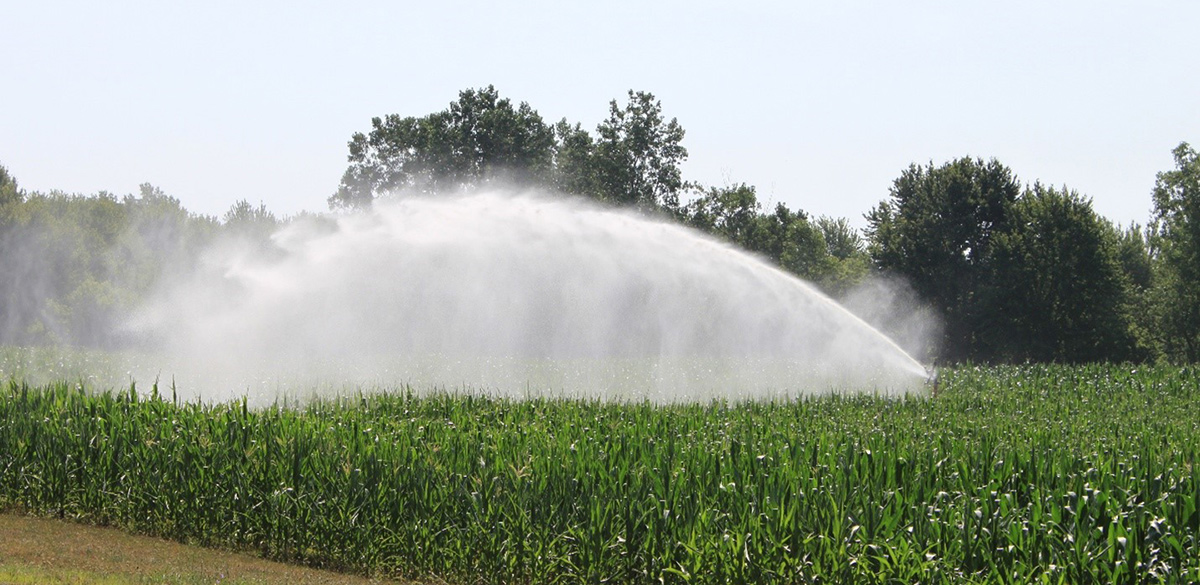
Securing the sustainability of Great Lakes basin groundwater resources By James Polidori Groundwater, the "sixth Great Lake," faces rising demand from agriculture and technology. Improved data and coordinated policy are vital for long-term sustainability. Corn field irrigation, Plymouth Road at Curtis Road, Superior Township, Michigan. Camera location 42° 20' 05.91" N, 83° 36' 20.3" W. View this and other nearby images on OpenStreetMap.Often referred to as the “sixth Great Lake,” the total volume of groundwater within the Great Lakes basin is estimated to be greater than the volume of Lake Michigan. Despite its massive scale and its intrinsic connection to the quality and quantity of the region’s surface waters, extensive knowledge gaps remain regarding groundwater availability at the statewide, basin, and regional scales.One resource available to help address these gaps is the Great Lakes Regional Water Use Database, which the Great Lakes Commission (GLC) maintains in partnership with the Great Lakes-St. Lawrence River Water Resources Compact Council and Regional Body. This collaborative effort provides uniform, consistent data on withdrawals, diversions, and consumptive uses across jurisdictions, watersheds, and sectors. These data provide a baseline understanding of groundwater usage across the basin and inform regional water resources management.From 2020 to 2024, an average of more than 1.2 billion gallons of groundwater were withdrawn daily from the Great Lakes basin across all sectors. Agricultural water use—specifically for irrigation and livestock watering—currently makes up the second most significant withdrawal of groundwater in the basin at an average of 370 million gallons of groundwater per day over that same period, trailing only public supply. While agriculture in the Great Lakes region is currently primarily rain-fed, climate projections indicate that increasing drought severity and frequency by the end of the century will expand the need for supplemental irrigation. This shift could result in an increased demand on groundwater aquifers throughout the basin.Rapid growth and advancement in the technology sector is also raising questions about potential impacts on the basin’s water resources. Recognizing its role in sustainable water resource management, the GLC recently passed a series of policy resolutions on impacts to Great Lakes agriculture and water use, the water-energy nexus of emerging technologies, and non-potable water reuse development. These resolutions support the economic growth and sustainable development of these sectors while protecting the region’s water supply.To ensure the security of the Great Lakes region’s economy and the sustainability and balanced use of the Great Lakes basin’s water resources, we must continue to improve our understanding of the impacts of shifts in agriculture and energy production, technology growth, and changing climate conditions. Coordinated and informed policy and decision-making will help us secure the “sixth Great Lake” for generations to come.
Research Brief
Spring 2026
Groundwater, the "sixth Great Lake," faces rising demand from agriculture and technology. Improved data and coordinated policy are vital for long-term sustainability.
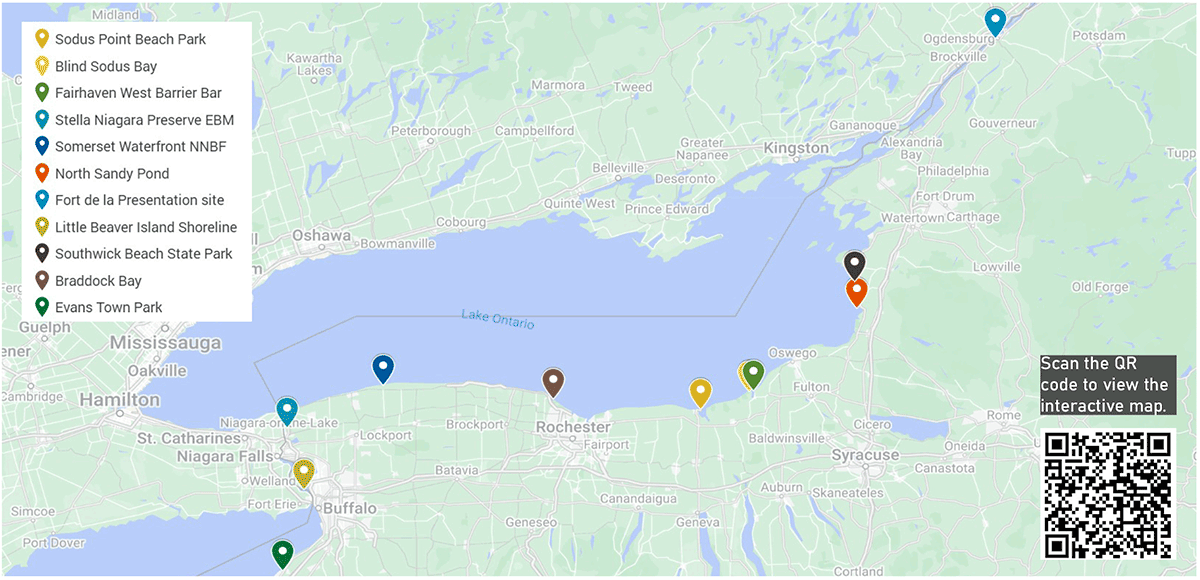
Bridging policy and practice in New York State: Barriers to shoreline adaptation along Lake Ontario By Rewa Phansalkar & Kristen Hychka Despite policy shifts, shoreline hardening dominates Lake Ontario. Structural limits, fragmented governance, and path dependency block nature-based adaptation and resilient land use. Examples of projects using natural and nature-based features in New York’s Great Lakes basin, compiled by NYSWRI and NYSDEC Great Lakes Watershed Program staff. These projects can serve as demonstration sites for broader promotion and replication.Communities along New York’s Lake Ontario shoreline are increasingly vulnerable to flooding and erosion as climate change drives greater lake-level variability. In response, the state launched the Coastal Lakeshore Economy and Resiliency (CLEAR) initiative in 2019, following rapid funding through the Resiliency and Economic Development Initiative. CLEAR aims to work with communities to identify adaptation strategies, prioritizing landuse approaches and nature-based demonstration projects over reactive shoreline armoring.This effort reflects a broader policy shift toward long-term resilience, supported by the 2014 Community Risk and Resiliency Act and the Climate Leadership and Community Protection Act. Federal priorities also align, notably through the 2022 Nature-Based Solutions Roadmap. Yet, despite this momentum, a local “adaptation deficit” persists. Shoreline hardening remains the dominant response: 16% of the U.S. Lake Ontario shoreline is classified as “artificial,” and 40.6% is armored across the U.S. and Canada (USACE, 2020; State of the Great Lakes, 2022).To understand this gap, our research assessed barriers to adaptation using a mixed-methods approach that combined practitioner interviews, document reviews, and participation in public meetings. Using a diagnostic framework by Moser and Ekstrom (2010), we conceptualized adaptation as a process moving through three phases: understanding, planning, and managing. Barriers can emerge at each stage and often compound.In the understanding phase, communities directly impacted by recent high-water events prioritize flooding, while inland residents often do not. Competing narratives about the causes of flooding further shape how risks are interpreted.In the planning phase, constraints are structural. Many municipalities operate with limited staff, technical expertise, and time, resulting in reactive approaches. Governance is fragmented, with authority split across local, county, and state actors, and much of the shoreline remains under private ownership. Even where data and tools exists, stakeholders struggle to navigate scattered and sometimes outdated information.Barriers become most visible during implementation. Nature-based approaches—such as restored beaches, dunes, and living shorelines—are often seen as infeasible. Stakeholders cite high wave energy, steep bluffs, limited parcel sizes, and competing priorities such as maintaining lake views. Uncertainty around siting and design, limited contractor expertise, and complex permitting pathways further complicate adoption. These challenges are reinforced by a strong path dependency on shoreline hardening; rooted in familiarity and established engineering standards, gray infrastructure remains the predictable choice.Similarly, resilient land use policies—zoning updates, setbacks, and conservation overlays—face persistent hurdles. Local governments hesitate to adopt regulations that might affect property values or reduce tax revenue, particularly in high-value shoreline areas. These challenges are compounded by limited legal and technical capacity and the time-intensive nature of adopting new local laws.Taken together, our findings suggest the challenge is not simply a lack of awareness or funding. Rather, it reflects a mismatch between how adaptation strategies are promoted and the conditions under which they must be implemented. As new state-led tools and funding streams create opportunities, overcoming these barriers will be critical. Supporting shoreline adaptation in the Great Lakes will depend not just on advancing new ideas, but on making them workable within the realities of local decision-making.
Research Brief
Spring 2026
Despite policy shifts, shoreline hardening dominates Lake Ontario. Structural limits, fragmented governance, and path dependency block nature-based adaptation and resilient land use.
It’s our turn: Stepping into Great Lakes governance By Scott Sowa U.S. federal cuts erode Great Lakes protections, but resilient governance remains. Now, it's time to evolve. Lake Huron sunrise.Those of us working in Great Lakes science, policy, and management are accustomed to complexity. But the current moment—marked by rapid federal policy shifts in the United States—presents both new challenges and new opportunities. This is not simply a matter of adapting to change; it is a test of whether the broader Great Lakes governance system is prepared to sustain environmental outcomes at scale while navigating evolving political dynamics.Recent U.S. federal changes affecting water, climate, and endangered species policy are being felt across the region. Staffing reductions at federal agencies have led to an unprecedented loss of institutional knowledge and capacity. These changes do not eliminate legal authority—states, Tribes, and local governments retain it—but they significantly diminish enforcement, monitoring, and program continuity. The risk is not regulatory collapse, but quiet erosion: delayed permits, fewer inspections, reduced data collection, and cumulative impacts that may go unaddressed or even unseen, making future responses more costly or irreversible.While it is easy to feel pessimistic, we at The Nature Conservancy believe there is reason for cautious optimism. At binational forums across the region, I continue to see strong bipartisan and binational support for Great Lakes policies and programs. That commitment has been evident in the coordinated response by organizations mobilizing to oppose proposed cuts to key Great Lakes programs in the FY26 federal budget. I am deeply grateful to our Congressional champions who continue to support the Great Lakes Restoration Initiative and advance bipartisan legislation such as the Great Lakes Fisheries Reauthorization Act.Importantly, the Great Lakes governance system was built for moments like this. Binational and interstate compacts, treaties, federal and state enabling laws, and the principles of cooperative federalism create a dense web of shared authority and institutional redundancy. The Great Lakes–St. Lawrence River Basin Water Resources Agreement and Compact exemplify this resilience by establishing durable expectations for sustainable water management across jurisdictions. While a pullback by any partner—including one as significant as the U.S. federal government—is challenging, it is not unanticipated. The question before us is not whether authority exists, but whether we are prepared to fully exercise it.This is not simply a matter of adapting to change; it is a test of whether the broader Great Lakes governance system is prepared to sustain environmental outcomes at scale while navigating evolving political dynamics.In the near term, states are shouldering much of the burden, and I am encouraged by their response of prioritizing enforcement, strengthening cross-border coordination, and partnering more deeply with Tribes, universities, NGOs, and local governments. Multistate invasive species enforcement efforts, risk-based permitting, and cooperative science initiatives show how innovation and pooled capacity can partially offset federal reductions.Over the longer term, I envision that collective efforts to diversify and stabilize public funding, complemented by filling national policy gaps and harnessing market mechanisms to drive conservation outcomes, will bring about exciting opportunities for collaboration and innovation. Thankfully, we are already seeing progress across these fronts. State-level funding initiatives such as Minnesota’s Legacy Amendment, Ohio’s H2Ohio program, and New York’s Environmental Bond Act demonstrate how voter-backed and executive-led efforts can generate sustained investment in land and water conservation. These models underscore a growing reality: we must explore new public funding options beyond U.S. federal appropriations.Additionally, Canada’s continued investment in monitoring, science, and implementation helps maintain the integrity of binational agreements like the Boundary Waters Treaty and Great Lakes Water Quality Agreement. New investments—such as the establishment of the Canada Water Agency and Can$420 million for the Great Lakes Freshwater Ecosystem Initiative—demonstrate Canada’s commitment to freshwater health in general and more specifically to the Great Lakes. Collectively, these actions show that Canada is not merely a partner, but a ballast that can help stabilize collaborative management of the system in periods of rapid U.S. political change and funding uncertainty.Funding challenges are especially acute for local governments, particularly aging water infrastructure. Community-based systems have long relied on user fees, yet these models often proved insufficient to protect water resources. Major federal investments in the 1970s and 1980s helped address infrastructure backlogs, but many communities have struggled to keep up. New regional and state investments are essential not only to protect freshwater ecosystems, but also to ensure equitable access to safe and affordable water.States and local governments are also stepping in to address regulatory gaps left by weakened federal protections. Illinois’s efforts to establish new state-level wetland protections and Michigan communities experimenting with shoreline management ordinances reflect a broader trend: environmental leadership is increasingly emerging at subnational levels. This is where regional collaboration becomes indispensable. Interstate and basinwide organizations help align policies, share data, and present a unified voice—functions that become even more critical when federal policy ceilings or floors shift on issues like pollution, invasive species, and hydrology that ignore political boundaries.Universities and professional societies such as the International Association for Great Lakes Research have a unique role to play by providing continuity. Stewarding long-term datasets, preserving institutional memory, convening cross-sector partnerships, and training the next generation of professionals are more important than ever. Just as critical is maintaining public trust by practicing transparency, acknowledging uncertainty, and grounding research in the needs of local communities and decision-makers. Place-based engagement that treats communities as partners, rather than research subjects, is essential in an era of skepticism toward science and government.Ultimately, the Great Lakes governance framework remains legally robust. The challenge before us is not survival, but evolution. Previous generations stepped up when circumstances demanded it. Now, it is our turn. If states, provinces, Tribes, municipalities, businesses, universities, and NGOs step forward as coequal stewards—investing in capacity, coordination, and credibility—we can make the Great Lakes management system more resilient than ever. That is not a consolation prize; it is a responsibility—and a chance to lead.
Feature
Spring 2026
U.S. federal cuts erode Great Lakes protections, but resilient governance remains. Now, it's time to evolve.
Great Lakes region needs data center transparency By Helena Volzer Rapid data center expansion threatens Great Lakes water resources, calling for transparency and multilevel regulation to safeguard this finite freshwater system. Across the Great Lakes region, a transformation is underway with data centers rapidly becoming part of the landscape to power our digital lives. But as their footprint grows, so do important questions about water, energy, community, and environmental impacts. The issue is whether and how data centers can be developed sustainably in a region defined by one of the world’s most important freshwater systems.The Great Lakes hold 20% of the world’s surface freshwater. This abundance can be misleading. Less than 1% is renewed each year, and many communities rely on groundwater and local aquifers that are more vulnerable to overuse. These finite and interconnected resources must be managed responsibly for today and tomorrow. The eight Great Lakes states and two Canadian provinces recognized this when they agreed to complementary frameworks: the Great Lakes-St. Lawrence River Basin Water Resources Compact and the Great Lakes-St. Lawrence River Basin Sustainable Water Resources Agreement. Together, these instruments create a binational governance structure where proposals to divert Great Lakes water outside the basin are generally prohibited with minor exceptions. The Compact applies to U.S. states while the Agreement mandates similar restraint across the Canadian provinces of Ontario and Quebec. Any exceptions to the prohibition on diversions require water to be returned after use.This is where data centers enter the conversation. The Great Lakes region is attractive to data centers because of its resources, relatively cool climates, infrastructure, and tax incentives. The U.S. side of the region now hosts nearly one-fifth of all U.S. data centers, with growth expected to exceed national averages through the end of the decade. But this growth can put pressure on local water systems, especially in small communities that were not designed for large and, at times, sudden withdrawals. For perspective, llinois and Ohio each host around 200 data centers, ranking fourth and fifth nationally in total count, according to Data Center Map. While Canada overall hosts about 285 data centers, located primarily in the provinces of Ontario and Quebec, numbers are not indicative of scale and the localized impact on water resources that individual data centers may have.Data centers generate enormous heat and must be cooled constantly. Many use water-based cooling systems that can use millions of gallons per day. However, not all the water returns to the system. In evaporative cooling, a significant portion is lost to the atmosphere, effectively removing it from the local watershed. Other ways of cooling data centers are highly energy intensive. The tradeoff is a water-energy nexus:Water-based cooling saves energy but consumes vast amounts of waterAir-based cooling conserves water, but demands signficantly more electricityNon-renewable energy production itself requires water, so cooling methods that reduce water use onsite may still increase water use offsite at power plants. For example, the Vantage data center in Port Washington, Wisconsin, will reportedly have power needs reaching 3.5 gigawatts. If non-renewable sources are used to meet those needs, its off-site water use could be more than twice the amount of water used by every home, business, and manufacturer in the City of Green Bay. Even before the data center boom, 70% of reported Great Lakes water use in 2024 was associated with generating electrical power, making it the largest Great Lakes water-using sector.Perhaps the biggest gap we face is the lack of transparency around exactly how much water an individual data center uses. Most data centers connect to public water systems and therefore aren’t required to report water use. While some companies release this information, it’s often aggregated, doesn’t address indirect or off-site water use (including for energy production), and lacks important details needed to assess an individual data center’s water resource impact. This also makes it challenging to evaluate the cumulative effect of expansion across the region. The issue is whether and how data centers can be developed sustainably in a region defined by one of the world’s most important freshwater systems.Each level of government has different roles to play when it comes to oversight. At the federal level, the U.S. administration is using executive power to try to fuel growth. The president has issued several executive orders facilitating this expansion—from keeping coal-fired power plants open to trying to restrict states from regulating AI. Now is the time for Congress to step up, use its legislative power on behalf of communities, and enact meaningful regulations that mandate more transparency around water and energy use so that benchmarks for water conservation and efficiency can be established. In Canada, the federal government adopted its Sovereign AI Compute Strategy in 2024 to attract data centers above 100 megawatts. Expansion in Canadian provinces continues as tensions emerge over which level of government has authority to regulate this rapidly expanding industry. An announcement earlier this month of new data centers in British Columbia was met by accusations of a “build-first regulate-later model” and calls for a moratorium on new data centers until stronger regulation and environmental policies are enacted.Locally, communities can negotiate data center proposals to ensure community benefits, such as green infrastructure and payment for infrastructure improvements. However, state and provincial level frameworks that ensure transparency and provide consistent rules for monitoring water use and preventing pollution are necessary to reduce the regulatory and legal burden on small and under-resourced local governments. Standardized regulations can assist local municipalities to plan for both the initial build out of data centers, as well as ongoing maintenance (including e-waste management), and future decommissioning.At the state, provincial, and Tribal levels, the most important role will therefore be ensuring sustainable water use and management. In the U.S., states are furiously considering legislation, including everything from energy- and water-use reporting requirements, bans on the use of non-disclosure agreements, study commissions, and repeals of tax incentives, to statewide moratoria. While Canadian provinces have primary responsibility for water management, they have thus far primarily pursued energy-specific proposals to regulate data center expansion. For example, British Columbia has limited data center expansion by limiting access to power altogether, whereas Québec enacted a higher rate for electricity for data center customers. Additionally, the Canadian government has a duty to consult First Nations on numerous activities, including regulatory project approvals. This engagement illustrates the vital role First Nations must play as regulations and future projects are considered. The role and ability of states and provinces to establish regulations that successfully balance rapidly evolving economic development with conservation and protection of water resources and provide for thoughtful planning will be critical in the years ahead.ResourcesA Finite ResourceThe Great Lakes region faces the prospect of water shortages, groundwater conflicts, and contaminated aquifers as demand sharply increases from large water users such as data centers, agriculture, and critical minerals mining. A new Alliance for the Great Lakes report details how access to water in the region will be undermined in the coming years if serious planning, policy, and regulatory actions are not taken. A Regional PlaybookData center development is rapidly growing across the Great Lakes region. To help make sense of the impacts, the Alliance also released this guide for residents, concerned citizens, grassroots organizations, and local leaders seeking clear, accessible information. It describes how water is used in data centers and provides checklists to help communities understand potential impacts and ask the right questions at the right time.
Feature
Spring 2026
Rapid data center expansion threatens Great Lakes water resources, calling for transparency and multilevel regulation to safeguard this finite freshwater system.
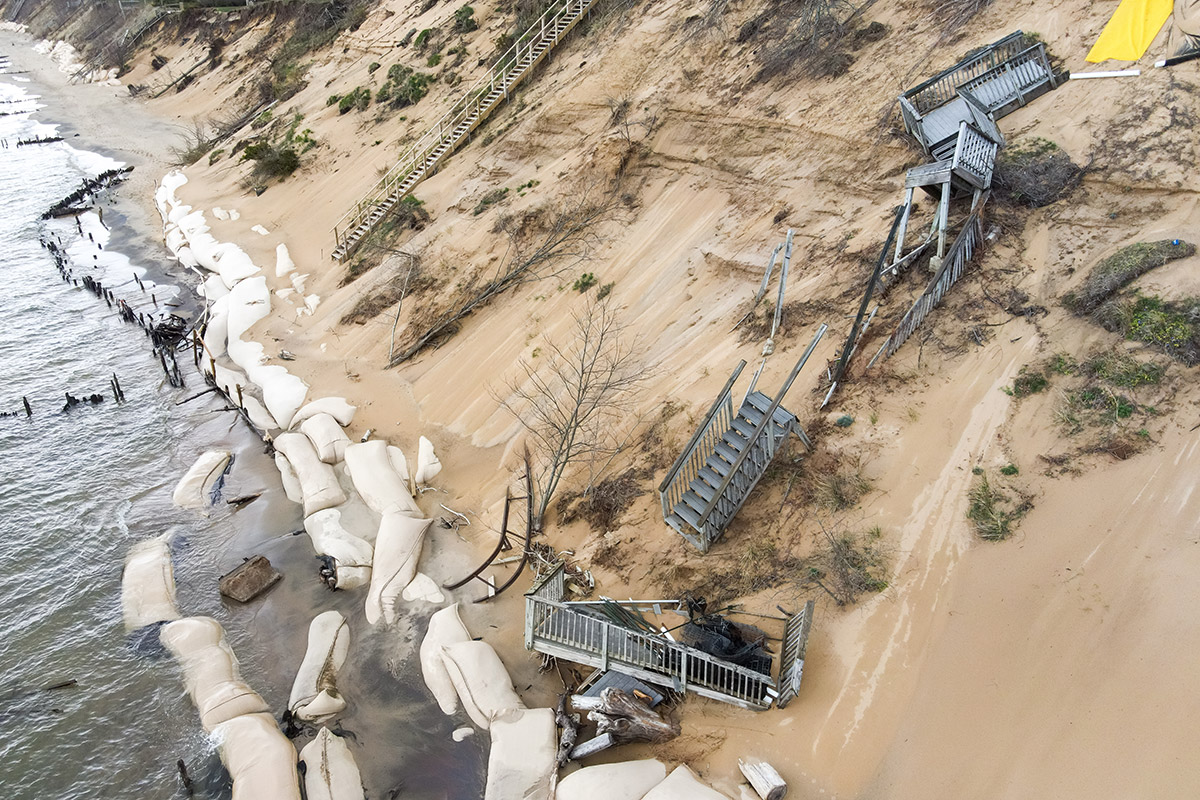
Incorporating climate risks in the management of Great Lakes water By Gail Krantzberg New policies that anticipate future conditions rather than react to past patterns require climate-informed planning and nature-based solutions to ensure long-term water security and equity. Aerial view of damage on eroding dune on Lake Michigan. Photo by Sarah Rypma.The impacts of climate change on the Great Lakes are manifesting as intensified precipitation, heightened evaporation rates, diminished ice cover, and increased variability in water levels. These phenomena pose significant dangers to essential resources such as drinking water, groundwater recharge, shoreline integrity, coastal infrastructure, and the habitats that sustain fish and wildlife.Recent occurrences of record-high lake levels have resulted in severe erosion, substantial property damage, and widespread flooding. Simultaneously, longer-term forecasts indicate increasing extremes in lake levels, oscillating between unprecedented highs and lows. The warming of winters is leading to a decline in ice cover, consequently leaving shorelines vulnerable to intensified wave action. In addition, heavier rainfall events contribute to increased nutrient and sediment runoff, which exacerbates harmful algal blooms and places additional strain on municipal water systems. Furthermore, groundwater systems, which are hydrologically connected to the lakes, are at risk of altered recharge dynamics and contamination during flood events. Existing policies rooted in historical hydrological data fall short of addressing these pressing challenges posed by climate change.Existing policies rooted in historical hydrological data fall short of addressing these pressing challenges posed by climate change.Policy recommendationsGiven the inadequacy of current policy frameworks, a new approach is needed—one that anticipates future conditions rather than reacting to past patterns. Four key strategies have emerged, each designed to strengthen the region’s capacity to adapt to an increasingly volatile climate.1. Require climate-informed planningIt is imperative to revise floodplain maps, shoreline zoning regulations, and infrastructure designs by incorporating climate projections and dynamic lake-level modeling. For example, the city of Rotterdam in the Netherlands has integrated climate projections into its urban water management strategy, using adaptive flood defenses, water plazas, and updated flood-risk maps to manage rising sea levels and extreme rainfall. Chicago integrates climate projections into coastal planning along Lake Michigan through its Climate Action Plan and shoreline management strategies, which guide the design of lakefront infrastructure, stormwater systems, and flood-resilient parks to address rising lake levels and extreme storm events.2. Enhance integrated water managementFoster cooperation in the governance of both surface water and groundwater across state and provincial boundaries, leveraging transnational relationships to ensure comprehensive management. The Great Lakes region is still falling short in truly integrating groundwater and surface water management, especially regarding nutrient flows, emerging contaminants, and the ecological impacts of groundwater withdrawals. Addressing these gaps requires better monitoring of groundwater-lake interactions, stronger cross-border data sharing, and policies that explicitly link groundwater management with surface water protections.A notable international success in transboundary integrated water management is the Mekong River Basin, where the Mekong River Commission (MRC) coordinates water allocation, ecosystem protection, and hydropower development across China, Laos, Thailand, Cambodia, and Vietnam. By jointly monitoring river flows and conducting basinwide environmental assessments, the MRC addresses both surface water and connected groundwater impacts, such as maintaining groundwater-dependent wetlands and managing sediment transport.3. Emphasize nature-based solutionsPrioritize the restoration of wetlands, dunes, and floodplains to serve as buffers against storm surges, mitigate runoff, and bolster groundwater recharge.For example, projects funded through the Great Lakes Restoration Initiative—such as the Shiawassee Flats Wetland Restoration in Michigan and the Fort Sheridan coastal habitat restoration along Lake Michigan—have restored marshes, ravines, and dune systems that naturally absorb floodwaters, filter runoff, and enhance coastal resilience.4. Commit to monitoring and equityExpand the sharing of basinwide data and allocate resilience funding specifically to vulnerable shoreline communities and Indigenous Nations to promote equity in resilience and adaptation.For example, the Great Lakes Observing System provides real-time data on water levels, temperature, and water quality across the Great Lakes, while programs under the Great Lakes Restoration Initiative have directed funding to projects in historically underserved shoreline communities and support Indigenous Nations in Michigan, Wisconsin, and Ontario to enhance local resilience planning.Neglecting to integrate anticipated climate impacts into the policy frameworks for Great Lakes water and coastal management represents a significant governance shortfall, as seen in municipalities along Lake Ontario, Lake Erie, and Lake Michigan where floodplain regulations and shoreline infrastructure designs still rely on historical water levels rather than projected climate-driven changes. Embedding advanced climate projections into these policies is crucial for safeguarding water security, sustaining ecosystems, and supporting coastal economies amidst an era characterized by increasing hydrological instability.
Feature
Spring 2026
New policies that anticipate future conditions rather than react to past patterns require climate-informed planning and nature-based solutions to ensure long-term water security and equity.
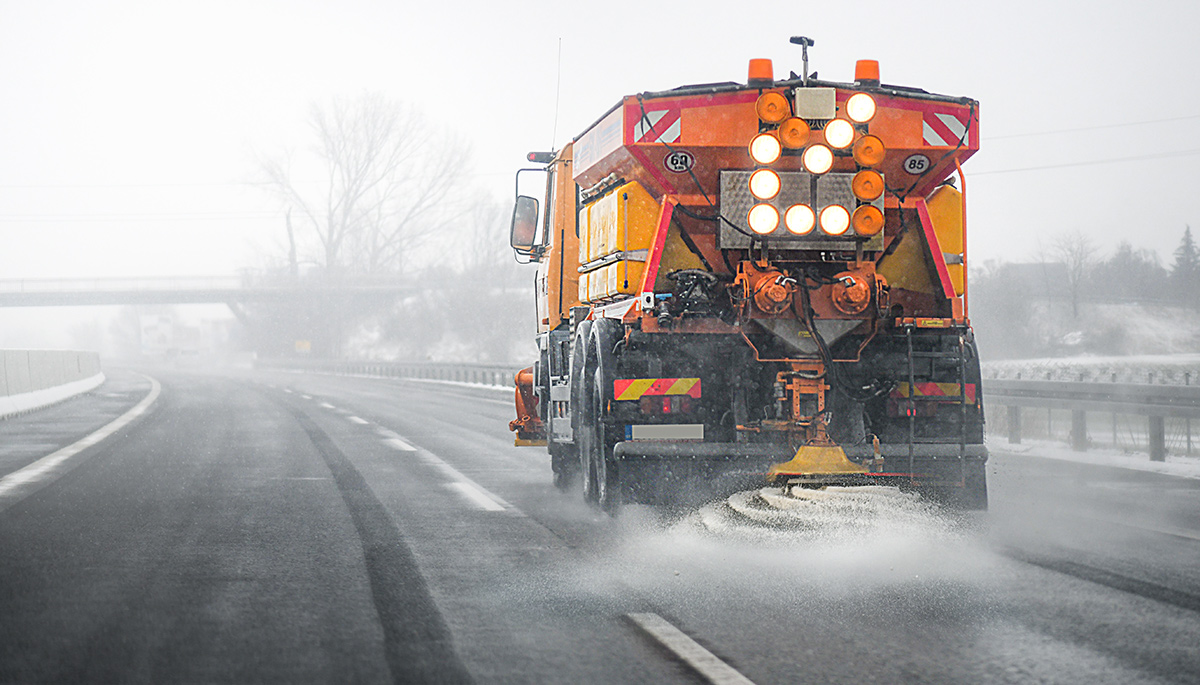
On the road to disaster: How road salt policy gaps are threatening the Great Lakes By Gabrielle Parent-Doliner, Dani Lindamood, Jérôme Marty & Monica Seidel Road salt is is accumulating in the Great Lakes, threatening aquatic life and groundwater. Regulations and liability reform are needed. Every winter, road crews, homeowners, and property managers across the Great Lakes basin reach for the same solution they have relied upon since the 1940s: salt. Cheap, effective, and familiar, salt—predominantly sodium chloride (NaCl)—has become the default tool for keeping roads and sidewalks passable through ice and snow. But what happens to all that salt once it washes off our streets and parking lots? It flows into our streams, lakes, soils, and groundwater, and it doesn’t leave.Salt pollution is now one of the most pervasive and underappreciated water quality threats facing the Great Lakes basin. Chloride, the toxic fraction of NaCl, is rising in freshwater systems across the region, and unlike many other pollutants, there is no natural process that removes it once it enters the water. The cumulative load of chloride from decades of winter road maintenance is reshaping the chemistry of the basin’s freshwaters. For instance, from 1980 to 2020, chloride concentrations in Lake Michigan increased from 9 to 15 mg/L, an annual increase of about 0.125 mg/L. More dramatically, Lake Simcoe in central Ontario is already at an average chloride level of 61 mg/L and is projected to see an increase of 0.7 mg/L chloride per year, reaching an average of 120 mg/L by the 2050s—the Canadian Council of Ministers of the Environment’s (CCME) long-term exposure threshold. Many watersheds are experiencing spikes in chloride that exceed seawater levels (19,400 mg/L). Notably, Newmarket’s Western Creek registered a reading of 26,000 mg/L in February 2025, and Ottawa Riverkeeper’s monitoring of Green’s Creek registered above 20,000 mg/L.The CCME’s chronic guideline was not designed to protect soft-water ecosystems like those on the Canadian Shield. Research shows that at the low water hardness typical of Muskoka’s lakes, protective chloride thresholds should be as low as 64 mg/L. Some Shield lake species begin showing reproductive failure and increased mortality at concentrations as low as 5 mg/L, well below the CCME's 120 mg/L limit. Most Muskoka lakes haven’t yet reached the CCME’s chronic threshold, but that’s cold comfort when the science shows damage occurring at a fraction of that level. Both the guideline and the pollution are problems.The threat is even more direct for groundwater. Waterloo, Ontario, for instance, draws most of its drinking water from aquifers in the Paris and Waterloo moraines, and those aquifers are showing elevated chloride from decades of road salt application on the surfaces above. Unlike surface water contamination, groundwater cannot be flushed or filtered by natural processes. What goes in stays in. This also applies to lakes: natural removal in Lake Erie would take about seven to nine years, 25 years in Lake Ontario, and 500 to 600 years in Lake Superior.Salt pollution is now one of the most pervasive and underappreciated water quality threats facing the Great Lakes basin. The alternatives market offers little relief. While products like potassium chloride, magnesium chloride, and calcium chloride are marketed as substitutes, research shows they can be even more toxic to aquatic organisms than sodium chloride. Similarly, “natural” products have proven just as harmful. Physical alternatives like sand disrupt aquatic habitat and damage terrestrial ecosystems through extraction. The most promising reductions come not from substitution but from doing things differently: optimized plow timing, anti-icing techniques, adjusted speed limits, and snow tire requirements (that are still not mandatory in Ontario).None of that matters much without policy that creates real incentives to change, and that’s exactly what we don’t have. In 2001, the Canadian federal government concluded that road salts met the criteria for toxic substances under the Canadian Environmental Protection Act, then opted for a voluntary code of practice rather than regulation. More than 20 years later, salt use has not stopped growing.At the provincial level, Ontario has water quality objectives and guidelines but no enforceable targets for groundwater quality or water availability. The province’s Safe Drinking Water Act applies only to treated drinking water and not to the protection of the surface or groundwater sources that feed it. Between 2003 and 2019, 24% of monitored groundwater wells showed increasing chloride trends, with no binding framework to respond.This regulatory gap is not unique to Canada. Across the border, the United States applies over 24.5 million tons of road salt annually, according to the Cary Institute of Ecosystem Studies in New York, with Great Lakes states being the heaviest users.Moreover, the U.S. EPA’s chloride criteria are less strict than Canada’s: 230 mg/L for chronic and 860 mg/L for acute.The thresholds are not legally enforceable rules, because the criteria only become regulatory once a state adopts them into its own water quality standards under Section 303 of the Clean Water Act.Some action has happened at the state level, where a handful of states have taken meaningful steps. Minnesota has built out one of the most comprehensive approaches, including a statewide chloride strategy, a Twin Cities metro total maximum daily load (TMDL) study, and chloride management requirements built into municipal separate storm sewer system (MS4) permits. Wisconsin also has developed its own TMDLs and variance programs. The state’s MS4 permit framework requires communities discharging to chloride-impaired waters to include chloride reduction measures in their stormwater management programs, but typically focuses on winter road maintenance rather than removing the chloride during treatment.When the cost of a lawsuit far outweighs the cost of extra salt, applying more is the rational choice, leaving the Great Lakes’ freshwater reserves increasingly compromised.Many Great Lakes states look to New Hampshire’s RS 489-C as a single change that could move the needle on private road salt application. New Hampshire passed a law limiting liability for certified applicators from the Green SnowPro Program, recognizing that private contractors over-apply salt because they’re afraid of slip-and-fall lawsuits. Yet outside New Hampshire, most jurisdictions lack comparable policy tools to regulate salt use on private property, and the economic logic of over-salting prevails on both sides of the border. When the cost of a lawsuit far outweighs the cost of extra salt, applying more is the rational choice, leaving the Great Lakes’ freshwater reserves increasingly compromised.Municipalities throughout the basin are left holding a problem they can’t fully address. On public roads, crews face reputational and legal risk for under-salting; on private property, contractor liability drives over-application. Meanwhile the long-term costs of chloride pollution fall on no one’s ledger. Reforming liability legislation to protect operators who follow best management practices—as New Hampshire does—is one of the most impactful near-term changes available, and one of the most consistently overlooked.Meanwhile, urban sprawl is expanding the impervious surfaces that need de-icing each winter, climate variability is making freeze-thaw cycles less predictable, and economic pressure keeps salt cheap and attractive.The Great Lakes hold roughly 20% of the world's surface freshwater. The communities that depend on them deserve water quality standards that reflect that significance. Salt pollution is solvable, but solving it will require enforceable guidelines, liability reform, and a cultural shift toward treating salt as a last resort, not a first response.
Feature
Spring 2026
Road salt is is accumulating in the Great Lakes, threatening aquatic life and groundwater. Regulations and liability reform are needed.
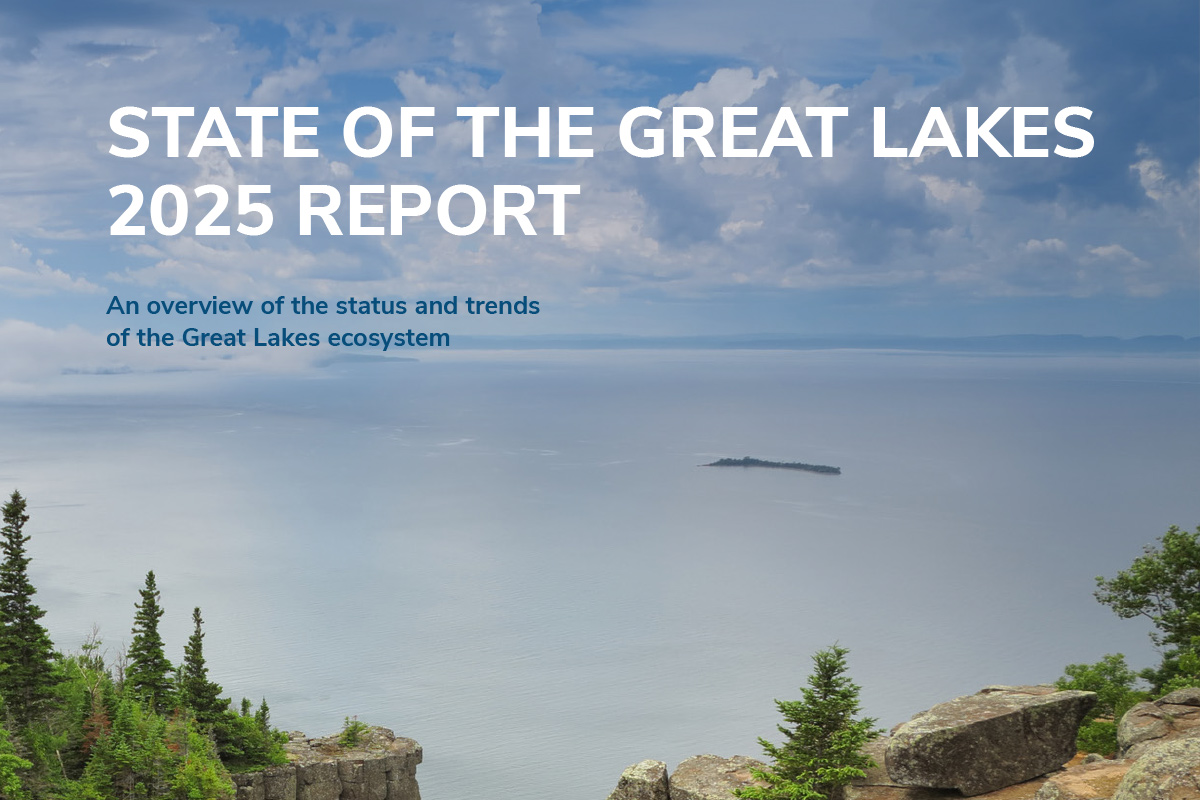
A snapshot of Great Lakes conditions By Matthew Pawlowski & Jacob Orland Report reveals progress in reducing toxins and invasive species introductions but warns of persistent challenges like algal blooms and habitat loss. The State of the Great Lakes 2025 Report provides a science-based snapshot of ecosystem health across the basin. Prepared by Canada and the United States under the 2012 Great Lakes Water Quality Agreement, the report describes basinwide trends, highlights lake-specific conditions, and tracks progress toward the Agreement’s general objectives.To assess those objectives, the 2025 report uses nine indicators supported by over 40 subindicators. Together, they show both progress and continuing challenges. The report points to major gains in restoring and protecting the Great Lakes, including basinwide reduction in toxic chemicals in the environment and food web (for example, see figure below showing mercury concentrations in lake trout) as well as a decline in the rate of new non-native aquatic species entering the basin. At the same time, it shows that ecosystem stressors vary widely across the basin, and this variability is reflected in indicator assessments and ecosystem conditions.Mercury concentrations in lake trout fillets have declined substantially across the basin since the 1970s and 1980s.The first three general objectives focus on how people use the Great Lakes, including as sources of drinking water, recreation, and fish for consumption. Overall, the Great Lakes continue to provide safe sources of drinking water, recreation, and food, although some local advisories remain in place.The lake-specific nature of ecosystem stressors is especially clear through the findings of the Habitat and Species indicator. Each lake contains a mix of healthy and degraded habitats and food web components. For example, lakes Michigan and Huron contain some of the basin’s healthiest coastal wetlands, yet they also have the lowest aquatic habitat connectivity among the Great Lakes. Populations of Diporeia, an important food source for fish, have declined sharply in all lakes except Lake Superior. Lake Superior is also the only lake where lake trout populations are considered fully recovered. By contrast, the walleye population in Lake Superior remains below target, while the Lake Erie population is at nearly record levels.Differences in invasive species conditions across the basin contribute to the variation in conditions for many other subindicators. Although the rate of new non-native species introduction has declined, established non-native species continue to spread within and between the lakes and to affect ecosystem health in significant ways. Notably, dreissenid (zebra and quagga) mussels have altered nutrient cycling, increased water clarity, and changed phytoplankton and zooplankton communities. Dreissenid mussels are widespread in all of the lakes except Lake Superior, although population trends vary both within and among the five lakes (see figure below).Quagga mussels have spread throughout Lake Huron, but data from 2022 suggest that populations are somewhat reduced from the peak observed in 2017.The report also points to several broader challenges. While basinwide reductions in nutrient loads since the 1980s, including 2.6 million pounds of phosphorus from U.S. tributaries from 2010 to 2025 alone, were successful in decreasing high nutrient concentrations that were contributing to algal blooms, excess nutrient inputs continue to drive harmful and nuisance algal blooms in Lake Erie and in localized areas across the other Great Lakes. These blooms are linked to warmer surface water temperatures and more extreme storm events, both of which are becoming more common across the basin. Rising surface water temperatures and other changes in physical conditions, such as decreasing ice cover and increasingly variable water levels, could impact all aspects of the Great Lakes ecosystem in the years ahead.The collaboration of governments, agencies, organizations, and individuals continues to accelerate restoration and protection efforts across the Great Lakes.Overall, the State of the Great Lakes 2025 Report illustrates each lake’s unique set of conditions and lake-specific stressors. It also highlights the value of long-term science, monitoring, and binational cooperation in understanding basinwide changes. The collaboration of governments, agencies, organizations, and individuals continues to accelerate restoration and protection efforts across the Great Lakes. That work helps to ensure the Great Lakes continue to be a reliable source for drinking water, recreation, and other uses that support the region’s environment, economy, and way of life.
Feature
Spring 2026
Report reveals progress in reducing toxins and invasive species introductions but warns of persistent challenges like algal blooms and habitat loss.
Connecting global science to local action: How IPBES & Indigenous knowledge are together reshaping Great Lakes policy By Catherine Febria
Featuring insights from Abraham Francis, Dawn Martin-Hill, Sarika Suarez Sharma, Peter Stoett & Kyle Whyte A new way of working together for effective science policy connects global biodiversity science with local action, centering Indigenous knowledge to drive transformative change across the Great Lakes basin. From the global stage of IPBES to the shores of the Great Lakes, a new community of practice is bridging Indigneous, place-based, and western science and policy to drive transformative change. Pictured here, Guadalupe Yesenia Hernández Márquez takes a sunset photo in Point Pelee National Park as part of an IPBES workshop at the University of Windsor. Photo by Michael Wilkins, University of Windsor.Across the Great Lakes basin and beyond, the converging pressures of climate change, biodiversity loss, pollution, and environmental and social injustices call for new ways of working together. Effective science-policy—grounded in cooperation, collaboration, and consensus-based processes—is one such pathway. Among multilateral science-policy platforms, the most recognized include IPCC (climate change), IPBES (biodiversity), and the newly launched ISP-WCP (chemical pollution). Until earlier this year, all Laurentian Great Lakes and African Great Lakes countries participated in these UN-supported platforms through governmental representation and expert contributions. But international science policy can feel remote from local and place-based research and practice. Mobilizing knowledge about platforms such as IPBES can help bridge that gap.Humans are not only dependent on but a part of Nature, and transformative change is needed to reverse declines in biodiversity, climate, and pollution.About IPBESEstablished in 2012 as a sister platform to IPCC, the Intergovernmental Science-Policy Platform on Biodiversity and Ecosystem Services has become a leading resource for multilateral agreements including the Kunming-Montreal Global Biodiversity Framework. IPBES learned from IPCC's experience about the importance of capacity building and working across plural knowledge systems. After more than a decade and 14 assessments, IPBES has pushed intergovernmental platforms toward more meaningful inclusion of Indigenous knowledge systems, epistemologies, and cosmologies as part of its multievidence-based approach to synthesis.A key outcome of these assessments is the convergence of knowledge: they establish patterns and processes that Indigenous Peoples and local communities have known about Nature since time immemorial, now confirmed through multiple lines of Western science-based evidence. The message is clear: Humans are not only dependent on but a part of Nature, and transformative change is needed to reverse declines in biodiversity, climate, and pollution (IPBES TfC 2024). Globally, IPBES findings show that Indigenous Peoples steward disproportionate levels of biodiversity in their territories while being disproportionately impacted by environmental degradation (IPBES 2018 Global Assessment). Heightened geopolitical uncertainty is driven by increased environmental uncertainty, given Nature's central role in all businesses (IPBES B&B 2026). Despite these trends, solutions are within reach. Leaning into relational processes—cooperation, consensus building, and collaboration—is needed now more than ever.IPBES is more than the reports it produces; it is also a network and a set of processes united by a shared vision for a positive future for Nature and People. After more than a decade of effort, this article connects that global vision to the Great Lakes by sharing the experiences of scholars who have engaged with IPBES, including reflections on a recent workshop in Windsor, Canada (November 2025). In their own voices, diverse IPBES authors and participants from the Laurentian Great Lakes reflect on their experiences and visions for a community of practice to strengthen science-policy interactions locally, regionally, and globally.IPBES workshop comes to Windsor to discuss and co-develop methodological guidance for working with Indigenous and local knowledge in science-policy frameworks, and, to foster a Dialogue workshop with Indigenous Peoples, Local communities and science-policy authors on IPBES’ 2nd global biodiversity assessment. Photo credit: Michael Wilkins, University of Windsor.On engaging the science-policy interfacePeter Stoett (Professor and Dean of Social Science and Humanities, Ontario Tech University, Co-Chair of the IPBES Invasive Alien Species Assessment): “It is absolutely essential that interdisciplinary approaches to the large-scale problems of our time are fostered through a community of scholars and practitioners. For my own work, it is an opportunity to learn about other disciplines engaged in the assessment, as well as to collaborate with new and interesting and incredibly talented people. On the Great Lakes, most of my work has been based in the policy realm; I’d welcome the opportunity to work more closely with those engaged in the scientific work of understanding the immense challenges the basin faces. I found that IPBES carries some respectable weight when it comes to getting policy attention, though this might be more a reflection of media coverage than genuine science-policy interfacing.”Participatory processes and diverse knowledge systemsEngaging multiple lines of evidence—not just standard peer-reviewed literature—is central to IPBES assessments. In-person, place-based dialogue workshops are a key participatory mechanism, especially for ethical engagement with Indigenous and local knowledge. Unlike IPCC, IPBES has a dedicated mandate to build capacity and engage diverse knowledge systems, reflected in its Fellows programme for early-career researchers, its work with national governments, and dedicated task forces focused on Indigenous and local knowledge, models, and data.Kyle Whyte (Professor, University of Michigan, Citizen Potawatomi Nation, IPBES Indigenous & Local Knowledge Task Force Member, and Co-chair of the IPBES ILK Dialogue Workshop in Windsor): “Indigenous Peoples in the region should be able to lead their own institutions that make connections across local conservation practices, governance, research, and law and policy. First Nations and Tribal nations should have programs that encourage community members in a range of Indigenous and scientific knowledge systems and that uplift community members in environmental decision-making so that governance is cooperative and participatory. The governance decisions Indigenous Peoples make should have access to the best information, whether from First Nations or Tribal colleges, or from their being independent Indigenous-led science assessments that deliver policy-relevant knowledge about the environment. First Nations and Tribal governments, then, should have reciprocal relationships with First Nations and Tribal colleges and research institutions. First Nations and Tribal institutions, whether Traditional Knowledge programs, governments, colleges, or research institutions, should be able to send delegates to major policy fora to represent the knowledge, interests, and brilliance of Indigenous Peoples. Policy fora should recognize Indigenous delegates, including them at each relevant level of the policy process. In this way, Indigenous Peoples begin to enjoy the same access to levers of change and education for the sake of environmental protection.”Abraham Francis (Deer clan from Akwesasne, Policy Analyst, Chiefs of Ontario, and IPBES ILK workshop participant): “Policy is important to me because it can harm communities and is often defined without our voices. They are not passive tools but powerful mechanisms with the potential to exacerbate harms, especially for Indigenous Peoples. I show up and engage as a commitment to harm reduction for my people, ancestors, future generations, and creation. I have always been extremely critical of these global mechanisms. I am firmly situated in the power of local community work to create real change. However, more recently, I have become interested in connecting the local and global, which the Haudenosaunee have been doing for centuries.”Dawn Martin-Hill (Professor Emerita, McMaster University, IPBES workshop participant): “Enhancing the role of Indigenous knowledge in the science-policy interface is a key objective of our work at Ohneganos Ohnegahdę:gyo at Six Nations of the Grand River. Indigenous knowledge and place-based ecological knowledge must be recognized as central to addressing real-world challenges. However, to be truly impactful, the funding landscape must change so that Indigenous-led conservation, water security, and climate mitigation receive support similar to that of mainstream conservation organizations.”Building capacity at the science-policy interfaceIPBES’s Capacity Building Task Force has delivered a long-standing Fellows programme connecting early career researchers with assessments as authors, providing mentorship and networking. This programme has propelled fellows into other science-policy roles within their own institutions, governments, and multilateral processes.Sarika Sharma (University of Windsor, early career researcher): “The Windsor IPBES workshop offered excellent insight into the realities and importance of multiscaled policy making and the inclusion of Indigenous and local knowledge voices. It was refreshing to see space being held for the honest, respectful, and vulnerable sharing of these diverse perspectives. And it was also a reminder that policy is created by and meant to adapt with people and communities. For policies to be truly effective, diverse voices need to be part of policy-making processes through relationship and reciprocity. Policies are not perfect, nor are people, but their re-evaluation is not a failure. Instead, these discussions are a natural opportunity for dialogue and connection. They are critical to improving policy relevance, strength, and stature as a common ground for all.”Abraham Francis: “It was wonderful to build community at the IPBES workshop in Windsor through discussions, dinners, and an adventure to Peele Point. For a community of practice, the creation of a fund to support the organizing and meeting of Indigenous Peoples around the Great Lakes is critical—cultivating relationships and translating global messages into collaborative solutions for local contexts. Indigenous Peoples participating in these spaces tend to find themselves over-extended and alone. These spaces offer hope through a knowledgeable and culturally grounded group to care for each other.”Full group participating in the first water ceremony held at a Caldwell First Nation wetland restoration site as part of the IPBES workshop in Windsor. Photo credit: Michael Wilkins, University of Windsor.Toward transformative changeTransformative change is defined as “fundamental, systems-wide shifts in views, structures and practices that address the underlying causes of biodiversity loss and nature’s decline” (IPBES 2026). The evidence underpinning assessments emerges from years-long collaboration between scientists, knowledge holders, governments, and organizations. Yet transformative change remains elusive, partly because many still don’t connect global science-policy platforms to on-the-ground actions and regional collaborations across the Great Lakes.Despite the withdrawal of the United States from UN-affiliated organizations, many U.S. citizens continue contributing to IPBES as independent scholars and practitioners. As IPBES Chair David Obura notes, the departure “harms everybody, including themselves.” He reminds us that we cannot ignore the fact that more than one million species face extinction, nor can we change the reality that the global economy loses up to $25 trillion per year in environmental impacts. Crucially, he points out the missed opportunities of inaction: failing to generate more than $10 trillion in business value and 395 million jobs by 2030.The mandate of IPBES remains clear: to objectively provide credible science and evidence about biodiversity to all decision-makers for better-informed action. The commitment of the IPBES community to this goal—“science and policy for people and nature”—is unwavering.Peter Stoett: “When it comes to a community of practice, it’s difficult right now to get people concerned about climate change, but Great Lakes communities will face grave problems ahead. The diminishment of aquifers and rivers will increase pressure on the lakes as commercial water prospects become more enticing. Systems thinking is more important than ever, as are the spiritual ontologies of Indigenous communities around the lakes and their connecting rivers. An effective community of practice would weave all these elements together publicly. The power of media and film should not be overlooked. Getting youth more engaged is a central question; we must improve the role of universities, but it needs to start sooner.”Kyle Whyte: “The IPBES workshop solidified in my mind that such a system, with feedback loops and direction, is possible, not only at the Great Lakes scale but also at continental and global scales. At one level, this would be done in a way that’s authentic to Indigenous Peoples; but at another level, it’s no different from how nation states, universities, and multilateral institutions have coordinated among each other for some time—they have just excluded Indigenous Peoples from being able to operate in a multi-institutional fashion.”Nature has taught us that diversity is a strength, and that connections across levels and over time ensure resilient and thriving ecosystems. The same holds for the Great Lakes science-policy-practice network. The diverse outputs of IPBES can strengthen local and regional priorities — but only if people pick them up and use them. To join a growing network of Great Lakes scholars and practitioners connecting IPBES to their own organizations and mandates, reach out. We will be launching a community of practice and further initiatives to ensure that global processes can have local and regional benefits.ResourcesFor more information on the regional community of practice, please contact ipbes@uwindsor.ca.Explore IPBES reports, social channels, and resources.

Feature
Spring 2026
A new way of working together for effective science policy connects global biodiversity science with local action, centering Indigenous knowledge to drive transformative change across the Great Lakes basin.
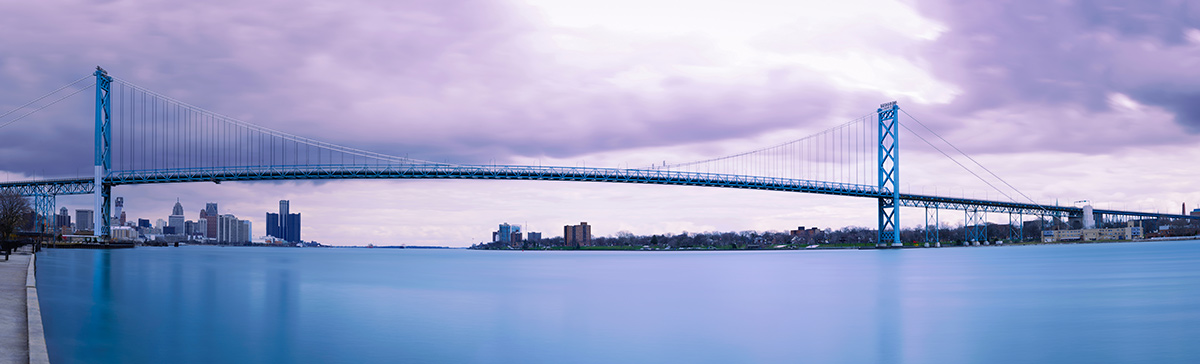
Sustaining the Great Lakes–St. Lawrence Region: Integrating freshwater stewardship with economic modernization By Vance Badawey The Great Lakes–St. Lawrence region must treat freshwater as critical infrastructure. Strategic integration of stewardship, climate resilience, and trade ensures long-term economic competitiveness and ecological health. The Great Lakes-St. Lawrence region anchors a deeply integrated binational economy. Pictured are the cities of Detroit, Michigan, and Windsor, Ontario, with the Detroit River between.The Great Lakes–St. Lawrence region is one of the most strategically important freshwater systems in the world, supporting over 100 million people, enabling trillions in economic activity, and anchoring a deeply integrated binational economy between Canada and the United States. Its ecological integrity and economic performance are not separate realities; they are fundamentally interdependent. This means the region’s long-term competitiveness in global trade depends directly on how effectively it integrates freshwater stewardship with economic modernization. Yet, despite its global significance, the region faces mounting pressures: climate change, aging infrastructure, ecosystem degradation, and increasing demands on water and transportation systems. From the Council of the Great Lakes Region (CGLR) perspective, the path forward requires more than incremental improvements. It calls for systems change, an intentional shift in how we think, collaborate, and act across borders, sectors, and disciplines. Sustainability must be understood as the integrated outcome of economic growth, environmental stewardship, and social equity, where freshwater protection is not a constraint on development, but a foundational driver of modern economic performance.Moving beyond silos: Freshwater as a catalyst for economic modernization Historically, policy and investment in the Great Lakes region have been fragmented across jurisdictions and sectors, creating artificial divisions between economic development and environmental protection. Science makes clear that this divide is untenable. Freshwater systems underpin industrial productivity, energy generation, agriculture, and trade logistics. When these systems are degraded, the economic consequences are immediate and measurable, through disrupted supply chains, increased infrastructure costs, declining water quality, and reduced system reliability. Conversely, strategic investments in freshwater stewardship, such as wetland restoration, watershed management, and water quality improvements, function as enabling infrastructure for economic modernization. A systems approach reframes freshwater not simply as a natural resource to be protected, but as critical economic infrastructure that must be managed, modernized, and integrated into regional development strategies.Sustainability must be understood as the integrated outcome of economic growth, environmental stewardship, and social equity, where freshwater protection is not a constraint on development, but a foundational driver of modern economic performance.A science-policy lens on integration priorities Applying a science-policy lens ensures that the integration of freshwater stewardship and economic modernization is grounded in evidence, data, and measurable outcomes. Several priority areas illustrate this convergence:Freshwater protection as enabling infrastructureThe Great Lakes are central to industrial activity, trade, and energy systems. Strengthening binational coordination, through aligned Canadian and U.S. restoration and protection initiatives, can ensure sustained, science-based investment in ecosystem health. This directly supports economic stability, reduces systemic risk, and enhances the reliability of cross-border trade.Climate resilience as a driver of system efficiencyClimate variability is already affecting water levels, port operations, and shoreline infrastructure. Science-based adaptation strategies, including nature-based solutions and integrated watershed management, are essential not only for environmental protection, but for maintaining efficient, predictable trade and transportation systems.Low-carbon transportation and supply chain transformationThe Great Lakes–St. Lawrence corridor is a backbone of North American trade. Modernizing this system through green shipping technologies, resilient port infrastructure, and multimodal integration enables both emissions reductions and productivity gains. Here, freshwater stewardship and economic modernization converge directly in the transition to low-carbon logistics.Data-driven systems managementAdvanced monitoring, data integration, and digital technologies are critical to managing complex freshwater and economic systems. From hydrological modeling to AI-enabled supply chain optimization, integrating science and technology enhances decision-making, reduces uncertainty, and improves both environmental and economic outcomes.Inclusive growth and system resilienceEquity is a key determinant of system performance. Communities with equitable access to clean water, infrastructure, and economic opportunity are more resilient to environmental and economic shocks. Embedding social equity into freshwater and economic strategies strengthens long-term regional stability.Achieving these priority areas requires more than technical solutions—it demands a fundamental shift in how we govern and collaborate.Achieving these priority areas requires more than technical solutions—it demands a fundamental shift in how we govern and collaborate.Redefining how we work: Integration through collaboration and convening Achieving this level of integration requires a fundamental shift in governance and collaboration. The Great Lakes–St. Lawrence region is inherently binational, and its freshwater and economic systems are deeply interconnected. Addressing its challenges and unlocking its opportunities demands a model of collaborative, science-informed governance that operates across borders and sectors. CGLR plays a critical role as a binational convenor, bringing together governments, industry, academia, and civil society to align freshwater stewardship with economic modernization strategies. By fostering multinational, multisector collaboration, CGLR helps translate scientific knowledge into coordinated policy and investment action. This approach includes:Aligning Canada–U.S. policy and regulatory frameworks around shared freshwater and economic objectivesIntegrating public and private sector investment to accelerate infrastructure modernizationEmbedding science into decision-making through iterative, data-driven processesMoving from fragmented coordination to true co-creation of solutionsStrengthening binational trade performance through integration If the Great Lakes–St. Lawrence region were a country, it would rank as the third-largest economy in the world, an economic powerhouse rivaling the GDP of major nations. Spanning eight U.S. states and two Canadian provinces, the region generates trillions in annual output through advanced manufacturing, agriculture, energy, technology—all underpinned by one of the planet’s most critical freshwater systems.This immense economic scale is underpinned by a deeply integrated binational supply chain that supports tens of millions of jobs and facilitates a significant share of North America’s trade. In an increasingly competitive global economy, the region’s ability to deliver reliable, efficient, and low-carbon trade infrastructure is a defining strategic advantage. Strengthening this advantage requires aligning economic performance with environmental stewardship. Integrating freshwater protection with infrastructure modernization ensures that healthy, well-managed water systems continue to support consistent shipping conditions, reduce operational risks, and enhance the resilience of ports, corridors, and critical trade assets. At the same time, investing in modern, low-carbon transportation networks improves efficiency, lowers emissions, and reinforces the region’s competitiveness in global markets. Salmon fishing on Muskegon Lake, a drowned river mouth lake that flows into the eastern shore of Lake Michigan. Last year, after decades of cleanup and restoration, the lake was officially removed from the binational list of Great Lakes Areas of Concern and is now seeing the community benefits from restoration and remediation. Recreational use of the rivers and Muskegon Lake by residents and visitors has increased, tourism is up, and property values have grown.Holding over 20% of the world’s surface freshwater, the Great Lakes are not only an economic engine but also a globally significant environmental and resource asset. Through sustained binational collaboration, the region can further solidify its role as a premier international trade corridor, improving supply chain reliability, advancing climate resilience, and attracting investment aligned with environmental, social, and governance priorities. In this sense, the Great Lakes–St. Lawrence region is more than a geographic system, it is a globally significant economic, ecological, and geopolitical force whose coordinated stewardship and strategic investment will shape the future of North American prosperity and sustainability.A regional model for integrated systems leadership The Great Lakes–St. Lawrence region can be more than a case study in freshwater management—it can be a global proof of concept: that protecting the ecosystems which sustain trade, industry, and communities is not a cost of competitiveness, but its source. CGLR’s strategic framework, anchored in economic growth, environmental stewardship, and social equity, provides the foundation for this leadership. The path forward demands what this region is uniquely positioned to deliver: science aligned with policy, cooperation across borders, and a commitment to outcomes that are both environmentally and economically transformative. If the region seizes this opportunity, it will not only secure its own future—it will show the world that sustainable prosperity is possible where freshwater and economic ambition go hand in hand.Freshwater is not just a resource to be protected, but a critical infrastructure for the Great Lakes region. Pictured is the Great Republic, a self-discharging bulk carrier, in Duluth Harbor at the western tip of Lake Superior. Photo by Colleen Pilat Images.
Feature
Spring 2026
The Great Lakes–St. Lawrence region must treat freshwater as critical infrastructure. Strategic integration of stewardship, climate resilience, and trade ensures long-term economic competitiveness and ecological health.
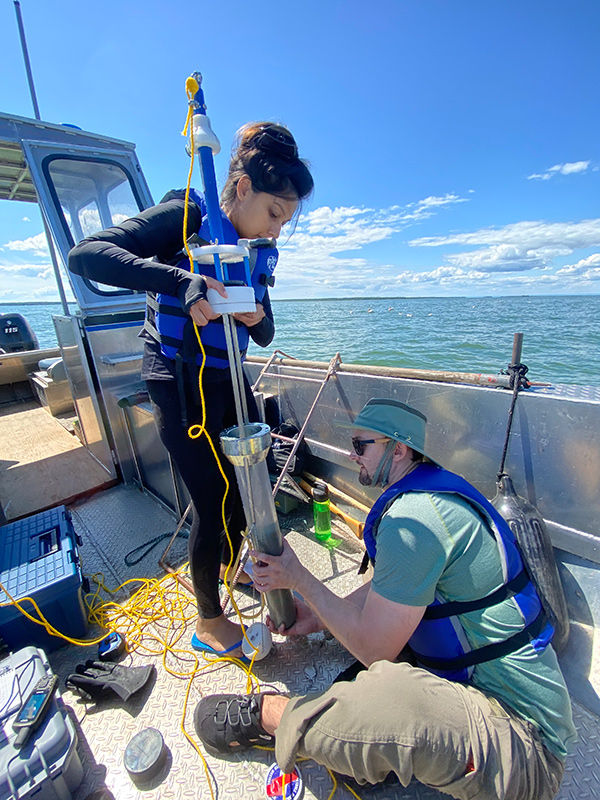
Lake Winnipegosis through time: A paleolimnological perspective By Samadhi Jayathissa A paleolimnological study examining sediment cores from Lake Winnipegosis to reconstruct historical water quality and ecosystem changes. Extracting a sediment core from the bottom of Lake Winnipegosis. Photo by Geoff Klein, Manitoba Natural Resources and Indigenous Futures.Lake Winnipegosis is Manitoba’s second largest lake and one of the world’s great inland waters. Despite its size and cultural importance, its long-term ecological history remains poorly understood compared with many other large lakes. My research uses paleolimnology, the study of lake sediments, to reconstruct how Lake Winnipegosis has changed over time. Conducted within the Gushulak limnology lab at the University of Manitoba, this study contributes to the lab’s ongoing research goals to understand how and why lakes across climate and land-use gradients respond differently to human stressors.Lake Winnipegosis has long been a cultural and lifeways resource for local First Nation and Métis communities. In recent years, rising concerns over declining water quality and fisheries health have highlighted the need to understand how the lake is changing. This study is one of the first to look at the lake’s past and present water conditions, and I hope to help communities to protect and manage this important resource for generations.Lake sediments act as archives. Layer by layer, they preserve biological remains, chemical signals, and particles washed in from the surrounding landscape. By extracting sediment cores from the lake bottom, we can look back in time and track changes in water quality, nutrient inputs, and ecosystem structure. Indicators such as diatom communities, sedimentary pigments, and stable isotopes help reveal how the lake has responded to climate and land-use changes across its large and complex watershed.This study explores long-term and spatial patterns in the water quality of Lake Winnipegosis, focusing on the influence of land-use change, multiple inflows, and climate gradients across the lake. We collected four sediment cores from distinct depositional basins across the lake and established their chronologies using 210Pb alpha spectroscopy, producing age models that extend back to around 1850. We analyzed organic matter content (by loss on ignition) and algal and cyanobacterial pigment concentrations (using high-performance liquid chromatography). To identify periods of major changes in sedimentary pigments, we applied constrained cluster analysis, a statistical method that groups successive layers with similar characteristics. This analysis showed that the lake experienced clear changes in water quality over time, and that these changes differed between basins depending on their location, river inputs, and surrounding land use. Future analysis using other water quality proxies, such as stable isotopes and diatom assemblages, will provide a more detailed understanding of the timing and magnitude of water quality changes in Lake Winnipegosis.
Research Brief
Winter 2026
A paleolimnological study examining sediment cores from Lake Winnipegosis to reconstruct historical water quality and ecosystem changes.
Looking beneath the surface: Revealing the hidden threat of microplastics in lakes By Federica Rotta Researchers investigate the growing prevalence of microplastic contamination in large lake systems, revealing hidden threats to freshwater ecosystems. Located on the Swiss-Italian border at the southern side of the Alps, Lake Lugano is known for high levels of microplastic pollution on its surface. Although small in surface area, the lake’s depth, temperature layering, and long water residence time are similar to those of much larger lakes. Photo by Federica Rotta.When talking about microplastic pollution in lakes, we are used to thinking about tiny particles floating on the water’s surface. This idea has guided most research to date, from the vast North American Great Lakes to smaller European subalpine lakes. Consequently, we know surprisingly little about how microplastics behave in the deeper layers of lakes worldwide, leaving many relevant questions unanswered. What happens once these particles leave the surface? Do they sink or accumulate at certain depths? And which parts of the lake’s ecosystem are most exposed?To address these gaps, we looked beneath the surface to the deep waters of Lake Lugano—a lake on the Swiss-Italian border—to reveal the hidden pathways of microplastics through the water column. What we found was remarkable, but not unexpected: microplastics were present throughout the lake, all the way down to 80 meters, with their vertical distribution shaped by seasonal changes in water density driven by thermal stratification. Pollution hotspots occurred within the upper layers of the lake in the bright, sun‑lit zone where primary producers, zooplankton, and many other freshwater organisms live. This indicates an elevated exposure risk for freshwater biota, a risk that could grow as climate change intensifies thermal stratification, trapping microplastics in these biologically active depths for longer periods. At the same time, the particle composition reflects human contributions: polypropylene and polyethylene fragments and fibers dominate, consistent with inputs from urban littering, textile-derived wastewater, and surface runoff from nearby densely populated areas. Why does this matter? Beyond Lake Lugano, large, deep lakes are integral to urban life, providing drinking water, supporting biodiversity, and offering economic services and recreational opportunities to millions of people nearby. Microplastics threaten these ecosystems in ways we are only beginning to understand. We hope our contribution will encourage moving beyond surface-only studies, supporting better environmental monitoring, improved risk assessment, and the effective long-term protection of freshwater resources in today’s rapidly changing world.JGLR Editor’s ChoiceTo learn more, see the article “Beyond the surface – Microplastic hotspots in the water column of a top plastic-polluted deep lake” in the Journal of Great Lakes Research. Authors include Federica Rotta, Camilla Capelli, Agnese Marchini, Barbara Leoni, Giusto Lo Bue, Maya Musa, Maria Pia Riccardi, and Fabio Lepori. Selected as the Editor's Choice article for the journal's February 2026 issue, the article will be available via open access for 60 days.
Research Brief
Winter 2026
Researchers investigate the growing prevalence of microplastic contamination in large lake systems, revealing hidden threats to freshwater ecosystems.
Rising from the abyss: Discovering the role of lakemounts in Great Lakes By Michael Rennie
Photography by Zach Melnick & Yvonne Drebert Scientists used cutting-edge underwater robotics to explore Lake Superior's mysterious underwater mountains, revealing new insights into geology, ecosystems, and one of the Great Lakes' least explored landscapes. Redfin trout on a glacier-scoured granite cliff of the Superior Shoal 60 meters below the surface of Lake Superior. Photo by Zach Melnick & Yvonne Drebert.Left to right: Zach Melnick and Yvonne Drebert (Inspired Planet Productions); Lisa Sundberg, Tom Frantti, and Jason Agnich (University of Minnesota Duluth); Gwen Phillips and Bianca Possamai (University of Vermont); Rual Lee and Ted Gephart (UMD); Lydia Paulic (University of Windsor), and Michael Rennie (Lakehead University). Photo by Zach Melnick & Yvonne Drebert.It was by far one of the most indelible experiences of my career on the Great Lakes. In early September 2025, funded by the Government of Canada’s Natural Sciences and Engineering Research Council and the Great Lakes Fishery Commission, I set out with researchers Bianca Possamai and Gwen Phillips (University of Vermont), Lydia Paulic (University of Windsor), and filmmakers Yvonne Drebert and Zach Melnick (Inspired Planet Productions) aboard the R/V Blue Heron on Lake Superior to explore the Superior Shoal. There, we hoped to test theories that we and others have developed to determine how physical and biological processes interact in these lakemount environments, as well as capture some incredible underwater video that would facilitate not just great footage but also scientific discovery. The voyage represents the first such expedition led by Lakehead University, located on the north shore of Lake Superior in Thunder Bay.Lakemounts are underwater mountains that rise from the lakebed but do not break the surface.For those unfamiliar with the term, lakemounts are underwater mountains that rise from the lakebed but do not break the surface. Seamounts, similar structures in the oceans, have long been documented to support high levels of biodiversity and biomass compared to either open water or coastal environments, to the extent that many now form the basis of significant marine sanctuaries (e.g., the Davidson Seamount off the coast of Monterey, California). Despite these findings, comparatively little investigation has occurred on lakemounts. Building off what is known about seamounts, we outlined a conceptual model (Possamai et al. 2024) that describes how these unique physical environments of steep rock faces could interact with underwater currents to support the biodiversity and productivity we expected to see on our expedition. Like seamounts, these lakemount environments likely represent biological oases that may support critical metapopulations for other more disturbed environments surrounding them. As such, understanding the role lakemounts play in the Great Lakes is important, especially given the swift alterations driven by climate change and other stressors.Zach Melnick flying an underwater drone equipped with a cinema-grade camera down the flank of Superior Shoal during a livestream in September. Photo by Zach Melnick & Yvonne Drebert.We were not disappointed by what we found. Rising from nearly 300 meters deep and cresting just 6 meters below the surface, the Superior Shoal is the underwater remnant of an ancient volcano and sandstones transported through geologic faults passing under Lake Superior’s depths. Occupying an area of about 300 square kilometers and located in Canadian waters approximately 70 kilometers from any shoreline, it sits surrounded by a sea of freshwater. Despite this geographic isolation, this and previous expeditions found the shoal to be teeming with life. During our seven days on the shoal, we observed exceptionally high densities of several strains of lake trout (including leans, humpers, and redfins) around the lakemount crests where the expedition sampled. Using a remotely operated vehicle (ROV) equipped with a cinema-grade camera to observe these fish, we found them cruising along shoal surfaces and among dense mats of periphyton that persisted to about 15 meters, as well as on shelves along the sides of the shoal under steep drop offs. Further down, ROV deployments revealed high densities of hydra (pictured below), covering the vertical shoal surfaces of the lakemounts where sediments can’t accumulate, observed down to depths of 140 meters and potentially deeper.This underwater mountainside is covered in hydra at 88 meters. Photo by Zach Melnick & Yvonne Drebert.And that’s just what we saw directly as part of the expedition. We have reams of hydroacoustic data (collected from the boat as well as from both upward-looking stationary units and the slocum glider deployed as part of this expedition); acoustic Doppler current profiler (ADCP) data to assess currents around the shoals; glider conductivity, temperature, depth, and flourimetry data; phytoplankton and zooplankton samples; nutrient chemistry samples; as well as biological samples for stable isotope analysis and a ton of high-resolution video to assess. Sample analyses are currently being prepared or underway with preliminary results hopefully forthcoming in the new year. And while a large part of the success of this mission can be chalked up to unbelievably good weather, it could never have happened without the dedication of both the scientific and ship crew on the University of Minnesota Duluth’s R/V Blue Heron, who all went above and beyond to make sure we collected all the data we could in our time at the shoal.Michael Rennie prepares a stationary upward-looking hydroacoustic submersible to detect concentrations of fish above the shoal. Photo by Zach Melnick & Yvonne Drebert.Though the data generated from this expedition will certainly begin to provide greater insights into the mechanisms supporting the diversity and production of these shoal ecosystems, longer-term, moored deployments of ADCPs and hydroacoustics to evaluate currents and the distribution and densities of organisms over the winter, as well as more extensive biological sampling for organisms along shoal surfaces are things we hope to be able to accomplish in future expeditions. We are currently working up these data to support future grant proposals to help fill these gaps and hope to visit the Superior Shoal and potentially other Great Lakes lakemount environments again very soon.Watch the expeditionFor a firsthand glimpse of what we saw, you can watch the Freshwater Everest livestream recording.
Feature
Fall 2025
Scientists used cutting-edge underwater robotics to explore Lake Superior's mysterious underwater mountains, revealing new insights into geology, ecosystems, and one of the Great Lakes' least explored landscapes.
The future is now: Autonomous vehicles enable enhanced views of fish and mysids in the Great Lakes By Kayden Nasworthy, Lars RudsTam, James Watkins & Peter Esselman 24/7 drones uncover new insights into Great Lakes fishes & mysids. Active hydroacoustics are used worldwide to estimate fish abundance, including in the Great Lakes. This technology uses sound waves to detect fish, much like a bat does to find its next meal. Current surveys are done at night from ships by research agencies in both the United States and Canada. Recent advances in drone technology now allow surveys with uncrewed vehicles to cover large areas and to operate both day and night. These autonomous drones can collect more high-quality, active-acoustic data than ever before with the crewed research fleet, providing unprecedented insights into the fishes of the lake and how the lakes function. Through a collaboration with the United States Geological Survey Great Lakes Science Center and Cornell University, two of these new sampling platforms, pictured above, were deployed throughout four Great Lakes, covering more than 21,000 kilometers of sampling track—over half the Earth’s circumference—on lakes Michigan, Huron, Erie, and Superior. One was an uncrewed surface vessel developed and operated by Saildrone Inc. The second was a long-range autonomous underwater vehicle, developed by the Monterey Bay Aquarium Research Institute.The surface drones are propelled by wind power and use solar panels embedded in the drone to charge batteries to power onboard sensors and equipment. This type was selected because they have no propellers, allowing us to test the hypothesis that motorized research vessels alert fish to their approach, causing them to flee. The drones’ lower noise levels also result in cleaner data and increase our ability to detect fish and even mysid shrimps at greater depths—as deep as 250 meters. We exlored fish avoidance of ships by comparing drone data with ship-based acoustics, finding that ship avoidance behavior is minimal (Evans et al. 2023, 2024). However, data collected from the underwater drone show that a substantial number of fish, especially smaller fish, are near the surface at night and are missed by surface-deployed acoustics. This type of drone travels underwater for long periods (several days), collecting hydroacoustic data with both upward- and downward-looking echosounders. It resurfaces at regular intervals to transmit data and receive new instructions before resubmerging.Two of these drones completed a whole-lake acoustic survey of Lake Superior, the first of its kind in the Great Lakes.In 2024, we explored whether surface drones could gather data at a lakewide scale, in lieu of ships. Two of these drones completed a whole-lake acoustic survey of Lake Superior, the first of its kind in the Great Lakes. This survey collected data continuously for 45 days, providing a unique look at the daily migrations of fish and invertebrates. Daily migrations are a common phenomenon in ocean systems and known in the Great Lakes, but the 2024 data allowed us to look deeper than previously possible due to the quietness of the drones and the ability to survey both day and night. The data reveal a routine daily migration of both fish and mysid shrimps spanning several hundred meters throughout Lake Superior, as illustrated in the figure above. At dusk, the Kiyi, a coregonid that specializes on feeding on mysids, ascends from a daytime depth of around 150 meters, followed by mysids that move with a preferred light level and visit the thermocline at night. The reverse happens at dawn, with mysids descending first, followed by fish. Because we can observe mysids deeper than before, we found that mysids form a 20- to 30-meter-thick layer in the water column around 200 meters depth, almost 50 meters deeper than the fish layer. Where water depth is shallower than 200 meters, mysids reside on the bottom, but even in 250-meter-deep water, some mysids appear to continue to the bottom rather than stay suspended. Whether mysids spend the day on the bottom has implications for the coupling between the benthic and pelagic zones in the Great Lakes.These autonomous technologies provide a promising complement to conventional vessel-based surveys. By freeing crew time on already busy vessels, they enhance operational flexibility. Most importantly, they offer a way to increase spatial and temporal resolution in ecosystem monitoring, revealing patterns that were previously difficult or impossible to detect with conventional means. "
Feature
Fall 2025
24/7 drones uncover new insights into Great Lakes fishes & mysids.
A digital partner for the Great Lakes: Navigating the ethical and scientific future of artificial intelligence By Dani Jones An AI‑powered turning point for Great Lakes science. It is an exciting moment for Great Lakes research, one that calls for thoughtful and responsible strategizing. The Great Lakes research and management community is gaining new power to apply advanced algorithms, data integration strategies, and cloud-scale infrastructure that can fundamentally enhance our ability to study, manage, and protect these complex inland seas. This progress is driven by both scientific curiosity and a commitment to ethical stewardship of the environment and the technologies we embrace.Fueled by collaboration and the generous support of partners such as the National Oceanic and Atmospheric Administration (NOAA) and the Great Lakes Observing System (GLOS), the Cooperative Institute for Great Lakes Research (CIGLR) is launching the Great Lakes AI Lab as a regional hub for collaboration across the Great Lakes science community. Rather than replacing established science, this initiative unlocks our community’s collective potential to build smarter, faster tools for managing the colossal streams of data produced by monitoring and modeling efforts across the world’s largest freshwater system.The Vision: Taming the data delugeThe Great Lakes generate vast amounts of information every day from satellites, buoys, remote sensors, and advanced computer models. Artificial intelligence (AI) and machine learning (ML) offer essential tools for managing this data deluge. These are methods that allow computers to detect patterns and make predictions from very large datasets, helping scientists uncover insights that would otherwise remain hidden.Our vision, which took shape after the 2024 CIGLR summit titled “Mapping Out How Machine Learning and Artificial Intelligence Will Change Great Lakes Observations, Modeling, and Forecasting,” is to build a collaborative, open-source framework. Think of it like a shared digital workbench where researchers across the region can train, test, and deploy AI approaches. This framework moves beyond disconnected data and models. By integrating them for systemwide optimization, we can improve forecasting and make observing networks more adaptive and effective. The arrival of ML and AI represents a fundamental shift, not just a new set of tools. Rather than reacting to change, our community must decide how to use this technology with focus and intention.The arrival of ML and AI represents a fundamental shift, not just a new set of tools. Rather than reacting to change, our community must decide how to use this technology with focus and intention. To maintain the high standards of accuracy and reproducibility that the Great Lakes demand, domain expertise must remain in the driver’s seat. We are not simply training algorithms on numbers; we are embedding them in decades of scientific understanding and process knowledge. Realizing this vision depends on continued investment in our local experts, who form the human accountability layer for these powerful tools. This commitment is essential for moving toward systemic understanding and higher-order connectivity. It allows us to apply smarter, more holistic methods for assessing the interconnected Great Lakes system and to ask and answer more complex questions than ever before.AI in Action: Extremes and efficiencyThe power of this technology lies in its ability to address some of the region’s most pressing challenges.Predicting water level extremes. Water levels on the Great Lakes fluctuate dramatically, from record lows to flood-inducing highs. Our data-driven approach identifies subtle, long-term patterns to provide probabilistic forecasts on subseasonal to annual timescales. One key example is our NOAA-funded effort, supported by the Bipartisan Infrastructure Law, to provide the U.S. Army Corps of Engineers with advanced tools that extend the probabilistic water level forecast horizon beyond six months. This capability helps communities across the basin prepare and adapt to changing conditions.Designing Smarter Observing Networks. Each year, considerable resources go toward deploying sensors and buoys across the lakes. Data-driven methods help us evaluate whether we are measuring the right things in the right places. By blending model forecasts with sensor data, ML algorithms can test different observing strategies and highlight where new instruments or vessel missions would have the greatest impact. This work, supported through NOAA’s Synthesis, Observation, and Response program and GLOS, is being advanced through CIGLR summer fellowships that develop algorithms to guide future monitoring efforts.The adjacent possible: What comes nextThe applications we are developing today are only the beginning. As we master our current tools, new and unexpected breakthroughs will follow. Each success opens doors to new scientific territories, expanding what we can understand and predict.This growing collaborative enterprise, made possible by NOAA and our regional partners, represents national-scale investment in the Great Lakes research community. It strengthens our collective capacity to support coastal resilience and environmental stewardship.We are just beginning to chart this digital frontier. We invite colleagues across the Great Lakes community to collaborate, experiment, and help us harness the potential of AI. To get involved, connect with our collaboration hub on GitHub and contribute to the effort. We look forward to forging this path together. To learn more, please see “Mapping Out How Machine Learning and Artificial Intelligence Will Change Great Lakes Observations, Modeling, and Forecasting in the Coming Decade.”"
Feature
Fall 2025
An AI‑powered turning point for Great Lakes science.
Dawn of data sharing: Championing water quality data sharing for Great Lakes futures By Katherine Balpataky Community data improves freshwater health by making water quality information accessible. DataStream got its start in the Mackenzie River Basin 10 years ago and has since established hubs across Canada. Photo credit: Pat Kane.Katherine Balpataky and Crowley, the English Setter, exploring the shores of Lake Erie.When you walk the shoreline of a great lake over days, years, or decades, you can’t help pondering the changes you witness. For me, that great lake is Lake Erie. I grew up with Long Point in my backyard and now own a home near Port Colborne, Ontario. In my 48 years, I have seen shorelines transformed by the arrival of new species and the loss of familiar ones, as well as by algal blooms, plastic waste, and climate change. These changes have inspired curiosity and dismay, but also hope. More research and actions are needed to protect these precious lakes. Underlying all this is a need for greater availability of data.At DataStream, I collaborate with an incredible team bringing passion and expertise to address the freshwater data limitations we face across Canada. While numerous organizations, researchers, and industries collect water data, as a nation, we haven’t pulled it together and used it effectively. Practically, we lack the evidence to make important decisions that will shape the health of our Great Lakes—now and into the future. It’s a serious challenge that some regard as a national security threat. DataStream is addressing this problem. In the U.S., there is greater integration of publicly available water quality data through the Water Quality Portal. However, due to a recent lapse in government funding, the portal’s future is uncertain.Northern exposureDataStream is a registered charity supporting a comprehensive data literacy program and an open access platform for sharing western scientific water quality data. DataStream’s story includes hundreds of community groups, governments at all levels, Indigenous water guardians, and freshwater scientists committing their time to data stewardship. Water monitoring is the starting point of a lifecycle that includes working with a specialist to standardize data, prepping metadata, and sharing it for future analysis. As we say at DataStream, “open data is a team sport.” The results are inspiring, and we’re only beginning to understand its potential.DataStream exists because 10 years ago, communities of the Mackenzie River Basin in the Northwest Territories were grappling with how to protect freshwater for future generations. They identified data gaps as a barrier. They needed a solution to assess the outcomes of a collaboration between five neighbouring jurisdictions and the Government of the Northwest Territories (GNWT). To address this gap, the GNWT teamed up with the Gordon Foundation, a philanthropic foundation with a long-standing interest in freshwater protection. Their goal was to build a system to house community-based and government datasets. The resulting 2016 launch of Mackenzie DataStream became the prototype for the current system that houses surface water, sediment, and (soon-to-be) groundwater data, with over 340 organizations engaged, all in the name of freshwater protection.DataStream has regional hubs in the Great Lakes, Lake Winnipeg, the Mackenzie River Basin, the Atlantic region, and the Pacific region.Dizzying days of data sharingDataStream’s cross-sector and cross-country data sharing has been conceptualized as the appropriate type of solution in literature on freshwater data. A 2025 article by Jess Kidd et al. in the journal Water synthesized insights from technology sector experts about Canada’s freshwater data dilemmas. While our team wasn’t mentioned, the results ring true to our experience and approach. The authors pointed to the need for 1) support of an open data culture, 2) enhanced use of data licenses, 3) increased data literacy skills and development, as well as 4) a freshwater data standard guiding collection and management. But there’s more to do.Data sharing is particularly relevant for environmental data and data collected in the public interest, using public funds.The open data culture the authors speak of is a growing movement worldwide. DataStream talks to groups who are initially unsure about sharing data openly. However, data sharing is particularly relevant for environmental data and data collected in the public interest, using public funds. When we describe transboundary data uses or the time saved (by one researcher’s estimation over 60%) by having data standardized in one place, monitoring groups get excited about the potential. Certainly not all data are suitable for open access, such as Indigenous Traditional Knowledge, but most water quality data are fair game. The lion’s share of the effort involved in fostering an open data culture comes from outreach and support. There are hundreds, maybe thousands, of community-based monitoring groups aiming to improve freshwater health. They wish to contribute to science, policy, water management, and education efforts, but need help with their data. Although data may be captured by non-scientists, it’s highly valuable and sometimes collected with expert advice or guidance in design protocols. It costs money (often taxpayers’) to collect it, and it’s essential for freshwater science and protection. Therefore, we support them in data formatting and management. DataStream is growing into a one-stop-shop for making freshwater quality data discoverable, available, machine-readable, and ready for prime time. The platform provides free and open access data, aligns with international open data best practices, and all datasets are published under open data licenses, which provide clarity around ownership, attribution and reuse. Finally, data are shared in a standardized format, based on the WQX (Water Quality Exchange) schema, the most widely used water quality standard in North America.Here are five inspiring examples of data collaborations from the Great Lakes: University of Waterloo researchers crunch big data using AI to assess nutrient loads Citizen scientists gather nutrient data on Lake Erie to fight algal bloomsVolunteers with Ottawa Riverkeeper advance chloride monitoring to advocate for smarter salt management DataStream and the Great Lakes Observing System develop an integration to make water data more accessibleData Rescue intern curates polyfluoroalkyl substances data from the Université de MontréalDataStream’s efforts in the Great Lakes are supported by the Canada Water Agency.
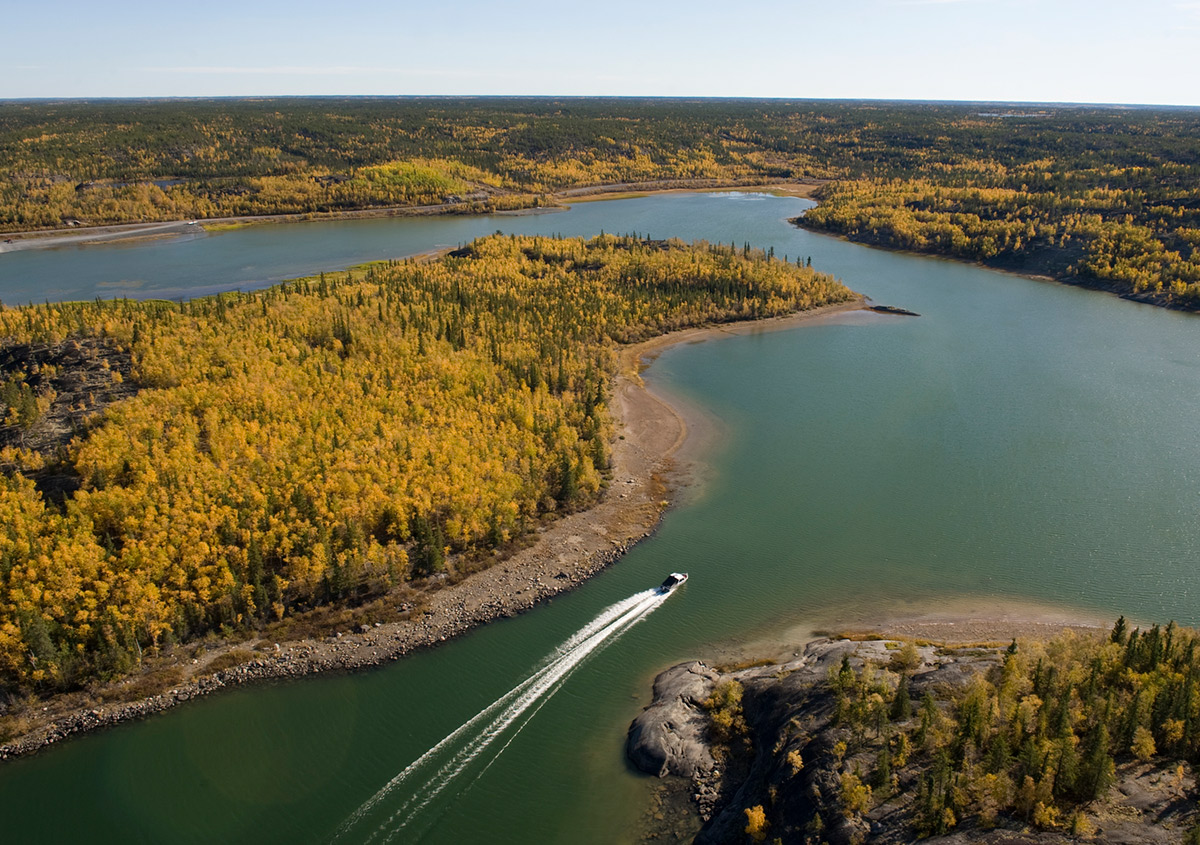
Feature
Fall 2025
Community data improves freshwater health by making water quality information accessible.
Integrating technology and collaborative monitoring in the Western Lake Erie Basin By Edward Millar, Katelynn Johnson, Elizabeth Striano & Aaron Fisk High-tech sensors and community science combine to track water quality and algal blooms in the Western Lake Erie Basin. Based at the University of Windsor, the Real-time Aquatic Ecosystem Observation Network (RAEON) supports collaborative freshwater research by providing access to water monitoring instruments and infrastructure. The core of RAEON’s mission centers on collaboration: providing a system through which emerging freshwater monitoring technologies are shared to improve research and management. Its suite of Slocum gliders (autonomous underwater vehicles), real-time buoys, and multiparameter sondes collect continuous, high-resolution data on a wide range of parameters, including temperature, oxygen, chlorophyll, phycocyanin, nitrate, and pH. This information improves understanding of the timing and severity of harmful algae blooms, changing food web dynamics, and the effects of increasing temperatures on lake health. Although these instruments serve as vital tools for tracking lake health, they do not always capture local and nearshore data. This missing information is crucial for connecting the scientific picture to public perceptions of how the lakes and waters are changing. That’s where community science comes in. From a glider navigating Lake Erie to a student doing monthly testing at a local creek, every observation adds to our shared understanding of the health of the Great Lakes.With support from the Canada Water Agency, RAEON is integrating participatory science into its monitoring network by engaging volunteers, schools, and community organizations. Through this initiative, the network is engaging community members in data collection to expand monitoring while helping people learn about their local waters and shape how they are managed. The program provides opportunities to participate in monitoring baseline parameters like temperature, pH, conductivity, dissolved oxygen, and other water quality indicators in streams, rivers, and shorelines throughout the Western Lake Erie Basin. By sampling at regular intervals, volunteers track seasonal trends and help identify local stressors. The data complement RAEON’s high-tech sensor arrays, creating a more complete picture of watershed health. They also support university researchers modeling the flow of nutrients through the ecosystem and into the Great Lakes. The program also helps connect volunteers with community science initiatives to build on work by established organizations and strengthen their presence in the Western Lake Erie basin. The team collaborates with Water Rangers, a Canadian nonprofit that provides simple water quality test kits and an open platform for sharing results. Data are also uploaded to DataStream, an open access platform developed by the Gordon Foundation that standardizes and shares water quality data from across Canada (see story, page 20). The program is integrated within the Lake Erie Volunteer Science Network, coordinated by the Cleveland Water Alliance, which links dozens of organizations conducting community-based monitoring across the basin. These partnerships ensure community-based data are accessible and useful not only to researchers, but also to the public, civil society groups, government agencies, and other users.Outreach activities are not just about raising the public’s awareness of water quality issues, but also raising scientists’ awareness of the public’s concerns, and providing forums for researchers to listen and learn about what water issues resonate most.Beyond data collection, RAEON’s participatory science efforts are also focused on public outreach and engagement. This work includes setting up information booths at community festivals and environmental events, making public demonstrations of monitoring tools and platforms, giving public talks, talking with residents about local water issues, and bringing hands-on freshwater science into classrooms. These outreach activities are not just about raising the public’s awareness of water quality issues, but also raising scientists’ awareness of the public’s concerns, and providing forums for researchers to listen and learn about what water issues resonate most.RAEON is also conducting qualitative survey research to explore how community members prioritize different aspects of water monitoring, and how these priorities align or differ from those of scientists engaged in community-based research. The results of this work will help guide the next phase of RAEON’s participatory science program, ensuring that monitoring efforts reflect both scientific and community interests. By aligning these perspectives, the network hopes to strengthen mutual trust and make freshwater science more responsive to the people it serves.The program aims to expand its reach and scope over the next three years by working with new partners to identify and fill data gaps to better understand the links between offshore, nearshore, and tributary monitoring. From a glider navigating Lake Erie to a student doing monthly testing at a local creek, every observation adds to our shared understanding of the health of the Great Lakes. High-resolution glider and buoy data reveal the dynamics of algal blooms offshore; community-based data provide context at the land-water interface, and open platforms like those created by DataStream and Water Rangers make those datasets visible and interoperable. Researchers gain new data and local insights, communities gain tools and confidence to understand their environment, and the lakes themselves gain a growing network of people invested in monitoring and stewardship. Established in 2018 and led by Science Director Aaron Fisk and Research and Operations Director Katelynn Johnson, the RAEON network links universities, municipalities, and government institutions to share equipment, expertise, data, and logistical capacity to accelerate Great Lakes research. In 2023, RAEON joined Global Water Futures Observatories (GWFO), a national network led by the University of Saskatchewan that operates 64 instrumented research sites across Canada. RAEON serves as GWFO’s Great Lakes node, providing real-time monitoring and open access environmental data of changing ecosystems within a national network. The team works collaboratively with partners, such as the Great Lakes Observing System, to ensure that high-resolution buoy and glider data are publicly accessible and supports binational research, forecasting, and management efforts across the Great Lakes.
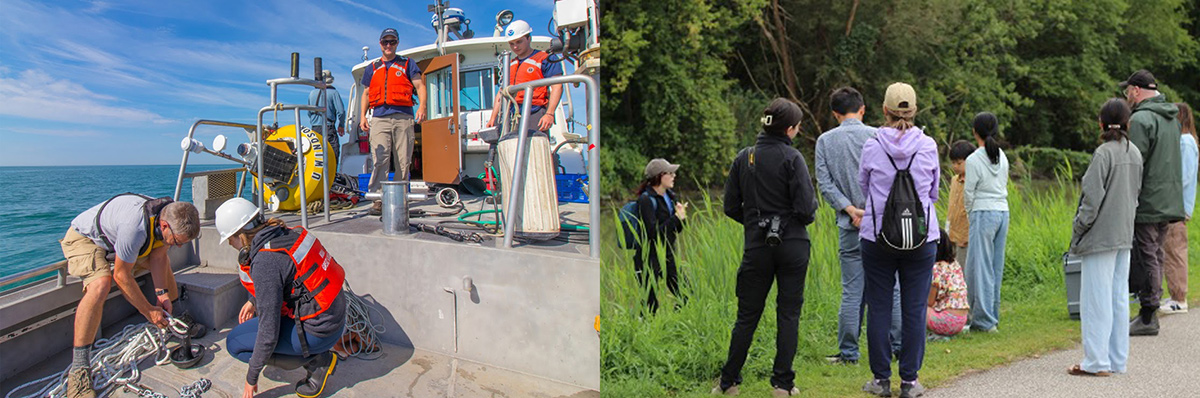
Feature
Fall 2025
High-tech sensors and community science combine to track water quality and algal blooms in the Western Lake Erie Basin.
Sensing the future: Building a field-based PFAS detection tool in the Great Lakes region By Vernon LaLone Wave Lumina develops a portable field device to rapidly detect parts-per-trillion PFAS levels in the Great Lakes region. Per- and polyfluoroalkyl substances (PFAS) have become the poster children for the challenges of modern water pollution: persistent, invisible, and costly to track. For the past two years, we’ve been working to solve one of the biggest barriers in PFAS management: the time and cost required to measure them in the field.From our lab in Traverse City, Michigan, Wave Lumina is developing a portable field screening technology that uses laser light and artificial intelligence (AI) to rapidly detect PFAS at the parts-per-trillion levels, no large lab or lengthy turnaround required. Our goal is to enable environmental engineers, water utilities, and PFAS-impacted site managers to make data-driven decisions on-site, in real time.A new approach to an old problemTraditional PFAS analysis requires samples to be shipped off-site to specialized laboratories for liquid chromatography–mass spectrometry (LC-MS/MS) analysis, often taking weeks and costing several hundred (sometimes over a thousand) dollars per sample. Our approach leverages Raman spectroscopy enhanced with nanotechnology, specifically, surface-enhanced Raman scattering (SERS), to detect the unique molecular “fingerprints” of PFAS compounds.Paired with proprietary sample preparation chemistry and machine-learning algorithms, the technology translates these complex optical signals into clear quantitative results within minutes. Think of it as the field-ready cousin of a laboratory mass spectrometer that is smaller, faster, and deployable at contaminated sites.Celebrating science and discoveryAs a scientist-turned-founder, I believe innovation thrives when we connect fundamental discovery with practical tools that serve society. Wave Lumina’s work is part of that continuum, bridging advanced spectroscopy and AI with hands-on environmental protection. The company was founded on the idea that translating rigorous research into accessible field technology can multiply the reach and impact of science.That philosophy has been validated through national support: Wave Lumina is backed by the National Science Foundation’s Small Business Innovation Research program and the Activate Fellowship, a nonprofit that empowers scientists and engineers to turn research breakthroughs into scalable solutions. These programs invest in teams who are tackling some of the most pressing challenges of our time, such as environmental contamination, public health, and climate resilience. And they have allowed us to pursue PFAS detection not just as a technical milestone, but as a public mission.Science isn’t just about data; it’s about empowerment. Every test run by a field engineer, every dataset shared by a researcher, every student learning to apply spectroscopy to water quality, all of it contributes to our collective capacity to safeguard freshwater ecosystems. In a time when environmental challenges can feel overwhelming, stories of scientific progress remind us why this work matters and how it can tangibly improve lives.Innovation thrives when we connect fundamental discovery with practical tools that serve society.Innovation rooted in the Great LakesWave Lumina’s story is inseparable from the Great Lakes community that surrounds it. Our partnership with Northwestern Michigan College and the Freshwater Research and Innovation Center has provided access to chemistry and photonics lab space, enabling us to design and test prototypes just blocks from Lake Michigan’s Grand Traverse Bay. Collaborations with regional engineering firms, environmental consultants, and municipal water utilities allow us to validate our technology on real-world groundwater and PFAS-impacted samples across Michigan.Growing up in northern Michigan, I’ve seen firsthand how intertwined our livelihoods are with clean water. It’s not just an environmental issue; it’s an economic and cultural one. Developing advanced water-testing technology here is convenient, but it’s also symbolic of the Great Lakes leading the way in freshwater innovation.From lab bench to field kitToday, Wave Lumina’s third-generation prototype integrates optical hardware, advanced chemometric analytics, and a compact reagent kit into a system that fits in a single field case. We are testing the device on samples provided by field partners from remediation sites to evaluate its performance alongside standard laboratory results. Early data show promising measurements at trace-level PFAS concentrations, with results produced in under 10 minutes.We see this as a complementary tool to laboratory methods, not a replacement. By providing immediate screening data, our device helps identify which sites and samples need confirmatory testing, thereby saving both time and money and accelerating cleanup decisions.The next wave of collaborationAs the environmental challenges facing large lakes grow more complex, so too must our tools. Wave Lumina’s mission is to ensure that the next generation of water scientists and engineers (especially those here in the Great Lakes) have access to technology that keeps pace with the problems they’re solving.In 2026, we plan to expand our pilot network across the Great Lakes basin and are seeking collaborators interested in integrating rapid PFAS field testing into ongoing monitoring or remediation projects. We believe these early adopters, including scientists, consultants, and utilities, will help shape a new model for environmental testing that’s faster, more accessible, and more responsive to the needs of the field. If you’re interested in collaborating in our pilot network next year, please contact us.
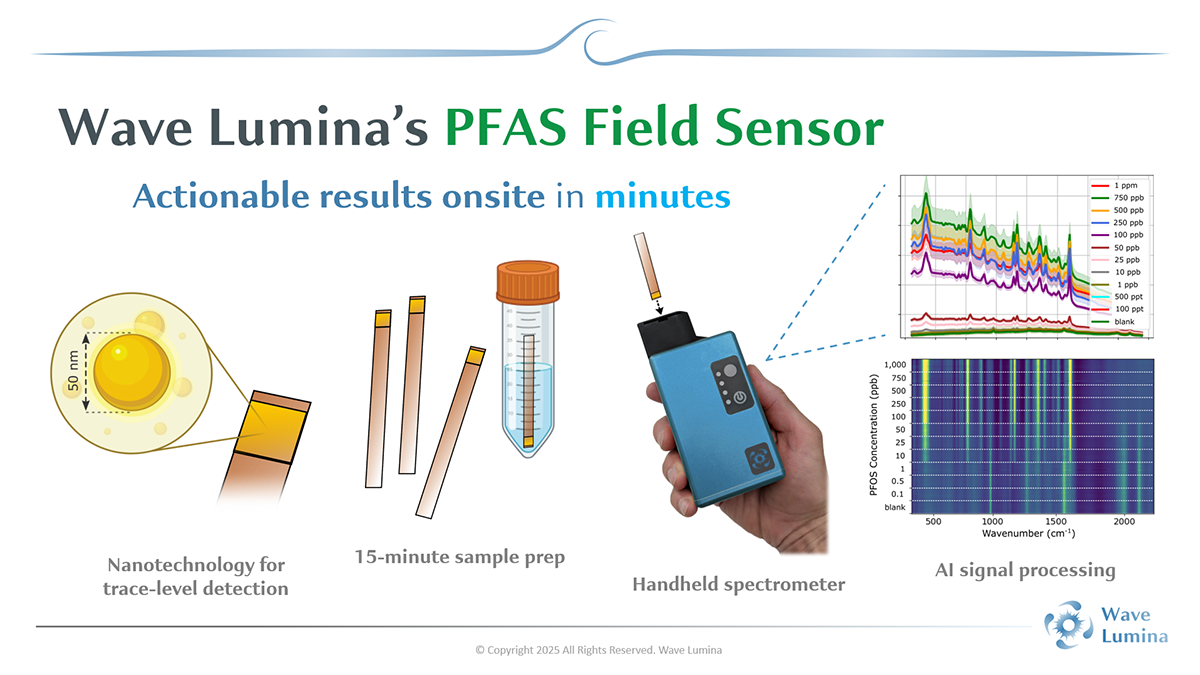
Feature
Fall 2025
Wave Lumina develops a portable field device to rapidly detect parts-per-trillion PFAS levels in the Great Lakes region.
Sharing Your Stories: Highlights from IAGLR’s survey on impacts of U.S. federal actions on Great Lakes science By Paula McIntyre IAGLR shares key findings from a survey documenting the personal and professional impacts of U.S. federal actions on the Great Lakes science community, including job losses, funding cuts, and emotional toll.

Feature
Summer 2025
IAGLR shares key findings from a survey documenting the personal and professional impacts of U.S. federal actions on the Great Lakes science community, including job losses, funding cuts, and emotional toll.
Sea lamprey control field season underway after delayed start Despite federal hiring freezes and staff losses, the Sea Lamprey Control Program successfully began its 2025 field season, treating tributaries to suppress invasive populations by 90%. Control agents applying secondary treatments by boat, targeting tributaries and backwater areas that the main stem treatment does not reach. Photos by Zak Allan, Great Lakes Fishery Commission.The Sea Lamprey Control Program in the United States comprises approximately 85 full-time and 25 seasonal employees. The program was disrupted earlier this year due to the loss of U.S. Fish and Wildlife Service staff and a federal hiring freeze. This initially impacted the USFWS’s ability to begin the 2025 field season as planned. Fortunately, elected officials throughout the basin worked hard to ensure that the critical work of controlling invasive sea lamprey populations was safeguarded.As outlined in a recent study (Marcy-Quay et al., 2025), delays in lampricide applications can yield serious consequences for the Great Lakes. Sea lampreys are most vulnerable in their larval stage, where they are concentrated in stream sediments. Without a fully staffed control program, their populations could rebound and threaten both the fishery and the regional economy.Although the Sea Lamprey Control Program had a late start in preparing for the field season, the program successfully began at the end of April. Currently, control agents are in the midst of a busy field season with plans to treat approximately 120 Great Lakes tributaries. Despite earlier challenges, the long-standing partnership between the Great Lakes Fishery Commission, USFWS, Fisheries and Oceans Canada, and the U.S. Army Corps of Engineers remains strong. The integrated control program, focused on lampricide treatments and physical barriers, continues to suppress sea lamprey populations by about 90% in most areas of the Great Lakes.Background photo: Control agents applying secondary treatments by boat, targeting tributaries and backwater areas that the main stem treatment does not reach.Sampling lampricide concentrationsControl agents setting up automatic water samplers programmed to collect river samples every hour during lampricide treatment. The samples are analyzed to measure lampricide concentrations, which inform managers of the treatment efficacy.Feed checksControl agents perform “feed checks,” which is the act of measuring the amount of lampricide applied during treatment.Sea lamprey larval assessmentA control agent uses a backpack electrofishing unit to sample the streambed for larval sea lamprey, pictured at left.Lampricide applicationsA lampricide application from a state-of-the-art spray boat, used to apply granular lampricide to lentic areas where a typical treatment setup is not feasible.Photos by Zak Allan, Great Lakes Fishery Commission.
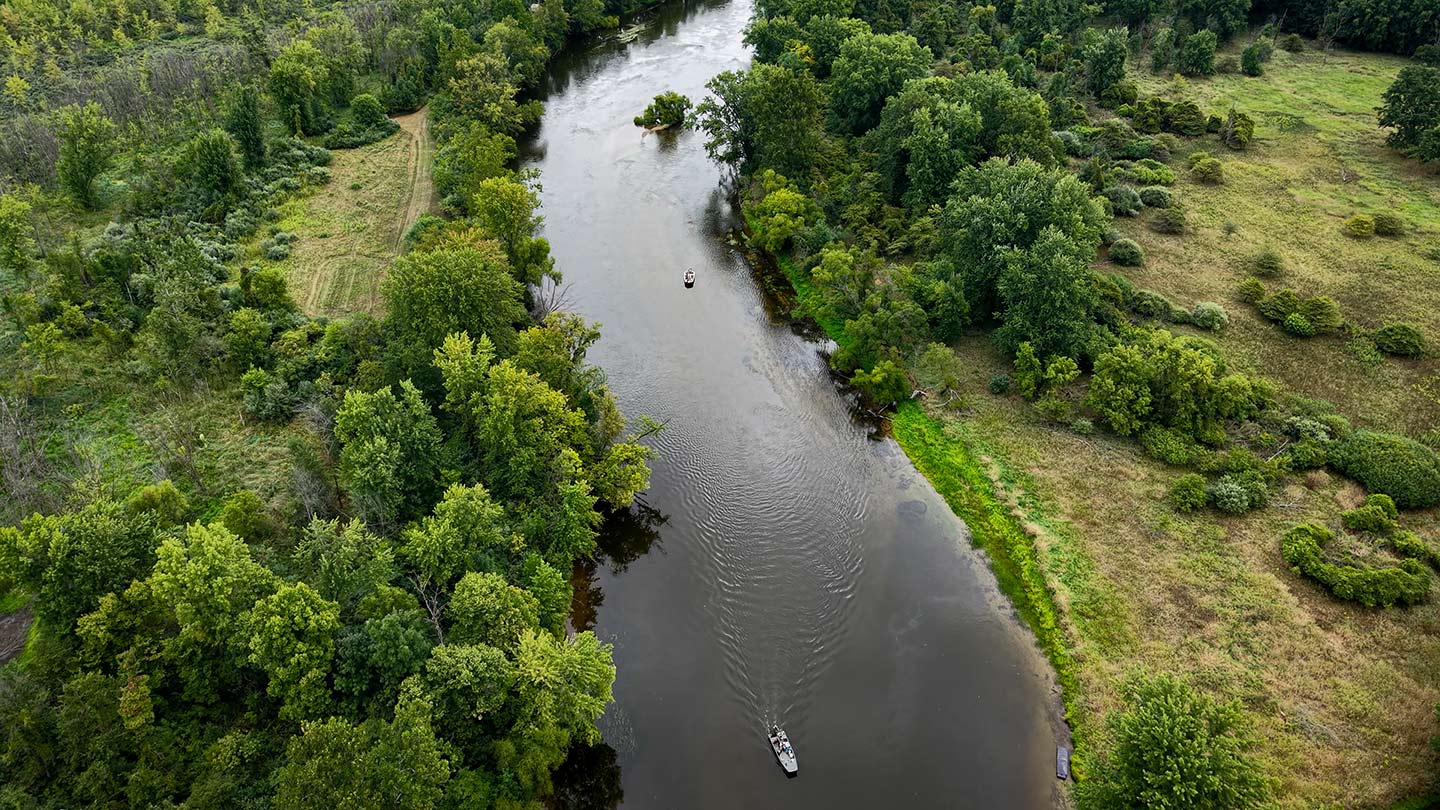
Feature
Summer 2025
Despite federal hiring freezes and staff losses, the Sea Lamprey Control Program successfully began its 2025 field season, treating tributaries to suppress invasive populations by 90%.
Impacts to Great Lakes science, service, and stewardship By Deborah Lee Former NOAA GLERL Director Deborah Lee details the devastating impacts of federal staff reductions and funding cuts on the Great Lakes Environmental Research Laboratory and its mission. Aerial view of GLERL headquarters in Ann Arbor, Michigan.On February 26, 2025, I celebrated my retirement from 40 years of federal civil service, with the last 10 years as the director of NOAA's Great Lakes Environmental Research Laboratory (GLERL). What should have been a happy event was instead sorrowful and bitter; late in the prior week, I’d received a list of “probationary” employees who had been identified to be fired; ostensibly to meet goals of downsizing the federal workforce. I was not informed as to who made the selection decision, nor was I given the opportunity to weigh in. The date of the dismissals was unknown, and I tried to prepare my staff for the uncertain future. To their credit, the staff continued to prepare for my send off and made a memorable event. The following day, February 27, eight staff received dismissal emails from NOAA headquarters at 4 p.m., with one hour to vacate the facility.An all-time federal staffing lowOf the eight “probationary” employees, all but one were mid-career, and all but one had worked for NOAA either as a federal employee, cooperative institute employee, or contractor. Seven were female, and one was a U.S. Air Force veteran, another a former editor of the Pentagon’s Stars and Stripes, and another was a former Peace Corps volunteer. One person had moved quite a distance at their own expense and given up a well-paying academic position. Ironically, all of them had essentially received promotions—putting them in probationary status despite records of high performance and prior service. Hope glimmered when they were reinstated and placed on administrative leave following lawsuits, but ultimately the courts did not find in their favor, and they were again dismissed from service, adding insult to injury.Earlier, two employees also accepted the Deferred Resignation Program, aka “The Fork” and departed at the end of the month, for a loss of 10 employees. A third wave of departures followed when Voluntary Early Retirement Authority and Voluntary Separation Incentives Program were offered. Another six employees departed by the end of April.The vacant director’s position and three vacant positions that were in the process of being advertised, but cancelled, brought the total to 20 positions. Another employee voluntarily resigned for a position outside the federal workforce, bringing the total to 21 vacant positions out of an authorized 52 federal employees—or a 40% reduction in force—within a two-month time period. The laboratory was now at an all-time low of federal staff since it was established in 1974, with 31 employees. Remaining federal staff, contractors, and cooperative institute employees tried to pick up the workload to keep NOAA’s mission in the Great Lakes moving forward, most critically, toxic harmful algal bloom monitoring and prediction, but there were significant gaps in skill sets and no time for hand-offs or training on job responsibilities.Soon after, impacts to GLERL’s cooperative institute staff and contractors began to occur when new rules requiring Department of Commerce and Department of Government Efficiency approval were put in place, slowing or eliminating awards. One contractor retired, two others were temporarily laid off, and five boat captain positions remained unfilled. No captain would accept a position given the uncertain future of NOAA and the laboratory, despite a contract fully funded in the prior fiscal year. The cooperative institute, running on the fumes of FY24 grants, and the prospect of FY25 Inflation Reduction Act rescissions, began two rounds of layoffs in June, prior to delayed Great Lakes Restoration Initiative (GLRI) grants being approved mid-June. As of the end of June, the cooperative institute has laid off two employees.Other impactsFurther compounding the ability of the lab to conduct its mission, travel to conferences and meetings were restricted, including prior commitments to the International Association of Great Lakes Research’s annual conference and regional inter-agency meetings. Procurement cards and spending limits were greatly reduced, impacting the ability to procure science and vessel supplies and equipment.Funding uncertainty continuesAs of late June, the delayed NOAA FY25 spend plan and reorganization plan continued to create uncertainty regarding the future of the laboratory. Although the laboratory was receiving its monthly base funding allocation under the Congressionally approved Continuing Resolution, management was instructed to prepare for a 5-30% funding reduction late in the fiscal year, essentially preventing expenditures except for the most basic labor and facility costs.In early July, the NOAA FY26 Congressional Budget Submission was released, aligned with the Office of Management and Budget NOAA passback, proposing elimination of all NOAA Oceanic and Atmospheric Research (OAR) laboratories. In mid-July, the Commerce-Justice-Science Senate and House appropriations committees began to mark up NOAA’s FY26 funding bills. The Senate bill rejects eliminating NOAA Research citing, “While the Committee could be open to realigning some programs to enhance operational outcomes, the absence of detailed plans hinders informed decision making. Consequently, the Committee maintains funding for OAR programs under their existing structure.”Scientific discovery at riskThe specific impacts of such a large and fast reduction in force are still unfolding. These actions resulted in the lack of resources to deploy the two Environmental Sample Processors that report Harmful Algal Bloom (HAB) toxicity monitoring in western Lake Erie. The lab is struggling to operate the vessel-based HAB monitoring program in Lake Erie, Saginaw Bay, and Green Bay, as well as communicate the results to the public. The federal employees who performed the work are gone, and the cooperative institute employees are at risk due to funding cuts, with the potential for ending the HAB program. Meanwhile the HAB problem continues unabated; this year the HAB toxin was detected on April 28—the earliest the toxin has been detected.The laboratory’s Climate Ecosystem Fisheries Initiative (CEFI) has also ground to a very slow crawl. CEFI, a NOAA-wide initiative, is to develop the next generation of oceans and fisheries models to help predict their productivity and aid in fishery management decisions. Funded by the Inflation Reduction Act, freezing of the funding and potential rescission has essentially stalled development. The retirements of the lab’s two food web federal scientists have left one scientist and one federal technician to move the project forward. Eagerly awaited by the Great Lakes Fishery Commission, CEFI will be delayed or possibly ended.With the loss of the entire communications team who were responsible for assisting scientists with scientific publications, media response, and educational outreach, there has been a slowdown in getting science results out to those who make Great Lakes management decisions and to the general public.A grant that was intended to facilitate the research lab working collaboratively with federally recognized Tribal Nations fell early victim to funding decisions. The highly successful and competitive Summer Fellows Program may also be at risk in future years, reducing training opportunities for the next generation of U.S. scientists.The development of GLERL’s next-generation Great Lakes Coastal Forecast System is also at risk if FY26 Bipartisan Infrastructure Law funds are rescinded. The next generation would predict compound river and lake flooding, leading to better flood inundation forecasts, warnings, and mapping. The system also predicts ice cover development and movement and is crucial for accurately mapping oil spill transport in icy conditions. Work has been progressing on Lake Ontario, but has not yet been extended to Lake Erie, Lakes Michigan-Huron, or Lake Superior. One of the federal technicians who processed the model input data, managed the satellite data feeds, and ensured the models ran daily in experimental mode is no longer at the laboratory.The loss of the GLERL director as the NOAA GLRI program manager, the former federal GLRI program coordinator, and the budget officer, has pushed these roles onto already burdened staff to manage and execute the $10-$30 million of projects annually. Given the high bipartisan support and continuing priority of the initiative, it is unfortunate that, as one of the top three federal agencies executing the program, GLERL has been so heavily impacted. Unjustly, the GLRI program coordinator who managed the GLRI program since 2010, and oversaw $330 million of successful projects, was fired as a probationary employee after receiving a promotion.Overall, the staffing reductions and budget cuts restrict GLERL’s ability for new scientific discovery. If staffing and funding restrictions continue, scientific progress will be limited for the foreseeable future.Beyond the laboratoryGLERL is not just a research laboratory—it unofficially serves as NOAA’s Great Lakes Regional Center. The director serves as the Great Lakes regional team leader, coordinating NOAA’s missions across its line offices for efficient delivery of services. The Ann Arbor GLERL facility houses other NOAA staff including the Office of Habitat Conservation, Office of Response and Restoration, Office of National Marine Sanctuaries, Office of Law Enforcement, and the National Geodetic Survey. The facility also houses other NOAA-funded partners such as the Great Lakes Observing System, Sea Grant, the Cooperative Institute for Great Lakes Research, and other collaborating agencies’ staff from the U.S. Coast Guard and the International Joint Commission. Eliminating GLERL would have cascading relocation and facility costs and destroy the synergy and efficiencies of co-location.Impacts are and will extend beyond the laboratory itself, including other federal U.S. and Canadian agencies, the International Joint Commission, the Great Lakes Commission, and the Great Lakes Fishery Commission. Cuts to other federal agencies and state programs, such as H2Ohio, will amplify impacts on preserving and restoring the Great Lakes. It remains to be seen what FY26 will hold for the laboratory; Congressional appropriations will be the final determinant.
Feature
Summer 2025
Former NOAA GLERL Director Deborah Lee details the devastating impacts of federal staff reductions and funding cuts on the Great Lakes Environmental Research Laboratory and its mission.
Funding cuts threaten early career researchers By Abby Hutson Early career researcher Abby Hutson describes how federal funding cuts and policy shifts are hindering career progression, collaboration, and the future of Great Lakes research. Abby Hutson uses atmospheric modeling to study Great Lakes weather and improve precipitation simulations, helping to predict impacts on lake levels, ice cover, flooding, and harmful algal blooms. Photo courtesy of the Cooperative Institute for Great Lakes Research.A loved one recently said to me: “Why are you getting so stressed about research funding? You shouldn’t let it affect you this much.” I love my job, and I care deeply about Great Lakes research. The problem is that I am a federally funded early career research scientist at the University of Michigan, specifically the Cooperative Institute for Great Lakes Research. To keep my job, I need to meet specific requirements within the next four years, including securing external funding, publishing peer-reviewed research, and developing collaborative relationships in my field. Unfortunately, my progress toward these requirements is being hindered by the current U.S. administration. As my colleagues and I experience these road blocks, I realize that many people outside of academia may not fully grasp how deeply recent policy shifts are affecting our work. The state of U.S.-based scientific research is being attacked and erased, and it hits us early career researchers hard.The most obvious way federal actions are impacting my professional career is through funding cuts. In my current role within U-M, research grants pay 90% of my salary. I am responsible for finding funding sources, leading project proposals, and applying for competitive external funding to show that I am capable of being an independent researcher. In my field of research, funding is typically sponsored by federal entities like the National Oceanic and Atmospheric Administration, U.S. Environmental Protection Agency, and the Department of Energy, among others, but current administrative actions have turned the once-reliable funding cycle on its head. Some previously funded projects have been handed stop-work orders, while others have had awards impounded. Grant proposals in review, which take months of work by the researchers, are stuck somewhere unknown in the process. To top it off, there currently are no open opportunities due to departments and offices within the government being closed, gutted, or completely reorganized. I’m repeatedly seeing that even late-career, tenured scientists are losing and missing out on grants. If they can’t get funding, how will we early career researchers get our foot in the door?We don’t do this work for money or job security. We do it because we believe in the Great Lakes. Our devotion to the Great Lakes region runs deep. We recognize its importance and beauty. Above all, it’s our home, driving us to protect and preserve it for future generations.Beyond funding, collaboration and professional relationships are another important piece of my career progression. This makes sense—great science thrives in multidisciplinary teams with a broad range of experience. But in the past six months, doing collaborative work has been incredibly difficult. My position at a cooperative institute allows me to work often with federal colleagues, but probationary firings, early retirements, and a significant loss of institutional knowledge have led to a “brain drain” that compromises collaborative efforts. The federal researchers who remain are spread thin, covering projects left behind by former colleagues, leaving little bandwidth to form new collaborations. How can I, even with funding opportunities, form proposals without the co-investigators I need to make them strong and competitive?I’m sure I’m not the only one who has been told, more than once, that: “You’re smart! If you lose your job, you’ll be able to find another one.” When I hear that, I can’t help but feel a sense of dread. If I lose my job due to federal funding cuts, it’s not just me—most researchers in atmospheric science would be facing the same fate. We are not talking about one company performing lay offs; we’re talking about the dismantling of a critical scientific profession that supports national environmental and public health efforts. The academic job market will become oversaturated, and the number of positions for academic researchers in the U.S. will shrink, leaving few opportunities for new talent. I would feel hopeless about finding other jobs anywhere in the country, let alone in the place I’ve made my home.Again, I love my job. Despite all of these setbacks, I am putting my head down and continuing to do Great Lakes research. Not only because federally funded research makes the Great Lakes safer by improving forecasting and environmental monitoring, stronger by advancing policy recommendations, and more profitable by ensuring sustainable industries like fisheries, tourism, and agriculture. We don’t do this work for money or job security. We do it because we believe in the Great Lakes. Our devotion to the Great Lakes region runs deep. We recognize its importance and beauty. Above all, it’s our home, driving us to protect and preserve it for future generations.
Feature
Summer 2025
Early career researcher Abby Hutson describes how federal funding cuts and policy shifts are hindering career progression, collaboration, and the future of Great Lakes research.
SP2ARKs Still Fly: A story of aquatic connections, hope, and voice By Molly Wick, Julia Obuya & Anna Hill Despite the cancellation of the NSF-funded SP2ARK Fellowship, the three IAGLR fellows reflect on the program's impact and their commitment to continuing science communication and advocacy.
Feature
Summer 2025
Despite the cancellation of the NSF-funded SP2ARK Fellowship, the three IAGLR fellows reflect on the program's impact and their commitment to continuing science communication and advocacy.
Great Lakes scientists unite: Warn of crucial need for federal investment in research By Gregory Dick, Mary Ogdahl & Bopaiah Biddanda Leading scientists publish a commentary in JGLR warning that reduced federal investment in Great Lakes research will have devastating impacts on public health, safety, and the economy.
Feature
Summer 2025
Leading scientists publish a commentary in JGLR warning that reduced federal investment in Great Lakes research will have devastating impacts on public health, safety, and the economy.
A plan to strengthen Great Lakes science By Tori Agnew-Camiener, Megan McLaughlin & Ian Stone The IJC Science Advisory Board is developing a Great Lakes Science Plan for the Next Generation, emphasizing Indigenous knowledge equity, workforce development, and collaborative governance.
Feature
Summer 2025
The IJC Science Advisory Board is developing a Great Lakes Science Plan for the Next Generation, emphasizing Indigenous knowledge equity, workforce development, and collaborative governance.
Reimagining research in volatile times By Cameron Davis Cameron Davis applies the concepts of resilience and adaptation to the scientific community, urging researchers to evolve funding models and embed research in practical solutions to survive political headwinds.
Feature
Summer 2025
Cameron Davis applies the concepts of resilience and adaptation to the scientific community, urging researchers to evolve funding models and embed research in practical solutions to survive political headwinds.
A life melding science, art, and a love of the outdoors A review by John Gannon of David Jude’s new book of poetry, “Voices from the Meadow of the Mind of the Wandering Spirit.”
By John Gannon A review of David Jude's poetry book, which blends ecological processes, whimsical views of biota, and philosophical musings, celebrating a life of melding science and art in the Great Lakes.
Book Review
Spring 2025
A review of David Jude's poetry book, which blends ecological processes, whimsical views of biota, and philosophical musings, celebrating a life of melding science and art in the Great Lakes.
Sumeep Bath Sumeep Bath, editorial and communications manager at IISD Experimental Lakes Area, shares his journey from Spanish teacher to science communicator and offers advice on testing messages with diverse audiences.
Member Spotlight
Spring 2025
Sumeep Bath, editorial and communications manager at IISD Experimental Lakes Area, shares his journey from Spanish teacher to science communicator and offers advice on testing messages with diverse audiences.
El Lower El Lower, GLANSIS Communication Specialist, discusses the rhetoric of invasion science, the importance of storytelling in conservation, and their passion for foraging and wild foods.

Member Spotlight
Spring 2025
El Lower, GLANSIS Communication Specialist, discusses the rhetoric of invasion science, the importance of storytelling in conservation, and their passion for foraging and wild foods.
Rethinking risk communication: Understanding audience needs matters By Alex Benitez Gonzalez A study on HAB risk communication in Michigan reveals that emotionally framed messages and understanding audience needs are more effective than purely factual ones for increasing risk perception.
Research Brief
Spring 2025
A study on HAB risk communication in Michigan reveals that emotionally framed messages and understanding audience needs are more effective than purely factual ones for increasing risk perception.
Equitable environmental storytelling a potent tool to fight environmental injustice By Hira Ahmad Research highlights the importance of community-driven storytelling models to fight environmental injustice, moving away from extractive media practices toward equitable, collaborative narratives.
Research Brief
Spring 2025
Research highlights the importance of community-driven storytelling models to fight environmental injustice, moving away from extractive media practices toward equitable, collaborative narratives.
Forging a new era of Great Lakes protection: An urgent call to communicate your science to policy makers and the public By David Dempsey David Dempsey urges scientists to overcome communication barriers and actively engage with policy makers and the public to protect Great Lakes science from political headwinds.
Feature
Spring 2025
David Dempsey urges scientists to overcome communication barriers and actively engage with policy makers and the public to protect Great Lakes science from political headwinds.
Science and local journalism: Informing better, together By Ellie Katz Ellie Katz highlights the role of local journalism in bridging the gap between scientists and the public, using storytelling and audio to make science accessible and relatable.
Feature
Spring 2025
Ellie Katz highlights the role of local journalism in bridging the gap between scientists and the public, using storytelling and audio to make science accessible and relatable.
Science communication through comedy By Anna Boegehold Anna Boegehold shares how improv comedy training has helped her overcome public speaking anxiety and improve her science communication skills by embracing failure and storytelling.
Feature
Spring 2025
Anna Boegehold shares how improv comedy training has helped her overcome public speaking anxiety and improve her science communication skills by embracing failure and storytelling.
The power of authenticity in science communication By Tamara Poles Tamara Poles argues that building trust in science communication requires authenticity, vulnerability, and recognizing the audience's expertise, rather than trying to mimic their peers.
Feature
Spring 2025
Tamara Poles argues that building trust in science communication requires authenticity, vulnerability, and recognizing the audience's expertise, rather than trying to mimic their peers.
Start with a plan: Strategic communication in scientific research By Elizabeth Striano Elizabeth Striano emphasizes the need to integrate communications planning into research design from the beginning to ensure impactful and useful products for end users.
Feature
Spring 2025
Elizabeth Striano emphasizes the need to integrate communications planning into research design from the beginning to ensure impactful and useful products for end users.
Becoming a bridge: Strategies to build culturally informed and community-engaged environmental communications By Laura Legzdins with support from Niisaachewan Anishinaabe Nation Seven strategies for cross-cultural communication are presented, focusing on humility, reciprocity, and weaving Indigenous and Western knowledges in the Manomin Project.
Feature
Spring 2025
Seven strategies for cross-cultural communication are presented, focusing on humility, reciprocity, and weaving Indigenous and Western knowledges in the Manomin Project.
Narrating water: Ecocultural storytelling for Great Lakes restoration By Lynne Heasley & Glenn Wolff Lynne Heasley and Glenn Wolff explore the power of ecocultural storytelling to connect people emotionally and spiritually with Great Lakes restoration, moving beyond pure science-telling.
Feature
Spring 2025
Lynne Heasley and Glenn Wolff explore the power of ecocultural storytelling to connect people emotionally and spiritually with Great Lakes restoration, moving beyond pure science-telling.
Sea lampreys and science communication: Protecting fish and fisheries from a Great Lakes menace By Andrea Miehls & Jill Wingfield The Great Lakes Fishery Commission's communication strategy for sea lamprey control is detailed, emphasizing the importance of maintaining social license and public trust through effective engagement.
Feature
Spring 2025
The Great Lakes Fishery Commission's communication strategy for sea lamprey control is detailed, emphasizing the importance of maintaining social license and public trust through effective engagement.
Four key lessons for Great Lakes scientific communication By Mike Shriberg Mike Shriberg outlines four essential lessons for communicating Great Lakes science: focus on impacts, tell stories, show passion, and unify messages to navigate political and environmental challenges.
Feature
Spring 2025
Mike Shriberg outlines four essential lessons for communicating Great Lakes science: focus on impacts, tell stories, show passion, and unify messages to navigate political and environmental challenges.
The art of communication: Notes from a long-time environmental journalist By Tom Henry Veteran journalist Tom Henry shares insights on the importance of storytelling, human impact, and trust in communicating Great Lakes science to the public and policymakers.
Feature
Spring 2025
Veteran journalist Tom Henry shares insights on the importance of storytelling, human impact, and trust in communicating Great Lakes science to the public and policymakers.
Talking about science: The importance of your origin story By Sandra Svoboda Sandra Svoboda advises scientists on crafting and sharing their origin stories to connect with audiences, build credibility, and make their work relatable to the public and media.
Feature
Spring 2025
Sandra Svoboda advises scientists on crafting and sharing their origin stories to connect with audiences, build credibility, and make their work relatable to the public and media.
Molly Wick
Member Spotlight
Winter 2025
An EPA postdoctoral fellow, Molly Wick studies cultural ecosystem services along Great Lakes.
Julia Obuya
Member Spotlight
Winter 2025
A Ph.D. candidate at Bowling Green State University, Julia Obuya uses molecular techniques to study harmful algal blooms, translating complex data into actionable strategies for communities in Africa and North America.
Anna Hill
Member Spotlight
Winter 2025
A Purdue master's student studying alewife in Lake Michigan, Anna Hill bridges the gap between scientific research and community stakeholders to make fish ecology findings accessible to anglers and the public.
Bringing back Arctic grayling (Nmégos) to Michigan
Research Brief
Winter 2025
A coalition of partners is reintroducing Arctic grayling to Michigan streams using streamside incubators to ensure imprinting, reconnecting Anishinaabe people with their cultural heritage.
Lake trout restored in Lake Superior
Research Brief
Winter 2025
After nearly 70 years of effort, native lake trout populations have been fully restored in Lake Superior, marking a major conservation triumph through sea lamprey control and stocking.
Refugia of hope: Life in submerged karst sinkholes
Research Brief
Winter 2025
Submerged sinkholes in the Great Lakes harbor unique, biodiverse microbial mats that offer insights into early Earth life and potential pharmaceutical compounds, representing hidden refugia of hope.
Volunteering for the love of suckers
Research Brief
Winter 2025
A citizen science program engages volunteers to document sucker fish migration, revealing temperature as the primary trigger and demonstrating the power of public engagement in fish conservation.
Hope through Indigenous leadership
Research Brief
Winter 2025
A Keweenaw Bay Indian Community climate study shows that despite challenges, climate impacts are strengthening cultural knowledge transmission and community bonds, offering a path forward for Indigenous-led research.
Choosing hope By Paula McIntyre A piece reflecting on the theme of hope in the face of scientific challenges, emphasizing the role of storytelling and collaboration in sustaining the Great Lakes research community. How can one write about hope at a time like this? The theme for this issue— Science & Hope—germinated several months ago, but now it seems almost insensitive—naive at best. As I write these words, I have one screen open to a story about the successful restoration of lake trout in Lake Superior, and another with news about the dismissal of federal employees who implement the sea lamprey control that makes this restoration possible. Collaboration is the beating heart of IAGLR and large lake science worldwide. Yet news stories tell of U.S. scientists who are no longer allowed to freely communicate with their Canadian collaborators.Does hope have something to offer us now? The benefits of hope on mental and physical health are well-documented. With hope, people better tolerate pain, adhere to medical treatments, and recover from illness. A recent global study suggests that people need hope from their leaders much more than trust, compassion, or stability. Other studies show that nonscientists overwhelmingly associate science with hope (see page 21 of this issue). This indicates that scientists can play a significant role in inspiring hope, especially in difficult times.Elin Kelsey argues that the very nature of global environmental challenges requires hope. In Hope Matters, she writes that “the environmental crisis is also a crisis of hope.” She believes that hope is essential to addressing climate change, biodiversity, and other environmental crises. But what is hope? It’s not just wishful thinking or optimism. Researchers highlight several dimensions with a common thread: hope involves envisioning a desired future, acknowledging challenges, and taking action. Kari Grain defines this combination as “critical hope” and says it requires engaging with current difficulties.At the recent American Association for the Advancement of Science annual meeting, CEO Sudip Parikh emphasized that hope must be channeled into strategy and focus. President Willie May went a step further, saying that scientists have a responsibility to envision the future and plan how to achieve it.So, what can be done? Much advice centers on sharing stories about science. Communicate your work and its importance to your community and society. Have a conversation with your elected officials. Some groups encourage scientists to write opinion pieces in local newspapers and participate in rallies like the Stand Up for Science event on March 7, with the mantra that “science is for everyone.” Multiple science institutions, including IAGLR, have issued statements, and their leaders advise scientists to “remain focused on the long game.” This includes continuing to support students and early career researchers in this time of uncertainty.Kelsey encourages us to look for and share proven trends that are providing the desired outcomes. In The Book of Hope, Jane Goodall also calls for sharing stories to fuel hope. She considers hope to be a human survival trait that helps us take action toward our desired future, even in the darkest of times. Her co-author, Douglas Abrams, calls it a social gift.In this spirit, the current issue of Lakes Letter highlights success stories throughout the large lake research community. These include habitat protection, species restoration, and the adoption of new technologies—all made possible by collaboration with diverse individuals and talents, even oil-sniffing dogs! We hope these stories guide us toward critical hope, providing examples of how we can move toward the future we envision.
Perspective
Winter 2025
A piece reflecting on the theme of hope in the face of scientific challenges, emphasizing the role of storytelling and collaboration in sustaining the Great Lakes research community.
The future of Great Lakes research: Developing a collaborative science plan
Feature
Winter 2025
The IJC Science Advisory Board is developing a decadal science strategy to address aging infrastructure, workforce shortages, and emerging threats through a collaborative, basin-wide plan.
Sniffing for oil under ice: Dogs could aid in winter oil spill response
Feature
Winter 2025
A groundbreaking experiment at IISD Experimental Lakes Area shows that trained detection dogs can locate oil spills under ice with 100% accuracy, offering a rapid and cost-effective solution for winter response.
Lake Erie and Aquatic Research Network
Feature
Winter 2025
The LEARN program demonstrates how meaningful collaboration between researchers and management professionals in Ohio fosters trust, adaptive monitoring, and hope for freshwater futures.
Science elicits hope, joy depending on the audience
Feature
Winter 2025
Research shows that while the public associates science with hope, scientists associate it with joy. Understanding these differing emotional lenses is crucial for effective science communication and engagement.
Biodiversity after a Phragmites invasion
Feature
Winter 2025
Long-term monitoring of wetlands in Ontario reveals that while secondary invasions occur after Phragmites control, native plant communities eventually recover, highlighting the importance of sustained monitoring and collaboration.
Reintroducing species: A tool to stem the loss of freshwater biodiversity
Feature
Winter 2025
Research from the Freshwater Restoration Ecology Centre explores how soft-release strategies can mitigate transport stress and improve survival rates for reintroduced lake sturgeon in the Great Lakes.
Academic publishing at a crossroads: Optimistic about the JGLR's future
Feature
Winter 2025
New lead editor Margaret Docker discusses the future of the Journal of Great Lakes Research, emphasizing community, peer review integrity, and the value of society journals amidst changing publishing landscapes.
Chris Vandergoot
In Memoriam
Fall 2024
A tribute to Chris Vandergoot (1976–2024), the director of GLATOS, whose innovative work in acoustic telemetry has transformed fisheries management and left a lasting impact on the Great Lakes community.
Huifang Bi
Member Spotlight
Fall 2024
Huifang Bi is developing green, biomass-derived coatings to prevent oil adhesion on shorelines and enhance biodegradation, aiming to revolutionize oil spill response in freshwater environments.
Can freshwater microbes help clean up oil contamination in the Great Lakes?
Research Brief
Fall 2024
Research at the University of Windsor is investigating the potential of natural freshwater microbial communities to degrade hydrocarbons and clean up oil contamination in the Great Lakes.
A look back: A chronology of oil spills in the Great Lakes basin
Feature
Fall 2024
A historical chronology of major oil spills in the Great Lakes basin, from the 1948 Detroit River incident to the 2010 Kalamazoo River spill, illustrating the evolution of spill science and response.
The impact of regulation on oil spill response
Feature
Fall 2024
A perspective on how regulatory frameworks like the Oil Pollution Act of 1990 have shaped oil spill response, highlighting the challenges of workforce retention and the need for advanced training.
Oil spill risks & response capabilities: An overview of the Great Lakes region
Feature
Fall 2024
A RAND report assessing oil spill risks and response capabilities in the Great Lakes, identifying gaps in preparedness and the need for enhanced communication and training.
Concordia Oil Spill Research Group responds to oil spills and protects freshwater ecosystems
Feature
Fall 2024
The Concordia Oil Spill Research Group is developing green technologies, such as bio-based coatings, to prevent oil adhesion on shorelines and enhance cleanup efficiency in freshwater environments.
Leading response research: The U.S. Coast Guard Great Lakes Oil Spill Center of Expertise
Feature
Fall 2024
An inside look at the U.S. Coast Guard's Great Lakes Oil Spill Center of Expertise (GLCOE), which leads research and training to improve oil spill response in freshwater and icy environments.
A new focus on an old issue: The International Consortium of Oil Research builds scientific capacity in the Great Lakes to understand oil spills
Feature
Fall 2024
The International Consortium of Oil Research (ICOR) is building scientific capacity to study the biological impacts, fate, and detection of oil spills in the Great Lakes ecosystem.
Oil Spill Modeling: The critical impact of ice cover in the Great Lakes
Feature
Fall 2024
Research highlights the complex interactions between oil and ice in the Great Lakes, emphasizing the need for improved modeling to predict oil movement and weathering under ice cover.
Research networks: Advancing Great Lakes oil spill preparedness, response, and recovery through collaboration
Feature
Fall 2024
An overview of collaborative research networks in the Great Lakes, including the GLCOE and ICOR, working to improve oil spill prediction, detection, and response capabilities.
Satellite Earth observations to monitor lake health
Research Brief
Summer 2024
Capacity-building workshops in East Africa are training the next generation of experts to use satellite remote sensing for monitoring water quality and supporting the blue economy in Lake Victoria.
Satellite images and coastal changes after historic water level increase
Research Brief
Summer 2024
High-resolution satellite imagery reveals significant shoreline retreat and erosion in Lake Michigan following historic water level increases, informing coastal management strategies.
Satellite data for monitoring phytoplankton abundance and phenology in deep lakes
Research Brief
Summer 2024
A study validating satellite data for monitoring phytoplankton in Lake Geneva, demonstrating the potential for long-term phenology analysis in deep lakes.
Plane-mounted hyperspectral cameras help forecast harmful algal blooms
Research Brief
Summer 2024
NOAA GLERL uses plane-mounted hyperspectral cameras to monitor and forecast harmful algal blooms in the Great Lakes, providing critical data for drinking water safety.
Improving safety in the Straits of Mackinac with high-frequency radar
Feature
Summer 2024
High-frequency radar technology provides real-time data on surface currents in the Straits of Mackinac, enhancing maritime safety and environmental monitoring for the region.
A research jiimaan: Adapting to protect manoomin
Feature
Summer 2024
A metaphorical "birch bark canoe" research framework that integrates Indigenous Knowledge and Western science to protect manoomin (wild rice) and build climate resilience in the Great Lakes.
Emerging technologies for remote sensing of the Great Lakes
Feature
Summer 2024
An overview of remote sensing technologies, from satellites to drones, that are transforming the monitoring of harmful algal blooms, ice coverage, and oil spills in the Great Lakes.
Brian Eadie
In Memoriam
Spring 2024
A tribute to Brian Eadie (1944–2024), a respected leader in Great Lakes biogeochemistry and sediment resuspension research who mentored generations of scientists at NOAA GLERL.
Observing surface water currents and plastic pollution transport using GPS-tracked drifters
Research Brief
Spring 2024
GPS-tracked drifters reveal how surface currents and wind transport plastic pollution in Nottawasaga Bay, Georgian Bay, highlighting accumulation zones and fragmentation risks.
The impact of seiche events on phosphorous dynamics in Lake Ontario coastal wetlands
Research Brief
Spring 2024
Seiche events in Lake Ontario can resuspend sediments and release sequestered phosphorus into the water column, impacting nutrient retention in coastal wetlands.
Meteotsunamis in the Great Lakes
Feature
Spring 2024
An overview of meteotsunamis, atmospheric-generated waves that pose hazards to Great Lakes beachgoers and mariners, and the challenges in forecasting these events.
The art of moving water
Feature
Spring 2024
A personal reflection on sailing the Great Lakes, capturing the beauty and power of water movement through photography and stories of the Chicago to Mackinac race.
How might the thermal stratification in Lake Ontario change as the climate warms?
Feature
Spring 2024
Analysis of recent warm winters in Lake Ontario suggests a shift in mixing and stratification patterns, with profound implications for oxygen levels, nutrient cycling, and fish habitats.
Unlocking the secrets behind salt giants in hypersaline lakes
Feature
Spring 2024
Research in the Dead Sea reveals how tiny water motions and double-diffusive instabilities create massive salt deposits, offering insights into ancient geological events and coastal erosion.
Storm surges and seiches
Feature
Spring 2024
A clear distinction between storm surges (driven by wind and pressure) and seiches (oscillatory responses), explaining their different dynamics and impacts on Great Lakes coastal communities.
Ronald A. Hites
In Memoriam
Winter 2024
A tribute to Ronald A. Hites (1938–2024), a pioneering environmental chemist and former IAGLR president who revolutionized the measurement of trace pollutants in the Great Lakes and was known as the "father of environmental mass spectrometry."
Katie Rousseau
Member Spotlight
Winter 2024
Katie Rousseau coordinates the Smart Great Lakes Initiative, advancing technology applications to improve the understanding, conservation, and management of the Great Lakes.
Christine Atuhaire
Member Spotlight
Winter 2024
Christine Atuhaire uses remote sensing and satellite imagery to map and quantify plastic litter in aquatic environments, contributing to environmental policy and mitigation strategies.
Risk, uncertainty, action: Navigating PFAS and other contaminants of emerging concern
Feature
Winter 2024
A guide to understanding the risks of PFAS and other contaminants of emerging concern in the Great Lakes, with a focus on community-specific engagement and effective risk communication strategies.
One Water, One Health: Investigating antimicrobial resistance in Great Lakes
Feature
Winter 2024
An examination of antimicrobial resistance (AMR) in the Great Lakes as a One Health issue, exploring how environmental factors and human activities contribute to the spread of resistant bacteria and genes.
Reframing the process for fish consumption advisories
Feature
Winter 2024
A community-based approach to fish consumption advisories that prioritizes Indigenous knowledge, youth engagement, and relational connections to the land, moving beyond restrictive "don't eat" guidelines.
Advancing molecular technologies and microbial water quality assessment in the Great Lakes Basin
Feature
Winter 2024
The International Joint Commission is advancing a basinwide assessment of microbial water quality using molecular and genomics technologies to track pathogens, HABs, and antimicrobial resistance.
Cyanobacterial blooms in the Winam Gulf of Lake Victoria: Lessons for Western Lake Erie?
Feature
Winter 2024
A comparative study of cyanobacterial blooms in Lake Victoria and Western Lake Erie reveals potential future threats to Lake Erie, including the detection of cylindrospermopsin-producing Raphidiopsis blooms in a warming climate.
Lisa Sonnenburg
Member Spotlight
Fall 2023
Lisa Sonnenburg manages cultural resources for the Lake Superior National Marine Conservation Area, documenting and protecting submerged archaeological landscapes through collaboration with Indigenous communities.
Harris Phiri
Member Spotlight
Fall 2023
Harris Phiri, a retired fisheries director from Zambia, shares his extensive experience in Lake Tanganyika research and his passion for conservation and interacting with the global aquatic science community.
Heather Dettman
Member Spotlight
Fall 2023
Heather Dettman serves as a Senior Science Advisor for Natural Resources Canada, leading research on oil spill science and petroleum products to protect water resources.
Research unearths microplastics and algae nexus in the Great Lakes
Research Brief
Fall 2023
Research reveals that microplastics can trigger the release of substances from cyanobacteria, altering buoyancy and potentially fueling harmful algal blooms, creating a complex nexus between plastics and algae.
Litter to pollution in Great Lakes: Levels and factors
Research Brief
Fall 2023
Stormwater runoff studies show that low-income and commercial areas contribute significantly higher amounts of macro-litter and microplastics to the Great Lakes, highlighting the need for targeted waste management.
Learning from the last decade of microplastics research in the Laurentian Great Lakes
Research Brief
Fall 2023
A synthesis of a decade of microplastics research in the Great Lakes reveals widespread contamination but highlights the need for standardized monitoring methods and risk assessment frameworks.
A ripple effect caused by a science-arts-cultural collaboration: Plastic pollution in the Great Lakes watershed
Feature
Fall 2023
The Synthetic Collective's collaboration between scientists and artists has raised awareness of plastic pollution in the Great Lakes through exhibitions, data visualization, and the discovery of plastiglomerate.
Clean Shores, Great Lakes: Preventing microplastics from entering the African Great Lakes through citizen science cleanups
Feature
Fall 2023
The Clean Shores, Great Lakes project mobilized thousands of volunteers to clean up plastic litter from Tanzanian shorelines, using citizen science to identify hotspots and advocate for policy change.
Developing frameworks for monitoring and assessing the ecological risk of microplastics in the Laurentian Great Lakes
Feature
Fall 2023
The IJC's Great Lakes Science Advisory Board is developing coordinated frameworks for monitoring microplastics and assessing their ecological risks in the Laurentian Great Lakes basin.
Plastic pollution: A full life-cycle issue By Sherri Mason Plastic pollution is a full life-cycle issue, from fossil fuel extraction to end-of-life, with significant impacts on the Great Lakes and human health, requiring systemic solutions beyond just recycling.
Feature
Fall 2023
Plastic pollution is a full life-cycle issue, from fossil fuel extraction to end-of-life, with significant impacts on the Great Lakes and human health, requiring systemic solutions beyond just recycling.
Turning the Tide: A call to collective action
Book Review
Summer 2023
A review of the Global Commission on the Economics of Water's report "Turning the Tide," which outlines a seven-step call to action to revalue water as a global commons and address the global water crisis.
Michael Fraker
In Memoriam
Summer 2023
A tribute to Michael Fraker (1978–2023), a dedicated researcher and mentor in Great Lakes science who passed away in 2023, remembered for his ecological modeling expertise and commitment to student research.
Jordanna Bergman
Member Spotlight
Summer 2023
Jordanna Bergman investigates the ecological connectivity of the Rideau Canal Waterway, studying how anthropogenic barriers affect native and invasive fish movements to support conservation strategies.
Ontario moves backward on land and water protections in the Great Lakes basin
Feature
Summer 2023
Ontario's Bill 23 (More Homes Built Faster Act) dismantles environmental protections and the Greenbelt, threatening watersheds and water quality in the Great Lakes basin despite public opposition.
Sackett v. EPA ruling puts half of U.S. wetlands at risk
Feature
Summer 2023
The Supreme Court's Sackett v. EPA decision removes federal protection from many wetlands, posing a significant threat to Great Lakes water quality, though some states like Michigan and Wisconsin have stronger laws.
A look at Great Lakes Restoration Initiative funding
Feature
Summer 2023
A congressional perspective on the robust year-over-year funding for the Great Lakes Restoration Initiative, highlighting its critical role in science-based restoration and community revitalization.
Canada's strengthened freshwater agenda and historic Great Lakes investment
Feature
Summer 2023
Canada announces a historic C$420 million investment in the Great Lakes and a new Canada Water Agency to strengthen freshwater management, restore Areas of Concern, and modernize the Canada Water Act.
Watershed science and the public trust doctrine
Feature
Summer 2023
Integrating watershed science with the public trust doctrine offers a legal and scientific framework to protect Great Lakes water quality and prevent impairment from upstream activities.
Talking Rivers: Rights and responsibilities
Feature
Summer 2023
The "Rights of Nature" movement is critiqued from an Indigenous perspective, arguing that the St. Lawrence River (Kaniatarowanénhne) is already a relative with agency, requiring responsibility rather than bestowed rights.
The Devil's Element
Book Review
Spring 2023
A review of Dan Egan's "The Devil's Element" examines the paradox of phosphorus as both a life-sustaining nutrient and a pollutant driving eutrophication in the Great Lakes.
Ali Reza Shahvaran
Member Spotlight
Spring 2023
Ali Reza Shahvaran uses remote sensing and satellite imagery to model and monitor algal blooms in western Lake Ontario, informing nutrient management and decision-making.
Emilie DeRochie
Member Spotlight
Spring 2023
Emilie DeRochie coordinates the St. Lawrence River Strategy, fostering inclusive communication and collaboration between Indigenous communities and stakeholders along the river.
Thunderstruck: Using passive acoustics to eavesdrop on sturgeon spawning vocalizations
Research Brief
Spring 2023
Underwater microphones detected low-frequency "thunder" sounds from spawning lake sturgeon in the Detroit River, revealing their spawning timing and sensitivity to ship noise.
What can we hear in freshwater lakes?
Research Brief
Spring 2023
A 15-month acoustic recording in Lake Superior revealed seasonal soundscapes dominated by boat traffic in summer and ice cracking in winter, highlighting the need to monitor noise impacts on sensitive species.
Great Lakes science helps shape green energy revolution: A case study of offshore wind in Lake Erie
Feature
Spring 2023
A four-year pre-construction study in Lake Erie used passive acoustics and fish telemetry to evaluate the environmental impacts of an offshore wind project, setting a model for future energy development.
Listening to Great Lakes fishes
Feature
Spring 2023
Fish in the Great Lakes produce a variety of sounds for communication and reproduction; bioacoustics offers a powerful tool to study their behavior, ecology, and responses to environmental change.
The environmental stressor you never hear about
Feature
Spring 2023
Anthropogenic noise from shipping and boating is an emerging stressor in the Great Lakes, masking fish communication and causing physiological stress, yet remains largely unregulated.
Passive acoustic monitoring of freshwater ecosystems
Feature
Spring 2023
Passive acoustic monitoring offers a non-invasive, continuous method to track freshwater biodiversity and behavior, addressing risks and biases associated with traditional sampling methods.
Kiersten McCutcheon
Member Spotlight
Winter 2023
Kiersten McCutcheon coordinates the Visual Assessment Survey Tool (VAST) for Niagara Coastal, engaging citizen scientists to collect data on changing Great Lakes conditions.
Nick Boucher
Member Spotlight
Winter 2023
Nick Boucher, a Ph.D. student at Michigan State University, focuses on analyzing acoustic telemetry data and assessing arrays to improve fish tracking in the Great Lakes.
Edina Illyes
Member Spotlight
Winter 2023
Edina Illyes studies how historical glaciation and human activity shape fish species distributions in northwestern Ontario, blending landscape processes with contemporary ecology.
Regional fisheries agencies collaborate to improve prey fish assessments through adoption of advanced survey technologies
Research Brief
Winter 2023
USGS and partner agencies are using Saildrones and autonomous underwater vehicles to correct biases in sonar surveys, improving the accuracy of prey fish abundance estimates for Great Lakes fisheries.
Trust-based social networks & collaboration in a post-pandemic world
Research Brief
Winter 2023
A survey of fishery professionals reveals that while virtual engagement maintains existing relationships, in-person interaction remains critical for building trust and new collaborations in the post-pandemic era.
Lake committees & advisory groups in the Laurentian and African Great Lakes
Feature
Winter 2023
A comparison of lake committees in the Laurentian Great Lakes and advisory groups in the African Great Lakes reveals a promising framework for transboundary collaboration and resource sharing.
Research collaborations: The best way to tackle big ecosystem issues
Feature
Winter 2023
The Real-Time Aquatic Ecosystem Observation Network (RAEON) demonstrates how sharing equipment, data, and expertise enables researchers to tackle complex environmental challenges in the Great Lakes.
Bending the curve of species invasion: Does a Great Lakes cooperative effort offer hope for COP15?
Feature
Winter 2023
The binational success of ballast water regulations in the Great Lakes, which reduced invasions by 85%, offers a model for achieving global biodiversity targets under the COP15 framework.
Odawa Ziibi: A river reborn
Feature
Winter 2023
The removal of three dams on the Boardman River restored connectivity and cultural significance, showcasing a successful collaboration between Indigenous communities, government, and local stakeholders.
Modeling the importance of interdisciplinary collaboration
Feature
Winter 2023
A special section of the Journal of Great Lakes Research highlights the spectrum of actors in ecosystem-based management and the necessity of integrating social and natural sciences.
Large team collaborations in large lake research
Feature
Winter 2023
Large, multidisciplinary teams are essential for tackling "wicked" problems like climate change and biodiversity loss, offering broader perspectives and greater impact despite management challenges.
The story of water
Book Review
Fall 2022
A review of Giulio Boccaletti's "Water: A Biography" examines the sociopolitical history of water and its profound impact on human civilization and future challenges.
Pubudu Kumarage
Member Spotlight
Fall 2022
Pubudu Kumarage models pollutant transport in inland and coastal water bodies, using fluid dynamics expertise to identify harmful accumulations and conserve aquatic ecosystems.
Ruth Duncan Ruth Duncan, a student at Trent University, uses Indigenous Ecological Knowledge and smart technology to study lake whitefish behavior in culturally relevant habitats in Lake Huron.
Member Spotlight
Fall 2022
Ruth Duncan, a student at Trent University, uses Indigenous Ecological Knowledge and smart technology to study lake whitefish behavior in culturally relevant habitats in Lake Huron.
20 years of Lake Sturgeon research, outreach, and management on the Black River
Feature
Fall 2022
Two decades of collaborative research on the Black River have restored lake sturgeon populations through hatchery production, genetic studies, and community outreach efforts.
Sea lamprey, science, and successful invasive species control
Feature
Fall 2022
The sea lamprey control program is the only reported successful aquatic vertebrate invasive species control at an ecosystem scale, driven by over a century of scientific innovation and cooperation.
Submerged sinkholes of Lake Huron
Feature
Fall 2022
Underwater sinkholes in Lake Huron host unique microbial mat worlds resembling early Earth conditions, offering analogs for deep-sea vents and extraterrestrial life research.
A decadal-scale science strategy for the Great Lakes
Feature
Fall 2022
A comprehensive decadal science strategy proposes a $100 million annual investment to coordinate multinational research, monitoring, and centers of excellence for the Great Lakes.
Simon Freeman Simon Freeman, an undergraduate at Lake Superior State University, conducts research on larval lake whitefish, cisco, and zooplankton in the Great Lakes as part of his senior thesis.
Member Spotlight
Summer 2022
Simon Freeman, an undergraduate at Lake Superior State University, conducts research on larval lake whitefish, cisco, and zooplankton in the Great Lakes as part of his senior thesis.
Richard Micka Richard Micka serves as chair of the International Wildlife Refuge Alliance, fostering community engagement and outdoor experiences at the Detroit River International Wildlife Refuge.
Member Spotlight
Summer 2022
Richard Micka serves as chair of the International Wildlife Refuge Alliance, fostering community engagement and outdoor experiences at the Detroit River International Wildlife Refuge.
Rebecca Nixon Rebecca Nixon, an environmental social scientist, studies the social dimensions of climate change and coastal community resilience, focusing on revitalization in Great Lakes Areas of Concern.
Member Spotlight
Summer 2022
Rebecca Nixon, an environmental social scientist, studies the social dimensions of climate change and coastal community resilience, focusing on revitalization in Great Lakes Areas of Concern.
Charity Nonkes Charity Nonkes bridges Indigenous Knowledge and Western science in sea lamprey management, collaborating with the Saugeen Ojibway Nation to rehabilitate Denny's Dam.
Member Spotlight
Summer 2022
Charity Nonkes bridges Indigenous Knowledge and Western science in sea lamprey management, collaborating with the Saugeen Ojibway Nation to rehabilitate Denny's Dam.
Sovannara Uk Sovannara Uk studies phosphorus dynamics and primary production in Tonle Sap Lake, Cambodia, highlighting the need for transdisciplinary collaboration in data-deficient tropical ecosystems.
Member Spotlight
Summer 2022
Sovannara Uk studies phosphorus dynamics and primary production in Tonle Sap Lake, Cambodia, highlighting the need for transdisciplinary collaboration in data-deficient tropical ecosystems.
Filamentous algal blooms in clear lakes By Yvonne Vadeboncoeur Unexpected filamentous algal blooms are emerging in clear lakes worldwide, driven by invasive mussels, nutrient pollution, and climate change, posing a new threat to littoral habitats.
Research Brief
Summer 2022
Unexpected filamentous algal blooms are emerging in clear lakes worldwide, driven by invasive mussels, nutrient pollution, and climate change, posing a new threat to littoral habitats.
Diet and growth of larval coregonines in the nearshore waters of Lake Michigan-Huron By Kelly Hoyer Larval cisco grow faster than larval lake whitefish in low-prey nearshore waters of Lake Michigan-Huron, potentially explaining their recent resurgence while whitefish decline.
Research Brief
Summer 2022
Larval cisco grow faster than larval lake whitefish in low-prey nearshore waters of Lake Michigan-Huron, potentially explaining their recent resurgence while whitefish decline.
An experimental biophysical nowcast-forecast system for lakes Michigan and Huron By Mark Rowe, Peter Alsip, and Aubrey Lashaway A new experimental biophysical nowcast-forecast system helps researchers locate transient productivity hot spots in the dynamic nearshore zones of Lakes Michigan and Huron.
Research Brief
Summer 2022
A new experimental biophysical nowcast-forecast system helps researchers locate transient productivity hot spots in the dynamic nearshore zones of Lakes Michigan and Huron.
Wisconsin climate change report showcases impacts and solutions for coastal communities By Dea Larsen Converse The Wisconsin Initiative on Climate Change Impacts report details how warming temperatures and extreme precipitation are altering Great Lakes coastal ecology and threatening communities.
Research Brief
Summer 2022
The Wisconsin Initiative on Climate Change Impacts report details how warming temperatures and extreme precipitation are altering Great Lakes coastal ecology and threatening communities.
Protecting Great Lakes shores by not “protecting” them By Richard K. Norton Raising concerns about climate impacts on Great Lakes shores can inadvertently justify destructive armoring; the best ecological response is often to let nature respond naturally.
Feature
Summer 2022
Raising concerns about climate impacts on Great Lakes shores can inadvertently justify destructive armoring; the best ecological response is often to let nature respond naturally.
The nearshore: A legacy of modifications and heightened impacts and also a source of hope By Scott Colborne The Great Lakes nearshore is a legacy of human modification but also a source of hope, where restoration efforts and community engagement are revitalizing vital habitats.
Feature
Summer 2022
The Great Lakes nearshore is a legacy of human modification but also a source of hope, where restoration efforts and community engagement are revitalizing vital habitats.
Great Lakes estuaries: Hot spots of productivity, problems, and potential By Tony Weinke, Ian Stone, Jillian Greene, Sean Woznicki, Janie Cook, Nate Dugener, and Bopi Biddanda Drowned river mouth estuaries in the Great Lakes are hot spots of productivity and human activity, offering ideal conditions for research and potential designation as a National Estuarine Research Reserve.
Feature
Summer 2022
Drowned river mouth estuaries in the Great Lakes are hot spots of productivity and human activity, offering ideal conditions for research and potential designation as a National Estuarine Research Reserve.
Saugeen Ojibway Nation Coastal Waters Monitoring Program By Emily Mansur and Kathleen Ryan The Saugeen Ojibway Nation's Coastal Waters Monitoring Program collects the largest multi-year dataset on nearshore fish and habitat in their territory, blending science with sacred stewardship.
Feature
Summer 2022
The Saugeen Ojibway Nation's Coastal Waters Monitoring Program collects the largest multi-year dataset on nearshore fish and habitat in their territory, blending science with sacred stewardship.
Ecohydrology of a Lake Michigan interdunal wetland By Suzanne DeVries-Zimmerman An ecohydrological study in a Lake Michigan interdunal wetland reveals how rising lake levels and muskrat foraging interact to shape vegetation dynamics and wetland structure.
Feature
Summer 2022
An ecohydrological study in a Lake Michigan interdunal wetland reveals how rising lake levels and muskrat foraging interact to shape vegetation dynamics and wetland structure.
Great Lakes coastal wetlands By Titus Seilheimer A photographic journey through Great Lakes coastal wetlands showcases their dynamic landscapes, diverse vegetation zones, and vital role as spawning habitat for nearly three-quarters of Great Lakes fish. Photo by Titus Seilheimer.Where the land meets the water of the Great Lakes is one of the most magical places in the world, especially when it comes to coastal wetlands. These marshes fringe the bays, inlets, and river mouths in all five lakes, from the rocky shores of Lake Superior to the barrier beaches of Lake Erie. Coastal wetlands contain a complex mix of plants and animals and serve as vital spawning and nursery habitat for many species of fish, as well as other animals. Because the wetlands are shallow, warm, and productive, they are an ideal place to hatch and rapidly grow. Nearly three quarters of all fish species in the Great Lakes are estimated to rely on coastal wetlands for some part of their life or their food source’s life (Jude and Pappas 1992). Wetland habitat has been lost or degraded over the years, especially in populated areas, but even the most degraded sites are still home to a surprising diversity of fish species. Words do not convey the magic of coastal wetlands, so the story is told here through images.A Dynamic LandscapeThe landscape of coastal wetlands is very dynamic, from the true uplands to the deeps of the Great Lakes. These dynamic habitats warm rapidly in the spring, can absorb nutrients and sediment, and can help buffer flooding. Coastal wetlands are influenced by the rise and fall of water levels in the Great Lakes, but they can move up and down with those changes.VegetationPhoto by Titus Seilheimer.Three important zones of vegetation are the emergent, floating, and submerged. Emergent vegetation commonly encountered are cattails (Typha sp. - native, invasive, or hybrid), invasive Phragmites, and bulrush (Schoenoplectus sp.). Floating vegetation are often water lilies (white and yellow) that add color to the wetlands. Submergent vegetation can be very diverse, with many species of pondweed (Potamogeton sp.), wild celery, and common waterweed.A Peek BelowTaking the plunge to view wetland habitat underwater shows a great deal of complexity in the height and structure of the aquatic plants. The plants provide surface for attached algae to grown on, habitat for invertebrates, and hiding and foraging places for fish of many sizes. The Mink River Estuary in Wisconsin, pictured here, is a great place to explore.Photo by Titus Seilheimer.Visiting FishGreat Lakes coastal wetlands serve as spawning and nursery habitat for many fish species, like the northern pike, largemouth bass, and yellow perch (above). The juvenile fish species may move out of the wetland into the larger lake when they reach a large enough size.Photo by Titus Seilheimer.Resident FishSome fish species are wetland residents and spend most of their time there. Many of these species have a lower profile than the sport and commercial species. Bowfin (below) and central mudminnow are two species commonly found in coastal wetlands. Sunfish, bullheads, and minnows are also important parts of the wetland fish assemblage.Photo by Titus Seilheimer.BiodiversityPhoto by Amy Carrozzino-Lyon.In addition to fishes, there are many other groups of animals that reside in coast wetlands, such as birds, mammals, reptiles, and amphibians. Some are residents and some use the habitats for feeding or nesting. At left, the author is shown with a grumpy snapping turtle in Seagull Bar wetland, Marinette, Wisconsin.Degraded sites can be home to a surprising diversity of species. The marsh in the Little Manitowoc River shown below has degraded water quality with few submerged aquatic plants, but has 25 fish species, including juvenile northern pike and largemouth bass. Photo by Titus Seilheimer.
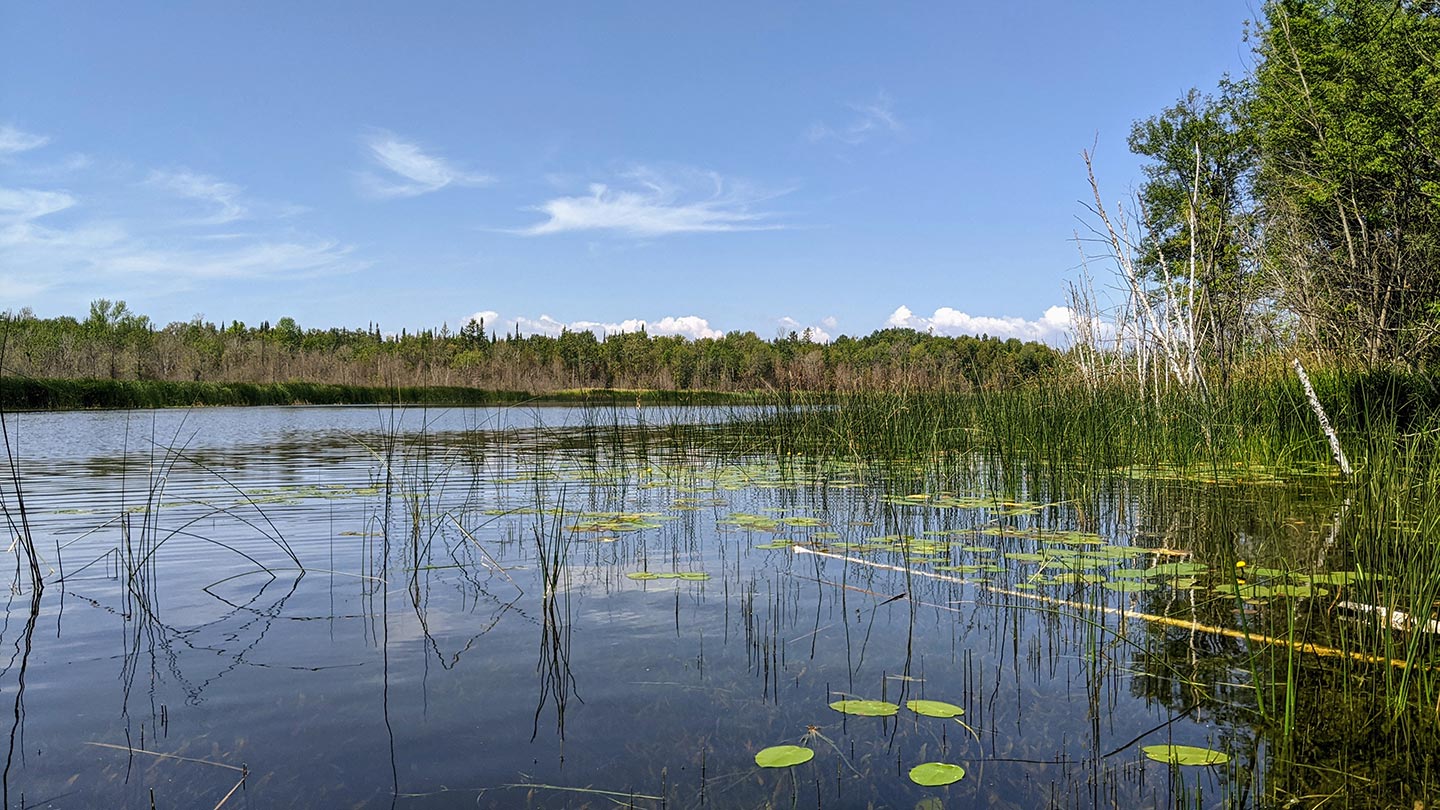
Feature
Summer 2022
A photographic journey through Great Lakes coastal wetlands showcases their dynamic landscapes, diverse vegetation zones, and vital role as spawning habitat for nearly three-quarters of Great Lakes fish.
Kerry Caslow Kerry Caslow manages long-term water quality monitoring at Old Woman Creek, contributing to a dataset spanning over 40 years to understand nutrient processing in Lake Erie's estuary. About my workAs an application development manager, I work with scientists all over the world who are leading fascinating projects that use our water quality and level sensors. I help people find the right tools for the job, assist in the development of new technologies, create informational and educational content on a variety of topics, and every once in awhile I get to go back to my roots and help with field deployments.Favorite part of workThe best part of my job is that I get to continually learn new things. Every day is a little bit different, so I never know what I will be presented with. However, each of those experiences tend to teach me something that I didn't know about before. It's like being in school without having to worry about a grade!Something else about myselfI started my career as part of a storm-water monitoring program and having stepped outside of that field, I realize now that there are so many more cool water-related careers and fields of study out there. I am excited to meet other members of IAGLR who are truly making an impact on the world around us.
Member Spotlight
Spring 2022
Kerry Caslow manages long-term water quality monitoring at Old Woman Creek, contributing to a dataset spanning over 40 years to understand nutrient processing in Lake Erie's estuary.
Jacob Cianci-Gaskill Jacob Cianci-Gaskill works as an application development manager, helping scientists worldwide utilize water quality sensors and technologies for field deployments and data analysis.
Member Spotlight
Spring 2022
Jacob Cianci-Gaskill works as an application development manager, helping scientists worldwide utilize water quality sensors and technologies for field deployments and data analysis.
Shayenna Nolan Shayenna Nolan uses eDNA metabarcoding to study microbial communities and carbon dynamics in headwater streams, blending fieldwork with science communication and Anishinaabe principles.
Member Spotlight
Spring 2022
Shayenna Nolan uses eDNA metabarcoding to study microbial communities and carbon dynamics in headwater streams, blending fieldwork with science communication and Anishinaabe principles.
Tongyao Pu Tongyao Pu models the stratification and redox chemistry of meromictic lakes, using hydrodynamic simulations to understand how physical conditions drive chemical changes in freshwater systems.
Member Spotlight
Spring 2022
Tongyao Pu models the stratification and redox chemistry of meromictic lakes, using hydrodynamic simulations to understand how physical conditions drive chemical changes in freshwater systems.
Fish diversity and fisheries of Omo-Turkana Basin in the face of hydrological modifications By Mulugeta Wakjira and Abebe Getahun A study of the Omo-Turkana Basin reveals 79 native fish species but highlights threats from hydrological modifications, illegal fishing, and cross-border conflicts affecting local livelihoods.
Research Brief
Spring 2022
A study of the Omo-Turkana Basin reveals 79 native fish species but highlights threats from hydrological modifications, illegal fishing, and cross-border conflicts affecting local livelihoods.
In the benthos: Bottom-up biodiversity in the Great Lakes By Alyssa Frazao Research in southwestern Ontario headwater streams compares sampling methods, finding that D-framed sweep nets capture greater macroinvertebrate diversity than petite ponar grabs.
Research Brief
Spring 2022
Research in southwestern Ontario headwater streams compares sampling methods, finding that D-framed sweep nets capture greater macroinvertebrate diversity than petite ponar grabs.
All hands on deck for the freshwater biodiversity crisis By Steven Cooke Freshwater ecosystems face an emergency requiring immediate action to bend the curve of biodiversity loss through six priority recovery actions.
Feature
Spring 2022
Freshwater ecosystems face an emergency requiring immediate action to bend the curve of biodiversity loss through six priority recovery actions.
All the life we cannot see By Maureen Coleman Microscopic organisms drive critical ecosystem functions in lakes, yet their biodiversity remains largely invisible and understudied in the face of climate change.
Feature
Spring 2022
Microscopic organisms drive critical ecosystem functions in lakes, yet their biodiversity remains largely invisible and understudied in the face of climate change.
Great Lakes Water Life: A database documenting biodiversity of Great Lakes native species By El Lower and Rochelle Sturtevant A new accessible database documents native aquatic species in the Great Lakes, supporting researchers, managers, and citizen scientists with identification guides and distribution data.
Feature
Spring 2022
A new accessible database documents native aquatic species in the Great Lakes, supporting researchers, managers, and citizen scientists with identification guides and distribution data.
William D. Taylor William D. Taylor (1950–2022) was a pioneering limnologist whose research on phosphorus cycling and microzooplankton fundamentally advanced Great Lakes science.
In Memoriam
Winter 2022
William D. Taylor (1950–2022) was a pioneering limnologist whose research on phosphorus cycling and microzooplankton fundamentally advanced Great Lakes science.
Bill Henry Bill Henry applies his expertise in food safety and automation to advocate for the Great Lakes, exploring microbial solutions to reduce agricultural runoff.
Member Spotlight
Winter 2022
Bill Henry applies his expertise in food safety and automation to advocate for the Great Lakes, exploring microbial solutions to reduce agricultural runoff.
Jennifer Powell Jennifer Powell studies the effects of hypoxia and temperature on Lake Chubsucker physiology to develop habitat models for climate adaptation.
Member Spotlight
Winter 2022
Jennifer Powell studies the effects of hypoxia and temperature on Lake Chubsucker physiology to develop habitat models for climate adaptation.
Alicia Sendrowski Alicia Sendrowski integrates science and communication to study phosphorus runoff in the Eastern Lake Erie Watershed and engage the public in remediation.
Member Spotlight
Winter 2022
Alicia Sendrowski integrates science and communication to study phosphorus runoff in the Eastern Lake Erie Watershed and engage the public in remediation.
Alana Tedeschi Alana Tedeschi researches coastal and riverine systems, focusing on hydrological connectivity in wetlands and the impact of climate change on the Great Lakes.
Member Spotlight
Winter 2022
Alana Tedeschi researches coastal and riverine systems, focusing on hydrological connectivity in wetlands and the impact of climate change on the Great Lakes.
Reducing our agricultural footprint to preserve, protect, and restore the ecological health of the Great Lakes By René S. Shahmohamadloo An agrosystem approach inspired by UN Sustainable Development Goals offers a path to regenerative agriculture that reduces runoff and supports community well-being.
Research Brief
Winter 2022
An agrosystem approach inspired by UN Sustainable Development Goals offers a path to regenerative agriculture that reduces runoff and supports community well-being.
Exploring pluralism in ecosystem governance By Jen Holzer A new special issue explores how integrating diverse knowledge systems, including Indigenous and scientific, is crucial for effective ecosystem governance and sustainability.
Research Brief
Winter 2022
A new special issue explores how integrating diverse knowledge systems, including Indigenous and scientific, is crucial for effective ecosystem governance and sustainability.
A SWOT analysis of the ecosystem approach in the Baltic Sea region By Savitri Jetoo A SWOT analysis reveals that while the ecosystem approach is simple to communicate, its implementation in the Baltic Sea suffers from unclear language and resource fragmentation.
Research Brief
Winter 2022
A SWOT analysis reveals that while the ecosystem approach is simple to communicate, its implementation in the Baltic Sea suffers from unclear language and resource fragmentation.
How an ecosystem approach can accelerate socio-ecological systems mapping and management of aquatic invasive species in the Great Lakes By Federico Holm, Ramiro Berardo, and Steven Alexander Mapping social-ecological systems reveals that effective invasive species management requires aligning human governance structures with ecological interdependencies.
Research Brief
Winter 2022
Mapping social-ecological systems reveals that effective invasive species management requires aligning human governance structures with ecological interdependencies.
Participatory, holistic management of great lakes: Experiences from Lake Vättern, Sweden By Andreas C. Bryhn Lake Vättern demonstrates how participatory, holistic management can successfully reverse eutrophication and sustain iconic fish species like Arctic char.
Research Brief
Winter 2022
Lake Vättern demonstrates how participatory, holistic management can successfully reverse eutrophication and sustain iconic fish species like Arctic char.
Back to the future with the ecosystem approach By Catherine Febria, Brad Cardinale, Doug Haffner, and John Hartig The ecosystem approach is more vital than ever to manage the Great Lakes against climate change, prompting a new global conference to accelerate action. We are now two years into struggling through COVID-19, and a surprising outcome of the global pandemic has been been our growing reliance on nature to maintain mental and physical health and renewed relationships with nature during isolating times. Never before has the connection between natural ecosystems and society been more inextricably linked, particularly in the Laurentian Great Lakes, where human health, vitality, and well-being directly relate to the health and management of entire watersheds and the multitude of ecosystems that comprise them.The ecosystem approach has long served as a collaborative framework for governing, researching, and stewarding the health of large watersheds like the Great Lakes (Hartig and Zarull 1992; Munawar and Hartig 2020). Operationalized through programs such as the Great Lakes Areas of Concern and the Coordinated Surveillance and Research Initiative, the ecosystem management framework has resulted in multiscale solutions and partnerships that continue to evolve and grow toward improved relationships, research, and management into the future (Alsip et al. 2021).The ecosystem approach has long served as a collaborative framework for governing, researching, and stewarding the health of large watersheds like the Great Lakes.Although there are examples of ecosystem-based approaches to research and management of the Great Lakes and other large collections of ecosystems (e.g., Australia’s Great Barrier Reef, the African Great Lakes), climate change has become a threat multiplier, and the interaction of multiple stressors has led to greater uncertainty about how these systems will respond to management actions. Now, more than ever, we need to progress toward more holistic and strategic approaches to managing natural ecosystems to protect their biodiversity and the ecosystem services upon which we depend.How can ecosystem-based efforts be accelerated into action more effectively, strategically, and with greater certainty of success? Over the past few years, a Great Lakes-based collaborative has been underway, focusing on a shared vision to make progress on the ecosystem approach as a key framework that will integrate knowledge systems and expertise from around the world specifically to help inform and guide science and management of this critical region. To elevate this effort, and no longer willing to wait for COVID uncertainties to dissipate, we are thrilled to announce the forthcoming Ecosystem Approach in the 21st Century as a hybrid conference and workshop summit.Save the date August 22–24, 2022, for the event, hosted at the University of Windsor situated in the Traditional Territory of the Three Fires Confederacy and the heart of the Great Lakes basin. Convened in celebration of the 50th anniversary of the Canada-U.S. Great Lakes Water Quality Agreement, the event is sponsored by The Nature Conservancy, University of Windsor, Fisheries and Oceans Canada, Great Lakes Fishery Commission, International Joint Commission, U.S. Geological Survey, Aquatic Ecosystem Health & Management Society, University of Michigan's School of Environment and Sustainability, and IAGLR. Its hybrid model will combine a one-day online international conference featuring plenaries, posters, and presentations to help connect the global community engaged in dimensions of an ecosystem-based approach to science, research, and management. This will set the tone for the in-person summit, a writing-intensive gathering of multiple working groups focused on unpacking key dimensions of the ecosystem approach. While the workshop is planned to be in person, we are monitoring the pandemic globally and simultaneously planning for the possibility of a virtual format. Intentionally embedded with diverse knowledge systems and expertise and inclusive modes of engagement and participation, the event will have multiple outputs that include and extend beyond a special issue of Aquatic Ecosystem Health and Management, book(s), and a traveling discussion series that will contribute to the Great Lakes Public Forum being planned by the Canadian and U.S. federal governments for September.This issue of Lakes Letter features a number of examples of the ecosystem approach in research and management to get the conversation going and ideas flowing. We look forward to engaging with you more in 2022 as part of this collaborative effort.
Perspective
Winter 2022
The ecosystem approach is more vital than ever to manage the Great Lakes against climate change, prompting a new global conference to accelerate action.
The Great River Rapport: An ecosystem health report for the Upper St. Lawrence River By Leigh McGaughey and Pam Maloney The Great River Rapport combines Indigenous Knowledge and scientific data to assess the health of the Upper St. Lawrence River in an accessible format.
Feature
Winter 2022
The Great River Rapport combines Indigenous Knowledge and scientific data to assess the health of the Upper St. Lawrence River in an accessible format.
Evolving institutional arrangements for use of an ecosystem approach in restoring Great Lakes Areas of Concern By John Hartig and Peter Alsip A study of 43 Areas of Concern shows how evolving institutional arrangements and nonprofit partnerships have driven successful restoration and economic revitalization.
Feature
Winter 2022
A study of 43 Areas of Concern shows how evolving institutional arrangements and nonprofit partnerships have driven successful restoration and economic revitalization.
Systems thinking and the ecosystem approach By Peter Stoett and Paula McIntyre Managing complex large lakes requires systems thinking to understand interactions, leverage points, and the human dimensions often ignored in reductionist approaches. Large lakes are complex, open systems that face myriad threats. They cannot be managed over the long term without respecting the interactions between their component parts, including coasts, water, biodiversity, drainage points, economic sectors such as fisheries and tourism, and pollution, to name a few. Further, the human dimensions cannot be ignored nor minimized. The demands of adaptive governance of large lakes can only be met if policy makers and stakeholders alike take a systems approach to thinking about problems and solutions.In our discipline-driven work, we can lose sight of the broader system in which we are engaged. Most environmental management efforts were initially focused on an equilibrium view—the pursuit of static as opposed to dynamic stability—and on the control of variables (“command-and-control” management). What does it mean to take a systems thinking approach to complex problems? In the words of Donella Meadows, a system is “an interconnected set of elements that is coherently organized in a way that achieves something” (Meadows 2008). Examining a system by observing only the component parts is generally referred to as a reductionist approach; a systems thinking approach, in contrast, implies that we need to consider how those parts interact (Waltner-Toews et al. 2008). As David Peter Stroh writes, “optimizing the system requires improving the relationships among its parts, not optimizing the individual parts as is often assumed and rewarded” (Stroh 2015).One approach that has gained legitimacy at the regional and global levels is the ecosystem approach, which has been endorsed by the Parties to the United Nations Convention on Biological Diversity (CBD). According to Article 2 of the CBD, an ecosystem is “a dynamic complex of plant, animal and micro-organism communities and their non-living environment interacting as a functional unit.” Ecosystems are not stable, pristine entities from which we can inexhaustibly draw beneficial resources. They are characterized by thresholds, regime shifts, resilience, leverage points, and feedbacks.The ecosystem approach demands flexible thinking, adaptive management, and the ability to respond to feedbacks. This may entail interagency cooperation among governing authorities, or even deep organizational change, and the participation by many stakeholders in consensus-based decision making, rather than command-and-control by a few. Great Lakes management has proven a leader in this effort, and researchers focusing on various parts of these ecosystems have much to contribute and coordinate as they pursue the common goals of promoting sustainability and resilience.We can listen to what the system tells us, and discover how its properties and our values can work together to bring forth something much better than could ever be produced by our will alone.In this pursuit, it’s important to recognize that systems work is happening under different terminology, frameworks, and worldviews, and it can be helpful to learn from these existing approaches. For example, some researchers consider lakes as part of socioecological systems, a view highlighting that real people with rights and obligations live within the ecosystems being studied. Indeed, it is increasingly common to refer to biocultural systems, a framing stemming partially from a much older conceptualization of interconnected life originating in Indigenous worldviews (e.g., the Haudenosaunee Thanksgiving Address). Biocultural community protocols can represent these systems according to local understandings and governance arrangements, and be shared with national governments as well as researchers working in the area. Regardless of whether such protocols exist, simple research ethics demands the free, prior, informed consent of local communities before research is conducted, and the open sharing of results. It is foolhardy to ignore the accumulated wisdom of the caretakers of land and water, many of whom have been engaged in a form of systems thinking all along.Systems thinking is a method that has emerged to guide people toward transformative change. It calls for relinquishing the idea of controlling a system or completely understanding it. Instead, Meadows writes, “We can listen to what the system tells us, and discover how its properties and our values can work together to bring forth something much better than could ever be produced by our will alone.” Below, we share some ways to get started.Stepping into systems thinkingPlan to adaptBecause lake ecosystems are open systems constantly influenced by external forces, we need to accept uncertainty as the norm and plan accordingly. Rather than making a fixed, long-term plan, know what you’re aiming for, design an initial step with other stakeholders, and test it out. Monitor and evaluate what happens, learn from the experience, and adjust. Repeat with your next best shot.Know the conditionsUnderstanding the conditions that affect a system helps us to prioritize our efforts. While there are different models (e.g., the iceberg model, the six conditions of systems change), in general, responding to the explicit conditions that demand our attention, such as news and events, will rarely leverage long-lasting change. Systems thinking requires us to go deeper, looking not only at policies, practices, and resource flows, but relationships, power dynamics, and underneath it all, our mental models that hold the system in place. Addressing these implicit conditions holds the power for us to transform a system (Kania et al. 2018).Broaden your timelinesSystems thinking asks us to extend our timeline when considering our ecosystem work. We need to take a cumulative view that looks at impacts over time and focuses on sustainability (resilience promoted through adaptive management and governance). “It is easy to ignore larger systems if your time horizon spans only months and quarters,” writes Peter Senge. “Your perspective shifts when you think about consequences of your decisions over decades.” (Senge et al. 2010)Set your boundariesAn ecosystem approach considers the whole array of ecosystem components (e.g., human activities, habitats, species, and physical processes) and interactions, as well as the services they provide. Yet analyzing every single component and linkage within an ecosystem would be physically and intellectually impossible. Instead, we should concentrate on what we feel are key elements and the interactions between them and set a suitable boundary around them. Meadows urges us to “invent boundaries for clarity and sanity,” while also cautioning us that “boundaries can produce problems when we forget that we've artificially created them” (Meadows 2008).Map your systemMapping a system involves creating a visual representation of the relationships between parts, feedback loops that help drive the system, and forces affecting the system. It is a complex, subjective exercise that can help identify possible leverage points where concerted action can affect the whole. While it may seem that a map is the intended benefit of this exercise, the real benefit of systems mapping is that it provides a way for all stakeholders to engage in the process. It helps them to see how they contribute to the performance of the system as a whole, whether good or bad. (Stroh 2015).Discover your storyHow you tell the story of your system can have a profound impact on the success of your efforts. “Stories make, prop up, and bring down systems,” writes Ella Saltmarshe. “Stories shape how we understand the world, our place in it, and our ability to change it.” The creation of the Detroit River International Wildlife Refuge illustrates the power of story. One of the few urban refuges, and the only international one in North America, a story helped unite people with different perspectives around a shared vision. This binational story told of how cooperative conservation is re-creating gathering places for people and wildlife in the refuge. This story “had to be carried in the hearts and minds of all, and had to result in shared meaning” (Hartig 2015).See yourself in the systemBecoming well-versed in systems is an important capacity to develop. Through systems thinking, we come to see that the greatest leverage we have to change a system begins with changing ourselves (Stroh 2015). Systems thinking helps us understand that developing collaborative skills, sharing information, building relationships, and adopting a learning mindset are not just niceties; they are vital for transformative change. Taking the responsibility to be the best version of our “systems self” and understanding our own position and role will help us to collectively design and sustain the healthy large lake ecosystems we envision.By Paula McIntyre and Peter Stoett
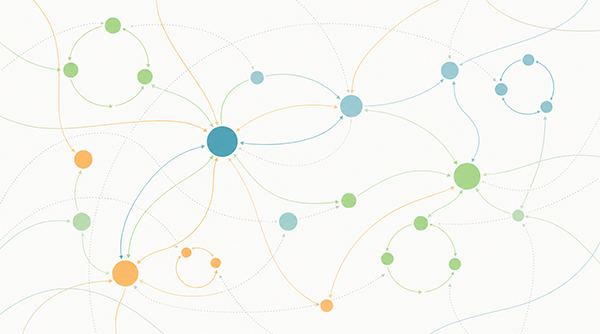
Feature
Winter 2022
Managing complex large lakes requires systems thinking to understand interactions, leverage points, and the human dimensions often ignored in reductionist approaches.
Evolution of a conservation organization By Scott Sowa The Nature Conservancy traces its evolution from a land trust to a global systems-based organization tackling climate change and biodiversity loss through science.
Feature
Winter 2022
The Nature Conservancy traces its evolution from a land trust to a global systems-based organization tackling climate change and biodiversity loss through science.
The dilemma of the ecosystem approach on Lake Victoria By Martin Van der Knaap Lake Victoria's experience with Nile perch and cage aquaculture highlights the tension between ecosystem principles and the immediate economic needs of local communities.
Feature
Winter 2022
Lake Victoria's experience with Nile perch and cage aquaculture highlights the tension between ecosystem principles and the immediate economic needs of local communities.
Jana Levison Jana Levison evaluates the effectiveness of restoration projects for fish species at risk across Southwestern Ontario as part of the FishCAST program.
Member Spotlight
Fall 2021
Jana Levison evaluates the effectiveness of restoration projects for fish species at risk across Southwestern Ontario as part of the FishCAST program.
Dominique Rumball Dominique Rumball investigates groundwater quantity and quality, focusing on nutrient transport and climate change impacts in the Great Lakes basin.
Member Spotlight
Fall 2021
Dominique Rumball investigates groundwater quantity and quality, focusing on nutrient transport and climate change impacts in the Great Lakes basin.
Earlier winter-spring runoff leads to lower summer primary production in temperate lakes By Allison Hrycik Earlier winter runoff correlates with lower summer phytoplankton biomass in temperate lakes, suggesting winter conditions set the stage for summer productivity.
Research Brief
Fall 2021
Earlier winter runoff correlates with lower summer phytoplankton biomass in temperate lakes, suggesting winter conditions set the stage for summer productivity.
Winter shapes fish behavior and species interactions By Bailey McMeans Winter conditions drive divergent activity patterns in fish species, promoting coexistence in ways that shorter winters due to climate change may threaten.
Research Brief
Fall 2021
Winter conditions drive divergent activity patterns in fish species, promoting coexistence in ways that shorter winters due to climate change may threaten.
Filling data gaps: A project to measure winter oxygen and carbon dioxide levels in western Lake Erie By Rachel Eveleth Continuous winter monitoring in Lake Erie reveals shifting metabolic states and CO2 fluxes, offering a glimpse into the lake's future low-ice conditions.
Research Brief
Fall 2021
Continuous winter monitoring in Lake Erie reveals shifting metabolic states and CO2 fluxes, offering a glimpse into the lake's future low-ice conditions.
Winter, summer bathymetric distribution and diet of benthic fishes By David Jude, Hans Van Sumeren, and John Luchco Deep-water fish like round gobies and alewives migrate significantly between seasons, with winter diets and behaviors differing sharply from summer patterns.
Research Brief
Fall 2021
Deep-water fish like round gobies and alewives migrate significantly between seasons, with winter diets and behaviors differing sharply from summer patterns.
The state of winter limnology in the Great Lakes By Andy Bramburger Winter is the least studied season in the Great Lakes, yet its changing ice cover dictates critical ecosystem processes that remain poorly understood.
Feature
Fall 2021
Winter is the least studied season in the Great Lakes, yet its changing ice cover dictates critical ecosystem processes that remain poorly understood.
The Great Lakes Winter Network Working together to learn more about the Great Lakes in winter
By Ted Ozersky A new collaborative network aims to fill the massive data gap in winter research across the Great Lakes through coordinated sampling and shared infrastructure.
Feature
Fall 2021
A new collaborative network aims to fill the massive data gap in winter research across the Great Lakes through coordinated sampling and shared infrastructure.
Investigating life under the ice in Lake Onego, Russia An interdisciplinary project
By Natacha Tofield-Pasche A Russian-Swiss interdisciplinary project reveals how under-ice convections and ice quality drive ecosystem development and carbon emissions in Lake Onego.
Feature
Fall 2021
A Russian-Swiss interdisciplinary project reveals how under-ice convections and ice quality drive ecosystem development and carbon emissions in Lake Onego.
Winter wakes By Ellen George Winter ecology demands resilience and flexibility, as seen in the comeback of cisco populations in Lake Ontario and the challenges of fieldwork in freezing conditions.
Feature
Fall 2021
Winter ecology demands resilience and flexibility, as seen in the comeback of cisco populations in Lake Ontario and the challenges of fieldwork in freezing conditions.
A season overlooked: A call to prioritize and coordinate winter research By Michael Twiss and Marguerite Xenopoulos With ice cover declining rapidly, the scientific community must urgently coordinate winter research to understand climate impacts before the data is lost forever.
Feature
Fall 2021
With ice cover declining rapidly, the scientific community must urgently coordinate winter research to understand climate impacts before the data is lost forever.
Embedding with the "Guardians of the Great Lakes" By R. Michael McKay Partnerships with the U.S. Coast Guard enable critical winter sampling in Lake Erie, providing unique data on a low-ice future when agency monitoring pauses.
Feature
Fall 2021
Partnerships with the U.S. Coast Guard enable critical winter sampling in Lake Erie, providing unique data on a low-ice future when agency monitoring pauses.
Bob Heath Bob Heath bridged biophysics and ecology to advance Great Lakes research.
Member Spotlight
Summer 2021
Bob Heath bridged biophysics and ecology to advance Great Lakes research.
Rupert Kindersley Rupert Kindersley advocates for water quality and aquaculture reform.
Member Spotlight
Summer 2021
Rupert Kindersley advocates for water quality and aquaculture reform.
Ariana Uwaibi Ariana Uwaibi uses genomics to study toxin genes in algal blooms.
Member Spotlight
Summer 2021
Ariana Uwaibi uses genomics to study toxin genes in algal blooms.
Remoting sensing explores freshwater lakes' role in global carbon cycle Satellite data reveals the role of large lakes in the global carbon cycle.
Research Brief
Summer 2021
Satellite data reveals the role of large lakes in the global carbon cycle.
Long-term NOAA GLERL dataset shows warming of Lake Michigan's deepwater temperatures By Gabrielle Farina NOAA's dataset shows Lake Michigan's deep waters are warming.
Research Brief
Summer 2021
NOAA's dataset shows Lake Michigan's deep waters are warming.
Best practices in Great Lakes climate communication By Kaytee Canfield and Kate Mulvaney Five best practices help communicate climate change impacts to communities.
Research Brief
Summer 2021
Five best practices help communicate climate change impacts to communities.
Vulnerability to aquatic invasive species under human population and climate change By Jeff Buckley, Len Hunt, Jenny Rodgers, Tim Johnson, and Andrew Drake Climate change and population growth will alter invasive species risk in Ontario.
Research Brief
Summer 2021
Climate change and population growth will alter invasive species risk in Ontario.
Responding to stresses facing the Great Lakes region in a changing climate By Don Wuebbles Climate change impacts include rising temperatures, extreme weather, and algal blooms. It’s summer time, beaches are open, and the Great Lakes shorelines await us. The Great Lakes are where many of us live, work, and play. And, right now, they need our help.The science is clear: changes in climate are already having increasing impacts on the Great Lakes region. A 2019 state-of-the-science report paints a comprehensive picture of how a changing climate affects the Great Lakes and what these changes mean for public health and safety, agriculture, infrastructure, fish and wildlife, and our regional economies. Temperatures are generally increasing in the Great Lakes region, but more importantly, climate change is leading to growing concerns about heat waves, larger precipitation events, and more intense severe weather. More extreme weather events are projected across the Great Lakes: more flooding early in the year; more heat waves and drought in hotter months; and an overall decrease in snowfall, but more heavy lake-effect snowstorms.As an important example of the impacts on the region, the warming trend has led to increased bacteria levels and exacerbated algae blooms. Both bacteria and algae blooms can make water unsafe to drink, thus significantly increasing water treatment costs. They can also make water unsafe for swimming, leading to more beach closures. Beaches, dunes, and shorelines will likewise be more vulnerable to coastal erosion as a result of changing weather patterns.The Great Lakes have also garnered recent attention due to their at or near all-time high water levels. Although water levels fluctuate considerably over decades, high precipitation in the Great Lakes watersheds has contributed to the recent high levels. Longer-term water levels will depend on the balance between future amounts of rainfall in the watersheds and increasing evaporation in a warming climate. Both of these counteracting effects are increasing. While it is possible that higher water levels will be the new norm, the current expectation from the science community is that levels will continue to fluctuate. More definitive research studies are needed to better understand this issue.Along with reducing the emissions driving climate change, efforts for adaptation and resiliency are crucial to planning the future of the Great Lakes region. Recommended policy solutions call for stepping up actions to achieve multiple benefits of mitigating climate change, protecting public health, and reducing stress on the Great Lakes ecosystem and our land. These include advancing green energy, improving energy efficiency, accelerating the adoption of cleaner transportation options, reducing agricultural runoff of phosphorus pollution, investing in green infrastructure, and funding to help protect fisheries, shorelines, and wetlands.Climate change is one of, if not the biggest challenges of our time. The impacts are already being felt in the Great Lakes region, and they are likely to grow to be far-reaching and very costly. If we don’t act now, the Great Lakes and all of us who enjoy and rely on our lakes for safe, clean drinking water, food, recreation, and commerce will pay an even greater price for decades to come.
Feature
Summer 2021
Climate change impacts include rising temperatures, extreme weather, and algal blooms.
On thin ice: Are lakes feeling the heat? By Sapna Sharma Warming winters cause lakes to lose ice cover, threatening ecosystems.
Feature
Summer 2021
Warming winters cause lakes to lose ice cover, threatening ecosystems.
Climate change effects, fluctuating lake levels, and a way forward for Lake Turkana A glance at the world's largest permanent desert lake
By Zephaniah Migeni Rising temperatures and dam projects threaten Lake Turkana, requiring adaptation.
Feature
Summer 2021
Rising temperatures and dam projects threaten Lake Turkana, requiring adaptation.
Understanding climate change in the world's ancient lakes By Stephanie E. Hampton Ancient lakes face unique vulnerabilities to climate change and pollution.
Feature
Summer 2021
Ancient lakes face unique vulnerabilities to climate change and pollution.
Place, knowledge, and change By Ryan Bowie Addressing climate change requires centering Indigenous Peoples and their knowledge.
Feature
Summer 2021
Addressing climate change requires centering Indigenous Peoples and their knowledge.
David Baker By Tom Henry David Baker's 50 years of data revolutionized tributary monitoring.
In Memoriam
Spring 2021
David Baker's 50 years of data revolutionized tributary monitoring.
Deborah Swackhamer By Matt Simcik Deborah Swackhamer was a pioneering researcher in organic contaminants and policy.
In Memoriam
Spring 2021
Deborah Swackhamer was a pioneering researcher in organic contaminants and policy.
Delaney Demro Delaney Demro compares public perceptions of stream quality with biochemical measurements.
Member Spotlight
Spring 2021
Delaney Demro compares public perceptions of stream quality with biochemical measurements.
Patricia Ann Owl Patricia Ann Owl bridges Anishinaabe Traditional Knowledge with water governance.
Member Spotlight
Spring 2021
Patricia Ann Owl bridges Anishinaabe Traditional Knowledge with water governance.
Michael Schmidt Michael Schmidt investigates nitrate contamination in groundwater.
Member Spotlight
Spring 2021
Michael Schmidt investigates nitrate contamination in groundwater.
Luwen Wan Luwen Wan uses NASA data to model nutrient fluxes.
Member Spotlight
Spring 2021
Luwen Wan uses NASA data to model nutrient fluxes.
A call for community science standards for the Great Lakes By Chris Winslow The International Joint Commission calls for standardized protocols for community science data.
Feature
Spring 2021
The International Joint Commission calls for standardized protocols for community science data.
Swim Drink Fish citizen science hubs: Blending technology, advocacy, and education to protect our waters By Mark Mattson Swim Drink Fish hubs train volunteers to monitor recreational water quality.
Feature
Spring 2021
Swim Drink Fish hubs train volunteers to monitor recreational water quality.
The Smart Citizen Science Initiative By Max Herzog The Cleveland Water Alliance aims to standardize volunteer water monitoring data. Western Lake Erie HAB, Sept. 26, 2017. Landsat-8 (NASA/USGS satellite) photo.Seasonal surges and legacy deposits of nutrient pollution make Lake Erie the epicenter of yearly harmful algae blooms (HABs) large enough to be seen from space. This annual ecological crisis puts the health and well-being of the nearly 12 million people that rely on this great lake for their drinking water, recreation, or livelihood at risk. Lake Erie states are increasingly investing in solutions to reduce the nutrient pollution that drives these blooms, but often don’t have the information needed to strategically locate these projects, evaluate their effectiveness, or optimize their performance. Further, reduction in budget allocations in Michigan, Ohio, and New York are challenging the scope and sustainability of state agency water monitoring. These challenges produce significant limitations on the scope and granularity of water quality data collected across Lake Erie and its watersheds.Fighting back against HABsCredit: Buffalo Niagara Waterkeeper.Citizen science (volunteer monitoring by community members) represents an important opportunity to expand our regional data collection capacity and address pressing water quality challenges like HABs. Lake Erie residents feel a powerful sense of connection to and responsibility for their water resources and are often willing to contribute their resources and time to that end. Local organizations have been harnessing this energy to monitor water quality in communities across the region for years. However, these groups have typically developed in response to hyper-local management needs, resulting in a fragmented regional landscape of citizen science that approaches data collection, management, and use protocols on a watershed-by-watershed basis. Many of these groups continue to rely on physical data sheets and Excel-based data management, which severely limit accessibility and discoverability to external end users. As a result, it is difficult for government, academic, and industry actors to leverage the full scope of Lake Erie’s existing citizen science movement to address their most pressing research, decision making, and management needs. Cleveland Water Alliance (CWA) is working to address these challenges through the Smart Citizen Science Initiative, a regional network of volunteer programs and community funders that support and accelerate community collection of Lake Erie Basin data. This network serves as a platform for driving regional citizen science innovation including piloting new technologies and implementing collective data standards. The initial three-year (2020–2022) effort is made possible by the support of the Great Lakes One Water (GLOW) Partnership, a collaboration of community foundations committed to solving Great Lakes water challenges.To date, the Smart Citizen Science Initiative has engaged 12 volunteer water quality monitoring groups in a series of technology pilots, group visioning sessions, curriculum development projects, and other regional collaborations. These include Buffalo Niagara Waterkeeper, Cleveland Metroparks, Doan Brook Watershed Partners, Erie Soil and Water Conservation District, Friends of Euclid Creek, Huron River Watershed Council, Lorain Soil and Water Conservation District, Metroparks Toledo, Old Woman Creek National Estuarine Research Reserve, Rocky River Watershed Council, SUNY Fredonia, and Toledo Metropolitan Area Council of Governments.Credit: Buffalo Niagara Waterkeeper.“Being a part of a Lake Erie-wide network of organizations and citizen scientists with the Smart Citizen Science Initiative is exciting, inspiring, and empowering,” notes Lisa Meranti, Watershed Volunteer Program Coordinator, Cleveland Metroparks. “Contributing to something that can have significant collective impact is very motivating.”Credit: Cleveland Water Alliance and The Commons.Throughout the last year, CWA partnered with The Commons to provide access to their data platform, Water Reporter. With features such as volunteer vs. organizer profiles, built-in QA/QC permissions, and a mobile app for field data upload, the Water Reporter platform is set up to enable organizations to leverage the power of volunteer monitoring to produce meaningful data that are structured and interoperable. The Commons has even worked with CWA to create a unique web widget that allows users to visualize, explore, and download data from Local Champions across the Lake Erie Basin. Now, community groups, researchers, and decision makers can easily access and leverage the data.These tools will be backed up by a set of standards for the collection, management, and use of Lake Erie citizen science data. These Smart Lake Standards will aim to formalize operating procedures and best available technology to provide an accessible framework for elevating the credibility of citizen science data. The creation of Smart Lake Standards will enable consistent, high-quality monitoring of key parameters across the region, enable wider use and comparability of currently available citizen science data, and allow rapid piloting of new data collection technologies against agreed-upon benchmarks. Further, Smart Lake Standards will provide a framework for collaborative regional research projects, comparison of locally collected data, and establishment of new community monitoring programs. CWA is currently convening key experts and decision makers spanning academic and federal research institutions as well as state environmental agencies to support this work. These advisors will support CWA and the Smart Citizen Science network in designing and executing the first iteration of these standards by early 2022.
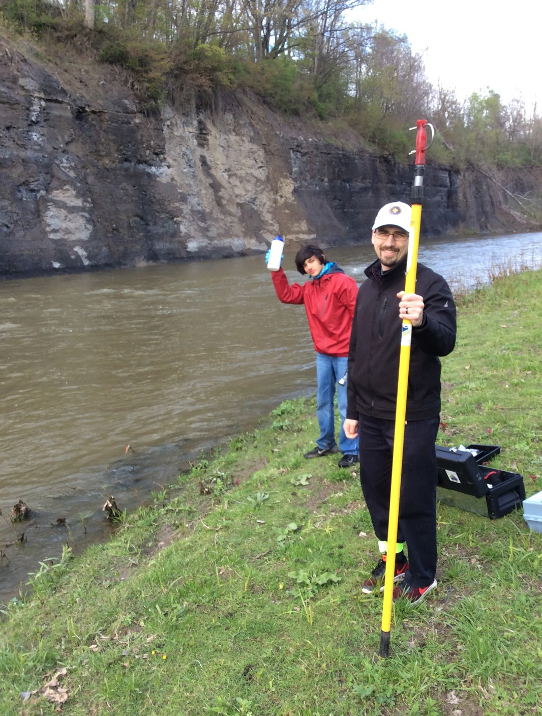
Feature
Spring 2021
The Cleveland Water Alliance aims to standardize volunteer water monitoring data.
STREAM: Combining DNA and people power for healthy freshwater ecosystems By Chloe Robinson and Mehrdad Hajibabaei The STREAM project combines DNA metabarcoding with community-based monitoring.
Feature
Spring 2021
The STREAM project combines DNA metabarcoding with community-based monitoring.
Uncharted waters: A story of how community-based water monitoring can help fill data gaps By Emelia Duguay Water Rangers use affordable test kits to collect water quality data.
Feature
Spring 2021
Water Rangers use affordable test kits to collect water quality data.
What to do about our national water crisis By Bopaiah Biddanda Erin Brockovich's new book urges citizens to fight America's drinking water crisis through activism and a national self-reporting registry, rather than waiting for regulators or "Superman" to solve the problem. Environmental activist Erin Brockovich’s latest book is an inspiring personal narrative about the drinking water crisis facing America and what you and I can do about it. With people causing more and more water pollution, the resulting scarcity of clean drinking water is an emerging challenge that will soon take center stage in the context of a changing climate. Thus, lessons contained in this book are most timely. As the title says, Superman’s not coming; instead, we will have to fight our own fights.Over the years and across the country—from Hinkley, California, (chromium-6, 1991) to Flint, Michigan (lead, 2014)—most Americans have imbibed unsafe drinking water, and all have been exposed to “forever chemicals” like PFCs (perfluorinated chemicals). Today, the top six toxins in our surface and groundwater are chromium-6, chloromines, lead, PFCs, fracking chemical cocktails, and trichloroethylene solvents. As human activity continues to contaminate the environment (often with new synthetic compounds with unknown effects) and deplete water reserves (often concentrating the very same contaminants), regulatory agencies and legislation aimed to protect the environment are only playing catch up in safeguarding our air, water, and soil. But citizen science and activism can make a difference. Among the many practical steps Brockovich recommends is for people to contribute to a national self-reporting registry of water crisis hot-spots—a living map of current trouble spots—on the Community Healthbook website. Other engaged citizens can then take up the issue at local, state, and national levels to collectively make a difference. While Superman may not be coming, Brokovich calls us to action and shows us the way forward. Her book is a must read for all who wish to advocate for the health of their neighborhoods and watersheds.
Book Review
Winter 2021
Erin Brockovich's new book urges citizens to fight America's drinking water crisis through activism and a national self-reporting registry, rather than waiting for regulators or "Superman" to solve the problem.
David L. Spangler By Tom Henry David L. Spangler (1946–2020) pioneered citizen science sampling to monitor Lake Erie water quality. The Lake Erie community is saddened by the passing of David L. Spangler, a gentle soul and beloved charter boat captain who fiercely devoted many of the final years of his life to educating others about the science of algal blooms, efforts to keep Asian carp out of the Great Lakes, and why the 30 million Americans and 10 million Canadians who live in the Great Lakes basin deserve better water quality in general.Dave, who lived along the Lake Erie shoreline near Oak Harbor, Ohio, was well-known among and highly respected by many of the International Association for Great Lakes Research’s leading scientists.He died of leukemia on Oct. 21 at Heroes Harbor Hospice, part of the Cleveland Veterans Administration Medical Center.“Dave and I fed off each other. I mean, we really did,” his long-time counterpart, Paul Pacholski, told The (Toledo) Blade for a news obituary published the day after his death. “Without question, he made me a better person and a better advocate.”Pacholski is the longtime president of the Lake Erie Charter Boat Association. As the same group’s longtime vice president, Spangler was his right-hand man.Tributes have poured in from past and current governors, members of Congress, and other dignitaries.Dave was “an enthusiastic supporter of all the work we do," noted IAGLR member George Bullerjahn of Bowling Green State University.“A day on the water with Dave was fun, enlightening, and always led to a successful research trip. I looked forward to catching up with him at all the conferences we have held. The fact he attended every meeting shows how much he cared about the lake and our research,” Bullerjahn said.We “have lost a voice of reason among those concerned with Lake Erie,” said Ohio Sea Grant/Ohio State University Stone Laboratory Director Chris Winslow. “Dave will be missed, but we can remember him in our words, actions, and efforts going forward.”That sentiment was echoed by Justin Chaffin, Ohio Sea Grant/OSU Stone Laboratory research coordinator, who called Dave “a true champion for Lake Erie sport fishing and water quality."Chaffin added, “It was a pleasure working with Dave on research projects and then chatting with him about hot spots and baits for walleye after our business was completed. He understood that fishing success and water quality are tightly connected. He and his advocacy for Lake Erie will be missed.”Mike McKay, executive director of the University of Windsor’s Great Lakes Institute for Environmental Research, lauded Spangler and Pacholski for the citizen science sampling program they initiated in 2012 with help from other charter boat captains.Samples drawn simultaneously by charter boat captains give the Ohio EPA and other agencies field data from a vast expanse of the lake on the same date and at the same time, information the agencies otherwise wouldn’t have.McKay was pleased Spangler worked closely with so many IAGLR members.Tom Bridgeman, the University of Toledo Lake Erie Center’s director, said he “had the greatest respect and affection for Dave,” and BGSU’s Tim Davis called him “a tireless advocate for Lake Erie.”
In Memoriam
Fall 2020
David L. Spangler (1946–2020) pioneered citizen science sampling to monitor Lake Erie water quality.
Eva Enders Eva Enders' research on flow and climate informs species at risk management. About my workMy research interest lies in studying the effects of natural and anthropogenic changes of flow and climate on fish and fish habitat. In my research, I enjoy working in large multi-disciplinary research teams. Most of my lab’s research relates to conservation physiology, fish behavior and bioenergetics, and aquatic ecology to provide science advice for Fisheries and Oceans Canada’s Species at Risk, Fish and Fish Habitat Protection, and Aquatic Invasive Species programs. We are combining controlled laboratory experiments on freshwater fishes that facilitate hypothesis testing with field experiments to validate developed models.Due to the Government of Canada’s interest in the protection of Lake Winnipeg, the focus of my research program has shifted in recent years from small stream systems to the Lake Winnipeg basin. In collaboration with several provincial, federal, and state agencies, as well as universities, we are currently conducting a large-scale telemetry project to analyze fish movement and habitat use, a long-term pelagic fish survey, a bathymetry and substrate survey, and a near-shore monitoring program. In these projects, we are particularly interested in studying species at risk and understanding the impacts of non-native species on the ecosystem.Why IAGLR?Due to my recent research focus on Lake Winnipeg, I joined IAGLR to become an active member of the community and learn about advances in Great Lakes research. The new research focus has also led to my involvement in the Journal of Great Lakes Research as guest editor for a special issue on “Lake Winnipeg – the emerging view after 15 years of whole-lake, whole-ecosystem science.” I was hoping to attend IAGLR 2020 in person to meet and network with scientists, managers, and stakeholders concerned with large lakes and am looking forward to meeting members at future events.
Member Spotlight
Fall 2020
Eva Enders' research on flow and climate informs species at risk management.
Kirsten Robinson Kirsten Robinson develops metrics to track progress in coastal wetland restoration. About my workI am beginning a new career in conservation at The Nature Conservancy in Michigan, USA, as a technician for the Blue Accounting Coastal Wetlands program. Blue Accounting is an initiative that was created in response to a call from both the U.S. and Canadian governments for a more efficient way to account for progress from investments in the Laurentian Great Lakes Basin. At this time, the focus areas on Blue Accounting include coastal wetlands, aquatic invasive species, source water, ErieStat (phosphorus levels in Lake Erie), and maritime transportation. I work with the coastal wetlands team to identify metrics for measuring progress, research the literature, write and publish material on the site, and update our content. Some of the ecological metrics I’ve worked on include a wetland breeding birds index, wetland breeding amphibians index, and the acreage of wetlands that are being protected, restored, or enhanced around the Great Lakes. I’m currently working to help develop socioeconomic metrics, such as the relationship of coastal wetlands to flood impacts on Great Lakes coastlines.Why IAGLR?Early this year, I collaborated with our team to create two presentations for the IAGLR 2020 conference related to our work on the socioeconomic benefits of coastal wetland projects. I was delighted when it turned out I could attend due to the conference going virtual. I enjoyed the variety and diversity of presentations from around the world. I also learned that access to IAGLR's Journal of Great Lakes Research could help me in my background research for Blue Accounting’s Coastal Wetlands metrics. So I joined IAGLR, and I am excited to learn more about current happenings and research in all of the world’s Great Lakes. As I grow professionally, I hope to stay a member of IAGLR and continue to discover new opportunities.
Member Spotlight
Fall 2020
Kirsten Robinson develops metrics to track progress in coastal wetland restoration.
A letter from Henry Lickers By Henry Lickers Henry Lickers advocates for integrating Traditional Knowledge and Western science. Shekon (Greetings), people of IAGLR and the Great Lakes. I hope this letter finds you and your family in good health and spirits during these trying times. I write this letter to share my experiences as an Indigenous scientist. I, too, have had problems talking to and understanding the knowledge of my people, the Haudenosaunee. I hope that by sharing my story, you will become more aware of and curious about Indigenous ways and the importance of drawing from multiple knowledge systems.I was encouraged by my grandparents and my mother to get an education to understand the ways of science and technology. I was never a really good student since I was too busy observing and living in the environment. Book learning was seen as important, but only as long as it didn’t interfere with my experiences.When I was 12, I left the Six Nations Indian Reserve and moved to downtown Toronto. What a culture shock! People in Toronto were always busy and placed entirely too much emphasis on progress to notice their beautiful surroundings. But for a boy with a bicycle, Toronto was a wondrous place. Within the first few months, I knew where all the nut, fruit, and medicine trees were within 10 kilometers of my house. I also found out that a young ragamuffin was not viewed as suspicious, so I knocked on people’s doors to ask if I could harvest the nuts, apples, and chestnut husks from their trees. In most cases, the homeowners saw these trees as nuisances that dirtied their lawns, so I always agreed to clean up their yards and make them look nice. Sometimes the homeowners even paid me!I took the fruit, nuts, and medicines home, where my mother made pies, apple sauce, and nut cakes and used the money for important things like clothes and shoes. I felt like a real hunter in the big city helping to take care of my family. Some months later, I realized that Toronto’s alleys were home to some of the biggest raccoons, squirrels, and skunks that I had ever seen. I decided to operate a trapline in the alley north of Bloor Street. I’d take the skins home to Brantford, where the fur buyers would ask where I got such high-quality pelts. I’d just cross my arms as only a boy can do and say that this was Traditional Knowledge of my people that I couldn’t divulge. I later learned that harvesting Canada geese for my mother’s wonderful goose soup was perhaps illegal at the time—indigenous harvesting practice hadn’t yet been won—but I only took what was needed and helped keep the population down.My school friends must have thought it strange that the apple sauce in my lunch was red (apples with the skins) and my “chicken” and rice soup (goose and wild rice) smelled different from theirs; even my bread was strange—Indian fry bread. They liked my nut loaf and maple tarts and would trade handsomely for these. I discovered that the Traditional Knowledge of the Haudenosaunee was not only important to my well-being and prestige, it was also profitable.Lake Ontario, Toronto Islands, and the many ravines in the city were the places where I could be myself, an Indigenous boy looking for a natural adventure. On the reserve, I had always wondered what job and who would pay me to play in nature. I was naturally drawn to the water, which seems to link everything together, and I decided to become a biologist. I worked as hard as I could, sometimes being irresponsible and crazy but always focused on the goal. I went to a new university in Peterborough called Trent University, which seemed perfect for me, got married, and ended up in graduate school at the University of Waikato in New Zealand. The Maori people there taught me to be myself and that the knowledge of the Indigenous Peoples may not be understood by the “new people,” but it was our responsibility to show the “new people” the way to live peacefully on the land. This was the same message I had heard from my great grandmother and grandparents.So, what does this have to do with science and Traditional Knowledge? I think everything. All my experiences have led me to this truth: that science and Traditional Knowledge need each other to be a whole knowledge system. This system includes both community knowledge and the ways in which knowledge is passed from one person to another, one group to another, and one nation to another. I call this a Naturalized Knowledge System that is connected to a given place. It is the knowledge gathered by the people in order to live in that place, and it allows the transfer of knowledge.My knowledge includes that which I have gained from all the areas and peoples I have met along the way. I keep their stories, understanding, and wisdom as if they were my own, but remember these people and acknowledge them whenever I use their knowledge. Some of my teachers were not even humans. As a boy, I believed that animals and plants could talk to me, but just used different forms of communication. Trees and plants used smells and colors to tell me about their lives, and the badger talked to me using his language of grunts and whistles. Sometimes I didn’t understand, but if I listened hard enough I could understand which grubs he liked the best. I lived in a magical world of sights, sounds, smells, and feelings. My grandfather told me everything had a spirit, and that I could talk with them if I listened closely enough. Only recently through my daughter did I learn that the stones on the ground could tell us very old stories, although they talk very, very slowly. All knowledge is story told to us in different forms—from scientific journals and great tomes to jokes and tales—each with their own lessons and facts.When I lived in the city, I met people who carried just one story as their profession. Scientists believed that science was the only factual story, economists believed that finance was not connected to the physical world, and doctors that the body acted like a machine. While these stories are useful, they don’t describe the world entirely. To carry out their work, these professionals need to reduce their understanding to a very small portion of the whole, and by doing so, they lose much of their ability to understand the world. I have been blessed to have met some giants in the fields of knowledge whose very presence has influenced how I think, and not all of them have been indigenous peoples. Truly great scientists are interested in everything, truly great economists see the links between the physical world and finance, and the greatest doctors see the humanity and spirits of their patients—and they use these attributes as tools in their professions.Naturalized Knowledge Systems expand the way we look at the world, and their tenets become important to people who live close to the land and environment. The basic tenets are as follows:The Earth is our mother;Cooperation is the way to survive;Knowledge is powerful only if it’s shared;Responsibility is the best practice;Everything is connected to everything;Place is important, and finally,The spiritual world is not distant from the Earth.As a society removes itself from the environment, these tenets are lost, and the first loss seems to be the recognition that the earth is our mother. With this loss, the society begins to lose its respect for women at the basic level. Yet as the environment and the tenets become more important, women become more important, too. Each of these tenets can be expanded with a little thought, and people who live on the land and depend upon the land and waters soon become steeped in these themes.The question that seems to occupy everyone’s mind is how do scientists integrate Traditional Knowledge into modern sciences. In order to evaluate a scientific fact’s validity, there are a number tests that it must pass. The fact has to be reproducible, consistent, and verifiable. Traditional Knowledge uses these same tools to judge the worthiness of a fact. Description, observation, and analysis all combine to establish the truth of a fact. The reliance on a fact is tested every time that fact is needed. In the natural environment, the result of a bad fact is usually more catastrophic than in a lab. The placement of known fruit and nut trees in Toronto was tested every time I left the house to harvest. If I could not reproduce the experiment, it meant no food. While this may not have meant death to my family, it could have meant hardship. Not having the right facts or knowledge meant a loss of prestige for the hunter. Getting it right meant honor and respect in my community. Scientists are honored for being right, and they take precautions to test and validate their information in the same way a hunter validates his.Scientists and Indigenous People can work together by building a relationship with each other and benefitting from the knowledge they both have. This relationship is based upon the science of relationship that the Haudenosaunee have been practicing for hundreds of years. The Haudenosaunee call this the Great Law of Peace, the Great Way of Peace, or the Way to be Nice, and it can be explained using three words. I have taken the liberty of translating these words into English as closely as possible: respect, equity, and empowerment (see sidebar).The Haudenosaunee say that with a little respect, equity, and empowerment, we build a joyful relationship, and we want to do it again. Only this time, we are willing to add more respect and equity and empower ourselves to build better and better relationships. In my grandmother’s words, “we learn how to be nice to each other” and the Great Way of Peace has accomplished a seemingly impossible task. It is interesting that the Great Way of Peace can be used to build a relationship, but it can also be used to analyze our failures to do so.I know this narrative is part story, part fact, and part reminiscence; that is the way Indigenous People pass knowledge to one another. When I was a boy, my great grandmother would tell me stories that I didn’t always understand, but the stories were exciting and I liked them. It wasn’t until years later that I got the “a ha” moment when I understood the story. In the relationship between IAGLR, the Great Lakes, and Indigenous Peoples, there will be many “eureka” moments in the future. I just hope that you’ll remember this story as well. My great grandmother would be pleased.Skennen (In Peace),Henry LickersThe Great Way of PeaceRespectWhile respect sounds simple, it has some tools that can assist us: Understanding. You can’t have respect for someone unless you try to understand them. Communication. You can’t respect someone unless you communicate with them. Consensus. There is not respect unless you form some type of consensus with each other. You do not need total agreement. Mediation. When you disagree, you need a process of mediation to get to consensus. Honor is that quality of truth that builds up through actions or deeds. As we say, respect is earned, not given. It is amazing how little respect is needed to start a relationship.In the modern world, equity is automatically thought of as money, but in the building of a relationship, knowledge is far more important. Knowledge brings us together and helps solidify the respect we have for one another. Also important to equity are networks—who knows whom and how they can help bring sweat equity to the relationship. Personnel are the people skilled enough to carry out the work, and having the time to do it is also equity. Social/political power or the prestige a person brings to the relationship can also help drive the action forward as more people add their skills to the relationship, but money and finance are also important. We say that equity must be balanced or someone will feel cheated and disrespected. A small amount of equity at the beginning of a relationship may prove vital to its existence. Among Indigenous People, the expression of thanksgiving in an opening or a meal shared are seen as respectful equity.EmpowermentSince the Haudenosaunee languages are verb based, we use peace as a verb; you must do peace or wage peace. These actions help to build relationships and show our sincerity in doing so. Application is to do what we say we will do. So many times we only discuss but never act. Consider authorship, which to academia is a tool of empowerment. When people come to our community to build a relationship, they collect information to use in a book or for the advancement of their careers, but often they don’t acknowledge the people who supplied the information. Sharing authorship of a paper can increase the empowerment of all the people who took part, even the local sources of information. Credibility and partnerships are built, and we accept the responsibilities for our actions and deeds. All of this adds to the empowerment of the relationship.
Feature
Fall 2020
Henry Lickers advocates for integrating Traditional Knowledge and Western science.
Since time immemorial By Valoree S. Gagnon, Bizhikiins Dylan Jennings, Michael Waasegiizhig Price, and Evelyn H. Ravindran Indigenous sovereignty and the First Treaty emphasize historical foundations of stewardship. Nayaano-nibiimaang Gichigamiin (the Great Lakes) is a physically dynamic land and water system and a diversely complex political landscape. But what do we really know about the region's diversity? Beyond recognition of two countries, eight states and one province, 163 Indigenous nations, and hundreds of municipalities, what understandings do we have about Nayaano-nibiimaang Gichigamiin?For 2021, IAGLR conference organizers embraced their responsibilities to share more about Nayaano-nibiimaang Gichigamiin and the rich and diverse history of place, people, and life. These intentions are reflected both in the 2021 conference theme, Bridging: Knowledges • Seven Generations • Land-to-Lake, and in our acknowledgement statement in the box at right. In this article, we explain the significance of acknowledgement and provide an Indigenous understanding of sovereign nations and the First Treaty of Nayaano-nibiimaang Gichigamiin. We also illustrate relevance for today’s governance and stewardship and conclude with thoughts on knowledge and practice for seven generations.AcknowledgementAcknowledgement is more than a collection of articulated words; it is a mindset that provides a lens into the journey of relearning. Acknowledgement conveys personal understanding of the obligations to Indigenous place, people, and life. The IAGLR 2021 statement acknowledges that U.S. and Canadian citizens share lands, waters, and responsibilities with Indigenous Nations who have cared for Nayaano-nibiimaang Gichigamiin since time immemorial, practicing stewardship principles informed by trusted Indigenous Knowledge Systems passed from one generation to the next, and through mutual respect and reciprocity for balanced relationships with living beings of many kinds. These are not mystical knowledge systems and practices—we use Traditional Knowledge Systems and approaches alongside science tools and approaches to work in partnership with other governments every day. Acknowledging the sources of knowledge is common practice, and for Indigenous Peoples, our teachings are gained from relationships, observations, and interactions with our non-human relatives. Plant beings, for example, are known as some of our wisest teachers on Earth.Indigenous sovereignty and the First TreatySovereignty is often described in terms of authority and power. Indigenous Nations’ sovereignty centers on autonomy, often articulated as self-determination and self-governance. It is also about collective strength in sustaining diplomacy with other sovereigns.Indigenous agreements between Nations were common practice prior to the establishment of the U.S. and Canada. In Nayaano-nibiimaang Gichigamiin, the Haudenosaunee Six Nations Confederacy includes Mohawk, Oneida, Onondaga, Cayuga, Seneca, and Tuscarora Nations; and the Anishinaabeg Three Fires Confederacy includes Ojibwa, Odawa, and Potawatomi peoples.Indigenous Nations remain rights holders, affirmed by a series of 18th- and 19th-century treaties negotiated with federal governments. In exchange for millions of acres of ceded territory, Indigenous Peoples reserved existing rights to hunt, fish, and gather, and secured “usual privileges of occupancy” throughout the land cession. Indigenous sovereignty is inherent—sovereignty was not granted to Indigenous Nations by the U.S. or Canada. In fact, these governments recognized the sovereignty of these Indigenous Nations, as treaties can only be established between sovereigns.Nayaano-nibiimaang Gichigamiin is and has always been governed by law. The foundation for sovereignty is rooted in the First Treaty, also called Sacred Law, Original Instructions, and the Great Laws of Nature. The First Treaty is the long-standing agreement between the Creator and all orders of creation that all beings are relatives of one another, will be interdependent upon one another, and honor, respect, and care for each other.These relationships and obligations are timeless across generations. They are also depicted in the pictograph on the next page, the Symbolic Petition of Chippewa Chiefs. In 1849, a Chippewa delegation journeyed to Washington with this pictograph sketched on birch bark to petition Congress and the president to protect their residence in Nayaano-nibiimaang Gichigamiin. The figures symbolize the clan memberships of the Chippewa delegation, with all of their hearts and minds connected while also being connected to the region’s lakes. Soon after, the 1854 Treaty With the Chippewa established reservations as permanent homelands throughout the region.As represented in the pictograph, human nations are one sovereign among many sovereigns—fish nations, plants and tree nations, and many other wildlife beings are sovereigns as well. Being sovereign requires diplomacy between nations, and that is Sacred Law, that nations acknowledge and have respect for one another’s autonomy.Seven generationsSignificantly, U.S. treaties and the Constitution are recognized as “supreme Law of the Land,” and as such, take priority over all other laws (Article VI, Clause 2). For several decades, U.S. statutes and resolutions have reaffirmed treaty law. We underscore the following: U.S. citizens greatly value constitutional rights after more than 230 years, and similarly, Indigenous Nations value treaty rights as supreme law.Revitalizing shared Nayaano-nibiimaang Gichigamiin governance and stewardship has been the work of Indigenous Peoples. Today, it is an ongoing commitment to ensure that Indigenous rights and responsibilities are protected for seven generations to come, and simultaneously, to honor the past seven generations, including our treaty makers.To learn more about Nayaano-nibiimaang Gichigamiin places, peoples, and life, visit the Great Lakes Indian Fish and Wildlife Commission Public Information Office and the Keweenaw Bay Indian Community Natural Resource Department Knowledge Center.IAGLR 2021 AcknowledgementIAGLR 2021 planners acknowledge that Nayaano-nibiimaang Gichigamiin (the Great Lakes) bioregion is the ancestral, traditional, and contemporary lands and waters of numerous Indigenous nations. We acknowledge Indigenous Peoples as the region’s original caretakers and knowledge keepers, and recognize their contributions to the stewardship and governance of the world’s largest system of freshwater. We extend our gratitude to members and staff of the Keweenaw Bay Indian Community, Chippewa Ottawa Resource Authority, Great Lakes Indian Fish and Wildlife Commission, and the 1854 Treaty Authority for their commitment to the planning and organization of the 2021 conference. Such partnerships are critical to bridging diverse knowledges, seven generations care, and sustaining land-to-lake relations in Nayaano-nibiimaang Gichigamiin. Finally, we remember that the teachings and practices we carry today were built and shared by many who came before us, including our human ancestors and many relatives with fins, wings, legs, and roots.Kitche Manitou then made The Great Laws of Nature for the well-being and harmony of all things and all creatures. The Great Laws govern the place and movement of sun, moon, Earth and stars; govern the powers of wind, water, fire, and rock; govern the rhythm and continuity of life, birth, growth, and decay. All things live and work by these laws.Excerpted from “The Creation Story of Kitche Manitou (The Great Spirit) of the Ojibwe.” Adapted from Basil Johnston’s Ojibway Heritage: The ceremonies, rituals, songs, dances, prayers and legends of the Ojibway. McClelland and Stewart 1976, reprinted 1998; Toronto."
Feature
Fall 2020
Indigenous sovereignty and the First Treaty emphasize historical foundations of stewardship.
IAGLR 2020 Virtual Session: Traditional Ecological Knowledge By Jessica Owen, Katrina Keeshig, and Catherine Febria. Panelists and Organizers: Myrle Ballard, Candy Donaldson, Catherine Febria, Pauline Gerrard, Chris Herc, Clint Jacobs, Katrina Keeshig, Jessica Owen, and Dilber Yunus Panelists share insights on bridging Indigenous and Western scientific approaches. Boozhoo; She:kon; hello, IAGLR community. The pandemic has changed many plans this year, including those for the IAGLR 2020 conference that was to be held in Winnipeg, Canada. Winnipeg is home to many Indigenous groups and is part of the traditional lands of the Anishinaabe, Cree, Oji-Cree, Dene, Dakota, and Métis Nation. Our plans were to feature an Indigenous-centered session highlighting the work of Indigenous Peoples working alongside and within STEM.Although IAGLR 2020 was not physically held in Winnipeg, the virtual conference allowed for Indigenous voices to be heard through a live discussion titled “Traditional Ecological Knowledge (TEK) and the Great Lakes Basin,” initiated by Catherine Febria of Healthy Headwaters Lab (HHL) and Dilber Yunus of the International Institute for Sustainable Development Experimental Lakes Area (IISD-ELA), and facilitated by Katrina Keeshig (HHL). This session sought to explore new and growing research partnerships with First Nations as well as how TEK can enrich our scientific understanding of aquatic ecosystems.The session featured three key speakers: Clint Jacobs, supervisor of NinDaWaabJig Heritage Centre on Walpole Island First Nation (Bkejwanong), Chris Herc, environmental monitoring coordinator for Grand Council Treaty 3, and Myrle Ballard, assistant professor and Indigenous scholar for the Department of Chemistry at the University of Manitoba. The session was attended by more than 100 individuals who were able to hear about the work being undertaken by our key speakers and their affiliations, and who were invited to ask questions and share insights with the panel.While the conference normally has individuals giving presentations for a specific time, the virtual conference allowed for individuals to interact through many means including the virtual library, video conferencing, and virtual Q&A forums. The TEK session echoed similar themes as those featured and discussed in the justice, equity, diversity, and inclusion panel; namely, Black, Indigenous, People of Color—specifically Indigenous—are knowledge holders of Turtle Island (North America) and have been excluded from many scientific research pursuits despite their diverse ways of knowing and understanding nature that are embedded in multiple cultures. Therefore, there is great potential in alignment and more impactful science in the Great Lakes. Knowing and understanding nature is central to Indigenous communities, and they have held this knowledge for thousands of years. It was emphasized in the session that the sciences must center the voices of Indigenous People. Fostering a deeper connection with Indigenous People will not only help our sciences, but can strengthen and, in some cases, repair relationships, which every Canadian and American should aim to do. This includes connecting with groups across Turtle Island to share knowledge, being involved in community not only through research but through community events and volunteering, and properly citing knowledge and its origins. We suggest that all members of the IAGLR community start and/or continue their relationship with local Indigenous groups and make their research more holistic. While 45 minutes was not enough time to fully and properly discuss TEK and the aquatic sciences, nor for our invited experts to thoughtfully respond to questions, the session was clearly welcomed by the IAGLR community and will continue to be a presence at future meetings. All panelists were grateful to connect with others, and for that we are deeply grateful.Since the conference, HHL and IISD-ELA, which reside in the Three Fires Confederacy and Treaty 1 Territory (with IISD-ELA’s research facility located in Treaty 3 Territory), have continued to connect. Both HHL and IISD-ELA have prioritized working alongside Indigenous groups in multiple aspects of their engagement and research. Both groups have benefited from their relationships with local Indigenous groups and their sharing of TEK. An example of this relationship is one between the HHL and Bkejwanong (Walpole Island First Nation), where a land-based field course and multiple funded projects have been underway since 2019. Moreover, because of COVID-19 closures, HHL began hosting listening circles with aligned partners and Indigenous Elders, which now include Bkejwanong’s NinDaWaabJig (Heritage Centre), Dr. Ballard, the IISD-ELA group, and other invited Indigenous and non-Indigenous guests. These meetings focus on topics of inclusion of Indigenous groups in ecological sciences, land preservation and ecological restoration, and how research is enriched and more impactful by including Indigenous groups, their knowledge, and communities. This circle of understanding will continue to grow. If you would like to learn more, please feel free to connect with the HHL's Indigenous Allyship Program (healthy.headwaters@uwindsor.ca) and the IISD-ELA: Pauline Gerrard and Dilber Yunus (pgerrard@iisd-ela.org, dyunusi@iisd-ela.org)."
Feature
Fall 2020
Panelists share insights on bridging Indigenous and Western scientific approaches.
I am one with everything By Mariah Alexander / Baashkooniingad Kwe An Indigenous artist presents a perspective on interconnectedness in the Great Lakes. I created this piece, “I am one with everything,” after reading a poster about primary producers, primary consumers, and secondary consumers in the water. I have often seen in scientific contexts that the size and diet of animals place them into hierarchies, so I thought there must be a more accurate representation of my connection to different beings. This piece illustrates how I become a part of creation as I consume; how, eventually, we all give back to one another something that promotes the continuation of the circle of life. I eat the fish, who eats the smaller insects, who eats phytoplankton, and eventually we all go back to the earth and are recycled by the plant beings. The water droplets represent that connection water gives us before, during, and after we consume each other. There is no hierarchy in the image because we are equally powerful and important to each other’s existence. Our interdependence, taking on the life that we take, is a truly beautiful and humbling thing to me.* Baashkooniingad Kwe translates to “buds on the tree beginning to open woman” in Anishinaabemowin, the Anishinaabe/Ojibwe languageAn Indigenous artist’s perspective on the ecology of the Great LakesBefore the global pandemic arrived, the Healthy Headwaters Lab, the Incubator Art Lab, and other collaborators at the University of Windsor were excitedly planning the second offering of the land-based Traditional Ecological Knowledge field course to take place at Bkejwanong Territory (Walpole Island First Nation) at the start of the summer solstice and in alignment with the annual pow wow in June of 2020. As part of that effort, Clint Jacobs, the course instructor from Bkejwanong and newly appointed adjunct Indigenous scholar, received a small teaching award along with me, Candy Donaldson, and Jennifer Willet to develop an art module as part of the 2020 course. When communities around the Great Lakes shuttered to help curb the spread of COVID-19 in March, so did plans for the course.Instead, we pivoted our support to Clint and his team at NinDaWaabJig (Walpole Island Heritage Centre) to empower and train youth through the Bkejwanong Eco-Keepers program virtually, and also extended opportunities for mentorship to Indigenous artists to explore science, art, and Traditional Ecological Knowledge (TEK). The aim was to create teaching resources for diverse groups of learners engaged in TEK and Indigenous-led environmental stewardship in the Great Lakes.Above, in gratitude and excitement, we share one of the works created by our featured Indigenous artist, Mariah Alexander/Baashkooniingad Kwe. Mariah is a recent B.Sc. graduate in environmental and Indigenous studies from Trent University, and as a recent grad, she spent much of the summer working alongside Indigenous youth engaged in the Bkejwanong Eco-Keepers and part of a community-based effort to rematriate native Walpole Island corn back to its ancestral lands for the first time in generations. She will continue to be mentored by artists in the Incubator Lab, engage with the Healthy Headwaters Lab’s research underway at Bkejwanong, and work in her communit y. This work was supported by the University of Windsor’s Seek to Know Nanadagikenim grant from the Centre of Teaching and Learning at the University of Windsor.As a group, we are continuing our efforts to deliver land-based courses in the future—in person and virtually.Baa Maa Pii and Miigwech,Catherine Febria"
Feature
Fall 2020
An Indigenous artist presents a perspective on interconnectedness in the Great Lakes.
How we collaborate with First Nation communities at the world's freshwater laboratory By Dilber Yunus IISD-ELA and Treaty 3 communities focus on monitoring and language preservation. In 2014, a brand-new chapter began at the Experimental Lakes Area (ELA) when the International Institute for Sustainable Development (IISD) saved it from imminent closure. Now operating as a nonprofit, we here at IISD-ELA have seized the opportunity to work closely with our neighboring Indigenous Nations, recognizing that we have been operating on the traditional land of Treaty 3 since we opened in 1968.Initial meetings between IISD-ELA senior staff and the chiefs and councils of several communities took place in the summer of 2014. Following these meetings, common areas of interest emerged; in particular, environmental monitoring and support for youth engagement and education. These discussions helped conceptualize some of the collaborative projects that were later developed, and we committed to hosting an annual Fall Feast at our research site.Since 2015, IISD-ELA has hosted five Fall Feasts. With a different theme each year, these feasts have brought Elders, knowledge holders, youth, and helpers together with our staff to honor the abundance that the season has brought, and most importantly, to open up discussions and continue conversations.In 2018, the Grand Council of Treaty 3 launched a community-based monitoring (CBM) training program with a goal to establish monitoring baseline data for the lakes in the area. As a result of the discussion at one of the Fall Feasts, IISD-ELA’s role to provide technical support in the CBM program was conceptualized. IISD-ELA has since welcomed participants, mainly youth, from three communities to the facility to learn about CBM. With an emphasis on lake health, the program provides first-hand experience in monitoring water quality and characteristics as well as sampling fish tissue for mercury. But what’s more exciting about the program is that it creates a pathway for knowledge exchange and sharing among the community members and our researchers.Over the years and through sharing circles at Fall Feasts, the importance of language and culture in connecting youth to the land and, in turn, to field-based research like we do at IISD-ELA has become evident.In early 2018, we initiated a collaboration with a group of Elders and language experts from the Treaty 3 community to translate IISD-ELA’s series of infographic videos on various research topics into Ojibwe. We wanted to make research findings more accessible to the communities in their language. We soon realized that this project has done more than just broaden our audience. It has produced Ojibwe transcripts for two research videos supplemented by lesson plans for language learners, created vocabulary, and helped facilitate a deeper connection with Elders and partners.In addition to the collaborations highlighted above, there are other ongoing projects and future initiatives, including a land-water-based traditional and scientific knowledge camp for youth (currently postponed due to COVID-19), a resources bundle to support and supplement the CBM training program, and a potential project looking into what Indigenous-led research would look like and how the two ways of knowing can work together in understanding emerging environmental issues.The work engaging Indigenous communities in Treaty 3 is a journey of learning, sharing, and reconciliation. We have learned that building long-term and in-depth relationships based on trust and respect with both communities and individuals is the first step toward many meaningful collaborations and partnerships; knowledge sharing is a two-way exchange of information; listening and continuous learning are key; and that we must always keep in mind the importance of language and culture.Looking ahead, here at the world’s freshwater laboratory we will continue to nurture established connections with communities and individuals, learn from knowledge holders, and create opportunities for knowledge exchange; continue to support CBM and youth engagement in language, culture, and land-based research; and explore ways to bring two ways of knowing and to create space for Indigenous wisdom and participation.Dilber Yunus is the outreach officer at the IISD Experimental Lakes Area.“Sharing our teachings of the water with our friends at ELA was paramount to what is needed for the longevity of all types of water. Together we learned about what is going into our water systems, and how we can work with our leaders of tomorrow to help us keep the next Seven Generations safe. Our water beings will greatly benefit from this important collaboration. Together, we are stronger!”From Grandmother Nancy Jones, Elder Don Jones, and Ojibwe Language Teacher Jason Jones from Ninigoonsiminikaaning First Nation
Feature
Fall 2020
IISD-ELA and Treaty 3 communities focus on monitoring and language preservation.
20 essential reads to enable Two-Eyed Seeing in aquatic research and management By Andrea Reid, Jesse Popp, Deborah McGregor, Jacquie Miller, and Albert Marshall A curated list offers resources for integrating Indigenous and Western knowledge systems. Two-Eyed Seeing, or Etuaptmumk in the Mi’kmaw language, is defined by Mi’kmaw Elder Dr. Albert Marshall as “learning to see from one eye with the strengths of Indigenous Knowledges and ways of knowing, and from the other eye with the strengths of Western knowledges and ways of knowing ... and learning to use both these eyes together, for the benefit of all.” (Read more about this concept on the Institute for Integrative Science & Health’s website.)There has been a proliferation of interest in this guiding principle for bridging knowledge systems and creating space to learn from multiple ways of knowing and being.In October 2020, a paper in the journal Fish and Fisheries reviewed the transformative potential for Two-Eyed Seeing for fisheries research and management if carried out in a good way. Following this, the lead and senior authors of this article, Drs. Andrea Reid and Albert Marshall, joined a dialogue as part of the Reconciling Ways of Knowing forum, alongside fellow Indigenous scholars Drs. Jesse Popp and Deborah McGregor to speak to these very subjects. Together with forum host Jacquie Miller, this team has compiled a list of essential reads for applying Two-Eyed Seeing in a good way to research and management in the aquatic realm and beyond. Please see the following page.20 Essential ReadsOn bridging knowledge systems in the aquatic sciences:McGregor, D.M.D., 2008. Linking traditional ecological knowledge and western science: Aboriginal perspectives form the 2000 State of the Lakes Ecosystem Conference. The Canadian Journal of Native Studies, 28(1), pp. 139-158. Link.For researchers seeking to decolonize research, aquatic or otherwise:Cajete, G., 2000. Native science: Natural laws of interdependence. Clear Light Pub. Link.On interweaving knowledge systems:Battiste, M. and Henderson, J.Y., 2000. Protecting Indigenous knowledge and heritage: A global challenge. UBC Press. Link.On bridging knowledge systems beyond aquatic sciences:Reo, N.J. and Whyte, K.P., 2012. Hunting and morality as elements of traditional ecological knowledge. Human Ecology, 40(1), pp. 15-27. Link."
Feature
Fall 2020
A curated list offers resources for integrating Indigenous and Western knowledge systems.
Henry Vanderploeg Henry Vanderploeg leads NOAA's research on food web dynamics and algal blooms. I supervise 12 research scientists and support staff as well as carry out research as a lead or co-PI on internal and external projects. These projects include studying the spatial structure and function of the food web, from microbes to fishes; invasive species impacts, particularly Dreissena and Bythotrephes; harmful cyanobacteria blooms and grazer interactions; and ’omics applications to understand food web function.My Pandemic StoryThis was to be one of the NOAA Great Lakes Environmental Research Laboratory (GLERL) ecosystems research team’s most ambitious years for doing both field and lab work until COVID-19 surfaced. We know that NOAA is not alone in our frustrations, but it has been challenging. As with our Great Lakes and oceanographic colleagues around the globe, much of our spring field season plans were dashed, and many projects were postponed and needed to be reworked. We all focused on doing our part by staying home and staying safe.Our long-term, seasonal monitoring program on Lake Michigan carried out by Lake Michigan Field Station staff is finally underway as of early July, and it feels great to be back at it.In Lake Erie and Saginaw Bay, GLERL and Cooperative Institute for Great Lakes Research colleagues are carrying out a greatly scaled back version of our usual harmful algal blooms monitoring and forecasting project. Funded by the Environmental Protection Agency Great Lakes Restoration Initiative, this work is necessary to address the critical problem of predicting the distribution of toxic cyanobacteria in western Lake Erie for the Harmful Algae Bulletin. Other experiments and projects have also been put on hold due to their intense demand for lab work.One of the biggest challenges I face as the program lead is the intensive planning for carrying out mission-critical functions in the COVID-19 environment. Although one might imagine that limited field and experimental work might free up time to get major work done on data analysis and manuscript writing, this has not really been possible for me due to the additional contingency planning and other new tasks. It is hard to keep up with my email inbox! Also difficult has been the blending of telework and home life and the need to spend extra time in both arenas because of COVID-19.It hasn’t been all bad. We did receive increases in funding for a few research programs, and we are certainly adapting to new ways of working together.A look to the futureLooking forward, I think we might want to consider virtual meetings as a routine option from the point of view of saving on expenses and reducing our carbon footprint. Although I do miss the camaraderie of face-to-face meetings, I thought the virtual IAGLR meeting was very effective, especially considering the short time in which it was put together.
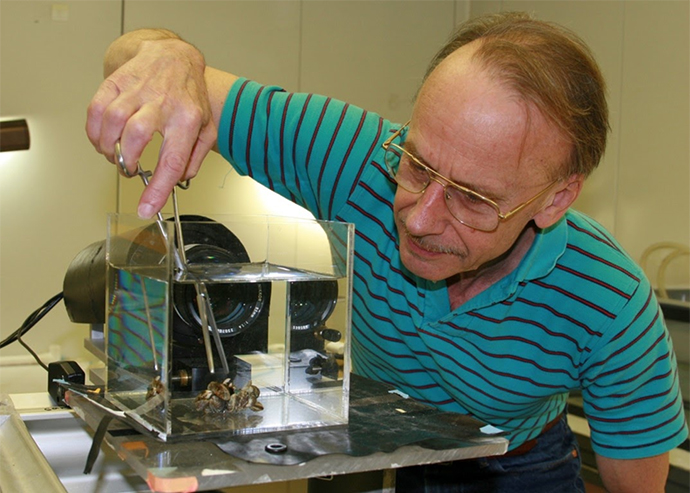
Member Spotlight
Summer 2020
Henry Vanderploeg leads NOAA's research on food web dynamics and algal blooms.
Dulcinea Avouris Dulcinea Avouris uses remote sensing to study water quality and algal blooms. I use remote sensing data to look at different water quality issues. My most recent focus was on the cyanobacterial and harmful algal blooms that recur annually in Lake Erie and in South Florida. We can use the data captured by the sensors to distinguish different in-water constituents like pigments, sediment, and colored dissolved organic matter. Now I am part of a project that tracks mercury in the San Francisco Estuary using proxies that we can detect with remote sensing instruments.My Pandemic StoryMy work was largely unaffected by the pandemic, because my research is primarily computer based! I had my laptop and a Wi-Fi connection and was able to work from home without a lot of fuss. I was teaching one class in the spring, an introductory oceanography class, and migrated it online for my students.However, just because I can easily work from home doesn’t mean that this time has been easy. The realities of ongoing societal-level uncertainty driving multiple layers of stress, worry for both loved ones and students, looking for a new job, and managing a changing household situation have a big impact. My oldest child moved home so she wasn’t isolated in an apartment while she worked remotely. My next two, college age students, were abruptly dislocated (one from a study abroad program in Scotland).In total, seven of us needed space and quiet to be able to continue to work and finish the school year. It is not an easy situation, but we are incredibly privileged to live in an area where we have the space in our house and the means to support our family. That privilege has also served to highlight the incredibly high level of inequality and financial disparity in our country and society—for families, scientists, and persons of color. This inequality has been both a source of further concern and a call to action for me personally and for my family.There have been some wonderful personal benefits during this time as well. I did get a new position with a principal investigator (PI) who is already proving to be an excellent mentor. My previous PI remains a part of my professional success, and my network grows! And at home, my partner has been taking over the cooking, and household tasks are more evenly distributed. We have been able to complete some projects as well. I know that this is very much a cliché, but it is true, and one way to help cope with the stress of the pandemic. I have also begun to find ways that I can help enact real change in our society. I am hopeful that change can occur and be real.A look to the futureI think that one of the most important impacts of the pandemic was to pull back the curtain on the realities of our lives. Scientists are people—with interests, relationships, and responsibilities outside of their scientific research. As a community, we need to be better at recognizing and valuing those things. We need to work to change the expectation of research as a priority for which everything else is sacrificed. For example, we should focus on increased access to conferences, a normalization of the challenges of childcare or eldercare, and attention to race and gender issues.I use remote sensing data to look at different water quality issues. My most recent focus was on the cyanobacterial and harmful algal blooms that recur annually in Lake Erie and in South Florida. We can use the data captured by the sensors to distinguish different in-water constituents like pigments, sediment, and colored dissolved organic matter. Now I am part of a project that tracks mercury in the San Francisco Estuary using proxies that we can detect with remote sensing instruments.
Member Spotlight
Summer 2020
Dulcinea Avouris uses remote sensing to study water quality and algal blooms.
Yakuta Bhagat Yakuta Bhagat balances environmental consulting with family during the pandemic. I work at an environmental consulting firm near Akron, Ohio, in the capacity of a senior scientist and project manager. My work typically involves conducting water quality and habitat assessments, biological community evaluations, and ecological risk assessments for natural resource sites as part of routine monitoring studies, and for industrial facilities as part of compliance evaluations for environmental permitting.My Pandemic StoryAt the onset of the pandemic, it was very difficult managing my project workload at home while also taking care of my two preschool-age children. As was the case with most families, my husband and I were thrust into a situation that was completely unfamiliar and were forced to quickly adapt to our very unusual circumstances. My project work at the time involved conducting analyses and writing reports. Homeschooling my kids during the day and working at odd hours of the night proved unsustainable after a few short weeks, at which point it became necessary to significantly reduce my work hours and take a pay cut as a result. The passing of the Families First Coronavirus Response Act in April helped in providing resources such as partial paid family leave to facilitate managing work while schools were shut down. In some respects, I am quite fortunate to be able to work remotely and have a flexible schedule so, while there have indeed been some challenges, I have been able to adapt to a new normal and take solace in the fact that my family members and I have managed to remain healthy and safe during this rather precarious time.As we approach the start of the school year and with the continuing rise in the number of cases, the possibility of a second wave of the pandemic and an inevitable second shutdown is something that has been on my mind lately.During the shutdown and even now, my family and I rely heavily on social networking platforms such as FaceTime, Skype, and Zoom to stay connected to extended family members, friends, and teachers. This has helped tremendously in coping with the situation with which we are faced and bringing a sense of togetherness and solidarity.An unexpected silver lining in the midst of this very challenging and uncertain time has been the ability to slow down the pace and spend quality time at home with my family, engaging in fun and creative activities on a daily basis that our normal schedules may not have allowed.A look to the futureWe are fortunate to live in a time where technology has proven to be a saving grace. The virtual conference held by IAGLR in June demonstrated how the scientific community can still convene to share ideas and have important discussions on ongoing research and topics of social importance. This pandemic has taught us all lessons in humility, sustainability, and our inherent need to stay connected. It is important for the research community to continue fostering communication and finding new and innovative ways of conducting research independently and collaboratively.
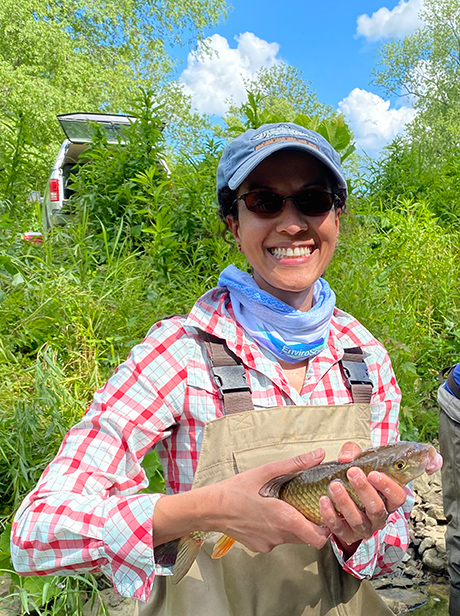
Member Spotlight
Summer 2020
Yakuta Bhagat balances environmental consulting with family during the pandemic.
Jasmine Mancuso Jasmine Mancuso's thesis on algal blooms provides insights for local management. My master’s thesis research focused on the harmful algal bloom (HAB) impairment in Muskegon Lake (Muskegon, MI), a Great Lakes Area of Concern. The first objective was to gain a historical understanding of the trends of HABs on Muskegon Lake (2003–2019) both in terms of abundance and composition. The second objective was to determine how the anomalous weather patterns of 2019, a very cool and wet year, affected the phytoplankton community and HABs in Muskegon Lake.My Pandemic StoryWhen campus officially closed in March, we were told it was a temporary measure. I hadn’t any idea I would only return to campus one more time to clear my desk months later.One of the most challenging realizations for me was that my graduate school career would not conclude with months of me working hard alongside my peers as we rallied to finish our theses, but rather with me trying to focus at an impromptu desk in my living room, alone. It was a struggle to maintain efficiency, and I began working long days finishing up data analysis and tackling the writing portion of what would turn out to be a 200-page thesis.While the seemingly constant distractions of the news, my cats, and the other members of my household (who were also trying to figure out how to work from home) made it difficult to maintain a strong work ethic, I can’t help but feel lucky that all of the work that needed to be done to finish my thesis could be done remotely. With all the time in the world and no reason to leave my home, it actually made for a timely opportunity to focus on writing and preparing for my defense. I found that the most important thing to maintaining sanity and productivity was to follow a strict schedule, not work for too long at a time, and take the weekends off. With the amount of time saved from not commuting to campus or the lab and the conclusion of classes, I was able to pick up old hobbies, tend to my plants, read more, make puzzles, go birding and hiking in the mornings before working, watch shows I’d earmarked, frequent the beach, and spend time with my family.In realizing all of the things that I, and many others, have lost during the course of the pandemic—the energy of the campus environment, the ability to go out with friends, celebrations for concluding our graduate school journey—I found that I actually gained things as well. For the first time since beginning my academic endeavors, I had time. Whereas my days used to be filled with driving to and from campus and the lab, completing class requirements, performing field and lab work, going to the gym, engaging in social activities, and more, they were now filled with seemingly endless amounts of time. At first, it was daunting and overwhelming, but it also provided endless opportunities to appreciate the world around me, and I believe I am a more adaptive, flexible, and self-sufficient person for it.A look to the futureTo me, one of the most important and obvious things to emerge from the pandemic is the realization that scientists have the ability to pull together and work hard to fast-track necessary research for the common good, all while facing criticism, mistrust, and disbelief from the public. There has long been a movement to try to better connect the scientific community to the community it serves, and I believe we have made progress in that regard and can use the momentum to tackle challenges like climate change. I think the key is collaborative efforts and a united front.
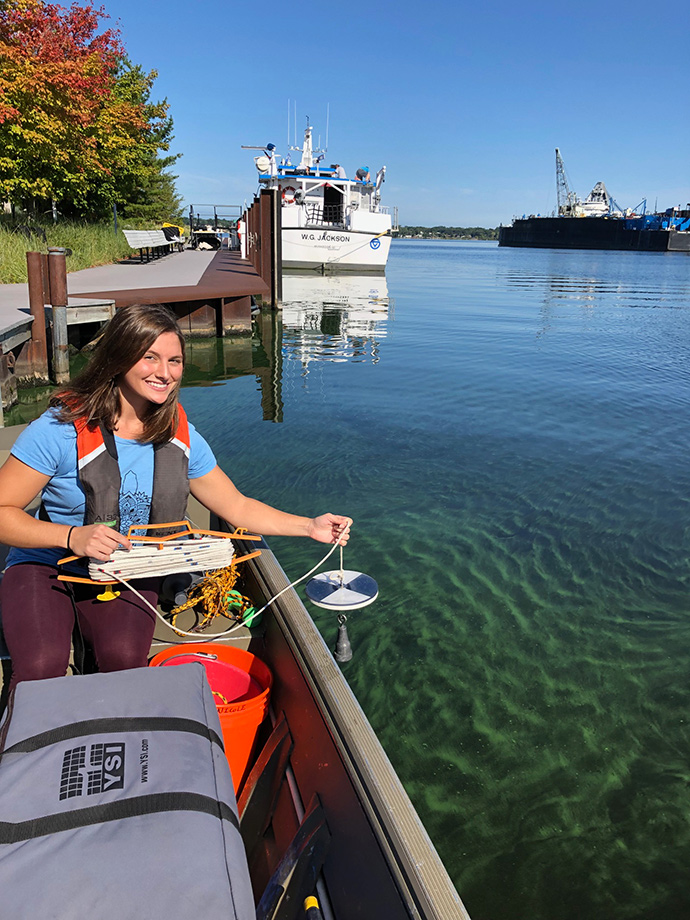
Member Spotlight
Summer 2020
Jasmine Mancuso's thesis on algal blooms provides insights for local management.
Mark Olokotum Mark Olokotum discusses PhD research on phytoplankton diversity in Lake Victoria. I undertake activities to generate information on the trends of fish stocks, biomass, and biodiversity. My colleagues and I carry out routine aquatic biodiversity assessments for all human developments to ensure “ecological good status/potential” and compliance with legislation. My Ph.D. research assesses the patterns of phytoplankton diversity, dynamics of cyanotoxins, and associated health risk. In addition, I advise on the interaction of algal blooms and fisheries production.My Pandemic StoryThe COVID-19 pandemic led to several presidential directives in Uganda, including a national lockdown that took place while I was traveling from the field to the workplace. The following week, researchers were designated at essential service providers and allowed to operate at 30% workforce. During this period, our workload was high, but we had limited working time due to a 7 p.m. curfew (when factoring commuting time).I started working from home, where my little girl was always my biggest challenge as she needed to play, in addition to the house chores. It was also the first time I experienced a feeling of “retirement” at an early age. All learning institutions were closed, and closure of Makerere University affected my mandatory cross-cutting courses that required physical classes and meetings with other Ph.D. students.With the cancellation of commercial flights, my plans for final data analysis and subsequent write up at the Museum National d’Histoire Naturelle in Paris, France, were put on hold. In addition, airport closures and subsequent flight cancellations would have kept me from attending the IAGLR conference in June if it had proceeded in person. Either way, I could not share in person with an international audience the ongoing assessment of the patterns of phytoplankton diversity and the dynamics of cyanobacteria. As a Ph.D. student, presenting my work to an international audience is a university requirement. This wasn’t possible during the peak of the pandemic.To keep up with my work and Ph.D. progress, I’ve held regular meetings with my work colleagues to manage workplans and budgets for recently approved projects. I adopted weekly Skype and Zoom meetings with supervisors; however, this was hindered by the high cost and poor internet connectivity.Although I have embraced e-working environments, airport closures still limit my ability to travel for my data analysis and to attend other international conferences to complete my Ph.D. studies. At work, we have embraced the World Health Organization standard operating procedures and recommendations of the Ugandan Ministry of Health as we exercise our mandate. However, we are still challenged, as our problems and those of fisher communities are far beyond just the COVID-19 pandemic. These challenges include increasing water levels and floods, poor fisheries management, post-harvest losses, lack of alternative livelihoods, health risk associated with cyanotoxins, and inadequate financing. Unfortunately, the pandemic has diverted funds and support away from these other challenges.A look to the futureWe must embrace working smarter within the different situations with the numerous webinars that have been used to reach researchers and stakeholders. I have participated in several online conversations and presentations that received good viewership. In addition, learning institutions in developing countries should embrace virtual meetings and presentations for subsequent assessments.
Member Spotlight
Summer 2020
Mark Olokotum discusses PhD research on phytoplankton diversity in Lake Victoria.
Judith Perlinger Judith Perlinger transitions to online teaching while researching pollutant transport. I am a professor of civil and environmental engineering at Michigan Technological University (Michigan Tech), located in Houghton on the Keweenaw Peninsula of Michigan’s Upper Peninsula. I teach courses in sustainable engineering, environmental chemistry, and meteorology. My research deals with transport and transformation of legacy and emerging pollutants in the Great Lakes region.My Pandemic StoryThe pandemic has affected my work in causing me to work from home for both teaching and research. I learned that Michigan Tech would be going to online teaching Wednesday of spring break. I had until the following Monday to inform my students how the course would function for the remaining seven weeks of the semester. Luckily, the course I was teaching was conducive to an online format, but, not surprisingly, I was not prepared for online teaching. I had to increase my online presence in the learning management system, learn how to hold synchronous and asynchronous class meetings, conduct online assessment, run student group meetings using Zoom breakout rooms, work in Google Docs and Sheets for classwork, and more, in a short time frame.Through those weeks, it became clear to me that I needed additional training in online teaching. At the end of the spring semester, Michigan Tech required all faculty to obtain certification to teach online, and so I obtained the Quality Matters (QM) certification by taking their seven mini courses in May and June. Taking the QM certification courses did increase my confidence in online teaching. The biggest challenge for me in this pandemic has been delivering courses online that are of similar quality as face-to-face courses. The litmus test for success in dealing with the challenge will be the start of fall term, when I am required to deliver courses both face-to-face and online.Michigan Tech is hosting the IAGLR conference May 17–21, 2021. Noel Urban, also a faculty member at Michigan Tech, and I are co-chairing the event, and so the conference has been on my mind a lot lately. If it occurs in person, it will be the largest conference ever hosted by Michigan Tech. We have held numerous planning meetings this summer, and I have been amazed at the outpouring of interest and help with the preparations. We will not know whether the conference will be held face-to-face or online until January, so we are preparing contingencies for both cases. IAGLR 2020 Virtual was outstanding, and I would personally like to thank President Ed Verhamme (an alumnus of our environmental engineering program, I am proud to mention) and the IAGLR staff for the key roles that they played in making IAGLR 2020 Virtual a reality. I admit that we hope that IAGLR 2021 can be held face-to-face, as we would very much like the IAGLR community to see and experience the natural beauty and rich history of the Keweenaw Peninsula in person.A look to the futureDuring this time of upheaval, how can we as a research community emerge stronger than before? The seemingly contradictory answer to this question is that standing together in solidarity means, quite literally, standing apart. Social (aka physical) distancing remains the most effective means to stop the pandemic. Given the distances across and between great lake basins, and as IAGLR 2020 Virtual so aptly demonstrated, the IAGLR community is already adept at standing apart in solidarity. Looking forward to seeing you at IAGLR 2021, whether it be in person or virtually!

Member Spotlight
Summer 2020
Judith Perlinger transitions to online teaching while researching pollutant transport.
IAGLR past, present, future By Ed Verhamme IAGLR President Ed Verhamme outlines the commitment to justice, equity, diversity, and inclusion. IAGLR President Ed Verhamme.One question has been burning in my mind since I became president of IAGLR during the COVID-19 pandemic: Who is IAGLR? I’ve attended 19 IAGLR-hosted conferences, and I thought I knew the answer to that question. Prior to the first-ever virtual IAGLR conference and the Black Lives Matter movement, I would have answered that IAGLR was an inclusive organization for those interested in understanding the Laurentian Great Lakes and other large lakes. However, it is clear there are very real barriers to entry for membership and inclusion in our association. Attending annual conferences in person (often in remote cities throughout the region) requires considerable time and resources, and publishing in our journal also requires an alignment of opportunities and institutional access that aren’t equally available. As the premiere research association for the great lakes of the world, we are missing the voices and expertise of Black, Brown, and Indigenous members of our community at almost every level of the association. This is not new information for anyone who has attended the annual conference. The issues that affect the integrity and sustainability of freshwater in our communities are complex, and it’s time for our association to strengthen its connection to and involvement from Black, Brown, and Indigenous people, as well as women, LGBTQ+, and other marginalized members of our community.The IAGLR Board of Directors, along with members and outside advisors, are working to broaden the social and cultural fabric of our association beyond its traditional science-only focus. This work began in 2017 with the hosting of State of Lake meetings to bring the association to local communities throughout the Great Lakes region every fall. These efforts continued into 2018 when IAGLR appointed its first international board member, and recently into 2020 with the hosting of a virtual conference and panel discussion on Justice, Equity, Diversity, and Inclusion (JEDI).These actions are only the beginning and were all initiated prior to the brutal murder of George Floyd in Minneapolis. Going forward, I expect that IAGLR will continue to examine the answer to the question, Who is IAGLR? As a primarily volunteer-based organization, IAGLR cannot reach these goals without you. We need to hear from you about your experiences and recommendations for actions we can take together. IAGLR needs help to identify and remove barriers and add resources that members can bring to their home institutions to support Black-, Indigenous-, and Brown-led efforts. The JEDI panel discussion and the conversations that led its inclusion in IAGLR 2020 Virtual started a conversation that will continue. Please reach out to me or other members of the board to provide input, volunteer your time, develop resources, and share your experiences. I also need you to hold the association accountable to these shared goals. In the meanwhile, please enjoy this issue of Lakes Letter, which features highlights from the JEDI panel and other conference events.
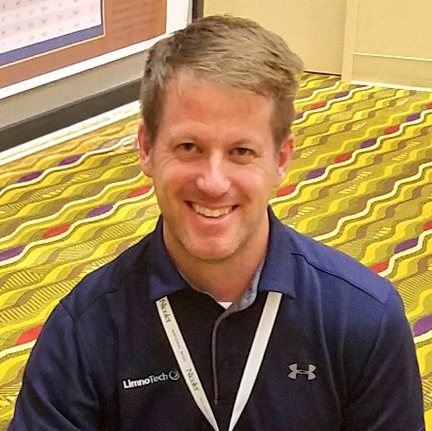
Editorial
Summer 2020
IAGLR President Ed Verhamme outlines the commitment to justice, equity, diversity, and inclusion.
Great Lakes science and policy through the lens of a pandemic By Paul Sibley A panel discusses the pandemic's impacts on Great Lakes research and policy. Deploying Western Lake Erie Buoy, July 2020. Cooperative Institute for Great Lakes Researchresearchers Russ Miller and Heidi Purcell deploy a Realtime Coastal Observation Network buoy inwestern Lake Erie, 7/14/20. Credit: NOAA GLERL.Think back to the annual IAGLR conference in Brockport, New York. It was business as usual; the last time we physically gathered to hear about, discuss, and debate the most pressing science and policy issues of the Great Lakes. Who could have predicted the situation in which we now find ourselves? The onset of the pandemic in the early part of 2020 has affected every sector and demographic of global society, and many of us have been forced to modify our lives in ways we neither could have predicted nor imagined. One of the “COVID casualties” was the annual meeting, although this did present the opportunity to gather virtually for the first time in the history of the association. At the time of the meeting, the potential scope and significance of the impacts of COVID on Great Lakes science and policy were beginning to emerge. It seemed fitting, therefore, to delve more deeply into whether and how COVID-19 has impacted research and policy in the Great Lakes basin, and this subject constituted the first panel discussion of the virtual meeting.The panel discussion was chaired by Dr. Paul Sibley (University of Guelph) and guest panelists included Dr. Gail Krantzberg (McMaster University), Dr. Donald Uzarski (Central Michigan University), and doctoral student Rene Shahmohamadloo (University of Guelph). The discussion was guided, in part, by a series of questions: How has COVID-19 impacted research and policy in the Great Lakes basin? Will the effects of COVID be short-term or long-lasting? Are there opportunities to change how we manage Great Lakes research in the future? Can restoration initiatives be used to stimulate economic recovery after COVID-19?With an audience of over 150 attending the panel discussion, each panelist was provided an opportunity to relate their experiences and express their concerns about the impact of the pandemic. The emerging consensus was that there is and will continue to be an impact on research and policy, but that it is too early to know the full extent and nature of the impacts. We heard about the difficulty in conducting research in the face of building and office closures, recommendations for physical distancing, and requirements for personal protective equipment (PPE). Early on in the pandemic, PPE was difficult to obtain, which hindered efforts to ensure researcher safety. Agencies that were forced or chose to shut down were no longer able to fulfil their obligations to the research programs in which they were participating. This will lead to a loss of sampling effort and potentially important data for those programs. Further, many government agencies were forced to shut down or significantly scale back activities, including environmental monitoring; these data are now lost, as is the opportunity to better understand how Great Lakes ecosystems might have responded, at least in the short-term, to the significantly reduced inputs of environmental pollutants during the pandemic. Investments in remote sensing platforms, which are largely unaffected by pandemics, may be one way to overcome this monitoring vulnerability in the future. Finally, in Canada at least, the federal government has rightfully directed significant dollars to COVID-related research, but as governments are forced to reconcile ballooning deficits, one wonders how this might affect funding for future non-COVID research programs.It is the mid-term graduate students who may be most affected, unable to start new experiments or complete experiments or field sampling already underway.Graduate students, who constitute arguably the most important constituency in creating and advancing our understanding of the Great Lakes ecosystems, could be significantly impacted, but this will depend on where they are in their degree programs. Later-stage graduate students are less likely to be affected, as they may have completed their research requirements and are focusing on writing and publishing. We heard about students whose entry into graduate programs has been delayed and of those whose programs have been modified to accommodate the situation and new requirements created by the virus. It is the mid-term graduate students who may be most affected, unable to start new experiments or complete experiments or field sampling already underway. Graduate students have expressed much anxiety and fear stemming from the uncertainty forced upon them by COVID. We must keep in mind that considering the mental health implications for students facing significant changes to research and teaching is just as important as the physical and administrative aspects of the research programs. With this in mind, many universities, with assistance from local and federal governments, have offered financial assistance to students whose funding may have been temporarily terminated, and relaxed completion requirements to accommodate the expected longer times to completion.It is easy to focus on the negative aspects of COVID, but it was also clear that the pandemic represents an incredible opportunity to embrace and enhance Great Lakes research initiatives; this could even fuel economic recovery in the basin. The Great Lakes Restoration Initiative is an excellent example. On the chopping block early on during the current U.S. administration, the governors of the Great Lakes states, community interest groups, environmental groups, and academics initiated a campaign to stop the defunding proposal, which, at ~$300 million, was miniscule compared to the overall U.S. budget. The decision was eventually defeated. Why? Because an evidence-based approach showed that this would lead to job losses (never a politically astute move), and that the return on investment, as shown in a recent IAGLR report, is as much as 3:1. In other words, investment in the environment could be used as an effective tool to promote economic recovery in the Great Lakes basin. Given the economic impact of COVID on the Great Lakes region, a strong argument can be made that funding of restoration and other research initiatives in the Great Lakes basin should be significantly increased. Failing to do so may be a significant opportunity lost. One example presented to the audience is tracking the movement and viability of the SARS-CoV-2 virus in wastewater effluent. What is the virus load in wastewater? We know that it is excreted and likely to be found in wastewater, but not whether the virus is viable and transmissible in this state, and whether it poses a risk to those recreating in areas receiving wastewater effluent.It was also clear that the pandemic represents an incredible opportunity to embrace and enhance Great Lakes research initiatives; this could even fuel economic recovery in the basin.Participants also spoke about the advantages and disadvantages of attending a virtual conference. Clearly, with the cancellation of the annual conference, we all lost one of the most important opportunities for attendees—to engage in the hallways, form collaborations, and share personal interactions as we discuss Great Lakes research and policy. This is particularly difficult for graduate students who may wish to speak directly and personally with influential researchers in their field to gain important feedback on their science and methodology, but also in making important connections as they develop into scientists in their own right. On the other hand, a virtual platform is also an opportunity for those who would not have attended in person to participate in the conference; that a virtual delivery model is more accessible is a point underscored by the nearly 550 registrations for the conference. While personal connections may be diminished with virtual delivery, they are not completely lost, and there is always the benefit of a reduced carbon footprint. In the future, it is likely that hybrid formats combining in-person and virtual attendance will become a successful norm for many societies.As is the case for almost all entities affected by the pandemic, the extent to which research and policy in the Great Lakes will be affected is uncertain. Perhaps it can be compared to a movie with alternative endings; as the editors, we can choose an ending in which we stand as collective champions for Great Lakes ecosystem health by acknowledging the important, reciprocal relationship between the environment and economy and vanquish the enemy of indifference.
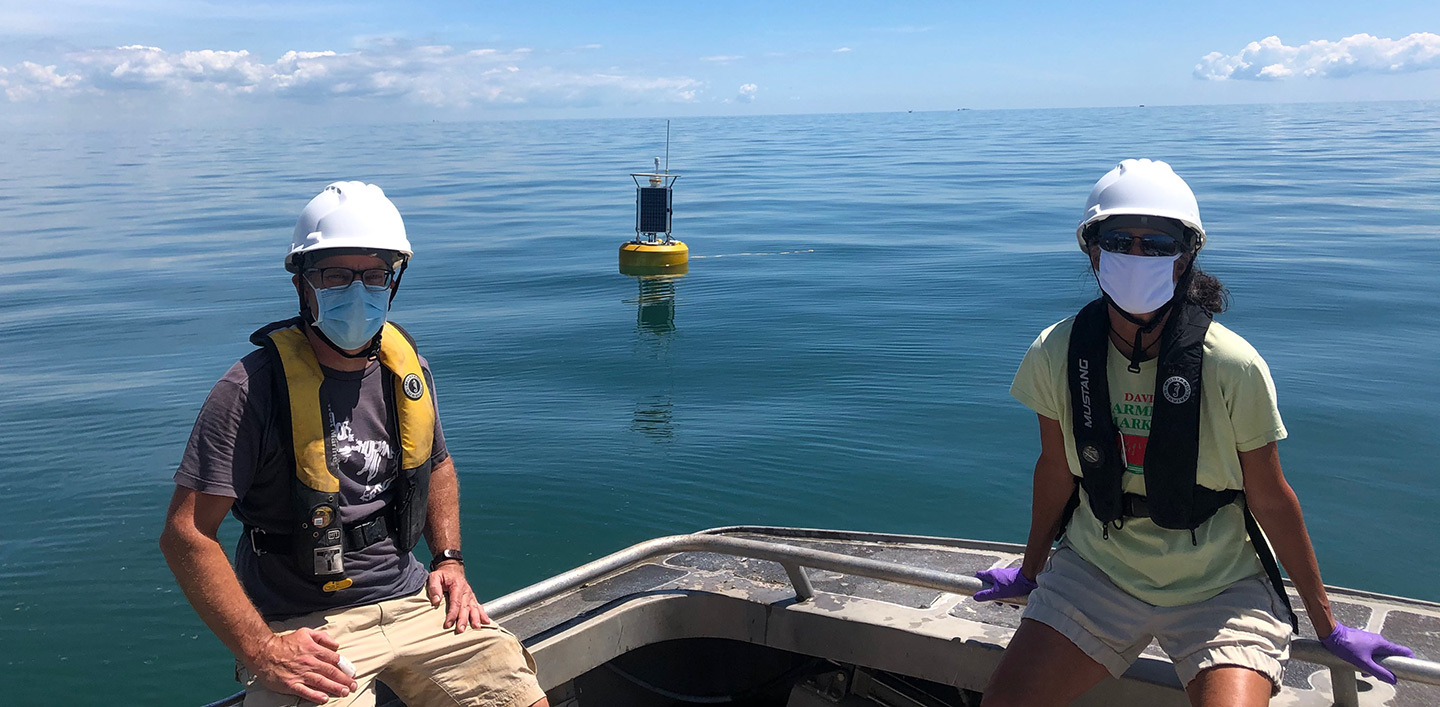
Feature
Summer 2020
A panel discusses the pandemic's impacts on Great Lakes research and policy.
Justice, equity, diversity, and inclusion By Jennifer Boehme. Panelists who contributed to this article include Alfred Otieno Achieng’, Catherine Febria, Donna Kashian, Andrea Kirkwood, Kevin Obiero, Jess Owen, Ali Shakoor, Paul Sibley, and Ed Verhamme The IAGLR JEDI panel outlines action items to promote diversity within the association. The global pandemic gave heightened awareness to the well-being of the IAGLR community, as the impacts affected many research programs and personal lives of our members. The fact that these impacts are disproportionately affecting marginalized and underrepresented groups contributes to a growing need to understand dimensions of justice, equity, diversity, and inclusion (JEDI) within IAGLR and beyond.While COVID-19 and Black Lives Matter were top issues during IAGLR 2020 Virtual, IAGLR members had signaled the importance of addressing JEDI within the association a couple years ago in a member survey. As members of the IAGLR family, we are all impacted by what happens to our friends, neighbors, and colleagues. We can no longer remain complacent to issues that negatively affect them nor the communities in which we work and belong. Science-based organizations were called to action in the days and weeks leading up to IAGLR 2020 Virtual. Thus, IAGLR held a panel discussion during the conference both to begin listening to members’ experiences and to reflect on how the organization can apply JEDI principles during this critical time and make them a permanent feature of IAGLR practice.The discussion allowed panelists, who were members of the IAGLR community and its board, to field live questions from members and be an inclusive and open forum for both its people and its science. We seek a path forward to address potential systemic exclusion of Black, Indigenous, People of Color (BIPOC) and other underrepresented groups (e.g., LGBTQ+ and those facing ableism) from full participation in the IAGLR community. As we strive toward further expansion as an international society, we must ensure that our actions and practices reflect the diversity of all IAGLR constituencies and elevate the contributions of all.Panelists considered the goals of inclusion for IAGLR’s international members and BIPOC, noting the importance of early education outreach and mentors to break down systemic barriers. Actions by BIPOC in IAGLR are not the answer, but rather non-BIPOC members are encouraged to act, beginning with authentic and concerted efforts to build trust within the IAGLR community and society. A persistent and consistent presence by scientists in the representative demographic was deemed critical for effective outreach to BIPOC communities to demonstrate an interest in and care for community well-being, as well as to draw a link between science and their place in the natural world.Commit to expanding networks to include BIPOC, build trust with local communities, and get to know communities of color in your region, understand their perspectives and expertise as naturalists, and the reasons that they are not taking part in the research and science community.When asked about disparities between the demographics of our communities and those who apply for science opportunities, panelists noted that exposure and access to science and the natural world by BIPOC communities vary a great deal. Wider recognition of this point is needed to encourage organizations to prioritize steps to retain students from all backgrounds. Panelists encouraged members to commit to expanding networks to include BIPOC, build trust with local communities, and get to know communities of color in your region, understand their perspectives and expertise as naturalists and the reasons that they are not taking part in the research and science community. Moreover, panelists also encouraged individuals to begin to understand the colonial history, Treaty partners and Indigenous rights-holders in the regions where we live, work, and recreate.Panelists also identified the importance of international participants sharing knowledge from other continents, and in particular, noted the need to increase participation of women from these other continents. Steps that IAGLR could take to further this goal include examining further options to defray travel, membership, or registration costs for IAGLR meetings, and pursuing partnerships with other societies to co-host meetings outside of North America. Such steps could also be considered for BIPOC members.Participants raised the need for strategies to share these values with home institutions, including ways for those with privilege to use it to open opportunities to broader groups. The sharing of rewards by government scientists and faculty could provide underrepresented students with grant and workshop opportunities as well as field experiences to foster their training and passion for science. The current assignment of value for JEDI work by academic programs and leadership also presents a challenge. If service work is not a higher consideration for tenure, that limits participation for those seeking tenure even if they personally value service. As a community that values JEDI, we need to work to change this paradigm.To realize a shared vision for a more just, equitable, and impactful IAGLR, a sustained effort will require all hands on deck within the association and include strong participation from the dominant demographic, white men. Panelists also observed that past promotion of colonial voices and perspectives over others via funding decisions is no longer servicing sustainability and science goals. This presents an opportunity for both top-down and bottom-up action to center research on local knowledge holders and needs. Investment in capacity and leadership by early career researchers through mentorship and investment in partnerships are examples of bottom-up actions that can take place immediately.For JEDI to be a priority for the association, it was recognized that we as members must share the value of a more just, equitable, and impactful IAGLR society. For next steps, panelists will follow up with the IAGLR Board of Directors with recommendations noted below so that IAGLR can restructure its bylaws and charter as needed to codify its commitment to this important initiative. We call on members to continue to share experiences and knowledge and assist IAGLR in taking action.Proposed JEDI action itemsPanelists indicated that a more welcoming IAGLR must include concrete steps by both the association and its membership. Their suggestions are listed below.Include more BIPOC and international representation in IAGLR leadershipSupport diversity mixers for studentsBe better listeners as scientistsCenter the research and input of diverse scientists on teams and funding opportunities Learn the names of Indigenous rights-holders and work towards understanding the relevant treaties in the places where we work, live and researchAccount for community needs when building a research program Serve as good role models and mentorsInclude students in future IAGLR JEDI initiatives and encourage people to join this work early in their careersUse our privilege to open opportunities to broader groupsShare rewards via grant and workshop opportunities and field experiencesWork to change the value assigned by academic programs and leadership to JEDI workProvide JEDI seminars at future conferences, including both the annual Conference on Great Lakes Research and the State of Lake conference series

Feature
Summer 2020
The IAGLR JEDI panel outlines action items to promote diversity within the association.
Large lakes of the world By Jessica Ives and Ted Lawrence Experts discuss shared challenges facing large lakes worldwide, including climate change. The shift to a virtual IAGLR conference this year came with the unexpected benefit of more researchers from around the world being able to participate. The Large Lakes of the World panel discussion was born from the State of Global Lakes session, co-chaired by Richard Ogutu-Ohwayo of the Ugandan National Fisheries Resource Research Institute and African Lakes Network. The session featured 13 recorded presentations from experts representing lakes in Russia, New Zealand, Italy, China, and throughout East Africa. These lakes ranged in size from Lake Garda in Italy (370 km2) to Lake Victoria in East Africa (Uganda, Kenya, and Tanzania; 2,750 km2). Each presenter gave an overview of their lake and discussed topics pertaining to it (e.g., land use changes, fishery exploitation, and aquaculture).Following the session, the one-hour live panel discussion featured a subset of session presenters to discuss commonalities, differences, and shared issues across global large lakes. Panelists included Kevin Obiero (Lake Turkana), Alfred Otieno Achieng’ (Lake Victoria), Nikolai Filatov (Lake Onego), Cecilia Githukia (Lake Victoria), Annette Janssen (Lake Taihu), and Yu-Chun Kao (representing a comparative fisheries study of 30+ global lakes). The discussion began with broad thoughts about the shared challenges of the world’s large lakes (e.g., climate change, eutrophication, exploitation), and quickly focused in on one particular challenge: data availability. It was clear through the discussion that data availability not only varies widely across the globe, but data access does as well. Participants noted that the data challenge is made up of numerous smaller challenges, including language barriers, data ownership, differing data collection methods that make data uncomparable, and data collection gaps (particularly in the global south where much of the research is patchy and project-based).Following the discussion, we invited panelists and the audience to submit ideas for concrete actions that IAGLR could take to strengthen its international reach. We received some excellent ideas, which will be directed to IAGLR’s International Committee, led by Dr. Ogutu-Ohwayo. The committee is developing a list of recommendations to share with the IAGLR Board of Directors.One of the key messages that we, as the moderators, took away from the discussion was that IAGLR and other international associations have a valuable role in connecting global players and facilitating data co-collection and sharing. IAGLR should continue to bring large lake researchers together. Not only does IAGLR need to continue to strengthen the areas it does well (a strong North American community, annual meetings, and the Journal of Great Lakes Research), but it also needs to grow in new ways that allow more global access and participation in knowledge sharing and network building. In this digital age, and highlighted by the COVID-19 pandemic, we encourage IAGLR to investigate how it can use virtual spaces to connect and strengthen large lake science at a global scale. This could most efficiently be done by partnering with other associations and organizations with networks outside of North America, allowing IAGLR to both retain its existing Laurentian Great Lakes strengths and contribute to the understanding and stewardship of global lakes, some of the world’s most precious resources.
Feature
Summer 2020
Experts discuss shared challenges facing large lakes worldwide, including climate change.
Cory Brant Cory Brant explains how art enhances his communication as a sea lamprey researcher. Photo by Andrea Miehls.My research primarily focuses on invasive sea lamprey in the Laurentian Great Lakes—from pheromones and physiology to the human dimension and history of the invasion and response. I recently published a book titled Great Lakes Sea Lamprey: The 70 Year War on a Biological Invader that tells the sea lamprey story through the lens of those who lived it. I’m also involved in cisco and whitefish restoration in the Great Lakes.Describe your creative pursuit.As a kid, I remember pretending to discover new species around the yard, sketching and “describing” each new creature in my trusty field journal. These days I work with graphite, ink, and watercolors. I mainly illustrate freshwater fishes, along with the occasional portrait or landscape. A few years ago, I began sharing both science and art on social media, and it’s since become a big part of my professional and personal life. After finishing up graduate school, the close friends I had made during my time at Michigan State University moved to different parts of the world in pursuit of new scientific adventures. This left me feeling isolated. Finding a group of like-minded artists became important to me, but social media was not where I expected to find it. Yet I discovered a highly engaged community of scientist artists on Twitter when I came across the hashtag #SundayFishSketch. Every Sunday, a group of wonderful fish nerds from around the world who like to draw fish share their work on Twitter using this hashtag. It was started by artist and scientist Rene Martin, @Lampichthys, a Ph.D. candidate at the University of Kansas studying the evolution of deep-sea fishes. The #SundayFishSketch group is inclusive, global, supportive, and a regular reminder for me to stay involved and keep practicing my scientific art.How does this pursuit influence your science?Art influences all aspects of my science and vice versa, especially as it relates to my communication and engagement efforts. Fishes are fascinating organisms that people don’t get to see that often in detail: mysterious, unseen, and therefore easily overlooked. Bringing that detail to life in an illustration is a special thing that can hook folks to the science beyond the sketch. Art allows me to tell a visual story about my research—something we can rarely do in an academic journal.Does it make you a better scientist, and if so, how?I’m certain it makes me a happier scientist. I work on complex and mostly negative environmental issues, and it can get overwhelming. When I focus on biological illustrations and all the details that make a certain species unique, it helps me settle my mind and process my emotions from the day, as well as understand and acknowledge the stress that can come along with being in academia. I’ve often thought of new research questions while illustrating, and regularly think of new things to illustrate while conducting research. I think both scientists and artists have a lot to gain by incorporating the other into their work. Both require a deep level of curiosity, experimentation, patience, and a high tolerance for failure. My illustrations connect me with my own creativity, allow me to communicate detailed science in a fun way, and channel my enthusiasm for fishes—their interesting shapes, diverse colors, fascinating habits, and connections with humans. Art helps me to be the best scientist I can be.Small-mouth bass. Watercolor by Cory Brant, 2019.
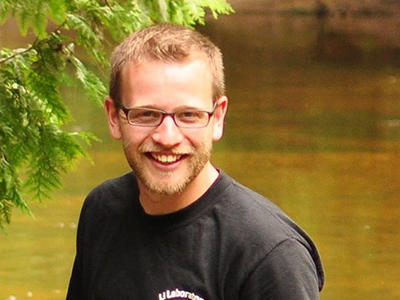
Member Spotlight
Spring 2020
Cory Brant explains how art enhances his communication as a sea lamprey researcher.
Darrin Hunt Darrin Hunt draws parallels between punk rock DIY ethos and invasive bivalve research. My dissertation research has largely dealt with the invasion and establishment of nonnative bivalves in small stream (<30m wide) ecosystems. I have documented population densities and assessed the impacts of bivalve invaders (dreissenid and cyrenid) on native, benthic macroinvertebrate communities throughout the Great lakes and southeastern United States. My research has included natural history surveys in Michigan, Ohio, Georgia, and Puerto Rico. Additionally, I have conducted enclosed mesocosm experiments through several Great Lakes tributaries. I also co-manage Dr. Donna Kashian’s lab.Describe your creative pursuit.Music has always been an important part of my life. My dad played music, and there was always a guitar around the house when I was growing up. I was drawn to my dad’s guitar and started playing before I was big enough to properly hold it, and when I was old enough, my parents gave me an electric guitar of my own. Shortly before that, I also received a skateboard. These two instruments have provided a lifelong lens through which I view the world.Skateboarding in the 1980s was deeply intertwined with punk rock music, and naturally, I became aligned with a community of like-minded punk rock musicians. This led to my friends and I starting a band, and then another, until skateboarding and punk rock became our primary means of socialization. I still play music with my friends, and I would not give it up for anything. I am a better, more well-rounded scientist because of it.How does this pursuit influence your science?By nature, punk rock is independent. It has separated itself from the rest of the music industry, and most of its enthusiasts would have it no other way. Much like punk rock music, skateboarding in the ’80s and ’90s was more of an act of resistance than a sport. Since that time, skateboarding and punk rock have evolved into multi-million dollar industries, and, while many resented this newfound popularity, I saw this as an opportunity to watch something unique happen—to see subculture become pop culture.Observing the convergence of “our” subculture with “their” popular culture impacted me. Though I saw this evolution of punk rock and skateboarding as necessary, forward movement, I was concerned that the important do-it-yourself principles would not embed themselves in future generations the way they did with mine. These principles, which are centered in self-motivation and “stick-to-it-iveness,” are important elements in shaping my character, and I have applied them in my career in the sciences.Does it make you a better scientist, and if so, how?My work in the punk rock music scene has fortified me with the necessary independence to successfully plan and carry out my research goals. My successes in the arts had little to do with conventional measures. We did not care much about money or widespread acclaim. Our efforts were driven by self-satisfaction, and we felt lucky to be a part of something unique and special that was taking place in southeastern Michigan. This enthusiasm and resilience allowed me to remain strong in the face of failing experiments, while exploring unknown ecosystems and navigating the inherent self-doubt we all experience during graduate school.When I first started my Ph.D., I wanted to compare the tolerances of various environmental toxins on resurrected and modern microcrustacean communities. I worked on this project for nearly two years, but I could not maintain my resurrected zooplankters for longer than a month. After much contemplation and discussion with my adviser, we decided to nix the project and revise my dissertation.As of now, I am on the cusp of graduation. Though I lost two years working on a failing project, I sampled aggressively, made up for lost time, and put myself back on schedule for a timely graduation. I believe that recoveries such as these are, at least in part, thanks to the fortitude and resilience I garnered in my punk community.VIDEOSVisit the following links for a sample of Darrin’s music:Darrin Hunt, The South Wind, 2020, Recorded for Lakes LetterFew and Far Between, Coming to Get You, 2011Few and Far Between, Take Control, 2009King for a Day, Lazy, 1997Roosevelt’s Inaugural Parade, Vendor, 1995

Member Spotlight
Spring 2020
Darrin Hunt draws parallels between punk rock DIY ethos and invasive bivalve research.
Jérôme Marty Jérôme Marty shares how music informs his work in science policy. At the Council of Canadian Academies, I work at the interface between science and policy. Prior to joining the CCA in 2016, I was a research scientist at the St. Lawrence River Institute, where I worked on aquatic invasive species in the Great Lakes and on eutrophication in the St. Lawrence River. In 2019, I became the chair of Partnership Group for Science and Engineering and was nominated to the Science Advisory Board of the International Joint Commission. When not working, I can be found biking, paddling, or playing accordion.My first exposure to the study of limnology consisted of spending hours observing diatoms under an electronic microscope in the laboratory of Dr. Antonella Cattaneo at the Université de Montréal. At that point, I was probably more fascinated by the geometry and beauty of these algae than by their ecology. While becoming a researcher, I maintained a connection with the arts because I believe it helped me to be more creative scientifically. Practicing music has provided me with a space where I could immerse myself and take a much-needed break. Performing music in public may have taught me how to better connect with my audience while delivering scientific presentations.Recently, I have started to incorporate music into my public presentations and share ideas on the links between the arts and science. The CreativeMornings speaker series was an opportunity to talk about the importance of water as a resource and also about its beauty (by showing diatoms) and its role in shaping who we are today (by playing Les Raftsman, a loggers song that preserves the memory of a hard life mixed with a certaine joie de vivre). This experience showed me that scientists may be able to convey effective messages to a wider audience in ways in which they were originally not trained to do so.VideosVisit the following links for a sample of Jérôme’s music:Rose of Raby, Recorded for Lakes Letter on Earth Day, 2020Les Raftsmans, The CreativeMornings, (at ~4:30 mark in recording)
Member Spotlight
Spring 2020
Jérôme Marty shares how music informs his work in science policy.
Catherine Masson Catherine Masson's passion for swimming influences her research on Great Lakes governance. Watercolor portrait of Catherine Masson by her mother, Joan Masson.2020 is a significant year for parks and protected areas across large lake complexes. Canada is signatory to the landmark 1992 U.N. Convention on Biological Diversity and must protect 17% of terrestrial and inland water areas under Aichi Target 11 (2010) and Canada Target 1 (2015). I am undertaking a comprehensive global-to-local freshwater biodiversity review. The Trent University Canadian Studies Ph.D. program will enable me to make vital contributions as we move forward.Describe your creative pursuit.Great Lakes open water swimming is my personal challenge. I will swim anywhere so long as conditions are safe. The lakes provide an ever-changing panorama of color, light, temperature, sensation, and sound. Polished rocks roll beneath as the swimmer is raised by the crests and lowered in the trough of progressive waves. Flex, reach, rotate, roll, breathe, and again. Credit youthful training for older ability. The goal is to swim long term for health, well-being, and the good of the lakes. Come on in folks, the water’s fine!How does this pursuit influence your science?The beaches I recreate on are subject to the Canada–U.S. Great Lakes Water Quality Agreement. Together, oversight institutions, federal, provincial, state, indigenous, and local jurisdictions, scientists, academics, nongovernmental organizations, and citizens all share responsibility for managing nutrients, pollution, and algae, assessing drivers and baselines, setting priorities, providing leadership, collaborating, and demonstrating flexibility. Knowing who and what keeps our lakes clean helps me swim nearshore waters with confidence.Back on dry land, I work to advance large lake science and policy through scholarship, public policy research, strategic planning, management support, and communications. I contribute to Canada’s climate, water, and fishery initiatives and evaluate international, national, and provincial environmental agreements. I travel widely across northern Ontario year-round and observe first-hand the daily exigencies facing remote and Indigenous communities.Does it make you a better scientist, and if so, how?Open water swimming is the missing piece of my Great Lakes–St. Lawrence River intellectual inquiry. It is more profound and immediate than looking out from the shoreline, a boat, or an airplane (or at reports, spreadsheets, and websites). The principal aptitude for swimming in the wild is a ‘feel for the water’—intent focus and total commitment to the opportunity that time and place present. This is the art of surrender rather than the science of stroke mechanics.I resolve to navigate this realm with competence toward a deeper appreciation of the waters of our Great Lakes and mighty rivers and, in so doing, develop robust and usable guidance for governments, communities, and citizens—across generations and over horizons.Fort William First Nation, Chippewa Park main beach in Thunder Bay, Ontario.
Member Spotlight
Spring 2020
Catherine Masson's passion for swimming influences her research on Great Lakes governance.
IAGLR amidst COVID-19: A unique time that calls for inspiration and creativity By Paul Sibley Academic life and the IAGLR conference pivot to virtual formats as the pandemic reshapes scientific community engagement and resilience. As I write this piece in early May, it occurs to me that even my cat, sleeping contentedly on the floor beside me in our study, is affected by the COVID-19 pandemic. In his case, the effect is largely positive, as he seems very happy to have me around a lot more; but he is, of course, oblivious to the reasons underlying his newfound situation. It is surreal to witness in real time the staggering increase in disease numbers and deaths around the world, along with the realization that we will all be affected by this for years to come. People speak of “the new normal” and “changed society.” Time will tell, but, like many of you, my experience has been one of personal and professional change as I confront the potential impacts of the COVID outbreak.Those of us in academia will face significant changes over the next year. In Canada, some universities have already decided that fall courses in 2020 will be offered only virtually. My university has not reached this decision yet, but it is likely, and I have already begun preparing for virtual delivery of my two courses. This will be challenging. One of the courses is 50% field-based and the other includes a weekly laboratory. Creativity will be the order of the day to ensure that the teaching goals are met. Research has been significantly curtailed, and we have been instructed that no new research projects can commence until it is safe to do so. Since no one really knows when that will be, I have had to delay the start of one graduate student from May to September (and possibly January), and another, who had already begun, is faced with the possibility of a completely different project.This week I attended a conference in Ireland. How is that possible? The entire conference—over 1,600 attendees—was converted to a virtual platform and I “presented” my prerecorded talk virtually. This was my first large-scale virtual meeting, and I was skeptical about how successful it would be. Honestly, I was blown away by the organization and functioning of the conference. Yes, there were a few technical issues during live sessions, but these were minor. More importantly, the science was still the science; only the delivery platform had changed (along with a much-reduced carbon footprint). Glass of wine in hand, I could listen (and relisten) to presentations at my leisure. As we all become more comfortable using virtual technologies, many have suggested that the new conference normal will be virtual delivery. I don’t believe that physical meetings will disappear, but I do believe that we will see changes marked by a gradual migration to virtual meeting platforms, perhaps beginning with hybrid models that combine in-person and virtual options.Many of you are regular attendees at the annual IAGLR conference and were undoubtedly disappointed to hear that the face-to-face version of the conference was canceled for the first time in its 63-year history. Canceling the conference was simultaneously one of the most difficult and one of the easiest decisions I have had to make professionally. It was an easy decision when viewed through the lens of public and personal safety. It was difficult because membership engagement is a core goal of the association, and the annual meeting provides the ideal forum to discuss new ideas about large lake science and policy, exchange professional and personal stories, and renew friendships. It is in this spirit that the board of directors decided to hold the conference virtually this year—another first in our history.This past Friday, the website for the virtual conference went live. The planning was both intimidating and exhilarating, but IAGLR has an incredibly dedicated group of individuals, from the conference planning committee to board members, who embraced the opportunity. Lessons learned from this experience will serve us well in the future. For example, we are in the early stages of planning for the State of Lake Ontario 2020 conference and are developing a contingency plan in case it, too, has to be delivered virtually.As it is for many professional societies, the COVID-19 pandemic is testing the resilience of IAGLR. One of my (new) goals in my remaining time as president is to ensure that we emerge from the pandemic with the same strength we have always had. To this point, as part of the virtual meeting, I am convening a “COVID-19 panel” to discuss the current and future impacts of the pandemic on all of us in the IAGLR family. I am sure you all have interesting stories to share—we would love to hear about them.I hope that each of you has been able to establish a comfortable routine; perhaps you have discovered new interests or rediscovered past hobbies to keep you busy. I miss my thrice-a-week hockey games but have been doing much more hiking (following distancing protocols, of course). My house has never received a spring cleaning like it has this year. If we want to save lives, staying put is the right thing to do. We may be at this for a while, but it is a price I am willing to pay, and a situation my cat, now on the study chair, is happy to endure.
Editorial
Spring 2020
Academic life and the IAGLR conference pivot to virtual formats as the pandemic reshapes scientific community engagement and resilience.
Crossing borders: Art, science, and the Great Lakes By Anne Moser Three projects combine art and science to communicate Great Lakes research. While the idea of scientists and artists collaborating may sound like a 21st century concept, the history of these disparate disciplines working in tandem dates back thousands of years. Scientists have long used art to document and illustrate, while artists have sought out science as inspiration. We see it in the prehistoric art in the caves of southern France, the human anatomy drawings of the master Leonardo da Vinci, and the exquisite masterpieces by John Audubon. The link continues today, as scientists and artists connect deeply to mutually inform their work. Artists are studying scientific findings to accurately communicate their concerns and inspirations, while scientists are searching for ways to better translate their research through art to engage a broader public in their findings.Recent education and outreach projects at the University of Wisconsin Sea Grant Institute (WSG) have taken this interdisciplinary approach by combining art and science to communicate Great Lakes research. We have taken inspiration from our work with children, who dive into scientific learning with an open mind, interdisciplinary nature, and artistic flair. The three projects featured here highlight opportunities where unique partnerships were forged and surprising common ground found between artists and scientists. Each exemplifies the crossing of disciplinary boundaries, with the goal of a more science-informed society, regardless of age, socioeconomic status, or education.We welcome collaborations from across the Great Lakes watershed. Please contact the author at akmoser@aqua.wisc.edu. THE POLY PLEDGEIn 2016, J. Leigh Garcia, at the time a student in the University of Wisconsin-Madison Master of Fine Arts program, approached the Wisconsin Water Library looking for information about plastic pollution and fish consumption. Although she was originally concerned about the impact plastic might have on her health, her library reference question eventually led to a public art installation on the UW-Madison campus. Leigh and a collaborator, Pete Bouchard, created a human-powered vending machine that dispensed reusable screen-printed shopping bags in exchange for pledges not to use plastic bags for one month. About 130 people took the pledge. WSG then held a symposium that featured Garcia and Bouchard talking about their artistic approach and the goals of their public performance. This artists’ talk was paired with a science presentation by Loyola University Chicago Associate Professor Timothy Hoellein, who gave an overview of his research on the sources and impacts of anthropogenic litter (trash) around Chicago. - A.M.Exhibition at the Thelma Sadoff Center for the Arts in Fond du Lac, Wisconsin. Courtesty of Thelma Sadoff Center for the Arts.ANCIENT SURVIVORSInspired to generate dialogue and discussion between art and science, two professors at the University of Minnesota Duluth curated almost 50 black and white images of lake sturgeon to help tell the story of the Great Lakes. These artistic interpretations formed the basis of several outreach programs, including a collaboration with the Thelma Sadoff Center for the Arts in Fond du Lac, Wisconsin. During early 2019, the THELMA mounted an exhibition, pictured above, in conjunction with the winter sturgeon-spearing season on Lake Winnebago. The exhibition included the artwork as well as artifacts and historical objects never previously collected in one place. Over 10,000 people learned the conservation story of an ancient fish brought back from the brink of extinction through newspapers, decoys and spears, audio recordings, scientific papers, sculpture, and drawings. - A.M.UNDER THE SURFACEAt Northwest Passage in northwest Wisconsin, youth in mental health treatment have the opportunity to go under the surface as part of an innovative curriculum that blends art, science, and therapeutic healing using underwater photography. This WSG-funded project has resulted in a photography exhibition that has traveled to libraries, visitor centers, and other public spaces around Wisconsin, showing the power of water to heal and restore. As one visitor to a show noted, “This exhibit took my breath away. I am blown away by how these kids have overcome pain and hardship and channeled emotions and experiences into creating great art.” - A.M.Portrait of a Freshwater Sponge by Jonathan.Under the Surface by Hailey.
Feature
Spring 2020
Three projects combine art and science to communicate Great Lakes research.
How to sketch a lake sturgeon By Cory Brant A step-by-step sketching guide for an iconic species. Begin by finding photos or specimens of the species to work from. If you have access to an aquarium, you can work from live species. Many aquariums have live digital feeds that allow you to watch the fishes! Preserved specimens in a lab or museum are also an option, as are your own photos or fair use photos on the internet. I prefer a drawing paper that is heavyweight. For this drawing, I’m using 80 lb. acid-free paper and a collection of pencils noted below. Since I’m currently self-isolated due to the global COVID-19 pandemic, and since art supplies are low, I recently discovered that a cut piece of brown paper bag works great for drawing.A. Start by sketching two main shapes. Sturgeon are torpedo-shaped with a sickle-shaped tail and a unique snout that looks like the side of a shoe.B. Adjust your shapes based on the shape of a sturgeon. You will be erasing a lot at this stage as you work out the general body outline. A #2 or 2H pencil is best.C. While looking at references, continue to refine the outline of your sturgeon. Add the fins, gills, and the eye. Pay special attention to the fins’ locations on the body, their shapes, and their proportions to one another.D. At this stage, make sure you are happy with the outline and fins. You can bold the outline with a softer graphite pencil like a 2B once you decide you like it. On big projects, I sometimes spend days adjusting things at this stage. Keep checking reference photos, and, while using softer pencils, shade in rough shapes and features like scutes, gills, or shadows. This is a good time to practice a technique called hatching that entails rapidly scratching closely spaced parallel lines to create tonal or shading effects.E. Now it’s time for details and blending. At this point I like to use softer pencils, 2B–4B, and a blending stump (a tightly rolled piece of tissue works). I’m left-handed, so I like to work from right to left to minimize smudging (it happens anyway). Continue to sketch and blend, paying attention to lighter versus darker areas on the fish. Often the fins of a lake sturgeon appear dark with light edges. Scutes along the back can be shaded lighter while the mid-body region can be shaded dark to give the appearance of light shining down on the fish. Don’t forget the four barbells (whiskers) on the snout! I often leave the belly white or lightly shaded. Have fun, and don’t be afraid to add your own style!
Feature
Spring 2020
A step-by-step sketching guide for an iconic species.
Waterways and local plants inspire papermaking artists By May Babcock and Megan Singleton Artists create site-specific paper installations inspired by local waterways. May Babcock and Megan Singleton, detail of Ebb and Flow II, 2017, 14 x 20 feet, handmade paper pulp, laser-cut handmade paper (abaca, cotton, Japanese knotweed, Phragmites australis, Eurasian watermilfoil, variable milfoil, inflated bladderwort, Codium fragile, Heterosiphonia japonica). Courtesy of May Babcock.In the summer of 2016, artists May Babcock and Megan Singleton collaborated to create the first of a series of seven installations titled Ebb and Flow. Rooted in hand papermaking processes, Ebb and Flow is based on research of dendritic waterways and plants found in local landscapes.May Babcock and Megan Singleton, Ebb and Flow, 2016, 12 x 25 feet, handmade paper pulp from Mississippi River mud, abaca, cotton, American lotus. Courtesy of Megan Singleton.The geomorphology and plant ecologies of these landscapes are the inspiration for the installations of handmade paper, in not only how it shapes the gallery space and the viewer’s experience of it, but in the imagery and paper pulp used. As both site-specific and place-based installations, unique iterations of Ebb and Flow have been installed in both gallery and public spaces across the country, including the St. Louis Lambert International Airport, the Rhode Island State House, and Brown University.May Babcock and Megan Singleton, Ebb and Flow II, 2017, 14 x 20 feet, handmade paper pulp, laser-cut handmade paper (abaca, cotton, Japanese knotweed, Phragmites australis, Eurasian watermilfoil, variable milfoil, inflated bladderwort, Codium fragile, Heterosiphonia japonica). Moveable wall section is to the left of the artwork, and at times conceals the grid of plant silhouettes. Courtesy of May Babcock.Ebb and Flow II was created for the mural space at the Granoff Center, a Brown University building in Providence, Rhode Island. To reflect the state’s ecologies, we based the artwork on the Narragansett Bay watershed and invasive plants. Through the spring season, we visited nine different sites around Narragansett Bay to collect plant fiber to make into pulp for the paper installation. The final plant list represented freshwater, riparian, and marine species. We were especially inspired by red seaweed (Heterosiphonia japonica), and the warm-red tones in the final installation are reflective of that. A taxonomy display of the plants collected and used for fiber was also created, and this portion of the installation was intermittently hidden or revealed depending on the sliding wall positioning. Adjacent to the organic line drawings of pulp, one can see the plant silhouette and its common and scientific name. The silhouette shapes are laser-cut from handmade paper sheets made from the plants they depict.May Babcock and Megan Singleton, Ebb and Flow, 2016, 12 x 25 feet, handmade paper pulp from Mississippi River mud, abaca, cotton, American lotus. Courtesy of Megan Singleton.
Feature
Spring 2020
Artists create site-specific paper installations inspired by local waterways.
A freshwater science refresher By Bopaiah Biddanda The textbook "Freshwater Ecology" serves as a comprehensive resource for students. In the end, if we can’t save our increasingly threatened freshwater resources, nothing else will really matter. Now, a recently published textbook by two researcher–educators provides a timely refresher on both the basic and applied aspects of freshwater ecology. The book is written both as a textbook for undergraduate and graduate students and as a reference manual for practicing scientists and managers in the fields of water resources, limnology, and freshwater science.Freshwater Ecology: Concepts and Environmental Applications of Limnology, 3rd Edition by Walter Dodds and Matt Whiles claims to be “a thoroughly updated revision of the classic textbook on limnology and freshwater ecology,” and it does not disappoint. In addition to the traditional topics, this edition includes useful, new sections on toxins, pollutants, molecular biology, large-scale ecosystem ecology, and even endearing personal biographies of some leading researchers in limnology. Its 26 chapters and appendix consider topics including nutrient cycling, trophic relations, community interactions, scaling across landscapes, and experimental design. Each chapter ends with a list of take-home points and follow-up questions. It is a well-referenced book, and the citations and index sections are helpful. However, one way by which the book could be improved is moving its introduction of key concepts such as nutrient limitation, the river continuum, and the biome gradient from its final chapters to much earlier ones.I successfully used the book as the main framework for teaching a graduate course on advanced aquatic ecology in the fall of 2019. I complemented each book chapter with a student-led discussion of one or two related recent articles from journals such as Limnology and Oceanography and the Journal of Great Lakes Research. I found this hybrid strategy to be effective for communicating concepts and advances within each topic.On the whole, the arrival of this updated reference book could not be timelier, having come out when humanity is at a crossroads with regard to the world’s freshwater resources. The book ends with this personal call to action: “Please take time to reflect on what you have learned from this text, and take with you the valuable parts and make the world a better place. Get your feet wet, enjoy the water.” I can’t think of a better note on which to end a resourceful, student-oriented textbook on freshwater ecology.
Book Review
Winter 2020
The textbook "Freshwater Ecology" serves as a comprehensive resource for students.
Claire L. Schelske By Hunter J. Carrick and Gary L. Fahnenstiel Claire L. Schelske's research on phosphorus and eutrophication shaped Great Lakes science. The Great Lakes science and management community lost a prominent scholar and researcher with the passing of Claire L. Schelske on August 20, 2019. Claire graduated with a B.A. in 1955 and an M.S. in 1956 from Kansas State Teachers College in Emporia, Kansas (now known as Emporia State University). Claire first worked with David Chandler at the University of Michigan in 1960, where he completed his Ph.D. research on the availability of iron as a factor limiting primary productivity in a marl lake; this was subsequently published in Science in 1962. His research forms a 40-year body of work elucidating the relationship between phosphorus enrichment and algal production in large lakes, as well as secondary limitation of other nutrients, particularly silica. His work is a comprehensive treatise based on several lines of complimentary research (mechanistic experimentation, mass-balance compilation, paleolimnological inquiry, and synthesis of comparative limnology). As such, Claire’s research helped to build a sophisticated understanding of the eutrophication process in large lakes in North America.However, what was equally impressive to Claire’s scientific accomplishments is the manner with which he has achieved these successes. The same values that guided his research—honesty, integrity, rigor, and commitment—also translated to his professional relationships and service. Claire formed long-lasting relationships with all of his key colleagues—these remain viable to this day.
In Memoriam
Winter 2020
Claire L. Schelske's research on phosphorus and eutrophication shaped Great Lakes science.
Pierre-Denis Plisnier Pierre-Denis Plisnier advocates for long-term monitoring networks in African Great Lakes. My research mainly deals with climate impacts on the limnology of the African Great Lakes. This may be applied to various fields, including fisheries, paleoclimatology, and health (the latter via a possible plankton-cholera relationship). I am particularly interested in helping to set up long-term, continuous environmental monitoring of the African Great Lakes to better understand their functioning. Those lakes and their ecosystem services are facing serious threats, including oil exploitation.What inspired you to enter this work?For my thesis, I worked on lakes Ihema and Muhazi in Rwanda in the 1980s. I enjoyed the extraordinary lacustrine environment and the work in Central Africa, a region with historical links to my family. (My grandfather lived in the Congo from 1910 to 1925 and my parents from 1952 to 1963, in addition to other members of my family in other periods. I was born along the Congo River.) Several more years spent in Africa working on Lake Tanganyika on a project for the Food and Agriculture Organization of the United Nations confirmed my interest in this work.What body of knowledge would you like to build on?Great lakes such as the African Rift Valley lakes are extraordinarily climate sensitive. The abundance of pelagic fishes in Lake Tanganyika, for example, has been well correlated to oceanic anomalies such as El Niño through climate teleconnections. This could allow for possible forecasting about future catches and could also help our interpretation of the paleoclimate signals in this ancient lake (>10 million years old). I also find hydrodynamics to be of considerable interest. Upwelling, internal waves, surges, turbulence, and other limnological events can reach considerable amplitudes, strongly impacting lake organisms and ultimately the human population. These aspects make up the pieces of some kind of puzzle that researchers enjoy trying to put together. If my work can help to assemble even some parts of this puzzle, that would make me happy.If you could change something about the way science is done, what would it be?Multidisciplinary projects should be much more encouraged. Topics are varied, and so they need broader teams of both specialists and generalists to work on them in a coordinated way.The timeframes of projects on the African Great Lakes need to be longer: at least five to six years instead of the approximately four years that is often the case today. For some lakes, there is a great challenge to build networks, prepare material, implement training, etc., before the monitoring program becomes fully operational. Once the program is launched, having several years of observations rather than just a few can allow for the acquisition of knowledge in a much better, more cost-effective way.There should be baseline continuous monitoring of each great lake. At some great lakes, several parameters are not being measured (including temperature profiles and other essential parameters) when no short-term projects are taking place. An international consortium linking local authorities and research institutions could be developed for each great lake to help ensure such a continuous collection of basic but essential parameters. For African Great Lakes investigation, it is also important that the continuous monitoring stations be situated at some key sites (in particular, the north and south ends), while lakewide cruises would be more useful for additional specific studies.How long have you been an IAGLR member and why did you join?I joined IAGLR three years ago when I realized how urgently necessary it is to develop long-term monitoring of the African Great Lakes presently threatened by oil exploitation. A better knowledge of the environmental monitoring taking place in the North American lakes is useful for this development, as is access to the Journal of Great Lakes Research.
Member Spotlight
Winter 2020
Pierre-Denis Plisnier advocates for long-term monitoring networks in African Great Lakes.
Alfred Otieno Achieng’ Alfred Otieno Achieng' researches cage culture impacts in Lake Victoria. I currently mentor students and teach at the University of Eldoret in Eldoret, Kenya. I also conduct research in Lake Victoria’s Winam Gulf and catchment. There, I investigate anthropogenic activities and their impact on water quality and the invertebrate and fish communities within the major rivers originating from the Kenyan side of Lake Victoria. My Ph.D. research will assess various components of Lake Victoria’s cage culture; these include the lake’s ecological carrying capacity for cage aquaculture, surveillance and modeling of bacterial communities and nutrient cycling linked to cage culture, and paleolimnological comparisons via sediment core analysis of modern and prior lake conditions.What inspired you to enter this work?The need for conservation and management of our natural resources is a fundamental concern, given the rapidly increasing rates of their overexploitation and degradation. Population growth and settlement, unsustainable use of natural resources, pollution of water bodies, industrialization, infrastructure development, deforestation, and agricultural activities have led to, among other things, a drastic decline in renewable water resources, a drying of river channels, a decline in fish catches, and challenges in food and nutritional security. In addition, management limitations are numerous and include lack of skilled personnel plus inadequate and/or inaccessible research data for historic and current trends to be determined and evaluated. Yet proper conservation and management through well-informed policy making and sustainable resource use require credible research and reliable, long-term data.Without proper management, projections indicate worsening future conditions. The United Nations predicts that Kenya, currently a water-scarce country, will plunge into absolute water scarcity while continuing to experience rapid population growth and exploitation of natural resources. Notwithstanding, some efforts have been made toward finding solutions to these challenges. These include funding from national and international efforts, regionally collaborative research endeavors, and, recently, the internationalization of research within the great lakes of the world through the African Center for Aquatic Research and Education (ACARE).In my career as an aquatic scientist, I am motivated to be involved in and contribute to the current efforts to provide tangible and transformative solutions to the multifaceted problems of Lake Victoria through mitigation measures, conservation, and sustainable use of its resources.What body of knowledge would you like to build on?The mapping and modeling of aquatic ecosystems and catchment activities for use in sustainable management practice development.If you could change something about how science is done, what would it be?Since most of the quality research on ecosystems is multidisciplinary, it is important that the concepts, theories, and guiding principles of the various disciplines involved in the research are discussed and understood before the research proceeds. Understanding our terminologies and frameworks can improve the approach to solving ecosystem problems holistically.What might be surprising about research or lakes in your area?Lake Victoria is the largest tropical freshwater lake and the second largest freshwater lake by area in the world. It is the source of the world’s longest river, the Nile. The lake’s catchment unifies five East African countries, with 44% of the catchment being in Tanzania, 22% in Kenya, 16% in Uganda, 11% in Rwanda, and 7% in Burundi. The basin is recognized for its exceptionally high diversity and endemism of freshwater species. The stressors and impacts noted previously combined with factors hampering reliable research within the region have drawn regional and international interest as the changed lake ecology and ecosystem services threaten its sustainble use by the basin’s community.How long have you been an IAGLR member and why did you join?I joined two years ago, when I attended the annual conference for a session facilitated by ACARE on the African Great Lakes. ACARE introduced me to the annual conferences and facilitated my travel to attend. IAGLR provides a wealth of knowledge from researchers studying aquatic ecosystems and their catchments. I’m privileged to be a member, interact with the association, and learn from members’ experience and expertise.
Member Spotlight
Winter 2020
Alfred Otieno Achieng' researches cage culture impacts in Lake Victoria.
Savitri Jetoo Savitri Jetoo emphasizes integrated approaches to manage complex environmental challenges. I am most interested in what “good governance” is in the contexts of water protection and wicked problems such as eutrophication and climate change. My research has focused on multilevel systems of water governance in which different stakeholders exercise different levels of power and authority to determine who gets to participate in the decision making and problem solving for complex challenges. I have taken this research further by focusing on comparative water governance studies among the Baltic Sea, Chesapeake Bay, and now, other regions of the world.What inspired you to enter this work?My natural curiosity and passion for science led me into this field. My motivations have been strictly personal as I am most myself when I am in nature. As such, I want to understand it better and be able to leave a positive footprint. I am also inspired by experts in this field such as Gail Krantzberg, Isobel Heathcote, Marko Joas, Nina Tynkkyen, Erik Bonsdorff, Paul Sibley, Chandra Madramootoo, Velma Grover, Dustin Garrick, and Carolyn Johns, all of whom exhibit great passion for science and scholarship.What body of knowledge would you like to build on?Effective water governance will continue to be one of the key challenges of the 21st century. In the past, water governance focused on the decision-making processes and actors involved in the delivery of water-related services and the protection of water resources. However, the field needs to expand to include connections with, for example, climate change and energy governance. Therefore, I would like to expand my research beyond its focus on water to engage in multidisciplinary investigations about broader natural resources governance and the many societal issues linked to that wide-scale governance. This expanded breadth includes climate change concerns, multilevel energy governance, sustainability issues, and the implementation of the United Nations Sustainable Development Goals. I would also like to work more closely with the wider community on these issues.If you could change something about how science is done, what would it be?Because scientific questions are so complex and interconnected, our strict disciplinary walls need to be demolished. We also need to re-examine the policies that guide science and change the way we communicate science to make it more accessible to the public. A lot of research funding decisions are based on academic articles that only a limited number of academics read. Quality academic research is important, but it is equally important to disseminate these findings beyond academia to the wider society.What might be surprising about research or lakes in your area?The governance of the Baltic Sea was evolving around the same period as that of the North American Great Lakes but there were key differences. The Great Lakes Water Quality Agreement (GLWQA) was signed in 1972 after public outcry and scientific investigations into the pollution of the waters of the Great Lakes. However, the Convention on the Protection of the Marine Environment of the Baltic Sea Area (the Helsinki Convention) was signed in 1974 and arose from diplomacy during the Cold War period. The International Joint Commission was given oversight for the GLWQA, and, similarly, the Helsinki Commission became the governing body for the Helsinki Convention. However, there is a further layer of governance for the Helsinki Convention—that of the European Union (EU). Eight out of the nine Baltic Sea coastal countries (all but Russia) are members of the EU and hence are subject to EU environmental frameworks and directives. This has led to a network-based governance for the Baltic Sea with high degrees of coordination, but it has also led to difficulties in vertical collaboration across governance levels, particularly on the subnational level.How long have you been an IAGLR member and why did you join?I joined IAGLR as a doctoral student about five years ago to attend an IAGLR conference and meet like-minded researchers, scientists, and practitioners. I remember that meeting well. I was excited and stimulated by all the scientific sessions on multiple stressors to the Great Lakes ecosystem. It was inspiring for me as an early career researcher to be among some of the greatest experts in the field, listening to their presentations and interacting with them in person. These conferences are important in helping us to step outside of our subject silos to examine problems through different disciplinary lenses.
Member Spotlight
Winter 2020
Savitri Jetoo emphasizes integrated approaches to manage complex environmental challenges.
Anika Kuczynski Anika Kuczynski uses modeling to predict nuisance algae growth in the Great Lakes. My research focuses on monitoring and modeling nuisance benthic algae. Most of my past work and some of my ongoing work involves modeling the growth of Cladophora, a nuisance filamentous green alga, in the Laurentian Great Lakes. I use mechanistic modeling approaches supported by field and experimental data. In New Zealand, I am currently involved in developing new monitoring and modeling methods for stream periphyton. To monitor periphyton cover and biomass, we are using aerial (drone) and stationary imagery, which shows promise for increasing the spatial and temporal resolution. To support periphyton modeling, I am leading experimental work using respirometers (benthic chambers) to measure periphyton metabolism and nutrient uptake rates and thus help define model parameters.What inspired you to enter this work?My high school physics teacher encouraged me to consider studying engineering, and water as the source of life has always fascinated me spiritually and scientifically. When I researched different engineering disciplines, I realized I wanted to become an environmental engineer. But how did I get into algae? My Ph.D. advisor, Dr. Marty Auer, drew me in with his work on real-life problems and his solution-driven research. I was also inspired by his passion for teaching and community outreach. Generally, I am driven by a desire to contribute to the enhancement of surface water quality, sustainability, and the protection of human and ecosystem health.What body of knowledge would you like to build on?My professional goal is to help improve water quality modeling, especially to develop appropriate growth models that may be used to predict blooms and thus inform environmental management. I see a need for improvements in linking hydrodynamic, hydrologic, and water quality models from the mountains to the sea (or ki uta ki tai in New Zealand’s native Māori language) so that managers can be informed with better predictions of the likely environmental responses to various scenarios such as changes in land use, point source discharges, urban development, and climate. Why? Because I would like future generations to be able to enjoy our planet’s fresh waters, and I think te mana o te wai (Māori for the well-being of the water) is best realized and protected by making water management decisions based on sound science and traditional ecological knowledge.If you could change something about how science is done, what would it be?I think we need to improve our communication skills and increase transdisciplinary research. This is not a new thought, but it is a widely discussed topic that I think merits further attention. Though using scientific jargon may make us feel like intellectuals, it can obscure our messages and delay or impede management and research. When I speak or write, I try to remember KISS—Keep It Simple, Stupid. I strive to break down barriers in language use, overcome my fears of appearing ignorant, and work up the courage to ask more questions, listen, simplify my language, and ask for help.What might be surprising about research or lakes in your area?New Zealand does not boast lakes of comparable size to the Laurentian Great Lakes, but its deepest lake, Lake Hauroko (462 m), is deeper than Lake Superior (406 m). New Zealand also is home to the world’s clearest lake, Blue Lake, also known as Rotomairewhenua. Hydroelectric schemes supply more than half of New Zealand’s electricity, and water abstraction supports New Zealand’s agriculture, especially its dairy industry. But alongside the economic benefits come eutrophication problems as river flows decrease and nutrient loads increase. Further contributors to environmental issues are invasive algal species, such as Lindavia and Didymosphenia and toxic Phormidium and Microcoleus blooms.How long have you been an IAGLR member? Why did you join?I joined IAGLR as a student in 2012. I was eager to meet members of the academic Great Lakes community, to reach beyond my home research institution, and to meet leaders in my field.
Member Spotlight
Winter 2020
Anika Kuczynski uses modeling to predict nuisance algae growth in the Great Lakes.
Toward a global, large lake network By Richard Ogutu-Ohwayo IAGLR shifts toward a global perspective, emphasizing international collaboration on large lakes. Since its formation, IAGLR has played a leading role in promoting research and communication to support policy for management of the world’s large lakes. This has been done through its annual research conference, its Journal of Great Lakes Research, and regional meetings. Yet these efforts have mainly concentrated on the Laurentian Great Lakes of North America.However, IAGLR has begun making efforts to strengthen its role internationally. A majority of its members—62%—support this focus of expanding the association’s international engagement. This expanded focus is not simply an exercise in growth, but is, instead, an effort to enhance the global network of freshwater sciences so we can better address the challenges facing these critical, large, freshwater resources. By internationalizing IAGLR, we are broadening our perspectives, approaches, ideas, and knowledge for understanding these challenges. We are growing our networks and building trust for increased information exchange and the ability to work across borders on these inter-jurisdictional resources. This will require a shift in our collective mindset from one that focuses on the interests of our “own” lakes to one that visualizes all large lakes of the world as one global network with subnetworks at continental, regional, and national levels.As one of the oldest associations of great lakes research, and due to its being from the developed north, IAGLR is well positioned to lead this shift by incrementally scaling its efforts to encompass other lake systems of the world. IAGLR has made some progress in strengthening its role internationally: it has conducted joint meetings with other organizations such as the European Large Lakes Symposium; it has published special sections in its journal on non-Laurentian large lakes such as Lake Baikal and the African Great Lakes; it has conducted sessions on other large lakes at its annual conferences; it has provided international student travel scholarships to attend its conferences; and, in 2018, it added a member from outside the United States and Canada to its board of directors.At the board meeting last June, I was tasked as IAGLR’s first international board member to engage other members in developing suggestions to further strengthen the association internationally. Working with IAGLR Secretary Jessica Ives to initiate consultations on the matter, we formed a committee with representatives from many lakes around the world. The committee has discussed an initial set of activities for IAGLR to consider undertaking. These activities include promoting the formation of networks at continental, regional, and national levels and identifying opportunities for collaboration among researchers and institutions studying different lakes. These efforts would ultimately lead to the formation of one global, large lake network through which IAGLR can, over time, strengthen its role internationally for the good of the world’s large lakes. I encourage IAGLR members to provide any additional suggestions to help achieve this vision by contacting me at ogutuohwayo@yahoo.com."
Editorial
Winter 2020
IAGLR shifts toward a global perspective, emphasizing international collaboration on large lakes.
Expert roundup: Thoughts on international collaboration By Catherine Febria, Mohiuddin Munawar, and Robert Sterner Experts share insights on overcoming barriers to international scientific collaboration. Mohi Munawar, Catherine Febria, and Bob Sterner.We asked three members with experiences from around the world to share their perspectives on international collaboration.In what ways does international collaboration influence science?CF: It brings perspectives and expertise from outside your local research community. Knowledge may exist elsewhere, and you can uncover it by engaging with colleagues globally. It also makes the science more robust because it brings the skills you need to the table and ensures that you’re assembling the best team for the science challenge.MM: International collaboration helps researchers to take a holistic view and to broaden our scientific vision. My love for international collaboration was influenced by working with great limnologists like Jacob Verduin, Richard Vollenweider, and Jack Vallentyne who all promoted an ecosystem-based approach and the application of holistic strategies globally. The ecosystem approach that emerged from the Laurentian Great Lakes inspired the creation of the AEHMS, which has gone on to spread this approach across the world via its conferences, journal, and Ecovision World Monograph Series. This is a power example of how international collaboration can spread ideas.RS: International collaboration helps to bring the best and most suitable minds together to work on science’s biggest challenges. In so doing, it can bring the right teams together to address problems no matter where on the globe they occur. Though we are a global scientific community, different countries or regions have their own scientific strengths. Some have exceptional infrastructure or do a better job supporting technical staff, while others are more comfortable with risk. Some have extraordinary natural resource assets. Science needs all of this. How has working internationally changed your perspective?CF: Working internationally is my norm. I grew up in the Great Lakes region, but I was not born here. I grew up speaking and hearing different languages and participating in different cultures. These experiences have enriched my work life as they’ve taught me there are many ways to see an issue and approach a solution. As a scientist, I’ve also always been trained through an interdisciplinary lens, and thus pursuing international literature and experts is simply a way to ensure that the best science is being delivered.MM: Working internationally for 30 years has taught me to view the environment holistically and globally, to understand various problems from a top-down perspective, and to share solutions and assist in local capacity building. It also has made me question the practicality of applying western science to other parts of the world, especially to developing countries with limited facilities and resources.RS: My graduate training included a semester-long tropical ecology course in Central America. Every temperate biologist needs to immerse themselves in the tropics at least once. My perspective also was shaped in important ways during my postdoctoral years when I worked for just over a year in a Max Planck Institute in Germany. The strengths and ways of thinking I absorbed there complemented my graduate training and made me a much more well-rounded scientist. Later, work I did in collaboration with Jim Elser at the Experimental Lakes Area in Canada allowed us to pursue our interest in stoichiometry at the whole-lake level—work that would have been impossible at our home institutions, which lacked the “lakes as test tubes” facilities that ELA was and still is.What advice do you have for those interested in collaborating internationally?CF: Learn how to listen. Be open to learning new skills and taking risks, but learn from them, and move forward. I often ask myself and others: “Do I want to be right? Or do I want to learn, build a bridge, and/or solve the problem?” It’s typically the latter of these two, which is why collaboration skills are so important.MM: Be willing to help others, and treat international colleagues as equals. Share and exchange knowledge with scientists of different backgrounds, needs, and cultures. Invite local input, and do not impose your own ideas; instead, foster an exchange of ideas and approaches.RS: Your approach to international work depends entirely on what part of the world we are talking about, but, no matter where you work, keep in the front of your mind that you are a guest in that country. Do your science, and take advantage of opportunities to advance your work, but also learn about cultures different from your own, and do your best to understand different perspectives than those you grew up with. On the flip side, represent your own culture well. You are serving as an example. Doing these things will make you a better global citizen and a better collaborator.What personality traits and personal skills are best suited for international work?CF: Everyone can and should work internationally, but effective international collaboration will require more than a set of personality traits such as being a good listener. It also will require a shift in our scientific community’s values toward the creation of inclusive research environments that acknowledge privilege and inequities, involve local knowledge holders, and allow time for things to proceed meaningfully and effectively.MM: Patience and a friendly disposition are personal assets well suited for international work. The ability to communicate simply and thoroughly so that local people can understand and respond is a fundamental skill. In addition, the ability to adapt a sharing, rather than teaching, approach is helpful in most situations. Yet being able to train others in how to prepare manuscripts and presentations is needed, too.RS: Again, this depends very much on what part of the world we’re discussing, but flexibility and a willingness to learn and sometimes look stupid are important assets.What are some of the challenges you’ve found in collaborating outside of your home country?CF: When it comes to science and research, the hardest challenges are perhaps the time zone changes and flips in seasons, but that’s nothing that a good Doodle poll and platforms such as Zoom, Skype, FaceTime, Facebook Messenger, and Google Drive haven’t been able to help solve.MM: Some of the challenges I’ve encountered include language barriers, a lack of time management skills, and the need to communicate on weekends with scientists located elsewhere who are more available to work at that time.RS: Well, it is usually very difficult to synchronize funding across international borders. The political reality is that countries want, first and foremost, their resources to benefit themselves, and each country’s funding apparatus is almost entirely built and run with an inward, not outward, perspective. There are some bodies that think and fund globally, but few of these have a basic science mission. So, assembling your dream team of international scientists will require creativity in funding. At a more pragmatic level, moving expensive or sensitive scientific instrumentation across borders can sometimes be a daunting and frustrating experience.Anything else to add?MM: Consider the planet as one large ecosystem for conservation. Do not assume the application of western science as a solution to all the world’s problems. Learn and adopt techniques from other countries and cultures. Adopt a helpful, compassionate attitude of service to humanity.RS: Working internationally is fun! It adds richness to your life, and you should take advantage of it.Meet the ExpertsCatherine Febria is a Canada Research Chair in Freshwater Restoration Ecology at the University of Windsor’s Great Lakes Institute for Environmental Research. She was previously a director and scientist with the Canterbury Waterway Rehabilitation Experiment in Canterbury, New Zealand. She is a nominated expert in the UN Intergovernmental Science-Policy Platform on Biodiversity and Ecosystem Services.Mohiuddin Munawar is a research scientist with Fisheries and Oceans Canada and is the only recipient of IAGLR’s four professional awards. He is president of the Aquatic Ecosystem Health and Management Society and chief editor of the society’s journal, Aquatic Ecosystem Health and Management, which fosters international and cross-sectorial communications. In this capacity with AEHMS, he has 30 years of international experience in approximately 30 countries on six continents.Robert Sterner is the director of the Large Lakes Observatory at the University of Minnesota Duluth, which has as its mission to perform scientific studies on the large lakes of Earth. He has had experiences and collaborations with scientists in Canada, Costa Rica, Germany, Japan, Malawi, and Norway.
Feature
Winter 2020
Experts share insights on overcoming barriers to international scientific collaboration.
A shared life: Stephanie Guildford and Bob Hecky By Paula McIntyre Stephanie Guildford and Bob Hecky built shared careers studying large lakes in Africa and North America. Hecky and Guildford in New Zealand. Photo by Piet Verburg.How did a boy from Akron, Ohio, and a girl from Halifax, Nova Scotia, grow up to meet, marry, and build shared careers focused on the African Great Lakes? Their story is one of formative years as children spent exploring the out-of-doors, the happenstance of an advisor to nudge the course of a career, and a habit of remaining open to the possibilities that life presents. Most of all, it’s a story about relationships built along the way and the impact that ripples out from these connections—in the lives of their students around the world, and in the practice of lake science in North America and, especially, on a continent far away.Bob Hecky grew up in the Cuyahoga River Valley where, by the time he was born, the river had already caught fire seven times. It would do so several more times on its way to becoming a poster child for industrial abuse of the nation’s waters. But to a young boy, the mountains of detergent suds flowing down the river were a source of delight. Hecky, following the river’s example, made his way to Lake Erie for his first encounter with the Great Lakes. He marveled at the fishing and the emergence of the mayflies known locally as Canadian soldiers. “Those experiences likely influenced me more than I appreciated at the time,” he reflects.Meanwhile, in Nova Scotia, Stephanie Guildford was spending her summers at the seaside. “I was fortunate to have parents that let me sail boats by myself,” she recalls. “I loved being outside and preferably on large, remote waterbodies.” She went on to study marine biology at Dalhousie University in Halifax, and upon graduation she took her first job at the Bedford Institute of Oceanography across the harbor in Dartmouth. But Guildford was keen to see the world, and when an opportunity opened for her to join the Department of Fisheries and Oceans’ newly established Freshwater Institute in Winnipeg, she headed west, leaving the ocean behind. “The more I learned the more I wanted to understand how lake ecosystems functioned, and how we could prevent or remediate eutrophication,” she says. “This motivated me to do my graduate degrees.” Guildford enrolled at the University of Manitoba and went on to earn her Ph.D. in botany.Hecky was also interested in a career of studying the sea. After graduating from Kent State University, he headed to graduate school at Duke University intent on becoming a marine biologist. Yet his plans changed under the influence of his advisor. “I was very fortunate to be assigned to Professor Dan Livingstone,” Hecky says. “As a palynologist, he was studying the history of climate change in East Africa, and how it shaped the evolution of humans and their cultures.” Hecky did his Ph.D. on paleolimnology of saline lakes in Tanzania and “became imprinted on Africa and its lakes.” After a postdoc at Woods Hole Oceanographic Institution—where he studied lakes Kivu, Edward, and Albert—he joined the Freshwater Institute in Winnipeg.It was there that Guildford and Hecky met and worked together for several years studying the impact of flooding on a large lake in northern Manitoba. They eventually married and have been working on large lakes in North America and Africa ever since. They are well known to the research communities on both continents. Hecky is an advisor for several groups in Africa and North America including the Great Lakes Fishery Commission for which he serves as a commissioner, and his work has been honored by multiple awards. Since 2012, Hecky and Guildford also have served as co-editors of IAGLR’s Journal of Great Lakes Research (JGLR).Hecky and Guildford each have a history of substantive research focused on large lakes, according to Jim Bence, chair of IAGLR’s Publications Committee. “After extensive work on African large lakes, Bob started his Laurentian Great Lakes research by showing how invasive mussels were substantially altering phosphorus dynamics in the lakes through the now well-known nearshore phosphorus shunt. More generally, he has made many contributions to the understanding of nutrient cycling in large lakes and how the biota influences this cycling,” Bence notes. “Stephanie has also conducted research on both African and Laurentian Great Lakes, and she has made major contributions to understanding the determinants of phytoplankton productivity and the role of nutrient regeneration in the lower food web.”While some people marvel that spouses can work together, it has been a good life for Hecky and Guildford. “We have enjoyed truly rich, shared careers,” Hecky says. “Working together has always seemed natural for us. We take our mutual trust and respect for granted.”Guildford also notes the benefits of shared careers. “You can always talk about your work, and you see a lot of each other,” she says. On the other hand, “you can’t use your spouse as a reference, and you see a lot of each other.” Yet their biggest challenge was to find two professional positions together. “I hope it is better these days,” she says, “but hiring spouses was not common in the past.” In spite of this challenge, they went on to positions at the University of Waterloo and then at the University of Minnesota Duluth where each now has emeritus status.Working together enabled Hecky and Guildford to share research journeys with their five sons. The two eldest spent several field seasons with them in northern Manitoba, while the younger three spent time at their field locations on Lake Malawi in Africa. “All five loved their experiences,” Guildford says, “but, like most siblings, they continue to discuss who got the better deal.”The example the couple set raising five children while pursuing two busy academic careers was not lost on their students. “They served as fantastic role models of a healthy work-life balance,” says Rebecca North, an assistant professor of limnology at the University of Missouri. “I had my first child while I was a Ph.D. student working with Stephanie. She was the most supportive advisor a student could have in that situation. At a point where many women leave academia due to the demands of young children, it was her support and encouragement that kept me going.”This family-friendly attitude shaped the couple’s working style. “Perhaps it was the nature of their relationship being an academic couple,” North says, “but, when you worked with one of them, you were working with both, and you weren’t a colleague, you were a family member.” This connection was on display at a recent African Great Lakes workshop in Entebbe, Uganda. “During introductions,” co-organizer Jessica Ives recalls, “almost every other person was saying ‘Hello, I’m so and so, and I’m an academic child or grandchild of Bob Hecky.’”Such fondness is no surprise considering the couple’s longtime commitment to the lakes and people of Africa. Over the years, Hecky and Guildford have identified and trained young African scientists with the potential to play leading roles in African lake science, says Richard Ogutu-Ohwayo, who recently retired from the National Fisheries Resources Research Institute in Uganda where Hecky started an analytical lab in the early ’90s. Ogutu-Ohwayo credits the couple with helping him to attend the University of Manitoba for his Ph.D. and, more recently, to secure positions as IAGLR’s first international board member and as an associate editor of the JGLR. “Bob is a black man in white skin,” he says fondly when reflecting on Hecky’s dedication to Africa.Other students also comment on the couple’s personal focus. “They have been successful in their international work because they have been able to establish strong partnerships with scientists in Africa, and those partnerships are built on mutual trust and respect,” notes Harvey Bootsma who did his Ph.D. with Hecky and is now an associate professor at the University of Wisconsin–Milwaukee.Despite their profound impact, when Guildford and Hecky are asked what makes them most proud, they readily say it’s their students from around the world. “We were so fortunate to work with so many students who were so keen and dedicated and collegial,” Guildford says. “They have done amazing work and have gone on to such important positions where now many are training their own students and advising policy makers on the health of freshwater and marine ecosystems around the world.”Hecky and Guildford were thought-provoking and respectful mentors, which endear them to their many students, Bootsma says. “Bob and Stephanie’s sincere interest in the results of my research, no matter how trivial I thought they might be, was a great form of encouragement.”When North thinks back to her undergraduate years, she recalls that Guildford had a great reputation among students as being friendly and approachable. That support has continued. North says she can always run an idea by Guildford, even now, and receive an insightful and supportive response. “This type of lifelong coach is unusual in academia,” she says. “I am extremely fortunate.”Hecky’s students share similar stories. “As a supervisor, in spite of having many students, Bob was always accessible,” recounts Piet Verburg, now a lake scientist in New Zealand. “He truly cares about people and feels responsible for the welfare of his charges more than just as a supervisor.” Verburg also reflects on Hecky’s passion for his work. “As a scientist, Bob is extremely conscientious, and very knowledgeable. He is very driven, and both the science and environmental problems affecting lake water quality are important to him.”Perhaps that is what led Hecky to once dive into Lake Simcoe after a sonde that had detached from its lowering line. “Undeterred, Bob jumped in to retrieve the sonde, now lying on the bottom,” recounts former student David Depew, now a research scientist at Environment and Climate Change Canada. “Bob returned to the vessel, promptly plugged in the sonde, and marveled at the dissolved oxygen readings it had collected while sitting on the lake bottom.”Guildford and Hecky at the Freshwater Ecosystems–Key Problems conference in Irkutsk, Russia, in September of 2018.Curiosity about how lakes work has kept him going, Hecky says. And it also likely explains the enjoyment he finds in editing the JGLR. During their tenure as editors, Hecky and Guildford have tirelessly promoted the journal, traveling to international conferences and facilitating special sections highlighting large lake research outside of North America. According to Bence, the result has been an increase in both international submissions and published articles, an increase in the overall number of journal articles per year with the highest number of submissions ever in 2019, and a higher impact factor that reflects a growing reputation for the JGLR. At the same time, Bence says, the editors have insisted on keeping the journal accessible to those publishing good research focused on specific Laurentian Great Lakes issues.“I am hopelessly biased toward international, collaborative research and very pleased that IAGLR has become more international over the last several years,” reflects Guildford. “However, I want IAGLR to keep its core strengths—the conferences and JGLR—strong. IAGLR’s leadership role in helping to keep North American Great Lakes research strong and healthy while fostering collaborative opportunities is the best way IAGLR can support global great lakes health.”Hecky notes that the association is the world’s largest community of scientists, managers, and stakeholders concerned with large lakes. As such, it leads and sets the standard for appropriate research and management of these lakes, he says. Other large lakes, especially those shared internationally, can learn from and incorporate that experience.“I encourage all IAGLR members to appreciate that role and become interested in the problems that other great lakes are suffering as well as how our collective and individual activities can have impact at that global scale,” he says. “Lakes everywhere follow the same physical, chemical, and biological processes; but climate, geology, and evolution impose different expressions of those processes. I believe we will not really understand any great lake, or what is possible for it, until we understand all great lakes.”With climate change, eutrophication, invasive species, and habitat alteration threatening the world’s lakes, such an understanding—and the international collaboration it requires—has never been more urgent. Hecky and Guildford have done their part to pave the way forward.
Feature
Winter 2020
Stephanie Guildford and Bob Hecky built shared careers studying large lakes in Africa and North America.
Building strong international scientific networks in the African Great Lakes By Jessica Ives and Ted Lawrence IISD-ELA and ACARE partner to tackle algal blooms in African Great Lakes. Last November, nearly 100 freshwater experts from 18 countries gathered in Entebbe, Uganda. Their purpose? To answer the call for more collaborative research in understanding the African Great Lakes (AGL). Unlike the North American Great Lakes, these large lakes in East Africa each lack long-term, comparable, peer-reviewed data.For decades, international researchers have been calling for more collaborative work in the AGL region. During the past five years, several undertakings have highlighted these calls to action: the Great Lakes to Great Lakes Initiative, spearheaded by Russell Feingold, former U.S. senator and special envoy to the Great Lakes region of Africa (2015); the Global Conference on Inland Fisheries in Rome, sponsored by the United Nations’ Food and Agriculture Organization and Michigan State University, which resulted in 10 consensus-based steps toward achieving responsible inland fisheries (2016); and the African Great Lakes Conference in Entebbe, Uganda, led by The Nature Conservancy with funding from the MacArthur Foundation (2017). Additionally, in 2017, the African Center for Aquatic Research and Education (ACARE) was formed by freshwater experts from Africa and North America. Its goal is to better address the challenges facing the AGL by strengthening collaboration among freshwater experts both worldwide and specifically within the AGL riparian countries.“Strengthening collaboration and communication is critical for a resilient scientific and management community that effectively makes use of their limited resources,” says Robert Hecky, ACARE board member and editor of IAGLR’s Journal of Great Lakes Research. “IAGLR is mostly familiar with this in the North American Great Lakes, where cross-jurisdictional collaboration is well established. Thus, we look forward to strengthening the interaction of the global freshwater communities surrounding these large lake systems at IAGLR 2020.”ACARE convened a workshop in November 2019 in Entebbe, Uganda, centered around establishing a network of collaboration and information exchange on the AGL. This network is loosely based on the successful lake committee model that administers the Joint Strategic Plan for Management of Great Lakes Fisheries for the Laurentian Great Lakes. However, for it to succeed, this AGL network and the processes around it must be designed by African experts to fit African contexts and goals. The workshop was cohosted by ACARE, the Lake Victoria Fisheries Organization (part of the East African Community, a regional intergovernmental organization), and the National Fisheries Resources Research Institute (one of Uganda’s public research institutes), and it included participants from all 10 of the riparian AGL countries.Using a mixed plenary–breakout format, the workshop established six multi-jurisdictional, lake-specific advisory groups comprised of participants from the AGL riparian countries to help address the gaps in knowledge about each AGL. Each advisory group had the same basic structure and overall goals, but had the freedom to develop specifics independently within the context of its lake(s). These groups are the Lake Edward/Albert Advisory Group, the Lake Kivu Advisory Group, the Lake Malawi/Niassa/Nyasa Basin Fisheries & Aquaculture Network, the Lake Tanganyika-Scientific Advisory Group, the Lake Turkana Advisory Group, and the Lake Victoria Advisory Group.Each group created a purpose statement, identified missing key participants, designed group structure and processes, and developed next steps, which included a commitment to meet at least annually. At these annual meetings, each advisory group will prioritize research needs and harmonize both research approaches and data collection efforts among their riparian counterparts. Details of the workshop outcomes are available in a workshop report.“The purpose of this process is so that each lake can produce long-term, comparable, and peer-reviewed data that can eventually be used to positively influence policy and management,” explains Kevin Obiero, director of the Kenya Marine Fisheries Research Institute’s Sagana Research Centre and member of both the ACARE board and IAGLR. “Additionally, we intend that each group not only harmonizes research on its specific lake, but among the other lakes through larger, inter-basin meetings. We hope that we will be better equipped to direct financial and research resources where they are needed most and allow for more efficient information and data exchange.”We view international collaboration as essential to IAGLR’s interest in the global advancement of large lake science. While the AGL are fascinating from a scientific viewpoint, they historically have been studied in disparate and piecemeal ways. Critical outcomes of the AGL collaborative process can improve upon that history by influencing research to be useful to the local communities and by creating clear lines of communication both among AGL research communities and between the African researchers and the global freshwater community. In that spirit, more than 20 African freshwater scientists will attend the IAGLR conference in Winnipeg this June to engage with IAGLR members. Seek them out to help strengthen the global freshwater community.If you are interested in becoming involved with ACARE or following our efforts, please reach out to Ted Lawrence (ted@agl-acare.org).
Perspective
Winter 2020
IISD-ELA and ACARE partner to tackle algal blooms in African Great Lakes.
Joseph Henry Leach By Mark Fitzpatrick and Doug Haffner Joseph Henry Leach (1931–2019) contributed significantly to Great Lakes fisheries and zebra mussel research. A true friend of the Great Lakes has passed away, leaving a legacy of accomplishments to protect and conserve one of the most important ecosystems on Earth. Joseph Leach graduated from the Ontario Agricultural College (Guelph, Ontario) in 1954. While his early career focused on banking, he eventually returned to academia and, in 1969, received his doctorate at the University of Aberdeen, Scotland. As a research scientist in the Ontario Ministry of Natural Resources in Wheatley, Ontario, Joe’s research interests were holistic in nature and focused on the lower food web of Lake Erie with respect to sustaining the sport and commercial fisheries of the lake. He also was a strong advocate for comparative ecology, and using this framework played a major role in leading research efforts to quantify the effects of the zebra mussel invasion on the structure and dynamics of Great Lakes food webs.Joe served as IAGLR president and organized its 21st annual conference in 1978. He received IAGLR’s Anderson-Everett Award (1992) and Lifetime Achievement Award (2008) for his dedication and commitment to Great Lakes research. He served on many committees of both the Great Lakes Fishery Commission and the International Joint Commission and thus played a major role in integrating fisheries and water quality management. Perhaps his greatest contribution was his ability to bring people with different expertise together to develop the science framework for the implementation of the ecosystem management approach endorsed by both Canada and the United States.With his smile and wisdom, along with a dram of good scotch, Joe stands among the very best of Great Lakes researchers. Thank you, Joe, for your friendship and your many contributions. Your love for the Great Lakes will always be an inspiration for all of us.
In Memoriam
Fall 2019
Joseph Henry Leach (1931–2019) contributed significantly to Great Lakes fisheries and zebra mussel research.
EPA deploys autonomous underwater glider to explore Lake Erie hypoxia Glider returns with a tinge of orange
By Tom Hollenhorst and Paul McKinney An EPA glider mapped the hypoxic zone in Lake Erie, revealing iron oxidation. EPA’s glider (which is normally bright yellow, top left) was stained orange by high concentrations of iron (bottom left and right) as it collected data in the hypoxic bottom waters of Lake Erie’s central basin.In support of the 2019 Lake Erie Cooperative Science Monitoring Initiative, the Environmental Protection Agency “flew” its autonomous underwater glider (a Teledyne Slocum G2) to explore the recurring hypoxic zone of the lake’s central basin.The zone’s hypoxia is exacerbated by the seasonal growth and subsequent decomposition of a large amount of plankton (algae and zooplankton). This decomposition depletes the benthic dissolved oxygen concentration to below 2 mg/L, resulting in the late summer formation of a hypoxic layer that typically extends from 1 to 5 meters above the lake bottom. Lake Erie’s hypoxic layer negatively affects its aquatic habitat and biota, creating a large area sometimes referred to as a “dead zone.”In its investigation of the dead zone, the glider traveled nearly 500 kilometers during a three-week mission funded under the Great Lakes Restoration Initiative. It completed more than 10,000 vertical profiles of the water column while collecting temperature, conductivity, and chlorophyll data in addition to dissolved oxygen concentrations.When it was retrieved after its exploration, the normally bright yellow glider was stained orange. This color was likely imparted by the hypoxic layer’s dissolved iron oxidizing onto the glider’s body while it traversed the water column. Although there is more to investigate, some researchers have hypothesized that the excessive iron hydroxide that forms under hypoxic conditions may correlate with the amount of phosphrous released from the sediment. Regardless, it seems EPA’s glider encountered a geochemically reactive environment in the hypoxic zone of Lake Erie!
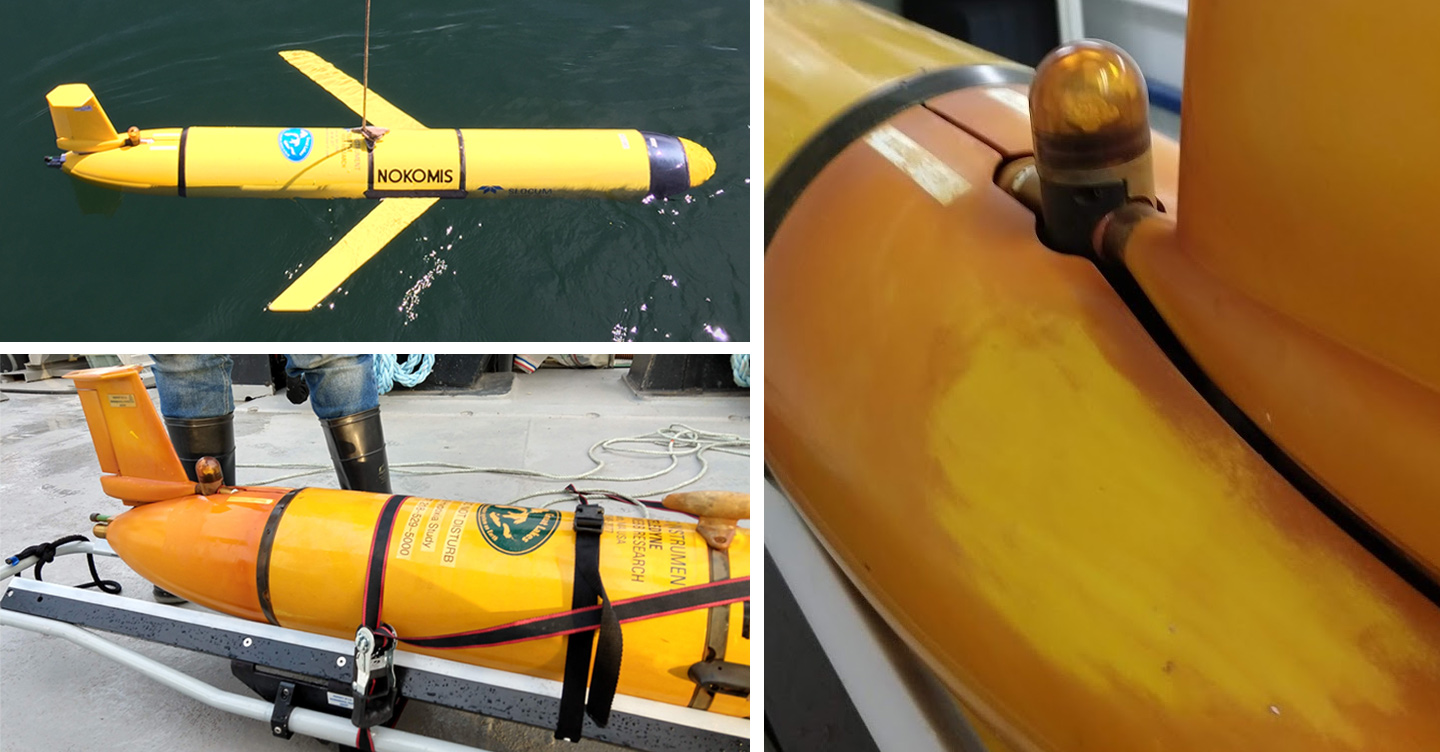
Research Brief
Fall 2019
An EPA glider mapped the hypoxic zone in Lake Erie, revealing iron oxidation.
Up close and personal with Lake Superior periphyton By M. Megan Woller-Skar and Ali Locher An autonomous vehicle collects high-resolution images of Lake Superior to model periphyton. Periphyton is the collection of organisms including algae, fungi, and bacteria that attach to submerged surfaces in freshwater ecosystems. As primary producers, they collect energy from the sun and make it available to other organisms in aquatic food webs. Periphyton communities in the Great Lakes can provide clues as to how fluctuating water levels due to climate change may affect aquatic communities, the health of aquatic systems, and the quality of water for human use. The compositions of these communities vary even within small geographic areas as they respond to depth- and location-specific chemical and physical factors such as temperature, nutrients, and substrate geology. To get a close look at these communities and their habitats, we need detailed photos and maps of the lake bottoms where they live.We used Michigan Technological University’s fully autonomous underwater vehicle, the IVER 3, to collect amazing, high-resolution (<10 cm) bathymetric images using side scan sonar at three locations in Lake Superior along the Keweenaw Peninsula. These bathymetric data are allowing us to map small-scale variations in substrate and to model factors that may influence the presence and composition of periphyton communities. In addition, the data will help us predict how lake level changes forecast for Lake Superior will potentially impact its periphyton community assemblages. In the face of increasing demands on water resources, it is vital that we understand the implications of a changing climate on aquatic systems in the Great Lakes. The IVER 3 will help collect data to allow us to do just that.
Research Brief
Fall 2019
An autonomous vehicle collects high-resolution images of Lake Superior to model periphyton.
“Smart skin” for sea lamprey detection By Xiaobo Tan Soft pressure sensors detect sea lamprey attachment and trigger deterrents at fish passages. The ability to selectively pass fish along a waterway has emerged as a high priority for the conservation, management, and restoration of Great Lakes fish communities. Deterioration of dams in Great Lakes tributaries and the recognized need to restore connectivity between lakes and tributaries have increased the urgency of developing strategies to allow passage of native and desirable fishes while blocking and/or removing invasive or undesirable fishes. A primary challenge to developing selective fish passage structures in the Great Lakes is preventing successful passage of sea lamprey (Petromyzon marinus) at fishways near dams, where their detection is key.Funded by the Great Lakes Fishery Commission Sea Lamprey Research Program, researchers at Michigan State University and the United States Geological Survey’s Hammond Bay Biological Station are working on a “smart skin” technology that can autonomously detect the suction of adult sea lampreys. The smart skin consists of arrays of soft pressure sensors embedded in a flexible substrate, which allows it to be mounted on variably shaped surfaces within or near fishways. Using the distinct pressure profile created by lamprey mouth suction, the researchers hope to detect the attachment of lamprey to the smart skin and then trigger a localized electrical stimulus to repel or deter it. In addition to its potential use for selective fish passage, smart skin technology also could be deployed in streams to determine the timings of sea lamprey entry and upstream migration for improving understanding of their refuge-seeking behavior.
Research Brief
Fall 2019
Soft pressure sensors detect sea lamprey attachment and trigger deterrents at fish passages.
Lakebed 2030: A vision of comprehensive Great Lakes mapping coverage By Hans W. Van Sumeren The Lakebed 2030 initiative aims for comprehensive mapping of the Great Lakes lakebed. The need exists for better mapping across broader areas within all large lakes of the world. Consider, for example, the Laurentian Great Lakes and their limited high-resolution bathymetry and substrate data. Estimates of coverage for the Great Lakes basin vary from 4 to 12 percent, lagging behind the 18-percent coverage achieved for the world’s oceans (Mayer et al. 2018). In fact, we have significantly more information at a much higher resolution for the surface of Mars than we do for either the Great Lakes or the world ocean. Such large gaps indicate a need for data collection strategies that streamline access, emphasize standards and competencies, and prioritize areas of need to benefit multiple user groups. New collaborative approaches combined with accessible data repositories and technological advancements can help move us closer to a well-understood Great Lakes basin, and may allow us to one day realize a complete and comprehensive view of the basin’s lakebed.Seabed 2030 is a collaborative project between the Nippon Foundation and the General Bathymetric Chart of the Oceans. The project aims to bring together all available bathymetric data to produce a definitive map of the world ocean by 2030. A Lakebed 2030 project could similarly drive support and the development of strategies for obtaining 100-percent coverage for the Great Lakes. The Marine Technology Society collaborated with Northwestern Michigan College (NMC) in Traverse City, Michigan, to hold the Great Lakes TechSurge–Lakebed 2030 conference in October. Stakeholders shared their perspectives and experiences to better understand bathymetric lakebed mapping. They discussed current practices, new approaches, successful partnerships, and lessons learned, and they identified several challenges and opportunities.From a Great Lakes perspective, fulfilling this vision of 100-percent coverage requires building capacity at local, regional, and international scales and further developing (or creating) collaborations that freely share collected data, technological advances, and workflow strategies. We must further classify, compile, and process these data into a robust and freely accessible digital repository that clearly defines existing coverage and data resolution. Gaps in data coverage could then be assessed and prioritized through continuing collaborations.Advancements in technology promote new collection strategies for mapping the gaps, and they provide opportunity for innovative approaches in meeting these needs. Specifically, rapid advances in acoustic technology and robotics are leading to innovative approaches that maximize efficiency, resolution, and visualization of the entire Great Lakes and other water bodies throughout the world. Multibeam sonar data can provide a broad understanding of the lakebed bathymetry, substrate, and water column all in a single pass. Unmanned surface vessels, autonomous underwater vehicles, and long range sub-surface gliders now navigate all marine domains equipped with a wide variety of sensor packages. The use of these platforms extends data collection windows and requires significantly fewer personnel for operation. Further developments in unmanned aerial systems can capture nearshore environments at a much lower cost and faster response.Recent mapping in the Straits of Mackinac included the use of multiple autonomous surface vessels virtually coupled to a manned survey vessel, which allowed for a near doubling of the swath of mapping coverage without requiring additional personnel or time on task. Data collection advancements like this have revolutionized our ability to comprehensively visualize the lakebed and water column. What began as single depth and position measurements taken by a lead line and sextant has evolved into massive amounts of data being collected in a single ping: multiple depths at decimeter resolution and highly accurate positions, identification of lakebed features, significant substrate identification, and complete water column coverage. The bathymetric mapping systems used today can collect data across multiple frequencies at swath widths of more than three times the water depth (as pictured above). This use of multiple frequencies provides multispectral backscatter return from the lakebed, with each return providing significant delineation in habitat classification and general lakebed structure. Staggering those frequencies during a single collection pass ensures comparability of the backscatter across all frequencies thus allowing the user multiple perspectives of the lakebed in a single transect.Realizing a comprehensive map of the Great Lakes will require significant contributions from beyond the formal mapping and science channels. Integrating commercial off-the-shelf (COTS) mapping technologies into crowdsourcing opportunities represents an additional approach toward reducing the gaps in data coverage and accelerating the vision of Lakebed 2030. COTS technologies are improving in quality and accessibility, and could be used to outfit ferries, commercial ships, and recreational vessels to collect data during their normal operations.A successful Lakebed 2030 project will produce a definitive map of the Great Lakes and, in so doing, will empower policy decision making, sustainable use of the lakes, and the scientific research that relies on comprehensive information on the Great Lakes.
Feature
Fall 2019
The Lakebed 2030 initiative aims for comprehensive mapping of the Great Lakes lakebed.
Old tech, new approach: Innovative use of mooring and glider technology to study Lake Superior convective processes By Jay Austin A large horizontal mooring helps scientists study convective processes in Lake Superior. Conceptual drawing of the horizontal mooring and glider path against a convective background. Red dots represent thermistors, yellow dots represent flotation devices, and blue dots represent pressure sensors.To study new phenomena, sometimes we need to reconsider either how we use traditional technologies or how we interpret the data they provide.Take, for example, the study of springtime convective processes in Lake Superior. Convection can occur when a water column is below its temperature of maximum density (about 4° C) and sunlight heats the near-surface water causing it to become denser and sink to the bottom. This movement displaces deep water toward the surface and provides a pathway for water column constituents to travel from the lake’s surface to its bottom in just a few hours in even the deepest parts of the lake. The ecological significance of this circulation has been explored in shallow lakes (e.g., Yang et al. 2017), but is poorly understood in deeper lakes like Superior. Recent work (Austin 2019) suggests convective cells dominate the circulation of Lake Superior for two to three months of the year, a significant portion, indicating the need for exploration of deep lake convective processes.One challenge in studying these processes is that we’re not that good at measuring the relatively narrow widths of convective cells. Most traditional observational techniques, such as CTD profiling or single-point moorings, assume that horizontal variability occurs on scales much larger than does vertical variability. In most cases, this is a reasonable assumption as vertical structure is driven by water column light penetration and density stratification. However, recent results suggest springtime convective cells have lateral scales on the order of just tens to hundreds of meters, making traditional approaches unviable. We are meeting this challenge with two new approaches: first, an innovative way to interpret data collected in a traditional fashion; second, a new design for a platform on which to deploy standard instrumentation.Interpreting data in a new wayAutonomous gliders are becoming a mainstay of oceanographic research, and are starting to be used more frequently in large lake research. A usual way to interpret data collected along the gentle slope (1:2) of a typical glider’s path is as a representation of a vertical profile, as would be collected by a CTD profiler. Yet for fairly narrow convective cells, variability along the glide path also may reflect lateral variability. Such may be the case for data collected during springtime convection, and estimates of the abundance of anomalously warm regions have allowed us to place some preliminary constraints on the size of convective plumes and cells.Standard tech, new designTo further address the issue of variability on very short lateral scales, we recently designed, built, deployed, and recovered a large “horizontal mooring” with support from the National Science Foundation. This mooring allowed us to deploy a two-dimensional array of precision thermistors. The platform is large, standing 150 meters tall, and the instrumented portion spans a width of 180 meters. It carries 48 RBR TR-SOLO thermistors and seven pressure sensors used to verify orientation of the mooring as currents displace it. This mooring was accompanied by several auxiliary platforms including a meteorology buoy and a current profiler. The data collected are allowing us to study the development of individual convective cells. This is a great example of how a traditional technology, like off-the-shelf thermistors, deployed in an innovative fashion allows us to ask (and answer!) questions that we otherwise might not be able to address. Insights from this research will provide us with a greater understanding of how the convective processes of the largest of the Great Lakes behaves for several months of each year."
Feature
Fall 2019
A large horizontal mooring helps scientists study convective processes in Lake Superior.
Underwater robots: Helping NOAA to better understand harmful algal blooms in the Great Lakes By Gabrielle Farina NOAA tests autonomous vehicles to detect microcystin toxins in Lake Erie algal blooms. In late August 2019, two underwater robots zigzagged beneath the surface of western Lake Erie to test new technology that autonomously monitors and measures in near real time the toxicity of Great Lakes harmful algal blooms (HABs). This was the second year in which the National Oceanic and Atmospheric Administration (NOAA) tested these robots and the first year that two were sent out at the same time. These field trials are part of an ongoing collaboration between NOAA, the Monterey Bay Aquarium Research Institute (MBARI), and the Cooperative Institute for Great Lakes Research (CIGLR). Project researchers tested these underwater vehicles to see how well they worked in a shallow, turbid, freshwater system and to see what tweaks were needed to make them part of NOAA’s efforts to forecast, monitor, and understand HABs in the Great Lakes.HABs develop when excess nutrients from fertilizers, sewers, and water treatment plants wash into the Great Lakes causing algae to grow out of control. Continuous monitoring of them is important because the toxins they produce can contaminate drinking water and pose a risk to people and animals.“The ability to measure algal toxins on the fly using autonomous vehicles will be a game changer for researchers and resource managers,” says Chris Scholin, president and CEO of MBARI. “Lake Erie and Monterey Bay are the only places in the world where this has been attempted.”The robots, known as long-range autonomous underwater vehicles (LRAUVs), each had a unique mission that helped scientists study the HABs. The first robot, named Tethys, searched for patches of algae that might be toxic to determine how far each discovered bloom extended and where it was most concentrated. The other robot, Makai, carried a third-generation Environmental Sample Processor (3G ESP) known as a “lab in a can” to measure levels of microcystin, a liver toxin produced by the cyanobacteria that commonly comprise Lake Erie HABs. Whenever Tethys found bloom patches likely to have high microcystin concentrations, it informed an operations team, which sent Makai to measure toxin levels in that area.LRAUVs collect high-quality data efficiently, cost-effectively, day and night, and in all weather conditions. They can provide more detail about how far a bloom has spread and how fast a bloom is moving than can traditional sampling from a boat. This information can also help complete satellite data gaps, which often result from cloud cover in the Great Lakes region. In addition, onboard 3G ESPs can measure algal toxin levels in near real time, a process that otherwise takes overnight to complete. These features help drinking and recreational water managers stay ahead of treatment plans and keep water safe. Once fully operational, these underwater robots will give NOAA the ability to detect, monitor, and map HABs and their toxicity on a 24/7 basis.“We are always looking for ways to improve our understanding of harmful algal blooms in the Great Lakes, and having the ability to continuously detect and report on these blooms would be a big boost to our efforts,” says Debbie Lee, director of NOAA’s Great Lakes Environmental Research Laboratory. “Harmful algal blooms have a big impact on Great Lakes residents, and, by teaming up with MBARI to advance technological innovations of these LRAUVs, we’re working to protect lives here in the Great Lakes and beyond.”To read more about this project and Great Lakes HABs, check out the full article on NOAA’s Oceanic and Atmospheric Research website.
Feature
Fall 2019
NOAA tests autonomous vehicles to detect microcystin toxins in Lake Erie algal blooms.
iNaturalist: Exciting research possibilities lurk in accessible dataset By Austin Happel Researchers utilize iNaturalist to analyze fish species distributions and infection patterns. Smartphones are seemingly everywhere. It’s estimated that 81 percent of Americans and 66 percent of Canadians now own these devices, which are capable of taking photos, logging GPS coordinates, and accessing the Internet. Citizen science projects take full advantage of this technology, having evolved from using pen and paper, to computer, to smart phone apps for collecting and recording data while engaging the public in research.iNaturalist is one such app. With it, any person can upload geotagged photos of plants and animals, and both they and other iNaturalist users can participate in identifying the organisms. Observations are cataloged by taxonomy, region, and other characteristics, and they can be pooled as iNaturalist projects. For example, the Amazing Aberrants project catalogs observations of rare color morphs of species (e.g., albinism), whereas the Great Lakes Fish Finder project seeks to increase the number of freshwater fish observations made in the Great Lakes region. To date, more than 28 million observations representing 239,500 species throughout the world have been uploaded to the iNaturalist open-access database.Of those millions of observations, 1.2 percent are of fish. As a fish nerd, I began to explore this dataset to see how I could both use the data and persuade others to upload fish photos to increase the dataset’s size. What angler doesn’t already take pictures of their catches? I decided the best way to convince others to begin using iNaturalist was to illustrate how the data could be used for scientific purposes. Maybe I could match the range of a spreading invasive species with that shown in the USGS Nonindigenous Aquatic Species database, or the timing of when a migratory species appears in an area with known spring ice-off periods, or maybe come up with something new as I played with the data.I began exploring iNaturalist, seeing what fish species were commonly posted, and noting where observations were more common. I also determined what some of the pitfalls of using the data would be. While doing so, I noticed that some of the fish had visible evidence of infection by black spot grub trematodes. These parasites live in fish’s flesh, and, as protection, an infected fish’s immune system surrounds the trematode with fibrous material and melanocytes, a process that creates the visible black spot that gives the disease its moniker.Having seen these spots on a few fish, I decided to start categorizing fish on iNaturalist based on black spot presence versus absence. I started with Creek Chub (Semotilus atromaculatus) because people seemed to have held them closer to the camera for their photos (likely due to their small size), which made it easier for me to analyze their skin for black spots. Smaller fish also tend to have more translucent skin, making the black spots more visible. After reviewing some 550 Creek Chub photos, I mapped each animal’s location using the photos’ geotags. I was surprised to see more infected Creek Chub in the southern part of Canada than elsewhere. I then looked at black spots in other species and found the same geographic distribution pattern for infected versus not infected Blacknose Dace (Rhinicthys spp), Nocomis spp., and Campostoma spp.I recently published these data (Happel 2019). Not only does my publication show there is a pattern to where fish exhibit symptoms of black spot grub infections across North America, it also demonstrates that data collected using citizen-science-based platforms such as iNaturalist can offer exciting research opportunities. Hopefully others will begin to use this large, freely accessible database of observations, and will also promote the contribution of additional fish (and other) observations.
Feature
Fall 2019
Researchers utilize iNaturalist to analyze fish species distributions and infection patterns.
The continuing evolution of the molecular limnologist’s toolbox 20 Years & Counting
By Steven W. Wilhelm, Helena L. Pound, and Robbie M. Martin Two decades of molecular biology tools are transforming our understanding of lake ecosystems. It has been two decades since the tools of modern molecular biology—primarily DNA and RNA sequencing—have been commonly available to limnologists. As DNA sequences provide the blueprint for all living organisms and many viruses, researchers can use sequence information to determine which organisms are present in a sample and the metabolic potential these organisms may have. From viruses (Stough et al. 2017) to fish (Thomsen and Willerslev 2015), and whether in sediments (DeBruyn et al. 2009) or open waters (Steffen et al. 2017), these molecular tools can be employed in the assessment of any biotic community, its members, or its processes. With careful interpretation, this information has incredible power and still unrealized potential.Today, DNA-sequence-based molecular methods generally fall into one of two broad categories. Targeted approaches typically use the polymerase chain reaction to amplify marker genes whose sequences contain key information about the identity or functional potential of an organism or community. A classic example includes the 16S rRNA gene as it is highly conserved among bacteria and archaea; sequencing this gene gives researchers an idea of which prokaryotic species are present in a microbial community. Alternatively, shotgun approaches attempt to sequence all genes in a sample to assess that community’s functional potential. DNA sequencing (i.e., genomics) can provide a blueprint that indicates what cells may try to do. This blueprint helps researchers to predict possible responses of a microbial community to perturbations in its environment. On the other hand, RNA sequencing (i.e., transcriptomics for single species or metatranscriptomics for an entire community) can reveal what cells are trying to do. Given the rapid turnover of RNA in cells, researchers can view actual community responses that occur in minutes to hours.Sequencing technology has evolved at a rapid pace during the last two decades. While typical sequencing in the 1990s commonly topped out at 50–100 sequences per sample, shotgun sequencing can now routinely generate billions of individual DNA or RNA reads per project, with 30–50 million reads being common for every sample (e.g., Tang et al. 2018). This deeper exploration of the genetic content that modern molecular techniques enable is particularly pertinent to studies of the biogeochemical processes in lakes. Bacteria are a major driver of these processes, and, as they persist ubiquitously at abundances of 105 to 106 per mL of lake water (DeBruyn et al. 2004), their abundance and distribution make them excellent targets for molecular assessment as sufficient bacterial material can be collected for community analyses from just a few cups of water. One example of such a molecular assessment is the estimation of the quantity of toxin-encoding genes in a cyanobacterial bloom (pictured). This metric provides a relative measure of the bloom’s toxin potential and can be used in conjunction with nutrient and temperature data to help biologists and water managers understand when high toxin loads might occur in a given water body (Rinta-Kanto et al. 2009). Increased ability to analyze genetic content using molecular tools, accompanied by parallel advances in bioinformatics, allows for the simultaneous characterization of nearly all biological processes for each member of a microbial community. By analyzing samples collected to have spatial and temporal variability, researchers can tease apart how the millions of microbes in every milliliter of water work together to shape lake function.While modern molecular techniques allow assessment of much about the microbial community, we note that some of these approaches are only semi-quantitative. Shotgun sequencing, for example, provides information in terms of relative, not absolute, numbers in a sample; as such, it allows for powerful comparisons of shifts in function or community member activity, but it does not provide complete quantification. However, targeted approaches performed for an entire community can allow for absolute quantification. Evolving technological adaptations can further improve the quantification precision of these approaches.Both technological adaptations of existing molecular tools as well as new molecular technologies are on the horizon. Examples of technological adaptations include digital PCR, which is a more precise and sensitive alternative to conventional and real-time quantitative PCR, and proteomics, which uses liquid chromatography coupled to sophisticated mass spectrometry to identify specific proteins in a sample. Interpretation of proteomics data can provide for a robust, semi-quantitative assessment of proteins, which are both longer-lived and, in many cases, more indicative of actual metabolic function than are RNA transcripts. In contrast to these existing tools, metabolomics is a still-emerging molecular technology that assesses small molecules in a biological sample and uses this information to infer the active biochemical pathways within communities. Metabolomics can be particularly powerful for detecting major perturbations in a system, but, as homeostasis is something all cells work toward (Steffen et al. 2015), minor changes in a community may not be detected by this method.Ultimately, how modern limnologists use molecular tools is a function of both the research question being asked and the limitations of each tool. DNA-based approaches can only be used to interpret community potential, while RNA-based and protein-based assessments indicate actual activity. Metabolomics is an appealing approach to investigating large-scale system disruptions, but any application of this tool must consider that it may not be able to detect minor system disturbances. Finally, the style applied to many of these approaches matters: while a shotgun-styled approach allows for assessment of a broad spectrum of the community, it produces results that are generally only relative in nature; in contrast, absolute quantification is achievable with targeted approaches, but the necessarily narrower scope of targeted assessments can make them less than desirable for some studies. Ultimately, and in spite of their limitations, the tools of the modern molecular biologist hold great promise for limnologists in the future.Definitions and jargon for modern molecular ecology in lakesTargeted: any methods that address a specific gene (or set of genes) in a samplePolymerase chain reaction (PCR): a method in molecular biology to make thousands to millions of copies of a specific DNA segmentShotgun: any methods that address random DNA or RNA targetsGenomics: the field of biology focusing on the structure, function, evolution, mapping, and editing of genomesTranscriptomics: the field of biology focusing on the examination of whole RNA molecules expressed by organisms across biological conditionsMeta-XXX: the prefix “meta” describes approaches used in mixed populations or samplesReads (aka sequences; aka transcripts in the context of RNA): specific copies of DNA or RNA that have been analyzed using sequencing approachesBioinformatics: methods and software tools for understanding biological data, or an interdisciplinary field of science that combines biology, computer science, information engineering, mathematics, and statistics to analyze and interpret biological data (see examples below)Assembly: aligning and merging short nucleic acid fragments to form a longer sequence in an effort to reconstruct the original sequenceAnnotation: identifying the locations of genes and coding regions in a nucleic acid sequence to determine what those genes doRecruitment: matching short reads from sequencing efforts to longer assemblies or genomes to determine the relative occurrence of specific sequences in a sampleProteomics: the large-scale study of the protein complement of an organism or community of organismMetabolomics: the large-scale study of small molecules, commonly known as metabolites, within cells, tissues, or organisms
Feature
Fall 2019
Two decades of molecular biology tools are transforming our understanding of lake ecosystems.
Real-Time technology provides greater insight on water quality issues By Jill Crossman, Elizabeth Striano, and Aaron Fisk Real-time analyzers and the ErieWatch network provide continuous data on phosphorus. Harmful algal blooms (HABs) and the low dissolved oxygen concentrations associated with them are a growing concern for large water bodies throughout the world. HABs have resulted in fish kills and drinking water advisories, which collectively have caused estimated economic losses of up to US$71 million per year within Lake Erie alone. HABs have been linked to excessive nutrient inputs, specifically those of nitrogen and phosphorus, and in the 1980s, were successfully managed by reducing phosphorus inputs to lakes. Recently, however, bloom frequency and toxicity have increased. Scientists and resource managers have proposed several hypotheses for this bloom resurgence, including changes in phosphorus bioavailability and increases in water temperatures, turbidity, and internal nutrient loads. Determining the specific sources of these water quality issues is challenging in the constantly changing Great Lakes environment with its multiple stressors. Without knowing the cause, it is impossible to find a solution; as a result, HABs issues persist within the Great Lakes. However, new technologies that enable real-time monitoring of nutrients in these water bodies are helping to provide some answers.Traditional water quality monitoring practices such as discrete sampling and laboratory analyses are expensive and labor intensive. As a result, nutrient samples are typically only taken at monthly or bimonthly intervals. The limited amount of data that results from this low sampling frequency combined with high rates of environmental flux create uncertainty in quantification of lake conditions. For example, concentrations of soluble reactive phosphorus (SRP), generally considered to be the most bioavailable phosphorus fraction, can vary greatly throughout the day. During heavy rainfall, SRP values can change by hundreds of micrograms per liter over just a few hours. In addition, nutrient concentrations in collected samples can change during transport to the laboratory as is the case for SRP, which is particularly sensitive to both microbial uptake and release as compared to total phosphorus (TP). Because of this variability, meaningful representations of lake phosphorous conditions require near-continuous measurements of both SRP and TP levels.Due to these limitations in data resolution, scientists have, to date, been unable to measure the impact of nutrient management strategies on the relative bioavailability of phosphorus in large water bodies. The Real-time Aquatic Ecosystem Observation Network (RAEON) aims to address this technical hurdle by providing Canadian researchers with the infrastructure, staff, and data management needed to enable collection of nutrient and other HABs-related data in real time. Based at the University of Windsor, RAEON is directed by Katelynn Johnson and funded by a CA$15.9 million grant recently awarded to RAEON lead Aaron Fisk by the Canadian Foundation for Innovation.RAEON supports research that contributes to management, rehabilitation, and enhancement of ecosystem services. One such program is ErieWatch, developed and run by Jill Crossman, an early career researcher at the University of Windsor. ErieWatch, which consists of a network of four biogeochemical monitoring platforms located across the western basin of Lake Erie, aims to identify drivers of HABs in the region. The platforms support new real-time wet chemical analyzers called WIZprobes, in addition to meteorological stations and more traditional in situ monitoring technologies for dissolved oxygen, light, chlorophyll a, and temperature. Every hour, the WIZprobes can sample the water to analyze three types of phosphorus present: dissolved, soluble, and total. This represents the first time that TP can be analyzed in remote locations, aided by the WIZprobes’ new low-power digestion techniques. Solar-powered portable units transmit live results to in-office computers using telemetry.These platforms, and the WIZprobes specifically, have provided scientists with the ability to more accurately quantify phosphorus concentrations in large water bodies and to monitor biochemical variables at resolutions that better capture process interactions. Scientists are only just starting to use WIZprobes in North America as they require large networks of instruments and regular maintenance by highly qualified personnel, including calibration and validation in the field; obstacles that RAEON is helping to address.The four biogeochemical research platforms of ErieWatch are part of the first international smart-sensor network in the Great Lakes, created by both RAEON and NOAA’s Great Lakes Environmental Research Laboratory. This network is monitoring hydrodynamics as well as nutrient, dissolved oxygen, phycocyanin, and chlorophyll a levels across Lake Erie’s western basin. Data are uploaded to the Great Lakes Observing System for public access and to help answer many questions such as the following: What effects are management strategies having on SRP:TP ratios? Does a short-term change in SRP:TP encourage algal bloom formation? Is there a specific trigger that causes an entire bloom to become toxic?The revolutionary real-time network approach of these technologies offers a better alternative to traditional sample collection methods that can limit the frequency, duration, and scope of environmental research programs. By implementing novel technologies for analyzing underlying process interactions, programs such as RAEON and ErieWatch have the potential to reduce threats posed by HABs and, more broadly, to transform conventional approaches to freshwater resource management to the benefit of policy makers, managers, residents, other users of Ontario watersheds, and the global research community.
Feature
Fall 2019
Real-time analyzers and the ErieWatch network provide continuous data on phosphorus.
AquaHacking: Using tech to tackle freshwater issues By Catherine van Reenen Multidisciplinary teams develop engineering solutions to address freshwater challenges in AquaHacking. “Hacking” describes using technical knowledge to overcome persistent problems, which range from the simple (is there an easier way to tie my shoes?) to the complex (how can cities coordinate snow removal more efficiently?). Indeed, just about anything can be hacked. Why not water?AquaHacking does exactly that. This multi-stage, start-up competition challenges students and young professionals to design practical engineering, web, and mobile solutions to the problems plaguing North America’s freshwater lakes. Its multidisciplinary teams of hackers compete for seed money and incubator space, with end goals of developing demand-driven solutions and launching new businesses that may have measurable impacts on freshwater issues.Launched in 2015 by the de Gaspé Beaubien Foundation in Montréal, AquaHacking has thus far engaged more than 1,500 youth in 12 critical water issues and supported the launch of 18 start-ups. For example, the 2018 winner, Geosapiens, produced E-Nundation, a software tool that performs flood simulations to assess their potential impacts and support effective flood risk-management procedures. Water Rangers, AquaHacking’s first winning team, is also one of its most successful start-ups. The organization offers a web-based data collection platform and portable water-testing kits to enable citizen scientists to sample water quality, upload their data, and track specific issues such as algal blooms and pollution over time.Tech competitions like AquaHacking are an emerging strategy for tackling freshwater issues across the globe. Erie Hack, for example, is a water tech challenge launched by the Cleveland Water Alliance in 2017 in which coders, developers, engineers, and water issue experts generate solutions to issues affecting Lake Erie. Similarly, in 2018 a Milwaukee nonprofit, The Water Council, started a global Tech Challenge devoted to identifying new freshwater technologies based on topics selected by corporate sponsors, while the Global Water Tech Hub Alliance, a project of the Neterhlands-based Water Alliance, established an open platform to help match water issues with relevant solutions.What distinguishes AquaHacking and its international counterparts from traditional hackathons is a long-term focus on real-world problems with well-defined end users. While most hackathons are weekend affairs, the AquaHacking Challenge is an eight-month endeavor. As the problems plaguing our freshwater lakes are as multifaceted and complex as the stakeholders involved—from researchers, NGOs, and governments to industry, entrepreneurs, and regulators—it takes time both to understand the scientific processes at play and to build relationships across sectors. Because of the extended timeline AquaHacking uses in its tech challenges, competing teams can engage key stakeholders throughout the challenge to ensure they have support from expert mentors in water, technology, and business as they build their solutions. The solutions developed as a result of these synergies are well worth the extra time needed: they are more likely to be effective, and, more importantly, they have a better chance of being implemented by end users.After five years of holding successful competitions in the Great Lakes-St. Lawrence region, AquaHacking is going national in 2020 with regional competitions planned in British Columbia, Atlantic Canada, and Lake Winnipeg. The AquaHacking Lake Winnipeg Challenge will be hosted by the International Institute for Sustainable Development (IISD), and it aims to find innovative solutions to issues such as microplastics pollution, algal blooms, and pharmaceutical contaminants.IISD’s AquaHacking Lake Winnipeg team will be hosting information sessions for potential participants throughout January 2020 at various university and college campuses. Although major competition events will take place in Winnipeg, teams can participate in person or virtually. Participants from both within and beyond the Lake Winnipeg watershed are welcome.
Feature
Fall 2019
Multidisciplinary teams develop engineering solutions to address freshwater challenges in AquaHacking.
Acoustic telemetry: Big advances in technology lead to big discoveries in fish movement By Christopher S. Vandergoot Acoustic telemetry provides unprecedented insights into fish movement and habitat selection. To implement management actions designed to promote long-term viability of exploited fish stocks in the Great Lakes basin, fisheries biologists must understand the timing and geographic range of these economically and ecologically important species. Historically, biologists examined fish movements using rudimentary approaches (e.g., attaching external tags made of metal or plastic) that provided only cursory information (e.g., release and capture locations) about fish behavior. Recent advances in acoustic telemetry technology have accelerated discovery, expanded both the scope and nature of our questions, and facilitated collaborative research among fishery researchers and managers throughout the Great Lakes region.Recent advances in acoustic transmitter and receiver technology have revolutionized how telemetry is used to understand how the characteristics of fish populations influence fish movement patterns in relation to physical lake conditions. Specifically, a trend over the past few decades toward smaller yet more powerful transmitters has allowed researchers to monitor the movements of increasingly smaller fish over more prolonged periods of time. For example, acoustic telemetry technology is being used to assess post-stocking survival, habitat use, and movement patterns for juvenile lake sturgeon (Lake Erie), juvenile cisco (Lake Ontario), and round goby (Lake Huron) for up to a year depending on how the transmitters are programmed. Similarly, the ability to passively monitor an area for the presence/absence of transmitter-tagged individuals is an advance that has materialized over the past few decades. Historically, researchers would have had to follow fish around with mobile hydrophones to track their movements; however, today researchers are able to deploy stationary acoustic receivers that passively monitor areas for telemetered fish over extended time periods (i.e., up to 15 months). Both of these technological innovations are providing unsurpassed research opportunities only fantasied a few decades ago.Today, these acoustic telemetry advances provide fishery researchers with an unprecedented ability to understand where, when, and why fish move. Using an expansive array of acoustic receivers deployed throughout the Great Lakes basin via the Great Lakes Acoustic Telemetry Observation System (GLATOS), studies examining both broad- and fine-scale movement patterns have been underway since 2010. In Lake Huron, researchers were able to better understand recruitment bottlenecks by learning what type of spawning habitat stocked and wild lake trout selected. Similarly, fine-scale movement patterns of invasive sea lamprey and grass carp are being evaluated throughout the basin to inform control efforts. By combining auxiliary sensors (i.e., for depth and temperature) with standard acoustic transmitters, researchers are able to address how fish respond to changing and variable lake conditions such as temperature, turbidity, harmful algal blooms, and anoxia (i.e., lack of oxygen in the water). Furthermore, because the GLATOS network extends throughout all five Great Lakes and their associated interconnecting waters (i.e., St. Marys River, Huron-Erie Corridor, Welland Canal), it is now feasible to understand how fish movements relate to physiochemical characteristics within the Great Lakes ecosystem at geographic scales that were previously impractical, or even impossible, to address.While conducting scientific research across large geographic scales is often logistically and administratively difficult, these challenges present new avenues for collaboration and innovation. For example, GLATOS researchers assist each other with gear deployments and maintenance, share research findings, and collaborate on new research endeavors. Futher, in association with other research going on in the Great Lakes basin, GLATOS researchers anticipate using autonomous underwater vehicles to monitor fish movements in collaboration with the Real-time Aquatic Ecosystem Observation Network based out of the Great Lakes Institute for Environmental Research at the University of Windsor. By combining fish movement and physical lake condition data, researchers will be able to gain a better understanding of the population dynamics of Great Lakes fish stocks and the management actions need to ensure their long-term sustainability in the face of a changing climate.
Feature
Fall 2019
Acoustic telemetry provides unprecedented insights into fish movement and habitat selection.
Don Scavia Don Scavia reflects on modeling phosphorus and the need for social science in policy. Describe your work.I’ve had a pretty diverse career. At NOAA/GLERL (1975–1990), I developed ecological models of Lake Ontario and carried out lab and field studies on Lake Michigan plankton and nutrient dynamics. At NOAA headquarters (1990–2004), I ran competitive coastal ocean and Great Lakes grant programs, and led several interagency environmental science and policy assessments. On the University of Michigan faculty (2004–2018), I directed Michigan Sea Grant, the NOAA Cooperative Institute, and the Graham Sustainability Institute, and I worked with students and postdocs to develop and apply models of the Gulf of Mexico, Chesapeake Bay, and Lake Erie plus its watersheds.Describe how you engage with policy making.While at NOAA headquarters, I had the opportunity to testify in front of various congressional committees, help draft legislation, and lead integrated assessments that assembled and evaluated scientific information to guide environmental policy related primarily to hypoxia and harmful algal blooms. As an academic, I continued all three of these engagements, but I also worked with environmental NGOs to help develop and support their policy initiatives and advocacy.What advice do you have for other researchers to engage at the science-policy nexus?To be effective, you need to be a trusted source of information related to your area of expertise, and there is no short cut to that. Research, publish, and establish your credentials. While it is important to understand uncertainty and alternative explanations, when communicating with policy makers and the public, avoid being the “two-handed scientist.” Saying “on the one hand, X; but on the other hand, Y” is not helpful. Similarly, knowing that a certain property could change by a factor of 2.4 or 2.6 is likely a nuance when all that is needed for policy making is that it will increase. In other words, understand the context of the policy decision, the precision and certainty realm in which they work, and the nature of the information they already have. You are providing a piece of their more complicated puzzle.What has been the biggest success story (yours or others) of large lakes research informing policy for good?Within my area of study, I think the research and modeling support for the original and revised phosphorus loading targets under the Great Lakes Water Quality Agreement are big success stories with some important commonalities and differences. Both agreements were based on the integration of multiple models and expert opinion, and the policy benefited from the consensus across the diversity of models. A key difference between the two eras is that for the original agreement models and associated research were deeply supported, which led to new models and insights that benefited not only the agreement and the Great Lakes, but the field in general. In contrast, the revised agreement had to rely on existing models and the efforts of volunteer modeling teams. While useful for the agreement, it was a lost opportunity for the field.What are some of the biggest research needs to inform policy?This may seem a bit strange coming from a natural scientist/engineer, but I think one of the most important research needs for informing policy comes from the social sciences. Increasing the understanding of how new information is used in policy development, identifying the impediments to its use, and exploring methods to overcome those impediments are critical. Equally important is that social scientists need to communicate their findings to natural scientists and engineers, rather than just among themselves in their journals.
Member Spotlight
Summer 2019
Don Scavia reflects on modeling phosphorus and the need for social science in policy.
Emily Tyner Emily Tyner uses social media data to inform management decisions on public preferences. Describe your work.My dissertation research is interdisciplinary, and I am being advised by a committee with diverse membership comprised of a limnologist, aquatic ecologist, economist, rhetorician of science, and geographer.I am using a mixed methods approach to explore the following: 1) what are the public preferences for restoration and conservation at areas targeted for restoration by the Great Lakes Restoration Initiative (GLRI), specifically Great Lakes Areas of Concern (AOCs) and National Park Service (NPS) sites; 2) what are the conversations about AOCs and NPS sites on Twitter; 3) how do these conversations connect to things we measure (e.g. visitation, preferences for restoration, political happenings); and 4) how might Twitter be a useful research tool for groups like Great Lakes planners, the International Joint Commission, and even the IAGLR board.Describe how you engage with policy making.I see my work as policy adjacent in that it can help inform policy decisions. For example, for my dissertation I did a survey of 1,200 Great Lakes residents to understand their preferences for restoration and conservation. My findings should be useful for regional planners or EPA officials wishing to purse management and policy actions that have the support of local communities.I have also done research on water quality in Lake Malawi. In that work, conducted collaboratively with researchers from the Malawi Department of Fisheries, we found that E. coli, an indicator for fecal contamination, had persistently high levels at sites along the shoreline but dropped off at 15 meters off shore. For beach managers and public health officials along Lake Malawi, this finding should be helpful in setting suggested guidance for shoreline usage of the lake.As a student I have twice participated in Great Lakes Day in Washington, D.C. Both visits were invaluable learning experiences. After training in crafting and delivering a message to congressional staffers short on time, we visited congressional offices to advocate for the Great Lakes region and the work accomplished through GLRI. In the Great Lakes, we often bemoan federal funding decisions, and it was helpful to hear firsthand what politicians are balancing as they consider support for the Great Lakes. My team had a memorable visit with the late John Dingell from Michigan’s 12th Congressional District. He was unhurried in welcoming us into his office, was familiar with Great Lakes-related happenings in his district, and was keen to talk about the health of waterbirds in Michigan. It was clear his interest in the Great Lakes was both political and personal.What are some of the biggest research needs to inform policy?As a student interested in learning about the black box of policy and management decision making, I would like to see more research and articles about the steps from environmental concern to policy decision. One of the best examples of this that I have read is an article in the Journal of Land Use & Environmental Law about the Microbead-Free Waters Act of 2015 (Strifling, 2016). It would be interesting to see the Journal of Great Lakes Research take up similar case studies exploring the detailed steps of taking an ecological issue and the research informing its topic to its policy or management outcomes. Perhaps this is a contribution I can make after finishing my dissertation.See Strifling’s perspective on the Microbead-Free Waters Act of 2015.
Member Spotlight
Summer 2019
Emily Tyner uses social media data to inform management decisions on public preferences.
G. Douglas Haffner Doug Haffner discusses energy transfer in food webs and integrating knowledge into policy. Describe your research.My research is primarily focused on the transfer of energy, nutrients, and contaminants through Great Lakes food webs. Specific studies include primary production, factors regulating the relative abundance and composition in phytoplankton and zooplankton populations, harmful algal blooms, bioaccumulation of persistent chemicals, and identifying sources and energy transfer efficiencies required to support Great Lake’s fisheries. Research is based on open lake systems as well as within areas with ongoing remedial action plans.Describe how you engage with policy making.Although my research has strongly been related to policy development, such as the use of primary production to identify the original phosphorus target loads in the Great Lakes, direct linkage to policy formulation is, at best, tenuous. I have served on committees such as the Science Advisory Board and Council of Great Lakes Research Managers, attended meetings of the Cooperative Science and Monitoring Initiative, and participated in the Detroit River Remedial Action Plan since implementation in 1986; however, these do not provide a strong linkage to forming or modifying environmental policies regarding the management of the Great Lakes ecosystem.Research needs to inform policyResearch outcomes tend to come in small, discrete packets that make great, informative readings in the Journal of Great Lakes Research but are of limited use to policy makers who require much broader, integrated perspectives. The current systems of funding research in Canada and the United States tend to be project based and focused on specific issues or problems. Although this approach produces good science, it does not provide a framework for the research community to take a more integrative approach for the management of the Great Lakes. When attending meetings regarding major research challenges in the Great Lakes, the consistent message is the need for integration. The lack of integration has definitely limited the success of the ecosystem approach as recommended in the Great Lakes Water Quality Agreement.During the 1970s, there was better communication between science and policy-making processes when dealing with a single issue, such as eutrophication. It was much easier then for the science community to deliver a clear, consistent message. Researchers today must consider the effect of multiple stressors and the many uncertainties associated with predicting lake responses in a highly variable environment. Instead of integrating research knowledge, our current funding systems set up a competition for resources within the science community to address priority research questions.Challenges connecting research and policyWe need a new approach that integrates research knowledge and information in a timely and meaningful way for policy makers. To form a better connection between research and policy, we should consider the development of an International Integrated Ecosystem Management Program jointly funded by the United States and Canada. The goal of the framework would be to allow government agencies and universities to work together to provide accurate and timely advice to all levels of government. Basically the framework would result in the development of “boundary organizations” that link scientists and communicators to effectively synthesize knowledge and information to meet the needs of policy makers. These boundary organizations will require formal partnerships among agencies and universities that bring together the expertise required for knowledge integration and communication, and they will result in unique international training opportunities for future researchers. These organizations will not just provide a link between research and policy, but will also provide a corporate memory as to how and why specific environmental policies were derived.
Member Spotlight
Summer 2019
Doug Haffner discusses energy transfer in food webs and integrating knowledge into policy.
Gail Krantzberg Gail Krantzberg shares strategies for communicating science to decision-makers on Great Lakes governance. Describe your work.I apply known and emerging scientific findings to the development or refinement of programs and policies directed at Great Lakes excellence. I am also aiming to get a better understanding of good governance and how truly meaningful multi-sectoral engagement can enrich collaborative decision making and change the future for the better.Describe how you engage with policy making.I was Great Lakes Senior Policy Advisor in the province of Ontario, and I helped decision makers understand how science can inform better policy directions in the face of competing government priorities, economic constraints, equity, inclusion, and societal change. Presently, all my research is focused on addressing ongoing environmental and governance challenges faced by Great Lakes managers and program practitioners.What advice do you have for other researchers to engage at the science-policy nexus?To do this well, you must first speak science without jargon. Use simple language as if you were describing your scientific information to your neighbors or family members. You need to understand the nature of the policy maker’s request for information. Complex scientific discourse does not help, it only serves to confuse. Overly emphasizing scientific uncertainty and failing to make your best efforts to provide the information in an understandable format will make you irrelevant.What has been the biggest success story (yours or others) of large lakes research informing policy for good?One interesting undertaking was the Great Lakes Futures Project, a collaboration among Canadian and U.S. universities and government personnel, within which we explored drivers of change in the Great Lakes regime. Using scenario analysis, we imagined four possible futures and the policy regimes necessary to enable those futures. This allowed students, faculty, the private sector, and the public sector to understand the policy directions necessary to achieve the desired future state of a resilient Great Lakes basin economy, social well-being, and environmental excellence.Another excellent application of research informing policy was my time as the coordinator of the Collingwood Harbour Remedial Action Plan. Science enabled an understanding of the causes for environmental degradation. Science and engineering enabled a response through active, targeted interventions. Policy determined what to do, when, how, and with whom, and then, ultimately, the decision to delist Collingwood Harbour as an Area of Concern.What are some of the biggest research needs to inform policy?Still outstanding is a framework to assess future emerging threats to the integrity of the Great Lakes. We need a systematic method for predicting new threats and prioritizing them for policy responses. Presently the International Joint Commission’s Great Lakes Early Warning System working group, on which I am privileged to serve, is grappling with this very matter. I hope we are successful; it is not yet clear that we will be. In the end, we will do our best to make the lakes great.
Member Spotlight
Summer 2019
Gail Krantzberg shares strategies for communicating science to decision-makers on Great Lakes governance.
Restoring Great Lakes Areas of Concern highlights value of research By John H. Hartig Thirty years of remedial action plans in Great Lakes Areas of Concern drove billions in economic recovery and community rebirth. IAGLR, with funding from the Fred A. and Barbara M. Erb Family Foundation, has been working on a 3-year project with the Aquatic Ecosystem Health and Management Society and others to evaluate what has been achieved and learned through more than 30 years of developing and implementing remedial action plans (RAPs) to restore Great Lakes Areas of Concern (AOCs).All involved are keenly aware that cleanup of AOCs has been difficult and time consuming. These communities overcame challenges in defining the scope, size, and nature of the problem and in how to even begin the work of unburdening the waters from years of abuse and neglect. They faced costly and confounding choices in tackling the legacy of toxics buried in sediments: whether and how to proceed, at what cost, and where to find the resources. In different ways and through varied approaches, they came to appreciate the importance of engaging and empowering the community in driving the cleanup. In so doing, they animated impactful processes that empowered local residents as partners.Pollution prevention and control of contaminants at their source were priorities for all AOCs. These communities also came to incorporate in their work the restoration of habitat for fish and wildlife, resulting in a powerful and satisfying restoration of the life in and around the lakes that was such an integral part of their historic beauty and gift to human denizens. By cleaning, reclaiming, and reconnecting local communities to the waters, these communities have also catalyzed local economic development and community rebirth to the tune of hundreds of millions, even billions, of dollars of economic benefits and countless new jobs for local residents. They have also rebuilt the emotional connection—the “love of the lakes”—that is such a defining attribute for those lucky enough to live in their vicinity.This project clearly shows the value and benefit of Great Lakes research that was the foundation of these cleanup efforts and the importance of strengthening science-policy-management linkages as part of efforts to accelerate the sustainability transition. Four examples of scientific advancements in AOCs are presented below.Prior to the onset of RAPs in 1985, there were no comprehensive programs in Canada and the United States to assess biological impacts of contaminated sediment, estimate risk, and apply evidence-based decision making. Governments, research scientists, and RAP groups had to figure out how to make decisions on the severity and geographic extent of sediment contamination, on whether or not to remediate, on what techniques to use, and how to get the money for contaminated sediment remediation, if necessary. In many respects, both the Canadian and U.S. contaminated sediment assessment and remediation programs came out of the RAP program.A second example of a scientific achievement in AOCs is quantifying habitat loss and degradation and establishing priorities for habitat rehabilitation and enhancement. Prior to the onset of RAPs, it was often said that “habitat had no home.” Responsibility for habitat was fragmented among many stakeholders. RAPs made habitat a priority and challenged management agencies to address it explicitly. Restoration of fish and wildlife habitat had to be addressed in a systematic and comprehensive fashion, which was particularly challenging in urban AOCs. In many cases, RAPs helped make sure that habitat was an integral part of community master plans. Early involvement of habitat scientists in project planning and partnerships was essential to habitat project success.A third example is quantifying the relative contribution of toxic substances from all sources in order to set management priorities. Mass balance frameworks were successfully used to quantify loadings of priority contaminants, establish baseline conditions to gauge future progress, predict benefits associated with loading reductions, and better understand ecosystem dynamics.The final example is establishing clean up guidelines that are specific, relevant, measurable, feasible, and achievable. RAPs were a pioneer in quantifying “how clean is clean,” identifying ecosystem recovery targets, and working in and through RAP institutional structures to ensure relevancy, feasibility, and achievability.For more information about this project visit iaglr.org/aoc/.Project TimelineMay ’17 - Restoring Great Lakes Areas of Concern symposium at IAGLR’s Conference on Great Lakes Research2018 - Selected papers from symposium published in special issue of Aquatic Ecosystem Health and ManagementAug ’19 - Great Lakes Revival published featuring 10 case studies that highlight the value and benefits of science-based cleanup of polluted areas of the Great Lakes2020 - Monograph to be published as part of the Ecovision World Monograph Series2020 - Review article in Journal of Great Lakes Research planned"
Feature
Summer 2019
Thirty years of remedial action plans in Great Lakes Areas of Concern drove billions in economic recovery and community rebirth.
The IJC’s science and policy partnership By David Burden The International Joint Commission bridges science and policy for the Great Lakes. Science and policy are challenging partners. Policy makers make decisions within deadlines that reflect legislative and political timelines. Scientific research on those issues often takes years or even decades to reach conclusions, or at least reduce uncertainty. In the absence of solid science, policy decisions should reflect the precautionary approach, but they often don’t because even that can be hard to define within time demands without adequate research.Both partners have the best of intentions, particularly when it comes to accomplishing the goals and objectives of the Great Lakes Water Quality Agreement. But by nature, the two federal governments act bilaterally rather than binationally. In many locations, binational direction through the agreement with community action has proven successful; for broader basinwide issues, progress is only as good as the collective political will and lowest common approach.Scientists also have a deep commitment to and best intentions for their research, but their work is often driven by the issue of the moment in agencies or by what will result in funding in the university setting. Thus scientists tend to work in their own silos, resulting in duplication and repetition of work and databases that are confusing to interpret for policy makers and the public.Opportunities to anticipate policy and research needs at a decadal scale are limited, but they are essential to tackle new pressures affecting the Great Lakes region such as climate change, novel chemical pollutants, urbanization and water needs, rapidly evolving agricultural practices, habitat loss, and invasive species.For more than a century, the International Joint Commission (IJC) has demonstrated that the challenge of science-informed policy making and policy-informed science making is possible to surmount with cooperation, collaboration, and coordination. In 1913, epidemic proportions of Great Lakes basin residents were stricken with cholera. The newly created IJC conducted one of the largest ever transboundary bacteriological contamination studies to understand ties between sewage pollution and the waterborne pathogens killing residents. Scientists from across the international border contributed to the study, which led to development of the region’s wastewater treatment. Fast forwarding a century, the IJC’s Health Professionals Advisory Board is now developing a framework proposing a repeat of this groundbreaking study in a modern context to see where we’ve made progress and where we need new policies to attack long-standing pollution problems affecting our waters.In 1972 after Lake Erie was declared “dead,” Canada and the United States signed the Great Lakes Water Quality Agreement that, among other things, empowered the IJC to advise governments on their priorities for research and management through the creation of the Water Quality Board and the Science Advisory Board. The boards’ studies and the IJC’s resulting recommendations helped both countries to restore Lake Erie. When faced with the same issue again in 2011, the IJC completed the Lake Erie Ecosystem Priority study, and in 2014 it recommended, among other actions, a 40 percent reduction in the amount of phosphorus entering the lake. Policies and programs with this reduction requirement have been agreed to by state, provincial, and local governments, and coordinated implementation throughout the Lake Erie basin is the last hurdle.The IJC’s boards exemplify the cooperation, collaboration, and coordination needed for science and policy to be mutually reinforcing. Members include scientists, researchers, government representatives from all levels, nongovernment organizations, businesses, and the public. The IJC also meets with other scientists, decision makers, and the public as part of its assessment of progress under the agreement; it did so in June at the IAGLR conference in Brockport, New York, and will continue to do so in communities around the basin this summer and fall.Strong consensus is developing among Great Lakes researchers that we are doomed to repeat past mistakes, as seen in bacterial contamination in Lake Erie, unless support for investigation and exploration is improved significantly. Our Science Advisory Board is supporting efforts to develop a decade-long binational plan for Great Lakes research that will help to address the challenge of providing effective, conclusive, and timely scientific findings to policy makers. Such a science plan is required to increase the collective ability of scientists and policy makers to forecast change, mitigate impacts, and help the goals of the agreement seem less daunting.
Feature
Summer 2019
The International Joint Commission bridges science and policy for the Great Lakes.
Students engaging in science policy By Sivani Baskaran The Toronto Science Policy Network trains students in evidence-based advocacy. One of the first things I learned as a co-founder of the Toronto Science Policy Network (TSPN) is that science policy is a fairly broad term and a far more complex topic than I initially thought. The term science policy can refer to either science for policy (the use of evidence and science to inform policy decisions) or policy for science (how institutional and governmental policies affect the way we do science, from research funding to research prioritizations).A little over a year ago, I met with fellow graduate students Ellen Gute, Vasa Lukich, Farah Qaiser, and Molly Sung to discuss creating a science policy group at the University of Toronto. We felt that there was a distinct lack of training for people in the sciences interested in learning about policy- and decision-making processes. And so we created the TSPN: a student-run platform for the University of Toronto community to learn about and engage in science and policy.TSPN has run a number of workshops on the different facets of science policy, including science advocacy, policy writing, and science communication. We have also invited research experts at the university to host public panels where the University of Toronto community and the interested public can learn about the science behind key policy topics like climate action and Ontario’s sexual education curriculum. TSPN has become a platform for us to learn more about science policy and connect with not only our fellow students and faculty but also members in our local community.In our inaugural year, TSPN has engaged over 200 people through panels, workshops, and other events, and we are looking forward to engaging many more in the years to come!If you have a passion for science policy, now is a great time to get involved. With the Canadian federal election just around the corner, TSPN is partnering with science policy groups on a national nonpartisan #VoteScience campaign. We want to encourage citizens, especially scientists, to go out and engage candidates on the importance of science and evidence-based decision making.If you’re interested in learning more about science policy, check out the TSPN website for resources. You’ll find a list of international science policy organizations, campus groups, and post-doctoral fellowships relating to science policy, and even tips on how to start your own group."
Feature
Summer 2019
The Toronto Science Policy Network trains students in evidence-based advocacy.
IISD Experimental Lakes Area committed to policy By Sumeep Bath Whole-lake manipulation experiments at IISD-ELA generate applies science that informs policy. When management of the Experimental Lakes Area, the self-proclaimed world’s freshwater laboratory, moved in 2014 from the Government of Canada to the International Institute for Sustainable Development (IISD), a nonprofit think tank whose raison d’etre is policy research and knowledge sharing, there was a clear opportunity to make that much-cited yet mostly mythical bridge between science and policy a reality.But first, let’s back up a bit.A group of 58 lakes and their watersheds in northwestern Ontario, Canada, IISD Experimental Lakes Area (IISD-ELA) is the only place in the world where scientists can manipulate whole lakes to build a more accurate and complete picture of the impacts of human activity on freshwater systems. Findings from IISD-ELA’s 50-plus years of groundbreaking research have rewritten environmental policy around the world and the organization aims to keep freshwater clean for generations to come.Researchers at IISD-ELA have added nutrients to lakes to improve our understanding of the relationship between phosphorous and algal blooms, acidified a lake to mimic acid rain, added artificial estrogen to a lake in similar levels to that which is found downstream from sewage treatment plants, and sprayed a small amount of mercury stable isotopes onto a lake and its watershed to understand mercury cycling in the environment. Research conducted at IISD-ELA is applied science with the goal of improving our understanding of human impacts on freshwater systems.When it comes to applying that science to government and industrial policy and public consciousness, Pauline Gerrard, who heads up IISD-ELA’s education and outreach program, has been leading that charge since the organization became an independent entity.Pauline, however, was no stranger to those famed 58 lakes. Starting as an undergraduate student in 1994 on a project focused on the impact of hydroelectric reservoir creation, she contributed toward research aimed at understanding mercury biogeochemistry in flooded systems. For her master’s research at the University of Alberta, she was back at the site examining the uptake of methylmercury in tree swallows living around the experimentally flooded reservoir.She then tore herself away from her beloved lakes, moving away from Canada and spending 10 years working in southeast Asia for the World Wildlife Fund for Nature focusing on wetland management and connections between poverty alleviation and biodiversity conservation. In 2010, Pauline returned to Canada and started, coincidentally, working for IISD to manage an internship program for Canadian students interested in international development.When IISD took over management of the site, Pauline immediately flagged the potential for IISD-ELA to communicate its unique take on freshwater science to educate students and the public, engage industry, and influence governmental policy in Canada and around the world.IISD-ELA’s outreach to students and the public has slowly blossomed over the past six years to include field courses, public tours, school presentations, and educational resources. Pauline has worked to make sure that thousands of people from across the country have literally and figuratively walked through IISD-ELA’s doors to learn, often firsthand, what freshwater research looks like, and why it matters.Of course, public education is valuable in and of itself, but it is all the more so when it leads to policy change at the governmental level. While the research born from IISD-ELA over the last 50 years has had significant impact on policy in North America and around the world, this was often not the result of concerted efforts toward improved policy outcomes.The challenge for a nonprofit focused on sustainable development and human impacts on the environment is to strengthen these connections and actively direct science toward better public policy. Research has shown that legitimacy, or studies that were designed to incorporate multiple points of view, is the strongest predictor of science that drives policy change (Posner et al., 2016).Based on those principles, Pauline and IISD-ELA have been working to engage multiple stakeholders in the research and its outcomes. This includes building diverse research partnerships with academic institutions, government regulators, and industry. It also involves conducting community meetings, presenting in schools, and meeting with decision makers at key stages of the research.They also track the policy landscape in search of opportunities for recommendations related to their research and communicate these recommendations in a variety of public fora, from opinion pieces to policy briefs.A next step for IISD-ELA is to build policy-needs analysis into experimental design at the onset. This ongoing process will involve mapping the existing policy landscape and determining priorities as part of the development of the research project so the outcomes of the experiment have an immediate relevance for policy makers.In fact, you can see for yourself exactly how the world’s freshwater laboratory bridges science and policy next year when it hosts IAGLR 2020 in Winnipeg. You will be able to take a tour of the site, meet the scientists in person, and try your hand at some of the science for yourselves.
Feature
Summer 2019
Whole-lake manipulation experiments at IISD-ELA generate applies science that informs policy.
The Microbead-Free Waters Act of 2015: Connecting science and policy By David A. Strifling Three key factors enabled the Microbead-Free Waters Act of 2015 to succeed. Environmental law scholars have long lamented that it has become unthinkable for Congress to pass noteworthy environmental legislation. This is not uniformly the case, as shown by the Microbead-Free Waters Act of 2015. The act addressed a significant environmental issue—the discharge of certain microplastics to surface waters—and the strategic building blocks underlying the act may provide useful foundations for future policy-making efforts.Plastics are an increasing threat to our oceans, lakes, and streams. A recent report estimated that each year at least 8 million tons of plastics leak into the oceans—the equivalent of one garbage truck per minute. The oceans are expected to contain more plastics than fish by 2050.Microbeads represent one aspect of this problem. They are microspheres commonly used as exfoliants in consumer toiletry products such as facial and body cleansers and toothpastes. Most are nonbiodegradable. Microbeads form a high concentration of some products; one study found that a typical exfoliating shower gel contains as much microplastic in the cosmetic as is used to make the plastic packaging it comes in. Prior to the act, no illicit or illegal activity was necessary for microbeads to enter surface waters. On the contrary, washing them down the drain is an expected result of cosmetics and toothpaste disposal after use.Plastic pollution is also an increasing concern for the Great Lakes. Early scientific research shows that concentrations of plastic microbeads are higher in some parts of the Great Lakes than corresponding concentrations in oceans—as many as 1.1 million bits of microplastics per square mile in some areas of the Lakes.The confluence of growing scientific understanding of the threat to public health certainly contributed to the genesis of the act. The result, essentially a ban on manufacturing cosmetics containing microbeads, sailed through both houses of Congress without opposition. Three factors help explain the easy passage.First, the act makes no effort to address our plastics problem in its entirety. Instead, it targets one clearly delineated aspect of the problem: cosmetics that contain microbeads. Had the act included broader provisions to, for example, limit the usage of plastic bags, one can surmise that it would never have passed both houses of Congress.Second, its congressional sponsors rooted the act in the scientific evidence collected to date, allowing them to position the act as a public health bill first and an environmental protection bill second. This was appropriate. Microbeads pose perhaps an even greater concern for human health than do ordinary plastics. Like other plastics, microbeads bioconcentrate pathogens and other hazardous chemicals. However, unlike macro-scale plastics, microbeads are easily ingestible by aquatic organisms and therefore have a greater potential to be concentrated up the food chain to humans. The scientific identification of these public health aspects of the issue may have eliminated—or at least rendered surmountable—the ordinary partisan blockade.Third, the act enjoyed broad stakeholder support both from grassroots groups and (perhaps surprisingly) from industry. The American Chemistry Council supported what it called a “sensible” effort to phase out microbeads. Other industry groups expressed comfort with the emplacement of a uniform national policy to avoid concerns over compliance with a patchwork of state regulations. In part, this support may also have been due to a belief that some companies would obtain a competitive advantage from continuing to use the inexpensive microbeads while other, more socially responsible, companies phased them out.The act shows that Congress can indeed pass smart environmental legislation. But it doesn’t come easily, as decades of failure have shown. Proponents of future environmental legislation can benefit from the act’s example by setting a reasonable scope and focus, crafting a broad stakeholder coalition, and rooting environmental policy in sound science framed through a public health lens. For a more complete discussion, see Strifling’s article The Microbead-Free Waters Act of 2015: Model for Future Environmental Legislation, or Black Swan? in the Journal of Land Use & Environmental Law, vol. 32."
Feature
Summer 2019
Three key factors enabled the Microbead-Free Waters Act of 2015 to succeed.
Cladophora body of knowledge built; still awaiting policy By Martin T. Auer Decades of research on nuisance algae exist, yet policy action remains stalled. I became a limnologist for a purely personal reason: I love to explore lakes. My training included exposure to the grassroots environmental movement of the 1970s, which nurtured an interest in lake research as a means of serving society’s needs. I learned that lake restoration and protection were accomplished in stepwise fashion: science → policy → regulation. I came to see the process as one where scientists would build a body of knowledge from which policy and regulation could evolve. If scientists build it, policy will come.Since 1978, I have been part of a community of Great Lakes scientists focusing their research on the filamentous, benthic macroalga Cladophora. Where stimulated by increased phosphorus availability, the alga grows to nuisance proportions fouling beaches, clogging water intakes, and resulting in lost beneficial use. Abundant growth was observed in Lake Erie in the 19th century. Complaints of beach fouling were reported in lakes Erie and Ontario in the 1930s, and extended to lakes Huron and Michigan in a few decades. In 1975, the International Join Commission (IJC) hosted a research needs workshop to foster efforts in support of Cladophora management—a clear call to build the body of knowledge.The call has been well received. Studies on Lake Huron in the 1970s and 1980s saw several firsts: application of remote sensing for monitoring Cladophora distribution, development of the Great Lakes Cladophora Model (GLCM v1), and demonstration of the efficacy of nuisance growth management through point source phosphorus control. The first decade of the 21st century saw teams of scientists publishing on Cladophora in lakes Erie and Ontario, with applications to invasive mussels, climate change, and development of the Cladophora Growth Model (CGM). The next decade featured a collaborative examination of the response of Cladophora to invasive mussels and development of an upgraded model (GLCM v2). More recently, agency scientists in Canada have published the results of Cladophora surveys in Lake Ontario, and monitoring and modeling are underway for Lake Michigan. The results of a 5-year study of Cladophora at a site on Lake Ontario that describes the role of invasive mussels in mediating the resurgence, the introduction of an advanced model (GLCM v3), and an analysis of the efficacy of point source control on nuisance growth are being rolled out. The bibliography on Cladophora in the Great Lakes compiled in the 1980s has grown by more than 100 references. The body of knowledge has been built.Cladophora has plagued the Great Lakes nearshore for over a century. Yet, the problem described in 1975 by the IJC as “deserted bathing beaches covered with layers of rotting Cladophora; bulldozers pushing Cladophora into mountains; and the accompanying flies and pig-pen odor which go hand in hand with rotting protein” remains, having received little policy and regulatory attention. Annex 4 of the Great Lakes Water Quality Agreement (2012 Protocol) has adopted a Lake Ecosystem Objective to maintain levels of algal biomass below those constituting a nuisance condition. But, as of this writing, the level of algal biomass constituting a nuisance condition has not been defined. The agreement further calls for establishment of Substance Objectives for nearshore phosphorus concentrations that would achieve the Lake Ecosystem Objective. Again as of this writing, there is no Substance Objective in place.Science and policy. We built it; nobody came. Why? Certainly policy makers are exposed to significant pushback from those who will carry the economic responsibility for maintaining sustainable water quality. However, work needs to be done at the interface between science and policy. Scientists need access to policy discussions and assistance in communicating the essence of their findings within the context of policy development. We cannot expect policy makers to comb through 100 technical manuscripts to inform decisions. We also cannot expect scientists to intuit the needs of the policy community. This exchange needs to happen in real time with both domain experts present at the table and assisted by communicators who operate at the boundary between science and policy. I believe that IAGLR is well positioned to mediate this partnering of people with complementary strengths. If you build it well, they will come.
Feature
Summer 2019
Decades of research on nuisance algae exist, yet policy action remains stalled.
Restoring lake sturgeon A story of curiosity, passion, and serendipity leading to hope for this ancient species
By Nancy A. Auer Thirty years of tracking lake sturgeon reshaped hydropower policies to save an ancient species. I believe that engaging the science-policy nexus can only spring out of diligent research. It results from addressing a scientific question and then going on the quest for answers. Some answers can impact policy decisions, but my research was driven by a passion to understand and hopefully impact the future of a fish. It was also based on serendipity.When I helped develop and publish the Atlas for Identification of Larval Fishes of the Great Lakes in 1982, I had visited a hatchery full of baby lake sturgeon (Acipenser fulvescens) reared at the University of Wisconsin, Milwaukee. Viewing those tiny fish marked me for life. When I moved to upper Michigan, I inquired at the Baraga Michigan Department of Natural Resources office if there were sturgeon in the river named Sturgeon that hundreds of people cross daily on their way to Houghton. I was told there were lake sturgeon in that river, but nobody had investigated them; I was given permission to try. I wrote a Nongame Wildlife Grant, received funding, and the rest is history.In the 1980s few people worked on lake sturgeon populations as most were believed to be remnant or lost, but I started tagging and tracking them in 1987. Unbeknownst to me, a hydropower facility operating in a peaking mode and impacting flow regimes was due to be relicensed in 1990. My early research was on basic population biology. We found spawning fish stranded for long periods, spawned eggs left high and dry when water levels fell, and few females were to be seen. The data collected were used in FERC relicensing, and the facility changed to Near-Run-of-River (ROR) operation after 1990. Dramatic differences were noted in the sturgeon population after that as the same amount of water coming into the reservoir had to be released 24/7 and a minimum flow was imposed to make sure fewer spawned eggs were exposed. The ROR flows brought larger fish (often females) into the spawning area, fish spawned and left quickly, and eggs had more stable flow and temperature conditions.During my early years of sturgeon work, I often wondered about effects of sea lamprey treatments as they were being done at the same time newly hatched lake sturgeon drifted downstream after hatching. I inquired of the U.S. Fish and Wildlife Service, but they had no data on possible impacts to sturgeon. So one year they set up a trailer onsite and used Sturgeon River water and hatchery-raised sturgeon in tanks to test the possible effect of typical treatment. Much to the dismay of all, it became clear that lake sturgeon youngsters were sensitive and there was enough mortality to change treatment protocols for later in the year when drift would be over. They now treat in late summer or fall in rivers known to have both sturgeon populations and water chemistry conditions that require attention.Research scientists in other systems also began to see successes. But I am proud to say some of my work was used to reshape policy that improved conditions for and helped increase a population of lake sturgeon that range widely across all of southern Lake Superior after 30 years of effort for the species.
Feature
Summer 2019
Thirty years of tracking lake sturgeon reshaped hydropower policies to save an ancient species.
Al Beeton By Deborah Lee Al Beeton directed NOAA's GLERL and shaped Great Lakes limnology through decades of research, mentorship, and leadership on the IJC's Science Advisory Board. It is with great sadness that I share that Dr. Al Beeton passed away on April 24. Dr. Beeton was the director of NOAA’s Great Lakes Environmental Research Laboratory from 1986 to 1996. Over the course of his career, he was a leading researcher of Great Lakes limnology and aquatic zoology. A three-time graduate of the University of Michigan (B.S. ’52, M.S. ’54, Ph.D. '58), he became a professor and administrator at the university’s School of Natural Resources and College of Engineering from 1976 to 1986. In the late ’60s, Dr. Beeton served on IAGLR’s steering committee and first board of directors. He also served as co-chair of the International Joint Commission’s Great Lakes Science Advisory Board from 1986 to 1991, and as NOAA’s chief scientist in the mid ’90s. I know many of us have fond memories of Dr. Beeton. He was a great mentor who invested in and developed people; he promoted diversity and valued people as individuals long before that rose to our national consciousness. He remained interested in GLERL and its people long after his retirement, continuing to attend our holiday parties and retirement ceremonies. We will miss him and the example he set for us.
In Memoriam
Spring 2019
Al Beeton directed NOAA's GLERL and shaped Great Lakes limnology through decades of research, mentorship, and leadership on the IJC's Science Advisory Board.
Norine Dobiesz By James Bence, Stephanie Guildford, and Robert Hecky Norine Dobiesz advanced Great Lakes fisheries science and global lake ecosystem comparison through quantitative analysis and served as technical editor of the Journal of Great Lakes Research. In December, the Great Lakes community lost a quiet but committed champion of the Great Lakes, Norine Dobiesz. She cared deeply about their water quality, fisheries, riparian peoples, and their future. Norine was an active member of IAGLR, including her role as technical editor of the Journal of Great Lakes Research. She was a dedicated and talented environmental and fishery researcher who sought to make a difference. Since 2013, she worked at Michigan State University’s Quantitative Fisheries Center, with duties both to research and to provide high-end computing and programming support on multi-disciplinary projects. NORINE DOBIESZ was a dedicated and talented environmental and fishery researcher who sought to make a difference. Norine’s first professional career was as a computer programmer for the phone company. She felt something was missing in that career choice and decided to retool and learn how she might harness her analytical talents to make a difference for the environment. This led her to complete an M.S. degree in environmental science at the University of Wisconsin-Green Bay in 1998 and a dual Ph.D. in fisheries and wildlife and ecology, evolutionary biology, and behavior at Michigan State University in 2003.Early on, her promise as a Great Lakes researcher was recognized by the award of the 2001 Norman S. Baldwin Fishery Science Scholarship. Her Ph.D. focused on the status of top predators in the main basin of Lake Huron. This work provided a launching point for an important review she led and published on the status of the Lake Huron fish community, as part of the Salmonid Communities of Oligotrophic Lakes (SCOL) Revisited initiative, in which she identified warning signs of the impending changes in that lake (Dobiesz et al., 2005). Norine was consistently concerned with translating complex technical topics for stakeholders and managers, and this led her to take the lead authorship in the predator-prey chapter for the Lake Huron Committee report on the state of Lake Huron in 1999 (Dobiesz and Bence, 2005), and to present summaries of her dissertation and SCOL work to the Lake Huron Committee multiple times. In 2004 Norine took a post-doctoral position with Nigel Lester at University of Toronto and lived in Owen Sound, Ontario. There sheundertook a study of environmental monitoring data from lakes Huron, Erie, and Ontario, requiring the collation of data from numerous government agencies in Canada and the United States, to determine changes in these lakes for the period 1968 to 2002. She documented significant warming rates in these lakes as well as remarkable changes in Secchi disc transparencies (Dobiesz and Lester, 2005). The lake warming was related to warming air temperatures, while increased transparency corresponded with phosphorus control in the lower lakes initially, which was amplified in all three lakes after dreissenid mussel invasion and establishment. The study was exemplary of Norine’s competency and vision as it uses large, diverse data sets to reach compelling and important conclusions about large lakes. Her interest in great lakes went global when she took a position with Robert Hecky, first at University of Waterloo and then moving to the University of Minnesota-Duluth, Large Lakes Observatory (LLO), with sponsorship from the Great Lakes Fishery Commission. Along with an international group of authors, she led the development of a common set of metrics for comparing the ecosystem health of 10 of the largest lakes in the world (Dobiesz et al., 2010). While at LLO with funding from the Institute on the Environment of University of Minnesota, she also led development of a prototype for a common web-based fishery and environmental database that could increase accessibility to lake-wide data for management, research, and public use across great lakes (globalgreatlakes.org).Norine returned to Michigan State University in 2013 as a senior research associate at the Quantitative Fisheries Center (QFC), with duties both to research and to provide high-end computing and programming support on multi-disciplinary projects. Norine was heavily involved in a number of Great Lakes projects, including an updated evaluation of the status of predator-prey interactions in Lake Huron (He et al., 2015) and development, maintenance, and use of an operating model to evaluate alternative approaches to control of sea lamprey (e.g., Dobiesz et al., 2018). She had a strong interest in how to harness limited data to provide useful information to managers; in her last years at the QFC, she was seeking opportunities to provide fishery assessment support in such situations in Africa, and to the assessment of round goby abundance in Lake Huron (this work will be presented posthumously at IAGLR’s 2019 Conference on Great Lakes Research). Norine became a fixture at the QFC, providing computing advice to students, postdocs, and faculty, and providing hard thinking and advice regarding data integrity and management.Norine loved the International Association for Great Lakes Research. She looked forward to and made regular presentations at the annual conferences since 2003. Her presentations were clear, interesting, and always included humor. She joined the Journal of Great Lakes Research team in 2012, providing valuable behind-the-scenes support to authors, reviewers, and the editors in her role as technical editor. She volunteered with various committees to promote the JGLR on social media. She presented at multiple author and reviewer workshops at IAGLR’s annual conference. Norine was a quiet but committed champion of the Great Lakes. She cared deeply about their water quality, fisheries, riparian peoples, and their future. She will be missed.ReferencesDobiesz, N.E. and J.R. Bence. 2005. Predator-prey interactions. In The state of Lake Huron in 1999. Edited by M.P. Ebener. Great Lakes Fish. Comm. Spec. Pub. 05-02. pp. 91-98.Dobiesz, N.E. and N. Lester. 2005. Changes in mid-summer water temperature and clarity across the Great Lakes between 1968 and 2002. J. Great Lakes Res. 35:371-384.Dobiesz, N.E., J.R. Bence, T. Sutton, M. Ebener, T.C. Pratt, L.M. O’Connor, and T.B. Steeves. 2018. Evaluation of sea lamprey-associated mortality sources on a generalized lake sturgeon population in the Great Lakes. J. Great Lakes Res. 44:319-329.Dobiesz, N.E., R.E. Hecky, T.B. Johnson, J. Sarvala, J.M. Dettmers, M. Lehtiniemi, L.G. Rudstam, C.P. Madenjian, and F. Witte. 2010. Metrics of ecosystem status for large aquatic systems – A global comparison. J. Great Lakes Res. 26:123-138.Dobiesz, N.E., D.A. McLeish, R.L. Eshenroder, J.R. Bence, L.C. Mohr, B.A. Henderson, M.P. Ebener, T.F. Nalepa, A.P. Woldt, J.E. Johnson, R.L. Argyle, and J.C. Makarewicz. 2005. Ecology of the Lake Huron Fish Community 1970-1999. Can. J. Fish. Aquat. Sci. 62:1431-1451.He, J.X., J.R. Bence, C.P. Madenjian, S.A. Pothoven, N.E. Dobiesz, D.G. Fielder, J.E. Johnson, M.P. Ebener, R.A. Cottrill, L.C. Mohr, and S.R. Koproski, 2015. Coupling age-structured stock assessment and fish bioenergetics models: a system of time-varying models for quantifying piscivory patterns during the rapid trophic shift in the main basin of Lake Huron. Can. J. Fish. Aquat. Sci. 72:7-23.

In Memoriam
Spring 2019
Norine Dobiesz advanced Great Lakes fisheries science and global lake ecosystem comparison through quantitative analysis and served as technical editor of the Journal of Great Lakes Research.
Remembering David Rathke By John Hartig David Rathke devoted 17 years to Great Lakes research, authoring over 20 publications on Lake Erie and advancing transboundary water quality cooperation through the IJC and EPA. The Great Lakes community lost a well-respected scientist and dear colleague, David Rathke, in February. Throughout his career, David worked for The Ohio State University’s Center for Lake Erie Area Research; Canada Centre for Inland Waters in Burlington, Ontario; and the International Joint Commission. He particularly loved working at OSU’s Stone Laboratory, researching and teaching. In his 17 years working on the Great Lakes, David authored over 20 scientific publications on Lake Erie, numerous IJC reports, and many peer-reviewed scientific publications. He also helped organize a number of special sessions at IAGLR’s annual conferences and many IJC workshops, and gave many scientific presentations at professional conferences. David took this knowledge to EPA’s Region 8 in Denver, where he worked until his retirement in 2016. On February 14, 2019, the Great Lakes community and Region 8 of the U.S. Environmental Protection Agency (EPA) lost a well-respected scientist and a dear colleague, David Rathke. David was born Sept. 23, 1947, in Rockford, Illinois and was an outdoorsman at heart from an early age. He grew to love hunting and fishing. His love of the outdoors and inquisitive mind led him to The Ohio State University where he received his Ph.D. in limnology in 1979. The title of his dissertation was “Plankton and nutrient distributions and relationships in the central basin of Lake Erie during 1975.”He worked for The Ohio State University’s Center for Lake Erie Area Research (CLEAR) from 1973 to 1978 performing his Ph.D. research. David particularly loved working at The Ohio State University’s Stone Laboratory, a 124-year-old field station located on Gibraltar Island that is part of Put-In-Bay in Lake Erie. David performed research and taught at Stone Lab, making friends and making an enormous contribution to our understanding of Lake Erie.Following the completion of his Ph.D., David took a post-doctoral fellowship at Canada Centre for Inland Waters in Burlington, Ontario, from 1978 to 1980 where he worked with colleagues on the scientific basis for controlling cultural eutrophication and made many more good friends. Following his post-doc, he returned to the CLEAR where he supervised the research laboratory from 1980-1987. While at CLEAR, David started working on a number of International Joint Commission (IJC) initiatives, eventually becoming a contract employee of the IJC’s Great Lakes Regional Office in Windsor, Ontario. He served the IJC through 1989 in a variety of capacities, from performing comprehensive assessments of the health of the Great Lakes for the Great Lakes Water Quality Board to helping develop the Great Lakes International Surveillance Plan under the Surveillance Work Group to providing key leadership on workshops like the “Monitoring in Areas of Concern Workshop” that helped provide the scientific foundation for the cleanup Remembering David Rathke David Rathke sampling phytoplankton in Lake Erie, 1970s. of the most polluted areas of the Great Lakes. David truly loved the Great Lakes and worked for a total of 17 years on both understanding how they function and how we can be better stewards of them. Throughout this 17-year tenure, David authored over 20 scientific publications on Lake Erie, numerous IJC reports, and many peer-reviewed scientific publications. He also helped organize a number of special sessions at IAGLR’s annual conferences and many IJC workshops, and gave many scientific presentations at professional conferences.David and his wife Pam then moved to Golden, Colorado, in1988. He joined the staff of EPA’s Region 8 in Denver in 1990 and spent the next 26 years applying what he had learned in the Great Lakes and leaving another legacy of environmental protection. Throughout his tenure at EPA, David used his Great Lakes’ knowledge and experience in controlling nonpoint source pollution and became Region 8’s first nutrient coordinator. This evolved into the establishment of the Region 8 Clean Lakes Program. David was named coordinator for this program and got to, once again, work on resolving water quality problems between the U.S. and Canadian governments. David, always being up to another challenge, was appointed in 1996 as a remedial project manager on the cleanup of several Superfund sites, including many formerly used defense sites. To no one’s surprise, David became Region 8’s subject matter expert on munitions’ remediation. Like he did in his Great Lakes work, David helped organize many national workshops, including developing the Uniform Federal Policy for Quality Assurance Project Plans, which is now the standard for environmental work planning for federal agencies. David retired from EPA in 2016 to Buena Vista, Colorado. Wherever David went he made friends and made significant contributions. He truly has left a legacy of Great Lakes science, environmental protection, and transboundary cooperation on water resource management. Each of us is a better person for having known David and each of us has lived a richer and fuller life because of David. We are profoundly thankful for his life, friendship, and his many contributions to science, water resource management, and environmental protection.Dave is survived by his wife of 30 years, Pam; sister, Rose; niece, Nancy; mother-in-law, Julie; sisters-in-law, Dianna and Heather and their families; many friends and his beloved pets, Max and Stella.
In Memoriam
Spring 2019
David Rathke devoted 17 years to Great Lakes research, authoring over 20 publications on Lake Erie and advancing transboundary water quality cooperation through the IJC and EPA.
Sara Belontz Sara Belontz investigates microplastic distribution and sources in Lake Huron's nearshore and offshore sediments to better understand biological impacts and bioaccumulation threats across aquatic trophic levels. My Ph.D. research will investigate factors controlling the distribution and accumulation of microplastics in benthic sediment of nearshore and offshore depositional environments of Lake Huron, to ascertain potential causes and sources of pollution. I have also been working with Dr. Patricia Corcoran from the University of Western Ontario on a project regarding microplastics in bottom sediments of the Thames River, along with a Pan-Great Lakes plastic pellet study.What inspired you to get into this work?After receiving my master’s in environment and sustainability at the University of Western Ontario, I had the opportunity to work with Dr. Corcoran on multiple microplastic projects. I learned a great deal about microplastic pollution and its adverse environmental and biological consequences. I was equally intrigued and disturbed by the amount of data describing the prevalence of microplastics in both marine and terrestrial environments. As a strong environmental advocate and dedicated researcher, this inspired me to pursue my Ph.D. with Dr. Corcoran and work on projects concerning microplastics in sediment.What body of knowledge would you like to build on?I would like to advance my understanding of the biological and chemical impacts of ingested microplastics by aquatic organisms. I am fascinated by potential pathways and bioaccumulation threats to higher trophic levels. It would be very interesting to be involved in the sample collection and biochemical analysis firsthand. This being said, I enjoy learning about all subjects and encourage informative conversations with individuals from different specializations. If you could change one thing about the way science is done, what would it be?Science is a powerful mechanism for change, but like any field, it has its challenges. Many single-discipline researchers struggle to collaborate with others. I strongly urge more successful interdisciplinary work amongst stakeholders, connecting scientists, artists, industry leaders, and policymakers. Complex issues like plastic pollution cannot be solved without the cooperation and support from all parties.How long have you been an IAGLR member and why did you join?I recently became an IAGLR member; however, after attending two IAGLR conferences in the past and networking with incredible professionals, it was long overdue. I became an IAGLR member to keep updated about current and profound research, as the membership includes an electronic subscription to the Journal of Great Lakes Research.Where will we find you at the conference?I will be presenting my research titled “Basin-wide Analysis of Microplastics in Nearshore and Offshore Benthic Sediments of Lake Huron” on Tuesday morning in the session Microplastics in Freshwater Systems: Advances in Chemistry, Biology and Physics. I will also be attending the session Microplastics in the Environment: Source, Fate, Impact, Detection, and Mitigation on Wednesday.
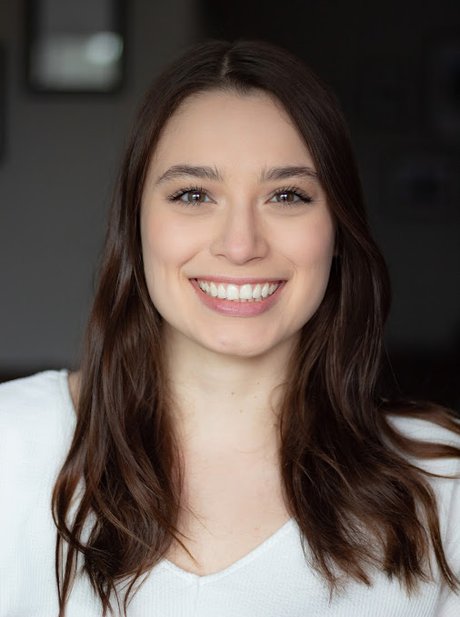
Member Spotlight
Spring 2019
Sara Belontz investigates microplastic distribution and sources in Lake Huron's nearshore and offshore sediments to better understand biological impacts and bioaccumulation threats across aquatic trophic levels.
Lyubov Burlakova Lyubov Burlakova studies the long-term ecological impacts of invasive Dreissena species on native mussels and benthic diversity. Her three-decade research spans European and U.S. ecosystems, emphasizing data repositories for trend analysis. I am a freshwater biologist studying ecology and diversity of benthic communities, and aquatic invasive species for the last 30 years in Europe and the U.S. I’ve worked at Buffalo State College since 2007 studying the impacts of Dreissena invasion on Great Lakes benthic communities and native freshwater mussel diversity. Since 2012, together with Cornell University, our team participates in U.S. EPA GLNPO’s monitoring of Great Lakes lower food webs.What inspired you to get into this work?Dreissena is an unusual beast in aquatic ecosystems. When choosing a topic for my Ph.D., I was told the incredible story of how zebra mussels changed the whole ecosystem structure and functioning in Lake Lukomskoe, Belarus. This was the first lake where the effect was tracked at all levels: water chemistry, structure, and productivity of all communities, benthic and pelagic. Plus, for me, a physicist by training, it was astounding and scary to study biological systems with their huge intrinsic variability. Wiens et al. (1986) note that studying ecology is comparable to what it would be like to study chemistry if the chemist were only a few angstroms long and lived only a few microseconds; the overall course of chemical reactions would be difficult to distinguish from the random collision of molecules! The attempt to separate ecosystem trends over time from natural variability and random changes is a fascinating journey.What body of knowledge would you like to build on? During my Ph.D. I studied growth, reproduction, population dynamics, spread, and effect of Dreissena on lake ecosystems. Almost three decades later, I continue this research, but on a different continent, in much larger lakes, and with two species of dreissenids. This makes it more challenging, but also more interesting. Not every scientist has the opportunity to study the same subject over several decades, but the investment and expertise pay off, providing a broad, unique perspective. It also makes you humble and persistent since right after you get the feeling “I finally got it,” nature proves otherwise!If you could change one thing about the way science is done, what would it be? Integration of different disciplines can further inform and enrich ecological research and monitoring; for example, a better understanding of the role of physical and chemical processes in community and species dynamics. We also always need historical data for our analyses of long-term community trends; creating regional repositories of samples and primary data will be a crucial investment in the future.How long have you been an IAGLR member and why did you join? I attended my first conference in 2008, soon after I joined the Great Lakes Center, to get a quick but comprehensive introduction to contemporary research on the Great Lakes. That conference exceeded my expectations, and I have never skipped a meeting since, first chairing sessions on aquatic invasive species and, later, on benthos and long-term monitoring. We always bring students to the conference since this is the best way to inform them on recent advances in Great Lakes research and integrate them into our wonderful community.Where will we find you at the conference? I am usually hard to find since my method is to select many different talks and jump between sessions to cover as much as possible. However, since I will co-chair the session Mud, Macrofauna and Microbes: Benthic Organism-Abiotic Interactions at Varying Scales (Thursday and Friday), I’ll surely be there! We also will present a photo exhibition and poster at the State of Lake Ontario session about our broad benthic survey activities on Lake Ontario in 2018.
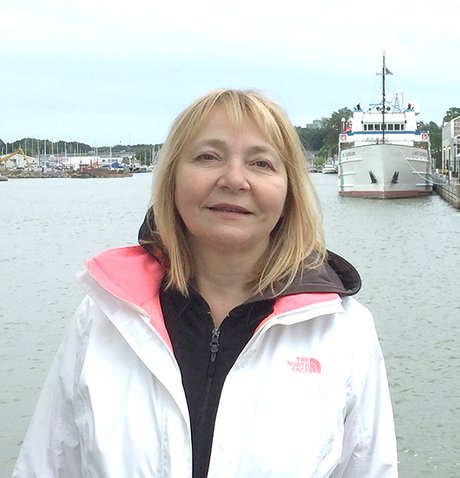
Member Spotlight
Spring 2019
Lyubov Burlakova studies the long-term ecological impacts of invasive Dreissena species on native mussels and benthic diversity. Her three-decade research spans European and U.S. ecosystems, emphasizing data repositories for trend analysis.
Pierre-Yves Caux Pierre-Yves Caux advises the International Joint Commission on transboundary water levels, flows, and quality. My work is to ensure decisions made at the International Joint Commission in my areas of responsibility are based on a credible and defensible science and engineering foundation. My team advises on several scientific and engineering projects throughout transboundary watersheds including the Great Lakes. The work focuses on transboundary water levels and flows and on water quality.What inspired you to get into this work?Many environmental issues that we are faced with today require problem solving that is multidisciplinary in nature. I enjoy making the linkages between the science and policy.What body of knowledge would you like to build on? This is a tough question for a scientist. Currently I feel climate change and adaptive management are worth building on as that knowledge will help us make the most sensible choices for the future of our waters, however daunting that may be. If you could change one thing about the way science is done, what would it be? We are fortunate in our organizations to conduct scientific investigations that our society believes in and are supported by our governments. Many will say more resources are needed to do a better job and in some cases they are correct. The scientific method we are utilizing is solid but needs to be more inclusive; that is, more of the population needs to take part in the science to empower them. For example, with all these apps being developed, think of the breadth of applicability these could have in water quantity and quality monitoring.How long have you been an IAGLR member and why did you join? I’ve been a member on and off for five years. I’m making an effort to stay connected despite my busy schedule.Where will we find you at the conference? I’m co-chairing a session with a colleague of mine, Jesse Feyen from NOAA, called Hydraulics, Hydrology, and Human Interactions in the Lake Champlain/Richelieu River Basin. The session is Wednesday afternoon in Seymour Union, Room 220
Member Spotlight
Spring 2019
Pierre-Yves Caux advises the International Joint Commission on transboundary water levels, flows, and quality.
Michael Chislock Michael Chislock explores the feedback loops between ecological adaptation and evolution in response to eutrophication and emerging contaminants. The work in my research lab focuses on several major themes: 1) We are interested in understanding the role of adaptation and evolution in modulating the response of lake ecosystems to eutrophication; 2) We study the prevalence and ecological consequences of emerging contaminants (e.g., microplastics); and 3) We assess the effects of restoration and management practices on water quality.What inspired you to get into this work?I grew up in central Pennsylvania and spent most of my childhood near rivers and lakes. I was also always interested in chemistry. As a graduate student, I learned how much I loved teaching, especially at the undergraduate level. My current position lets me combine all of my passions: aquatic environments and teaching/mentoring students, and is a blend of field- and lab-based activities. What body of knowledge would you like to build on? I would like to build on the rapidly growing body of knowledge demonstrating important feedbacks between ecology and evolution. I think the implications of this line of work for lake management are currently underappreciated, but important.If you could change one thing about the way science is done, what would it be? Most introductory science courses that I’ve seen are very large lectures seemingly designed to filter out students. I would like to see more funding and opportunities for immersive experiences in science for a larger proportion of students prior to the start of their undergraduate education. How long have you been an IAGLR member and why did you join? I joined IAGLR in 2011. I was interested in harmful algal blooms in the Great Lakes region, and I wanted to present the results of my research at the meeting.Where will we find you at the conference? Finger Lakes, HABs, watersheds, and wetland-related sessions.
Member Spotlight
Spring 2019
Michael Chislock explores the feedback loops between ecological adaptation and evolution in response to eutrophication and emerging contaminants.
Emily Ham Emily Ham investigates microplastic and microfiber occurrences in municipal water systems within the Niagara Region. My research investigates the concentration of microplastics in freshwater systems, wastewater treatment, and agricultural soils in the Niagara Region (Ontario, Canada).What inspired you to get into this work?I love to problem solve, and I wanted to investigate an environmental problem close to home. Microplastic pollution is widespread in all urban environments, and it has been incredibly rewarding working within my community to better understand this problem.What body of knowledge would you like to build on? Following my research on microplastics, I would love to continue investigating other emerging environmental contaminants in the Great Lakes basin. I find tracing environmental contaminants in freshwater environments to be fascinating and would enjoy playing a role in understanding their environmental impact, tracing them back to their source, and investigating novel ways to mitigate against these contaminants. I think this would be a great fit for my research goals and personal growth.If you could change one thing about the way science is done, what would it be? Collaboration should be fostered and emphasized to a greater extent. In emerging fields such as microplastic studies, standardized methods haven’t been agreed upon yet. One of the biggest struggles of my study was determining the best method for isolating microplastics from water/soil, as well as visually identifying what is actually a “microplastic.” More collaboration from the beginning of my research process would have helped me tackle these challenges more effectively. How long have you been an IAGLR member and why did you join? I have been an IAGLR member since March 2019. Where will we find you at the conference? You can find me at the session Microplastics in the Environment: Source, Fate, Impact, Detection, and Mitigation where I will be presenting my work titled “The occurrence of microplastics and microfibres in municipal water systems of the Niagara Region, ON” on Wednesday morning in Seymour Union, Room 220!
Member Spotlight
Spring 2019
Emily Ham investigates microplastic and microfiber occurrences in municipal water systems within the Niagara Region.
Josie Lindsey-Robbins Josie Lindsey-Robbins studies how detritivore abundance influences nutrient cycling and corn biomass in agricultural soils. I am studying the effects of increased detritivore abundance on nutrient cycling in agricultural soil, and how we might be able to incorporate detritivore abundance into best management practices for farmers. My work has found that increased detritivore abundance was able to reduce the volume of leachate from agricultural soil by about 31 mL per invertebrate, which can have drastic impacts on freshwater eutrophication processes. Detritivores were also able to significantly increase corn biomass and decrease weed growth, which are two main goals of farmers everywhere.What inspired you to get into this work?I originally wanted to study climate change and biological processes under different warming or rainfall scenarios, but living in Northwest Ohio, the community is so connected to Lake Erie. They use it for fishing, boating, drinking water, and industrial businesses. I wanted my research to help not only the ecosystems around me, but the communities that are impacted by the degradation of those ecosystems.What body of knowledge would you like to build on? Broadly, I would like to build on the body of knowledge surrounding global change biology and how changes in temperature and precipitation might alter natural processes, ecosystem functioning, and organismal biology. I would like my career to unite research and on-the-ground monitoring or conservation techniques to make a real difference in ecosystem health. If you could change one thing about the way science is done, what would it be? I would change the stigma placed around data sharing. There is a huge wealth of data, information, and knowledge that scientists seem to be scared of sharing, especially prior to publication. But these data are usually the most up to date and accurate, so we need to be sharing them worldwide to have greater impacts on environmental policy and management. This really comes into play for species management when we take into consideration species rarity, distribution, range, habitat preference, and more.How long have you been an IAGLR member and why did you join? I joined a couple months ago because I was looking for an organization that fit with my thesis research and overall career goals. While IAGLR is focused on the health of the Great Lakes, it also is broadly interested in both aquatic and terrestrial ecology, and how they work together to impact the health of the lakes. I wanted to present my research to an audience that would understand my goals, and possibly be able to incorporate my research into future work.Where will we find you at the conference? I am giving a talk on June 12 in the session Soil Health: Role of Nutrient Losses from Agricultural Sites. I also plan on attending Linking Human Well-being, Quality of Life, and Ecosystem Services to Conservation Efforts on June 11 and Beyond the Edge of the Field: Mitigating the Impacts of Nutrient Pollution on HABs on June 13. You can also find me at the student social and the banquet!
Member Spotlight
Spring 2019
Josie Lindsey-Robbins studies how detritivore abundance influences nutrient cycling and corn biomass in agricultural soils.
Harry Nelson Harry Nelson represents Fluid Imaging Technologies, demonstrating FlowCam imaging flow cytometry for aquatic plankton research. I am studying the effects of increased detritivore abundance on nutrient cycling in agricultural soil, and how we might be able to incorporate detritivore abundance into best management practices for farmers. My work has found that increased detritivore abundance was able to reduce the volume of leachate from agricultural soil by about 31 mL per invertebrate, which can have drastic impacts on freshwater eutrophication processes. Detritivores were also able to significantly increase corn biomass and decrease weed growth, which are two main goals of farmers everywhere.What inspired you to get into this work?I originally wanted to study climate change and biological processes under different warming or rainfall scenarios, but living in Northwest Ohio, the community is so connected to Lake Erie. They use it for fishing, boating, drinking water, and industrial businesses. I wanted my research to help not only the ecosystems around me, but the communities that are impacted by the degradation of those ecosystems.What body of knowledge would you like to build on? Broadly, I would like to build on the body of knowledge surrounding global change biology and how changes in temperature and precipitation might alter natural processes, ecosystem functioning, and organismal biology. I would like my career to unite research and on-the-ground monitoring or conservation techniques to make a real difference in ecosystem health. If you could change one thing about the way science is done, what would it be? I would change the stigma placed around data sharing. There is a huge wealth of data, information, and knowledge that scientists seem to be scared of sharing, especially prior to publication. But these data are usually the most up to date and accurate, so we need to be sharing them worldwide to have greater impacts on environmental policy and management. This really comes into play for species management when we take into consideration species rarity, distribution, range, habitat preference, and more.How long have you been an IAGLR member and why did you join? I joined a couple months ago because I was looking for an organization that fit with my thesis research and overall career goals. While IAGLR is focused on the health of the Great Lakes, it also is broadly interested in both aquatic and terrestrial ecology, and how they work together to impact the health of the lakes. I wanted to present my research to an audience that would understand my goals, and possibly be able to incorporate my research into future work.Where will we find you at the conference? I am giving a talk on June 12 in the session Soil Health: Role of Nutrient Losses from Agricultural Sites. I also plan on attending Linking Human Well-being, Quality of Life, and Ecosystem Services to Conservation Efforts on June 11 and Beyond the Edge of the Field: Mitigating the Impacts of Nutrient Pollution on HABs on June 13. You can also find me at the student social and the banquet!
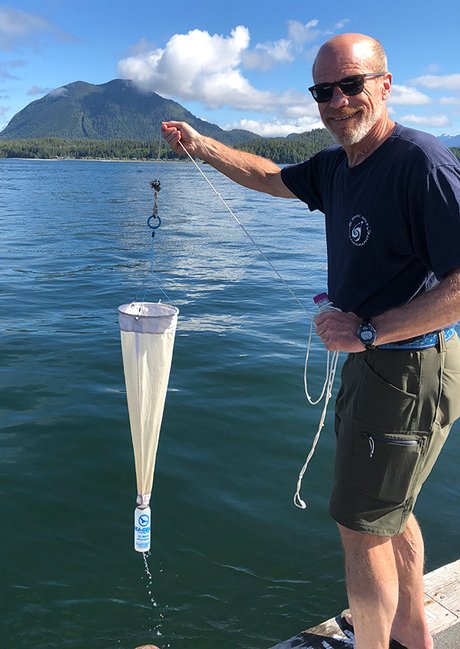
Member Spotlight
Spring 2019
Harry Nelson represents Fluid Imaging Technologies, demonstrating FlowCam imaging flow cytometry for aquatic plankton research.
Lakes Letter Redux A note from IAGLR President Michael Twiss
By Michael Twiss, IAGLR President IAGLR revives Lakes Letter to boost member engagement and share association news. Some who were IAGLR members a few decades ago might recall regularly receiving in the mail a newsletter on ivory-colored paper IAGLR used before the Internet to communicate en masse with its members by means other than the annual conference or the journal. Bringing back Lakes Letter was your idea. Let me explain. In 2018, we conducted a member survey where you told us that you wanted to be more engaged. Lakes Letter is just one way for our members’ voices be heard. In this new quarterly publication, we’ll celebrate your good news and mourn your loss. We’ll feature member profiles so we can better get to know one another. We’ll also share news from the board and committees that help make IAGLR tick.Since I’ve been on the board, IAGLR has made several changes to better support our members and constituents of great lakes across the globe, as our name suggests. We are now a member of the Consortium of Aquatic Science Societies, speaking with a unified voice to protect fresh waters by providing scientific advice to governments. On behalf of our members’ desire to be a more proactive force, we’ve responded to the U.S. federal government’s efforts to redefine waters of the United States, encouraged the Russian government to reconsider its desire to relax nutrient loading into Lake Baikal, and requested reconsideration of changes to the NSERC Strategic Grant program in Canada. We now have an international (non-Canada, non-U.S.) board member position to better reflect other nations, here on this continent and beyond, that are rights holders and stakeholders in great lake ecosystems. When I was elected to the board in 2016 we had one conference per year; last year we had three and will do so again in 2021. Our annual State of Lake conferences enjoy participation by those who don’t normally attend the annual IAGLR research conference, connecting to policymakers and business leaders across the Laurentian Great Lakes basin. In 2020, we will partner with the International Institute for Sustainable Development-Experimental Lakes Area in Winnipeg for our annual research conference. Based in an area rich in social linkages to water resources, IISD-ELA has a strong scientific connection to past and present issues confronting the Great Lakes. We look forward to stepping again outside of the LGL basin to reflect on where we are as an association of great lake researchers and establish new partnerships.Our association faces important issues. As our activity to serve our constituents grows, we need to find better ways to make connections amongst them and still maintain our mission to advance understanding of the world’s great lake ecosystems. To this end we are seeking input on a strategic plan for IAGLR. We are also living in a world experiencing rapid technological, environmental, and social changes. People worldwide rely on great lake ecosystems for their livelihood, and we must be able to reply to those who warn of impending strife due to climate change, burgeoning human population, and unsustainable attitudes toward the natural ecosystem. Great lake researchers are needed now and in the future.
Editorial
Spring 2019
IAGLR revives Lakes Letter to boost member engagement and share association news.