Often referred to as the “sixth Great Lake,” the total volume of groundwater within the Great Lakes basin is estimated to be greater than the volume of Lake Michigan. Despite its massive scale and its intrinsic connection to the quality and quantity of the region’s surface waters, extensive knowledge gaps remain regarding groundwater availability at the statewide, basin, and regional scales.
One resource available to help address these gaps is the Great Lakes Regional Water Use Database, which the Great Lakes Commission (GLC) maintains in partnership with the Great Lakes-St. Lawrence River Water Resources Compact Council and Regional Body. This collaborative effort provides uniform, consistent data on withdrawals, diversions, and consumptive uses across jurisdictions, watersheds, and sectors. These data provide a baseline understanding of groundwater usage across the basin and inform regional water resources management.
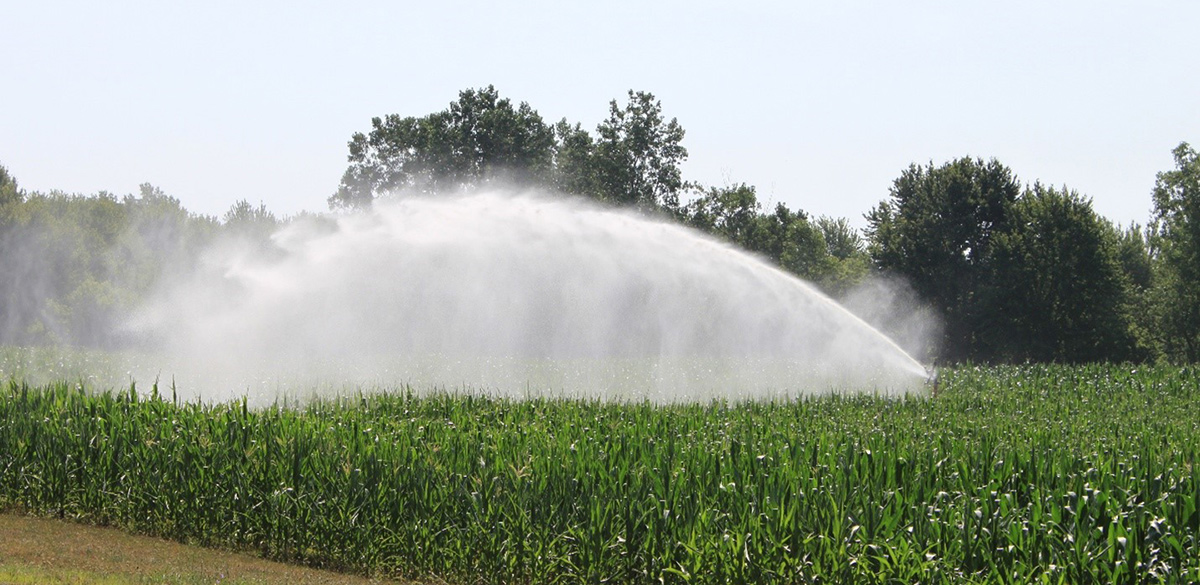
From 2020 to 2024, an average of more than 1.2 billion gallons of groundwater were withdrawn daily from the Great Lakes basin across all sectors. Agricultural water use—specifically for irrigation and livestock watering—currently makes up the second most significant withdrawal of groundwater in the basin at an average of 370 million gallons of groundwater per day over that same period, trailing only public supply. While agriculture in the Great Lakes region is currently primarily rain-fed, climate projections indicate that increasing drought severity and frequency by the end of the century will expand the need for supplemental irrigation. This shift could result in an increased demand on groundwater aquifers throughout the basin.
Rapid growth and advancement in the technology sector is also raising questions about potential impacts on the basin’s water resources. Recognizing its role in sustainable water resource management, the GLC recently passed a series of policy resolutions on impacts to Great Lakes agriculture and water use, the water-energy nexus of emerging technologies, and non-potable water reuse development. These resolutions support the economic growth and sustainable development of these sectors while protecting the region’s water supply.
To ensure the security of the Great Lakes region’s economy and the sustainability and balanced use of the Great Lakes basin’s water resources, we must continue to improve our understanding of the impacts of shifts in agriculture and energy production, technology growth, and changing climate conditions. Coordinated and informed policy and decision-making will help us secure the “sixth Great Lake” for generations to come.