With hardly 15% of the Laurentian Great Lakes floor mapped, several submerged sinkholes have been discovered. Karstic sinkholes—with actively venting ground water having no-oxygen, but high-chloride and high-sulfur—nurture vibrantly colored biodiverse benthic microbial mats of photosynthetic cyanobacteria and chemosynthetic microbes, possibly containing a trove of novel species.
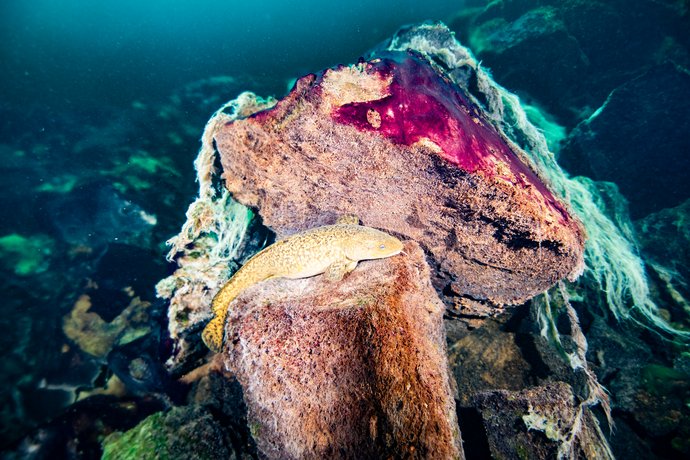
In addition to providing a window into life on early Earth, these physiologically versatile mat worlds in sinkhole refugia serve as models for testing ecological theories and phenomena—including life's evolution and biogeography and Earth's carbon burial and oxygenation—across sharp transition zones and within extreme habitats (Biddanda et al. 2023).
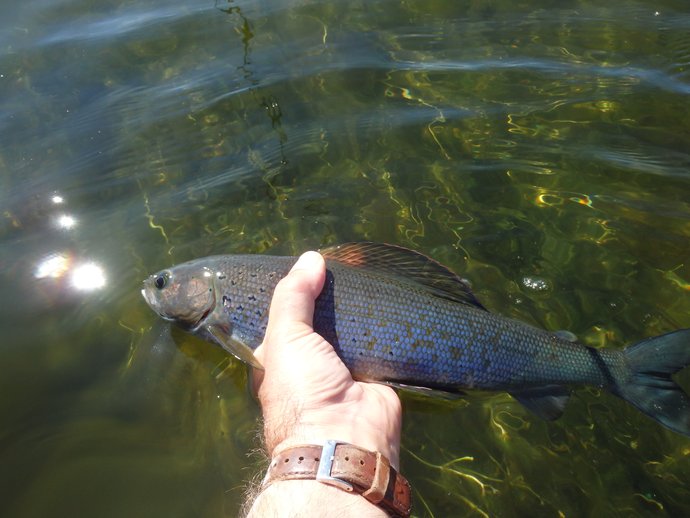
Moreover, mat ecosystems where bacteria, archaea, and viruses coexist in close and intense dynamic cooperation, competition, and conflict are likely rich in bioactive compounds of pharmaceutical value. For example, what are occasional large mobile metazoan visitors, such as this Burbot (Lota lota) pictured, doing hanging out over these microbes-only mats? Existing and future Great Lakes National Marine Sanctuaries and Marine Protected Areas should incorporate known submerged sinkholes ensuring their long-term protection and conservation.
Mat ecosystems where bacteria, archaea, and viruses coexist in close and intense dynamic cooperation, competition, and conflict are likely rich in bioactive compounds of pharmaceutical value.