Scientists in Canada have recently discovered that dogs can sniff out oil spills buried in freshwater lakes under ice, with a 100% success rate. Last month in an experiment at IISD Experimental Lakes Area (IISD-ELA) in northwestern Ontario, sniffer dogs were able to definitively detect the location of various types of oil under lake ice, better than even our most sensitive scientific instruments. This suggests the incredibly exciting potential use of dogs in the aftermath of an oil spill, where time is of the essence to respond and mitigate the impact on the environment.
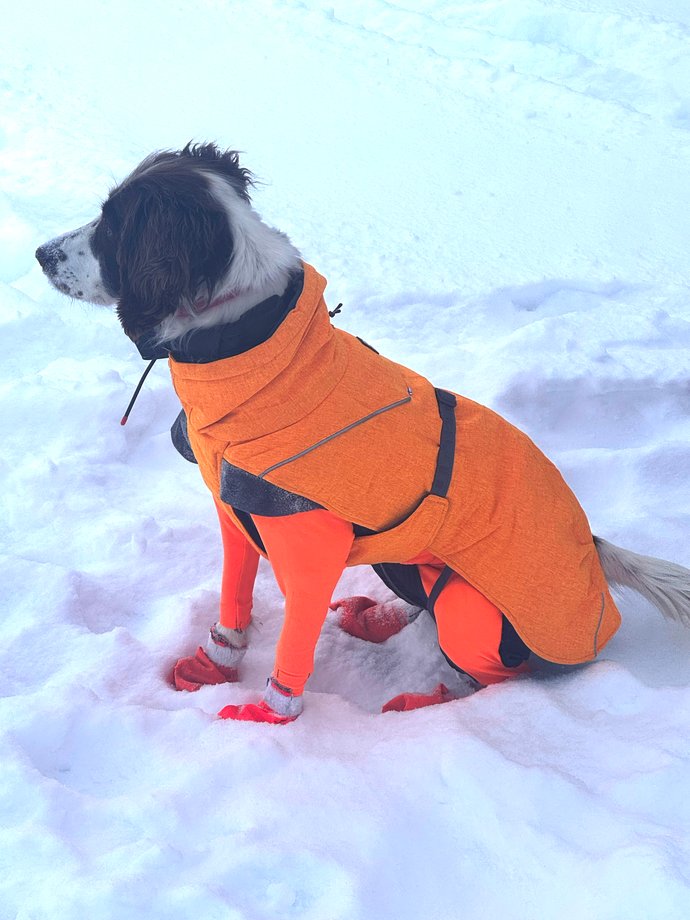
Specially trained detection dogs known as Oil Detection Canines (ODCs) were able to detect the location of two types of oil under lake ice in six out of six instances in a double-blind study that resulted in no false negative results.
The experiment was carried out on Lake 260, the site of many previous oil spills experiments. Researchers sawed three transects into the ice, with each consisting of nine holes measuring 1 square meter in size. Researchers let the holes freeze, with 2–3 inches of ice forming overnight. The next day, they drilled pilot holes at an angle to insert a pipe below the level of the newly formed ice, which allowed them to pump oil into three randomly selected holes. The types of oil used were a dyed diesel, ultra-low sulfur fuel oil and a syncrude condensate (typically mixed with oil sands bitumen to thin it for easier pumping through pipelines).
Five days later, a 6-year-old Springer Spaniel named Poppy came and worked her magic running across the transects in a zigzag pattern signalled by her trainer, Paul Bunker, owner of Chiron K9. Neither of them knew which holes contained oil and which ones were dummy (reference) holes. When Poppy detected oil, she “alerted” her trainer by sitting down. Bunker would raise his arm, and researchers would inform him if the alert was indeed where oil was deposited beneath the ice. If Poppy was correct (and she always was), Bunker rewarded her with a little bit of play with her favorite toy, a red KONG Wubba.
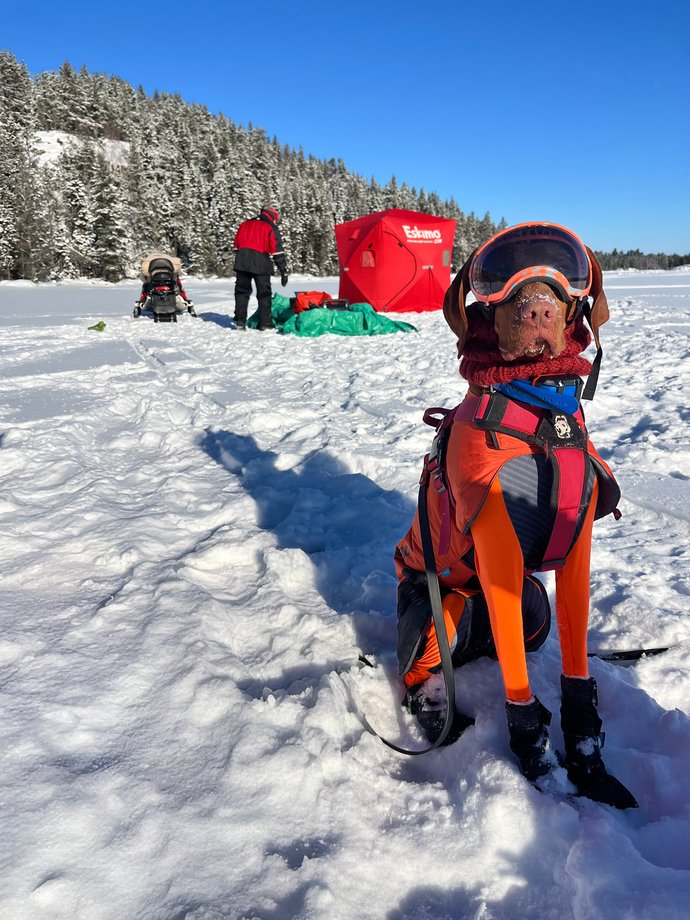
“These findings have enormous implications for speeding up how we deal with oil spills and protecting our freshwaters,” says Vince Palace, IISD-ELA head research scientist. “Over the years, we have tried sonar, radar, fluorescence, optical sensors, and old-fashioned, labor-intensive drilling—even the human eye with lights under the ice. But even our most sensitive scientific instruments and manual methods cannot come close to the 100% success rate of our canine friends. Oil Detection Canines are quick—covering up to 400 square meters in 20 minutes—they’re relatively inexpensive to train, and they’re evidently extremely accurate.”
Even our most sensitive scientific instruments and manual methods cannot come close to the 100% success rate of our canine friends.
When dealing with the aftermath of an oil spill from a pipeline under ice, response teams can spend much of their precious time determining where exactly the oil has spilled before taking action to clean up—a situation made much worse when working in frozen and harsh conditions.
Using dogs in the initial response, with their proven speed and accuracy, could greatly assist the process of oil spill response and clean-up, resulting in less of an impact on our freshwater ecosystems.
This study is part of a broader research project currently being conducted on freshwater lakes at IISD-ELA to determine the effectiveness of ODCs to detect oil under ice and is being carried out with funding from the United States Coast Guard Great Lakes Oil Spill Center of Expertise and in collaboration with Chiron K9, Owens Coastal Consultants, DF Dickins, and SLRoss.