Winter 2025 • Issue 24
Science and Hope
Published February 2025
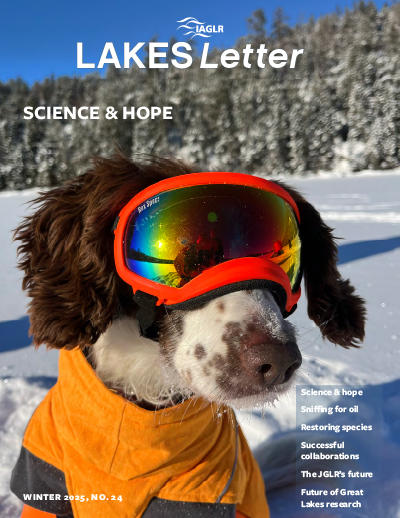
In exploring the theme of Science & Hope, we consider the importance of hope, especially during difficult times. We discover that hope isn't just optimism or wishful thinking; it requires facing challenges and taking action. By sharing stories of success—like that of Poppy, the talented pup on our cover who detects oil spills under ice—we can guide ourselves toward a brighter future. Join us as we explore the transformative impact of hope.
Features
Science elicits hope, joy depending on the audience
Research shows that while the public associates science with hope, scientists associate it with joy. Understanding these differing emotional lenses is crucial for effective science communication and engagement.
Biodiversity after a Phragmites invasion
Long-term monitoring of wetlands in Ontario reveals that while secondary invasions occur after Phragmites control, native plant communities eventually recover, highlighting the importance of sustained monitoring and collaboration.
Reintroducing species
Research from the Freshwater Restoration Ecology Centre explores how soft-release strategies can mitigate transport stress and improve survival rates for reintroduced lake sturgeon in the Great Lakes.
Academic publishing at a crossroads
New lead editor Margaret Docker discusses the future of the Journal of Great Lakes Research, emphasizing community, peer review integrity, and the value of society journals amidst changing publishing landscapes.
The future of Great Lakes research
The IJC Science Advisory Board is developing a decadal science strategy to address aging infrastructure, workforce shortages, and emerging threats through a collaborative, basin-wide plan.
Sniffing for oil under ice
A groundbreaking experiment at IISD Experimental Lakes Area shows that trained detection dogs can locate oil spills under ice with 100% accuracy, offering a rapid and cost-effective solution for winter response.
Lake Erie and Aquatic Research Network
The LEARN program demonstrates how meaningful collaboration between researchers and management professionals in Ohio fosters trust, adaptive monitoring, and hope for freshwater futures.
Departments
Julia Obuya
A Ph.D. candidate at Bowling Green State University, Julia Obuya uses molecular techniques to study harmful algal blooms, translating complex data into actionable strategies for communities in Africa and North America.
Anna Hill
A Purdue master's student studying alewife in Lake Michigan, Anna Hill bridges the gap between scientific research and community stakeholders to make fish ecology findings accessible to anglers and the public.
Molly Wick
An EPA postdoctoral fellow, Molly Wick studies cultural ecosystem services along Great Lakes.
Lake trout restored in Lake Superior
After nearly 70 years of effort, native lake trout populations have been fully restored in Lake Superior, marking a major conservation triumph through sea lamprey control and stocking.
Refugia of hope: Life in submerged karst sinkholes
Submerged sinkholes in the Great Lakes harbor unique, biodiverse microbial mats that offer insights into early Earth life and potential pharmaceutical compounds, representing hidden refugia of hope.
Bringing back Arctic grayling (Nmégos) to Michigan
A coalition of partners is reintroducing Arctic grayling to Michigan streams using streamside incubators to ensure imprinting, reconnecting Anishinaabe people with their cultural heritage.
Volunteering for the love of suckers
A citizen science program engages volunteers to document sucker fish migration, revealing temperature as the primary trigger and demonstrating the power of public engagement in fish conservation.
Hope through Indigenous leadership
A Keweenaw Bay Indian Community climate study shows that despite challenges, climate impacts are strengthening cultural knowledge transmission and community bonds, offering a path forward for Indigenous-led research.
Choosing hope
An editorial reflecting on the theme of hope in the face of scientific challenges, emphasizing the role of storytelling and collaboration in sustaining the Great Lakes research community.
Looking for research on a specific topic?
Explore our Article Directory to filter all issues by topic, article type, region, or keyword. Or browse the Author Index to find a contributor.
Issues Archive
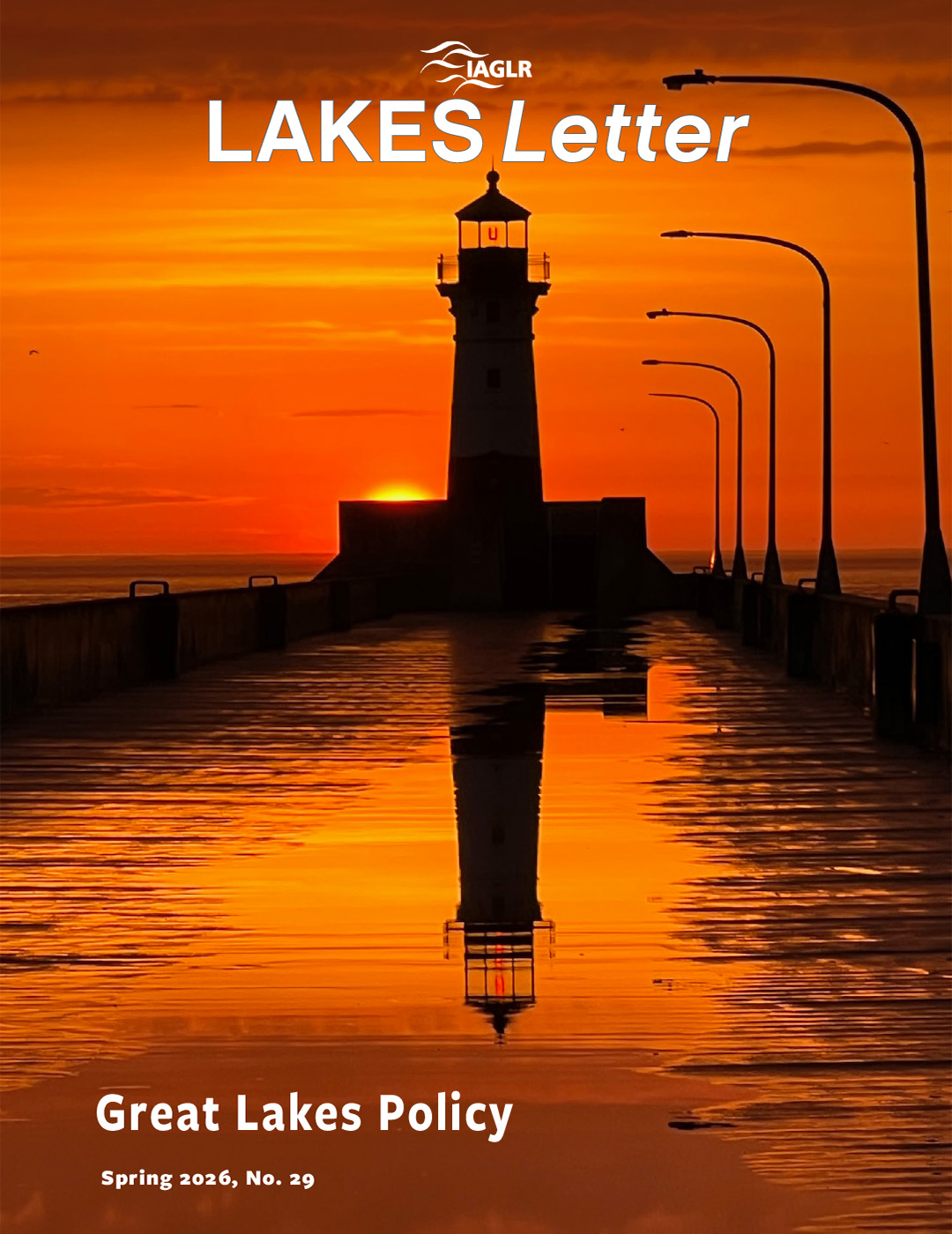
Great Lakes Policy
spring 2026 • Issue 29
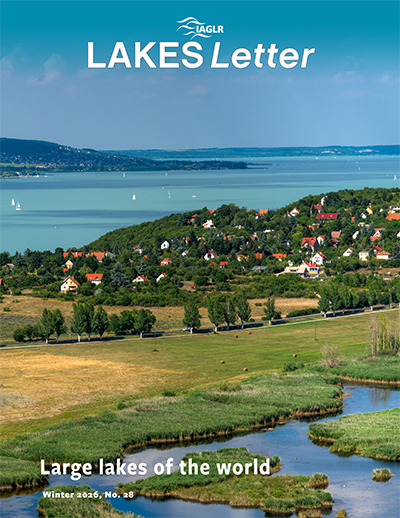
Large lakes of the world
winter 2026 • Issue 28
Science & Innovation
fall 2025 • Issue 27
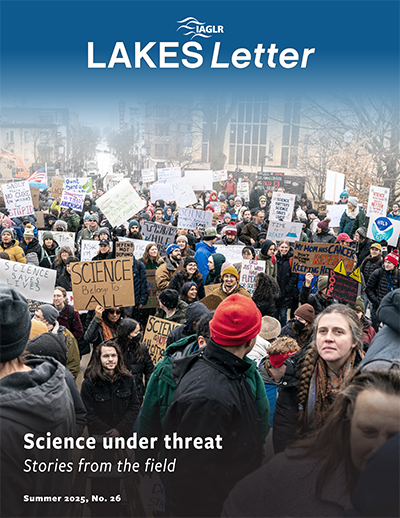
Science under threat: Stories from the field
Summer 2025 • Issue 26
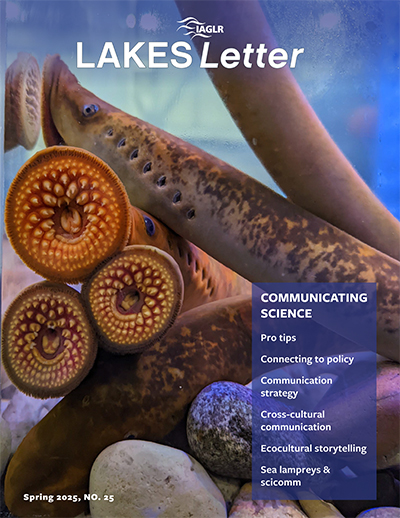
Communicating Science
Spring 2025 • Issue 25
Science and Hope
Winter 2025 • Issue 24
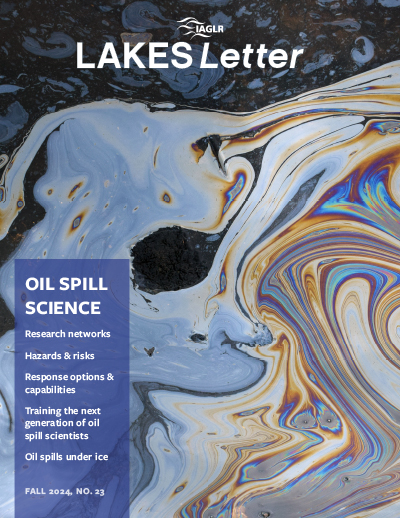
Oil Spill Science
Fall 2024 • Issue 23
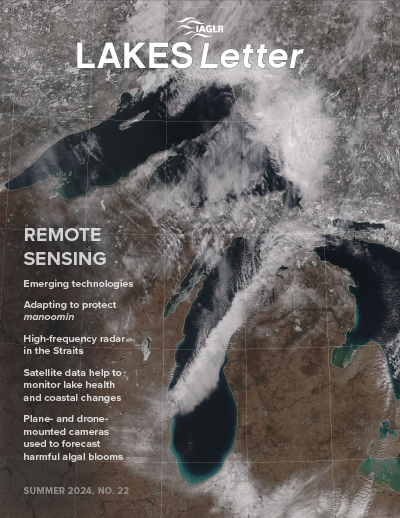
Remote‑Sensing
Summer 2024 • Issue 22
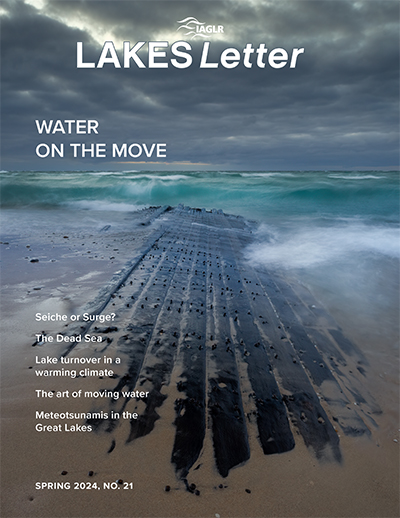
Water on the Move
Spring 2024 • Issue 21
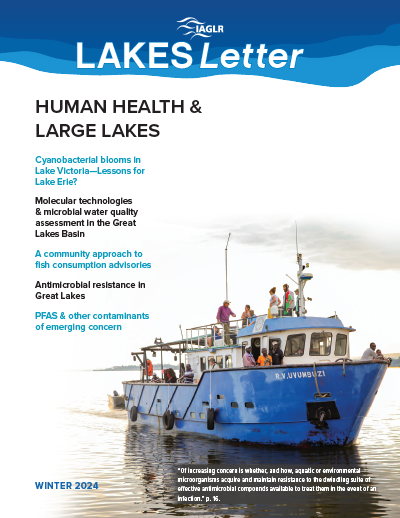
Human Health
Winter 2024 • Issue 20
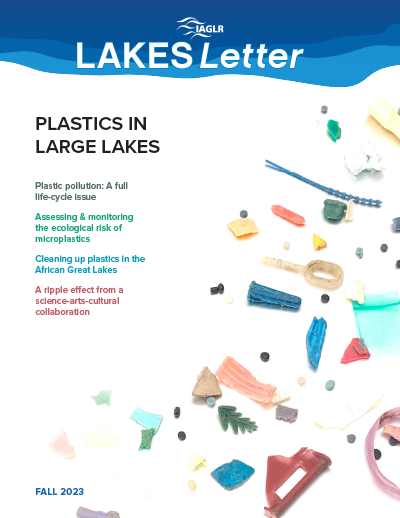
Plastic Pollution
Fall 2023 • Issue 19
Legal Frameworks
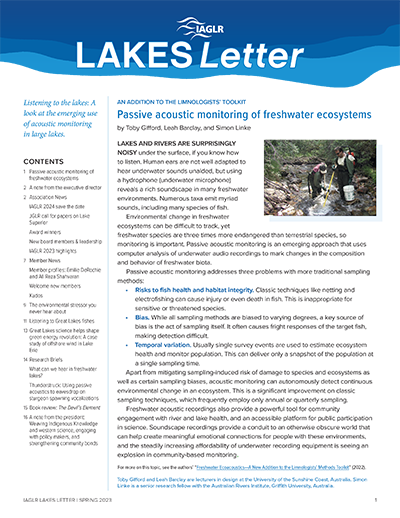
Summer 2023 • Issue 18
Acoustic Monitoring
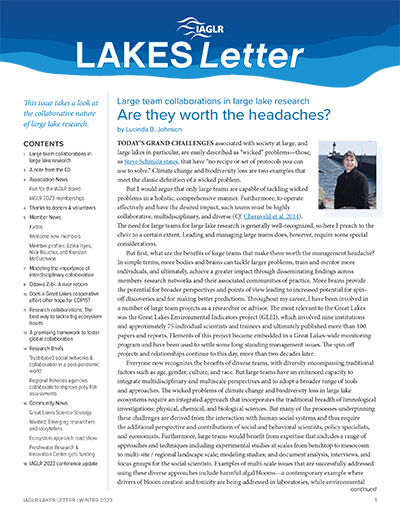
Spring 2023 • Issue 17
Collaborative Research
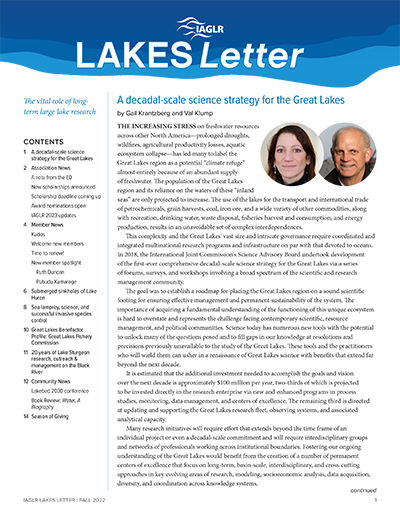
Winter 2023 • Issue 16
Long-term Research
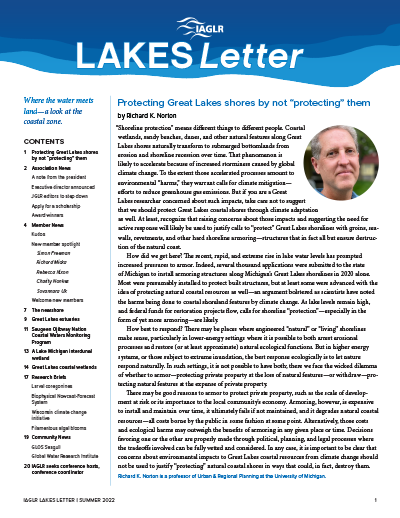
Fall 2022 • Issue 15
Coastal Zone
Summer 2022 • Issue 14
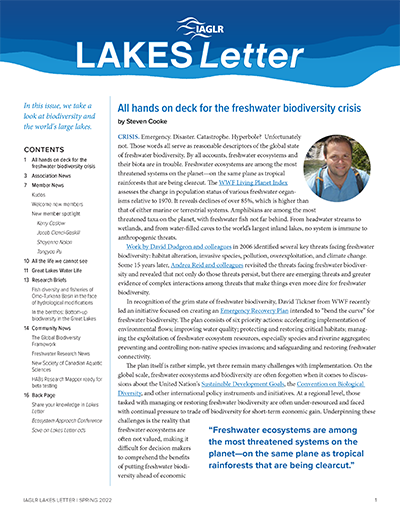
Biodiversity
Spring 2022 • Issue 13
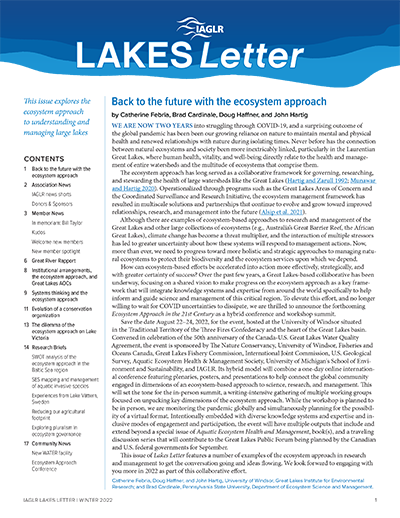
Ecosystem Approach
Winter 2022 • Issue 12
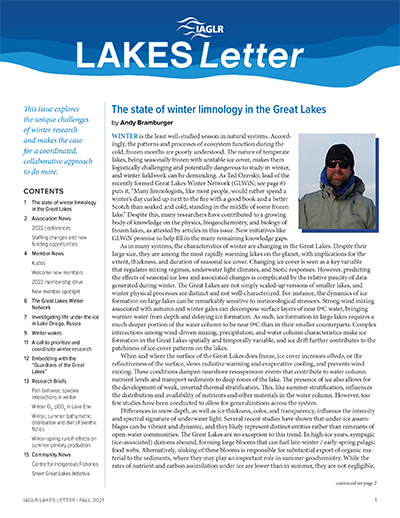
Winter Research
Fall 2021 • Issue 11
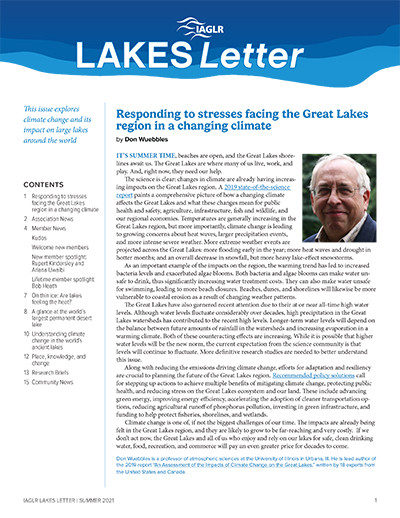
Climate‑Change Impacts
Summer 2021 • Issue 10
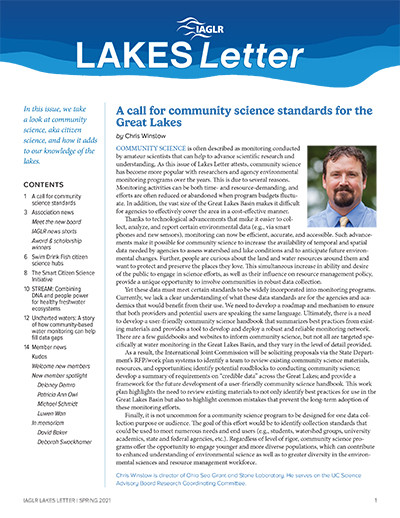
Community Science (Citizen Science)
Spring 2021 • Issue 9
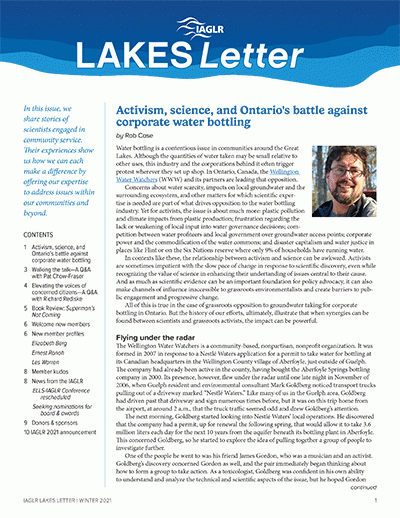
Community Service
Winter 2021 • Issue 8
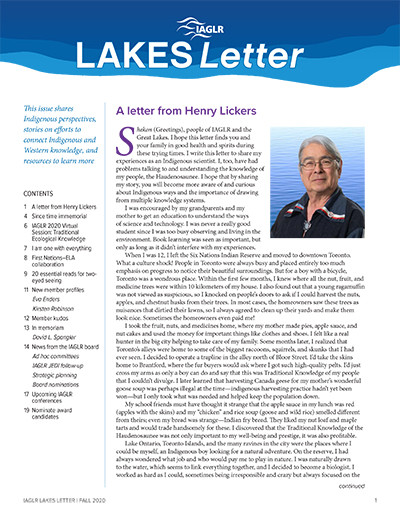
Indigenous Knowledge
Fall 2020 • Issue 7
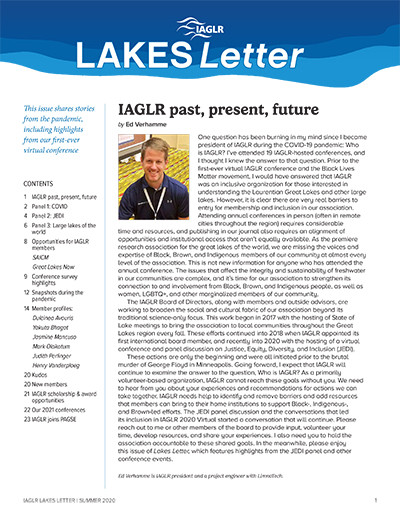
Pandemic, Conference Highlights
Summer 2020 • Issue 6
Arts and Science
Spring 2020 • Issue 5
International Collaboration
Winter 2020 • Issue 4
Technology
Fall 2019 • Issue 3
Science and Policy
Summer 2019 • Issue 2
Lakes Letter Redux
Spring 2019 • Issue 1