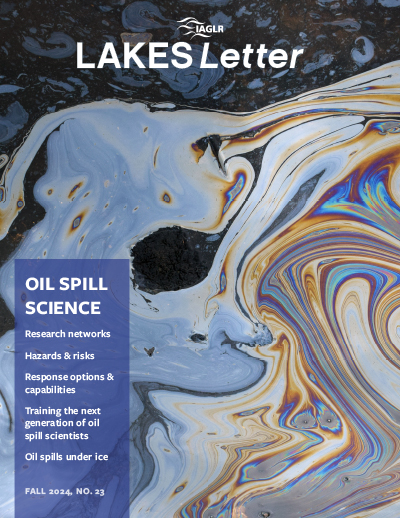
Fall 2024 • Issue 23
Oil Spill Science
Published November 2024
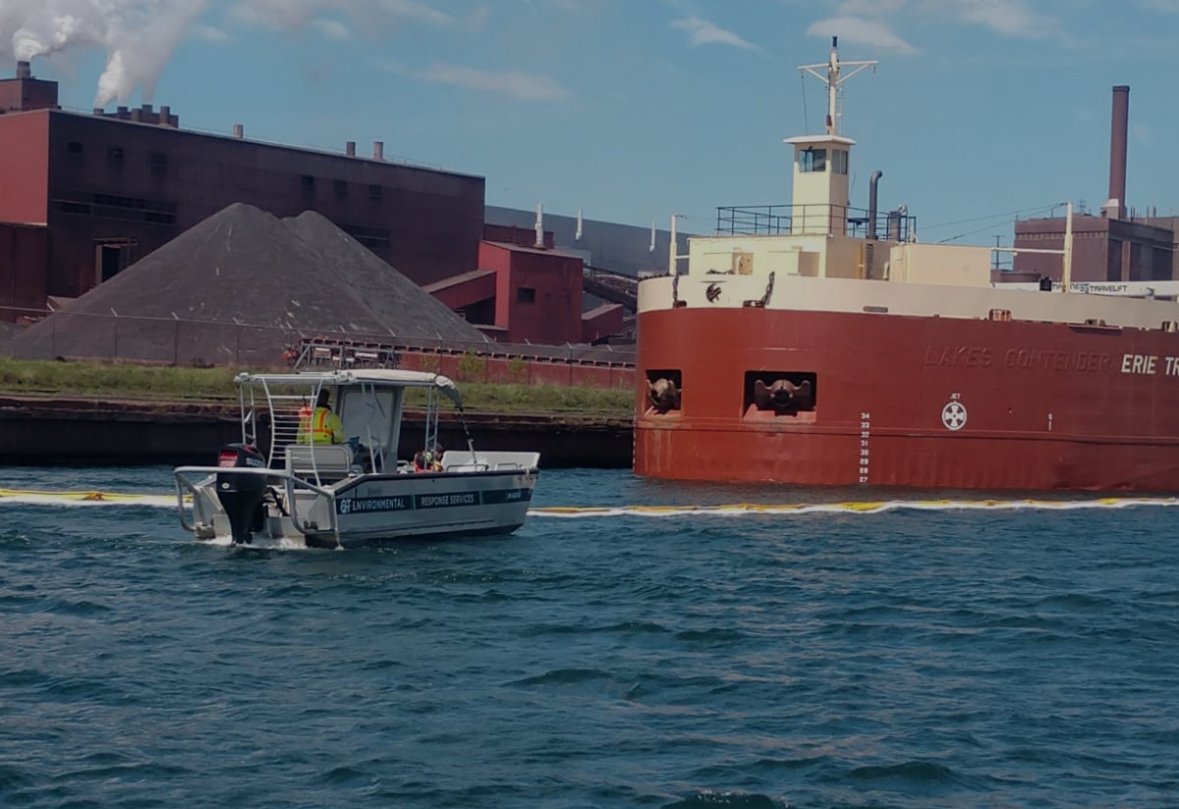
This issue takes a look at Oil Spill Science specific to the Great Lakes, emphasizing the unique challenges posed by the region's ice-covered environment and the necessity for robust cross-border collaboration. It highlights how research networks and new consortia are building scientific capacity to improve preparedness and response strategies, while detailing advancements in modeling, regulatory impacts, and the deployment of modern cleanup technologies like high-speed containment systems. The content also underscores the critical role of training and knowledge retention for responders, traces the history of significant spills that shaped current policies, and explores emerging biological solutions involving freshwater microbes to mitigate contamination.
Guest Editors: Kenneth Lee, of Kenneth Lee Research Inc., and Kelsey Prihoda, of the University of Minnesota Sea Grant College Program
Features
Innovating Environmental Solutions for a Cleaner Future
The Concordia Oil Spill Research Group is developing green technologies, such as bio-based coatings, to prevent oil adhesion on shorelines and enhance cleanup efficiency in freshwater environments.
Leading Response Research
An inside look at the U.S. Coast Guard's Great Lakes Oil Spill Center of Expertise (GLCOE), which leads research and training to improve oil spill response in freshwater and icy environments.
A New Focus on an Old Issue
The International Consortium of Oil Research (ICOR) is building scientific capacity to study the biological impacts, fate, and detection of oil spills in the Great Lakes ecosystem.
Oil Spill Modeling
Research highlights the complex interactions between oil and ice in the Great Lakes, emphasizing the need for improved modeling to predict oil movement and weathering under ice cover.
Research Networks
An overview of collaborative research networks in the Great Lakes, including the GLCOE and ICOR, working to improve oil spill prediction, detection, and response capabilities.
A Look Back
A historical chronology of major oil spills in the Great Lakes basin, from the 1948 Detroit River incident to the 2010 Kalamazoo River spill, illustrating the evolution of spill science and response.
The Impact of Regulation on Oil Spill Response
A perspective on how regulatory frameworks like the Oil Pollution Act of 1990 have shaped oil spill response, highlighting the challenges of workforce retention and the need for advanced training.
Oil Spill Risks & Response Capabilities
A RAND report assessing oil spill risks and response capabilities in the Great Lakes, identifying gaps in preparedness and the need for enhanced communication and training.
Departments
Chris Vandergoot
A tribute to Chris Vandergoot (1976–2024), the director of GLATOS, whose innovative work in acoustic telemetry has transformed fisheries management and left a lasting impact on the Great Lakes community.
Huifang Bi
Huifang Bi is developing green, biomass-derived coatings to prevent oil adhesion on shorelines and enhance biodegradation, aiming to revolutionize oil spill response in freshwater environments.
Can freshwater microbes help clean up oil contamination in the Great Lakes?
Research at the University of Windsor is investigating the potential of natural freshwater microbial communities to degrade hydrocarbons and clean up oil contamination in the Great Lakes.
Looking for research on a specific topic?
Explore our Article Directory to filter all issues by topic, article type, region, or keyword. Or browse the Author Index to find a contributor.
Issues Archive
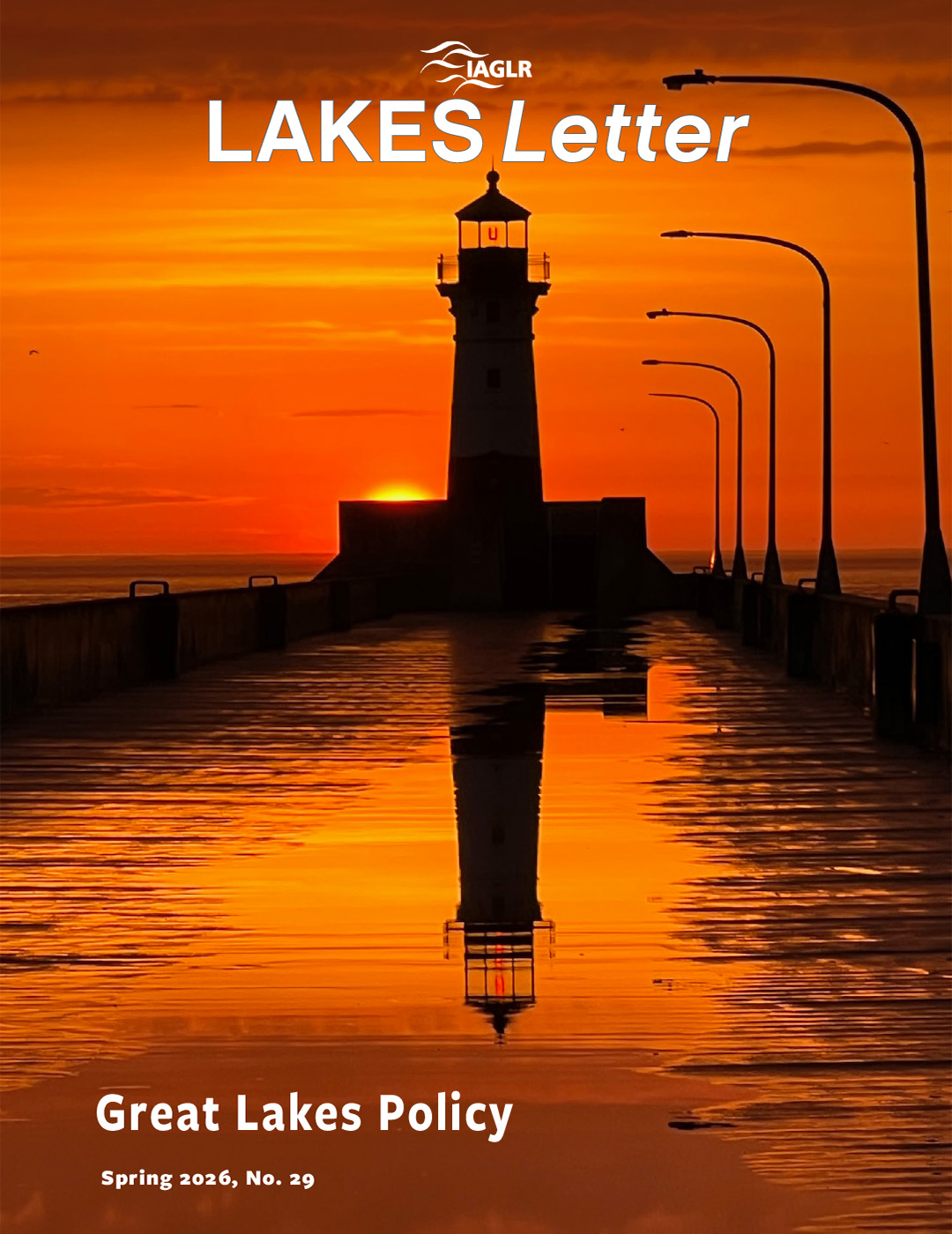
Great Lakes Policy
spring 2026 • Issue 29
Large lakes of the world
winter 2026 • Issue 28
Science & Innovation
fall 2025 • Issue 27
Science under threat: Stories from the field
Summer 2025 • Issue 26
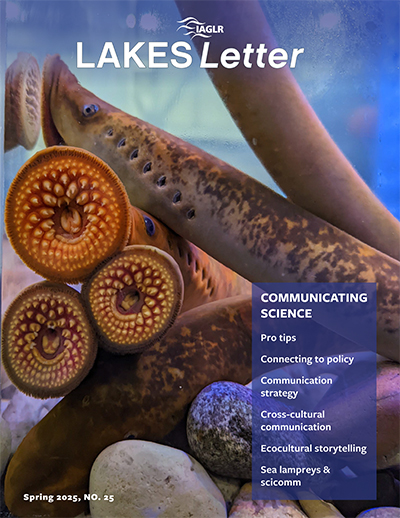
Communicating Science
Spring 2025 • Issue 25
Science and Hope
Winter 2025 • Issue 24
Oil Spill Science
Fall 2024 • Issue 23
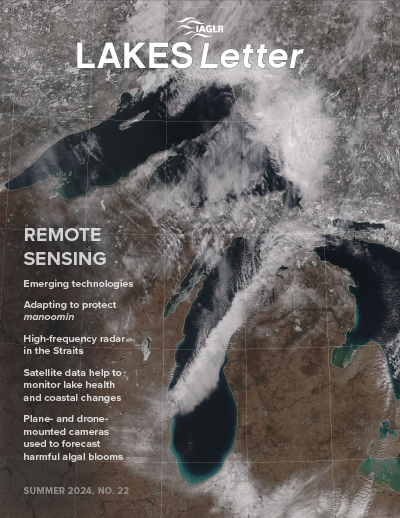
Remote‑Sensing
Summer 2024 • Issue 22
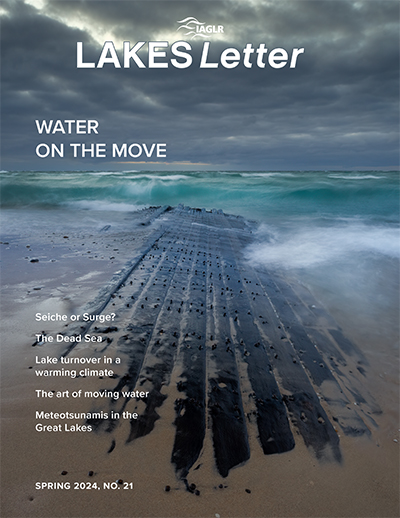
Water on the Move
Spring 2024 • Issue 21
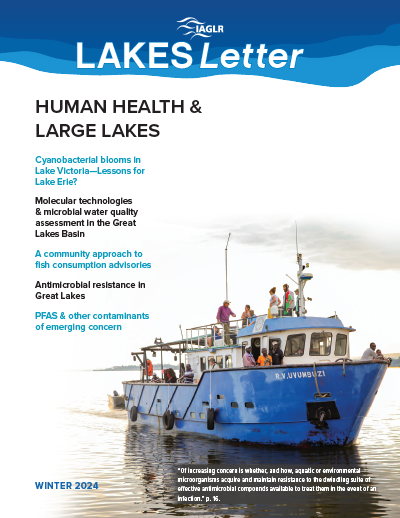
Human Health
Winter 2024 • Issue 20
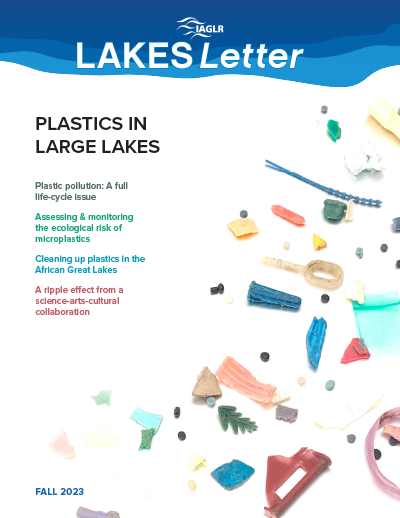
Plastic Pollution
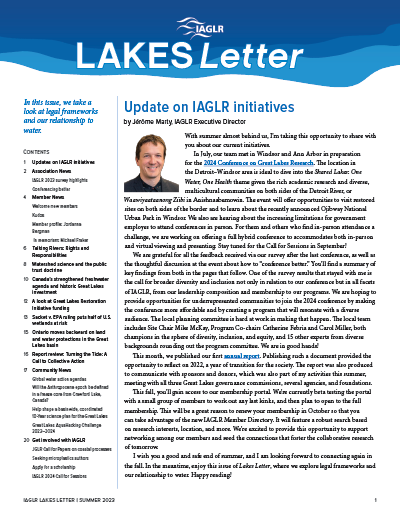
Fall 2023 • Issue 19
Legal Frameworks
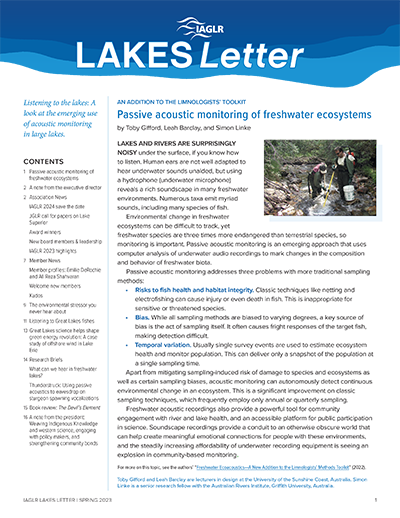
Summer 2023 • Issue 18
Acoustic Monitoring
Spring 2023 • Issue 17
Collaborative Research
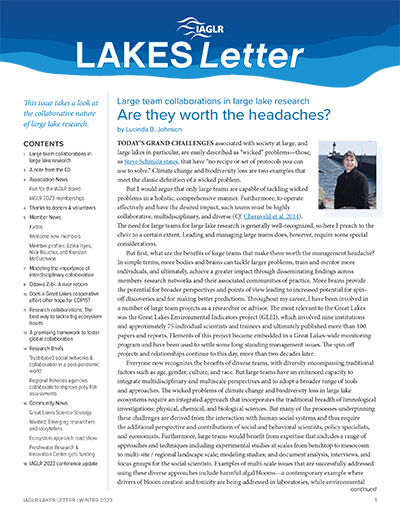
Winter 2023 • Issue 16
Long-term Research
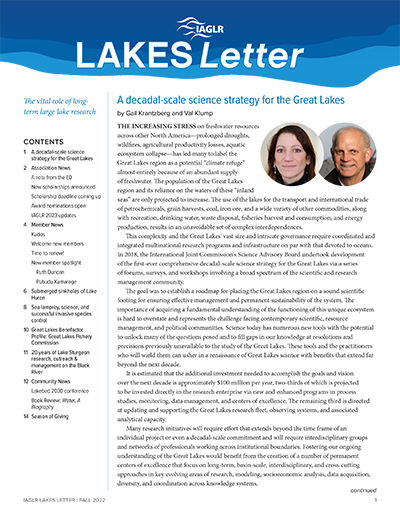
Fall 2022 • Issue 15
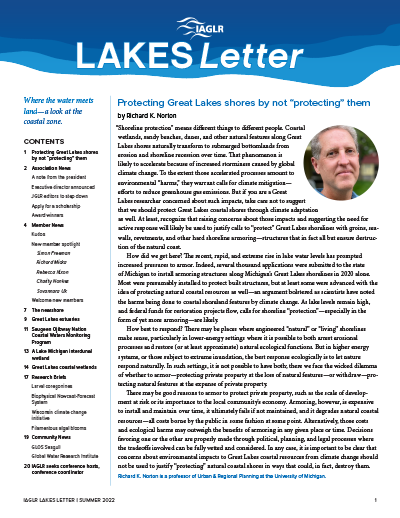
Coastal Zone
Summer 2022 • Issue 14
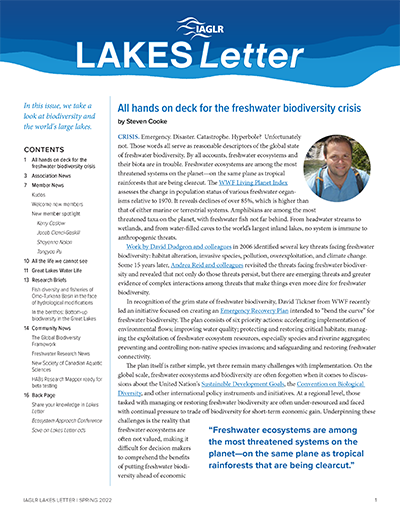
Biodiversity
Spring 2022 • Issue 13
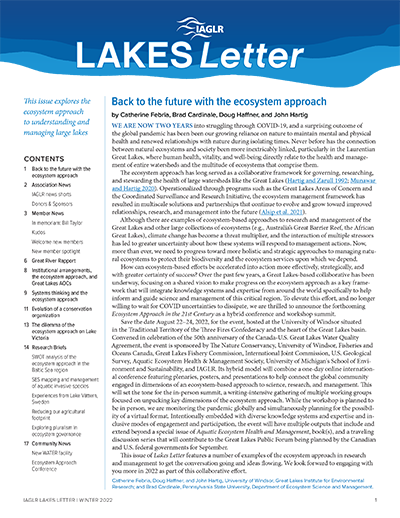
Ecosystem Approach
Winter 2022 • Issue 12
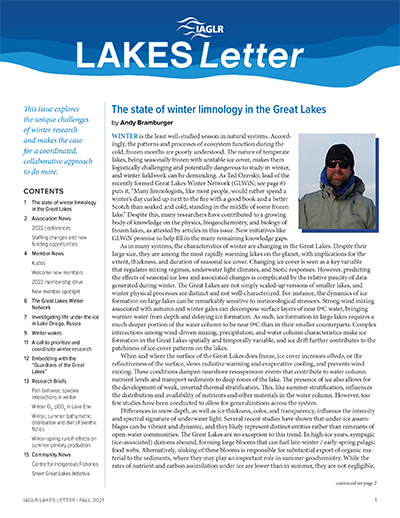
Winter Research
Fall 2021 • Issue 11
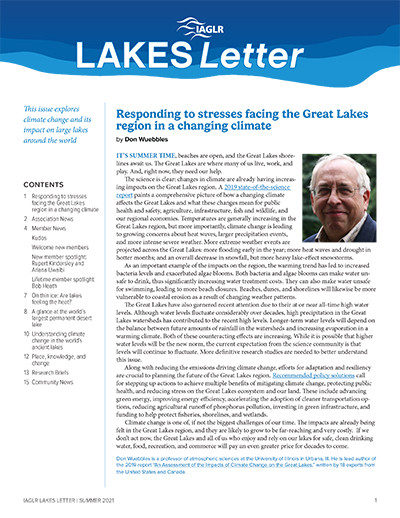
Climate‑Change Impacts
Summer 2021 • Issue 10
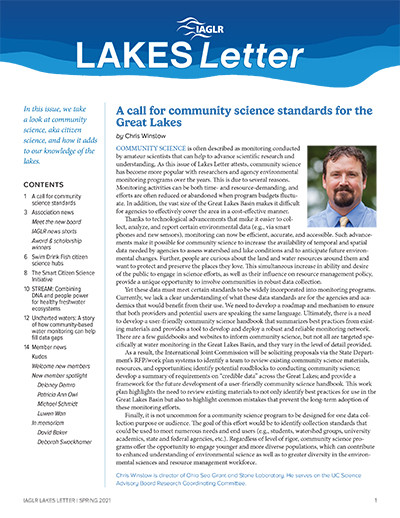
Community Science (Citizen Science)
Spring 2021 • Issue 9
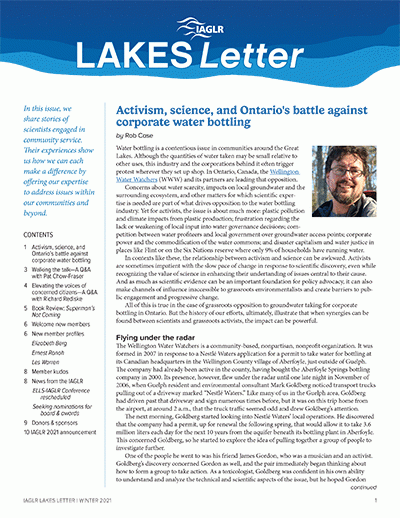
Community Service
Winter 2021 • Issue 8
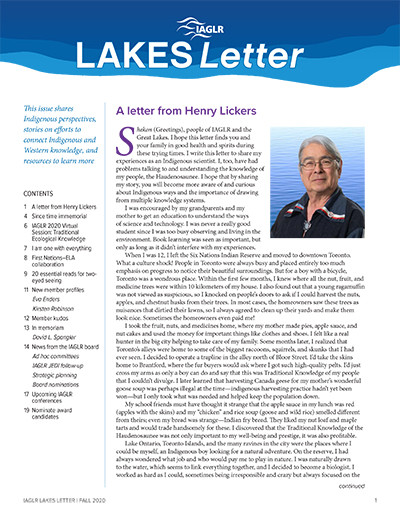
Indigenous Knowledge
Fall 2020 • Issue 7
Pandemic, Conference Highlights
Summer 2020 • Issue 6
Arts and Science
Spring 2020 • Issue 5
International Collaboration
Winter 2020 • Issue 4
Technology
Fall 2019 • Issue 3
Science and Policy
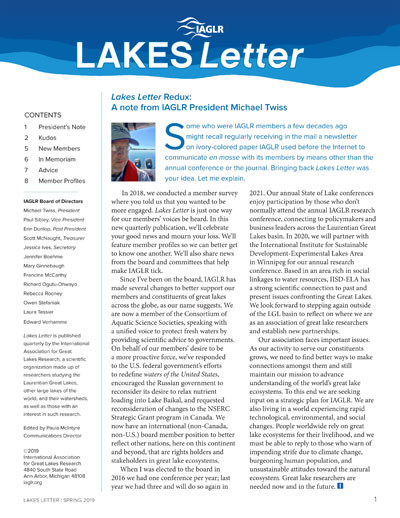
Summer 2019 • Issue 2
Lakes Letter Redux
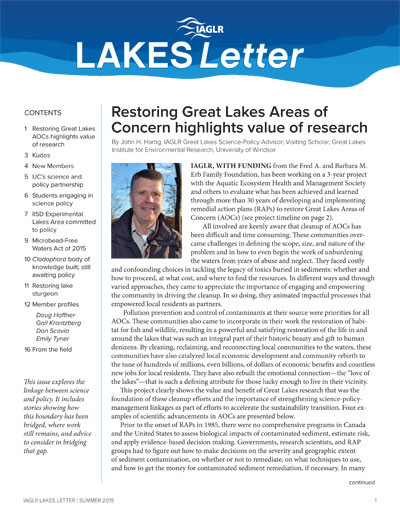
Spring 2019 • Issue 1