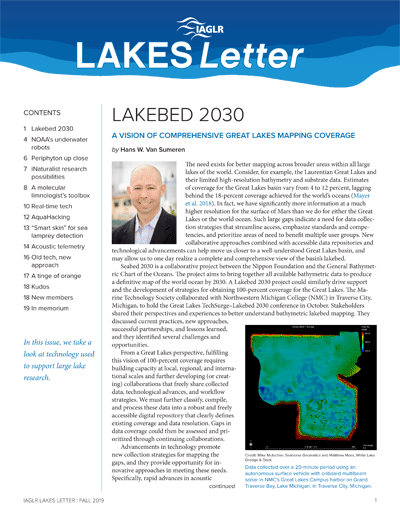
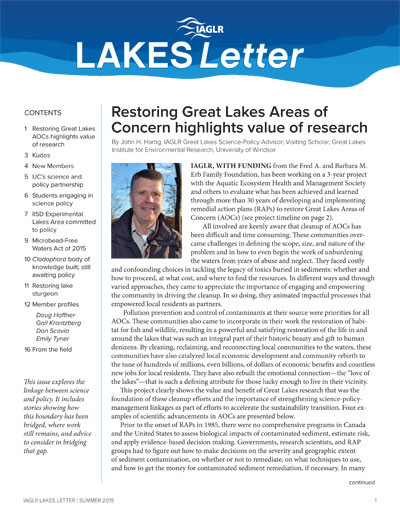
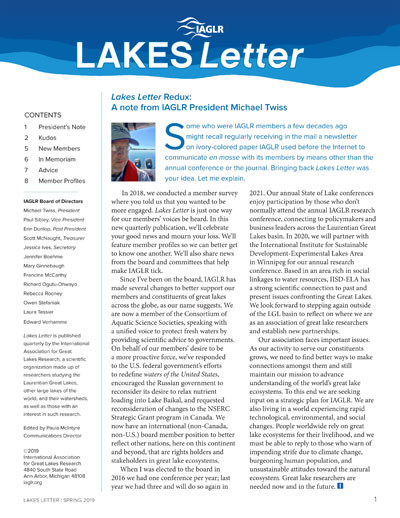
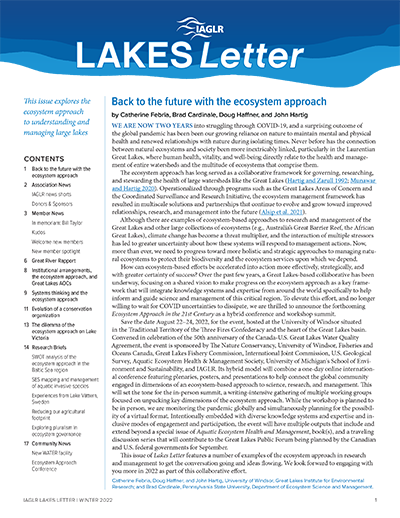
Winter 2022 • Issue 12
Ecosystem Approach
Published February 2022
The Winter 2022 issue examines the ecosystem approach as a key framework for large lake management. It highlights the Great River Rapport, integrating Indigenous knowledge with data to assess St. Lawrence River health, and reviews how institutional arrangements within Great Lakes Areas of Concern adapt over time. Systems thinking guidance offers strategies for addressing complex environmental challenges, while other articles explore The Nature Conservancy’s strategic evolution and fisheries management dilemmas on Lake Victoria. Research briefs offer international context through case studies from the Baltic Sea, Sweden, and agricultural systems. Collective contributions underscore the importance of adaptive governance, stakeholder collaboration, and long-term sustainability in safeguarding freshwater resources for future generations.
Features
The dilemma of the ecosystem approach on Lake Victoria
Lake Victoria's experience with Nile perch and cage aquaculture highlights the tension between ecosystem principles and the immediate economic needs of local communities.
Evolution of a conservation organization
The Nature Conservancy traces its evolution from a land trust to a global systems-based organization tackling climate change and biodiversity loss through science.
Stepping into systems thinking
Practical strategies for applying systems thinking to ecosystem management, from mapping feedback loops to broadening timelines and discovering your story.
Systems thinking and the ecosystem approach
Managing complex large lakes requires systems thinking to understand interactions, leverage points, and the human dimensions often ignored in reductionist approaches.
Evolving institutional arrangements for use of an ecosystem approach in restoring Great Lakes Areas of Concern
A study of 43 Areas of Concern shows how evolving institutional arrangements and nonprofit partnerships have driven successful restoration and economic revitalization.
The Great River Rapport
The Great River Rapport combines Indigenous Knowledge and scientific data to assess the health of the Upper St. Lawrence River in an accessible format.
Back to the future with the ecosystem approach
The ecosystem approach is more vital than ever to manage the Great Lakes against climate change, prompting a new global conference to accelerate action.
Departments
William D. Taylor
William D. Taylor (1950–2022) was a pioneering limnologist whose research on phosphorus cycling and microzooplankton fundamentally advanced Great Lakes science.
Alana Tedeschi
Alana Tedeschi researches coastal and riverine systems, focusing on hydrological connectivity in wetlands and the impact of climate change on the Great Lakes.
Alicia Sendrowski
Alicia Sendrowski integrates science and communication to study phosphorus runoff in the Eastern Lake Erie Watershed and engage the public in remediation.
Jennifer Powell
Jennifer Powell studies the effects of hypoxia and temperature on Lake Chubsucker physiology to develop habitat models for climate adaptation.
Bill Henry
Bill Henry applies his expertise in food safety and automation to advocate for the Great Lakes, exploring microbial solutions to reduce agricultural runoff.
How an ecosystem approach can accelerate socio-ecological systems mapping and management of aquatic invasive species in the Great Lakes
Mapping social-ecological systems reveals that effective invasive species management requires aligning human governance structures with ecological interdependencies.
A SWOT analysis of the ecosystem approach in the Baltic Sea region
A SWOT analysis reveals that while the ecosystem approach is simple to communicate, its implementation in the Baltic Sea suffers from unclear language and resource fragmentation.
Exploring pluralism in ecosystem governance
A new special issue explores how integrating diverse knowledge systems, including Indigenous and scientific, is crucial for effective ecosystem governance and sustainability.
Reducing our agricultural footprint to preserve, protect, and restore the ecological health of the Great Lakes
An agrosystem approach inspired by UN Sustainable Development Goals offers a path to regenerative agriculture that reduces runoff and supports community well-being.
Participatory, holistic management of great lakes: Experiences from Lake Vättern, Sweden
Lake Vättern demonstrates how participatory, holistic management can successfully reverse eutrophication and sustain iconic fish species like Arctic char.
Looking for research on a specific topic?
Explore our Article Directory to filter all issues by topic, article type, region, or keyword. Or browse the Author Index to find a contributor.
Issues Archive
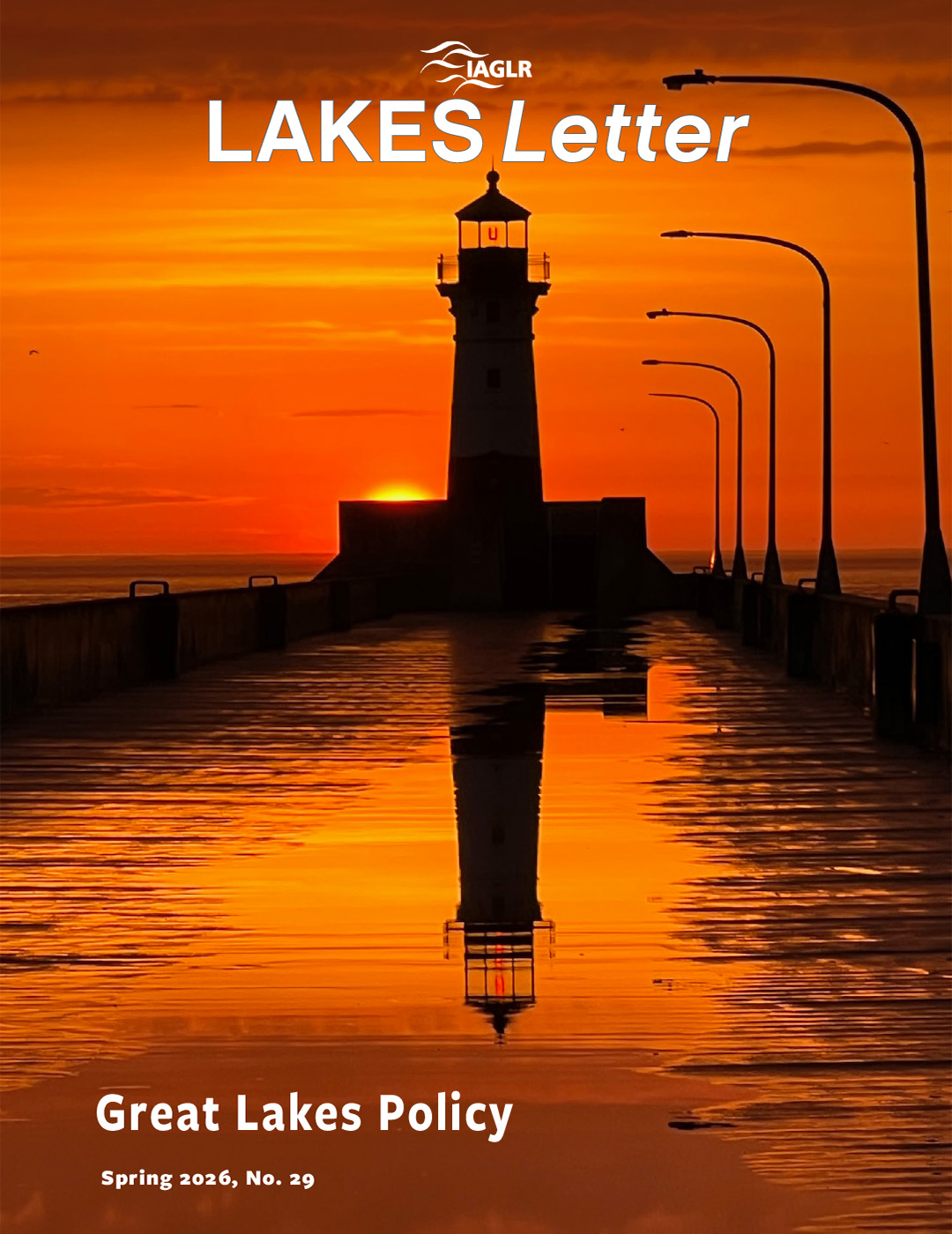
Great Lakes Policy
spring 2026 • Issue 29
Large lakes of the world
winter 2026 • Issue 28
Science & Innovation
fall 2025 • Issue 27
Science under threat: Stories from the field
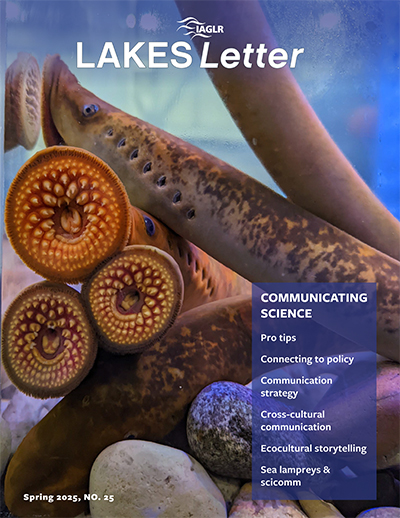
Summer 2025 • Issue 26
Communicating Science
Spring 2025 • Issue 25
Science and Hope
Winter 2025 • Issue 24
Oil Spill Science
Fall 2024 • Issue 23
Remote‑Sensing
Summer 2024 • Issue 22
Water on the Move
Spring 2024 • Issue 21
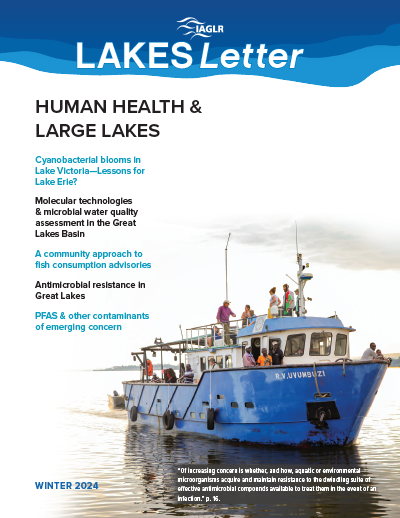
Human Health
Winter 2024 • Issue 20
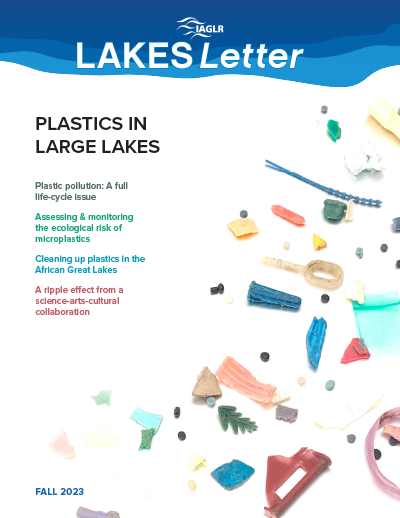
Plastic Pollution
Fall 2023 • Issue 19
Legal Frameworks
Summer 2023 • Issue 18
Acoustic Monitoring
Spring 2023 • Issue 17
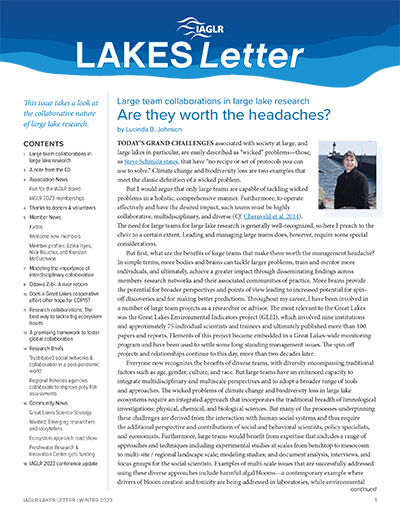
Collaborative Research
Winter 2023 • Issue 16
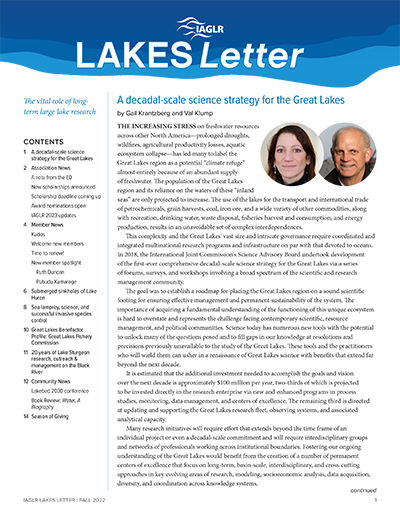
Long-term Research
Fall 2022 • Issue 15
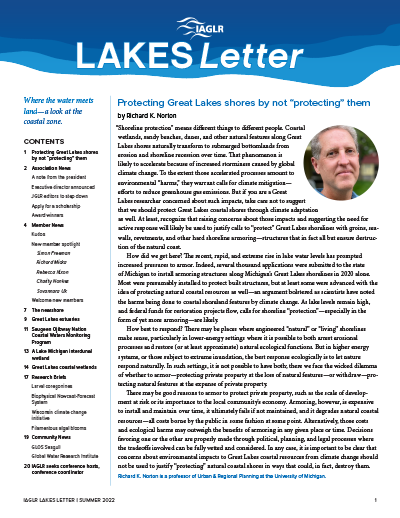
Coastal Zone
Summer 2022 • Issue 14
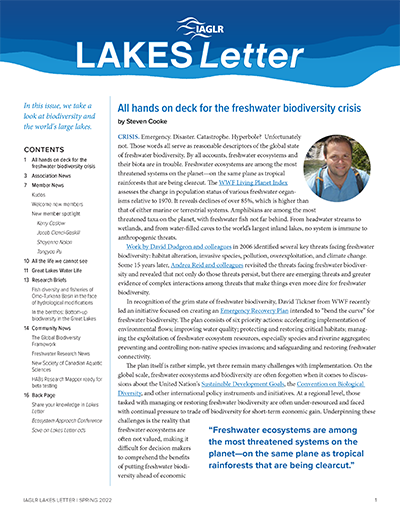
Biodiversity
Spring 2022 • Issue 13
Ecosystem Approach
Winter 2022 • Issue 12
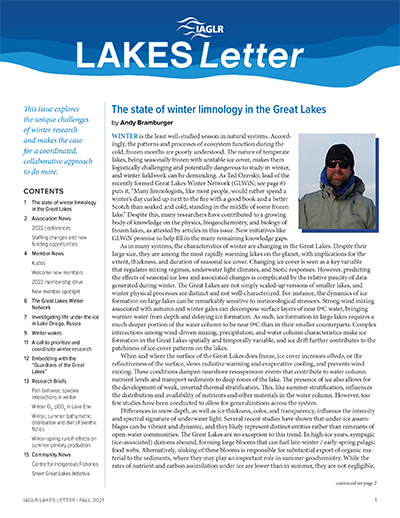
Winter Research
Fall 2021 • Issue 11
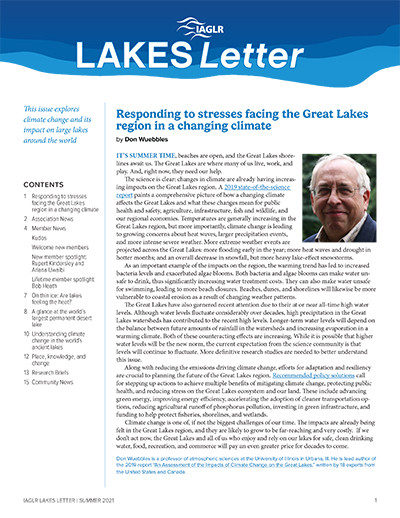
Climate‑Change Impacts
Summer 2021 • Issue 10
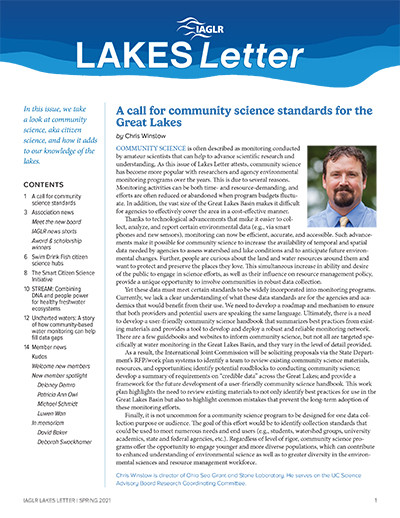
Community Science (Citizen Science)
Spring 2021 • Issue 9
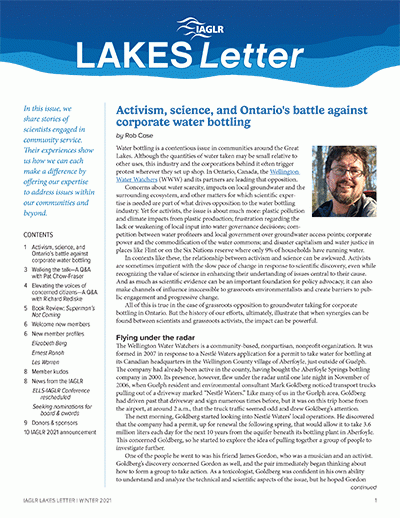
Community Service
Winter 2021 • Issue 8
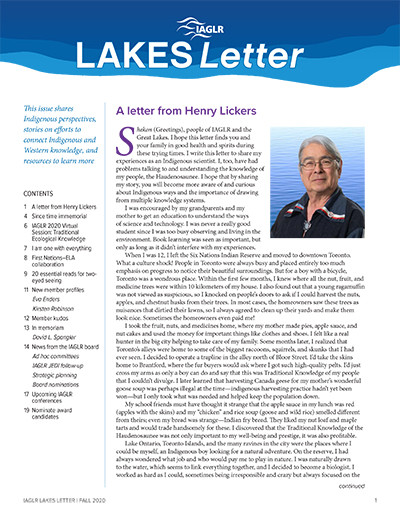
Indigenous Knowledge
Fall 2020 • Issue 7
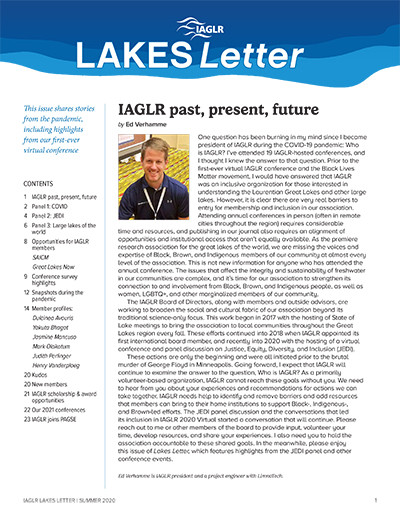
Pandemic, Conference Highlights
Summer 2020 • Issue 6
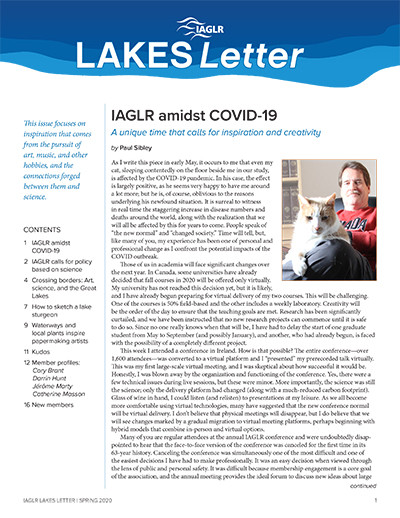
Arts and Science
Spring 2020 • Issue 5
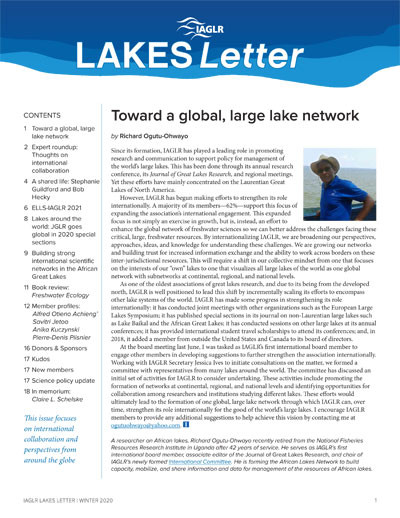
International Collaboration
Winter 2020 • Issue 4
Technology
Fall 2019 • Issue 3
Science and Policy
Summer 2019 • Issue 2
Lakes Letter Redux
Spring 2019 • Issue 1