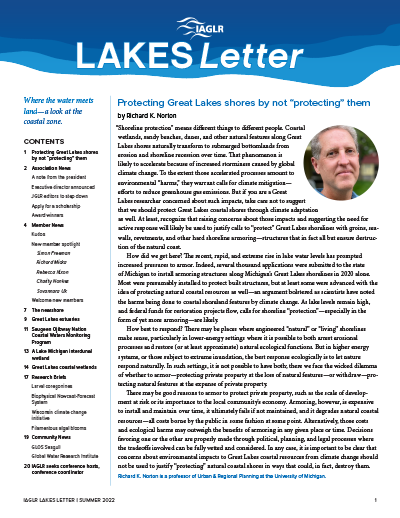
Summer 2022 • Issue 14
Coastal Zone
Published August 2022
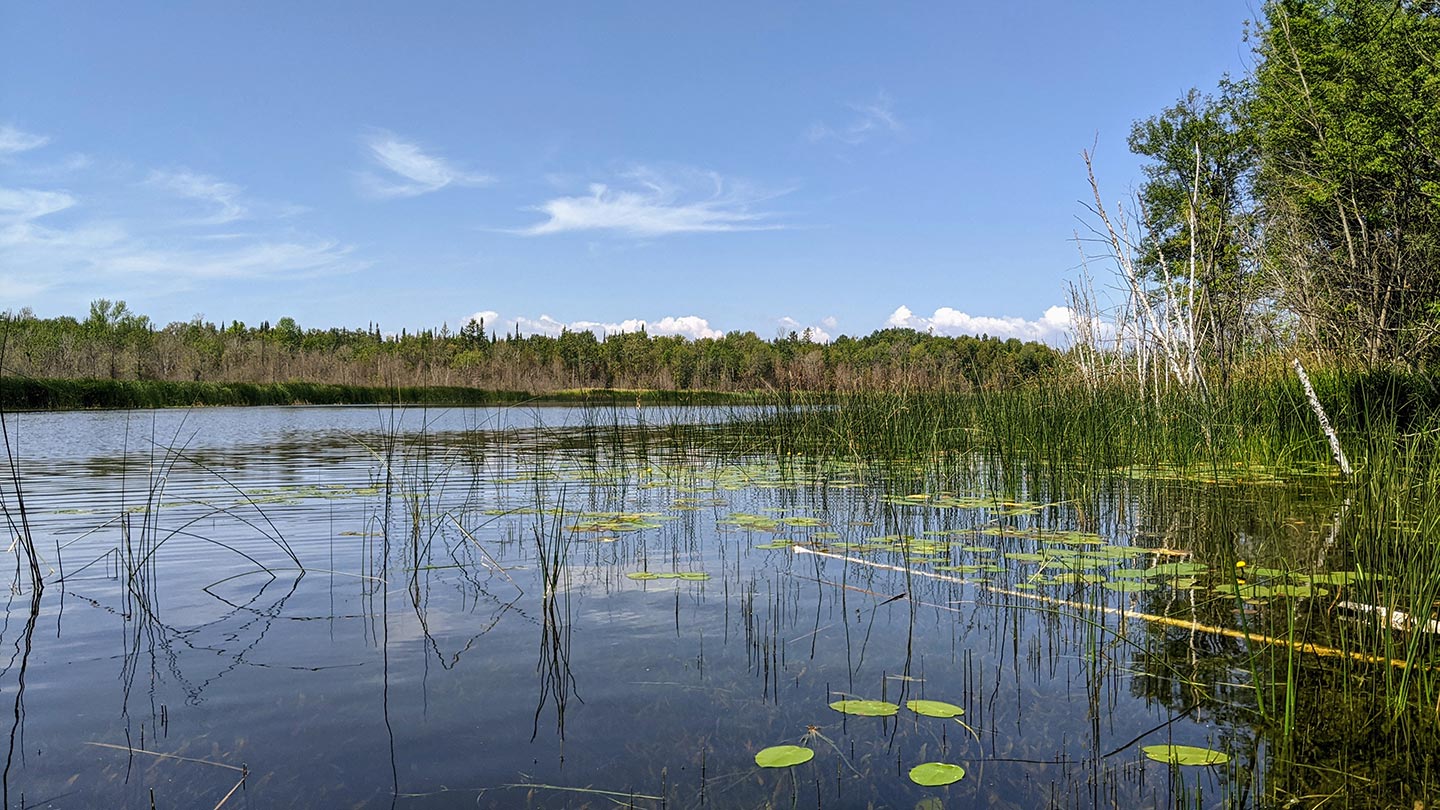
Focusing on the Coastal Zone, this issue examines the dynamic interface where land meets water and its critical role in Great Lakes health. It explores the ecological significance of nearshore habitats, estuaries, and coastal wetlands while balancing their history of modification with current restoration hopes. Contributions include Indigenous-led monitoring programs and detailed studies on larval fish growth and filamentous algal blooms, emphasizing how these transition zones serve as both hotspots of productivity and indicators of broader environmental change requiring careful protection.
Features
Great Lakes estuaries
Drowned river mouth estuaries in the Great Lakes are hot spots of productivity and human activity, offering ideal conditions for research and potential designation as a National Estuarine Research Reserve.
The nearshore
The Great Lakes nearshore is a legacy of human modification but also a source of hope, where restoration efforts and community engagement are revitalizing vital habitats.
Protecting Great Lakes shores by not “protecting” them
Raising concerns about climate impacts on Great Lakes shores can inadvertently justify destructive armoring; the best ecological response is often to let nature respond naturally.
Great Lakes coastal wetlands
A photographic journey through Great Lakes coastal wetlands showcases their dynamic landscapes, diverse vegetation zones, and vital role as spawning habitat for nearly three-quarters of Great Lakes fish.
Ecohydrology of a Lake Michigan interdunal wetland
An ecohydrological study in a Lake Michigan interdunal wetland reveals how rising lake levels and muskrat foraging interact to shape vegetation dynamics and wetland structure.
Saugeen Ojibway Nation Coastal Waters Monitoring Program
The Saugeen Ojibway Nation's Coastal Waters Monitoring Program collects the largest multi-year dataset on nearshore fish and habitat in their territory, blending science with sacred stewardship.
Departments
Charity Nonkes
Charity Nonkes bridges Indigenous Knowledge and Western science in sea lamprey management, collaborating with the Saugeen Ojibway Nation to rehabilitate Denny's Dam.
Rebecca Nixon
Rebecca Nixon, an environmental social scientist, studies the social dimensions of climate change and coastal community resilience, focusing on revitalization in Great Lakes Areas of Concern.
Richard Micka
Richard Micka serves as chair of the International Wildlife Refuge Alliance, fostering community engagement and outdoor experiences at the Detroit River International Wildlife Refuge.
Simon Freeman
Simon Freeman, an undergraduate at Lake Superior State University, conducts research on larval lake whitefish, cisco, and zooplankton in the Great Lakes as part of his senior thesis.
Sovannara Uk
Sovannara Uk studies phosphorus dynamics and primary production in Tonle Sap Lake, Cambodia, highlighting the need for transdisciplinary collaboration in data-deficient tropical ecosystems.
Filamentous algal blooms in clear lakes
Unexpected filamentous algal blooms are emerging in clear lakes worldwide, driven by invasive mussels, nutrient pollution, and climate change, posing a new threat to littoral habitats.
Wisconsin climate change report showcases impacts and solutions for coastal communities
The Wisconsin Initiative on Climate Change Impacts report details how warming temperatures and extreme precipitation are altering Great Lakes coastal ecology and threatening communities.
An Experimental Biophysical Nowcast-Forecast System for Lakes Michigan and Huron
A new experimental biophysical nowcast-forecast system helps researchers locate transient productivity hot spots in the dynamic nearshore zones of Lakes Michigan and Huron.
Diet and growth of larval coregonines in the nearshore waters of Lake Michigan-Huron
Larval cisco grow faster than larval lake whitefish in low-prey nearshore waters of Lake Michigan-Huron, potentially explaining their recent resurgence while whitefish decline.
Looking for research on a specific topic?
Explore our Article Directory to filter all issues by topic, article type, region, or keyword. Or browse the Author Index to find a contributor.
Issues Archive
Great Lakes Policy
spring 2026 • Issue 29
Large lakes of the world
winter 2026 • Issue 28
Science & Innovation
fall 2025 • Issue 27
Science under threat: Stories from the field
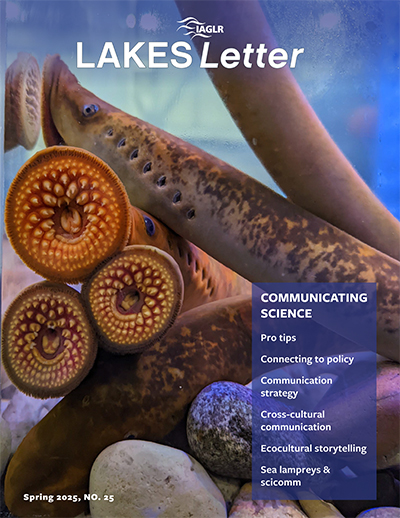
Summer 2025 • Issue 26
Communicating Science
Spring 2025 • Issue 25
Science and Hope
Winter 2025 • Issue 24
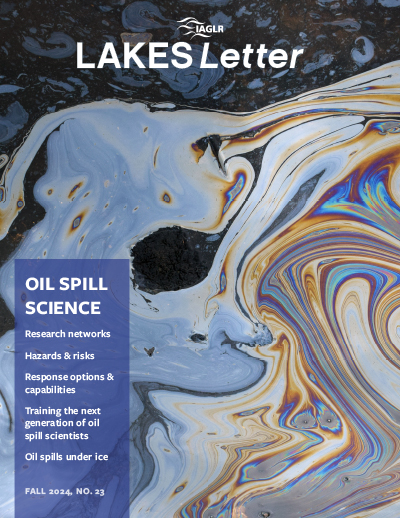
Oil Spill Science
Fall 2024 • Issue 23
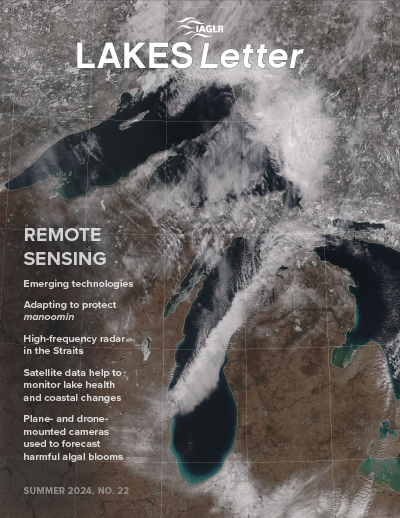
Remote‑Sensing
Summer 2024 • Issue 22
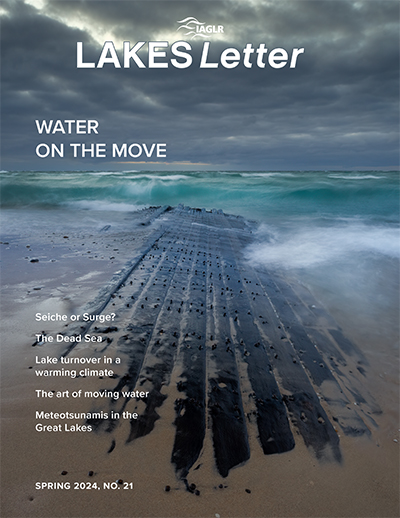
Water on the Move
Spring 2024 • Issue 21
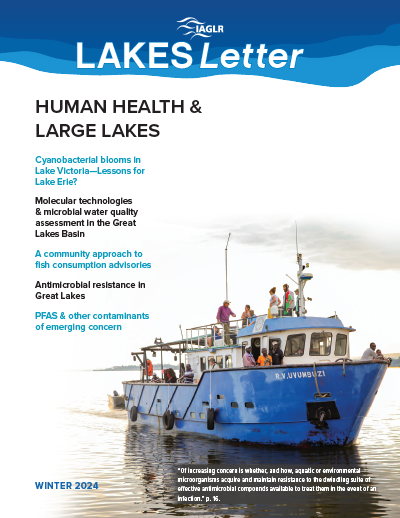
Human Health
Winter 2024 • Issue 20
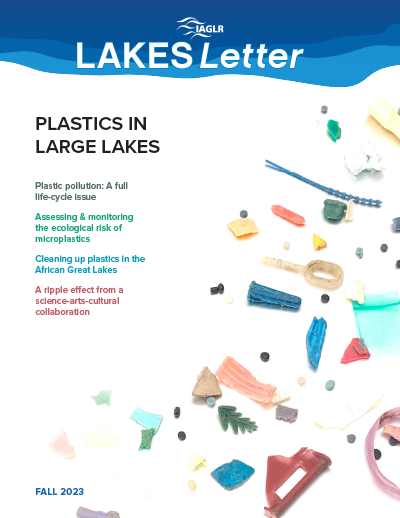
Plastic Pollution
Fall 2023 • Issue 19
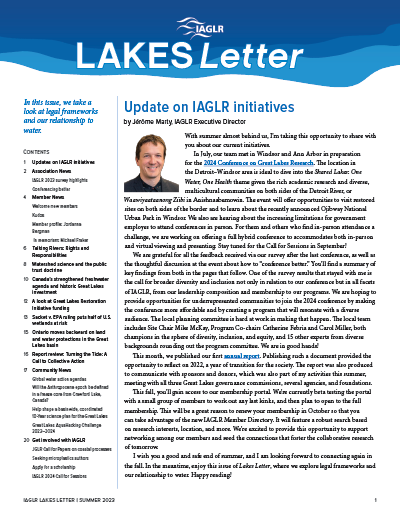
Legal Frameworks
Summer 2023 • Issue 18
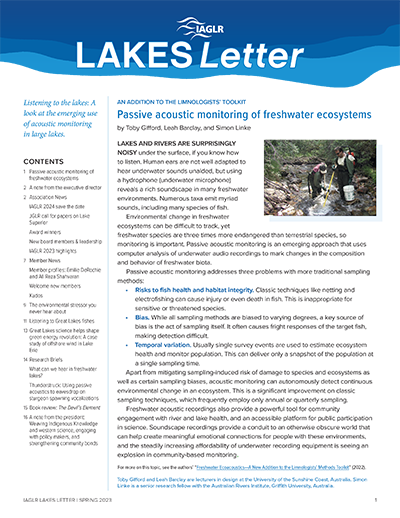
Acoustic Monitoring
Spring 2023 • Issue 17
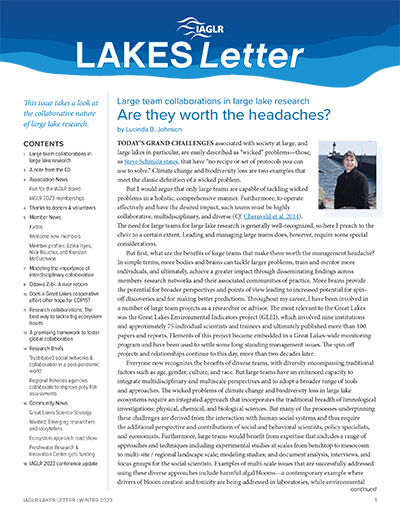
Collaborative Research
Winter 2023 • Issue 16
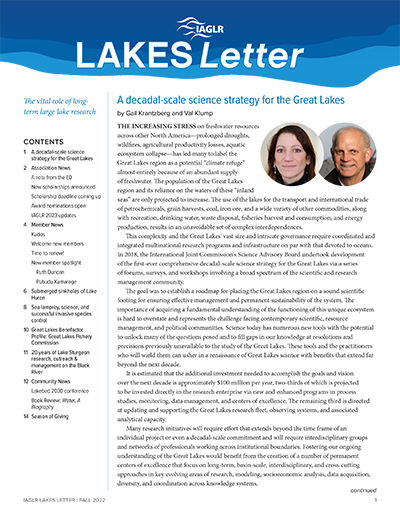
Long-term Research
Fall 2022 • Issue 15
Coastal Zone
Summer 2022 • Issue 14
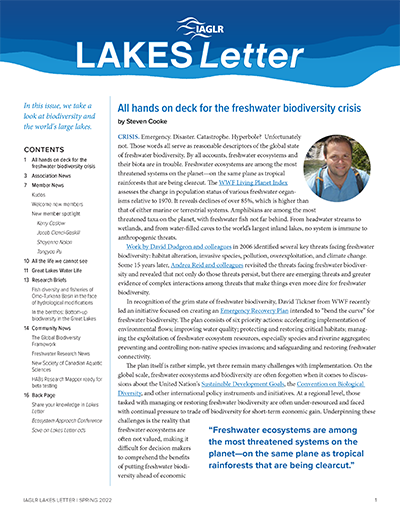
Biodiversity
Spring 2022 • Issue 13
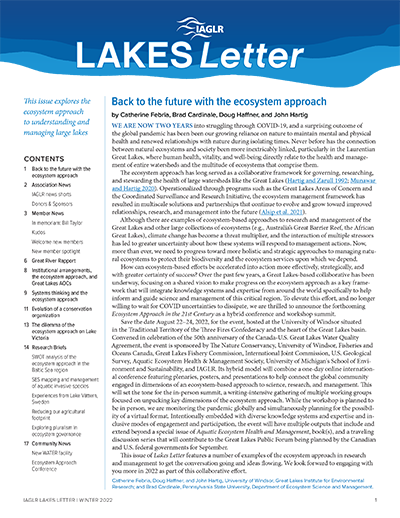
Ecosystem Approach
Winter 2022 • Issue 12
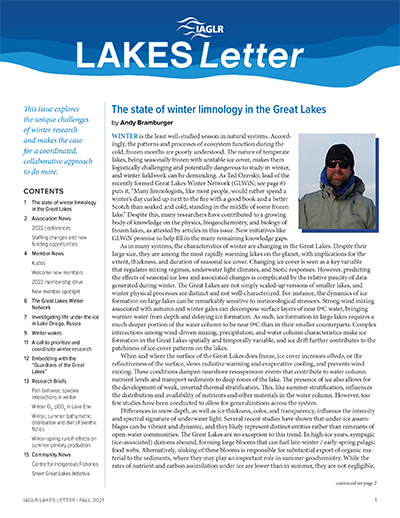
Winter Research
Fall 2021 • Issue 11
Climate‑Change Impacts
Summer 2021 • Issue 10
Community Science (Citizen Science)
Spring 2021 • Issue 9
Community Service
Winter 2021 • Issue 8
Indigenous Knowledge
Fall 2020 • Issue 7
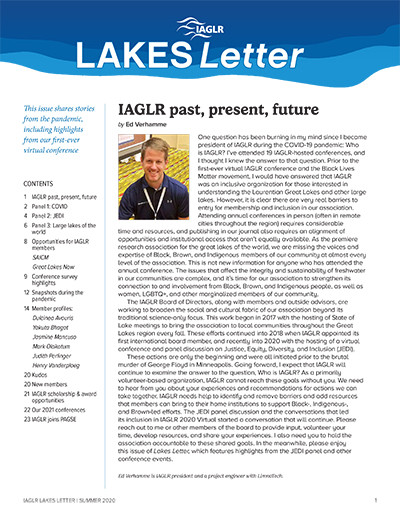
Pandemic, Conference Highlights
Summer 2020 • Issue 6
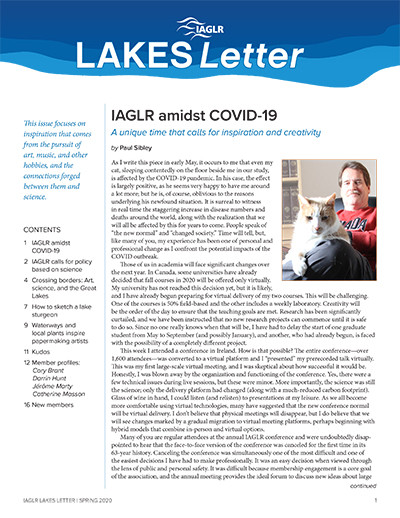
Arts and Science
Spring 2020 • Issue 5
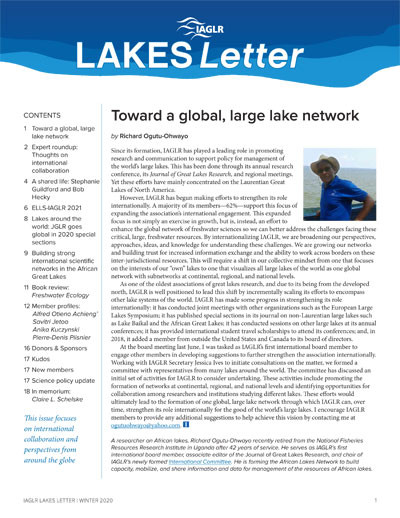
International Collaboration
Winter 2020 • Issue 4
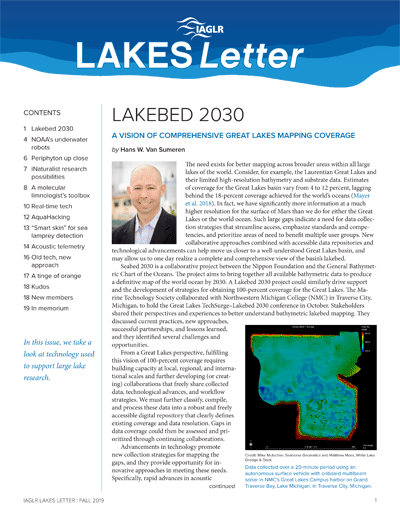
Technology
Fall 2019 • Issue 3
Science and Policy
Summer 2019 • Issue 2
Lakes Letter Redux
Spring 2019 • Issue 1