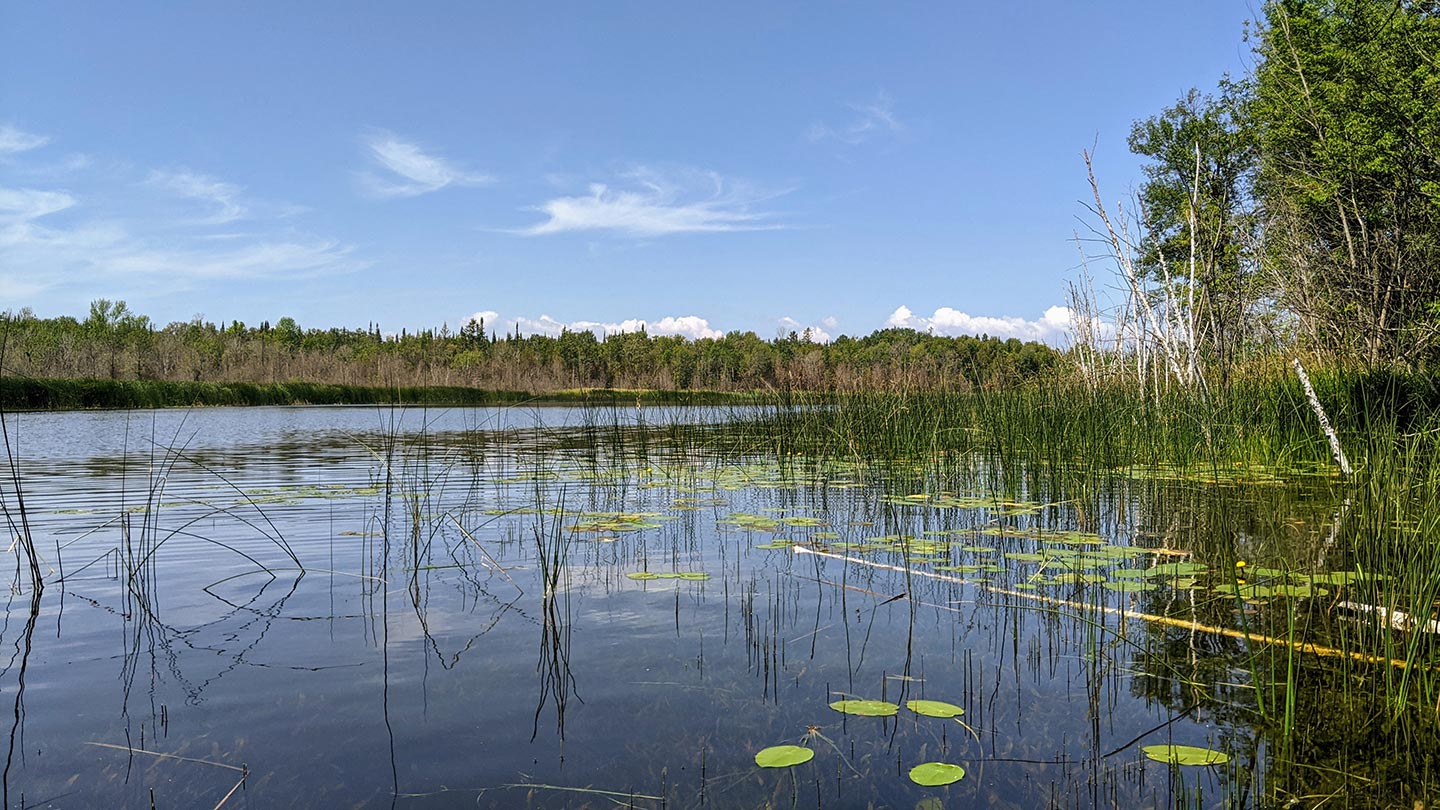
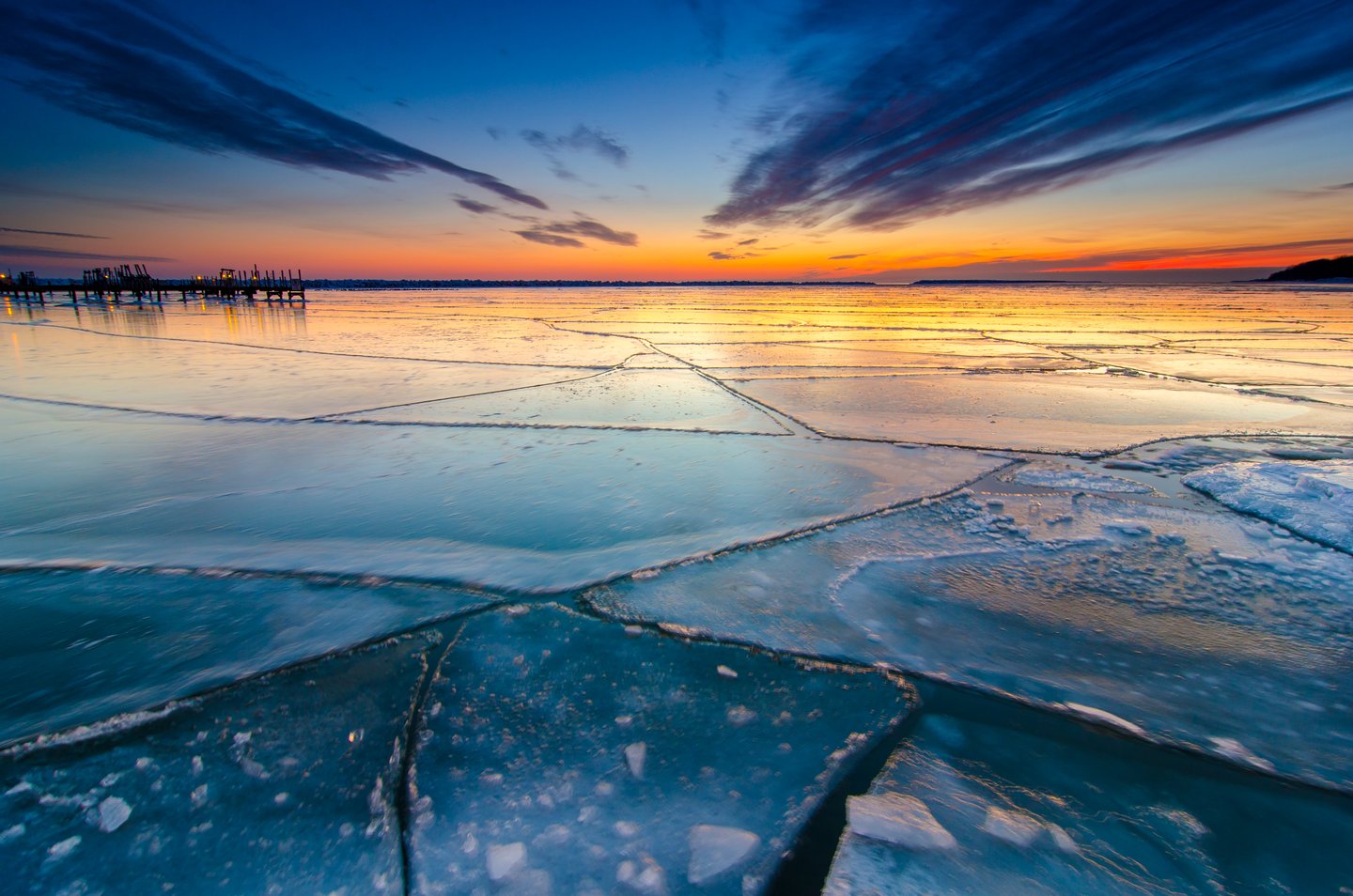
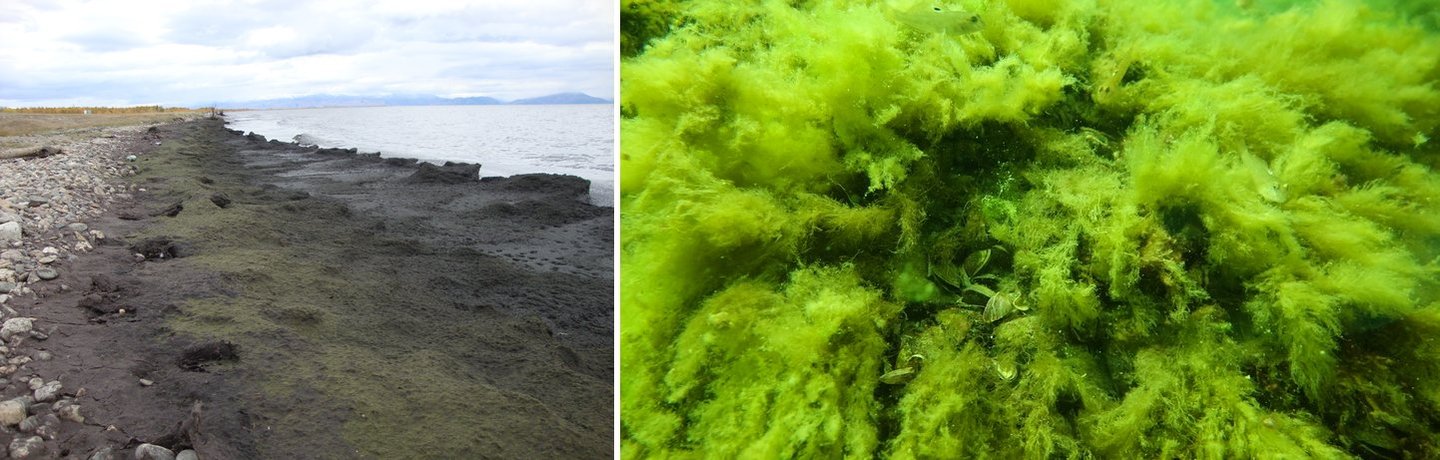
Nearshore areas of the Great Lakes are far more than just beaches for us to enjoy some swimming time during the summer months. Nearshore habitats vary greatly from beach shorelines and rock ledges to bays and marshes to connecting channels between the lakes. These varied nearshore habitats represent fundamental components of the health and productivity of the entire Great Lakes region.
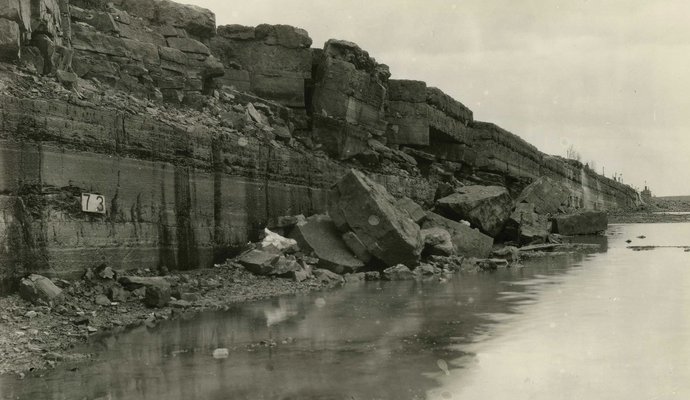
Modifications of nearshore habitats are not unique to the Great Lakes, but they are widespread and many have been largely forgotten over time. For example, most of Grant Park in Chicago used to be part of Lake Michigan before fill was used to move out the shoreline, but most people today would assume the park has always been a part of the city. Early 20th century engineering dammed sections of the Detroit River to facilitate shipping channel construction. Historical pictures such as the one shown at right are worth viewing and drive home the extent of the modifications that lie below the surface to this day (Bennion and Manny 2011). All of these engineering marvels undoubtedly helped build the cities and economic engine of the Great Lakes region. However, these activities also contributed to the loss of habitat for spawning and juvenile nursery habitats and in recent years brought about efforts to restore habitat and reconcile the needs of humans with the wildlife of the lakes. Fortunately, many native fishes appear to respond well to these habitat restoration efforts (e.g., McLean et al. 2015), and we continue to refine these efforts (e.g., Fischer et al. 2020).
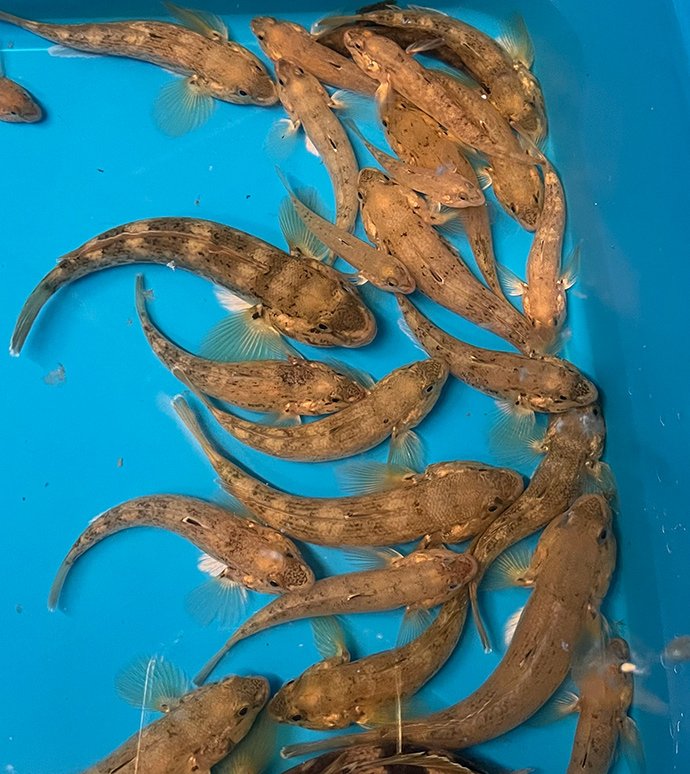
We cannot discuss impacts on nearshore habitats without also considering invasive species—even though invasive species are usually discussed in terms of changes to the pelagic habitats of the Great Lakes, often with a focus on salmonids and alewife. However, many invasive species, such as dreissenid mussels and round goby, are also prevalent in nearshore habitats. Round goby in particular have been documented as egg predators, potentially adding to the burden of parental care for nesting fishes (e.g., LeBlanc et al. 2020) and impacting overall reproductive success for many species. On the other hand, round goby can consume dreissenid mussels, potentially releasing the energy collected from the water column by the mussels back into the food web. Indeed, reports of largemouth and smallmouth bass indicate that these nearshore species may be benefiting from round goby by having a new abundant prey source to consume (e.g., Crane and Einhouse 2016). Furthermore, the Lake Erie watersnake population is rebounding, in part due to consuming large quantities of round goby (e.g., Jones et al. 2009). Overall, invasive species are a complicated issue, and I am not advocating that these species are helping the lakes. They undoubtedly pose serious challenges to ecological relationships and overall stability of the region. However, for many of the established invasive species, the reality is that they are going to be present long-term. We are still striving to understand how they fit into the Great Lakes ecosystem, predict how they could impact future conditions, and respond as best as possible to help manage the system for long-term productivity. As the success of sea lamprey control efforts have demonstrated, just because invasive species pose a major challenge doesn’t mean we don’t have a capacity to respond and make things significantly better.
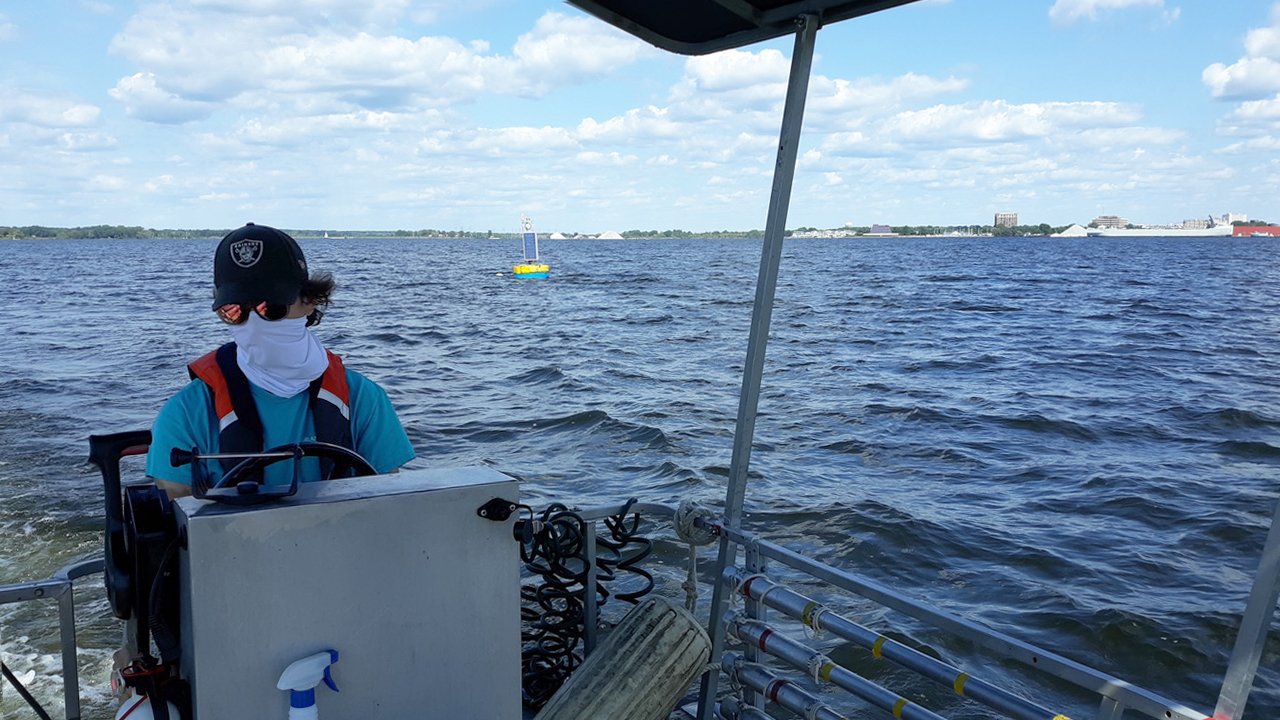
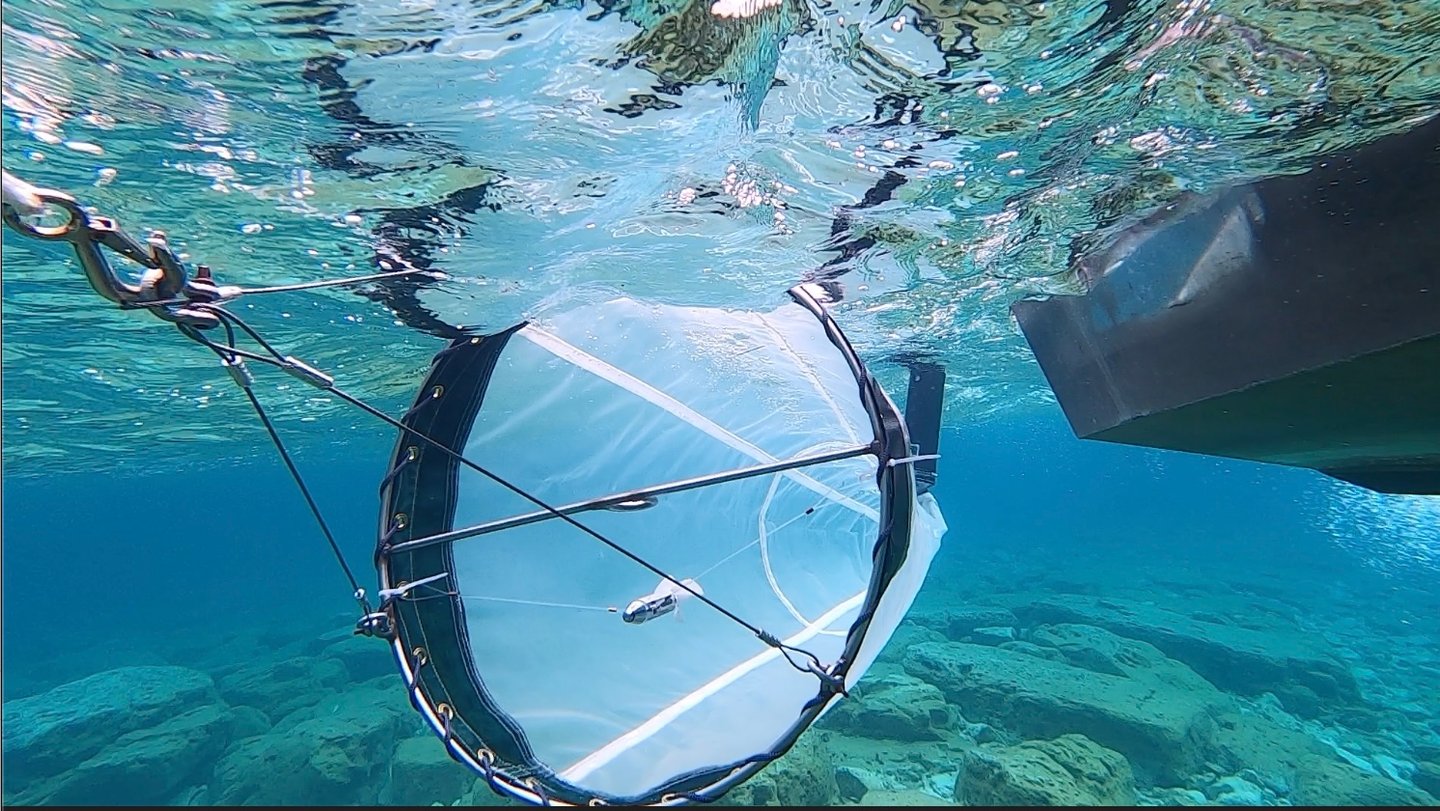
In addition to responding to invasive species already present, substantial efforts are also underway to limit the possibility of future invasion events into nearshore habitats. Bighead and Silver carp are two potential invasive species of major concern to the Great Lakes. Grass carp have already been detected in the nearshore areas of Lake Erie, but efforts are underway to respond to these fish while the population size is relatively small (e.g., Robinson et al. 2021). We just have to look at their impact in the Mississippi River system to know that this is a serious threat to the Great Lakes, and it is the nearshore habitats most at threat by these potential invaders. To protect the Great Lakes we need to continue monitoring nearshore habitats, such as the eDNA sampling conducted by the U.S. Fish and Wildlife Service.
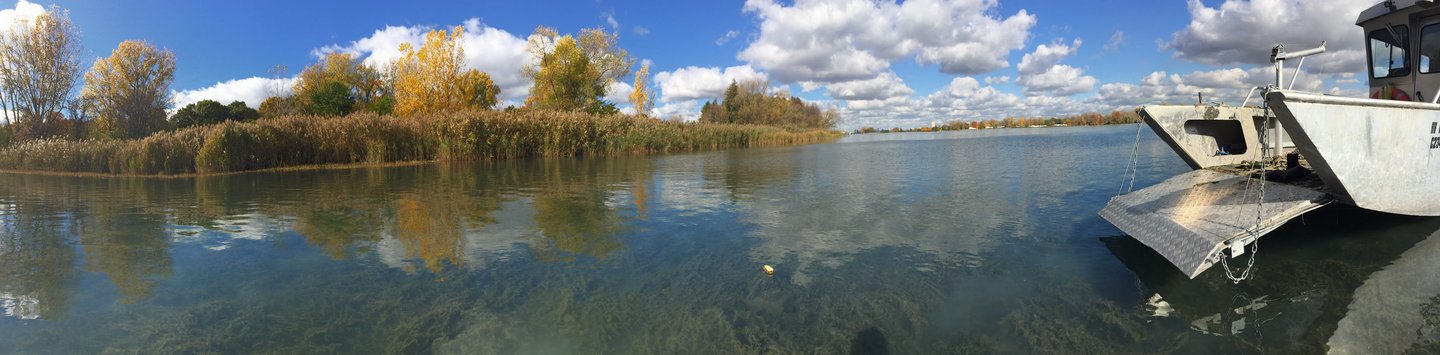
Finally, nearshore habitats are the regions in which people have the greatest interaction with the Great Lakes. The designation of Areas of Concern (AOCs) in the Great Lakes has focused on nearshore habitats, including the Detroit River. The AOCs have undergone remarkable management and restoration efforts (see the cover article in the Summer 2019 Lakes Letter by John Hartig), with some areas being delisted due to the improvements. I’ve had the pleasure of being involved with multiple research projects involving nearshore habitats, including the former dumping grounds at Fighting Island on the Detroit River, pictured below. I am continuously struck by the natural beauty of these nearshore areas, the efforts to help improve the habitat, and the passion of local communities for the lakes. We increasingly recognize the serious threats faced by freshwater ecosystems, (e.g., see the cover article in the Spring 2022 Lakes Letter by Steven Cooke), but the nearshore habitats of the Laurentian Great Lakes are also a source of hope for freshwater ecosystems. Are there challenges and concerns for the future? Absolutely. However, there is community engagement, broad political support, and world-class management and research happening throughout the Great Lakes region. So the next time you head to the shoreline, take a few minutes to look around you and appreciate these complex and vital nearshore regions of the Great Lakes and ask yourself how you can help keep the lakes vibrant for future generations to enjoy.