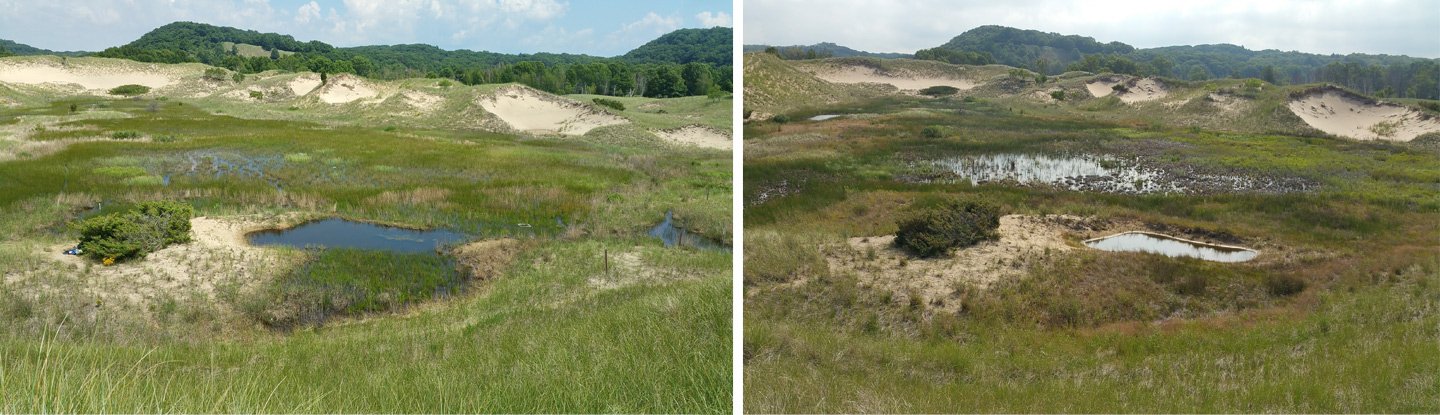
“Shoreline protection” means different things to different people. Coastal wetlands, sandy beaches, dunes, and other natural features along Great Lakes shores naturally transform to submerged bottomlands from erosion and shoreline recession over time. That phenomenon is likely to accelerate because of increased storminess caused by global climate change. To the extent those accelerated processes amount to environmental “harms,” they warrant calls for climate mitigation—efforts to reduce greenhouse gas emissions. But if you are a Great Lakes researcher concerned about such impacts, take care not to suggest that we should protect Great Lakes coastal shores through climate adaptation as well. At least, recognize that raising concerns about those impacts and suggesting the need for active response will likely be used to justify calls to “protect” Great Lakes shorelines with groins, seawalls, revetments, and other hard shoreline armoring—structures that in fact all but ensure destruction of the natural coast.
How did we get here? The recent, rapid, and extreme rise in lake water levels has prompted increased pressures to armor. Indeed, several thousand applications were submitted to the state of Michigan to install armoring structures along Michigan’s Great Lakes shorelines in 2020 alone. Most were presumably installed to protect built structures, but at least some were advanced with the idea of protecting natural coastal resources as well—an argument bolstered as scientists have noted the harms being done to coastal shoreland features by climate change. As lake levels remain high, and federal funds for restoration projects flow, calls for shoreline “protection”—especially in the form of yet more armoring—are likely.
How best to respond? There may be places where engineered “natural” or “living” shorelines make sense, particularly in lower-energy settings where it is possible to both arrest erosional processes and restore (or at least approximate) natural ecological functions. But in higher energy systems, or those subject to extreme inundation, the best response ecologically is to let nature respond naturally. In such settings, it is not possible to have both; there we face the wicked dilemma of whether to armor—protecting private property at the loss of natural features—or withdraw—protecting natural features at the expense of private property.
There may be good reasons to armor to protect private property, such as the scale of development at risk or its importance to the local community’s economy. Armoring, however, is expensive to install and maintain over time, it ultimately fails if not maintained, and it degrades natural coastal resources—all costs borne by the public in some fashion at some point. Alternatively, those costs and ecological harms may outweigh the benefits of armoring in any given place or time. Decisions favoring one or the other are properly made through political, planning, and legal processes where the tradeoffs involved can be fully vetted and considered. In any case, it is important to be clear that concerns about environmental impacts to Great Lakes coastal resources from climate change should not be used to justify “protecting” natural coastal shores in ways that could, in fact, destroy them.