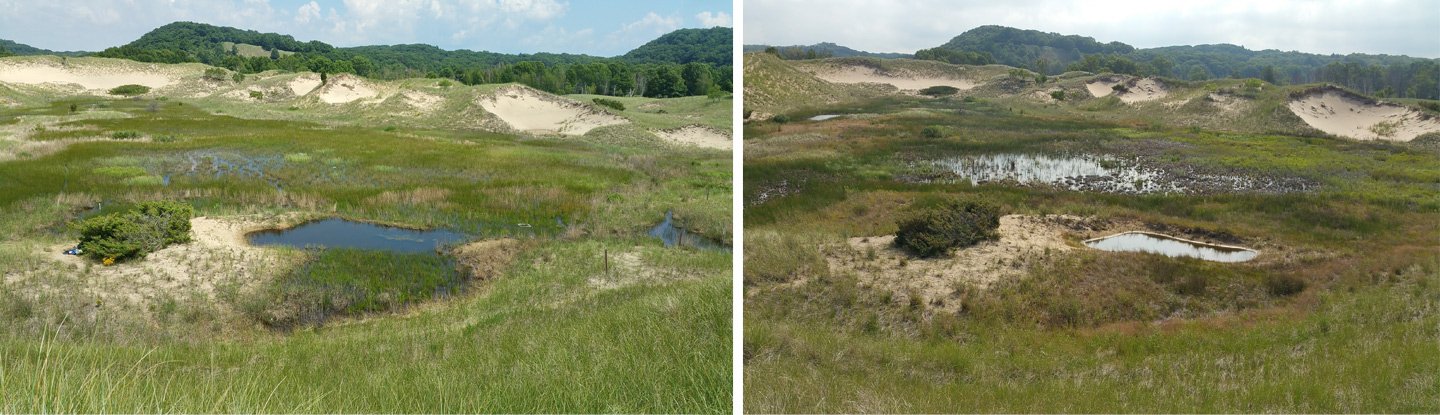
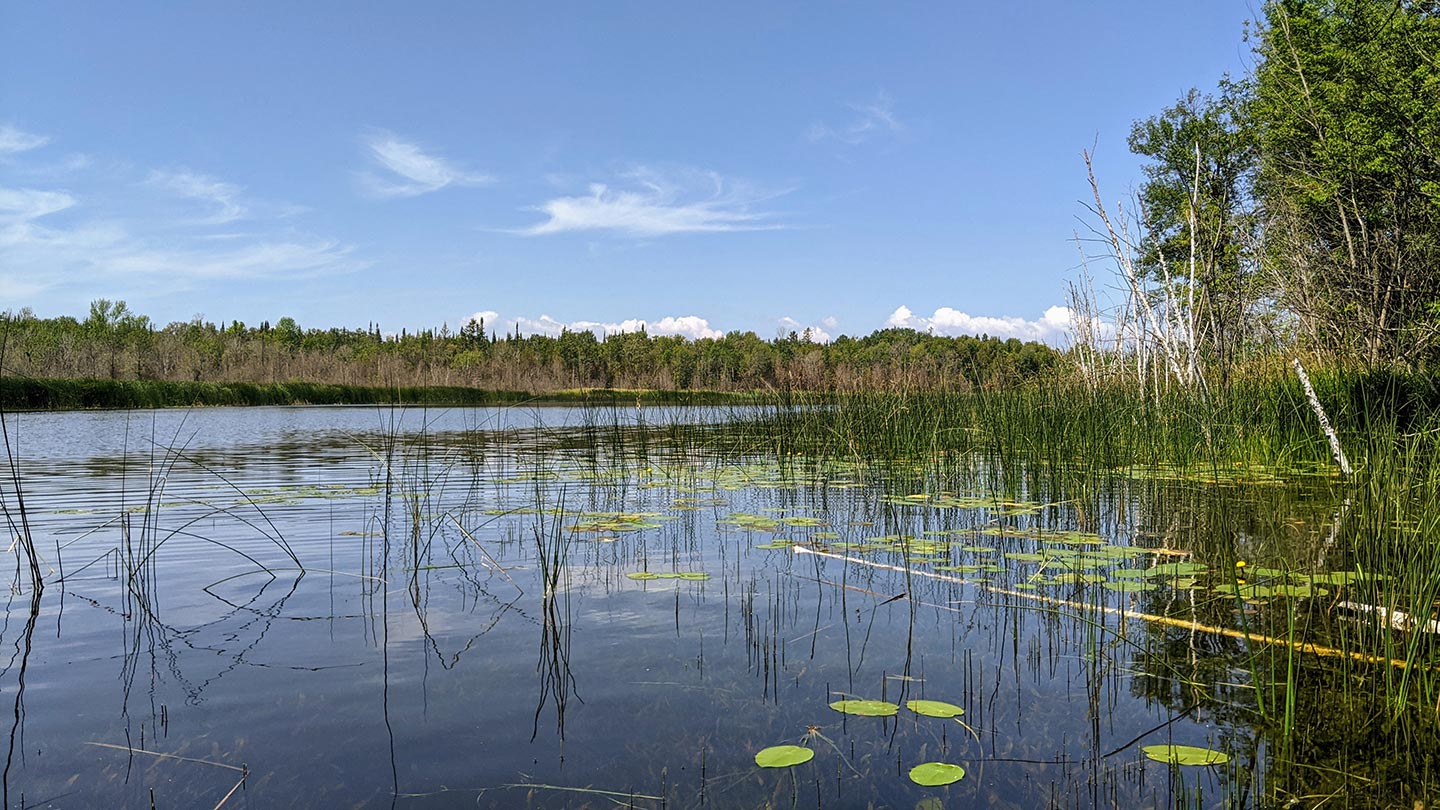
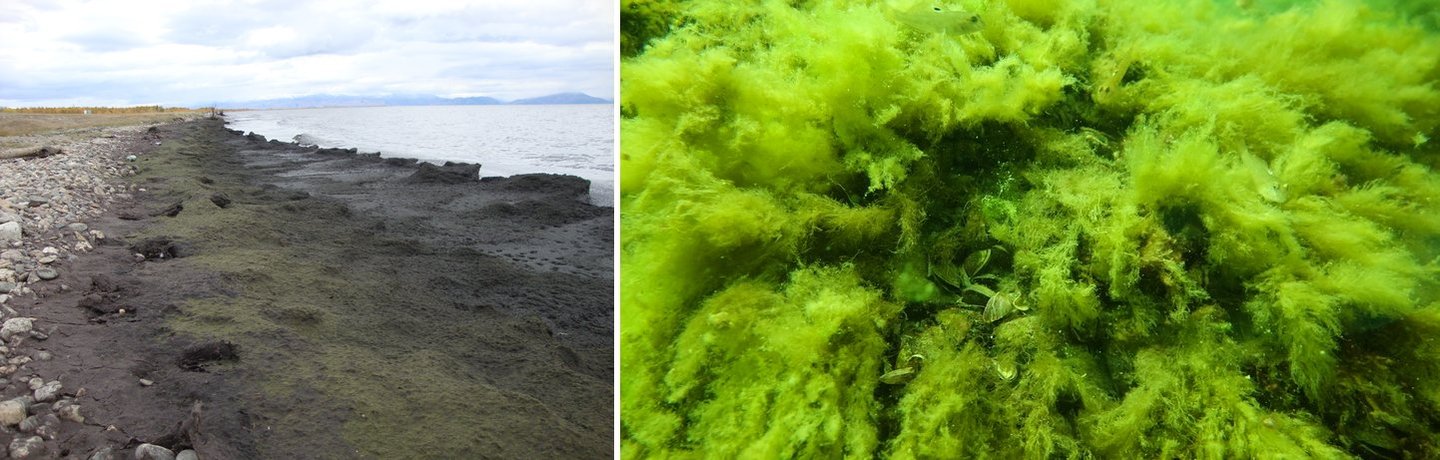
Unexpected and often unexplained proliferations of filamentous algae are increasingly common on the bottom of clear lakes, as reported in our article in BioScience. Usually, these filamentous algal blooms (FABs) are composed of green algae (chlorophytes), which have a distinctive chartreuse color and form extensive mats growing from the bottom (benthic) habitat of the lake into the water column (Lake Michigan, photo below at right). Filamentous algae are a normal part of benthic communities in lakes, but these expansive proliferations appear to be an emerging threat to some of the world’s most iconic lakes.
We immediately suspect nutrient pollution when faced with algal blooms. But FABs are not common in eutrophic lakes because benthic filamentous algae require a lot of light and do not proliferate when shaded by abundant phytoplankton. FABs occur in water with extremely low nutrient concentrations, but nevertheless, nutrients are sometimes the culprit. In the Laurentian Great Lakes, invasive mussels promote FABs by filtering the water clean of phytoplankton and simultaneously excreting nutrients on the lake bottom. In Lake Baikal, untreated sewage or polluted groundwater percolating through the lake bottom causes massive FABs. The algae often foul beaches (photo below at left). In order to understand and control FABs, scientists need to start monitoring nutrients in more than just the water column.
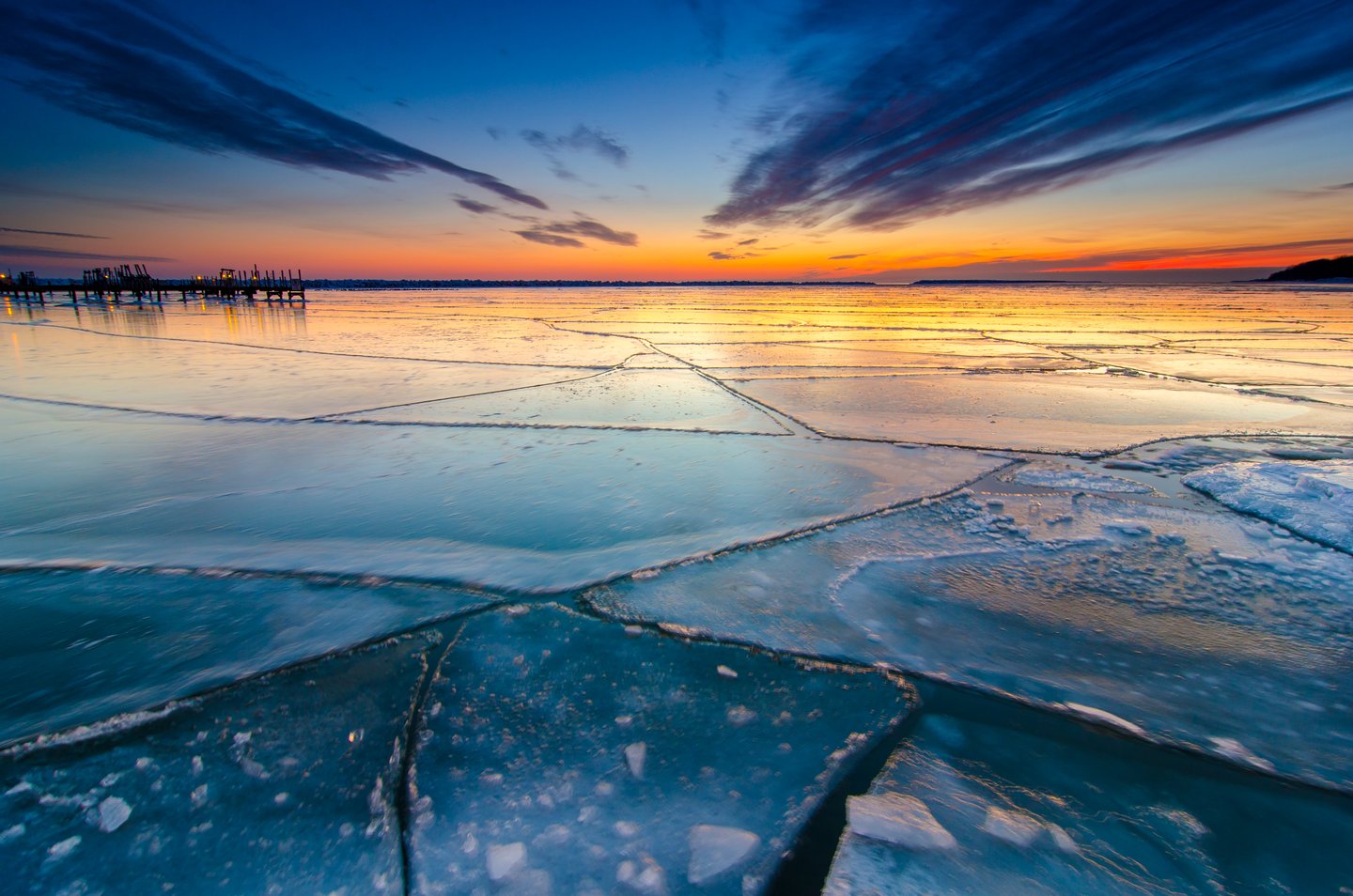
FABs are not just associated with groundwater pollution. Complex interactions among climate change, lake hydrodynamics, and food webs are likely causing FABs. Reductions in winter ice cover and changes in the intensity of summer storms are changing physical conditions in the nearshore, while warmer temperatures and reductions in insect grazers may be facilitating the rapid growth of filamentous algae. The nearshore habitat supports most of the biodiversity in lakes, and most human interactions with lakes occur along the shoreline. Despite this, littoral habitats are rarely studied. A coordinated effort between scientists and the public is needed to respond to this emerging threat to clear lakes.