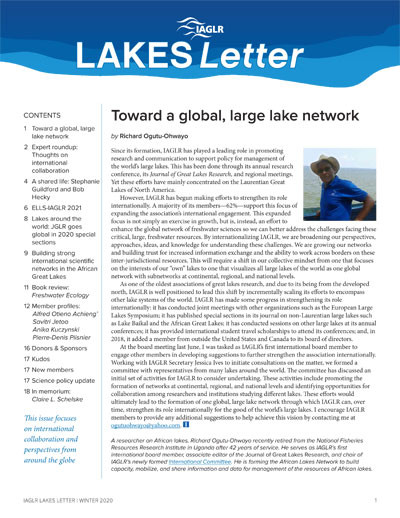
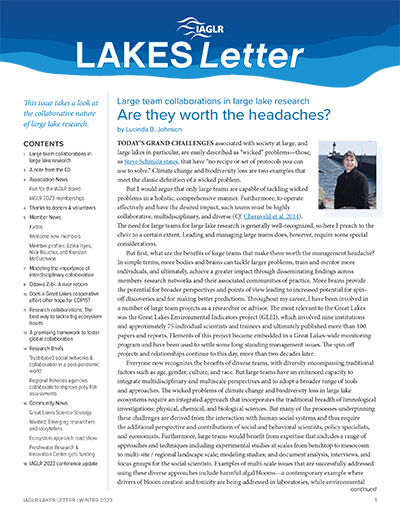
Winter 2023 • Issue 16
Collaborative Research
Published February 2023
Centered on Collaborative Research, this issue demonstrates how interdisciplinary partnerships and transboundary cooperation are essential for solving complex large lake challenges. It highlights success stories like the restoration of the Odawa Ziibi river and binational efforts that reduced invasive species rates, offering a model for achieving international conservation targets. Beyond specific projects, the content analyzes the social dynamics required for effective teamwork in a post-pandemic world, arguing that shared data, equipment, and trust are the foundations for sustainable ecosystem management across scientific disciplines.
Features
A promising framework to foster global collaboration
A comparison of lake committees in the Laurentian Great Lakes and advisory groups in the African Great Lakes reveals a promising framework for transboundary collaboration and resource sharing.
Research collaborations
The Real-Time Aquatic Ecosystem Observation Network (RAEON) demonstrates how sharing equipment, data, and expertise enables researchers to tackle complex environmental challenges in the Great Lakes.
Bending the curve of species invasion
The binational success of ballast water regulations in the Great Lakes, which reduced invasions by 85%, offers a model for achieving global biodiversity targets under the COP15 framework.
Odawa Ziibi
The removal of three dams on the Boardman River restored connectivity and cultural significance, showcasing a successful collaboration between Indigenous communities, government, and local stakeholders.
Modeling the importance of interdisciplinary collaboration
A special section of the Journal of Great Lakes Research highlights the spectrum of actors in ecosystem-based management and the necessity of integrating social and natural sciences.
Large team collaborations in large lake research
Large, multidisciplinary teams are essential for tackling "wicked" problems like climate change and biodiversity loss, offering broader perspectives and greater impact despite management challenges.
Departments
Kiersten McCutcheon
Kiersten McCutcheon coordinates the Visual Assessment Survey Tool (VAST) for Niagara Coastal, engaging citizen scientists to collect data on changing Great Lakes conditions.
Nick Boucher
Nick Boucher, a Ph.D. student at Michigan State University, focuses on analyzing acoustic telemetry data and assessing arrays to improve fish tracking in the Great Lakes.
Edina Illyes
Edina Illyes studies how historical glaciation and human activity shape fish species distributions in northwestern Ontario, blending landscape processes with contemporary ecology.
Trust-based social networks & collaboration in a post-pandemic world
A survey of fishery professionals reveals that while virtual engagement maintains existing relationships, in-person interaction remains critical for building trust and new collaborations in the post-pandemic era.
Regional fisheries agencies collaborate to improve prey fish assessments through adoption of advanced survey technologies
USGS and partner agencies are using Saildrones and autonomous underwater vehicles to correct biases in sonar surveys, improving the accuracy of prey fish abundance estimates for Great Lakes fisheries.
Looking for research on a specific topic?
Explore our Article Directory to filter all issues by topic, article type, region, or keyword. Or browse the Author Index to find a contributor.
Issues Archive
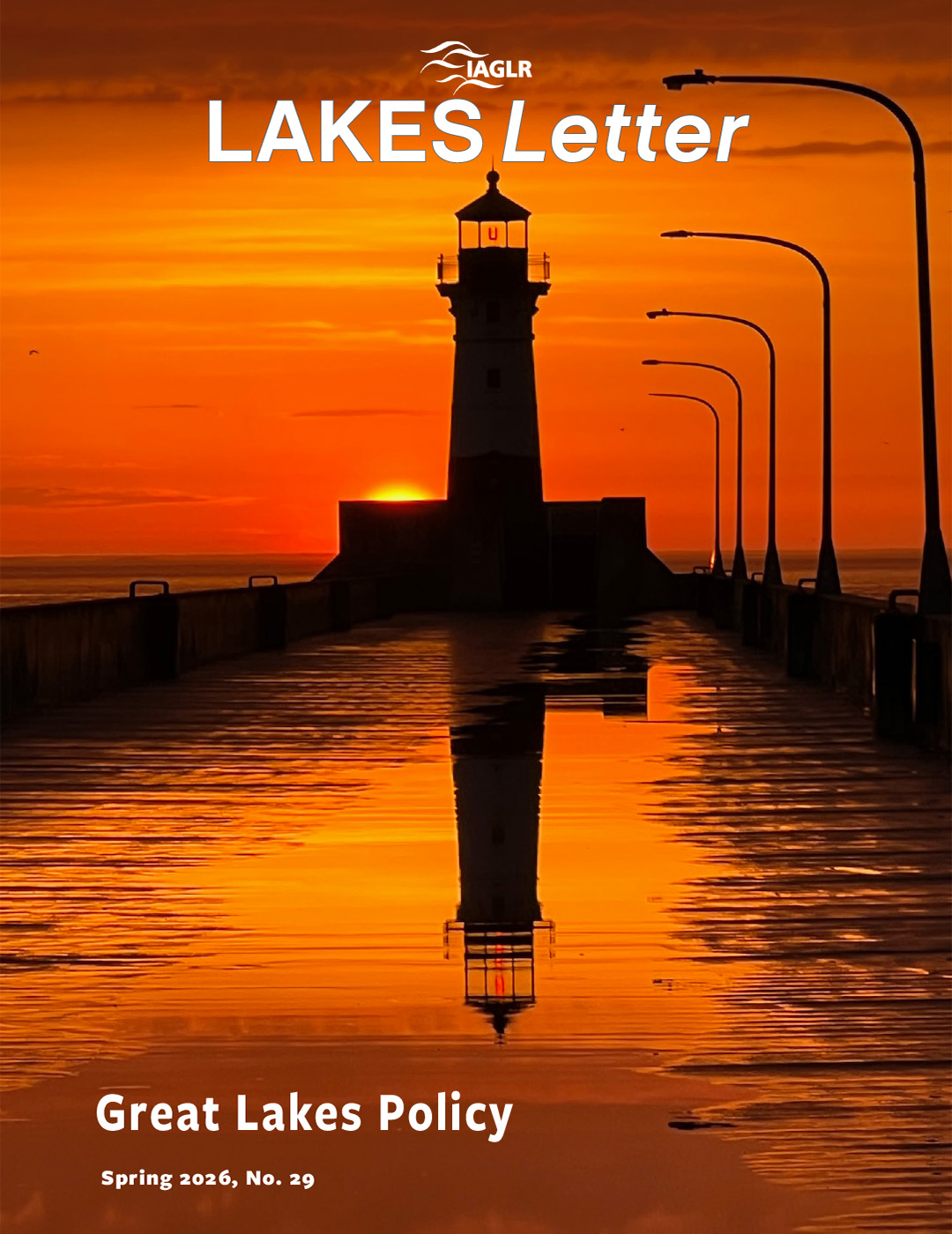
Great Lakes Policy
spring 2026 • Issue 29
Large lakes of the world
winter 2026 • Issue 28
Science & Innovation
fall 2025 • Issue 27
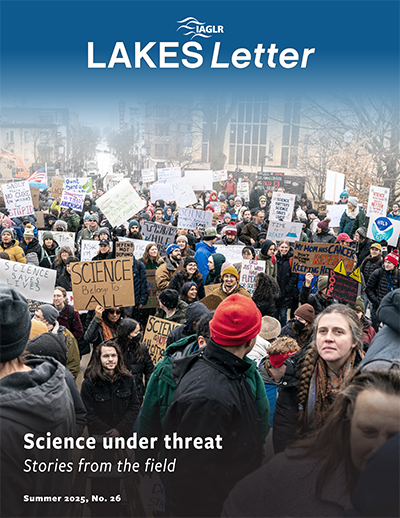
Science under threat: Stories from the field
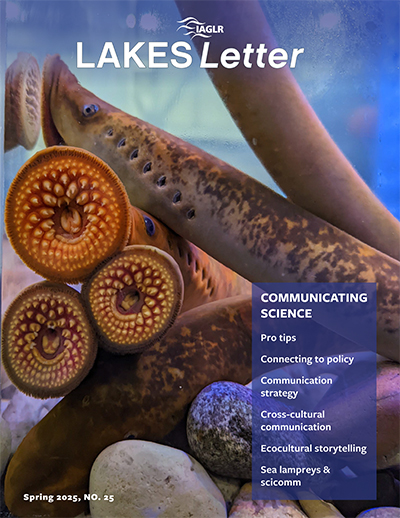
Summer 2025 • Issue 26
Communicating Science
Spring 2025 • Issue 25
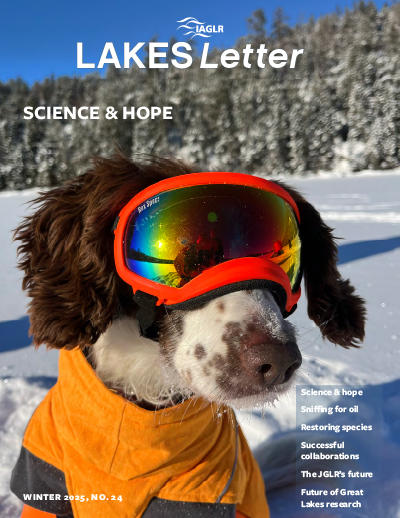
Science and Hope
Winter 2025 • Issue 24
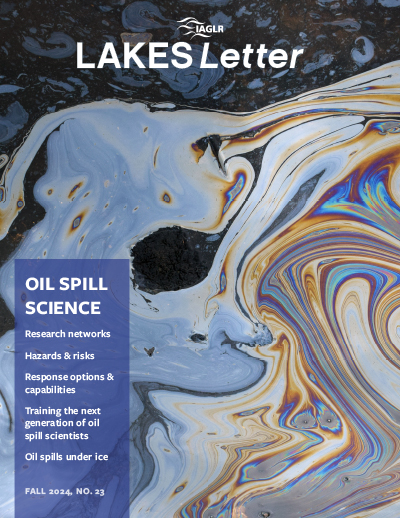
Oil Spill Science
Fall 2024 • Issue 23
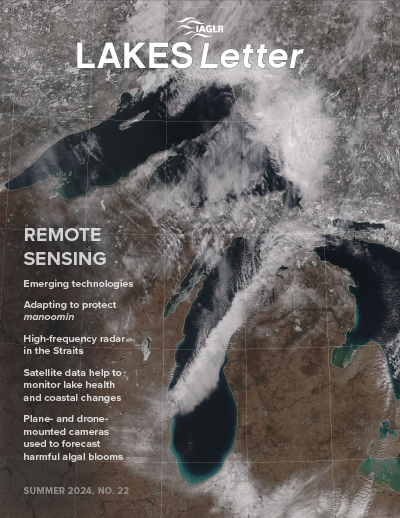
Remote‑Sensing
Summer 2024 • Issue 22
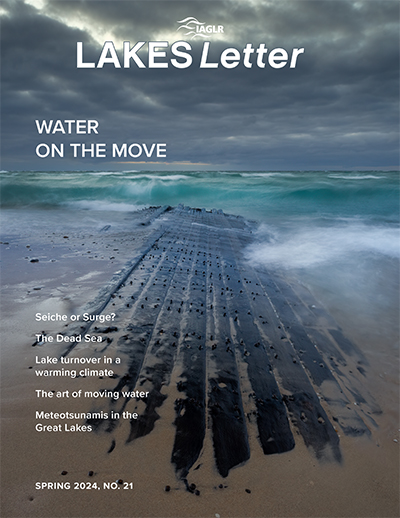
Water on the Move
Spring 2024 • Issue 21
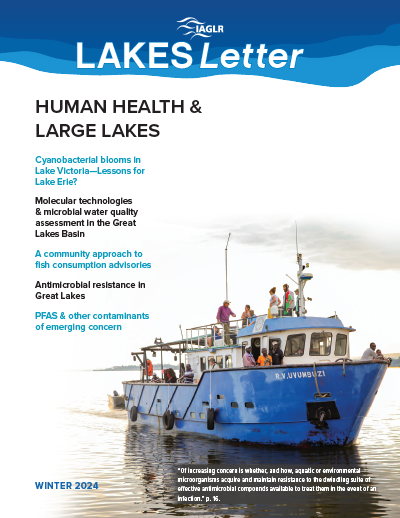
Human Health
Winter 2024 • Issue 20
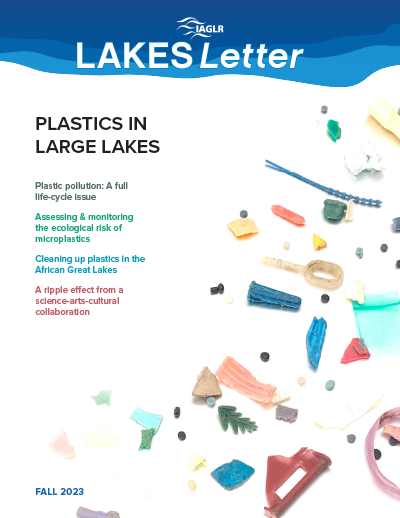
Plastic Pollution
Fall 2023 • Issue 19
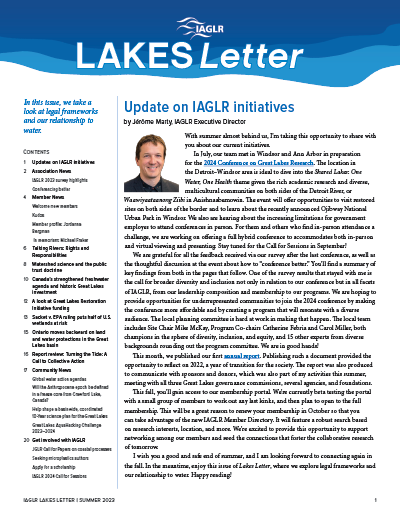
Legal Frameworks
Summer 2023 • Issue 18
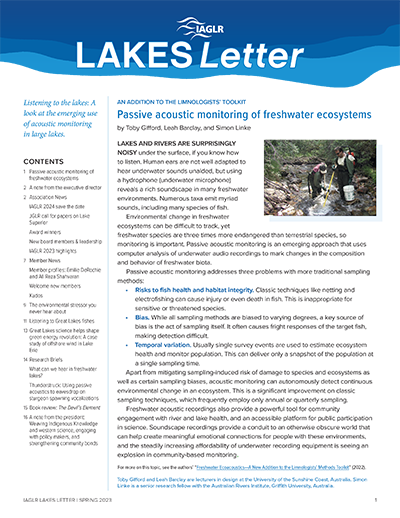
Acoustic Monitoring
Spring 2023 • Issue 17
Collaborative Research
Winter 2023 • Issue 16
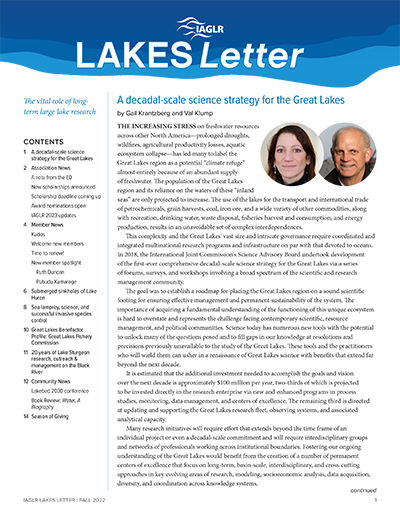
Long-term Research
Fall 2022 • Issue 15
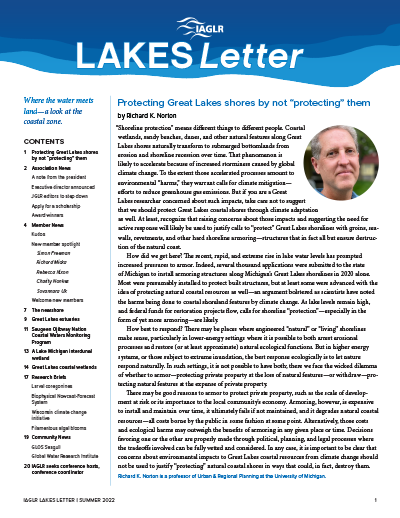
Coastal Zone
Summer 2022 • Issue 14
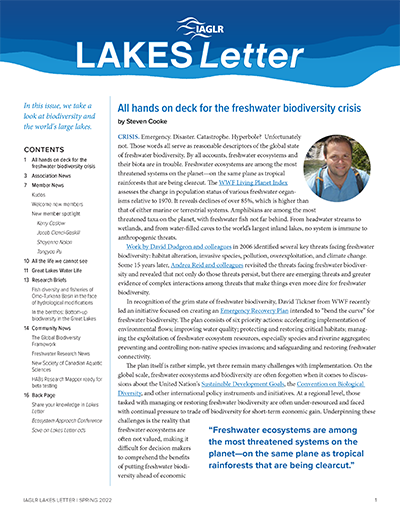
Biodiversity
Spring 2022 • Issue 13
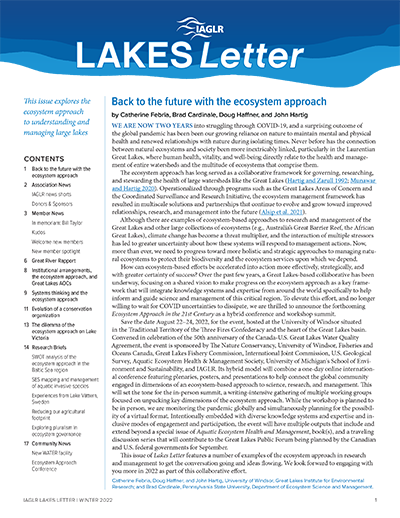
Ecosystem Approach
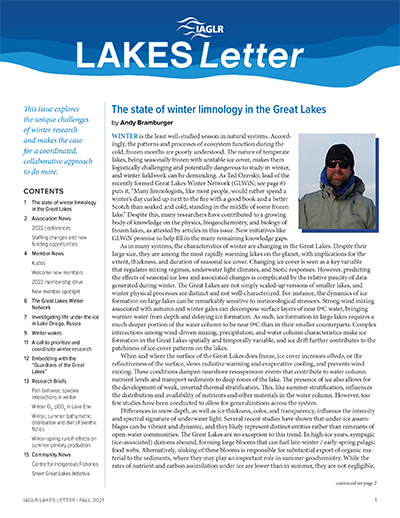
Winter 2022 • Issue 12
Winter Research
Fall 2021 • Issue 11
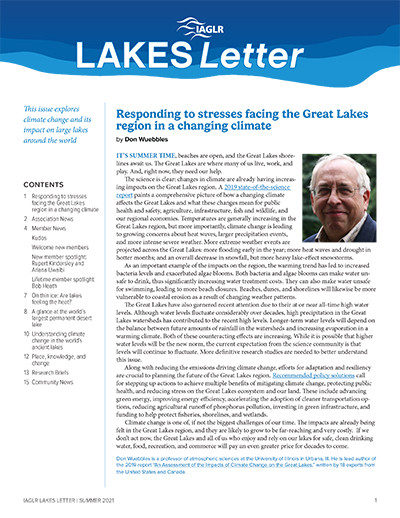
Climate‑Change Impacts
Summer 2021 • Issue 10
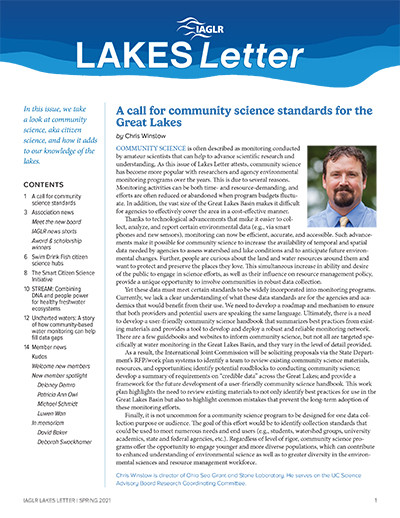
Community Science (Citizen Science)
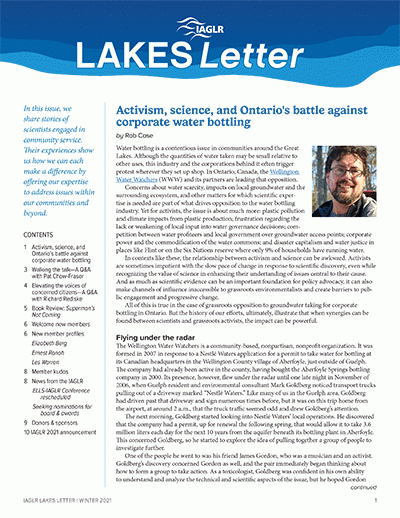
Spring 2021 • Issue 9
Community Service
Winter 2021 • Issue 8
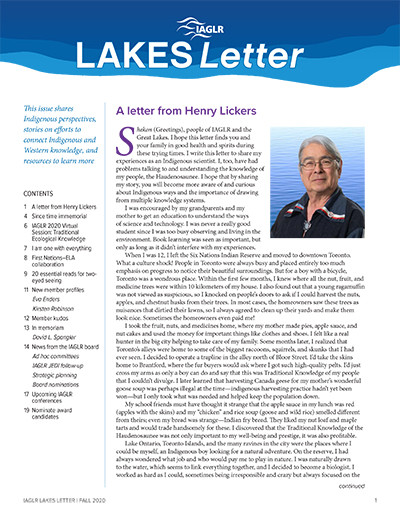
Indigenous Knowledge
Fall 2020 • Issue 7
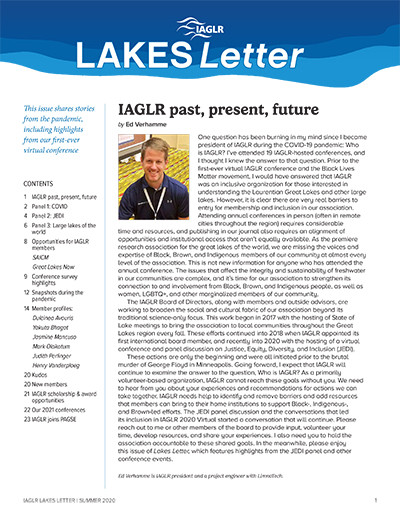
Pandemic, Conference Highlights
Summer 2020 • Issue 6
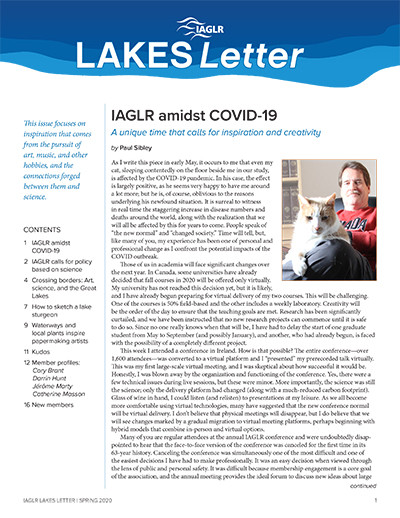
Arts and Science
Spring 2020 • Issue 5
International Collaboration
Winter 2020 • Issue 4
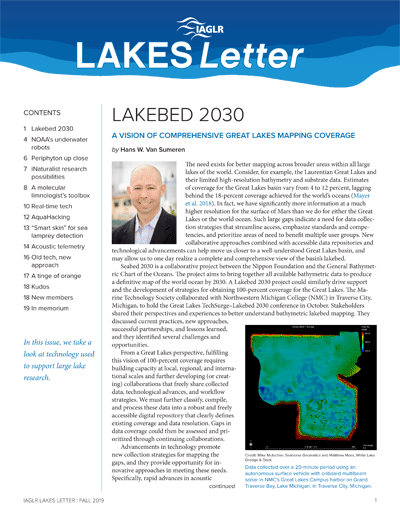
Technology
Fall 2019 • Issue 3
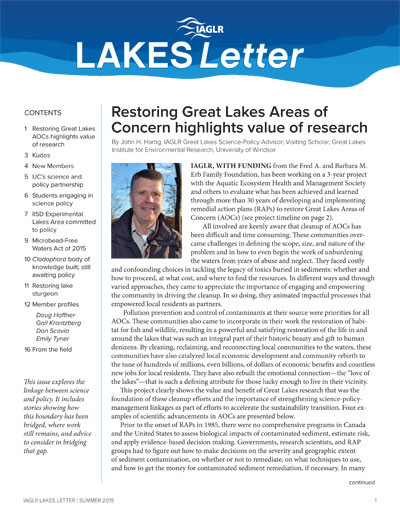
Science and Policy
Summer 2019 • Issue 2
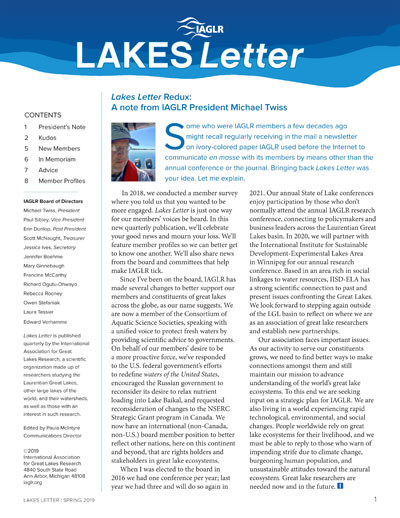
Lakes Letter Redux
Spring 2019 • Issue 1