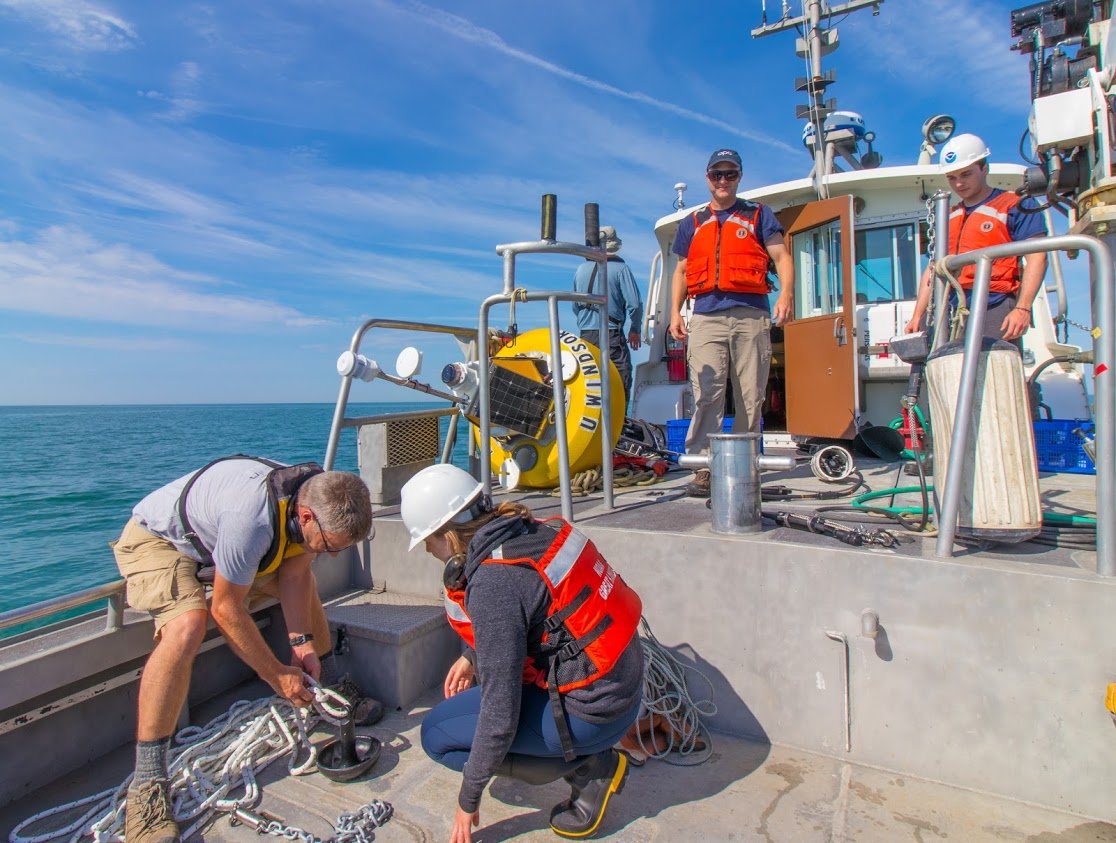
Solving increasingly complex environmental challenges requires collaborative research networks that share expertise, data, information, and tools. Fortunately, the Real-Time Aquatic Ecosystem Observation Network (RAEON) is providing exactly what researchers need to carry out their work to understand and monitor freshwater ecosystems in the Great Lakes.
Since receiving its original funding in 2018, RAEON has been providing researchers with access to instruments that generate real-time and continuous data from aquatic ecosystems and advanced laboratory facilities, data management, and technical expertise. Lead investigator Aaron Fisk directs the network. He is a professor in the School of the Environment and Canada Research Chair in Changing Great Lakes Ecosystems at the University of Windsor.
“All our equipment is available for researchers to use, as well as the data produced,” says Katelynn Johnson, RAEON research and operations director. Johnson says it’s important that researchers who participate in the network understand the data-sharing aspect of RAEON. “Data sharing has become such a big issue in science," she notes. “It’s a major requirement of the grants we’ve received.”
RAEON’s data sharing requirements allow other groups access to quality data to incorporate into their own research programs, reducing expensive duplicate sampling efforts and yielding practical results. These data are improving understanding of the mechanisms and processes of large lake ecosystems and contribute to the management, rehabilitation, and enhancement of their ecosystem services.
“Ultimately the goal of these collaborations is to provide leaders in government and industry with the comprehensive science-based data and information they need to make effective, responsive policy and management decisions,” Fisk says.
This sharing of equipment and data is the only way to tackle big ecosystem projects, particularly as monitoring instruments have become increasingly sophisticated and complicated.
“The practical benefits of a network like RAEON are its ability to provide equipment and field support to research groups that otherwise may not have access to such resources to carry out logistically difficult large, field projects,” explains Todd Leadley, RAEON Field Technician.
He goes on to note how collaboration within the network brings research groups together from all over the continent and with a wide range of expertise. "This allows a more integrated approach to common research goals,” Leadley says. “For example, for the study and early detection of harmful algal blooms in lake ecosystems, not only are nutrient experts important, but hydrologists, ecologists, genomists, and environmental engineers.”
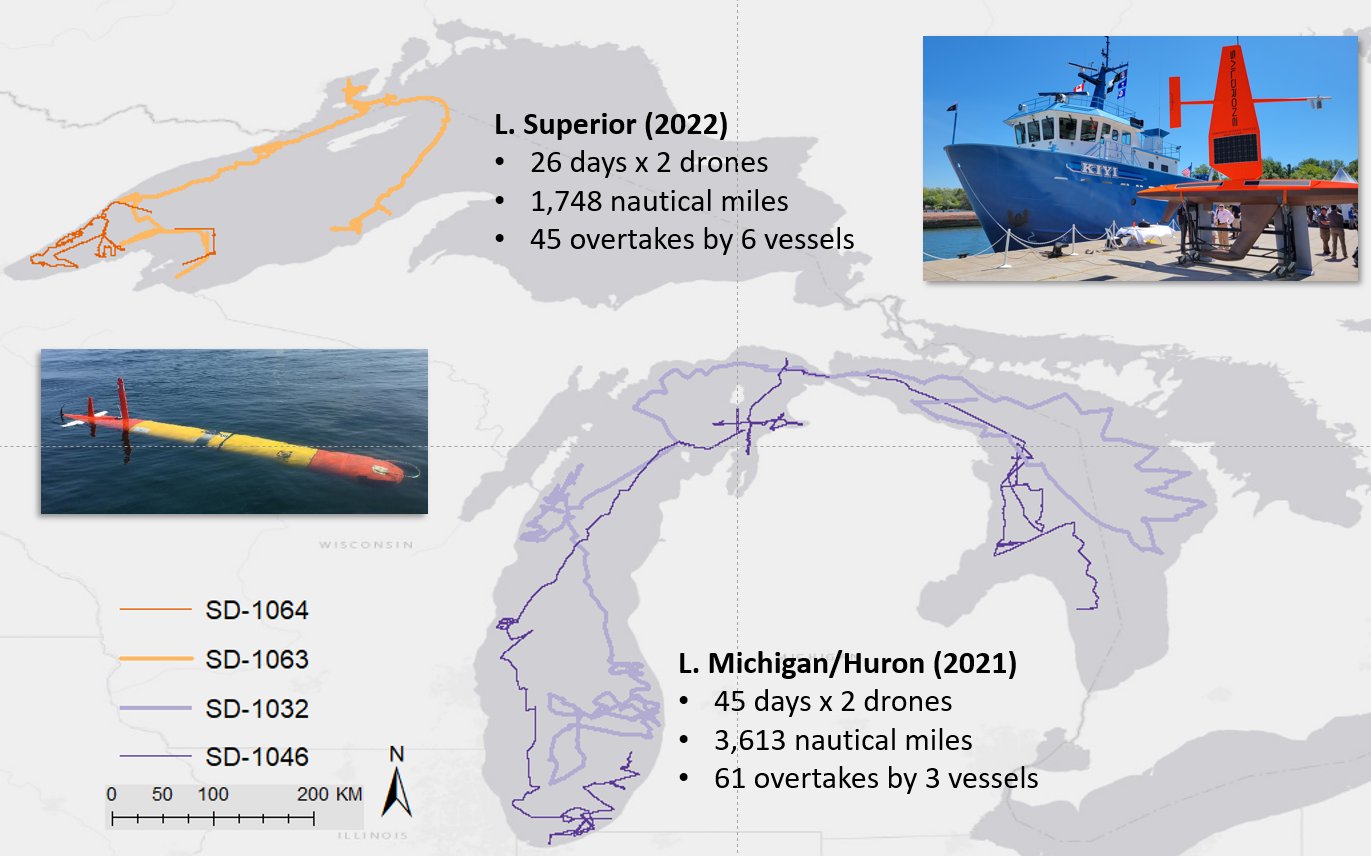
The Great Lakes Glider Consortium, a group of both U.S. and Canadian researchers, is a large, multinational effort. In addition to RAEON, the group includes the University of Minnesota at Duluth, the U.S. Environmental Protection Agency, and the Cooperative Institute for Great Lakes Research (CIGLR), a partnership between the University of Michigan and the National Oceanic and Atmospheric Administration (NOAA). Collaborators meet regularly to share knowledge and resources for Slocum glider efforts in the Great Lakes. For example, the consortium has worked together to tackle the issue of hypoxia in Lake Erie by using gliders to inform fisheries managers on when to conduct their fall trawling surveys.
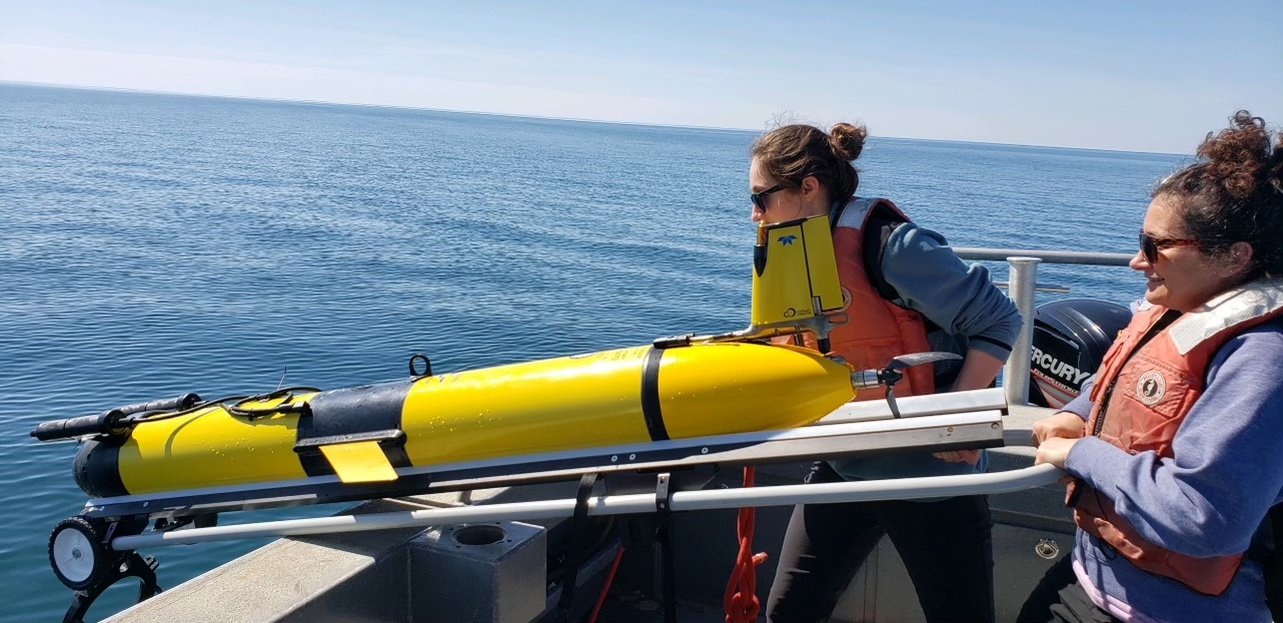
“This consortium is a great way to coordinate glider efforts in the Great Lakes, which allows us to cover more of the lakes, more frequently, giving us a better view of internal processes,” notes Russ Miller with NOAA-CIGLR.
Other projects RAEON is involved in include the Lake Erie Alliance Project, for which RAEON provides instrumentation, staff, and data management to help inform water utility managers on harmful algal blooms in the western basin of Lake Erie. RAEON also supports various fish telemetry projects through the Great Lakes Acoustic Telemetry Observation System, a binational network of researchers who collaboratively use acoustic telemetry to understand fish behavior and provide information to fish managers in their decision making. And at the University of Windsor, RAEON provides real-time buoys to support water security research in the Great Lakes.
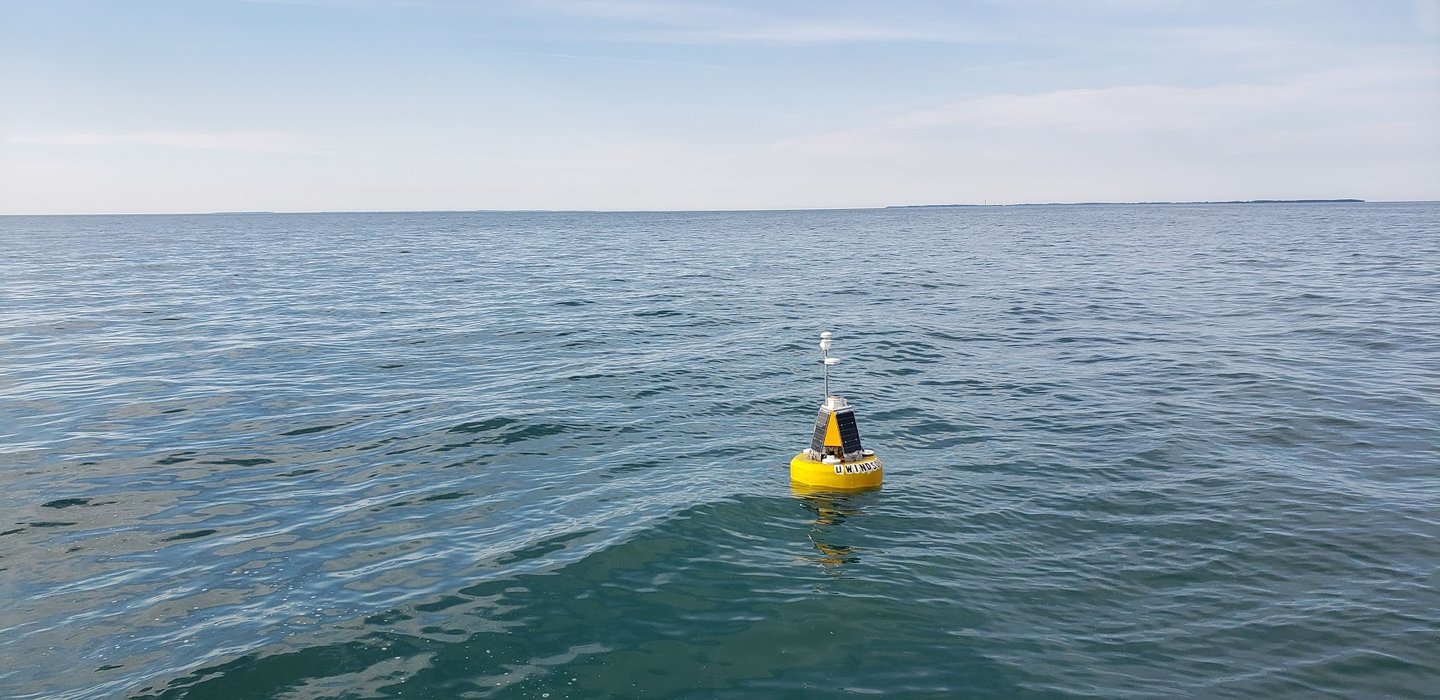
Recently, RAEON secured more than Can$1.77 million in additional funding, joining an even larger collaborative freshwater observational research network known as the Global Water Futures Observatories (GWFO), under the lead of the University of Saskatchewan. “With RAEON now joining GWFO, it will become part of the largest network in Canada and one of the largest freshwater research networks in the world,” Johnson says. “This collaboration will open up new collaborations with researchers outside of the Great Lakes as well.”
There are many other unexpected benefits of such collaborations. According to Leadley, RAEON has also gained interest from other groups. For example, the Marine Environmental Research Infrastructure for Data Integration and Application Network at Dalhousie University has reached out to RAEON. This group develops machine learning and data processing tools for underwater acoustic, vessel tracking, and satellite imagery. Another collaboration led to development of a novel way to retrieve data from underwater acoustic telemetry receivers. The RAEON team worked with industry partners Teledyne and INNOVASEA to develop a way for gliders to download the data from VR4-UWM receivers by flying down to those receivers and offloading the data in a fraction of the time it would take by boat.
As collaborations like these continue to evolve and expand, researchers will be better positioned to help solve some of the world’s growing environmental problems as climate changes and demand for water and resources increase. RAEON offers its equipment and services to Canadian academics and their bi-national partners. For more information, please reach out to Katelynn Johnson, katejohn@uwindsor.ca or visit our website.