The recent UN Biodiversity Conference (COP15) in Montreal may spark a renewed sense of purpose among freshwater conservationists. Rather than perpetuate the old “land and sea” paradigm that has traditionally ignored lakes, rivers, and wetlands, the COP15 framework explicitly identifies inland waters among the environments to be restored and conserved. This attention is justified given that freshwater ecosystems are disproportionately diverse and threatened compared to terrestrial and marine systems.
The framework also recognizes invasive species as a major driver of biodiversity loss, and one of its targets (Target 6) calls for reducing global rates of invasion by at least 50% before the year 2030. This ambitious goal will demand enhanced risk assessment, dedicated monitoring, and science-based management of invasion pathways. However, even a small reduction in globally burgeoning invasion rates would significantly benefit biodiversity and ecosystem stability.
Controlling the spread of invasive species is a transboundary, multidimensional challenge requiring cooperation among nations, policy makers, scientists, and industries. An encouraging example of such cooperation is the binational effort to mitigate ballast water invasions in the Great Lakes.
The Great Lakes basin is the world’s most invaded freshwater system, containing nearly 190 established nonnative species. These species were introduced over two centuries through various vectors including canals, aquarium dumping, bait bucket release, and aquaculture escapes. However, two-thirds of invasions recorded over the past six decades are attributable to ballast water release, which has introduced highly disruptive species such as the zebra mussel, quagga mussel, round goby, and spiny water flea. Although ballast water has been transported to the Great Lakes for nearly a century, the opening of the modern St. Lawrence Seaway in 1959 allowed larger vessels and more frequent ship traffic to deliver greater volumes than ever before. Consequently, the invasion rate skyrocketed. From 1959 to 2006, one new invader was discovered established in the Great Lakes basin every six to seven months on average—a rate unmatched by any other freshwater system on the planet.
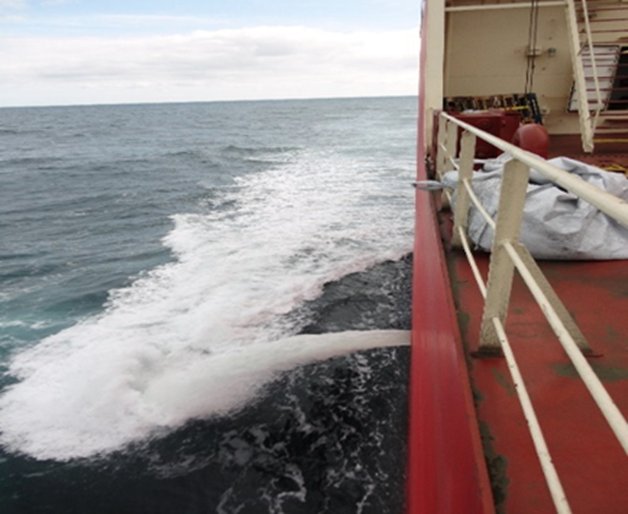
An attempt to control ballast water invasions through harmonized legislation by Canada and the United States in 1993 failed because of technological issues and a regulatory loophole; but its failure was only recognized in the years that followed. New harmonized regulations in 2008 mandated—with strict inspection and enforcement—that all transoceanic ships destined for the Great Lakes flush saltwater through their ballast tanks to achieve ocean salinities prior to entering the seaway. Experiments on this procedure indicated that it would significantly reduce the number of living freshwater organisms in ballast tanks.
We have now had 14 years to assess the effectiveness of binational ballast water management, and the results are impressive. Since 2008, invasions reported in the Great Lakes basin have declined by 85% and are now at their lowest rate in two centuries. Additional forms of management likely contributed to this decline, but empirical evidence points to ballast water regulation as the overwhelming primary cause. Nevertheless, the threat of invasive species is far from eliminated; invasion risks in the Great Lakes remain significant because of other, largely unregulated vectors such as those linked to commercial trade in live organisms. More effective management of these vectors is necessary for conserving biodiversity and protecting a fishery worth several billions of dollars.
The key takeaway message from the Great Lakes is that science-based solutions implemented through the cooperative actions of stakeholders can produce substantial results. In this case, binational cooperation apparently resulted in an unprecedented reduction in the invasion rate in the world’s largest freshwater ecosystem. This success should fuel optimism and determination for achieving the COP15 global targets.