We are now two years into struggling through COVID-19, and a surprising outcome of the global pandemic has been been our growing reliance on nature to maintain mental and physical health and renewed relationships with nature during isolating times. Never before has the connection between natural ecosystems and society been more inextricably linked, particularly in the Laurentian Great Lakes, where human health, vitality, and well-being directly relate to the health and management of entire watersheds and the multitude of ecosystems that comprise them.
The ecosystem approach has long served as a collaborative framework for governing, researching, and stewarding the health of large watersheds like the Great Lakes (Hartig and Zarull 1992; Munawar and Hartig 2020). Operationalized through programs such as the Great Lakes Areas of Concern and the Coordinated Surveillance and Research Initiative, the ecosystem management framework has resulted in multiscale solutions and partnerships that continue to evolve and grow toward improved relationships, research, and management into the future (Alsip et al. 2021).
The ecosystem approach has long served as a collaborative framework for governing, researching, and stewarding the health of large watersheds like the Great Lakes.
Although there are examples of ecosystem-based approaches to research and management of the Great Lakes and other large collections of ecosystems (e.g., Australia’s Great Barrier Reef, the African Great Lakes), climate change has become a threat multiplier, and the interaction of multiple stressors has led to greater uncertainty about how these systems will respond to management actions. Now, more than ever, we need to progress toward more holistic and strategic approaches to managing natural ecosystems to protect their biodiversity and the ecosystem services upon which we depend.
How can ecosystem-based efforts be accelerated into action more effectively, strategically, and with greater certainty of success? Over the past few years, a Great Lakes-based collaborative has been underway, focusing on a shared vision to make progress on the ecosystem approach as a key framework that will integrate knowledge systems and expertise from around the world specifically to help inform and guide science and management of this critical region. To elevate this effort, and no longer willing to wait for COVID uncertainties to dissipate, we are thrilled to announce the forthcoming Ecosystem Approach in the 21st Century as a hybrid conference and workshop summit.
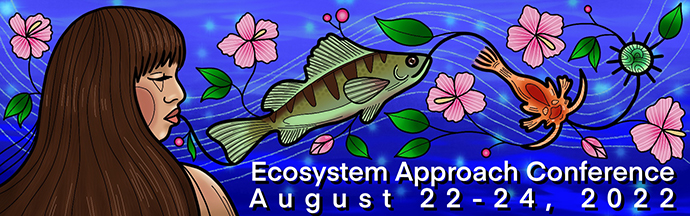 Save the date August 22–24, 2022, for the event, hosted at the University of Windsor situated in the Traditional Territory of the Three Fires Confederacy and the heart of the Great Lakes basin. Convened in celebration of the 50th anniversary of the Canada-U.S. Great Lakes Water Quality Agreement, the event is sponsored by The Nature Conservancy, University of Windsor, Fisheries and Oceans Canada, Great Lakes Fishery Commission, International Joint Commission, U.S. Geological Survey, Aquatic Ecosystem Health & Management Society, University of Michigan's School of Environment and Sustainability, and IAGLR. Its hybrid model will combine a one-day online international conference featuring plenaries, posters, and presentations to help connect the global community engaged in dimensions of an ecosystem-based approach to science, research, and management. This will set the tone for the in-person summit, a writing-intensive gathering of multiple working groups focused on unpacking key dimensions of the ecosystem approach. While the workshop is planned to be in person, we are monitoring the pandemic globally and simultaneously planning for the possibility of a virtual format. Intentionally embedded with diverse knowledge systems and expertise and inclusive modes of engagement and participation, the event will have multiple outputs that include and extend beyond a special issue of Aquatic Ecosystem Health and Management, book(s), and a traveling discussion series that will contribute to the Great Lakes Public Forum being planned by the Canadian and U.S. federal governments for September.
This issue of Lakes Letter features a number of examples of the ecosystem approach in research and management to get the conversation going and ideas flowing. We look forward to engaging with you more in 2022 as part of this collaborative effort.