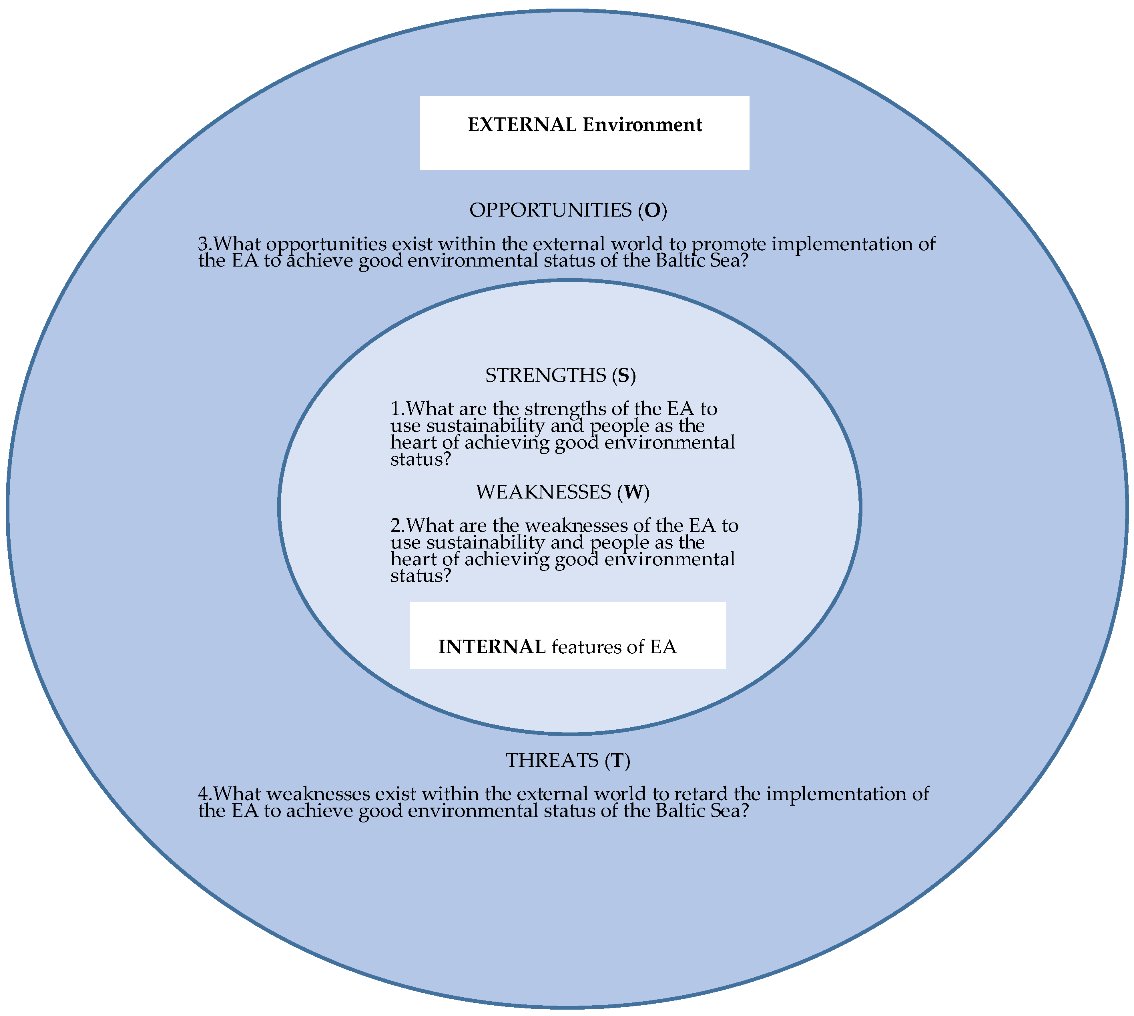
Successful invasive species management depends on far more than the biological conditions of a given system. It also depends on human interactions with the ecosystem, and coordination and cooperation among interdependent stakeholders (Lubell et al. 2017, Bodin 2017). To fully understand the complexity of aquatic invasive species (AIS) management, we must consider all the interconnected elements, both ecological and social. This is where the idea of social-ecological systems (SES) comes into play and exemplifies an ecosystem approach. The SES framework attempts to address the complex interdependent relationships between humans and the natural environment, supporting a systems perspective in which the relationships between multiple social and ecological components are at the center (Sternlieb et al. 2013).
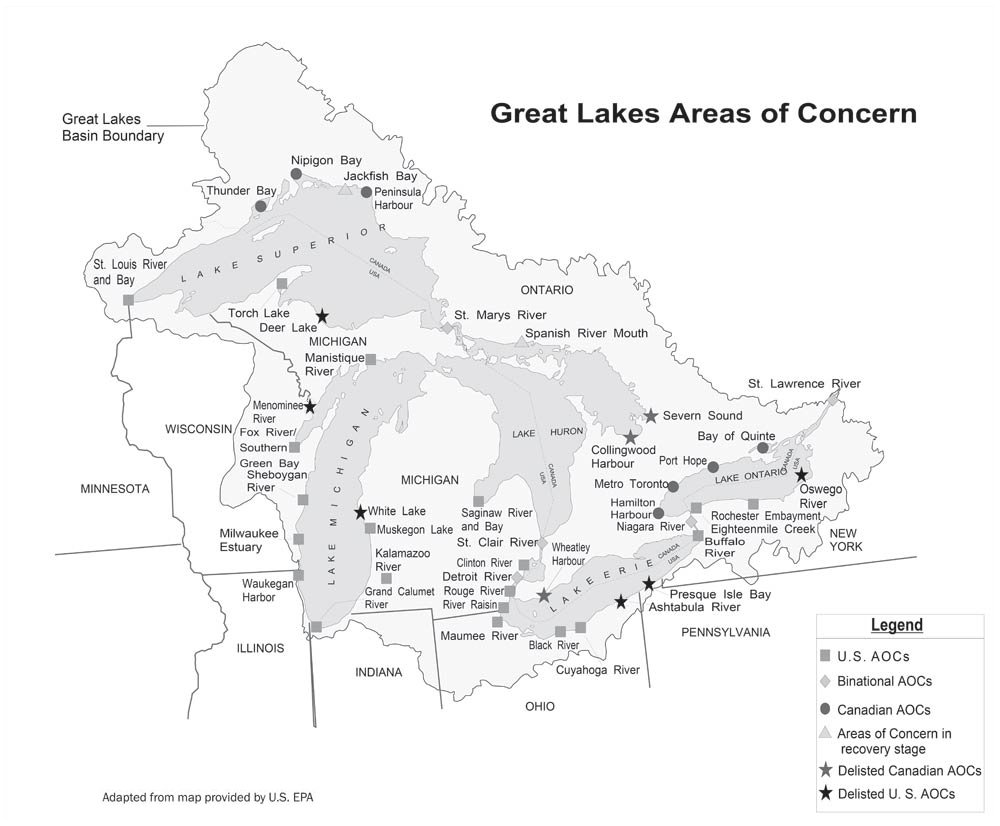
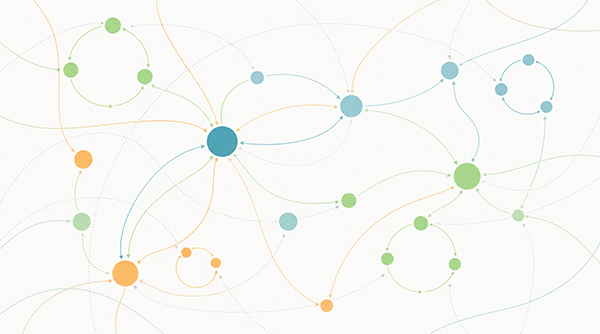
In AIS governance, management actions taken by myriad actors (governments, NGOs, researchers, corporations, etc.) create mutual interdependence, where actions and outcomes in one component of the SES can lead to outcomes in another (either intentionally or unintentionally) (Bodin et al. 2019). Our project focuses on AIS governance in the Great Lakes, understood as an SES. We seek to understand the patterns of social interdependencies between actors, and how well they reflect the existing interdependencies in the ecosystem. For example, if two actors are managing two interconnected elements of the ecosystem (such as one species that preys on another), we would expect that these actors collaborate in some form to “internalize” or reflect the existing ecological interdependence (see illustration).
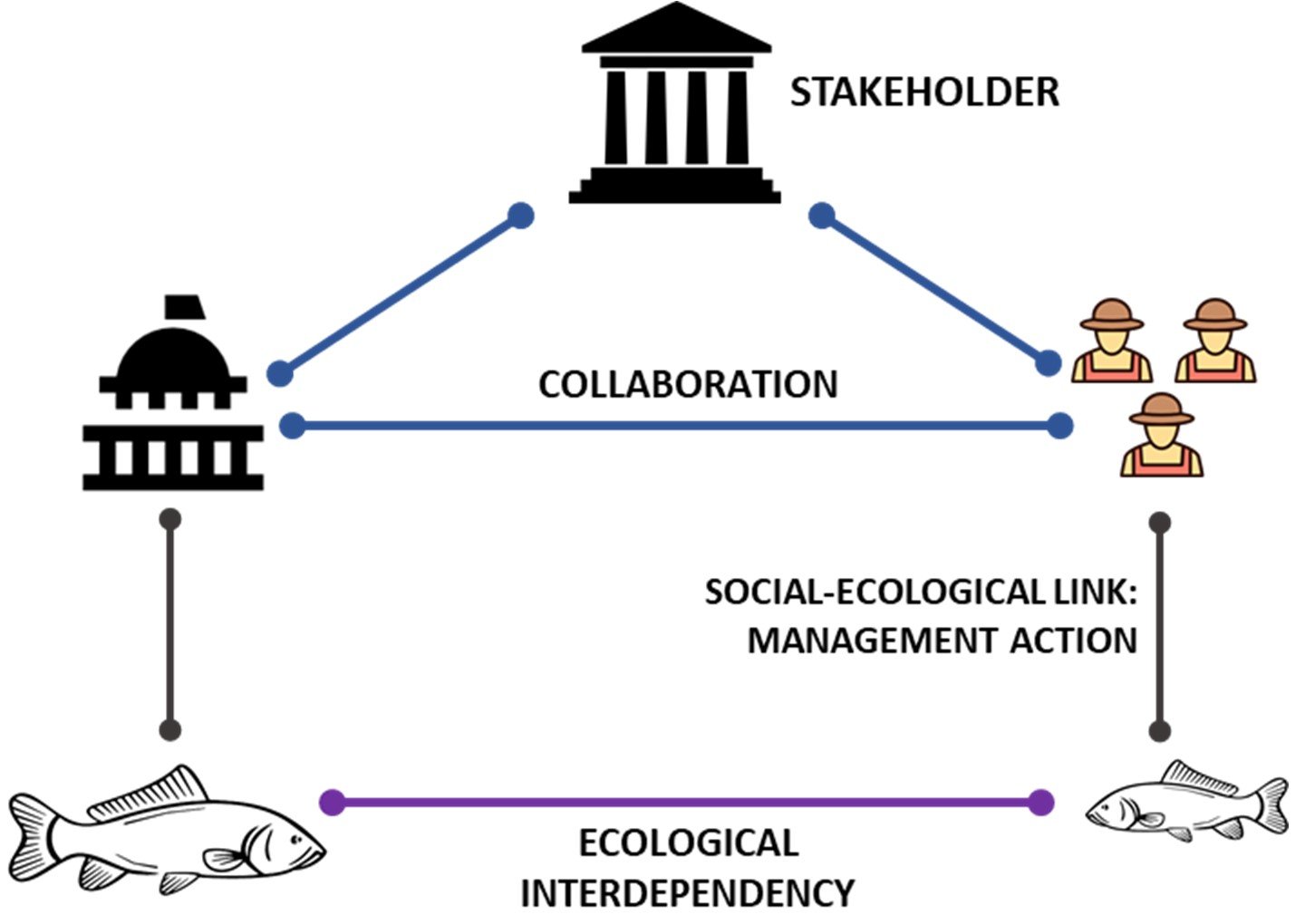
To “reconstruct” the social and ecological subsystems, we rely on existing food web models to understand the ecological components, and on stakeholder surveys to understand the social system. We are currently analyzing survey data and will present our initial results at the 2022 ICAIS Conference in April. This project has the potential to shape our understanding of complex freshwater governance systems as well as meaningful implications for the development of a cohesive management approach for AIS in the Great Lakes.