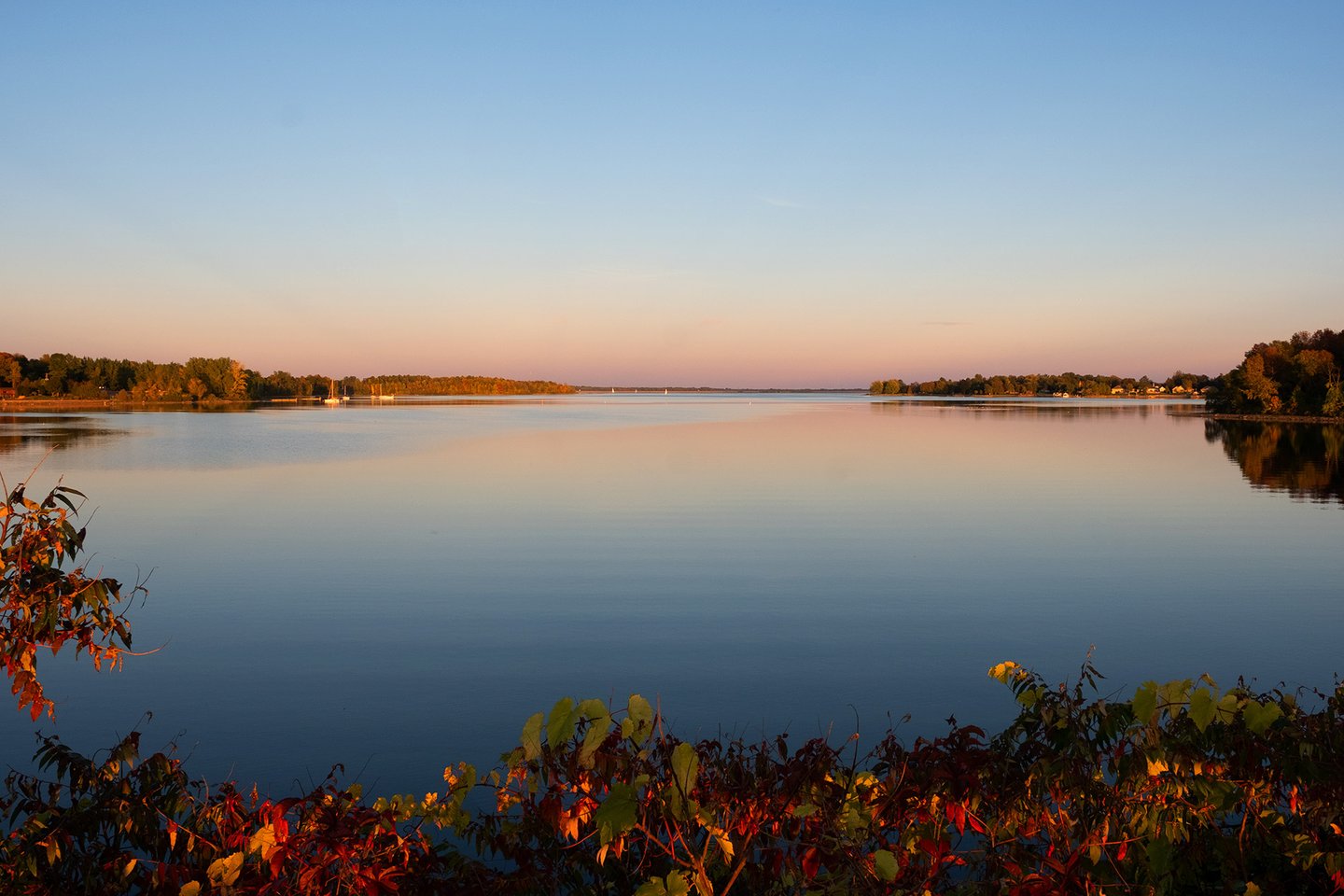
The Great River Rapport was inspired by the most commonly asked question in the community: What is the health of the St. Lawrence River? With no simple answer, we wanted to explore ways to describe the complexities of the ecosystem with a wide public audience.
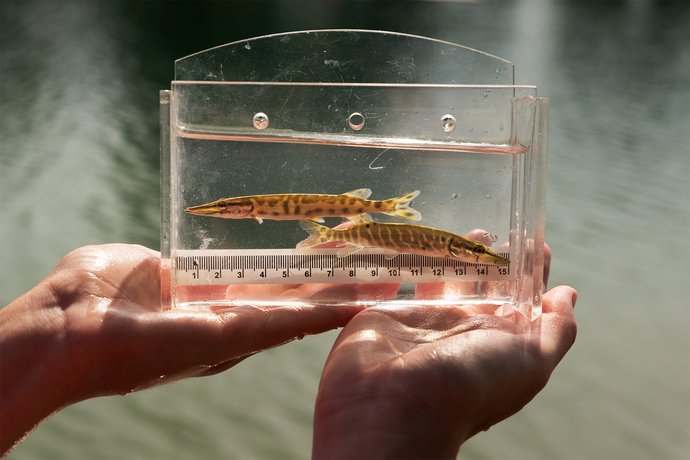
Ecosystem health reports have become commonplace across the globe, and many provide comparative results based on the same ecological health parameters. Although some national and global health reports have described the Upper St. Lawrence River region as data deficient, the St. Lawrence River Institute of Environmental Sciences (River Institute) believed that an ecosystem health report could be developed using a unique set of ecological indicators that best characterize the river. The Great River Rapport was developed to carefully disseminate the data that exist, identify the gaps and needs for future research, and provide answers for the public in a language that is accessible for community members.
The Upper St. Lawrence River region represents a complex jurisdiction that encompasses the international Canada/USA border, the Ontario/Quebec border, and the traditional territory of the Kanien’kehá:ka (Mohawk), part of the Haudenosaunee Confederacy. As collaborators on the Great River Rapport, our colleagues at the Mohawk Council of Akwesasne provided the inspiration to frame the project in the Haudenosaunee Thanksgiving Address (Ohenton Karihwatehkwen), “Words That Come Before All Else.” These traditional words are spoken at the start of important gatherings to bring minds together and to honour all elements of nature (including people) and their interconnectivity in the natural world. Through our partnership with Akwesasne, we embrace the two-row wampum approach to honour and engage the biocultural context of the Haudenosaunee. The result includes both Indigenous Knowledge and scientific findings in formats that encourage ongoing conversation, insight, and friendships through this co-creation.
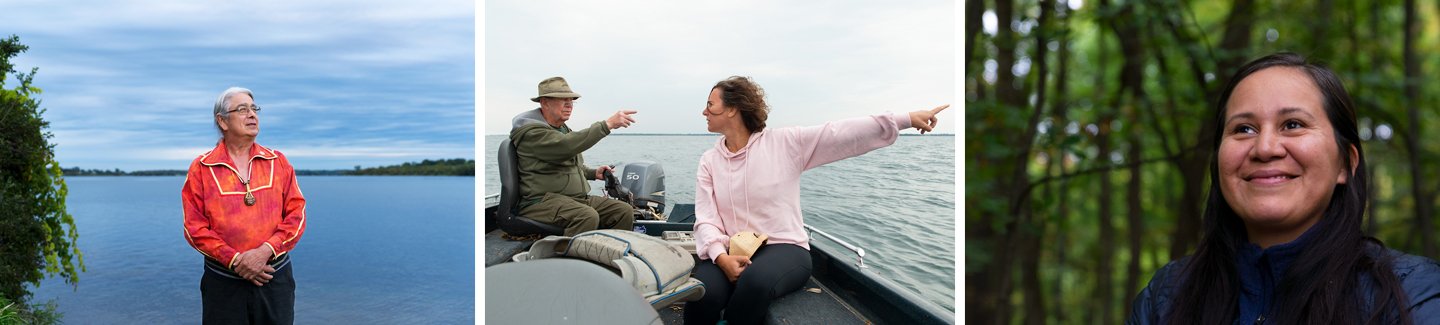
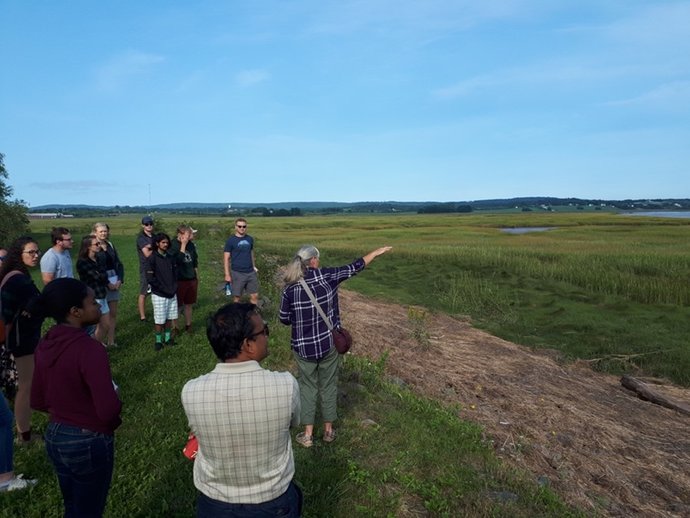
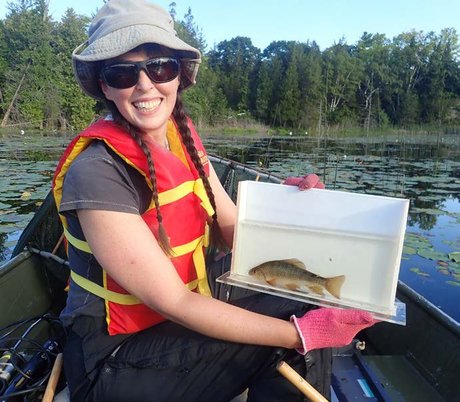
With this unique approach, it was important from the outset to develop a “rapport” with the people who live and interact with the environment. To answer the original question, What is the health of the St. Lawrence River?, we started with the people who live in the communities along the river. Surveys and workshops gathered feedback that defined their priorities and concerns. With this feedback, scientists, partners, and Akwesasronon (Akwesasne Community Members) were recruited to nominate and select ecological indicators that characterize the issues and concerns raised by the community. A grading and prioritizing process narrowed the list to 35 indicators, and the team started gathering all of the available data from academia, NGOs, government agencies, and citizen scientists. Ongoing data collection, compilation, and peer review follows a scientific approach for each indicator, with the detailed results expressed through a series of technical reports.
To maintain the goal of translating the science into accessible formats for the general public, we hired a photographer, an Indigenous artist, and a technology expert to incorporate art, photos, video, and stories. These elements give the project life, and invite people from all backgrounds to engage as we move along.
Since it began, the Great River Rapport has evolved into an ongoing quest for knowledge that promises to share current and future discoveries about the changing ecosystem. We appreciate the diverse lenses through which people view and enjoy the river, and we continue to find ways for people to access and connect with the environment.
The Great River Rapport reflects the diverse group of people who inspire and contribute to its growth. We are grateful to the artists, story tellers, knowledge keepers, scientists, community members, nonprofit groups, academics, government representatives, environmental groups, passionate individuals, community organisers, writers, editors, digital media experts, and designers who leave their signature on this unique project.
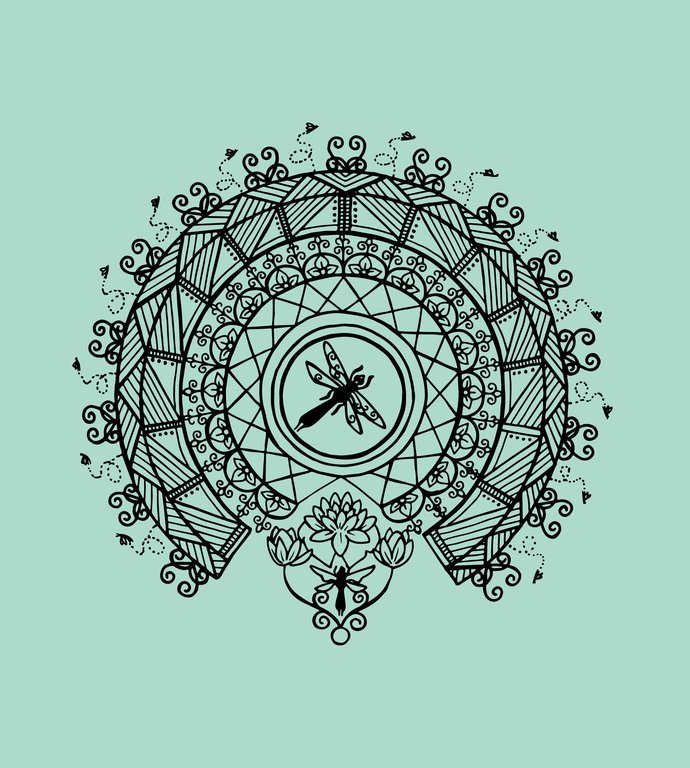
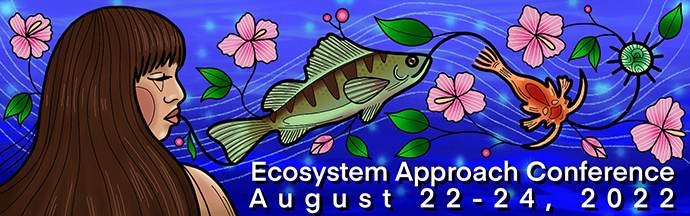
To help anchor the Great River Rapport project in the Haudenosaunee Thanksgiving Address, artist Victoria Ransom created illustrations to depict different parts of the address. The illustration represents Otsi’nonwa’shn:’a (Insects).
We thank the insects for continuously keeping our environment clean and balancing the natural equilibrium. So, we turn now to the Insects and send our greetings and thanks. Now our minds are one.
Artist's description: Chosen for this element are the dragonfly and shad fly, based on their significance to the river. The dragonfly is centered in the middle, as well as at the bottom surrounded by water lilies. Skydomes and pottery designs circle the center dragonfly, and the shad fly is depicted in the outer circle.