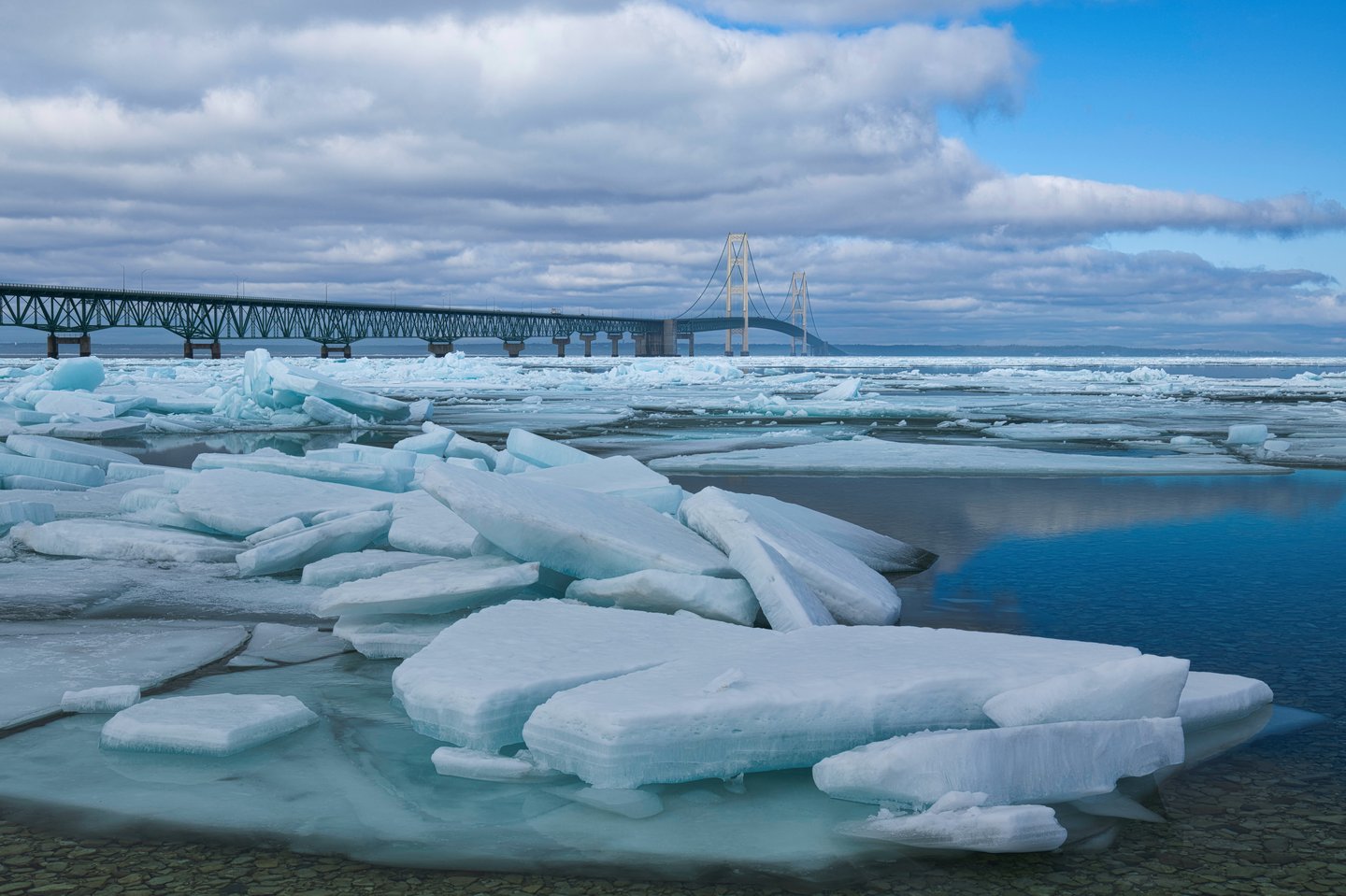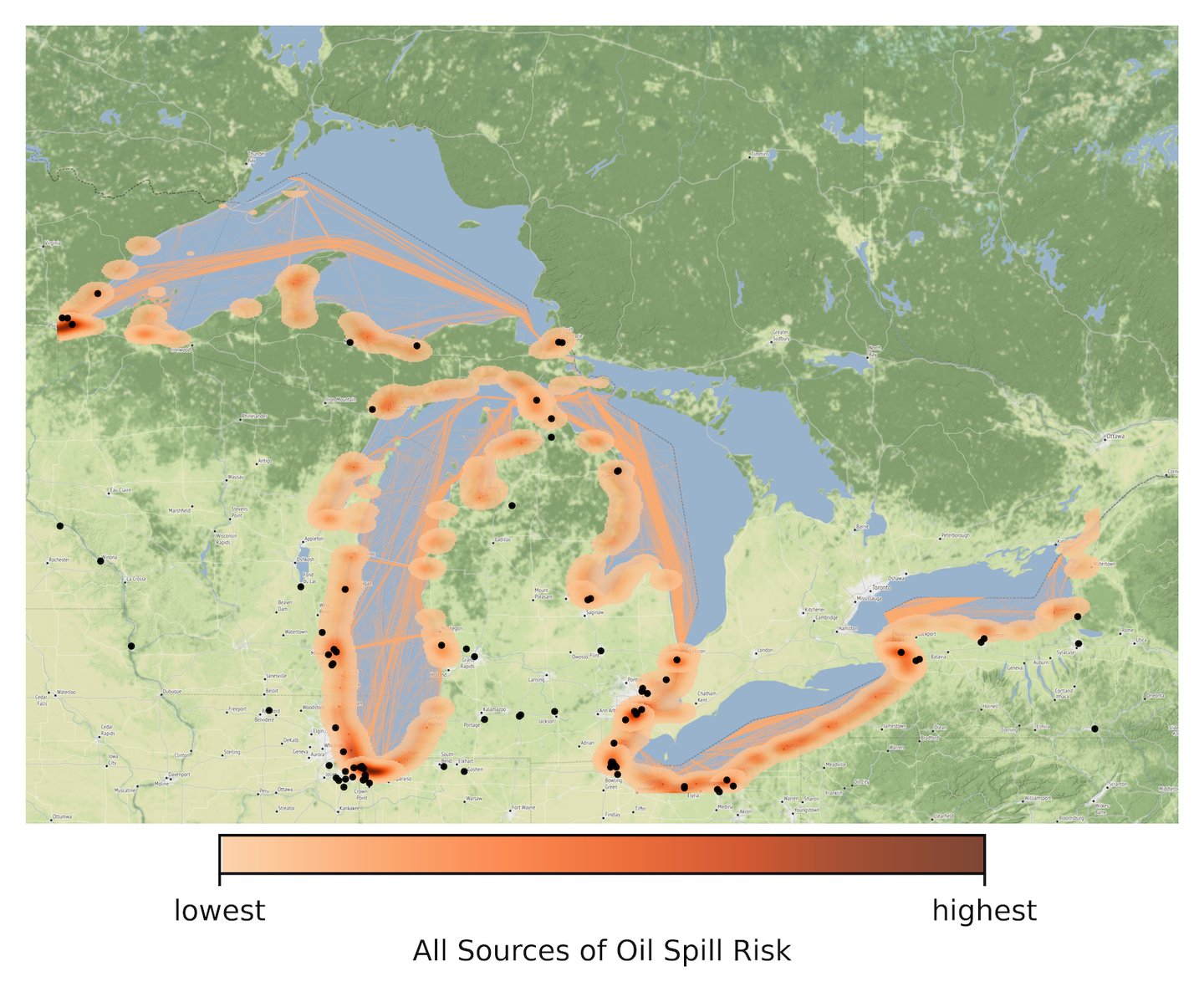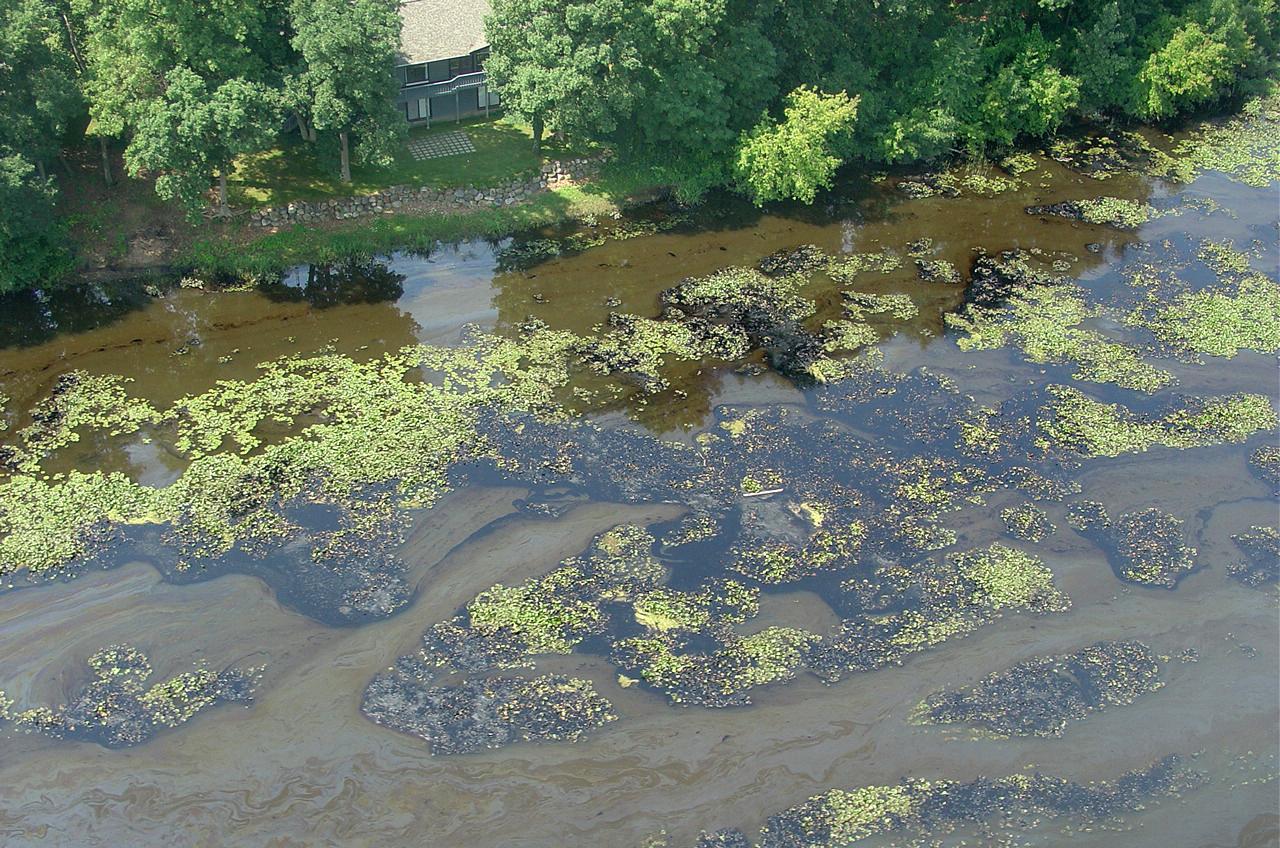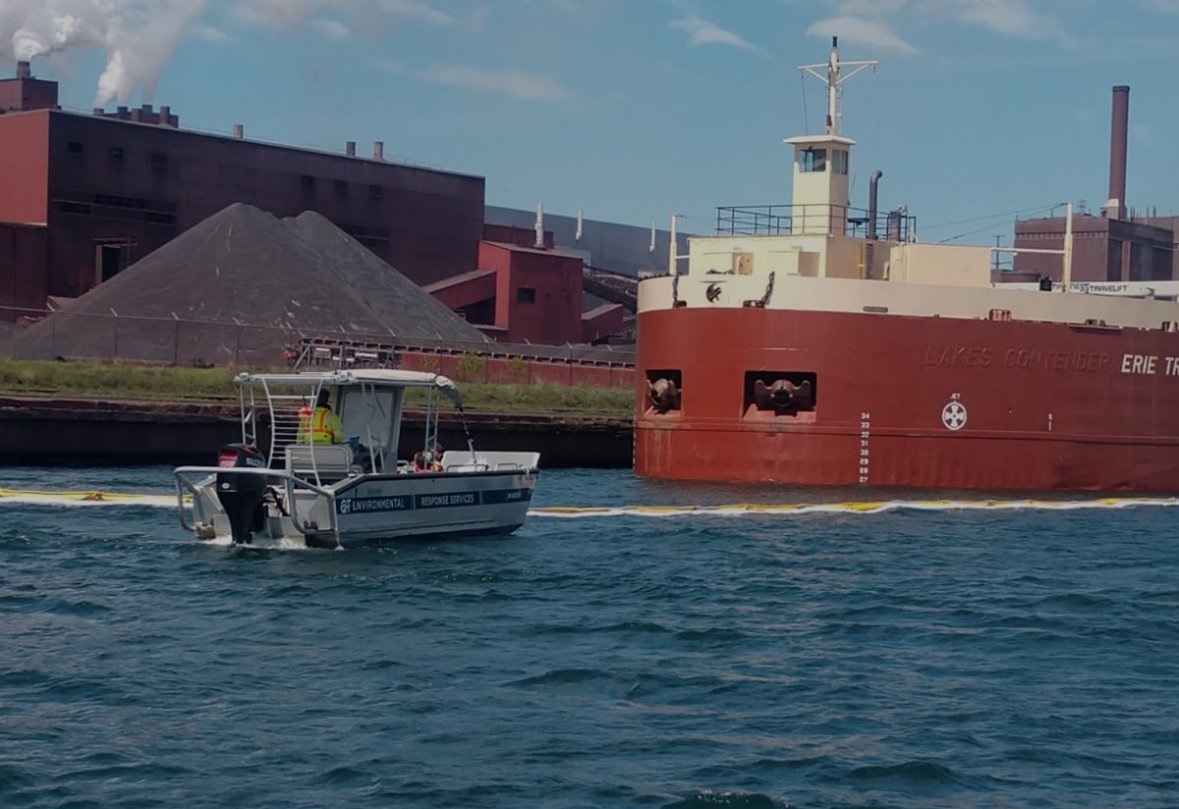
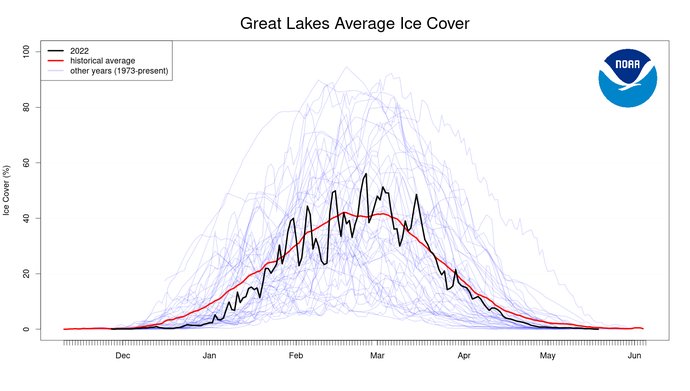
The risk of oil spills in the Laurentian Great Lakes is a growing concern due to frequent ship traffic and aging submerged pipelines at the Straits of Mackinac in Lake Michigan-Huron. Freshwater oil spills are known to cause severe environmental damage—from the death of local wildlife to contamination of drinking water supplies—yet they have been studied less extensively than marine oil spills. To address this issue, high-fidelity oil spill models are being developed and used for oil spill preparedness and response in the Great Lakes. Meanwhile, although ice cover is a regular occurrence in this region (see figures, this page), it has not been rigorously incorporated into these models. This lack of research could notably reduce the accuracy of oil spill movement simulations and decrease response effectiveness, posing serious threats to the water environment and ecology.
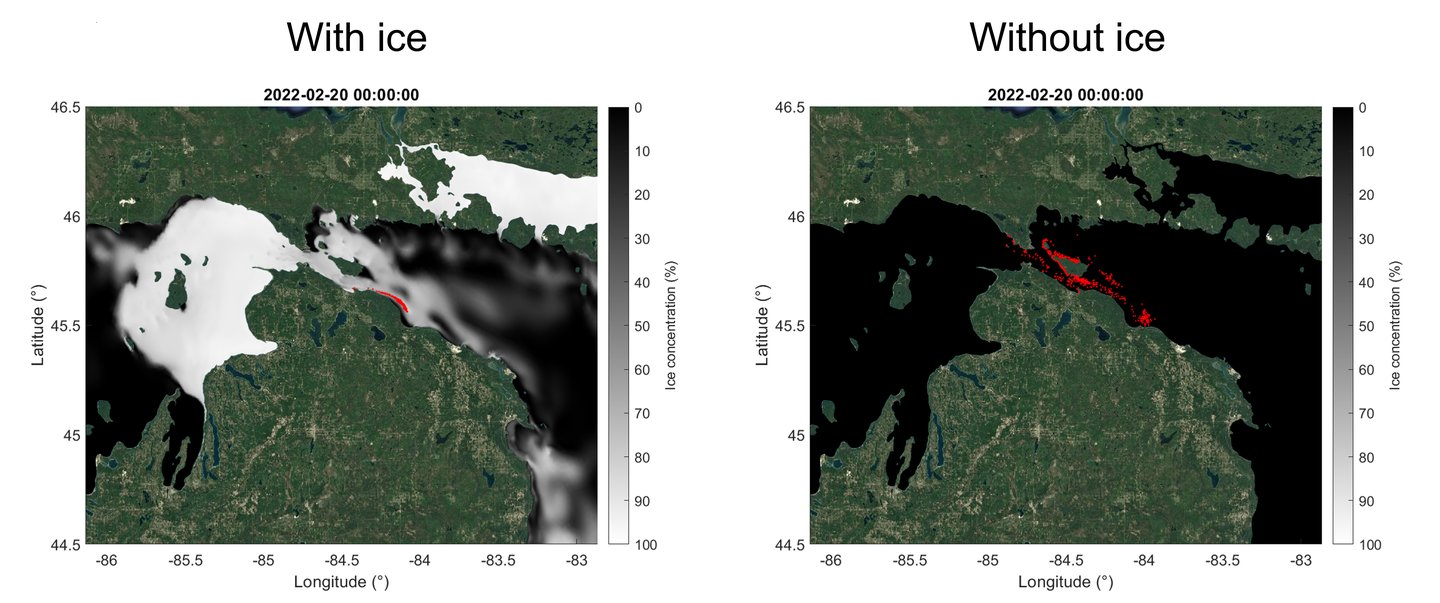
For the Great Lakes, we created a computer model looking at hypothetical oil spills at the Straits of Mackinac to help predict what would happen if oil were accidentally released there. The model explored how spills might spread across the water’s surface and interact with ice. It focused on the prominent oil advection process, specifically the movement of oil due to currents, winds, and ice. The results demonstrated that ice cover can limit oil movement and reduce the extent of oil-affected open water areas (see previous page, top figure). While this may initially seem like a positive outcome of ice cover, oil can actually move beneath the ice cover or become trapped and locked in ice, which is known as oil encapsulation or an oil-ice sandwich. Furthermore, oil trapped under ice is difficult to detect and clean up, making it even more crucial to predict its movement. These complex interactions between oil and ice are not fully understood or effectively represented in oil spill modeling, adding to the uncertainty in predictions.
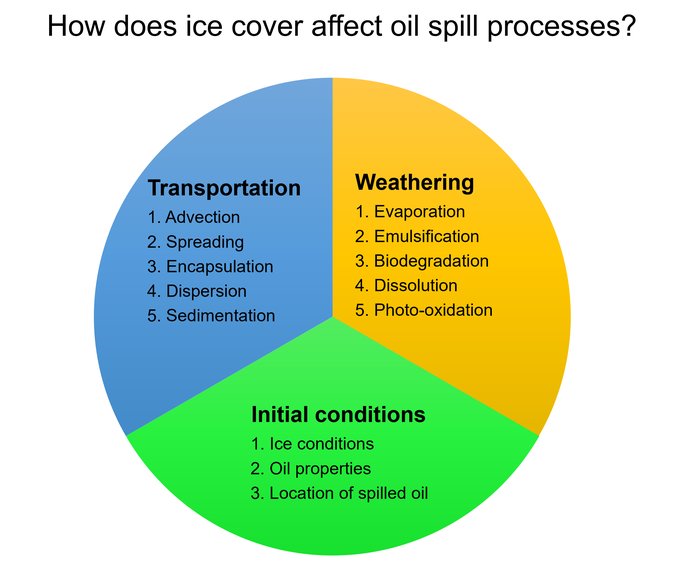
In general, ice cover affects oil spills through both transportation and weathering aspects (see figure at right). In terms of oil transport, ice cover can affect oil spill movement by forming barriers that reduce oil advection and spreading. This spreading is the thinning process of an oil slick caused by the interaction between viscosity, gravity, buoyancy, and surface tension. Moreover, ice cover can influence oil transport in other less-studied ways. These processes include 1) encapsulation, which is specific to ice-covered waters and is poorly understood; 2) dispersion, where breaking waves force oil droplets into subsurface water; ice cover can prevent this process; and 3) sedimentation, which refers to the adhesion of oil to suspended sediments and is the least studied of the transportation aspect.
Oil weathering refers to the changes in the physical and chemical properties of spilled oil, including processes such as evaporation, emulsification, biodegradation, dissolution, and photo-oxidation. Ice cover weakens evaporation by lowering the ambient temperature and thickening the oil slick, and it can even stop evaporation altogether if the oil is under ice, with no exposure to the atmosphere. Emulsification is the process in which small droplets of water are mixed into oil to form a stable emulsion due to waves and turbulence; ice has been reported to slow this process. Biodegradation, often considered the final fate of weathered oil, refers to the breakdown of petroleum hydrocarbons into simpler components, such as water and carbon dioxide, by microorganisms like bacteria and fungi. Ice cover can reduce this process due to the higher viscosity of oil, the lower evaporation rate, and the slower microbial activity compared to open water. Dissolution is the process where the soluble portion of oil breaks into individual molecules, blending with water to create a uniform mixture; it occurs much more slowly than evaporation, and oil could dissolve more readily in ice-covered water due to greater contact with the liquid phase. Photo-oxidation occurs when oil is exposed to oxygen and light, causing it to degrade into new oxygenated products; this process is the least studied of the weathering aspect, and the impacts of ice cover are largely unknown.
The initial location of the oil spill, such as whether the oil is on the ice, beneath the ice, within leads, on snow, or absorbed by snow, must be considered for emergency responders, as it can directly determine how ice cover affects oil transportation and weathering, the modeling of these processes, and the mitigation and cleanup strategies. It is also worth noting that the type of ice—such as land-fast ice, pack ice, and broken ice—and ice duration, as well as the properties of oil—such as oil type, viscosity, components, and volatility—also influence oil transportation and weathering, adding another two layers of complexity.
In summary, ice cover exerts unignorable impacts on oil spill movement and greatly complicates the oil spil process. Ice cover generally slows oil transportation and weathering and complicates modeling and cleanup efforts. To date, modeling oil behavior in ice remains in its initial stages, lacking a sufficient understanding of the influencing mechanisms and valid mathematical algorithms. Additionally, most research on oil-ice interaction has focused on sea ice; the differences with freshwater ice, like that in the Great Lakes, are not well understood. To improve the predictive accuracy of oil spills under icy conditions and ensure effective responses, future research should focus on quantifying oil-ice interactions to ensure their adequate representation in the models.