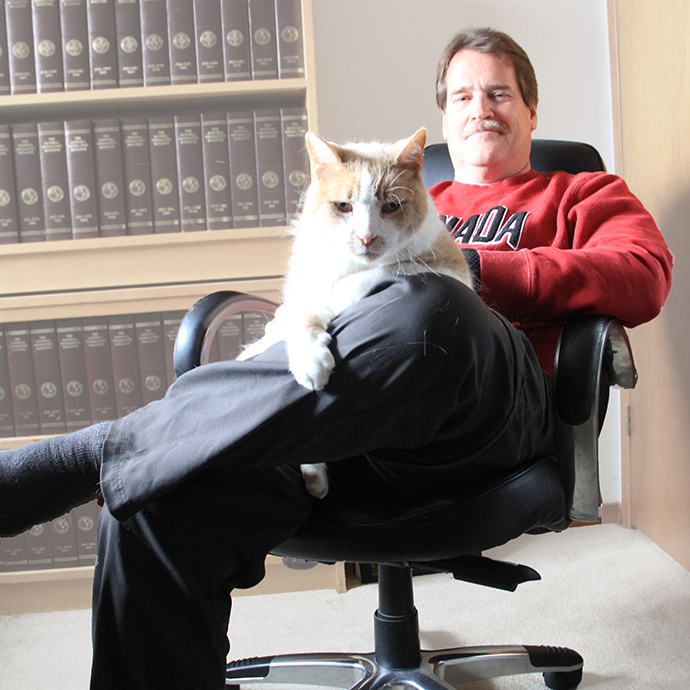
 As I write this piece in early May, it occurs to me that even my cat, sleeping contentedly on the floor beside me in our study, is affected by the COVID-19 pandemic. In his case, the effect is largely positive, as he seems very happy to have me around a lot more; but he is, of course, oblivious to the reasons underlying his newfound situation. It is surreal to witness in real time the staggering increase in disease numbers and deaths around the world, along with the realization that we will all be affected by this for years to come. People speak of “the new normal” and “changed society.” Time will tell, but, like many of you, my experience has been one of personal and professional change as I confront the potential impacts of the COVID outbreak.
Those of us in academia will face significant changes over the next year. In Canada, some universities have already decided that fall courses in 2020 will be offered only virtually. My university has not reached this decision yet, but it is likely, and I have already begun preparing for virtual delivery of my two courses. This will be challenging. One of the courses is 50% field-based and the other includes a weekly laboratory. Creativity will be the order of the day to ensure that the teaching goals are met. Research has been significantly curtailed, and we have been instructed that no new research projects can commence until it is safe to do so. Since no one really knows when that will be, I have had to delay the start of one graduate student from May to September (and possibly January), and another, who had already begun, is faced with the possibility of a completely different project.
This week I attended a conference in Ireland. How is that possible? The entire conference—over 1,600 attendees—was converted to a virtual platform and I “presented” my prerecorded talk virtually. This was my first large-scale virtual meeting, and I was skeptical about how successful it would be. Honestly, I was blown away by the organization and functioning of the conference. Yes, there were a few technical issues during live sessions, but these were minor. More importantly, the science was still the science; only the delivery platform had changed (along with a much-reduced carbon footprint). Glass of wine in hand, I could listen (and relisten) to presentations at my leisure. As we all become more comfortable using virtual technologies, many have suggested that the new conference normal will be virtual delivery. I don’t believe that physical meetings will disappear, but I do believe that we will see changes marked by a gradual migration to virtual meeting platforms, perhaps beginning with hybrid models that combine in-person and virtual options.
Many of you are regular attendees at the annual IAGLR conference and were undoubtedly disappointed to hear that the face-to-face version of the conference was canceled for the first time in its 63-year history. Canceling the conference was simultaneously one of the most difficult and one of the easiest decisions I have had to make professionally. It was an easy decision when viewed through the lens of public and personal safety. It was difficult because membership engagement is a core goal of the association, and the annual meeting provides the ideal forum to discuss new ideas about large lake science and policy, exchange professional and personal stories, and renew friendships. It is in this spirit that the board of directors decided to hold the conference virtually this year—another first in our history.
This past Friday, the website for the virtual conference went live. The planning was both intimidating and exhilarating, but IAGLR has an incredibly dedicated group of individuals, from the conference planning committee to board members, who embraced the opportunity. Lessons learned from this experience will serve us well in the future. For example, we are in the early stages of planning for the State of Lake Ontario 2020 conference and are developing a contingency plan in case it, too, has to be delivered virtually.
As it is for many professional societies, the COVID-19 pandemic is testing the resilience of IAGLR. One of my (new) goals in my remaining time as president is to ensure that we emerge from the pandemic with the same strength we have always had. To this point, as part of the virtual meeting, I am convening a “COVID-19 panel” to discuss the current and future impacts of the pandemic on all of us in the IAGLR family. I am sure you all have interesting stories to share—we would love to hear about them.
I hope that each of you has been able to establish a comfortable routine; perhaps you have discovered new interests or rediscovered past hobbies to keep you busy. I miss my thrice-a-week hockey games but have been doing much more hiking (following distancing protocols, of course). My house has never received a spring cleaning like it has this year. If we want to save lives, staying put is the right thing to do. We may be at this for a while, but it is a price I am willing to pay, and a situation my cat, now on the study chair, is happy to endure.