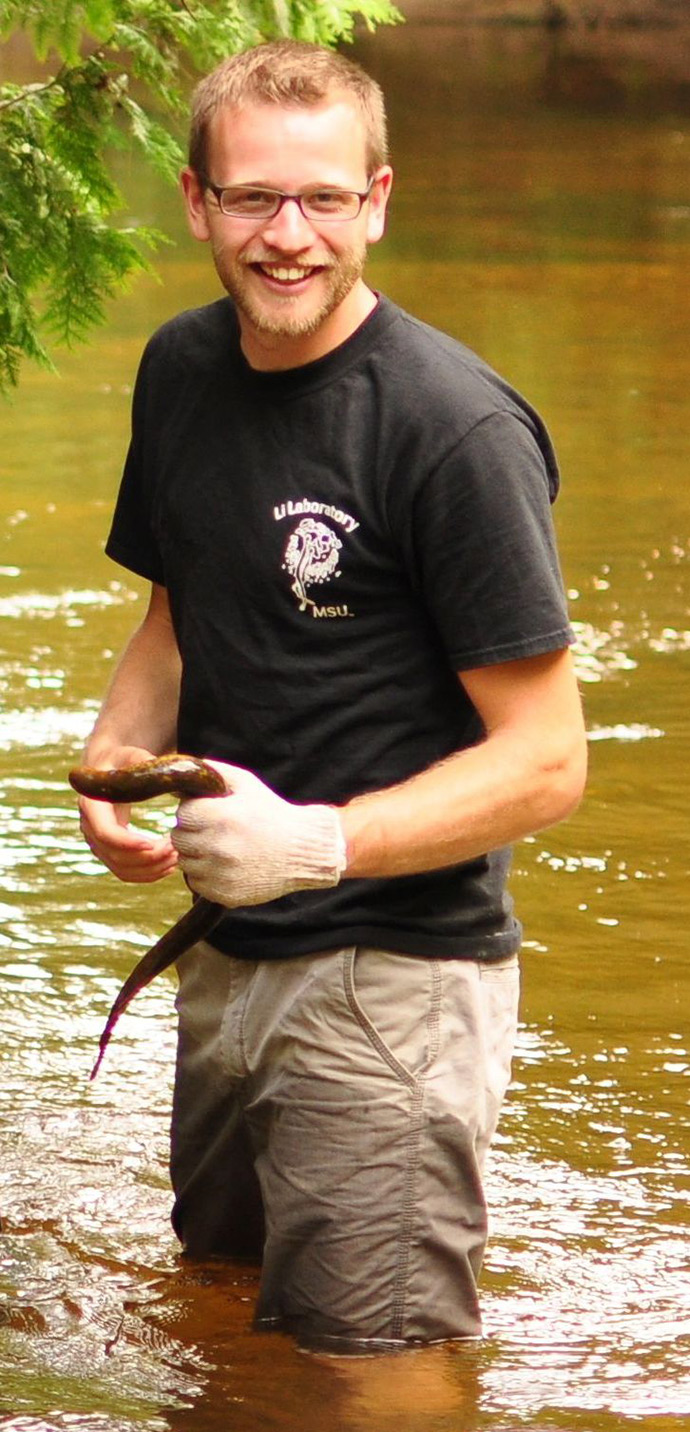
My research primarily focuses on invasive sea lamprey in the Laurentian Great Lakes—from pheromones and physiology to the human dimension and history of the invasion and response. I recently published a book titled Great Lakes Sea Lamprey: The 70 Year War on a Biological Invader that tells the sea lamprey story through the lens of those who lived it. I’m also involved in cisco and whitefish restoration in the Great Lakes.
Describe your creative pursuit.
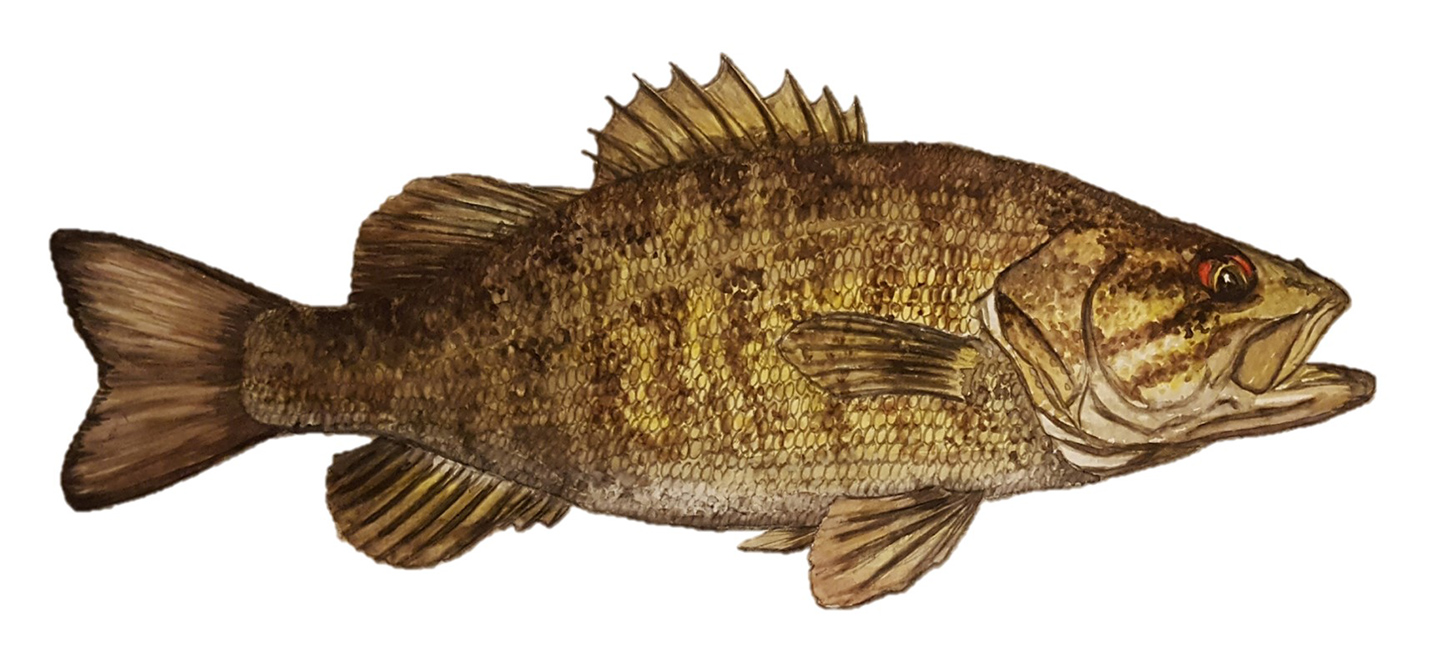
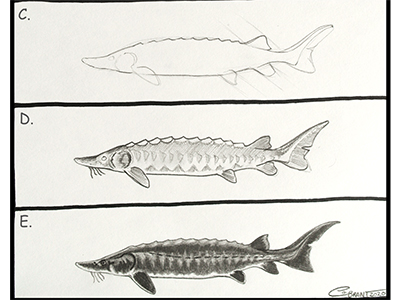
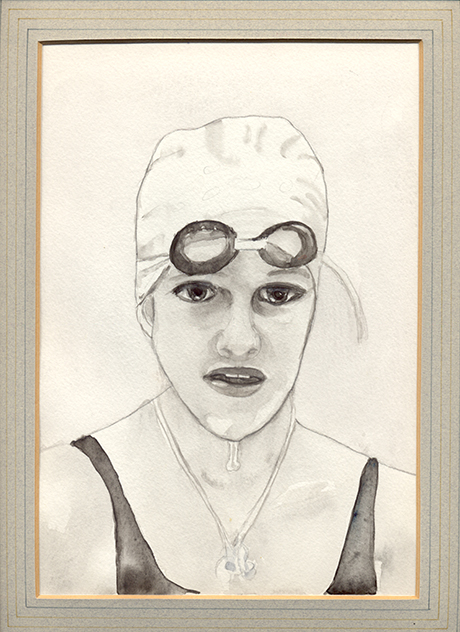
As a kid, I remember pretending to discover new species around the yard, sketching and “describing” each new creature in my trusty field journal. These days I work with graphite, ink, and watercolors. I mainly illustrate freshwater fishes, along with the occasional portrait or landscape. A few years ago, I began sharing both science and art on social media, and it’s since become a big part of my professional and personal life. After finishing up graduate school, the close friends I had made during my time at Michigan State University moved to different parts of the world in pursuit of new scientific adventures. This left me feeling isolated. Finding a group of like-minded artists became important to me, but social media was not where I expected to find it. Yet I discovered a highly engaged community of scientist artists on Twitter when I came across the hashtag #SundayFishSketch. Every Sunday, a group of wonderful fish nerds from around the world who like to draw fish share their work on Twitter using this hashtag. It was started by artist and scientist Rene Martin, @Lampichthys, a Ph.D. candidate at the University of Kansas studying the evolution of deep-sea fishes. The #SundayFishSketch group is inclusive, global, supportive, and a regular reminder for me to stay involved and keep practicing my scientific art.
How does this pursuit influence your science?
Art influences all aspects of my science and vice versa, especially as it relates to my communication and engagement efforts. Fishes are fascinating organisms that people don’t get to see that often in detail: mysterious, unseen, and therefore easily overlooked. Bringing that detail to life in an illustration is a special thing that can hook folks to the science beyond the sketch. Art allows me to tell a visual story about my research—something we can rarely do in an academic journal.
Does it make you a better scientist, and if so, how?
I’m certain it makes me a happier scientist. I work on complex and mostly negative environmental issues, and it can get overwhelming. When I focus on biological illustrations and all the details that make a certain species unique, it helps me settle my mind and process my emotions from the day, as well as understand and acknowledge the stress that can come along with being in academia. I’ve often thought of new research questions while illustrating, and regularly think of new things to illustrate while conducting research. I think both scientists and artists have a lot to gain by incorporating the other into their work. Both require a deep level of curiosity, experimentation, patience, and a high tolerance for failure. My illustrations connect me with my own creativity, allow me to communicate detailed science in a fun way, and channel my enthusiasm for fishes—their interesting shapes, diverse colors, fascinating habits, and connections with humans. Art helps me to be the best scientist I can be.