2020 is a significant year for parks and protected areas across large lake complexes. Canada is signatory to the landmark 1992 U.N. Convention on Biological Diversity and must protect 17% of terrestrial and inland water areas under Aichi Target 11 (2010) and Canada Target 1 (2015). I am undertaking a comprehensive global-to-local freshwater biodiversity review. The Trent University Canadian Studies Ph.D. program will enable me to make vital contributions as we move forward.
Describe your creative pursuit.
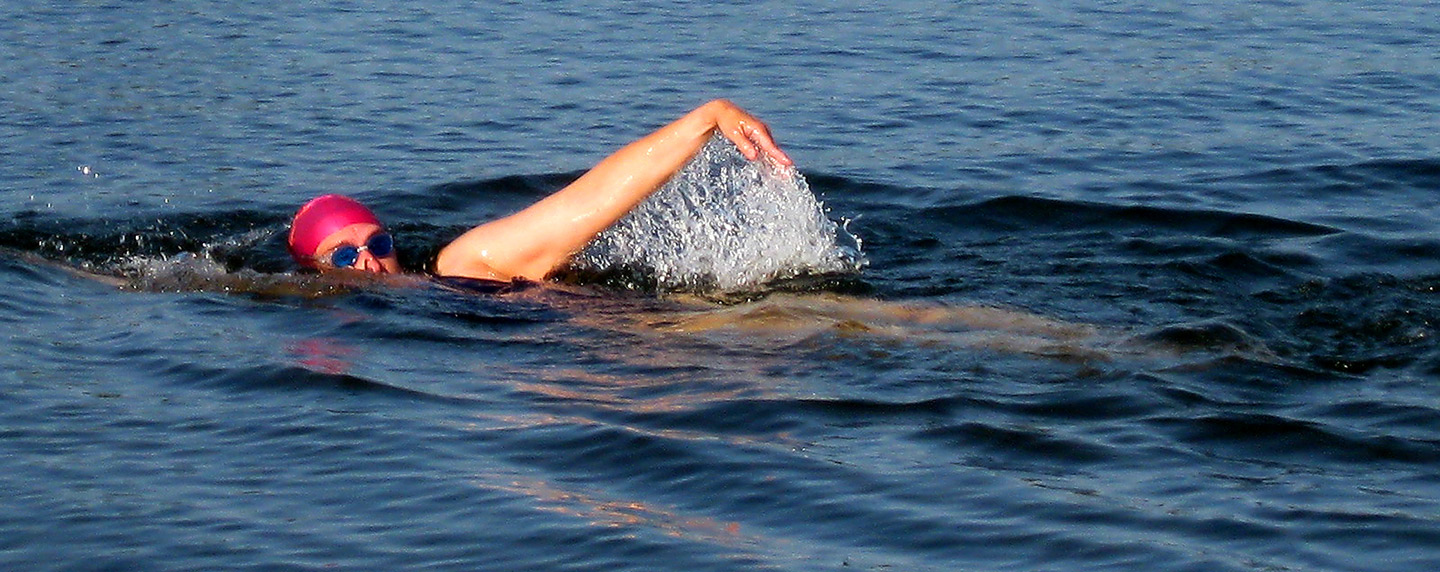
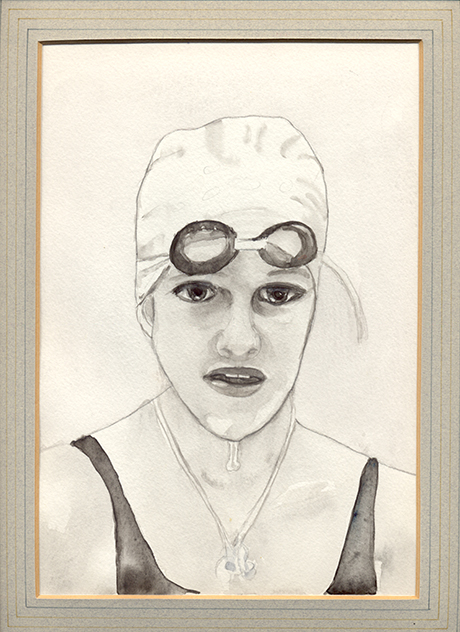
Great Lakes open water swimming is my personal challenge. I will swim anywhere so long as conditions are safe. The lakes provide an ever-changing panorama of color, light, temperature, sensation, and sound. Polished rocks roll beneath as the swimmer is raised by the crests and lowered in the trough of progressive waves. Flex, reach, rotate, roll, breathe, and again. Credit youthful training for older ability. The goal is to swim long term for health, well-being, and the good of the lakes. Come on in folks, the water’s fine!
How does this pursuit influence your science?
The beaches I recreate on are subject to the Canada–U.S. Great Lakes Water Quality Agreement. Together, oversight institutions, federal, provincial, state, indigenous, and local jurisdictions, scientists, academics, nongovernmental organizations, and citizens all share responsibility for managing nutrients, pollution, and algae, assessing drivers and baselines, setting priorities, providing leadership, collaborating, and demonstrating flexibility. Knowing who and what keeps our lakes clean helps me swim nearshore waters with confidence.
Back on dry land, I work to advance large lake science and policy through scholarship, public policy research, strategic planning, management support, and communications. I contribute to Canada’s climate, water, and fishery initiatives and evaluate international, national, and provincial environmental agreements. I travel widely across northern Ontario year-round and observe first-hand the daily exigencies facing remote and Indigenous communities.
Does it make you a better scientist, and if so, how?
Open water swimming is the missing piece of my Great Lakes–St. Lawrence River intellectual inquiry. It is more profound and immediate than looking out from the shoreline, a boat, or an airplane (or at reports, spreadsheets, and websites). The principal aptitude for swimming in the wild is a ‘feel for the water’—intent focus and total commitment to the opportunity that time and place present. This is the art of surrender rather than the science of stroke mechanics.
I resolve to navigate this realm with competence toward a deeper appreciation of the waters of our Great Lakes and mighty rivers and, in so doing, develop robust and usable guidance for governments, communities, and citizens—across generations and over horizons.