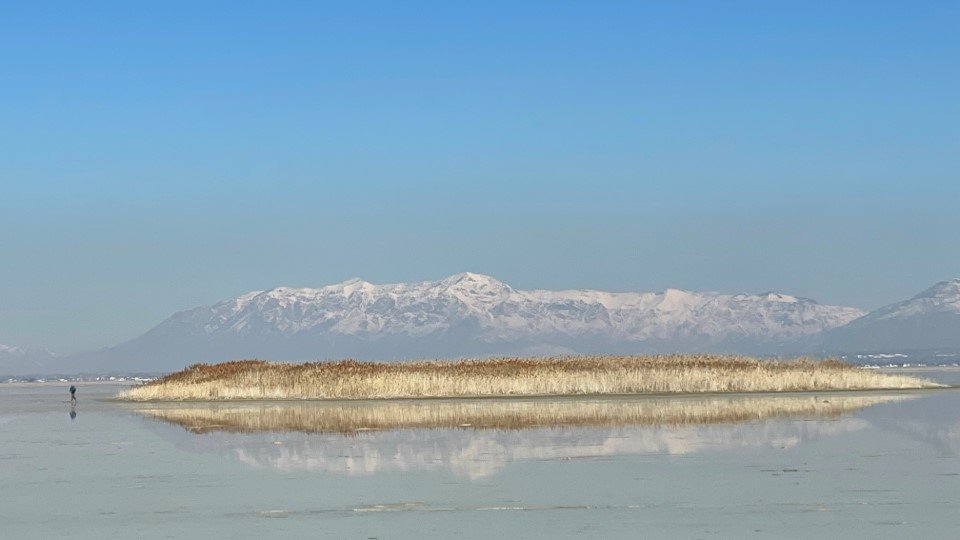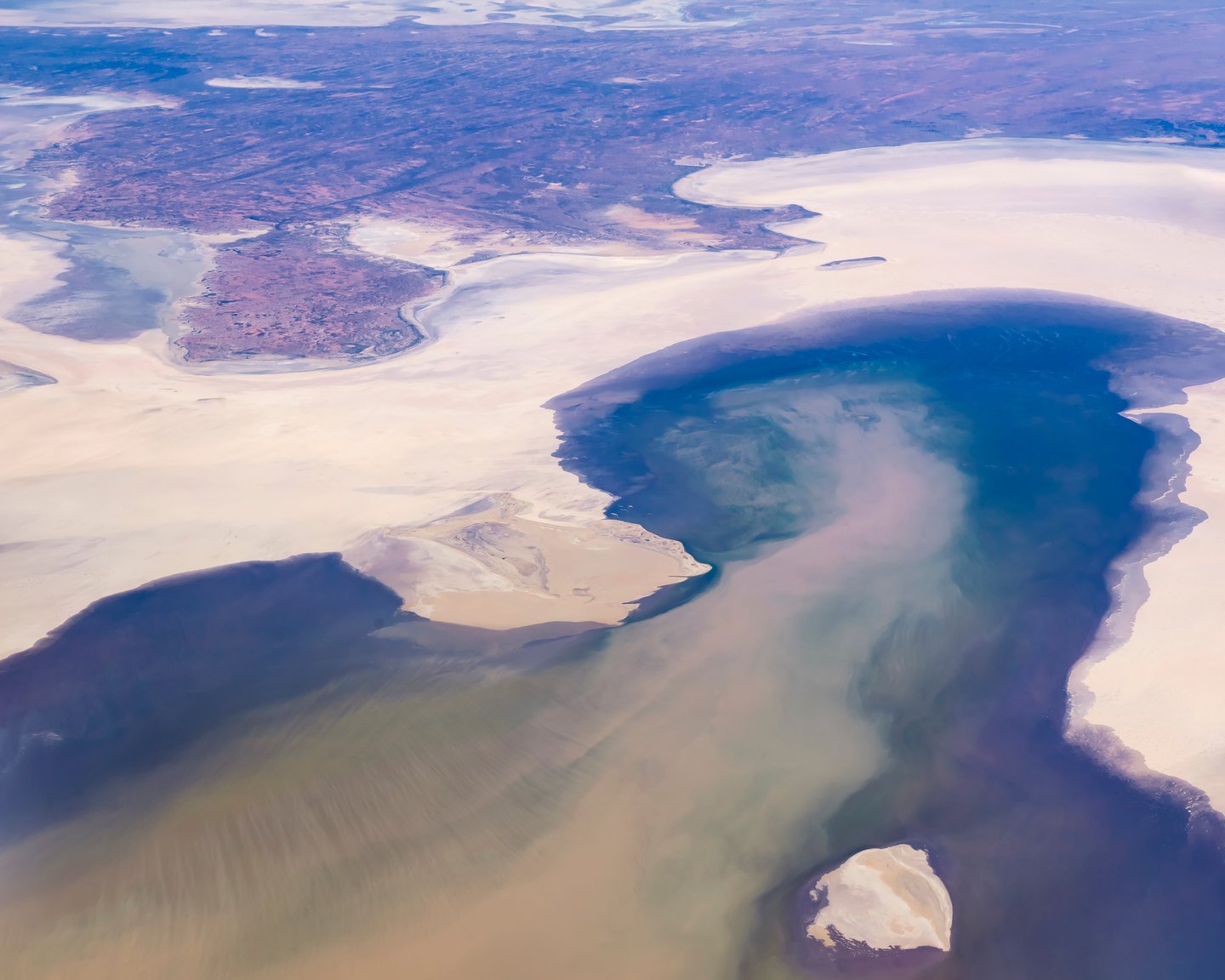
Kati Thanda–Lake Eyre (KTLE), Australia’s largest ephemeral lake, lies in the arid heart of South Australia. Usually dry, its vast whitish evaporitic surface contrasts with the surrounding orange-red dunes and the dry riverbeds converging toward this terminal basin—the continent’s lowest point. Water occasionally collects in the KTLE after heavy rainfall in its immense drainage basin of 1.14 million square kilometers. Quaternary paleoshorelines attest to past perennial lake episodes, shaped by waves and currents.
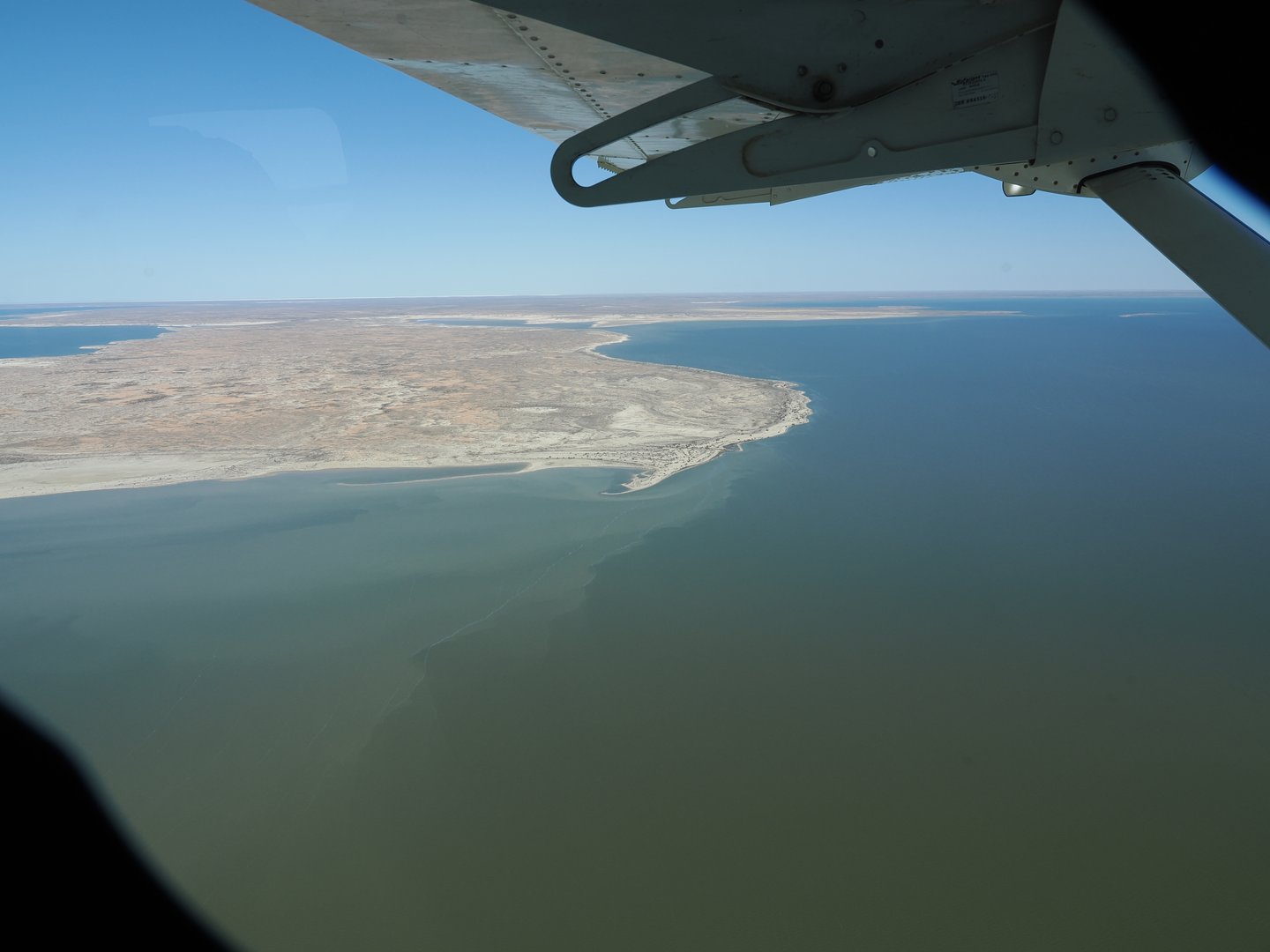
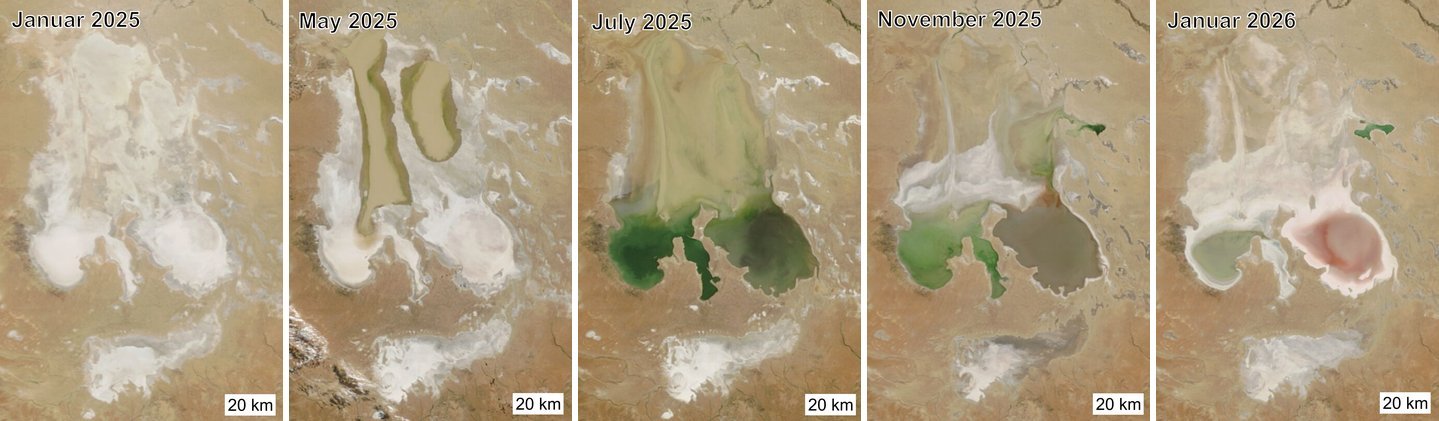
According to historical records, the lake last completely filled in 1974, an event that has occurred only four times in the past 160 years. Last year, record-breaking rainfall triggered the supposedly largest riverflood in about 50 years, also drawing widespread attention to the anticipated lake filling. In July 2025, our team visited KTLE to document this rare event, focusing on sediment transport and mapping ancient coastlines using observations from a small airplane. These aerial surveys, combined with ground observations, allow us to reconstruct water levels and climatic conditions during previous floods, providing critical data for understanding dryland lake dynamics.
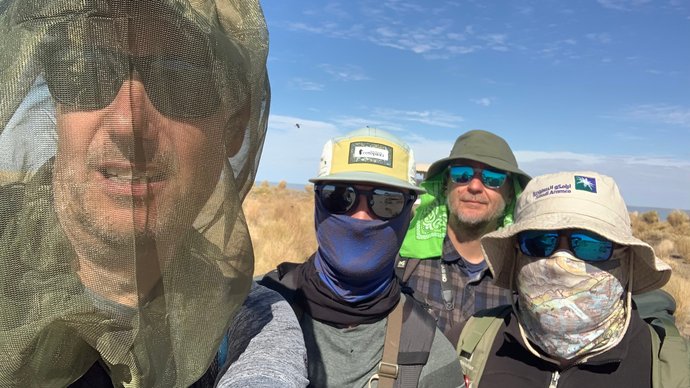
With their high revisit frequency, modern satellites offer unprecedented detail on hydrodynamics, sediment and algal transport, and evaporation—a capability that is indispensable for studying unmonitored lakes like KTLE. Such data are vital for our project, as we use them to validate Delft3D, an open-source, state-of-the-art hydrodynamics model that simulates water flow and sediment transport driven by wind and waves. While many lakes have abundant data to validate models, KTLE is a unique challenge due to its highly ephemeral nature and scarcity of hydrological data. Currently we are adapting the model for KTLE with limited data building on our experiences of modelling other data-sparce lakes such as Lake Turkana in Kenya and Ethiopia (see Zăinescu et al., 2022) and Lake Hulun in Inner Mongolia (see Xue et al., 2025).
By linking Delft3D with climate models, we aim to deepen our understanding of how climate impacts lakes, potentially even predicting tipping points in these vulnerable systems. This work at KTLE serves as a global case study, offering insights into the dynamics of arid-zone lakes and their future under changing climatic conditions.
For further reading, see our publications on Lake Eyre (May et al., 2022) and wind-driven waterbodies as a new category of lake (Nutz et al., 2018).