Describe your work.
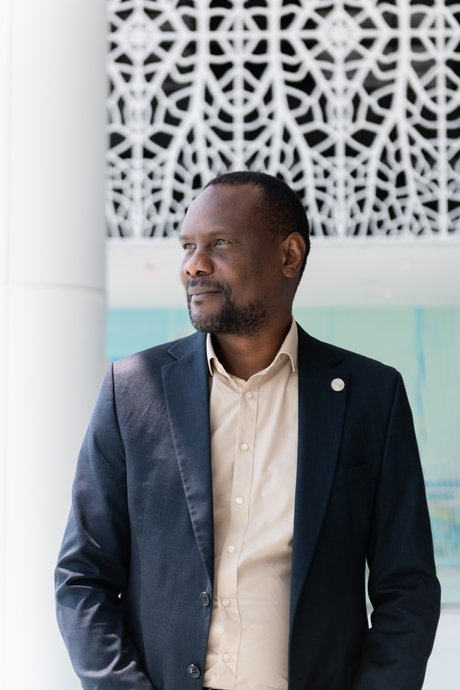
I have been a lecturer in hydrobiology and biostatistics at the Department of Zoology, Entomology, and Fisheries Sciences at Makerere University for the past 10 years. Additionally, I have administrative experience in academic collaboration, serving as the academic coordinator for the 30-year collaboration between Makerere University and the University of Bergen, Norway, for the last five years. I am a principal investigator since 2018 on two multinational projects involving up to 11 partners, focusing on building capacity in water and society issues. Over the past 25 years, I have collaborated with local and international teams to address the challenges of cyanobacteria and cyanotoxins on Lake Victoria, often providing technical support for national surface water abstraction projects. My work has also involved close collaboration with social and environmental scientists to improve access to safe water, particularly for vulnerable informal communities such as refugees and those living in urban slums. Currently, my research is concentrated on the environmental challenges posed by aquaculture, cyanobacteria, and plastic pollution, and developing methods to quantify the problems.
What inspired you to enter this work?
My inspiration to enter this field stems from regular field visits to Lake Victoria, particularly Murchison Bay, which is significantly affected by human activities. These visits highlighted how the selfish actions of a few can profoundly impact the health of an ecosystem and the livelihoods of millions. This experience has shaped my perspective on water-related issues, particularly water and society. Consequently, I have concentrated on addressing water pollution concerns, such as cyanobacteria, cyanotoxins, and plastic pollution. The societies surrounding these lakes, especially the African Great Lakes, are often informal and vulnerable. They deserve a voice in decision-making processes regarding the ecosystem services these lakes provide, and I view them as the frontline custodians of these ecosystems.
What do scientists studying the world’s large lakes most need to learn from one another, and why does that global perspective matter?
As the chair of the International Committee, I have the privilege of interacting with the advancements in large lake science, especially outside of North America. One of the most crucial lessons scientists working on these mostly shared water bodies can learn from one another is the importance of adopting a transboundary perspective. Many of the African Great Lakes and all but one of the Laurentian Great Lakes are shared waters, and the life forms and communities that depend on them do not adhere to internationally established boundaries. Therefore, it is essential for scientists to move beyond a national lens and engage in collaborative research, knowledge sharing, and joint actions. This approach is vital for developing regionally recognized policies that effectively manage these shared resources. A transboundary perspective matters now more than ever because the challenges facing large lakes, such as climate change, pollution, and overfishing, are not confined to national borders. A good step in this direction is the work of the African Center for Aquatic Research and Education in establishing scientific advisory groups at the lake level for African Great Lakes.
What is something about yourself that you’d like to share with other IAGLR members?
I am an avid football/soccer fan, with my preferred position being goal keeping, and I am looking forward to the next soccer game at the IAGLR conference.