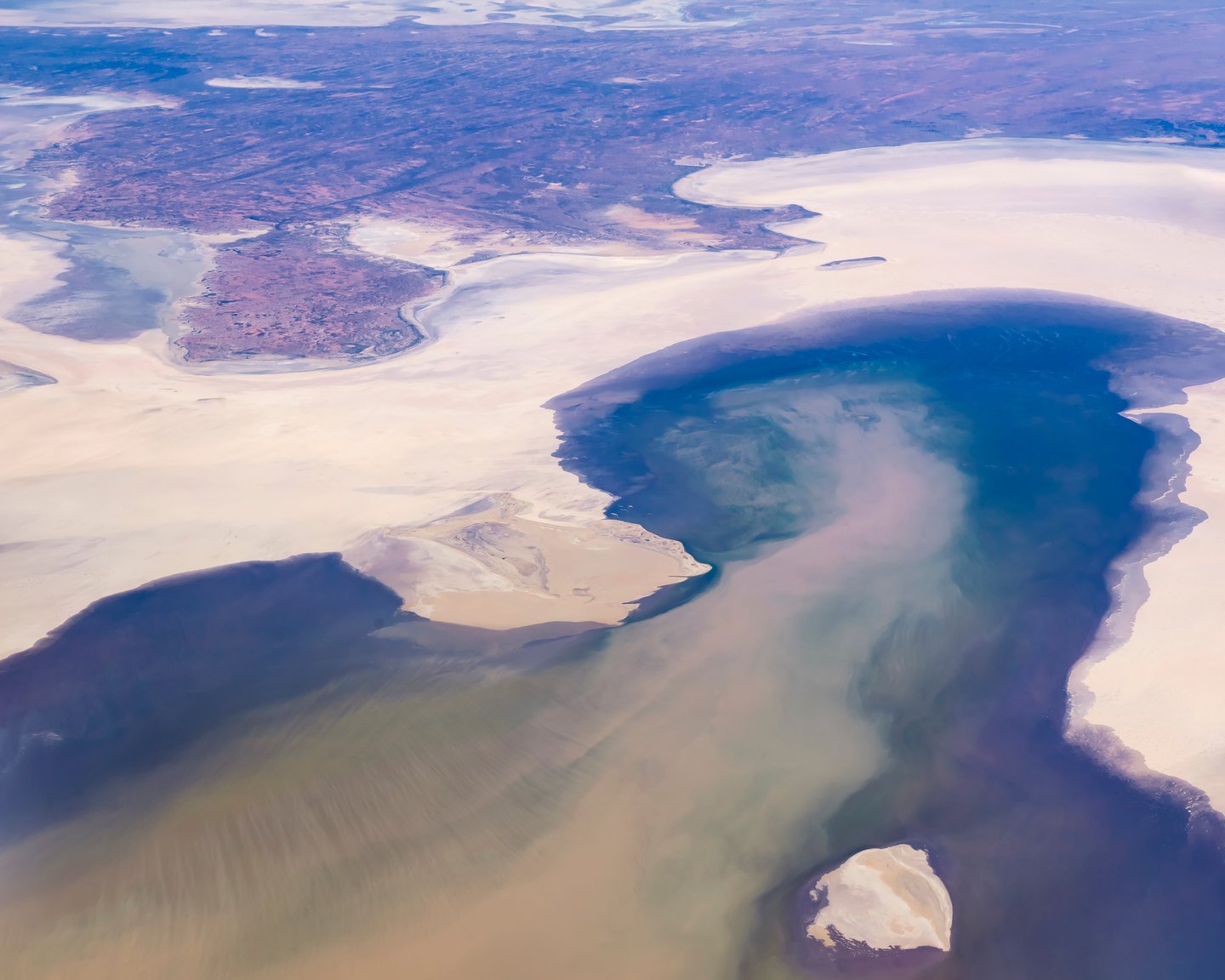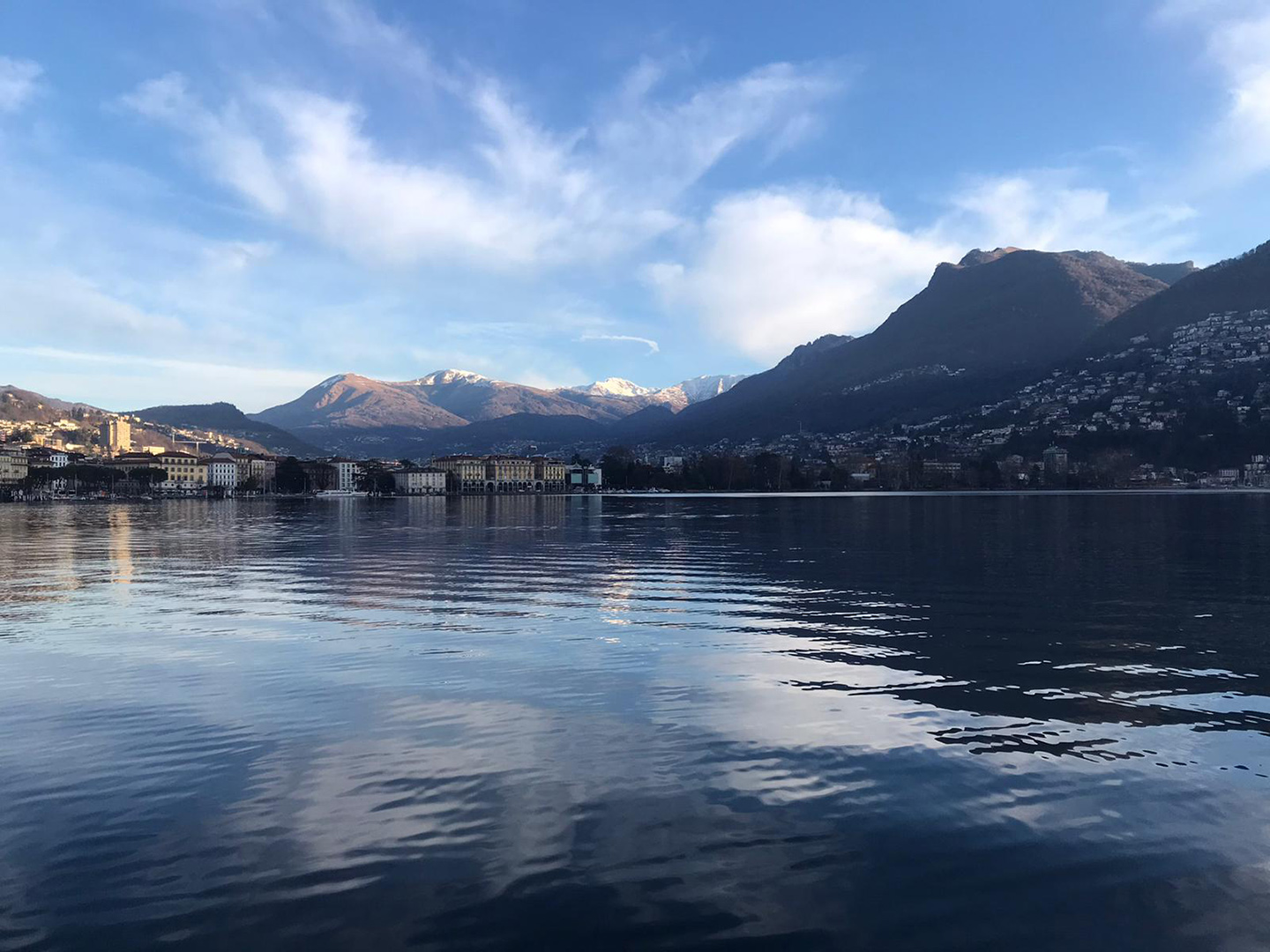
As temperatures rise and warm seasons lengthen, Great Salt Lake in Utah is a sentinel of climate change. Direct evaporation from the lake is increasing while runoff to the lake declines due to increased water demand in the surrounding watershed. The lake’s extreme sensitivity to climate arises from its vast surface area—about 30 billion square feet—relative to a maximum depth of about 30 feet, a ratio of a billion to one. This makes Great Salt Lake appear as a mere sheen on the desert tarmac, sustained partly by groundwater but mainly by precipitation and stream inflow.
Until recently, groundwater inflow estimations relied on subtracting estimated evaporation from measured inflow. A recent study installed piezometers directly on the exposed playa (a flat, arid basin that periodically fills with water and then dries, leaving a salty crust) to examine groundwater inflow (Adomako-Mensah et al., 2025). That investigation discovered pressurized ancient freshwater under the eastern playa, ranging from about 30 feet down to potentially several thousand feet. Environmental tracers indicate the water is recharged at mountain elevations, presumably on the Wasatch Mountains about 30 miles east of the lake. Dating by 14C suggests millennia-scale age since recharge (Adomako-Mensah et al., 2025).
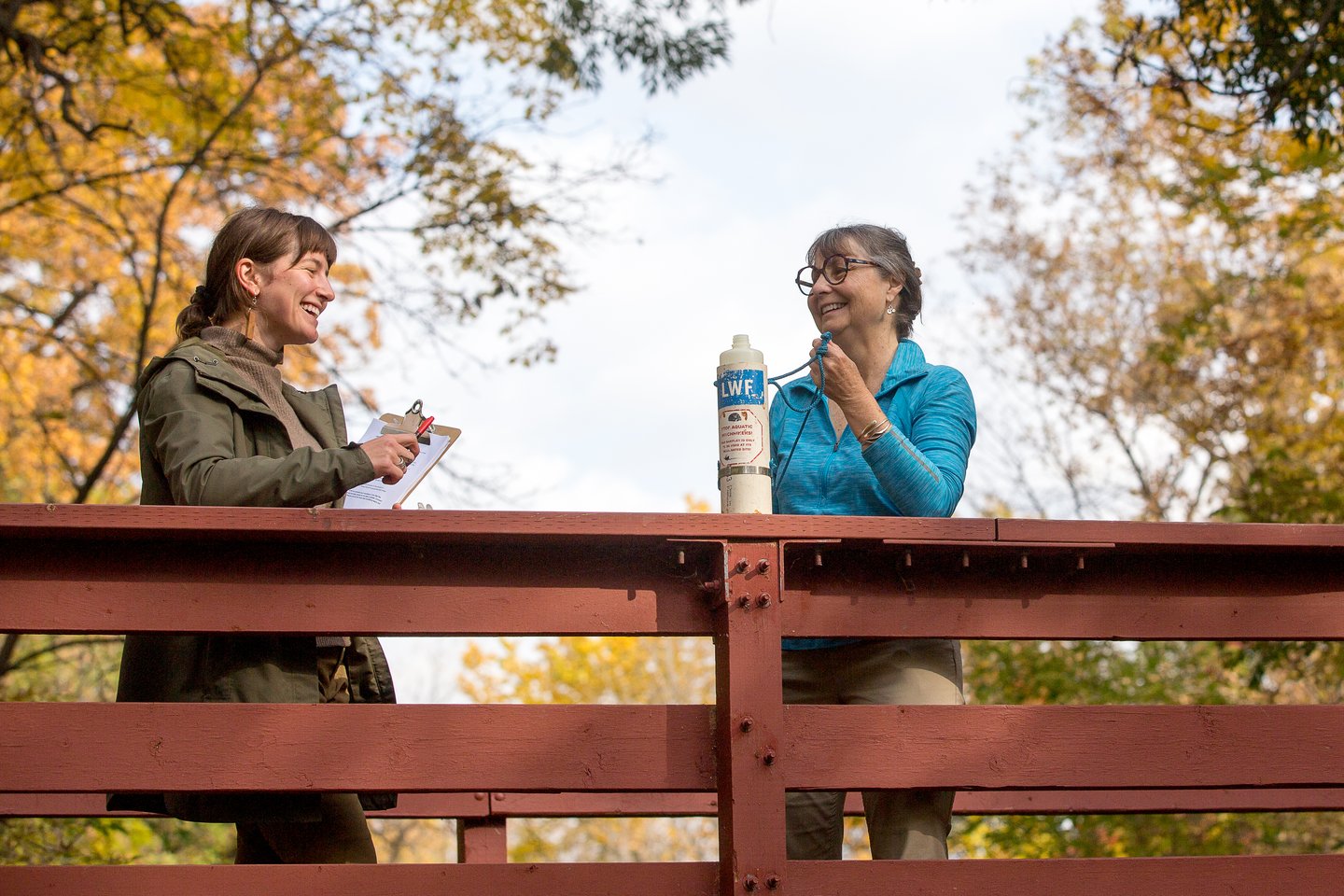
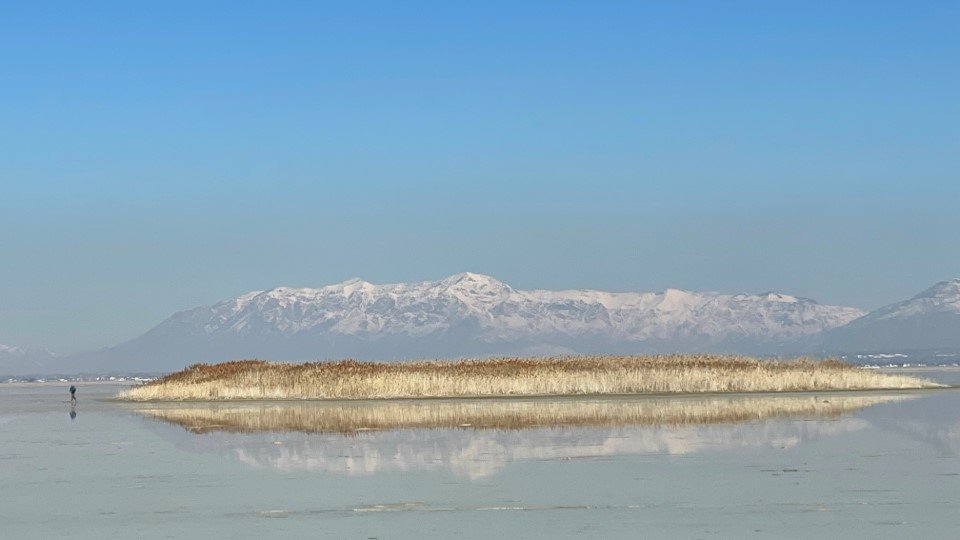
While scouting sites to install the piezometers, we’d observed on Google Earth dozens of round spots exposed on the drying playa. To our knowledge, these features had never been described. They’re difficult to access, often many miles from reliable roads and accessible only when the playa has not been turned to sticky mud by rain or snowmelt and when the sun is not so intense as to cause heat stroke. Our curiosity led us to use snow bikes to ride out to some of these locations (pictured above), where we discovered islands of Phragmites, the largest being roughly 100 to 200 feet in diameter (Adomako-Mensah et al., 2025).
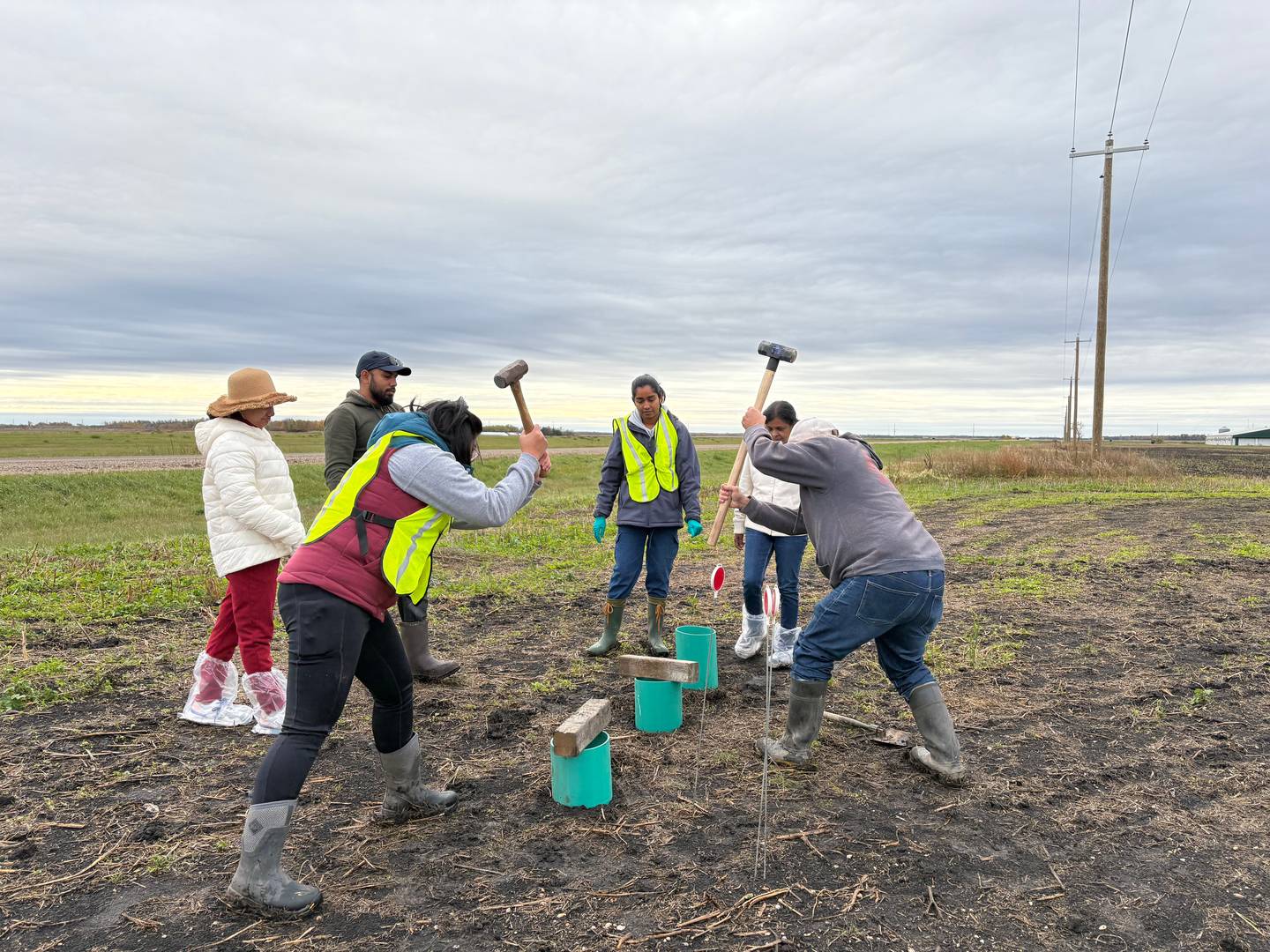
It’s surprising what can be accomplished with hand tools and mountain bikes. Suspecting a hydrologic origin, possibly springs, we brought an electric hedge trimmer and hand augers and installed 11-foot-deep piezometers into the center, edge, and midway point. This was hard work on top of that done just to reach these features, so we were relieved to find fresh groundwater at the center and hypersaline water at the edges, showing that these circular “mystery islands” or “Phragmites oases” are windows through the salt lens into this pressurized freshwater system beneath the playa.
The presence of pressurized freshwater beneath the eastern playa and the pipe-like nature of the round spots has been further substantiated by on-ground electrical resistivity surveys (Jacketta et al., in review) and airborne geophysical surveys (Zhdanov et al., in press). The latter hold promise for determining whether ancient freshwater exists not only under the periphery of the lake, but under Great Salt Lake itself.
Being able to place a small well anywhere on the playa and have water flow to the surface without mechanization could be handy for dousing localized dust hotspots on the exposed playa, as we’ve proposed to examine. However, the hype that this ancient (possibly Ice Age) resource could refill Great Salt Lake and replace watershed diversions is concerning, since understanding the quantities of groundwater that can be extracted without harming other benefits needs additional study. While the pressurized freshwater below the eastern playa might be used to extinguish dust much like a household fire extinguisher, it doesn’t justify lapsing on home insurance or defunding the fire department.
We need to continue efforts to bring more water into Great Salt Lake, keeping foremost in mind that the ultimate driver of lake shrinkage is climate. Overcoming the current malaise that views climate change as hopeless is essential. As Bill McKibben argues in his recent book Here Comes the Sun: A Last Chance for the Climate and a Fresh Chance for Civilization, we now possess the technical capacity to meet this challenge, and meaningful benefits can be realized within the next decade, hopefully before sentinels such as Great Salt Lake are lost.