Phosphorus is a nutrient essential for crop production, but when excess phosphorus leaves the fields and reaches water bodies like Lake Winnipeg, it contributes to algal blooms and poor water quality. The main goal of our research is to reduce phosphorus loss from agricultural lands in the Red River Basin to protect Lake Winnipeg and other water bodies. This research is funded by the Canada Water Agency with partner contributions from the University of Winnipeg and the Lake Winnipeg Foundation and will be carried out in collaboration with Agriculture and Agri-Food Canada, University of Manitoba, the Lake Winnipeg Foundation, Environment and Climate Change Manitoba, and Seine Rat Roseau Watershed District.
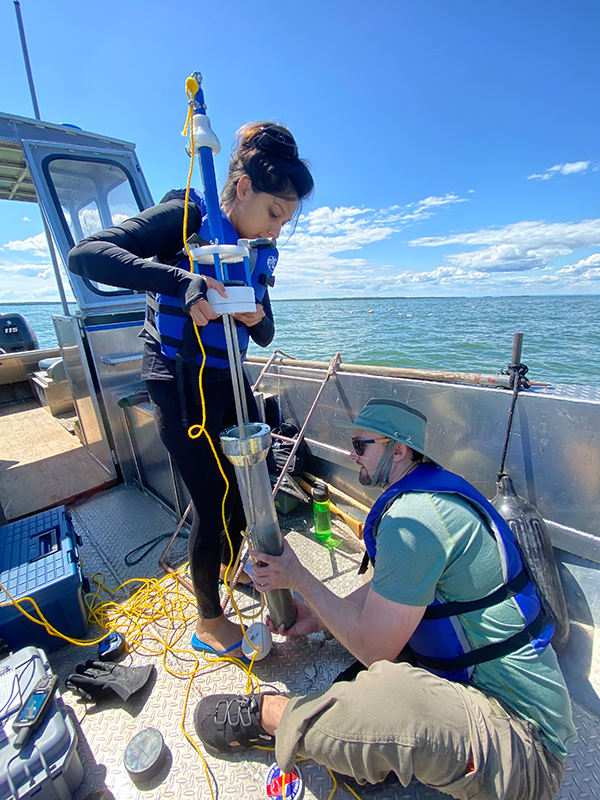
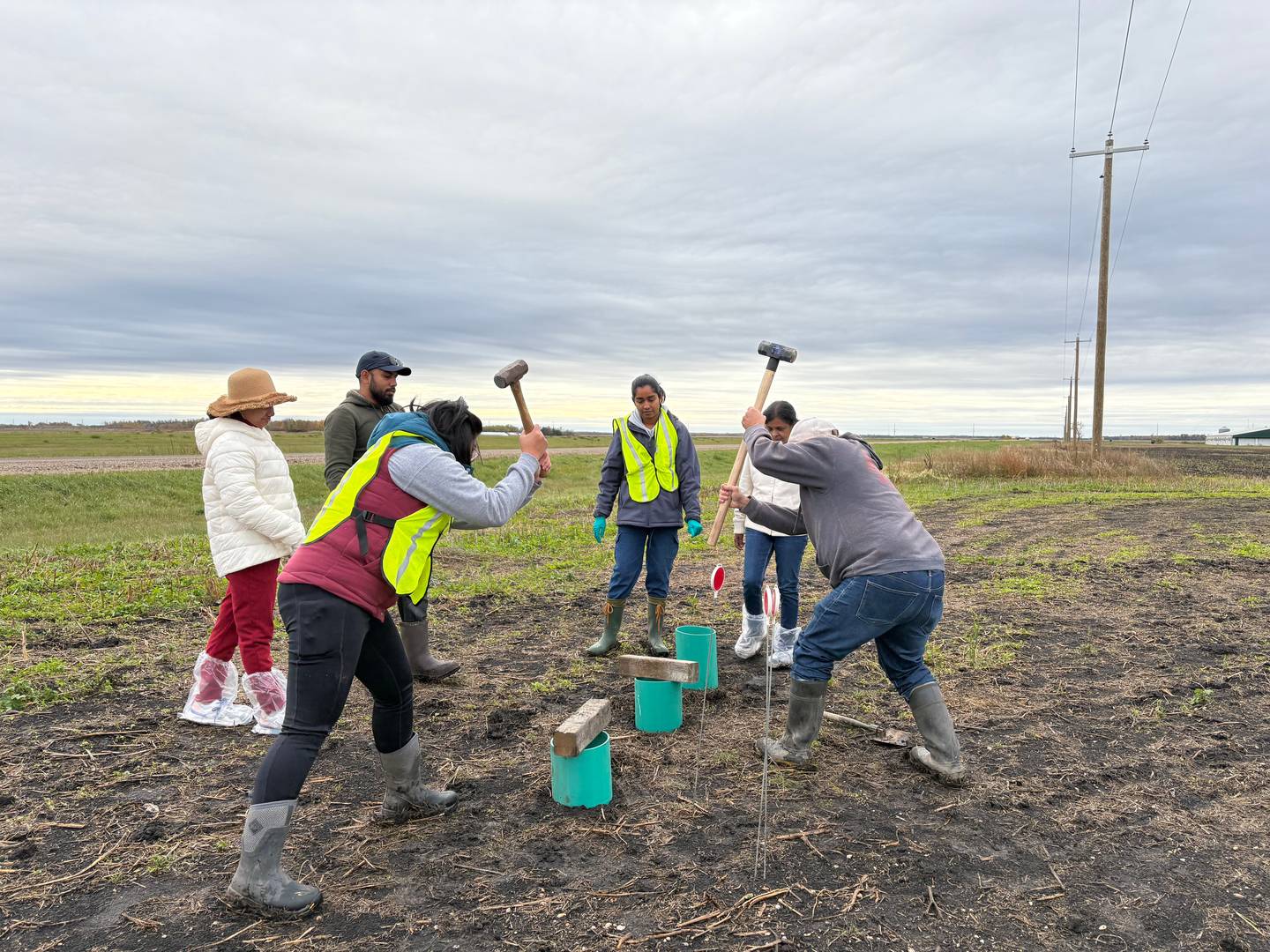
In the Canadian Prairies, including the Red River Basin, most of the phosphorus runoff doesn’t happen during rainfall, but during snowmelt. That’s why our work specifically targets phosphorus loss in snowmelt runoff. Our previous research has shown that phosphorus loss from agricultural soils to snowmelt is highly variable across the region. We now aim to assess and map regions with excessive phosphorus loss via snowmelt in Manitoba’s Red River Basin and facilitate more targeted management approaches to retain phosphorus in soil and reduce losses. For this research, we aim to collect 300–400 soil samples from fields with varying cropping and management histories over three years, focusing more on regions identified as phosphorus hotspots by the Lake Winnipeg Community-Based Monitoring Network. To date, we have contacted many farmers in the region who have shown strong support for the project by allowing us to take soil samples from their fields and letting us install snowmelt collection devices.
If we can reduce phosphorus loss from agricultural lands during snowmelt in the Red River Basin, we will keep more of the phosphorus on the land, where it is needed, and less amounts in the lakes, where it is not. That would be a win-win situation.