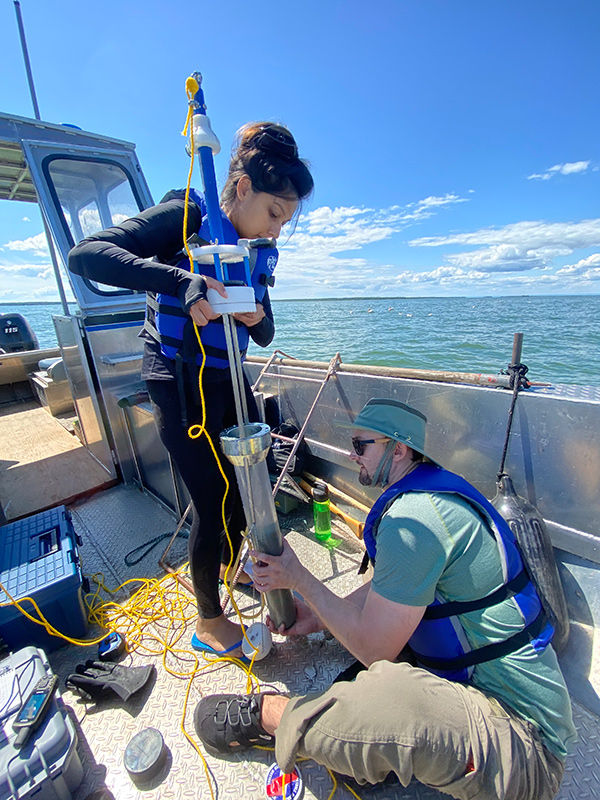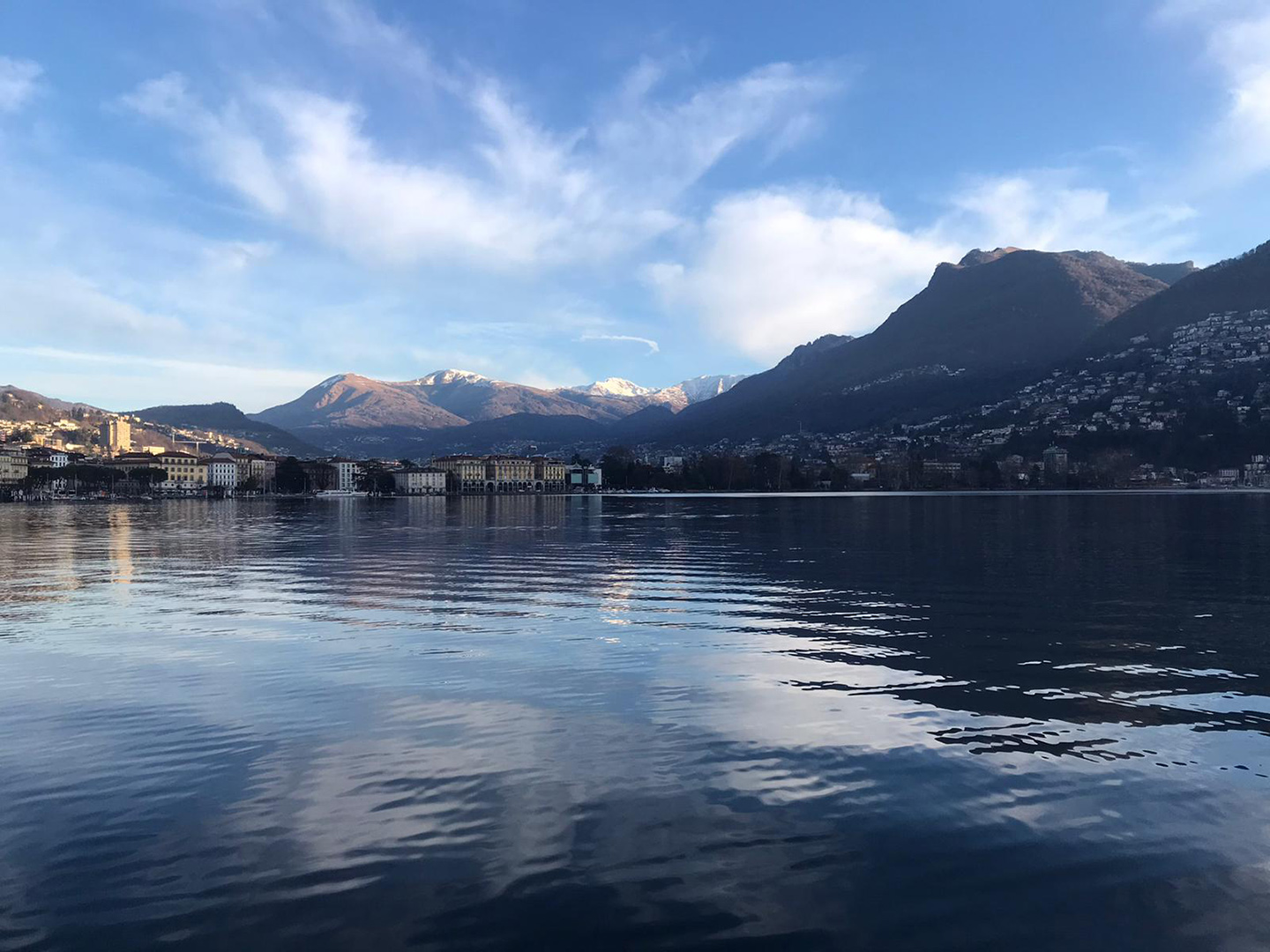
When talking about microplastic pollution in lakes, we are used to thinking about tiny particles floating on the water’s surface. This idea has guided most research to date, from the vast North American Great Lakes to smaller European subalpine lakes. Consequently, we know surprisingly little about how microplastics behave in the deeper layers of lakes worldwide, leaving many relevant questions unanswered. What happens once these particles leave the surface? Do they sink or accumulate at certain depths? And which parts of the lake’s ecosystem are most exposed?
To address these gaps, we looked beneath the surface to the deep waters of Lake Lugano—a lake on the Swiss-Italian border—to reveal the hidden pathways of microplastics through the water column. What we found was remarkable, but not unexpected: microplastics were present throughout the lake, all the way down to 80 meters, with their vertical distribution shaped by seasonal changes in water density driven by thermal stratification. Pollution hotspots occurred within the upper layers of the lake in the bright, sun‑lit zone where primary producers, zooplankton, and many other freshwater organisms live. This indicates an elevated exposure risk for freshwater biota, a risk that could grow as climate change intensifies thermal stratification, trapping microplastics in these biologically active depths for longer periods. At the same time, the particle composition reflects human contributions: polypropylene and polyethylene fragments and fibers dominate, consistent with inputs from urban littering, textile-derived wastewater, and surface runoff from nearby densely populated areas.
Why does this matter? Beyond Lake Lugano, large, deep lakes are integral to urban life, providing drinking water, supporting biodiversity, and offering economic services and recreational opportunities to millions of people nearby. Microplastics threaten these ecosystems in ways we are only beginning to understand. We hope our contribution will encourage moving beyond surface-only studies, supporting better environmental monitoring, improved risk assessment, and the effective long-term protection of freshwater resources in today’s rapidly changing world.
JGLR Editor’s Choice
To learn more, see the article “Beyond the surface – Microplastic hotspots in the water column of a top plastic-polluted deep lake” in the Journal of Great Lakes Research. Authors include Federica Rotta, Camilla Capelli, Agnese Marchini, Barbara Leoni, Giusto Lo Bue, Maya Musa, Maria Pia Riccardi, and Fabio Lepori. Selected as the Editor's Choice article for the journal's February 2026 issue, the article will be available via open access for 60 days.