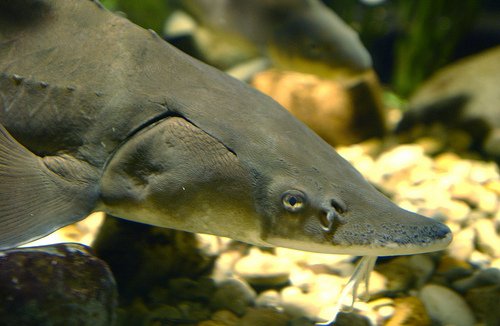
The biodiversity of the Great Lakes makes them unique on a global scale. To document the wide variety of flora and fauna native to the basin, NOAA-GLERL, U.S. EPA, and the Great Lakes Sea Grant Network have worked together to create the Great Lakes Water Life database (GLWL), an accessible, comprehensive inventory of aquatic species found throughout the region.
GLWL is designed to support researchers and environmental managers by hosting ecological information about native species. The database itself includes lists of expected species in a specific area and records of rare or unfamiliar taxa, while other parts of the GLWL site feature identification guides for native species, summaries of broad-scale biodiversity patterns, and more. This site is also available for public use to students, citizen scientists, and other Great Lakes residents who want to learn about native species in their area, providing new opportunities for outreach and education online.
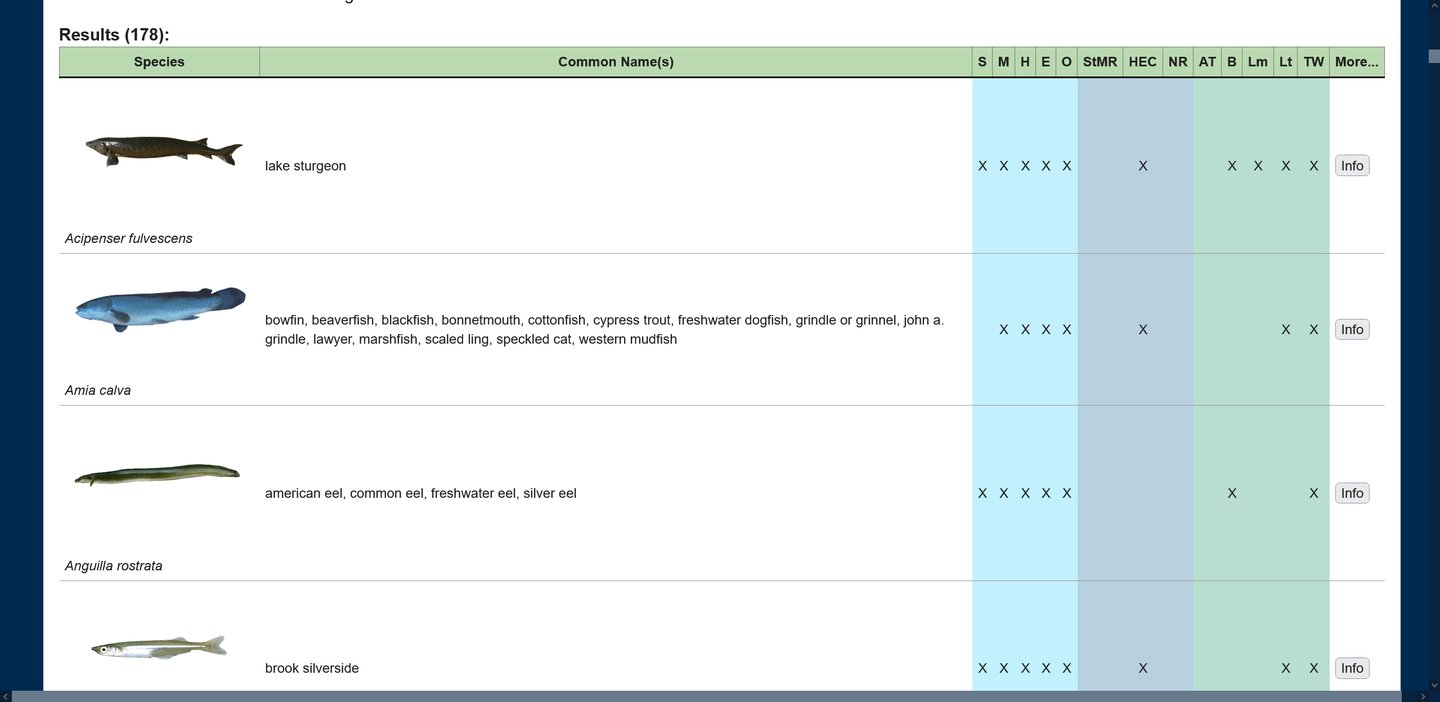
GLWL is registered with the Marine Biodiversity Observation Network as a Great Lakes-specific biodiversity atlas. The database allows users to search for species by taxa (including both scientific and common names), origin (whether a species is native throughout the region, is native to one part of the Great Lakes and introduced in others, or nonnative), domain (whether a species lives in sediment, on the shoreline, or in the water column), and broad geographic location (such as Lake Superior or Lake St. Clair). Each species’ result links to taxonomic information, a bibliography of reference and sighting information, and links into Barcode of Life DNA markers (placing eDNA into geographic context), Catalogue of Life taxonomy, and Integrated Taxonomic Information System reports for each organism. The database also includes links to other taxonomic keys and field guides to native species, information about the purpose and history of this project, and a user contribution portal where researchers can share new photos, sightings, and collection records to be added to the site.
This database expands upon a project formerly known as the “Great Lakes Waterlife Gallery” originally created in 2002 in support of Sea Grant’s Great Lakes Fisheries Leadership Institute in partnership with NOAA-GLERL and the Great Lakes Sea Grant Network. The original site was a static photo gallery with access to regionally specific taxonomic lists and keys, as well as links to regional resources for the various taxa. Additional components were added by the partners over the years in support of a variety of projects, and eventually included fish, benthic invertebrates, zooplankton and algae. With funding from the Great Lakes Restoration Initiative, staff of the EPA Office of Research and Development Mid-Continent Ecology Division (since renamed the Great Lakes Toxicology and Ecology Division) used the original gallery as one resource for the creation of a more comprehensive reference inventory of aquatic fauna (Trebitz et al 2019). The historic gallery has since been merged with data from the inventory to create a new Great Lakes Water Life database, programmed with support from the Cooperative Institute for Great Lakes Research, which offers many more interactive features in an easily accessible format. GLWL has recently received an additional $200,000 in GLRI funding to add vascular aquatic plants. Development and validation of this new component will be led by Michigan Natural Features Inventory staff.
Another NOAA-led regional database, the Great Lakes Nonindigenous Species Information System (GLANSIS), runs in parallel with GLWL to more comprehensively document the non-native aquatic species that have been introduced to the Great Lakes. Cross-linking the two systems helps GLANSIS to provide DNA information on non-native species and identify species that may be expanding their ranges, highlighting the value of the native species inventory to monitoring for and understanding the impact of aquatic invaders.
The Great Lakes Water Life partnership welcomes review and contributions from Great Lakes scientists and managers to provide the most accurate and up-to-date ecological information. In particular, the GLWL team is requesting distribution information, updated taxonomy and alerts about any potential species misidentification, and clear, high-resolution photos to aid in species identification guides; in short, we’d love to hear from you.
To learn more about the Great Lakes Water Life database or contribute information, please visit the site or contact Rochelle Sturtevant at Rochelle.Sturtevant@noaa.gov.