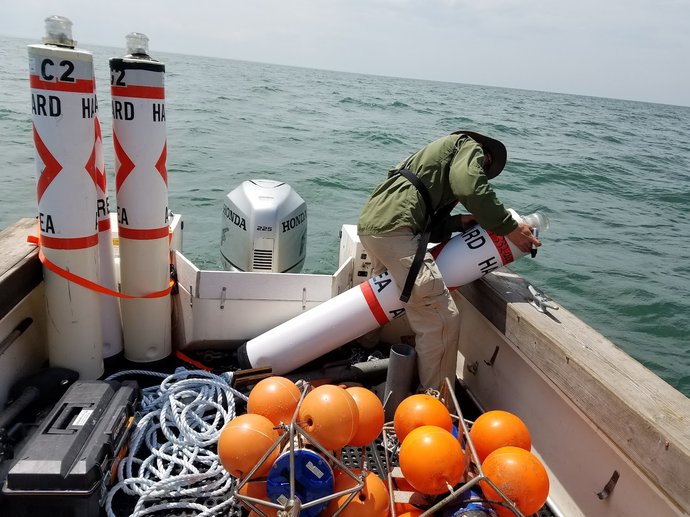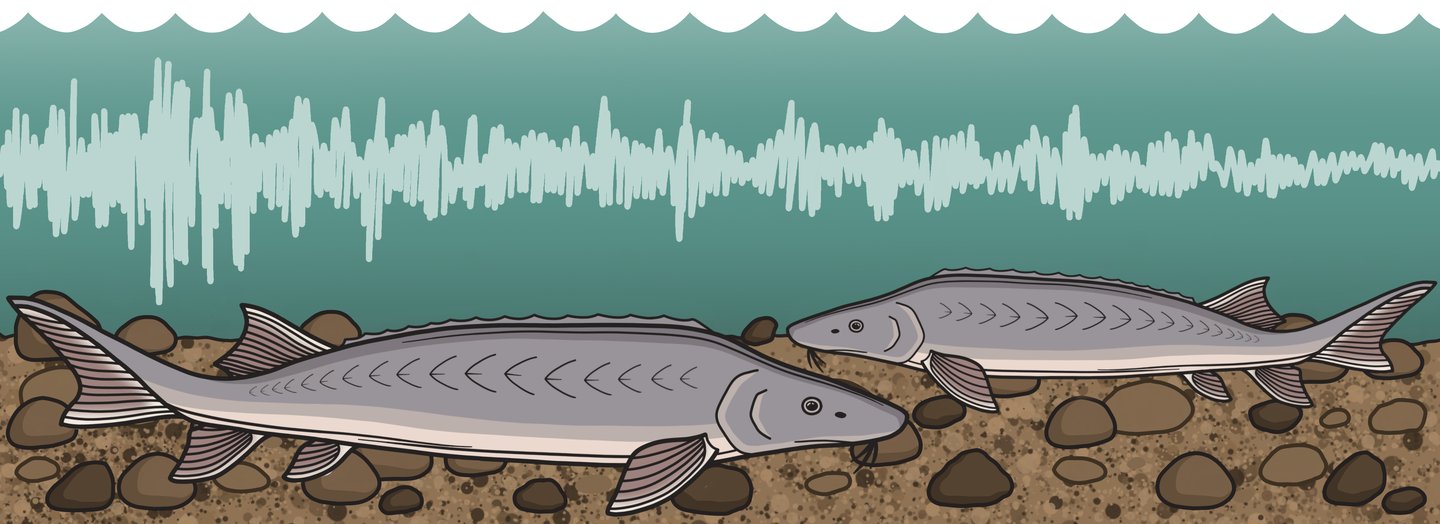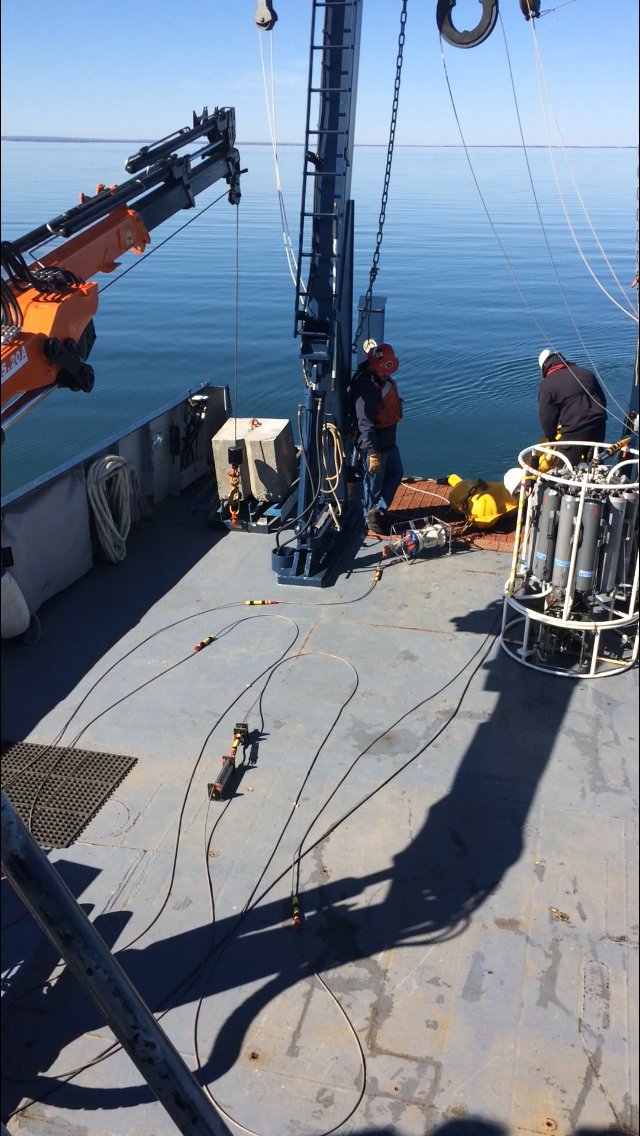
Underwater sound is used by aquatic animals to communicate, find prey, avoid predators, and navigate. Yet despite lakes and rivers being home to a diverse array of wildlife and a place for both recreational and commercial activities, little is known about the underwater soundscape of freshwater environments. To address this need, researchers at the University of Minnesota Duluth and the Large Lakes Observatory put an underwater microphone out in Lake Superior for 15 months (between November 2018 and March 2020) to explore the different sounds we can hear and compare seasonal trends.
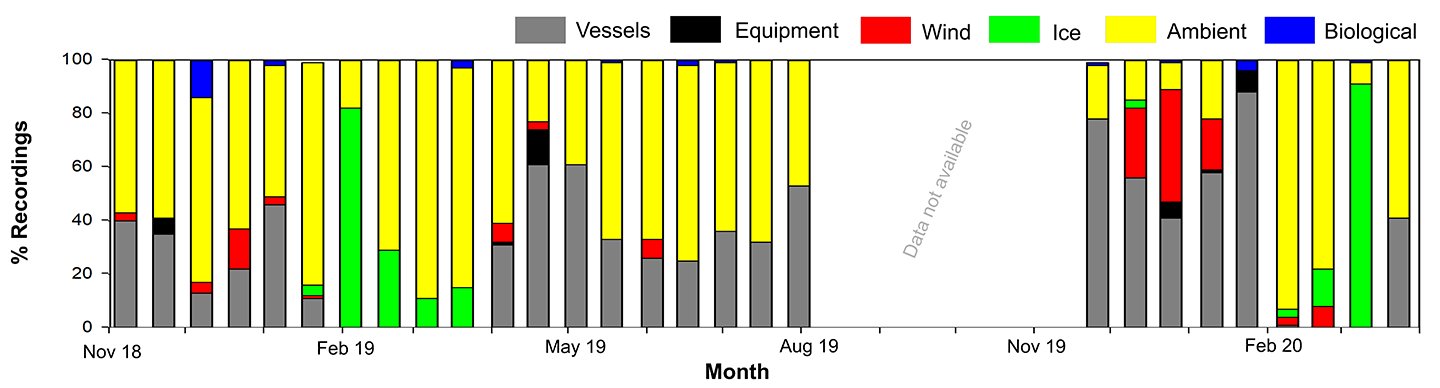
Sound levels were much lower during the winter and spring months coinciding with ice cover and the annual closure of the nearby Twin Ports of Duluth and Superior. As shown in the figure, recordings also provided an insight into the diversity of sounds that are found in the freshwater soundscape with ice cracking, snow mobiles, ice augers and fish vocalisations identified in the winter. Whereas, in summer boat traffic dominated the soundscape, masking the detection of other sounds (Putland et al. 2022).
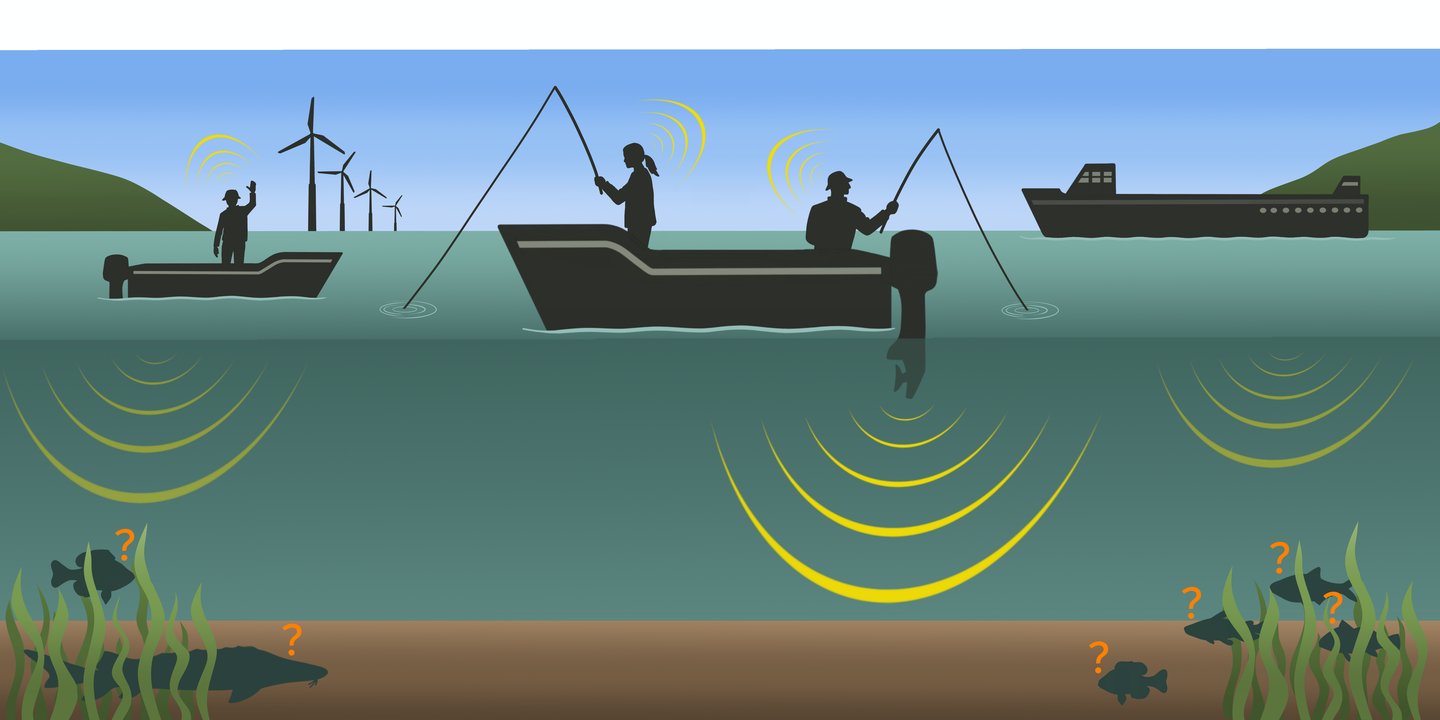
There is increasing concern about the effect of noise pollution from human activities on sound sensitive species and potential physiological and behavioural changes. Climate change is also expected to reduce ice cover and thickness potentially increasing the shipping season into the Twin Ports. Continued efforts to record baseline sound levels in freshwater environments and determining when, where and how often different animals are producing sound allows managers to prioritize acoustically sensitive times and areas and mitigate potential effects.