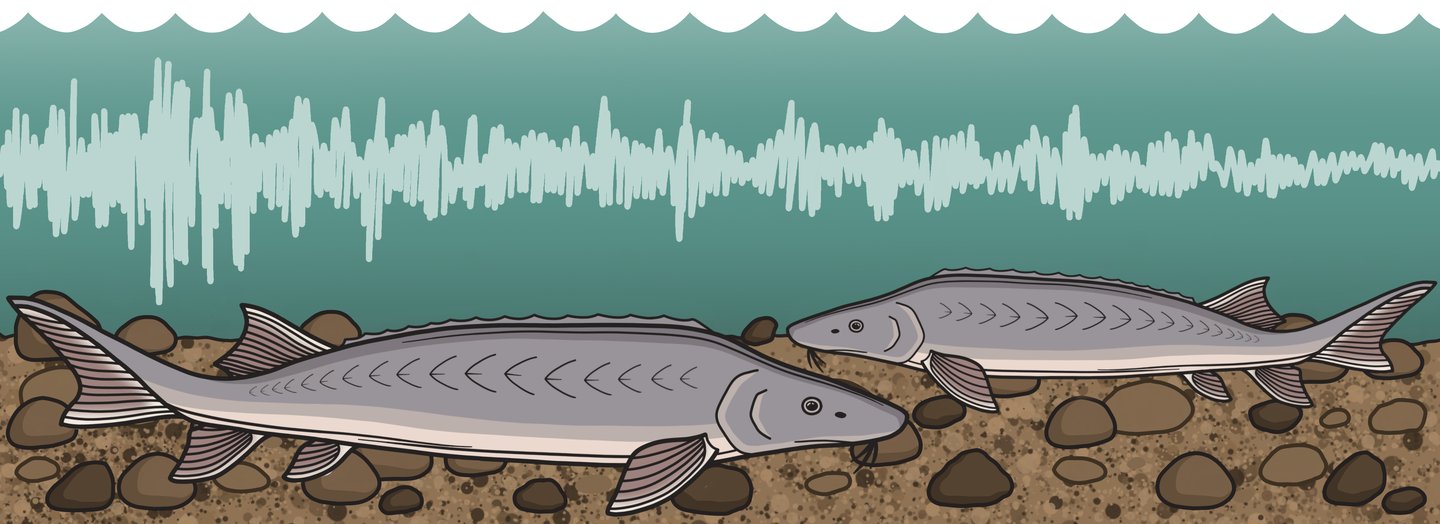
Lake sturgeon (Acipenser fulvescens) were once abundant in the Laurentian Great Lakes, but overfishing and habitat destruction led to dramatic declines in their population. Individuals of this keystone species are known for living up to 100 years, but these long life spans have kept their numbers low. Another obstacle to their recovery is their need for clean gravel substrates and fast currents for spawning beds, a habitat that is becoming harder to find. There have been encouraging efforts to improve water quality and establish new spawning beds in the Great Lakes, but it can still be difficult to tell where sturgeon might be breeding, especially in deeper waters.
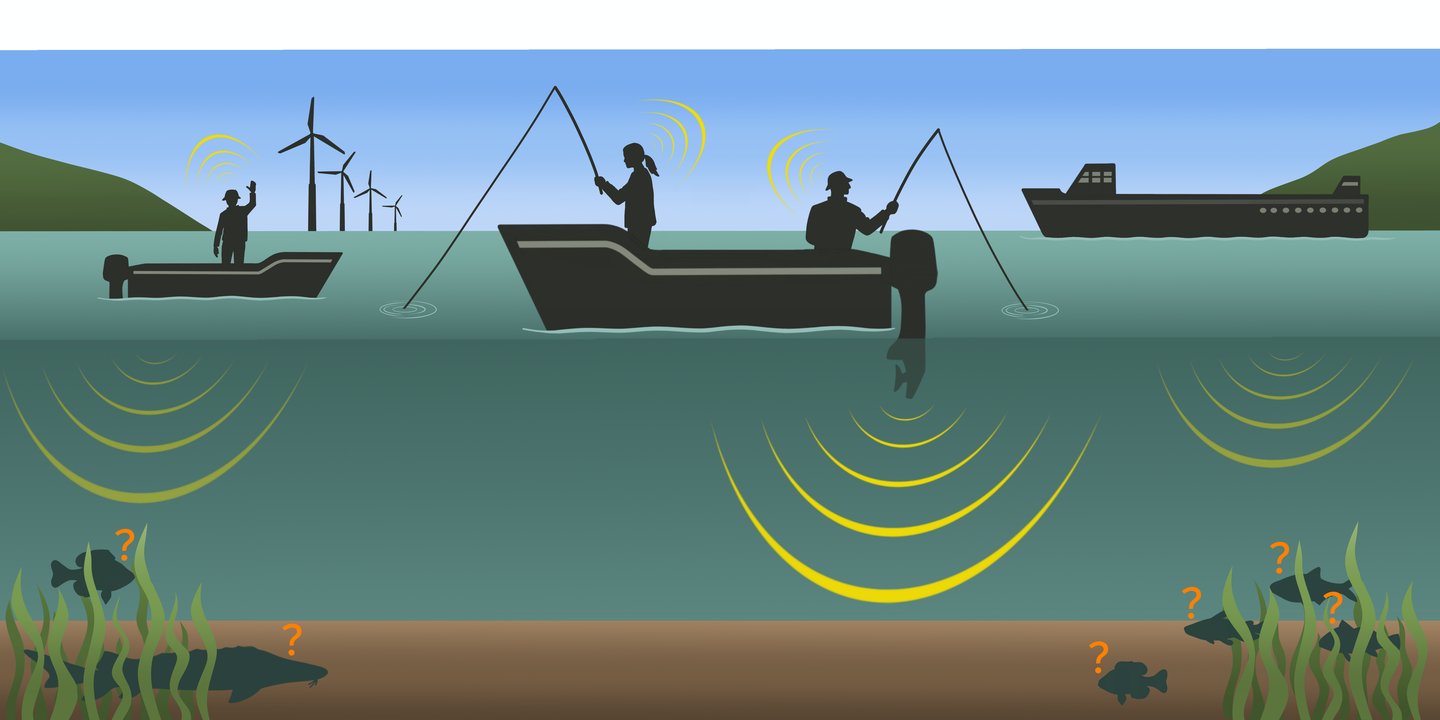
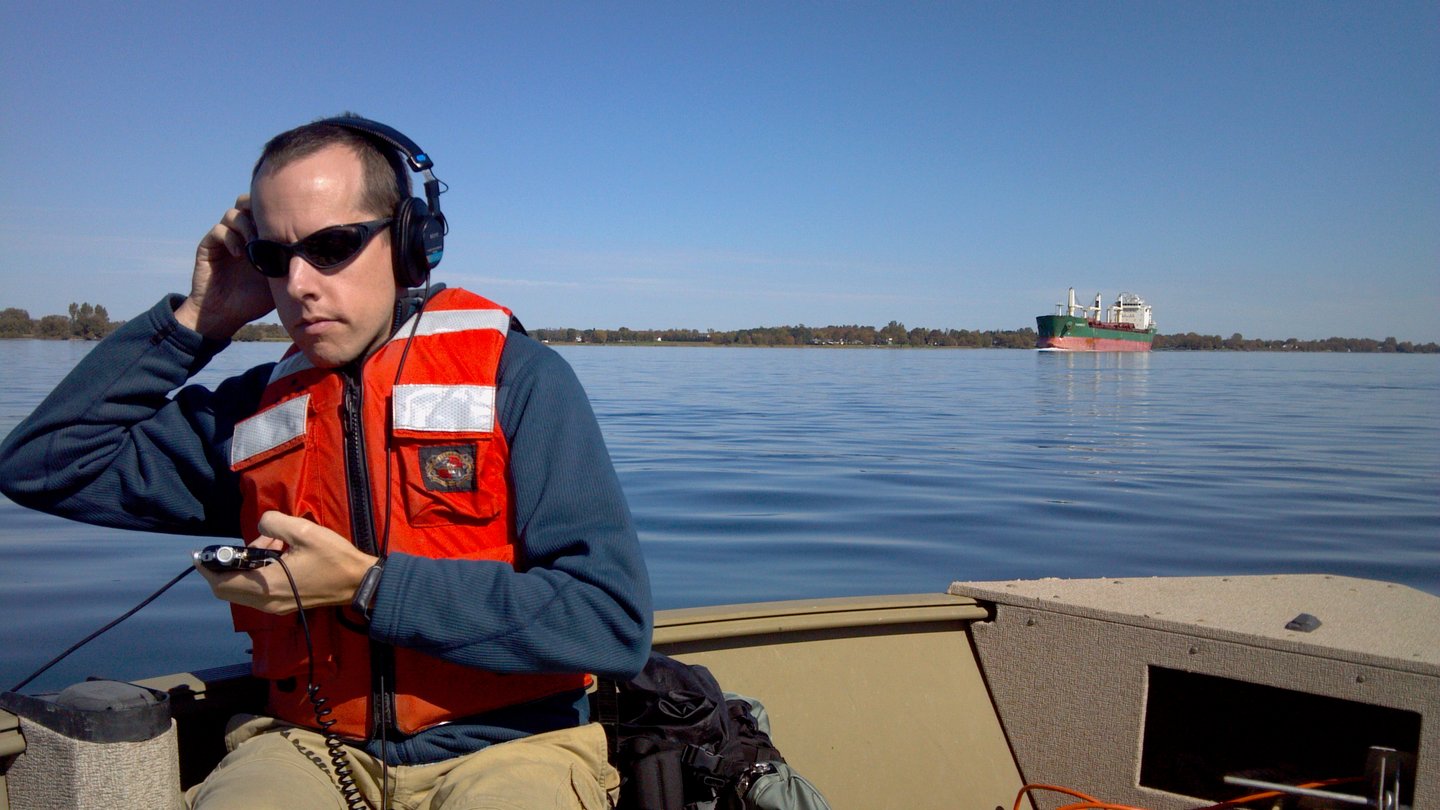
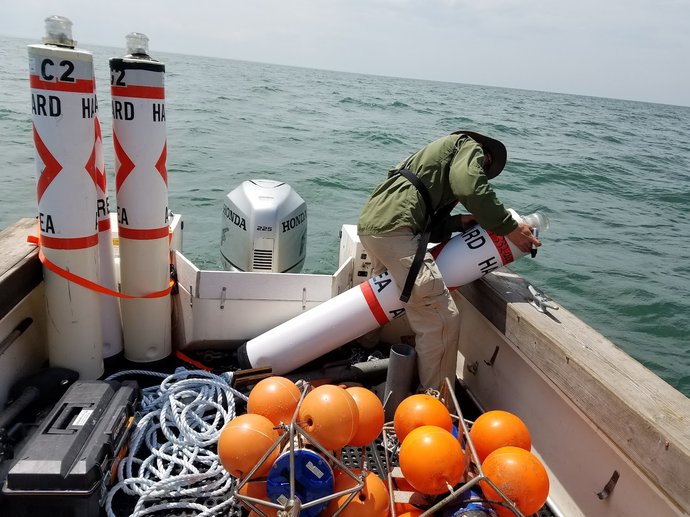
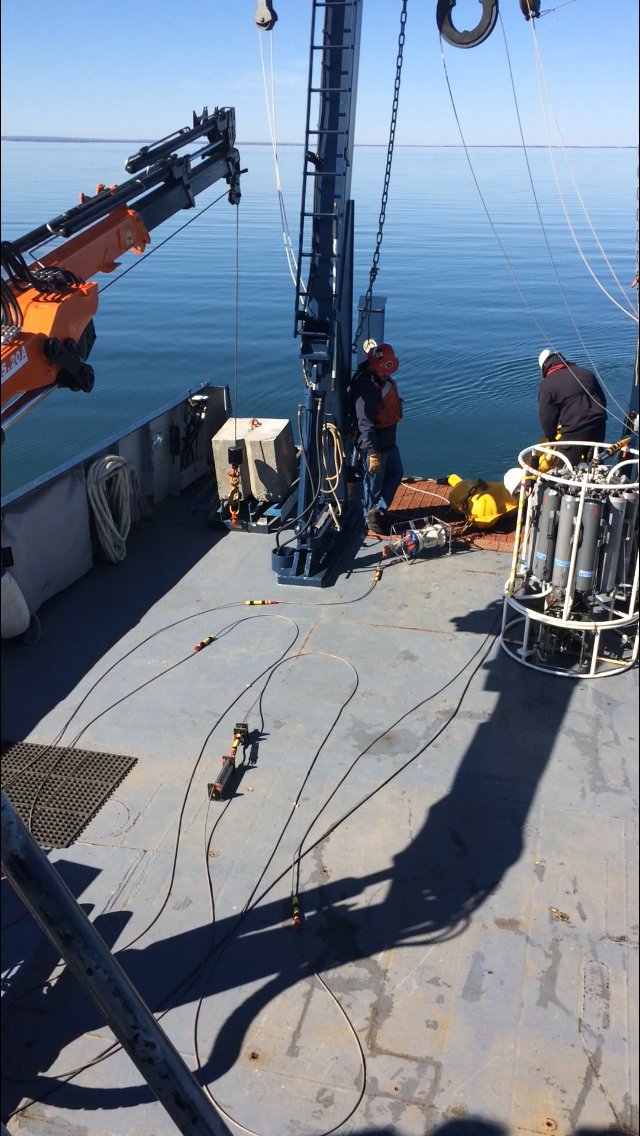
Sturgeon use sound to communicate when spawning and male sturgeon produce what has been termed a “thunder” sound, a low-frequency rumble caused by vibrating their swim bladders. To monitor spawning sturgeon, we used underwater microphones (called hydrophones) to “eavesdrop” on sturgeon in the Detroit River (Higgs and Beach 2021). Our spawning bed was relatively quiet until water temperatures reached 15°C, after which there was an explosion of calling fish, with up to 45 fish calls/hour. The fish also seemed to prefer calling only during the day, going quiet each night. Interestingly, the fish also seemed to go quiet when a large ship passed overhead, highlighting the impact that increasing levels of sounds from human activity can have on our local fishes. There are many fish species that can vocalize, and their sounds can get picked up with consumer-grade hydrophones available for a reasonable price. Even GoPro cameras can pick up fish sounds. We encourage all fishers to bend an ear to our underwater world!