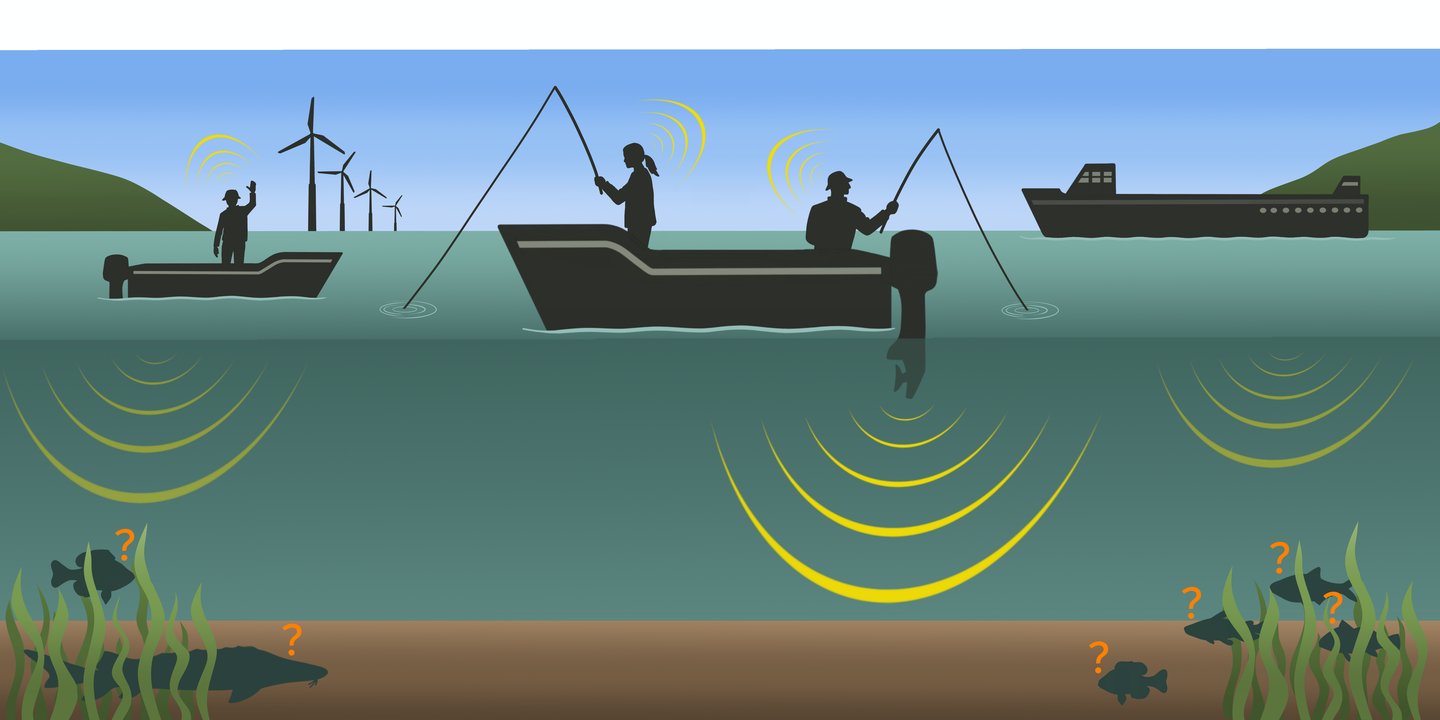
Speeding across Lake Erie in your treasured fishing boat, you and your friends have visions of landing your walleye limit in no time. Switching off the outboard motor and settling in, you observe many other boats looking for their lucky spots, appreciating that they stay a respectful distance so as not to foul your lines. You all sit quietly as you fish because you once heard that your voices could scare them off and don’t want to risk it on this beautiful day. Although you enjoy the morning, the gang doesn’t catch much and notices no one else has any luck either. You power up to head home and wonder why the catch seems to be lower on days with heavier boat traffic. Is it just the nature of fishing?
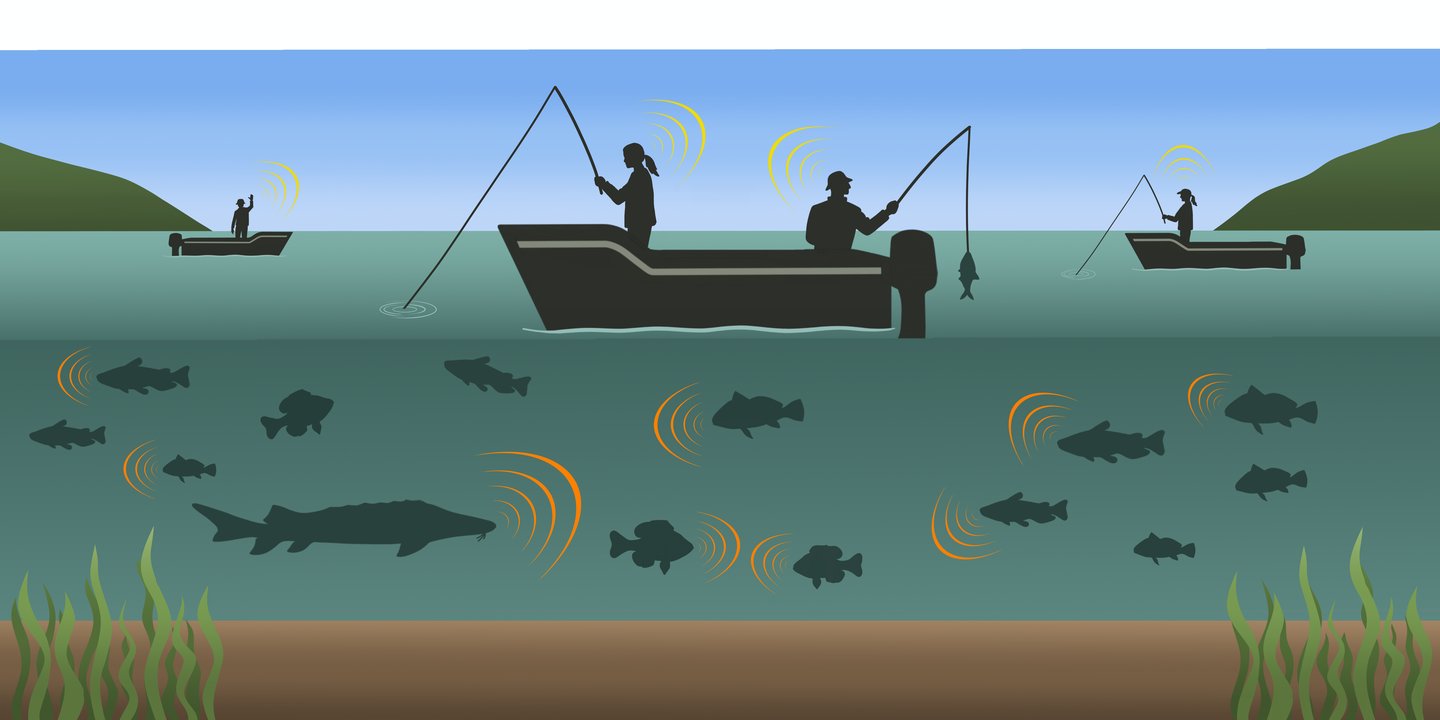
Now put yourself in the place of the fish. Awakening for your morning meal you listen for prey when a deafening roar sounds overhead as a monster seems to tear through the waves. Every time you relax again, and it’s quiet enough to hunt, a new beast passes. You relentlessly swim back and forth to hide from the deafening giants above. This continuous noise and the subsequent stress means your heart races, you can’t think straight, and you’re still famished.
The above scenarios are a common feature of our Great Lakes watershed and waters around the world. The Great Lakes face many challenges from human influences and many of these (e.g., increased nutrient runoff, invasive species, long-lasting chemical pollutants) have received a large amount of attention, policy scrutiny, and research dollars. While these threats are of course important, a lesser-known but growing concern is the intensifying levels of anthropogenic noise. Construction, resource exploration, and, more recently, offshore wind farms are some examples of noise-producing activities, but one of the most common sources of global underwater noise pollution comes from shipping vessels and recreational boats. In recent years, there have been calls for noise regulation in marine waters, since such pollutants have been shown to have great potential to harm ecosystems, but consideration for this problem in freshwater ecosystems remains minimal.
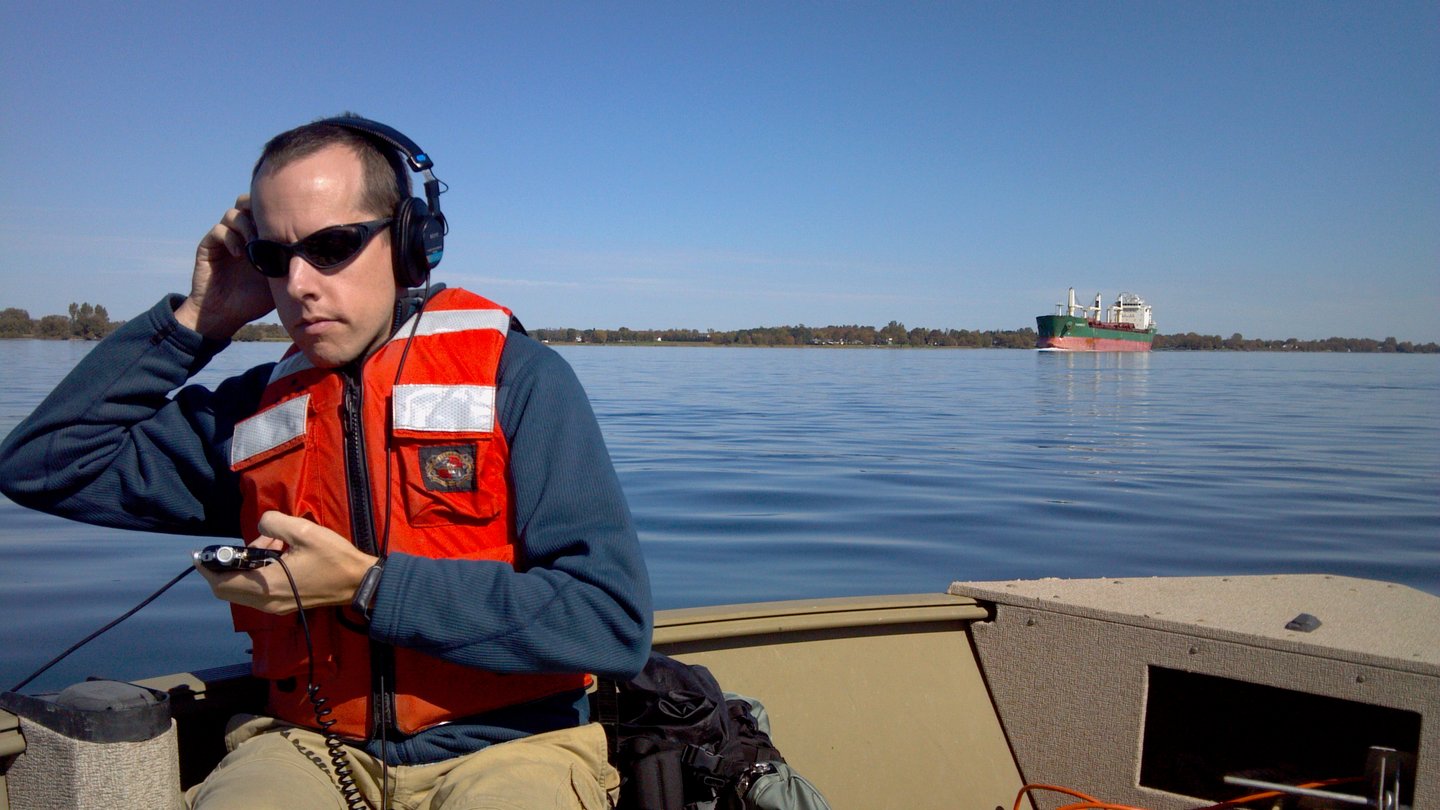
To understand the potential threat of these underwater noise sources to our freshwater fauna, it is useful to first think about how sound travels in water. Since water is much denser than air, sound can travel much further from the source, causing aquatic impact zones to be much larger than those in terrestrial environments. As commercial freighters navigate through deep channels, their engines and propellers produce low-frequency sounds that can be detected by fish up to a kilometre away. Recreational boats dart across shallower inlets emitting high-frequency sounds that can still be detected by fish at an appreciable distance. While you were happy to see other boaters avoid tangling your lines, their boat motor noise may have traveled beneath you without much dissipation. In contrast, your friends’ voices likely bounced off the surface without reaching the fish’s ears.
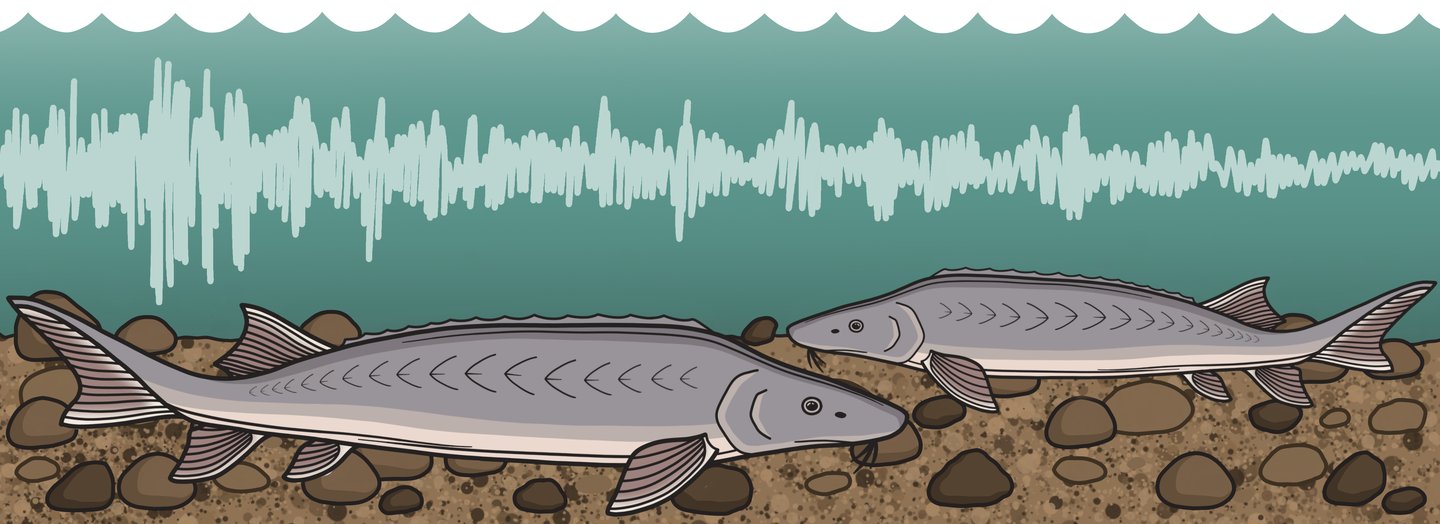
Wait, fish have ears? You don’t see any external ears when you catch a fish, however all fish do have well-developed internal ears that can hear a broad range of sounds. Different fish species hear different frequency ranges, but all fish can hear lower frequencies like those dominant in boat noise. And some of our local species, like gizzard shad, even have hearing ranges that exceed our own. Many fish, including sturgeon, freshwater drum, sunfish, and catfish, produce sounds to attract mates, guard territories, and sometimes scare predators. Increases in background noises can mask these sounds, thus impacting the communication space of local species. Fish are constantly using their auditory system to detect vocalizations and movements from other organisms and assess environmental conditions. Added background noise from boats can conceal sensory information, interfere with sensory detection, and act as a general stressor. This can lead to fish having reduced communication spaces, interruptions in feeding, changes in swimming patterns, elevated stress hormones, and overall decreased fish presence, which may explain your unsuccessful fishing trip.
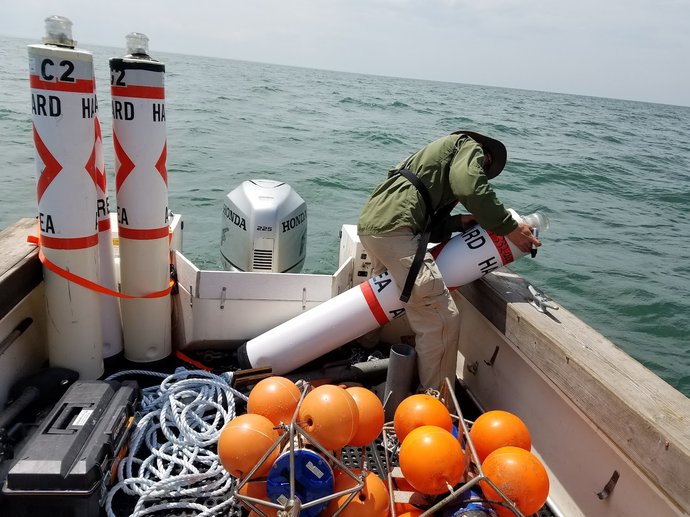
Shipping and boating will always be important activities in our Great Lakes watershed, but with careful management, it can be possible to mitigate their impacts. There are upwards of 20 underwater preserves or protected areas in the Great Lakes, but none of them have guidelines regarding underwater noise levels. As we move forward to develop policies, it is essential for Canadian and U.S. government agencies to properly assess the noise levels and impacts of both shipping and recreational boating in our waters. Well-defined regulations that reduce speed limits and prevent vessels from disturbing critical spawning habitats are just some ways this could be accomplished. In the meantime, next time you’re out, look for quiet spots and reduce your speed on approach to maximize your chances of keeping hungry fish in the area.
There are upwards of 20 underwater preserves or protected areas in the Great Lakes, but none of them have guidelines regarding underwater noise levels. As we move forward to develop policies, it is essential for Canadian and U.S. government agencies to properly assess the noise levels and impacts of both shipping and recreational boating in our waters.