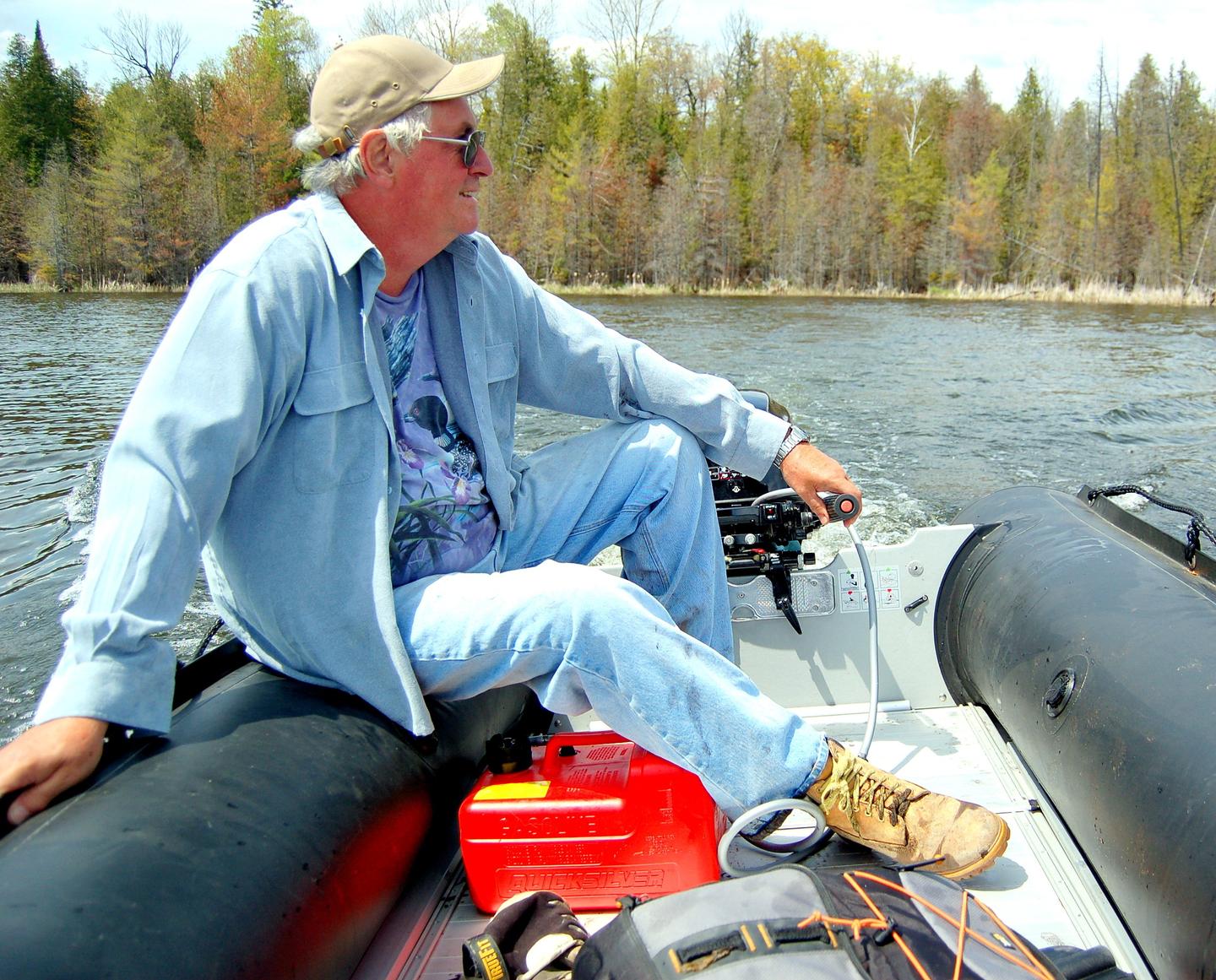
The Great Lakes research community mourns the loss of Gordon Douglas Haffner, “Doug” to all his acquaintances. Dr. Haffner was emeritus professor of biology at the University of Windsor. Doug was a towering figure in large lake science, whose career spanned more than five decades and whose influence shaped generations of scientists and institutions alike.
Doug’s path to becoming one of Canada’s most respected aquatic scientists began with achieving his Bachelor of Science degree at Queen’s University in Kingston, Ontario, followed by a Ph.D. at Royal Holloway College, University of London, United Kingdom. Before joining the University of Windsor in 1986 as an associate professor in biology, he held senior positions with the Ontario Ministry of Environment (head of Lake Systems, 1974–1979), the International Joint Commission (senior biologist, 1979–1981), and Environment and Climate Change Canada (head of the Water Quality Program, 1981–1986). This breadth of agency experience gave Doug an unmatched understanding of how science informs policy—knowledge he used throughout his academic career.
In 1992, Doug was promoted to full professor and became the inaugural director of the University of Windsor’s Great Lakes Institute for Environmental Research (GLIER), the first Canadian university research institute dedicated to the Laurentian Great Lakes and other large lakes around the world. As a founding member of GLIER, Doug contributed to the growth and direction of the institute throughout his career. In 2001 he was awarded a Tier 1 Canada Research Chair in Great Lakes Research, which he held until 2017.
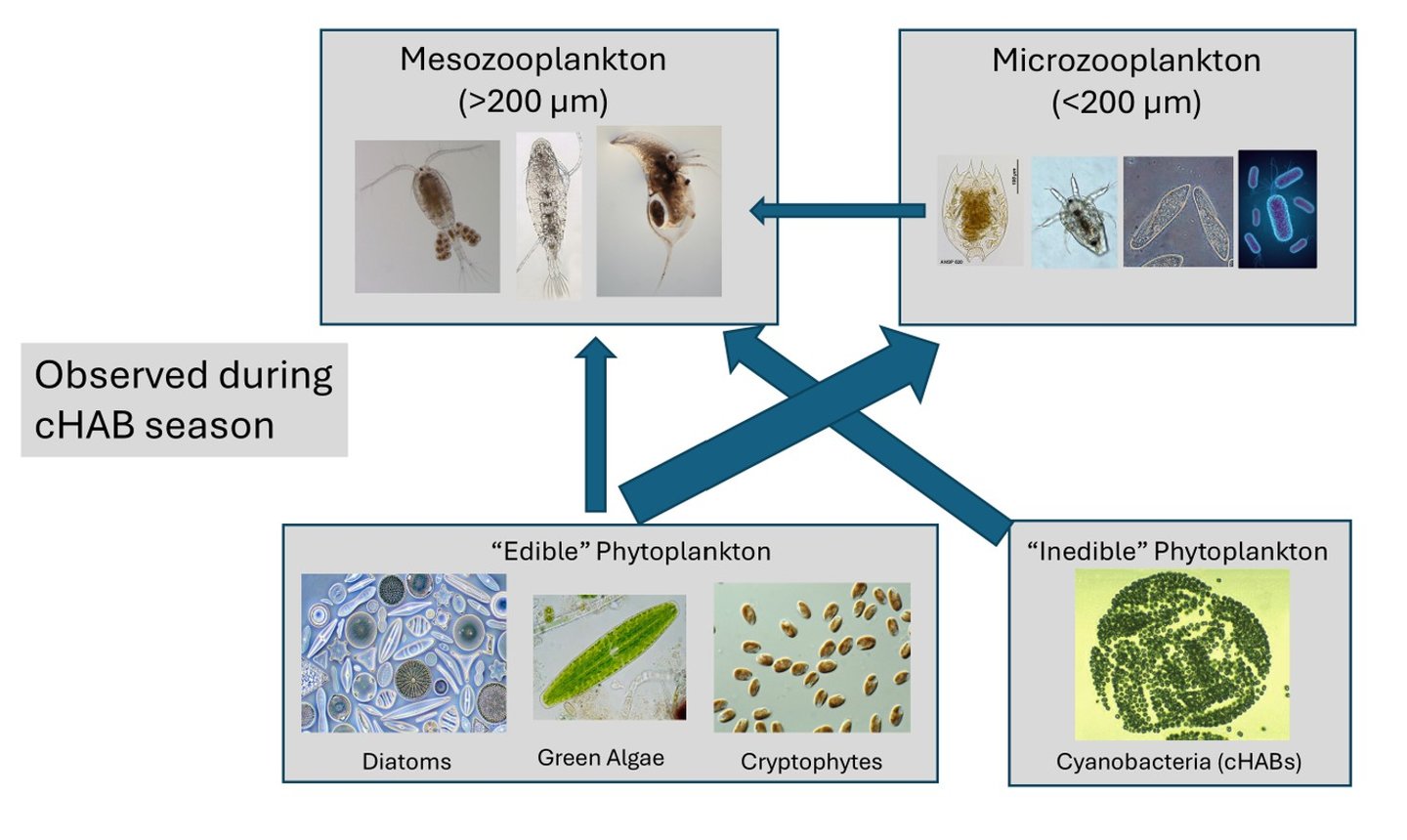
Doug’s scientific output was extraordinary for a researcher specialized in large lakes. Google Scholar lists more than 325 entries spanning from 1974 to 2026—a remarkable arc of over 50 years of continuous publication. A trained phycologist, Doug studied eutrophication throughout his career, from early work on Great Lakes nutrient dynamics to contemporary studies of primary production in western Lake Erie and a 2026 paper on harmful algal blooms in China’s Three Gorges Dam reservoir. For many years, he collaborated on landmark studies of organic contaminant biomagnification in aquatic food webs, work that bridged aquatic ecology, toxicology, environmental chemistry, and food web modeling. Beyond the Great Lakes, Doug played a pivotal role in addressing primary production and speciation in Indonesian lakes, notably examining diatom evolution over millennia in deep cores from Lake Matano. This work, conducted in partnership with Inco Mining, demonstrated Doug’s ability to bridge academia and industry with mutual respect and scientific rigor.
Doug’s contributions were recognized by numerous awards, including the Ontario Research Excellence Award in Water Quality. His service to the community was equally distinguished. Doug served on the IAGLR Board of Directors from 1989 to 1993, including a term as president from 1991 to 1992. He also co-chaired the Detroit River Monitoring and Research Area of Concern Implementation Committee and served multiple terms on NSERC’s Ecology and Evolution Discovery Grant Review Committee. As a mentor, Doug trained a large contingent of undergraduate students, graduate students, and postdoctoral fellows. Many of these individuals went on to outstanding careers in academia, government, and industry while continuing to collaborate and publish with him. He maintained an exceptional standard of excellence in every scientific publication bearing his name.
Above all, Doug was one of the most down-to-earth persons one could meet. He filled the halls of GLIER’s second floor with his jubilant laughter and was able to cut through institutional nonsense better than any contemporary, keeping the institute’s priorities at the forefront. His course on limnology was beloved by students in the biology program, and he had an uncanny ability to keep student attention during entire lectures using nothing more than a single slide projected on screen. He was an effective and animated communicator with a talent for winning the room to his position, whether they were students, colleagues, members of the public, or funders. There is so much to celebrate about Doug Haffner and his life. He has left an everlasting impression and made contagious the quest for knowledge through the scientific method to all in his presence.
Doug Haffner leaves a legacy etched into the institutions, science, and people of the Great Lakes. He will be profoundly missed. Doug is survived by his wife Margaret, two sons, and three grandchildren.