Describe your work.
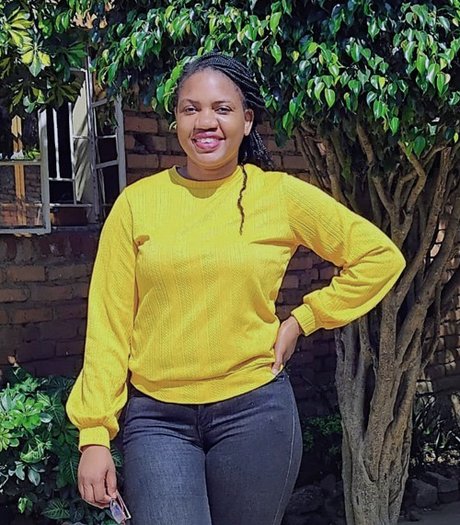
I study fish communities in Lake Malawi, one of the African Great Lakes and home to more than 800 endemic and rapidly diversified cichlid species. I use environmental DNA metabarcoding to read the genetic material the fish species shed in the water. My graduate research at the University of Malawi—the first project of its kind there—used a universal fish marker, coupled with three novel cichlid-specific nuclear markers designed from whole-genome data on 1,375 cichlids. This captured the broader community including rare and endemic taxa missed by trawl surveys, opening a new route for monitoring one of the most diverse and taxonomically challenging fish communities known to science. After training in Professor Richard Durbin’s lab at the University of Cambridge, I now work in the eDNA laboratory at the University of Malawi, built through the Science and Technology Research Partnership for Sustainable Development Japan-Malawi research cooperation. While collaborating with researchers at the universities of Antwerp, Tübingen, and Senckenberg, I also train students and technicians in eDNA methods. I also serve as the international student member on IAGLR’s Board of Directors for 2026 to 2028, and I am a member of the African Women in Science program.
What inspired you to enter this work?
I was driven by how much remains unknown about Africa’s Great Lakes and by the lack of research capacity available to the people, myself included, who depend on these waters for food and income. Innovative, sensitive, faster, and lower-cost methods like eDNA open greater channels for biomonitoring research in a country with limited resources and put the tools directly into local researchers’ hands. For me, that was the real win, not just for Malawi, but for research capacity across Africa.
How has collaboration shaped your work, and how do you hope it will influence the future of large lakes research?
All this work was only possible for me because of collaboration, from the infrastructure and the training to the tools. Collaborations have played an even larger role in connecting me with renowned scientists, allowing me to contribute to Great Lakes research. This experience has shown me large lake science at its best: generations and disciplines pooling knowledge, with local researchers trained to lead their own molecular work rather than supplying samples elsewhere. I hope this model becomes what unifies large lake research globally, linking African Great Lakes like Malawi with the Laurentian Great Lakes and other systems IAGLR represents, around a shared commitment to building capacity wherever the research is conducted.
My commitment to research capacity in Malawi has been recognized through several awards: a small research grant from the Nyika-Vwaza Trust for a fish assessment of Lake Kazuni using eDNA metabarcoding; a microgrant from the eDNA Collaborative, providing equipment for eDNA training in Malawi; and the Global Engagement Travel Grant to present at the Cichlid Science 2026 meeting this September at the University of Antwerp, Belgium.
What is something about yourself that you’d like to share with other IAGLR members?
I love my work, and for me, there is nothing quite like answering a question about a lake I have known my whole life with a tool built with my own hands. I am currently exploring Ph.D. opportunities and welcome contact from anyone looking to collaborate on such research, particularly across Africa’s Great Lakes. Malawi’s untapped potential for ancient eDNA research, among other questions, would open doors for more collaboration and capacity building.