Harmful algal blooms in Lake Erie are driven largely by phosphorus runoff from Maumee River tributaries, leading management to focus on reducing losses from agricultural fields. But our research points to a hidden in-stream source: phosphorus mobilized from streambed sediments during summer oxygen depletion.
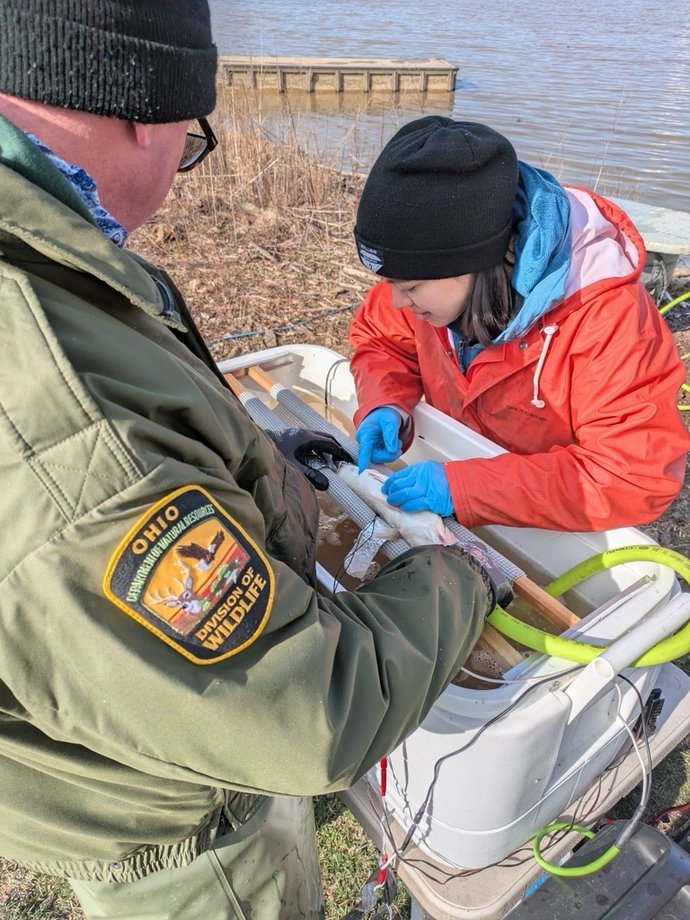
Last summer, we tracked seasonal phosphorus dynamics across three agricultural drainage streams in northwestern Ohio’s Shallow Run subwatershed within the Maumee River basin. To capture readily absorbable phosphorus, we deployed DGT probes into the sediment, alongside sensors tracking stream temperature and dissolved oxygen. This allowed us to monitor how sediment phosphorus stores shifted throughout the growing season. We then used statistical models to evaluate the environmental factors driving this porewater nutrient and scaled our measurements up to all streams in the watershed.
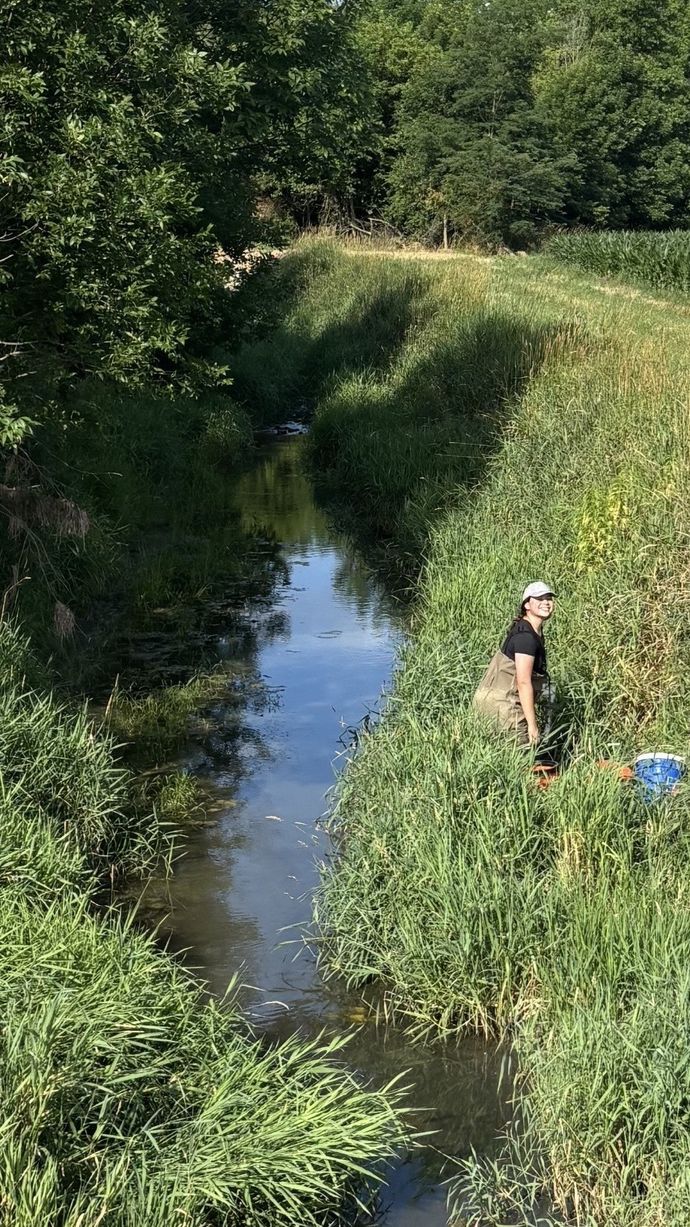
Summer brought warmer water, lower flows, and recurring nighttime oxygen depletion—conditions that break down the iron bonds holding phosphorus in place. By July, bioavailable porewater phosphorus had increased four- to sixfold compared to spring across all three streams. Surface water concentrations rose in parallel, suggesting that this newly released nutrient was escaping the sediment and entering the water.
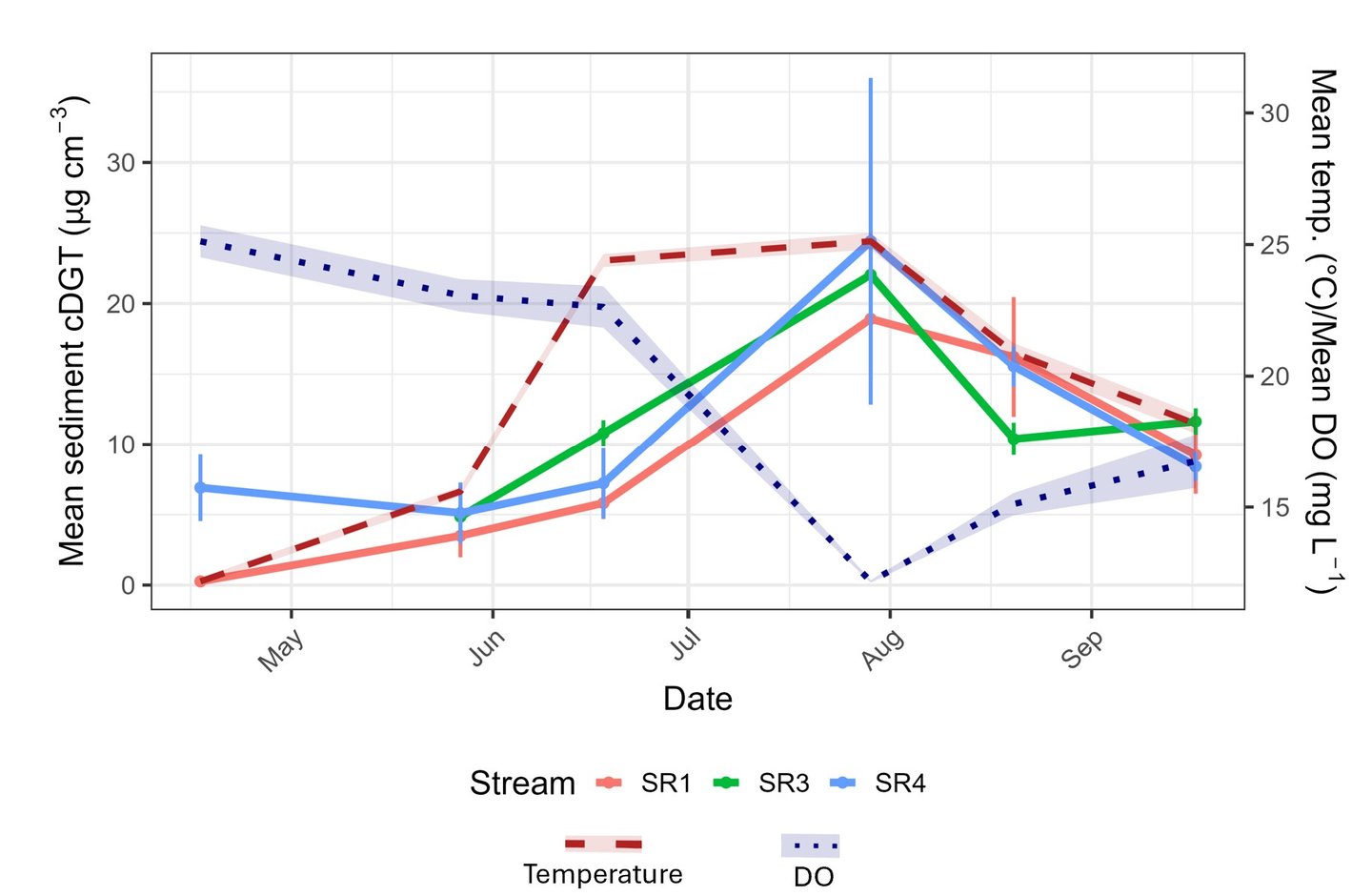
We estimate roughly 117 kilograms of bioavailable phosphorus accumulates across the 15.6-kilometer drainage network during peak summer, amounting to nearly 34% of the watershed’s average spring and summer export. Because this sediment phosphorus reservoir rebuilds each summer to fuel peak downstream algal blooms, it threatens to undermine land-based fertilizer reductions and delay long-term watershed recovery.