In Lake Superior, the largest freshwater lake in the world by surface area, lake trout (Salvelinus namaycush) serve as apex predators, support commercial and recreational fisheries, and hold deep significance for Indigenous and local communities. Lake trout populations collapsed in the mid 20th century due to environmental pressures, including intensive fishing and predation by invasive sea lamprey, prompting decades of coordinated management and stocking with hatchery-raised fish to rebuild wild populations.
Lake trout are now considered fully recovered in most of Lake Superior, but fundamental questions remain about their genetic health and resilience. Genetic diversity provides raw material for adaptation to changing environments and serves as a key indicator of population health, making it an important tool for informing management priorities.
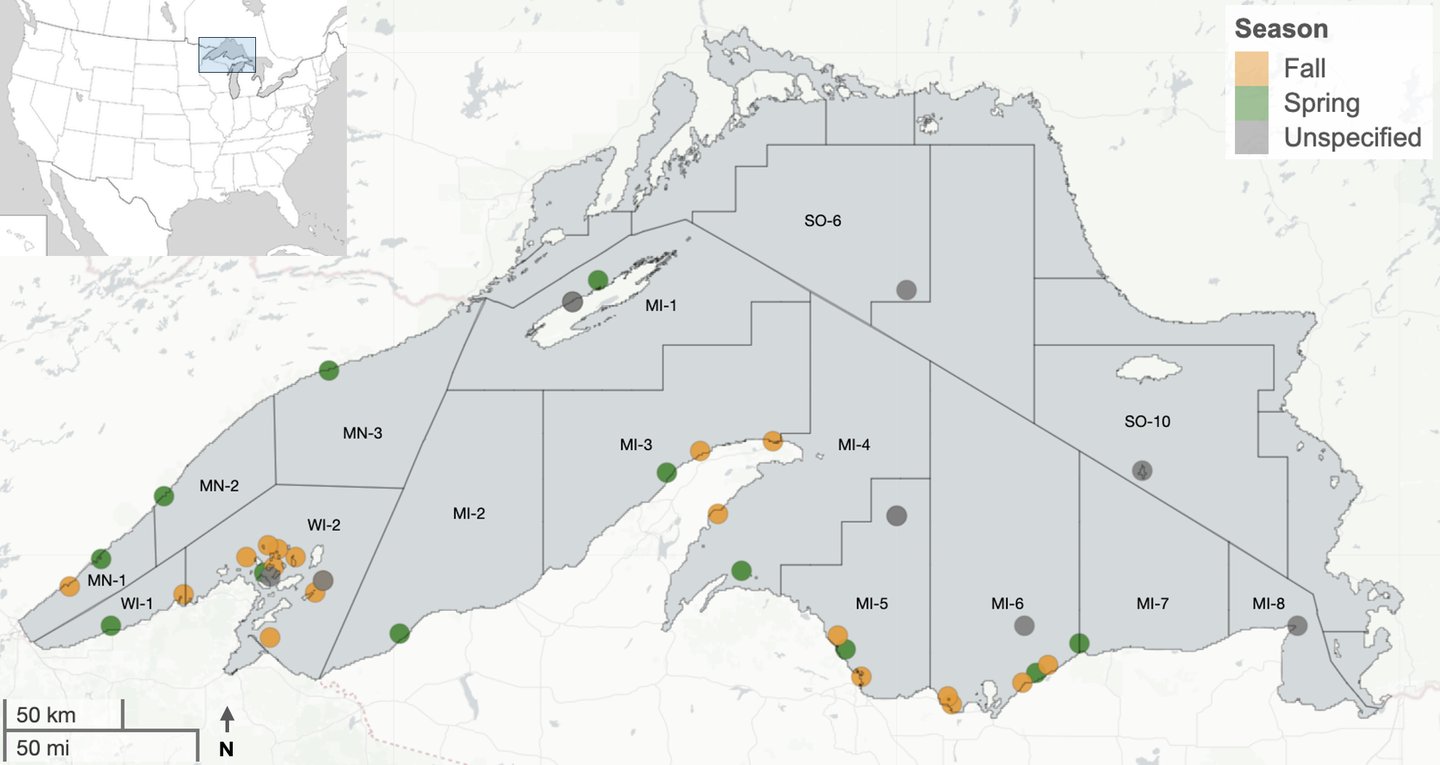
We collected genomic data from more than 2,500 lake trout sampled across the U.S. portion of Lake Superior. This effort focused on the lean lake trout ecotype, the form most targeted by fisheries within Lake Superior. We generated the most geographically comprehensive genomic dataset for this ecotype in Lake Superior to date, characterizing population structure to delineate genetic groups and quantifying genetic diversity to gauge population health.
Our findings indicate that lean lake trout in U.S. waters of Lake Superior function as one broadly connected population with low genetic diversity, underscoring the importance of ongoing monitoring to track genetic health alongside abundance. These results offer a comprehensive look at the genetic health of a population only recently declared recovered. Genomic insights can guide management approaches to help ensure lean lake trout remain resilient to future environmental pressures in Lake Superior.