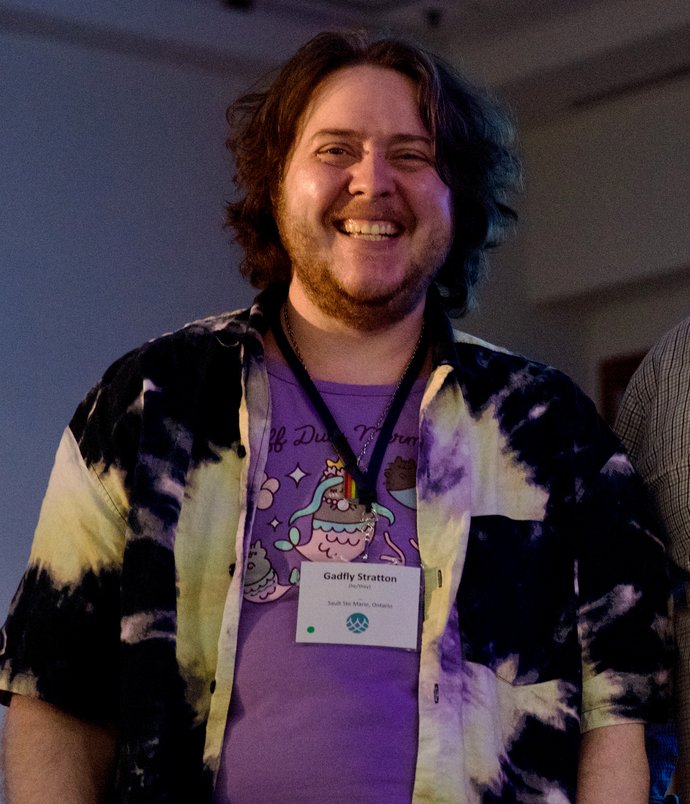
What does it mean to prepare for a future where the Great Lakes and professions dedicated to protecting them are changing faster than ever before? At three different points along the Great Lakes, each of us has stood on the shore experiencing the same mix of wonder, curiosity, and anticipation. Though our career stages and future goals differed, the same freshwater system and questions about its future brought us together on a new collaborative project. One of us is an undergraduate student, another is immersed in graduate research, and the third is applying graduate work to an early and accomplished career.
For students and early career professionals in environmental science, those same feelings of wonder, curiosity, and anticipation accompany the transition from the classroom to the professional world. We are entering a future shaped by rapid environmental change, new technologies like artificial intelligence, the growing concern of emerging contaminants, and increasingly complex decisions about how to steward one of the world’s largest freshwater ecosystems.
Every generation inherits changed lakes, and what we consider “normal” is shaped by the conditions we grow up with. But understanding today’s lakes requires actively looking for stories about previous baselines—past conditions that serve as reference points (Pauly 1995). Contaminants, for example, have affected the lakes for generations, and new ones will continue to impact them in the future. How should our generation, one that’s increasingly desensitized to disaster, grapple with the disturbed lakes we inherit and reject their state as “normal”? This realization has taught us that preparing for the future means more than learning scientific concepts. It means learning to work across disciplines, organizations, and communities so we can help shape the future of the Great Lakes rather than simply accept the lakes we inherit.
A center without walls
The Great Lakes Environmental Advocacy Collaboratory (or GLEAC, for short), models how universities can tackle these threats while simultaneously preparing students to work in a collaborative environment across multiple disciplines to create science-informed policy. GLEAC pairs researchers at Wayne State University and Michigan’s largest environmental advocacy organization, the Michigan Environmental Council. Together they work to uncover critical issues threatening the Great Lakes, how institutions interact around them, and what opportunities exist to strengthen collaborative governance.
Collaboratory, as a noun rather than an adjective, was coined by William Wulf as “a center without walls,” joining collaboration and laboratory (Wulf 1993). GLEAC began with five faculty from Wayne State University spanning five disciplines and the chief executive officer of the Michigan Environmental Council, a team built around difference rather than sameness from day one.
As students and early professionals, we have each stepped into this work through different lenses. As depicted below, our journeys through GLEAC reflect distinct yet complementary learning objectives. Undergraduate Ali Iqbal has been working on recording organizations and networks across the basin. We have found potential survey respondents by locating advisory boards and organizational webpages across the basin. “Old-fashioned” googling proved tedious, so this project became an opportunity to explore Python for web scraping, a reminder that even data collection now depends on new technical fluencies.
Learning objectives at different career stages
| Undergraduate | Graduate | Early career |
| Science is comprehending data | Science is producing knowledge | Science is creating partnerships |
| Classroom & lab | Publishing research | Collaboration |
| Learning concepts | Learning methods | Learning leadership |
“This project has provided a lot of data on the professional world as well,” Iqbal says. “It has given invaluable experience on how to apply research skills from the classroom in a professional setting, paving the way to graduate education and my ultimate goal of becoming a scientist.”
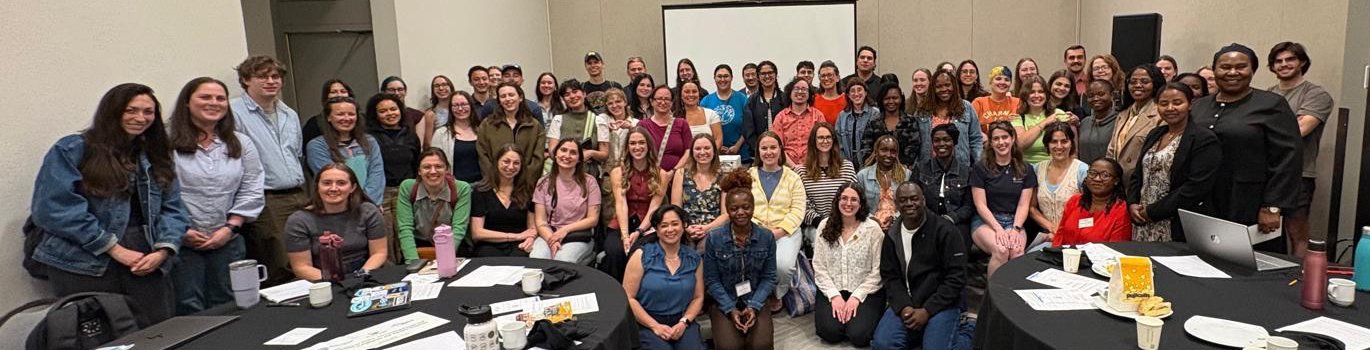
Hassan Ezzeddine, the graduate student, is designing a survey to capture organizations’ priorities across the basin, crafting questions that work equally well for all involved. Building those questions as a team, testing them at GLEAC’s workshop at the IAGLR conference this past May, and revising based on community feedback has been a lesson in research methods and international perspectives no classroom could fully teach.
“This process has been a crash course on co-production and survey design,” Ezzeddine notes. “As we seek to balance the different perspectives across the basin, it’s been super cool being a part of a team that values student engagement, as these perspectives will largely inform the professional world I enter.”
Abby Wallace, the early career professional, is using science to build partnerships, facilitate workshops, and translate those conversations into actionable next-steps. Serving as a key liaison between MEC and WSU brings its own challenges. Working with five faculty, an outside partner organization, and students learning on the fly requires navigating different vocabularies, priorities, and schedules.
“I’ve gained invaluable experience working alongside researchers and academic professionals,” Wallace shares. “They offer a completely different outlook on changemaking than that of the stakeholders I usually work with. It’s been incredibly rewarding to get an inside look at how the research that environmental advocates rely on to effect policy change is developed.”
GLEAC has taught us much more than survey design, stakeholder mapping, or collaborative governance. It has shown us that preparing the next generation of Great Lakes professionals is about creating opportunities to listen, to collaborate, and to become comfortable working in the spaces where science, policy, and community intersect. The future of the Great Lakes will depend not only on the science we produce, but on the relationships we build. Each generation inherits the Great Lakes in a different state. Ours has both the opportunity—and the responsibility—to shape what the next generation will inherit.
We invite you to share your organization’s priorities through the GLEAC survey.