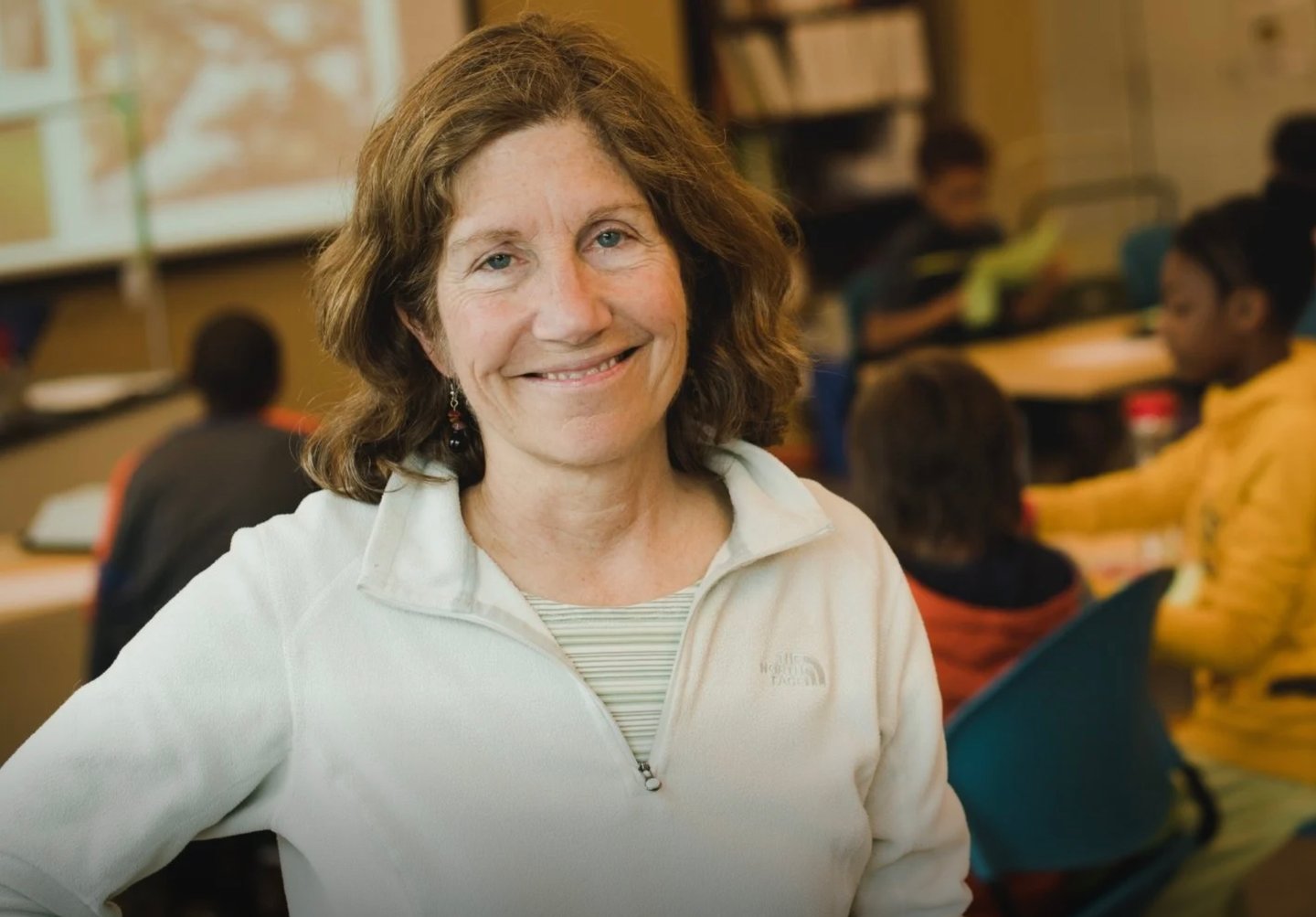
When Joan Chadde was named the 2026 recipient of the IAGLR Vallentyne Award, the recognition celebrated more than three decades of leadership in Great Lakes education and outreach. Throughout her career, Joan has inspired thousands of students, teachers, community members, and future scientists to engage with freshwater science, not simply by learning about it, but by experiencing it firsthand. As part of the magazine’s new mentoring series, I had the opportunity to speak with Joan about her career, her philosophy of education, and the lessons she hopes the next generation of scientists will carry forward.
Congratulations on receiving the Vallentyne Award. What does this recognition mean to you?
Joan: Reading the award letter was a walk through my career. I kept thinking, “Oh yeah, I remember that. Oh, that was so much fun.” It brought back so many wonderful memories. I wasn’t doing the work because I expected recognition, so having my peers acknowledge it meant a great deal. It made me feel grateful, recognized, and incredibly happy. It was really the frosting on the cake after doing work that I genuinely loved.
What of your experiences best reflect the values recognized by this award?
Joan: One of the greatest opportunities I had was the freedom to be creative. When I arrived at Michigan Tech in 1995, my supervisor told me, “You know what is best to do! Run with it!” That trust allowed me to develop a wide variety of innovative programs that connected people with science in meaningful ways. Because grants entirely funded our work, every proposal became an opportunity to ask what would make the biggest difference. That is how programs like the Great Lakes Teacher Institutes, family science and engineering nights, water festivals, after-school and summer science programs, and Great Lakes research vessel experiences came to life. Every project was different, and I loved that variety. I probably worked a lot of 12-hour days, not because I had to, but because I loved what I was doing.
You have worked with diverse groups of people throughout your career. What made those programs successful?
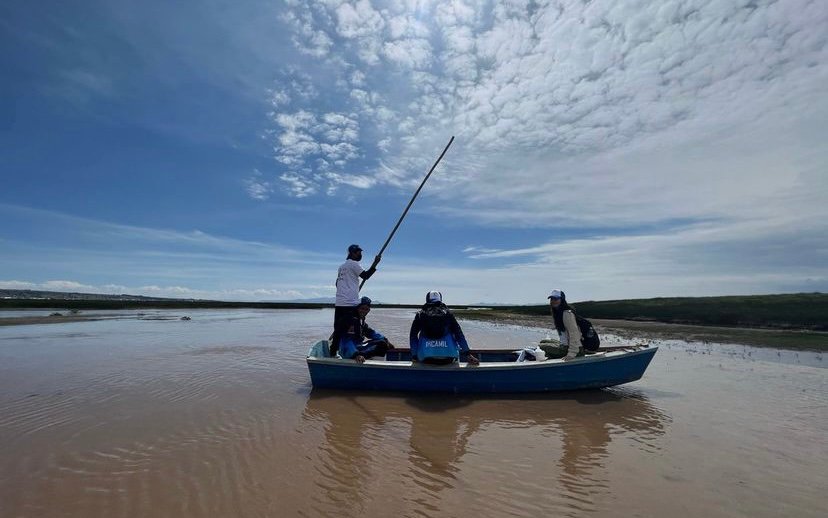
Joan: We always tried to remove as many barriers as possible. If transportation was a challenge, we found funding. If schools couldn’t come to us, we went to them. One of my favorite programs was taking students and community members aboard Michigan Tech’s research vessel to learn how scientists assess the health of the Great Lakes. We also brought teachers together for week-long field institutes where they worked directly with scientists. Everything was hands-on because that is how people learn best. Science is a verb. It’s not something you sit in a classroom and memorize facts about. Students have to do it. Whether digging soils, identifying wetland plants, or collecting water samples, students were doing science instead of simply hearing about it. That is what makes learning memorable.
What science communication strategies have you found most effective?
Joan: Scientists are excellent at communicating with each other, but how can they make their research accessible to a lay audience? I recall one colleague saying, “I can publish a paper, and I’ll be lucky if seven people read it.” We held our first water festival in 2012 at Michigan Tech’s new Great Lakes Research Center where more than 500 students, grades 4–12, experienced Great Lakes science through hands-on activities presented by Michigan Tech students and faculty and community experts. That comparison always stayed with me. I believe in visibility. People have to know what you’re doing. Whenever we organized a workshop, field day, or community event, I invited the media—TV stations, newspapers, whoever would come. You might have 15 teachers at a workshop, but if the media reports on the event, you’ve reached thousands more.
You mention place-based learning. What does that mean?
Joan: Environmental education starts close to home. Students connect most deeply with the environments they experience every day. People often talk about protecting places that are far away, like tropical rainforests. That is important, but students also need to understand and value the environment where they live. Place-based learning is about helping students identify a need in their school or community and developing a plan to address it. It could be a new school recycling program or a school garden to provide vegetables for lunch. It is incredibly empowering because stewardship becomes something they practice, not just something they learn about.
What gives you hope for the future of the Great Lakes?
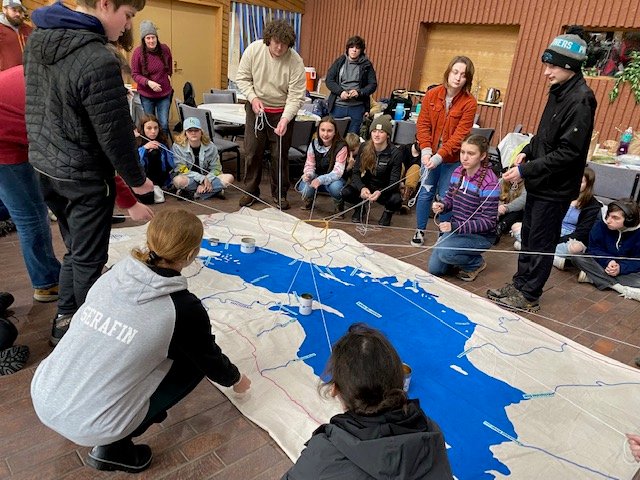
Joan: My hope is that we are raising enough young people who not only understand the Great Lakes but also develop a passion to protect them. Education matters. Helping young people understand watersheds and the relationship between land use and aquatic ecosystems prepares them to become future scientists, educators, community leaders, decision makers, and responsible citizens. Programs like the Lake Superior Youth Symposium for middle and high school students, held every two years since 1995, demonstrate the value of connecting students across state and international boundaries and encouraging them to view freshwater stewardship as a shared responsibility. Another project with broad impact involved creating more than 80 12x15-foot canvas floor maps of the Great Lakes basin and several dozen maps of the Lake Superior watershed. Students can gather around a map, locate the rivers flowing into the lake, and trace the watershed boundary. This activity shows them that what happens on the land in a watershed can affect the water quality of the lake. Students then work together to remove “pollution” (cans with labels like “sediments,” “livestock waste” etc.) from the lake, acting out how states and provinces cooperate to clean them up.
Finally, what advice would you offer students and early career scientists?
Joan: Share your science beyond academia. Be an enthusiastic educator— your excitement is contagious! Make science relevant. Collaborate. Find ways to remove barriers so more people can participate. A scientifically literate citizenry is essential to improving the environmental quality of our communities, our country, and the world.
Joan’s career shows that meaningful science communication is not simply about making research easier to understand. It is about creating opportunities for people to participate, ask questions, and see themselves as part of the solution. Her stories demonstrate how much impact one person can have by remaining passionate, persistent, and willing to invite others in. For students and early career scientists, her message is clear: sharing knowledge is not enough. Engage youth and adults in learning on-site whenever possible, communicate with diverse audiences, and use your knowledge to serve the communities and environments around you. As Joan reflected on the future of freshwater stewardship, she left me with one final thought that perfectly captured both her career and her philosophy: “You can’t complain if you’re not going to do something about it. There is no time like the present!”
Welcome to Mentoring Q&A
This issue launches a new regular department pairing a student or early career member with an established professional for a conversation about career, science, and lessons learned along the way. If you would like to suggest a topic or a mentor to feature, please email us at lakesletter@iaglr.org. We would love to hear your ideas for future issues.