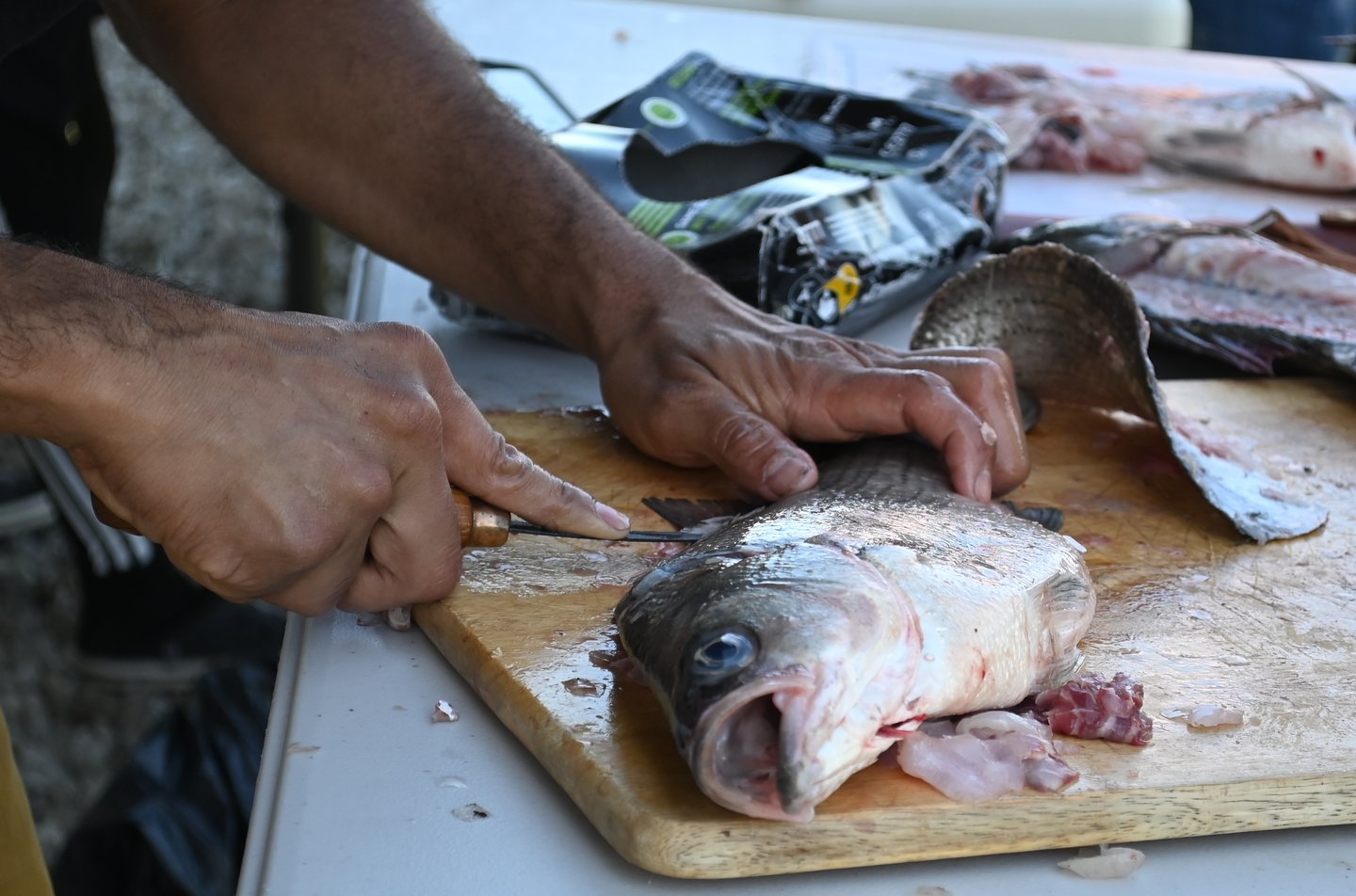
For decades, recreational fishing has primarily been viewed by scientists and managers as a leisure activity. However, this narrow lens often overlooks other important benefits like food security, food sovereignty, and sociocultural contributions. A recent study of shore-based recreational fishers in Detroit, Michigan, applied food systems thinking, an approach linking food to culture and economics, to examine these often-neglected dimensions of recreational fishing on the Detroit River and Lake Erie.
The study found that consumption of recreationally caught fish contributed to food security, with some fishers partially relying on it to reduce their grocery bills. It also supported food sovereignty by providing fishers with greater autonomy over where their food came from and how it was handled. Informal food-sharing networks among family, friends, and neighbors extended these benefits beyond individual households and strengthened community connection and well-being. Fish consumption also shaped angler motivation and satisfaction, particularly among nonwhite fishers who were significantly more likely to fish for food and view a fishing trip as successful if they brought fish home to eat.
This work has implications for managing the human dimensions of recreational fisheries. It highlights the value of extending creel data beyond harvest to include collection of demographic and consumption data for informing more equitable fisheries management. Understanding recreationally caught fish as part of a broader food system may also draw more attention to consumption-related contaminant concerns and shoreline access issues, while helping managers make decisions that better reflect how people use, value, and depend on Great Lakes fisheries.