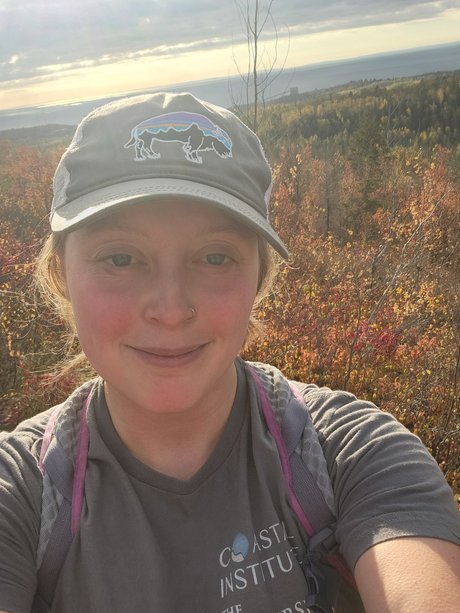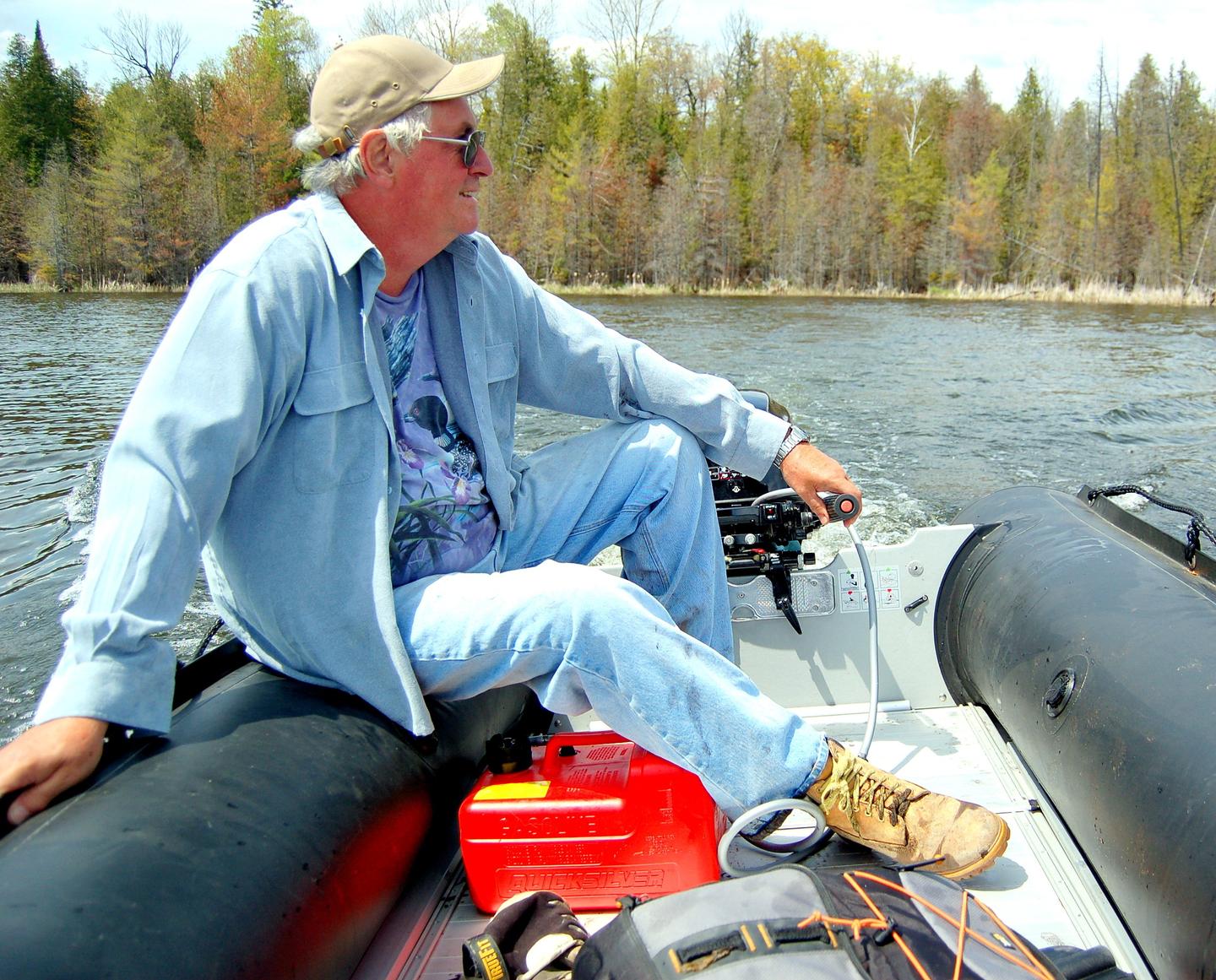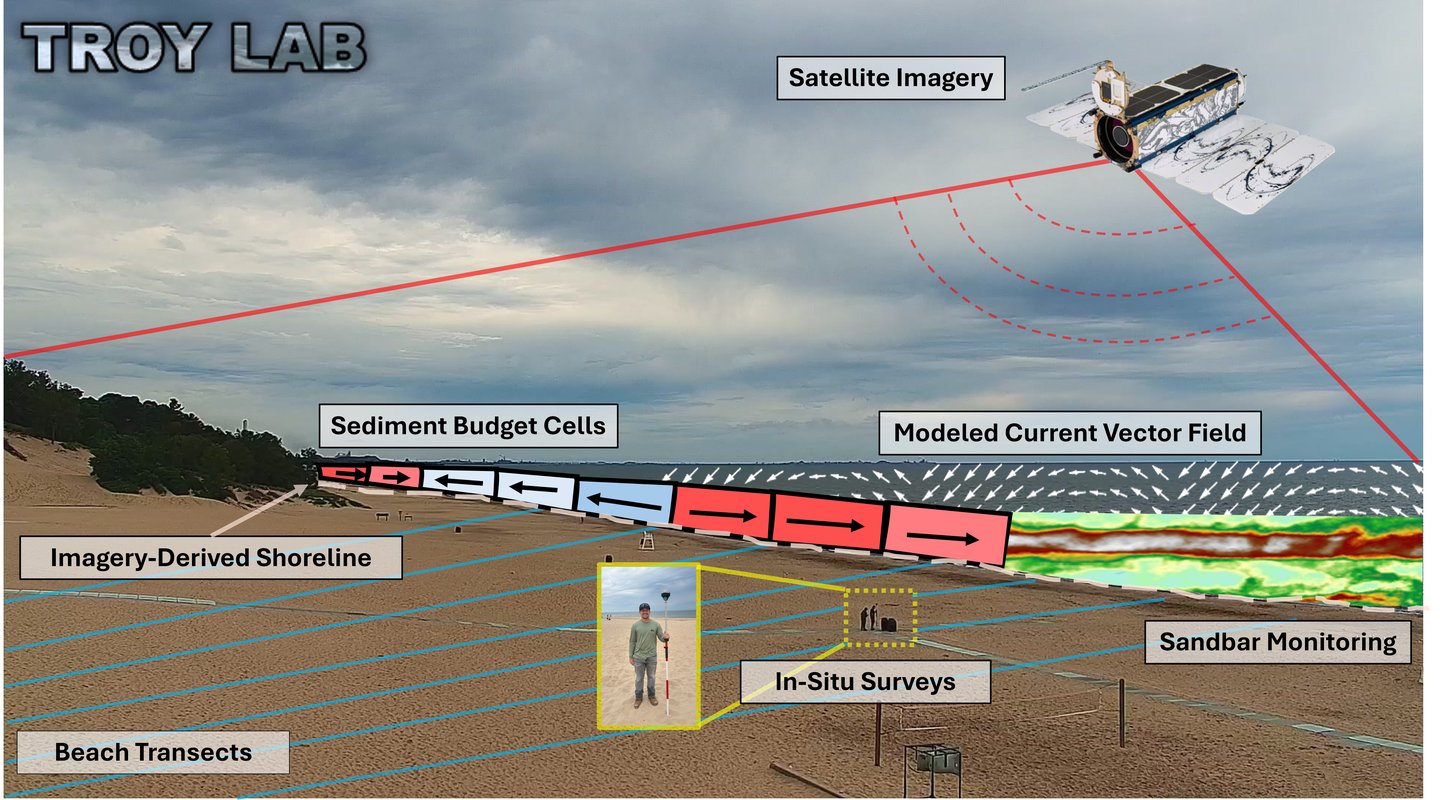
Within the Troy Lab at Purdue University, early career research is united by common coastlines but shaped by distinct engineering and scientific backgrounds. Before engaging with Great Lakes research, members of our lab worked on geotechnical engineering projects, space and satellite technologies, and hydraulic modeling. Our unique disciplinary backgrounds influenced the questions we asked and the methods we applied to study the Great Lakes coastal system.
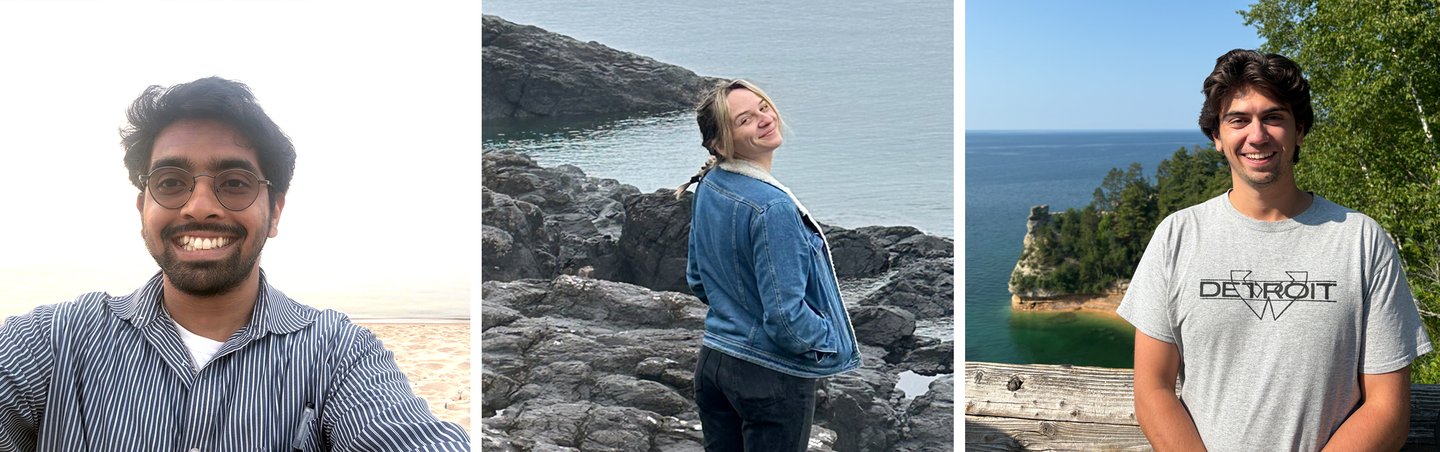
Initially, we set out to answer our questions through individual theses. Kendahl’s work investigated shoreline change and river plume dynamics from satellite imagery. Muhammed examined how waves drive sediment transport through numerical modeling. Owen explored how nearshore sandbars evolve and migrate using remote sensing. As our research progressed, we discovered that understanding one process depended on understanding another. A changing shoreline can be mapped from satellite imagery, but its evolution depends on sediment transported by waves and temporarily stored within migrating sandbars. River plume behavior reflects many of the same hydrodynamic conditions that influence sediment redistribution, while observations collected in the field give context needed to interpret patterns visible from above. These connections revealed that our projects examined different stages of the same coastal processes, such that answering our individual research questions increasingly required one another’s data, expertise, and analyses.
Our projects captured different stages of the same coastal processes, such that answering our individual research questions increasingly required one another’s data, expertise, and analyses.
That realization has changed the way we think about Great Lakes research. Coastal science is often organized into disciplines such as geomorphology, hydrodynamics, ecology, remote sensing, and water quality, but the lakes themselves do not function within rigid boundaries. Understanding coastal evolution ultimately requires understanding of how these processes and disciplines interact. Collaboration in our lab became more than sharing space. Rather, collaboration grew into designing field campaigns that support multiple projects, ensuring data are accessible to other members of the lab, and fostering a culture that encourages researchers to share expertise openly, regardless of experience or discipline. These efforts made our individual projects stronger and more complete.
One of the most rewarding outcomes of this collaboration has been its impact on mentoring new researchers. This summer, when an undergraduate student joined our lab to study shoreline dynamics, his project naturally drew upon the complementary expertise of multiple graduate students. His research used satellite imagery for shoreline modeling while incorporating hydrodynamic model outputs to better understand the physical processes driving the changes he observed. Rather than learning a single methodology, he developed an appreciation for how shoreline position, wave dynamics, sediment transport, and numerical modeling all contribute to coastal evolution. Watching a first-time researcher connect these perspectives and begin asking interdisciplinary questions of his own has been one of the clearest examples of what a collaborative lab culture can achieve.
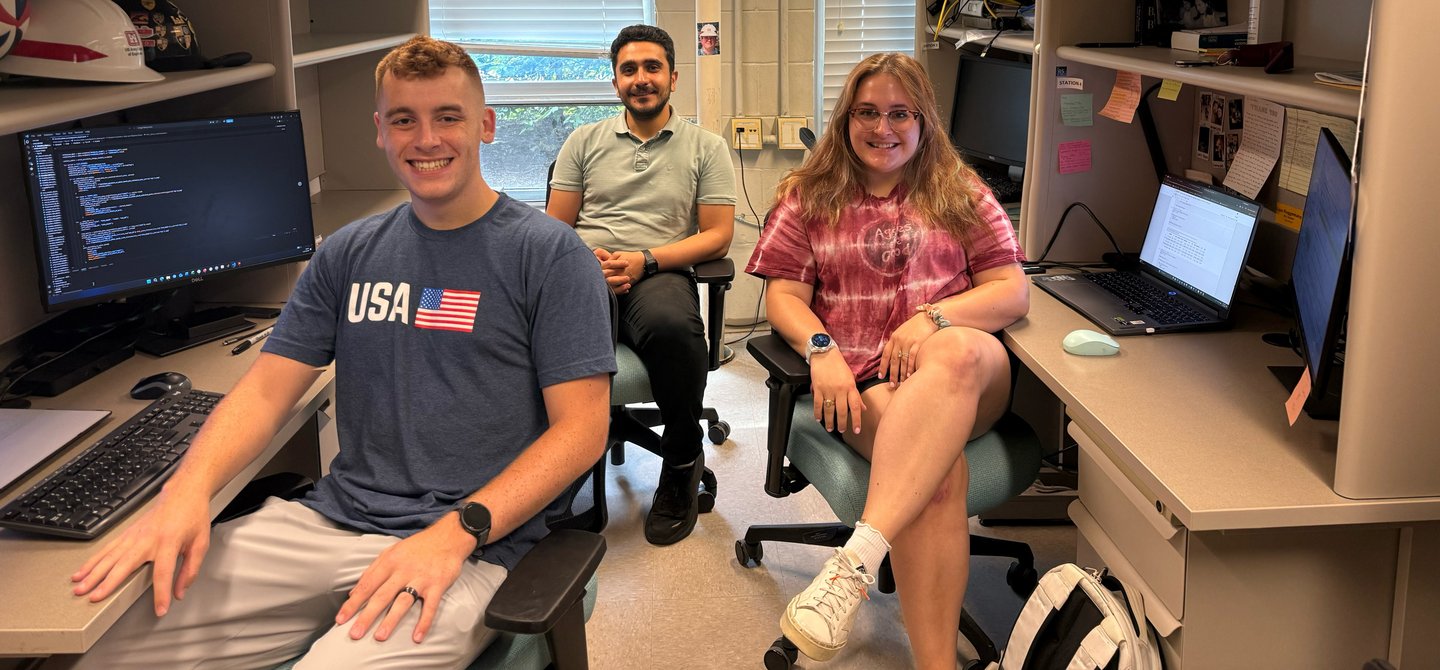
Perhaps the most valuable lesson we’ve learned as early career researchers is that interdisciplinary collaboration combines our expertise and expands the questions we can ask. The complexity of the Great Lakes means that no single researcher can fully understand every process shaping a coastline. Coastal evolution emerges from the interaction of countless physical, ecological, and environmental processes across space and time, making diverse expertise valuable and essential. By working together, we can produce research that serves engineers, scientists, decision makers, and the broader public. By integrating observations and numerical models, we move beyond merely documenting coastal change toward understanding the mechanisms that drive it. That broader perspective not only improves our understanding of how coastlines evolve today but also strengthens our ability to anticipate how they may in the future.