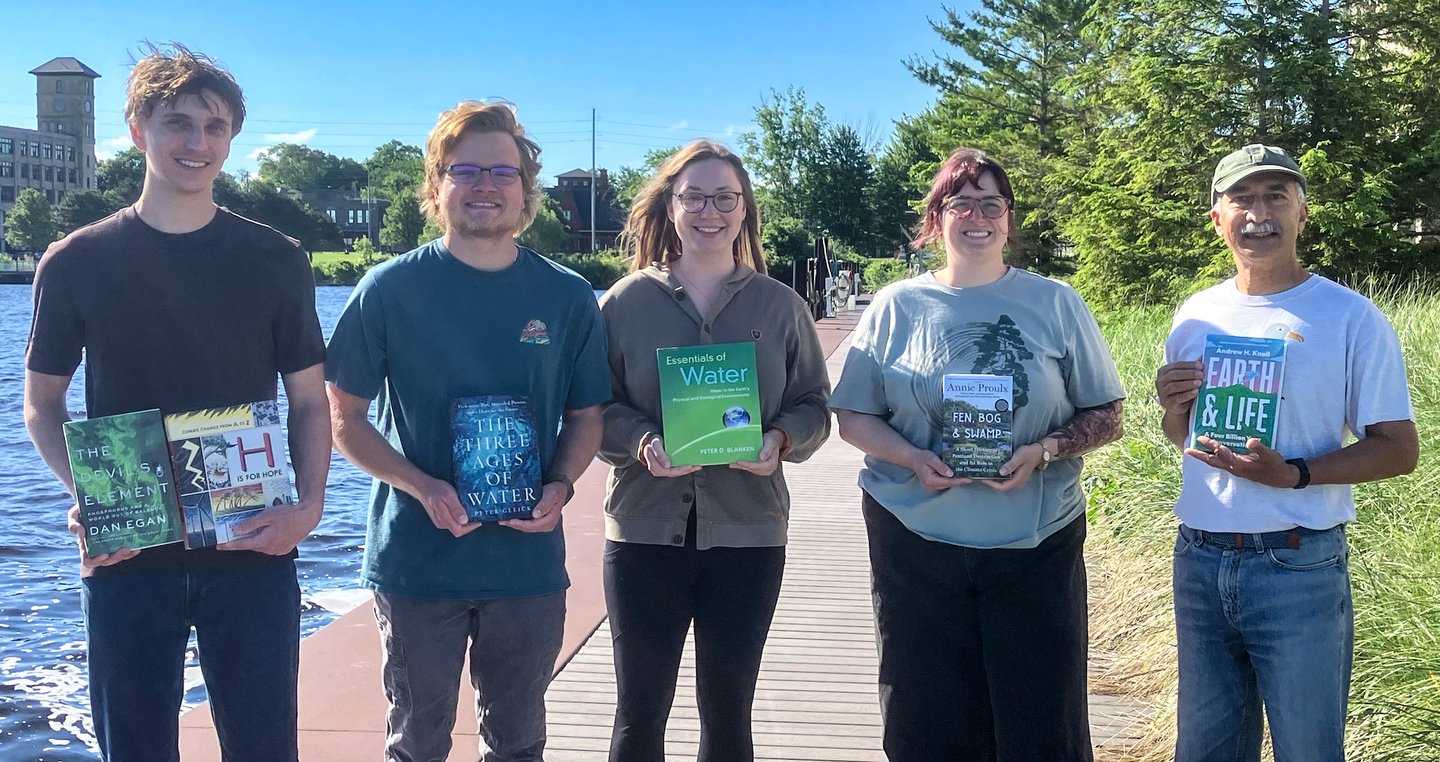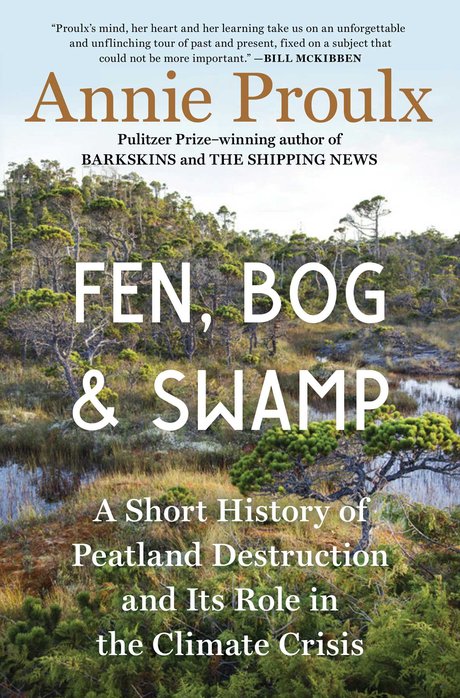
In Fen, Bog & Swamp: A Short History of Peatland Destruction and Its Role in the Climate Crisis, American writer and PEN/Faulkner Award winner Annie Proulx celebrates the significance of wetlands to humanity, biodiversity, and climate change, while describing their disturbing worldwide decline driven by drainage for resource extraction, farming, and development. Though waterlogged wetlands cover only about 5% of Earth’s land area, they play an outsized role in filtering large amounts of water and carbon, serving as critical habitats for both terrestrial and aquatic life. As wetlands have been drained and peat harvested, the carbon dioxide and methane stored within them have been released back into the atmosphere. Large-scale degradation of wetlands began in 17th century England with the draining of fens. In the North American Great Lakes basin, more than half of the wetlands have been lost since European colonization.
Proulx’s book covers wetlands across the world—from Siberian bogs and Brazil’s Pantanal wetlands to the Okefenokee Swamp in the U.S.—while simultaneously comparing the similarities, differences, and intricacies of the various wetland types. In Chapter 1, “Discursive Thoughts on Wetlands,” Proulx makes a historical accounting of wetlands over thousands of years, until the post-Columbian global colonization, when wetland loss reached levels great enough to impact global water resources and climate. In Chapter 2, “The English Fens,” she describes how fens, an integral part of human societies from prehistoric times (Fen Peoples of old Britain), have been mostly lost in just the last two centuries. In Chapter 3, “Bogs,” Proulx describes the bogs of the world, comparing their past and present states. In the final chapter, “Swamp,” which also includes mangroves, she emphasizes the importance of knowing historical baselines for dealing with changing realities such as the sinking shorelines of Louisiana and its drowning marshes as sea level rises. Throughout the book, Proulx explores the common theme of how shared histories, human use, and climate change have combined to shape Earth’s wetlands over time.
Ultimately, Proulx’s book is both a tribute to the world’s wetlands and a timely call to action for their protection and conservation. Since its 2022 publication, however, new threats have emerged. For example, projected water consumption by burgeoning AI data centers is alarming, and widespread damage to wetlands is already being reported. Wetlands that take weeks to drain can take millennia to recover. However, wetland restoration is possible, and Proulx documents some notable successes. For example, a recent report has recorded encouraging signs of a worldwide recovery of coastal mangrove swamps over the last four decades, as natural regeneration has gradually overtaken anthropogenic degradation. There is hope. It is time to heed Proulx’s plea to let live, conserve, and restore our wetlands.