On February 26, 2025, I celebrated my retirement from 40 years of federal civil service, with the last 10 years as the director of NOAA's Great Lakes Environmental Research Laboratory (GLERL). What should have been a happy event was instead sorrowful and bitter; late in the prior week, I’d received a list of “probationary” employees who had been identified to be fired; ostensibly to meet goals of downsizing the federal workforce. I was not informed as to who made the selection decision, nor was I given the opportunity to weigh in. The date of the dismissals was unknown, and I tried to prepare my staff for the uncertain future. To their credit, the staff continued to prepare for my send off and made a memorable event. The following day, February 27, eight staff received dismissal emails from NOAA headquarters at 4 p.m., with one hour to vacate the facility.
An all-time federal staffing low
Of the eight “probationary” employees, all but one were mid-career, and all but one had worked for NOAA either as a federal employee, cooperative institute employee, or contractor. Seven were female, and one was a U.S. Air Force veteran, another a former editor of the Pentagon’s Stars and Stripes, and another was a former Peace Corps volunteer. One person had moved quite a distance at their own expense and given up a well-paying academic position. Ironically, all of them had essentially received promotions—putting them in probationary status despite records of high performance and prior service. Hope glimmered when they were reinstated and placed on administrative leave following lawsuits, but ultimately the courts did not find in their favor, and they were again dismissed from service, adding insult to injury.
Earlier, two employees also accepted the Deferred Resignation Program, aka “The Fork” and departed at the end of the month, for a loss of 10 employees. A third wave of departures followed when Voluntary Early Retirement Authority and Voluntary Separation Incentives Program were offered. Another six employees departed by the end of April.
The vacant director’s position and three vacant positions that were in the process of being advertised, but cancelled, brought the total to 20 positions. Another employee voluntarily resigned for a position outside the federal workforce, bringing the total to 21 vacant positions out of an authorized 52 federal employees—or a 40% reduction in force—within a two-month time period. The laboratory was now at an all-time low of federal staff since it was established in 1974, with 31 employees. Remaining federal staff, contractors, and cooperative institute employees tried to pick up the workload to keep NOAA’s mission in the Great Lakes moving forward, most critically, toxic harmful algal bloom monitoring and prediction, but there were significant gaps in skill sets and no time for hand-offs or training on job responsibilities.
Soon after, impacts to GLERL’s cooperative institute staff and contractors began to occur when new rules requiring Department of Commerce and Department of Government Efficiency approval were put in place, slowing or eliminating awards. One contractor retired, two others were temporarily laid off, and five boat captain positions remained unfilled. No captain would accept a position given the uncertain future of NOAA and the laboratory, despite a contract fully funded in the prior fiscal year. The cooperative institute, running on the fumes of FY24 grants, and the prospect of FY25 Inflation Reduction Act rescissions, began two rounds of layoffs in June, prior to delayed Great Lakes Restoration Initiative (GLRI) grants being approved mid-June. As of the end of June, the cooperative institute has laid off two employees.
Other impacts
Further compounding the ability of the lab to conduct its mission, travel to conferences and meetings were restricted, including prior commitments to the International Association of Great Lakes Research’s annual conference and regional inter-agency meetings. Procurement cards and spending limits were greatly reduced, impacting the ability to procure science and vessel supplies and equipment.
Funding uncertainty continues
As of late June, the delayed NOAA FY25 spend plan and reorganization plan continued to create uncertainty regarding the future of the laboratory. Although the laboratory was receiving its monthly base funding allocation under the Congressionally approved Continuing Resolution, management was instructed to prepare for a 5-30% funding reduction late in the fiscal year, essentially preventing expenditures except for the most basic labor and facility costs.
In early July, the NOAA FY26 Congressional Budget Submission was released, aligned with the Office of Management and Budget NOAA passback, proposing elimination of all NOAA Oceanic and Atmospheric Research (OAR) laboratories. In mid-July, the Commerce-Justice-Science Senate and House appropriations committees began to mark up NOAA’s FY26 funding bills. The Senate bill rejects eliminating NOAA Research citing, “While the Committee could be open to realigning some programs to enhance operational outcomes, the absence of detailed plans hinders informed decision making. Consequently, the Committee maintains funding for OAR programs under their existing structure.”
Scientific discovery at risk
The specific impacts of such a large and fast reduction in force are still unfolding. These actions resulted in the lack of resources to deploy the two Environmental Sample Processors that report Harmful Algal Bloom (HAB) toxicity monitoring in western Lake Erie. The lab is struggling to operate the vessel-based HAB monitoring program in Lake Erie, Saginaw Bay, and Green Bay, as well as communicate the results to the public. The federal employees who performed the work are gone, and the cooperative institute employees are at risk due to funding cuts, with the potential for ending the HAB program. Meanwhile the HAB problem continues unabated; this year the HAB toxin was detected on April 28—the earliest the toxin has been detected.
The laboratory’s Climate Ecosystem Fisheries Initiative (CEFI) has also ground to a very slow crawl. CEFI, a NOAA-wide initiative, is to develop the next generation of oceans and fisheries models to help predict their productivity and aid in fishery management decisions. Funded by the Inflation Reduction Act, freezing of the funding and potential rescission has essentially stalled development. The retirements of the lab’s two food web federal scientists have left one scientist and one federal technician to move the project forward. Eagerly awaited by the Great Lakes Fishery Commission, CEFI will be delayed or possibly ended.
With the loss of the entire communications team who were responsible for assisting scientists with scientific publications, media response, and educational outreach, there has been a slowdown in getting science results out to those who make Great Lakes management decisions and to the general public.
A grant that was intended to facilitate the research lab working collaboratively with federally recognized Tribal Nations fell early victim to funding decisions. The highly successful and competitive Summer Fellows Program may also be at risk in future years, reducing training opportunities for the next generation of U.S. scientists.
The development of GLERL’s next-generation Great Lakes Coastal Forecast System is also at risk if FY26 Bipartisan Infrastructure Law funds are rescinded. The next generation would predict compound river and lake flooding, leading to better flood inundation forecasts, warnings, and mapping. The system also predicts ice cover development and movement and is crucial for accurately mapping oil spill transport in icy conditions. Work has been progressing on Lake Ontario, but has not yet been extended to Lake Erie, Lakes Michigan-Huron, or Lake Superior. One of the federal technicians who processed the model input data, managed the satellite data feeds, and ensured the models ran daily in experimental mode is no longer at the laboratory.
The loss of the GLERL director as the NOAA GLRI program manager, the former federal GLRI program coordinator, and the budget officer, has pushed these roles onto already burdened staff to manage and execute the $10-$30 million of projects annually. Given the high bipartisan support and continuing priority of the initiative, it is unfortunate that, as one of the top three federal agencies executing the program, GLERL has been so heavily impacted. Unjustly, the GLRI program coordinator who managed the GLRI program since 2010, and oversaw $330 million of successful projects, was fired as a probationary employee after receiving a promotion.
Overall, the staffing reductions and budget cuts restrict GLERL’s ability for new scientific discovery. If staffing and funding restrictions continue, scientific progress will be limited for the foreseeable future.
Beyond the laboratory
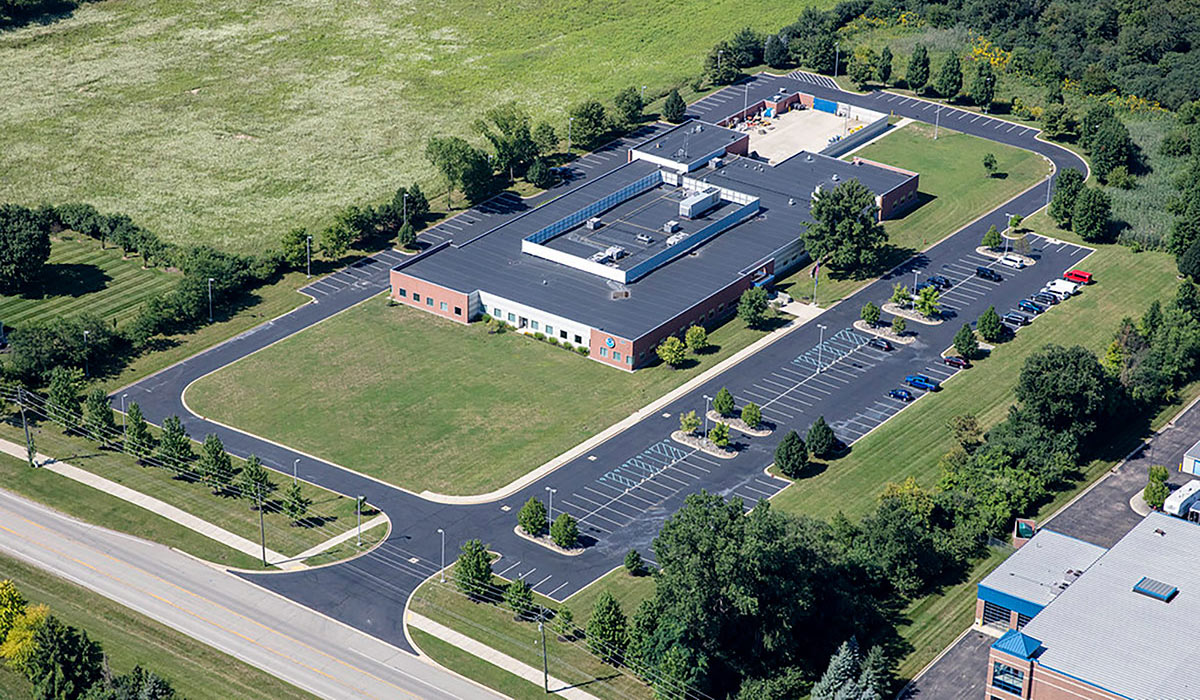
GLERL is not just a research laboratory—it unofficially serves as NOAA’s Great Lakes Regional Center. The director serves as the Great Lakes regional team leader, coordinating NOAA’s missions across its line offices for efficient delivery of services. The Ann Arbor GLERL facility houses other NOAA staff including the Office of Habitat Conservation, Office of Response and Restoration, Office of National Marine Sanctuaries, Office of Law Enforcement, and the National Geodetic Survey. The facility also houses other NOAA-funded partners such as the Great Lakes Observing System, Sea Grant, the Cooperative Institute for Great Lakes Research, and other collaborating agencies’ staff from the U.S. Coast Guard and the International Joint Commission. Eliminating GLERL would have cascading relocation and facility costs and destroy the synergy and efficiencies of co-location.
Impacts are and will extend beyond the laboratory itself, including other federal U.S. and Canadian agencies, the International Joint Commission, the Great Lakes Commission, and the Great Lakes Fishery Commission. Cuts to other federal agencies and state programs, such as H2Ohio, will amplify impacts on preserving and restoring the Great Lakes. It remains to be seen what FY26 will hold for the laboratory; Congressional appropriations will be the final determinant.