Growing up in Ontario during the 1970s through to the 1990s, I witnessed a golden age of environmental legislation that benefited the Great Lakes basin. A series of binational air and water pollution laws (e.g., Great Lakes Water Quality Agreement, Canada-U.S. Air Quality Agreement) as well as provincial acts (e.g., Ontario Environmental Protection Act, Ontario Water Resources Act) were created on a model of consensus between all parties. This history of environmental law in Ontario left me with the naïve impression that (generally) through time and effort, progress in environmental regulations was always the net result.
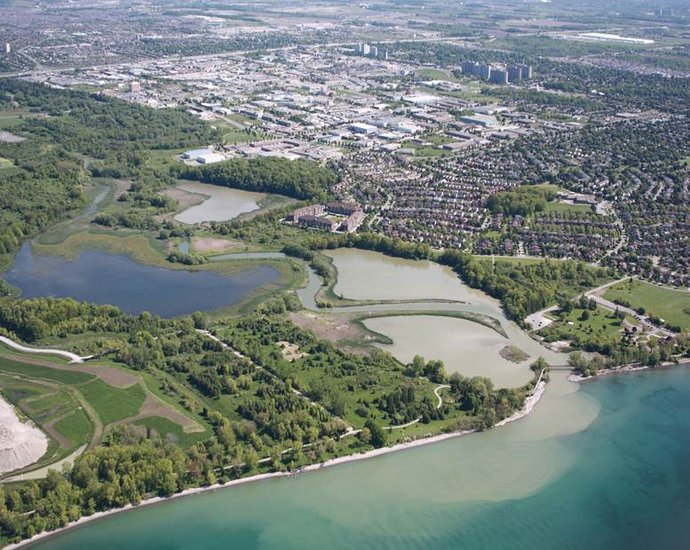
Fast forward to present day, I am dumbfounded by the recent actions of the current Ontario government to gut environmental legislation that took decades to come to fruition. The same party that owned the Walkerton Crisis of 2000—when the community’s drinking water supply was contaminated due to improper water treatment following heavy spring rains, resulting in thousands of people sickened and seven dead—seems to have forgotten that integrated source water protection as well as not building on flood plains not only protects the environment, but saves human lives too. As a result, I have had to sheepishly tell my students that the political model of environmental progress of which I was accustomed to had made a U-turn back to the 1950s. This legislative paradigm shift was due to Ontario’s Bill 23 (now officially the More Homes Built Faster Act, 2022).
Bill 23 was, by design, a complicated omnibus bill that “streamlined” (read “dismantled”) several provincial acts (e.g, Conservation Authorities Act, Provincial Planning Act) under the guise of expediting the building of affordable homes across the Greater Toronto and Hamilton Area. Arguably the most egregious aspect associated with Bill 23 was the targeted removal of thousands of hectares of agricultural and natural lands within the provincially protected Greenbelt.
Public outcry in response to Bill 23 was swift from an array of professional bodies and environmental groups. As it turns out, Bill 23 offers very little in the way of improving housing affordability, but rather paves the way for land speculators and developers to bulldoze their way across once protected watersheds with minimal to no restrictions on where and how to build. As an aquatic ecologist that conducts research on the impacts of land-use on water quality and ecosystem health, I know there are decades-worth of studies showing how urban sprawl pollutes waterways, increases flooding, and destroys critical habitat for threatened and endangered species. Irrespective of public consultation, where thousands of letters and emails were submitted in protest to Bill 23 last fall, the majority Progressive Conservative government in Ontario pushed the controversial piece of legislation through to royal assent anyway.
Now that Bill 23 has passed, there has been a growing coalition of individuals and groups that are working together to stop the implementation of Bill 23. It is early days, but recent media reports indicate that there remain significant road-blocks to unfettered development, including the province’s responsibility to consult with Indigenous First Nations regarding development activities in their traditional territories. Even the Canadian federal government has started to get involved in key areas where species at risk habitat is threatened.
If you are interested in getting involved or learning more about the implications of Bill 23 to the health of the Great Lakes, please check out these resources:
- Ontario’s Bill 23, The Narwhal
- Action Alert: Bill 23 - More Homes Built Faster, 2022, Canada’s Environmental Law Association
- What’s next as we work together to stop the destruction of farms, forests and wetlands in the Greenbelt and beyond?, Environmental Defence