In the third decade of the 21st century, the global water crisis has become existential—a crisis that has and will challenge the limits of science, law, and public policy to sustain watersheds. Even without the devastating effects from climate change, the health of watersheds and lakes are at a tipping point. This article suggests that (1) watershed and hydrogeological and meteorological science have advanced to the point that it is possible to understand and model the causal relationship of natural forces and human activity that connects the arcs of the water cycle to lakes and their tributary streams and groundwater; and (2) the legal framework and principles of public trust law (the public trust doctrine) offer a pathway to protect and sustain watersheds and meet the challenge of this watershed crisis.
Watershed science
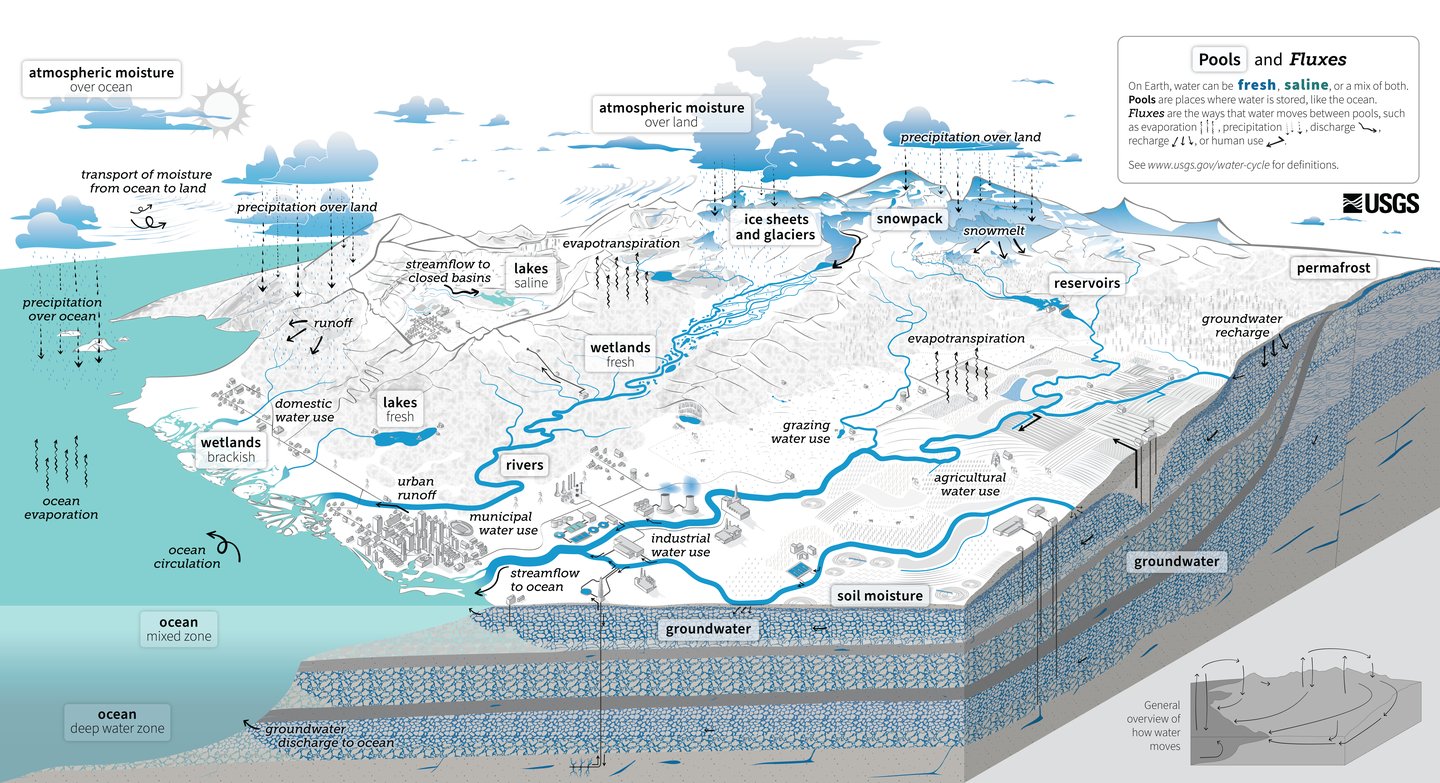
The hydrosphere and watersheds constitute a single hydrogeological system and include, for example, precipitation, runoff, percolating groundwater, seeps, springs, wetlands, root and plant uptake, evapotranspiration, and evaporation. Add to that the “rivers in the sky.” Water in watersheds defines life—natural and human—and along with climate defines human health, community, culture, development, and economy. Protecting the integrity of the quantity and quality of water sustains lakes, rivers, ecosystems, watersheds, and quality of life: Whatever happens in one arc of the water cycle affects the other arcs of the water cycle.
Science and technology have made major advances through monitoring, collection of data, calculations, and modeling to determine the causes of impacts on lakes, streams, and groundwater from human activities and natural forces within a watershed. When held to high standards, these advances provide a better picture for human conduct to conform better to reality. The old adage “out of sight, out of mind” is pointless.
Putting an end to harmful algal blooms: The story of Michigan’s Platte Lake
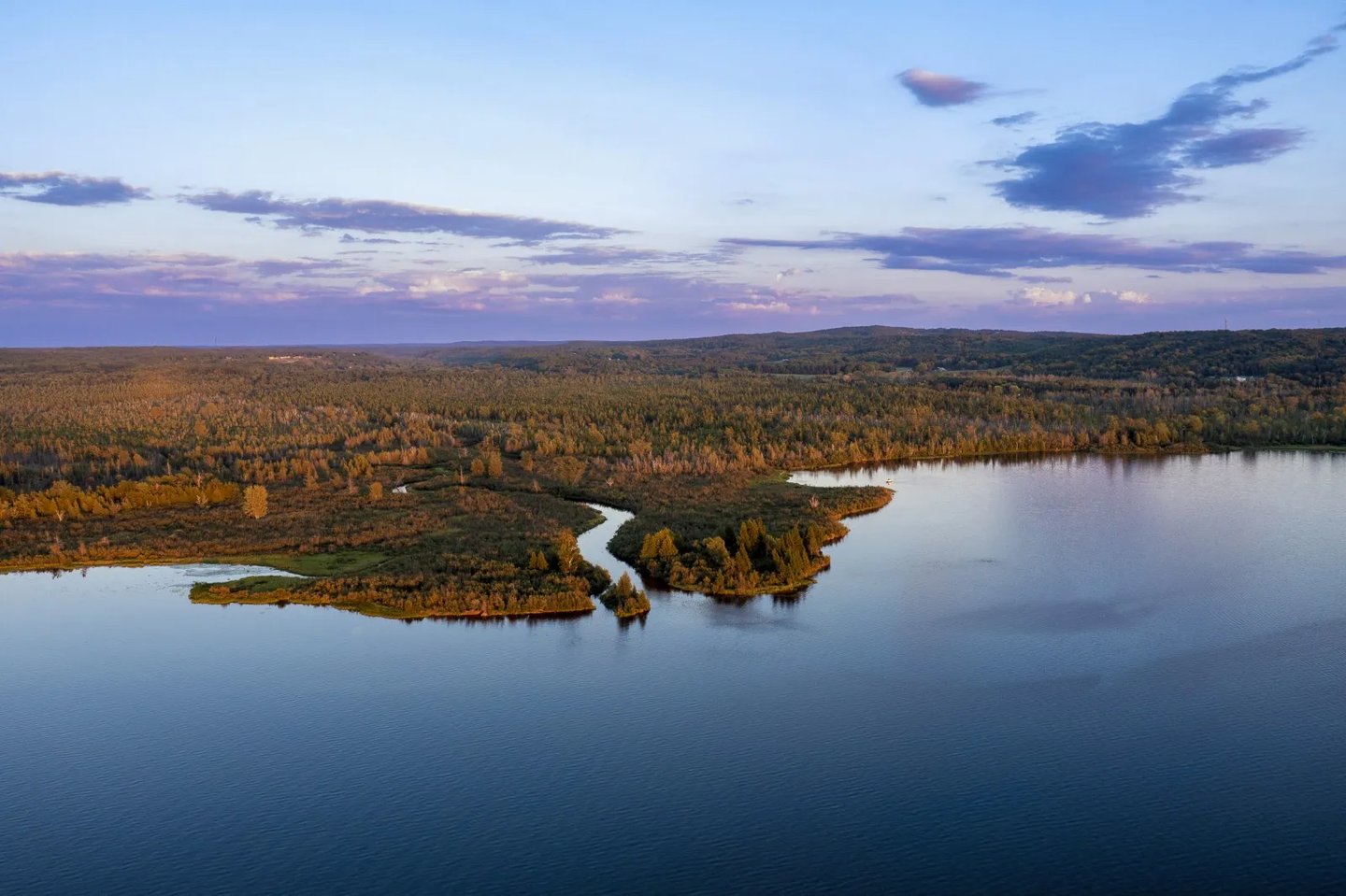
Will Swiecki enjoyed his childhood summers on the clear waters of Platte Lake in northwest Michigan. When he returned to the lake in the mid-1970s at 27, he was shocked that he could not see his hand under the murky green water. Childhood memories motivated him to do something. He met with officials from the Michigan Department of Natural Resources (DNR) and collected information. When meetings with officials failed to address the problem, he hired a lawyer and Ray Canale, a water quality engineering professor at the University of Michigan. Canale soon questioned the DNR’s evaluation of impacts from an upstream fish hatchery because of the high-phosphorus fish food, lax waste treatment, and the absence of any probability coefficient. It appeared that the fish hatchery was the culprit.
When the DNR balked, Swiecki and conservationists engaged the Platte Lake Improvement Association (PLIA). In the early 1980s, PLIA filed a citizen lawsuit based on the Michigan Environmental Protection Act, which prohibits pollution or impairment of water and other natural resources and the public trust rights of citizens (MEPA 324.1703[2]). The trial judge ruled in favor of the PLIA and ordered the DNR to reduce its phosphorous discharges. In 2000, after a decade of court supervision, the DNR and PLIA agreed to a consent judgement that required monitoring to assure the effectiveness of efforts to reduce phosphorous discharge. Equally significant, it established an extensive monitoring system at 18 locations in the watershed. The local Benzie Conservation District agreed to collect and manage the data, including flows, levels, phosphorus, and other parameters.
After the collection of 20 years of data, the court entered a new consent judgement that formalized the watershed-wide monitoring system and set the TMDL of phosphorus for Platte Lake at 8 ppb. In 2022, the parties and the conservation district worked with Canale, who built an innovative computer model that would evaluate and identify sources of impacts to the lake from human water and land activities and natural forces within watershed to ensure that the 8 ppb maximum daily load is not exceeded. The approach also incorporated the dynamic swings in weather as the result of climate change. (For a more complete story about Platte Lake, see “Remedies for Harmful Algae Blooms are Available in Law and Practice” by Keith Schneider, Circle of Blue.)
The public trust watershed framework
The public trust doctrine has been recognized in every U.S. state and Canadian province (referred to as the right to navigation and fishing) for almost 100 years. Public trust principles have spread to many other countries. The doctrine states that navigable waters and their submerged lands and ecosystems are held by government in public trust for the protection from impairment of public rights of navigation, fishing, boating, swimming, drinking water, bathing, and sustenance. Government as trustee has a solemn duty to assure that its decisions uphold this non-impairment of public trust resources and public rights in perpetuity. The doctrine limits upgradient activities and uses that impair the public trust in downstream lakes. In this way, water uses, pollution, and diversions, and other impacts on water and the environment within a watershed can be limited based on the public trust law non-impairment standard for lakes and tributary water courses.
The public trust doctrine
The public trust doctrine holds that certain natural resources like navigable waters are preserved in perpetuity for the benefit of the public to use and enjoy. Public trust principles have legal roots in Justinian laws of ancient Rome and have been a part of our democracy for centuries dating back to the Magna Carta in 1215. The Great Lakes were placed in public trust with the signing of the Northwest Territory Treaty in 1787, vesting these principles as a condition of statehood in Great Lakes states. The U.S. Supreme Court affirmed the public trust in 1892, and it is a part of common law, court rulings, and constitutional law in the Great Lakes states and provinces. (Read more about the public trust at the For Love of Water website.)
Watershed and public trust principles for the 21st century
In 2014, the International Joint Commission (IJC) pinpointed high nutrient loads as the trigger for creating oxygen-depleted “dead zones” and cytotoxins in Lake Erie. It recommended a 40 percent reduction in phosphorus and encouraged governments to use the principles of the public trust doctrine to restore Lake Erie. But efforts to establish a TMDL faced resistance from EPA, and subsequently Ohio and EPA delayed declaring the open waters of Lake Erie “impaired” to avoid triggering the establishment of the TMDL under the nonpoint discharge provisions of the Clean Water Act (CWA). More recently, both EPA and Ohio have declared these open waters “impaired,” but no TMDL has been recommended or adopted. Moreover, the CWA was not designed for systemic harm to watersheds and the environment, including climate change. Even if a TMDL is adopted, compliance is voluntary.
Why wait for federal or state and provincial legislatures to do something? The harmful algal blooms in the western end of Lake Erie are the result of phosphorus and other nutrient releases—roughly 80 percent from agriculture production and 20 percent from municipal and other waste discharges. It is not much of a leap to apply the watershed approach in the Platte Lake story and public trust principles to other watersheds to address any number of problems, including the “dead zones,” nutrient pollution, PFAs, toxic chemicals, and sediment loading. The common law of public trust is a constitutional and property law principle that is insulated from political efforts to weaken it. In 2016, the IJC in its 15-year report recommended the public trust doctrine as the “backstop” principle for protecting the waters of the Great Lakes.
The integration of watershed science and the non-impairment standard in public trust law provides the basis for assuring the protection of our lakes and waterways. While lawsuits are necessary, why not start at the end of the Platte Lake story and replicate the watershed scientific and legal framework as a constructive model for governance and protection for our world’s lakes and rivers, large and small? There is no reason to wait.