In Turning the Tide, the authors report on the increasingly disastrous global water crisis and prescribe steps for addressing it. Water is a life-sustaining, sociopolitical molecule. From the outset, water has dictated where, how, and if we live. Now, due to our own actions such as pollution and climate warming, our common water resources are threatened. Consequently, resolving the crisis also requires concerted global action.
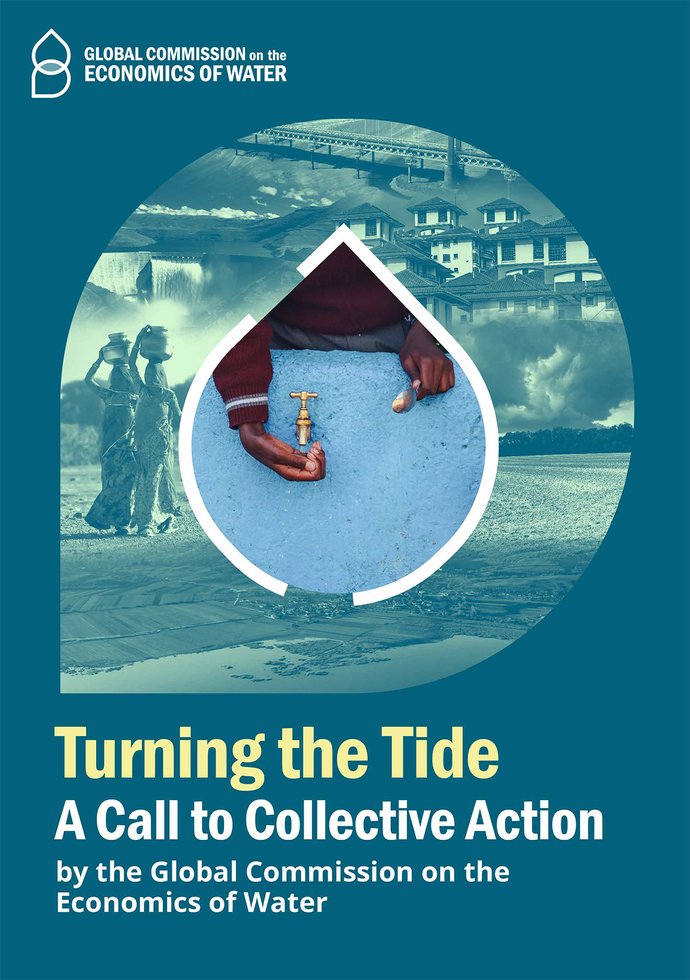
The report by the Global Commission on the Economics of Water outlines a seven-step call to action as a solution for the world’s water crisis. This process includes 1) managing and protecting the water cycle as a global common good; 2) holding availability of safe water as a human right; 3) halting underpricing water while supporting the poor; 4) ceasing excess agriculture and water subsidies, which lead to excessive water consumption; 5) founding local and regional water partnerships that encourage investments in water access, resilience, sanitation, and sustainability; 6) fortifying our water-storage systems, recycle wastewater, and reuse water while mining materials such as lithium; and 7) unifying the fragmented governance of water to support all demographics and implementing trade policies to ensure sustainable water practices. No single step is as impactful as all seven acting in concert.
Water is the ultimate global commons. Reenvisioning water resources as being vital to humanity is integral for resolving the water crisis. Water must be viewed as a human right, and all peoples should have ready access to safe drinking water. Currently, 26% of people do not have reliable access to clean water. With countries divided, there is a failure to formulate geographically interconnected partnerships, leading to a failure to deliver affordable and resilient water services and increased inequality. However, our collective failure offers a solution—collective action. Thus, the problem requires a global partnership to solve. Turning the Tide emphasizes the need for transnational unity in our action towards solving the water crisis.
Turning the Tide conveys the message that effective governance of water can shape a sustainable future for our shared water resources even as the world changes around us. The history of humanity is tightly bound to the history of water, a two-way street of water and society constantly shaping one another. To truly turn the tide of the impending water crisis, our social contract with water must be urgently redefined with water sustainability at its core.