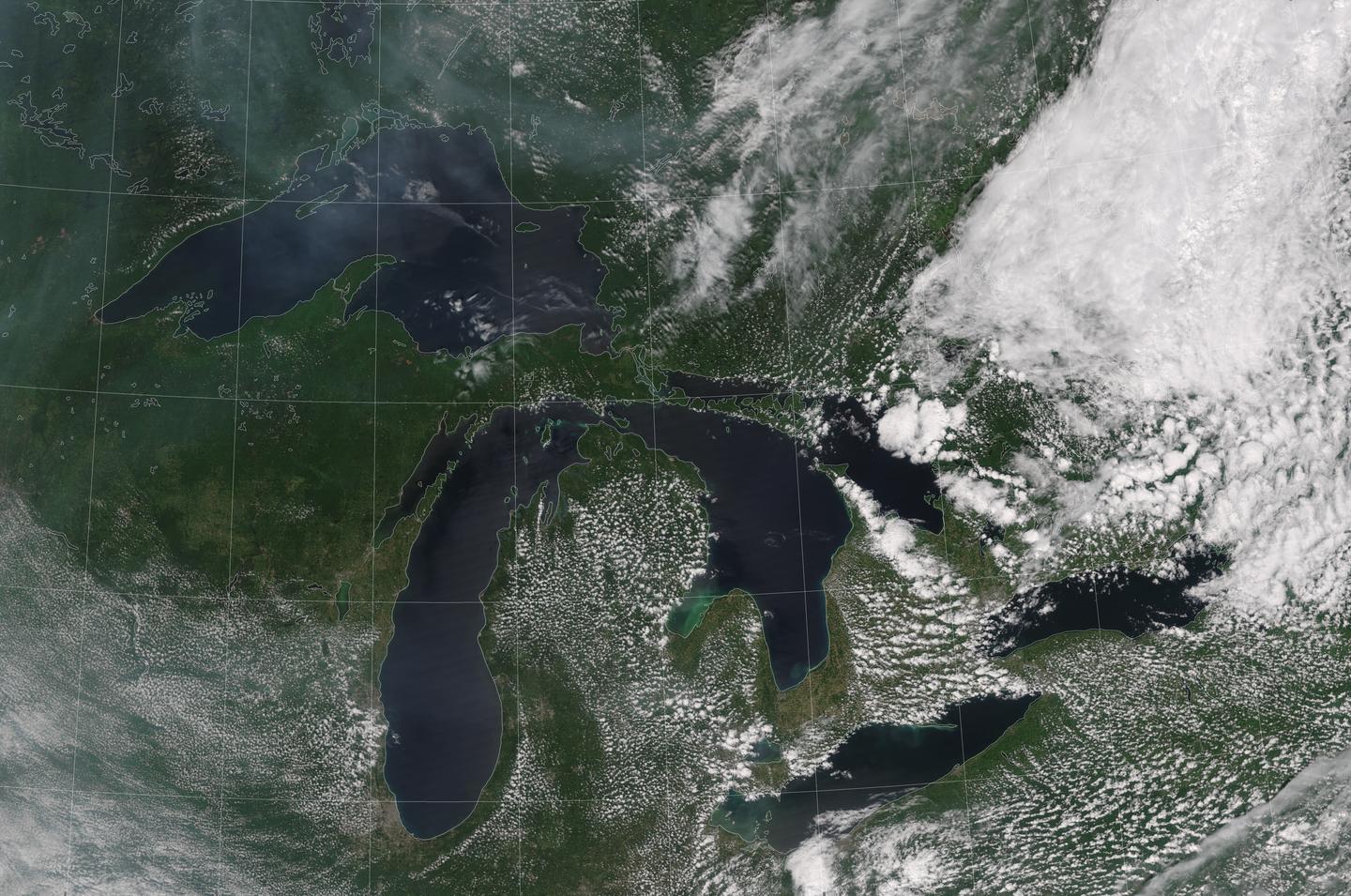
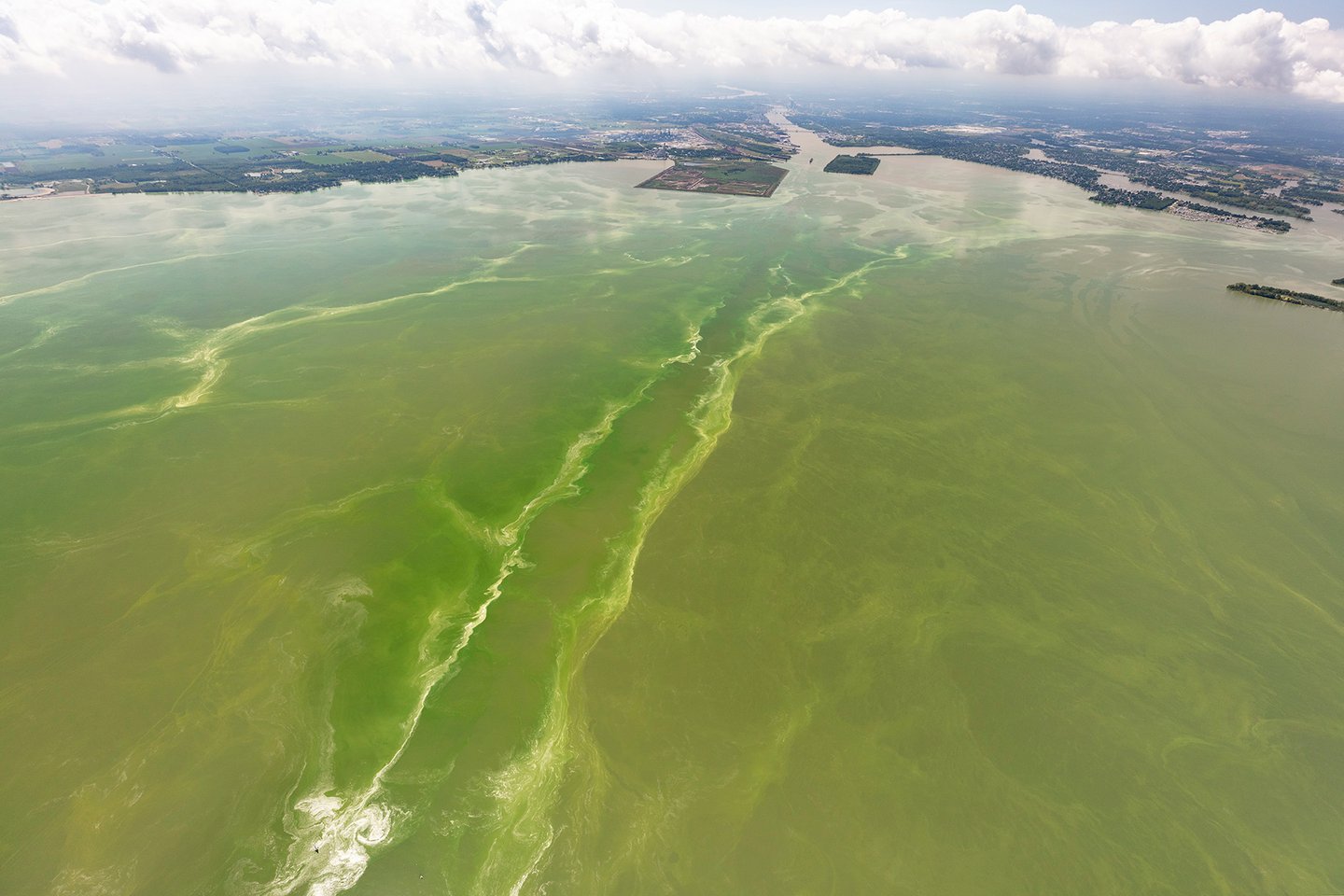
Under a Great Lakes Restoration Initiative project, NOAA’s Great Lakes Environmental Research Laboratory (GLERL) has been funded to evaluate water quality and ecosystem health. Led by Steve Ruberg, this work investigates harmful algal blooms (HABs) and uses remote sensing platforms with multi-year observations from an aircraft with a hyperspectral camera affixed in the aft of the plane. For almost a decade, the aircraft has been flying weekly to biweekly over the Great Lakes during the harmful algal bloom season, and the imagery is quickly processed to quantify harmful algal bloom levels for stakeholders in the region that monitor drinking water intakes in the lake (e.g., Lake Erie).
This aircraft platform capability has transitioned, under the leadership of Lauren Marshall, to putting the same hyperspectral camera on a drone to fly the very nearshore areas where HABs persist and people are more likely to interact with HABs. This effort is part of a funded project under NOAA’s Prevention, Control, and Mitigation of HABs program led by Reagan Errera. The aim of the project is to combine uncrewed surface vehicles (USV) that measure bloom toxin concentrations in near-real time with the airborne drone directing the USV where to sample next. These are two examples of NOAA GLERL’s dedication to delivering science to service to the Great Lakes region.