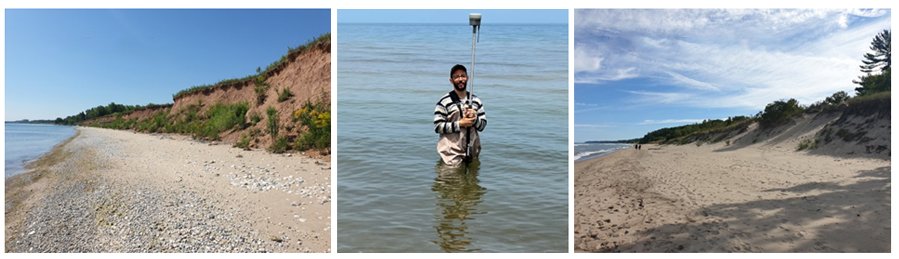
The wiigwaasi jiimaan—birch bark canoe—was once the predominant mode of transportation across the Great Lakes and today carries forward the culture and heritage of the Ojibwe. Traveling from their original homelands on the eastern shores of North America, the Ojibwe used the wiigwaasi jiiman to migrate to the Great Lakes region they now call home.
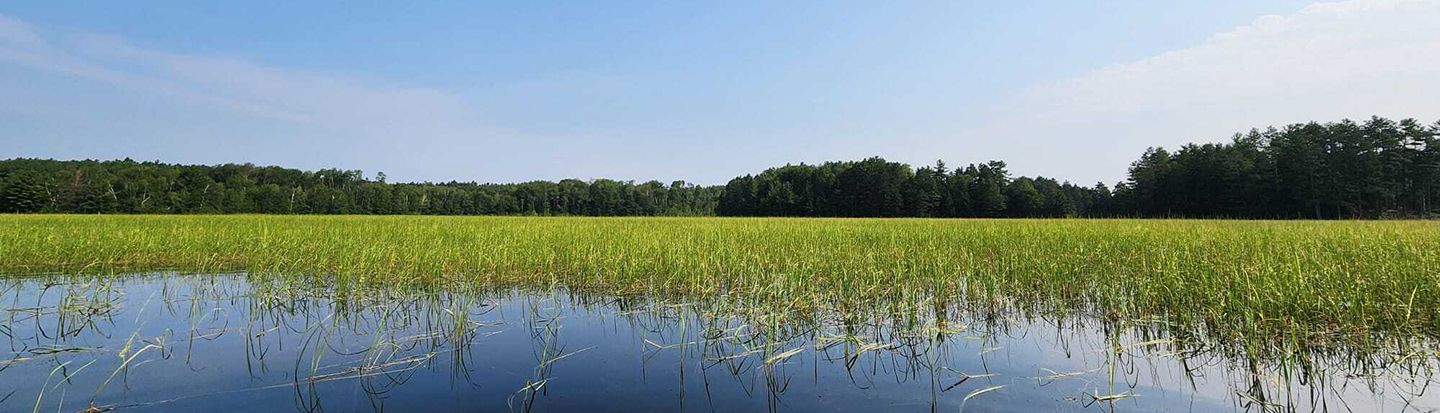
The jiimaan’s legacy of adapting with migration lives on through the STRONG Manoomin Collective. Partnering with several Ojibwe tribal nations, including Bad River, Lac du Flambeau, and Lac Courte Oreille, our team seeks to protect manoomin (wild rice) and achieve greater climate resilience throughout the Great Lakes by constructing a metaphorical wiigwaasi jiimaan. Generations ago, Ojibwe came to these lands in search of the “food that grows on water,” manoomin, which has sustained them spiritually and physically since. Now under constant threat from climate change, pipelines, and poor non-tribal management, manoomin needs help.
To work toward a future where manoomin is healthier and more plentiful, we are building a research-based wiigwaasi jiimaan. Consider its physical construction: all materials are different and have unique qualities, but if one was missing, the canoe could not be constructed. Giizhig (cedar) is the frame of the canoe: lightweight but durable and bends easily when green. Wiigwaasi-wanagek (birch bark) constructs the outer hull of the canoe. The bark is insect- and weather-resistant when applied properly. The grain of the bark is horizontal, which runs perpendicular to the structure of the canoe; this characteristic adds strength to the hull. Wadabiiyaab (spruce root) binds the birch bark to the cedar frame. Incredibly strong, spruce root grows in straight strands just underneath the soil. When dried, the roots contract, tightening the binding. Bigiw (spruce pitch) seals the cracks and seams in the bark hull to make the canoe watertight and functional. Each material contributes, and when combined, is greater than the sum of its parts.
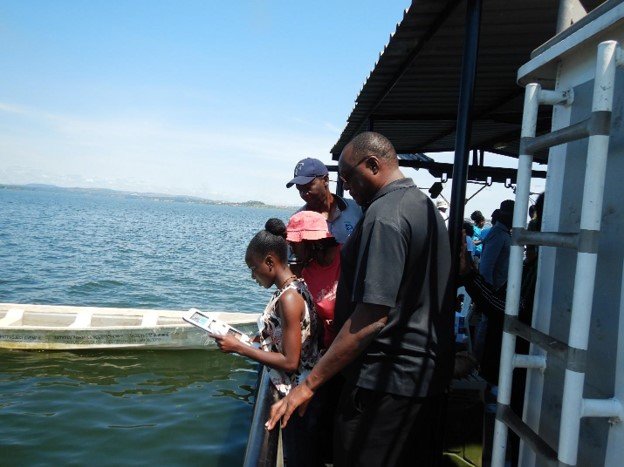
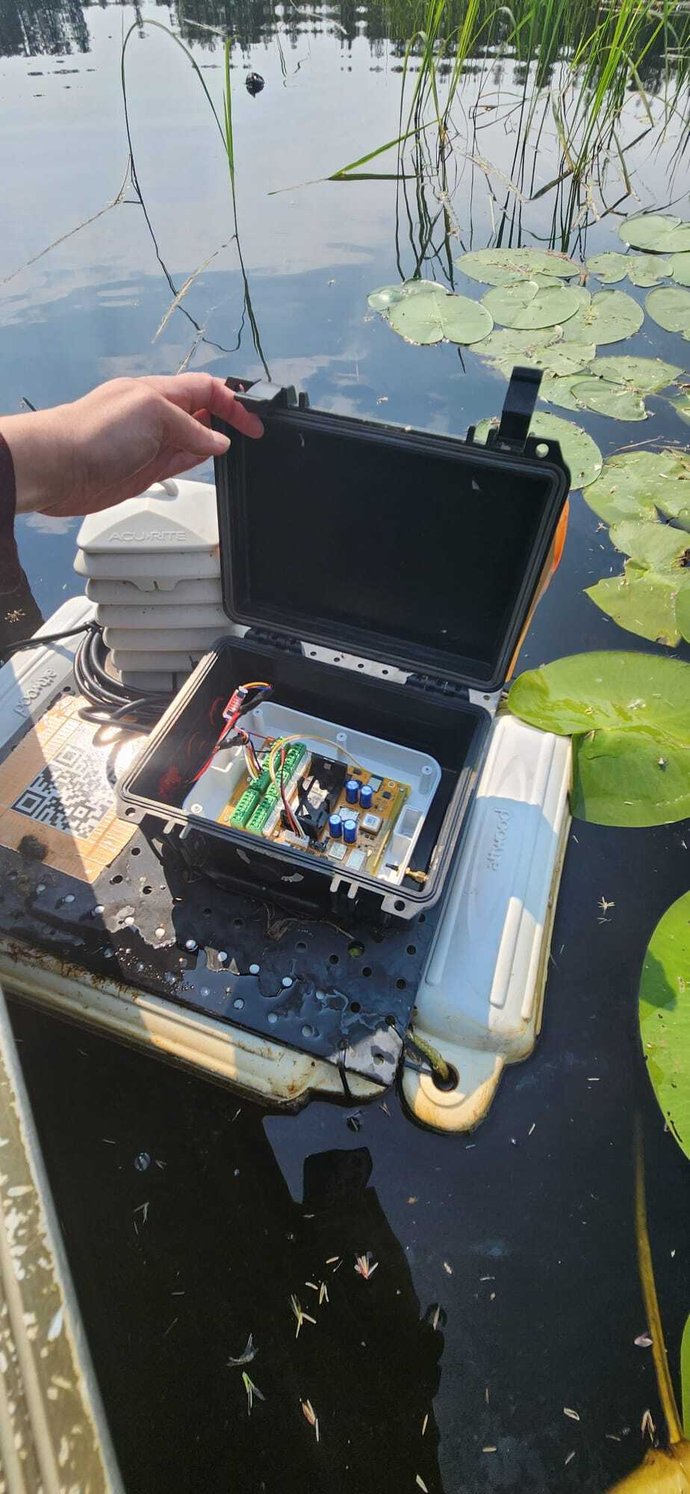
Our team works across four themes. First, the sensing theme—using advanced algorithms, onsite environmental sensors, and observations from the air and space—represents the giizhig (cedar) of our wiigwaasi jiimaan. Uploading and analyzing environmental data about manoomin in real time, this cyberinfrastructure is the frame of our research canoe by signaling to tribal leaders what waters manoomin treads. Second, concerned about the fragmented institutions that threaten manoomin management, the governance theme represents the wiigwaasi-wanagek (birch bark). Analyzing the institutional and policy landscape, governance research gives the canoe direction. The wiigwaasi-wanagek corrects the jiimaan when the waters (policies) are stormy. Third, the environmental theme combines Indigenous Knowledge with the computing capabilities of the cyberinfrastructure as an implementation of two-eyed seeing. This theme serves as the wadabiiyaab (spruce root); it binds together knowledge systems that ensure manoomin’s resilience. Fourth, engaging tribal members and guaranteeing that the research expands to many end-users, the education theme centers capacity building. It seals all themes together, and with its functionality, serves as our bigiw (spruce pitch).

Our research-based wiigwaasi jiimaan operates in practice by feeding insights and data from each theme into the others. Governance research, for instance, informs all the other themes by specifically interpreting and analyzing data to be usable.
For example, the sensors–the frame of our canoe—are the starting point for our data. They can collect and interpret data on the spot, flagging trends of concern. Take wake surfing. Some research show that wake surfing and boating cause turbidity that threatens the relatives that Ojibwe tribes steward. Moreover, driven by tribal leaders and knowledge that boat wakes and turbidity are a danger, the sensors can be programmed to flag these trends to spur decision-making to protect manoomin.
Governance research steps in by developing and testing resilience indicators—measures and scales for knowing when ecosystems (physical and social) are resilient. A potential indicator of resilience in this case is the number of bans on potentially harmful boating practices across the tribes that we work with. Because the Wisconsin Department of Natural Resources and the Wisconsin legislature have not enacted any statewide policies, regulation of wake boarding is ad hoc. Still, a tribe we work with—Lac du Flambeau—recently banned wake boating in the exterior waters of its reservation and cited threats to manoomin as one of the reasons. Governance researchers can track if other tribal nations enact bans, and in turn, can direct the sensors in lakes and waters where bans are enacted to provide the data case about the effectiveness of wake boat bans and manoomin health. With the backing of this scientific data, tribal leaders have a stronger foundation to shape agency and state policies.
Constructing and directing our research-based wiigwaasi jiimaan is ongoing. But it captures the importance of weaving Indigenous Knowledge and western science. Tribal knowledge holders direct our inquiry, with scientific knowledge providing further credibility to collect valuable policy-relevant data. Operating across themes makes it possible for teams to be greater than the sum of their parts and provide the evidence to inform resource management across the Great Lakes. We may not know all that the future entails, but our wiigwaasi jiimaan is durable and lightweight enough to adapt.