
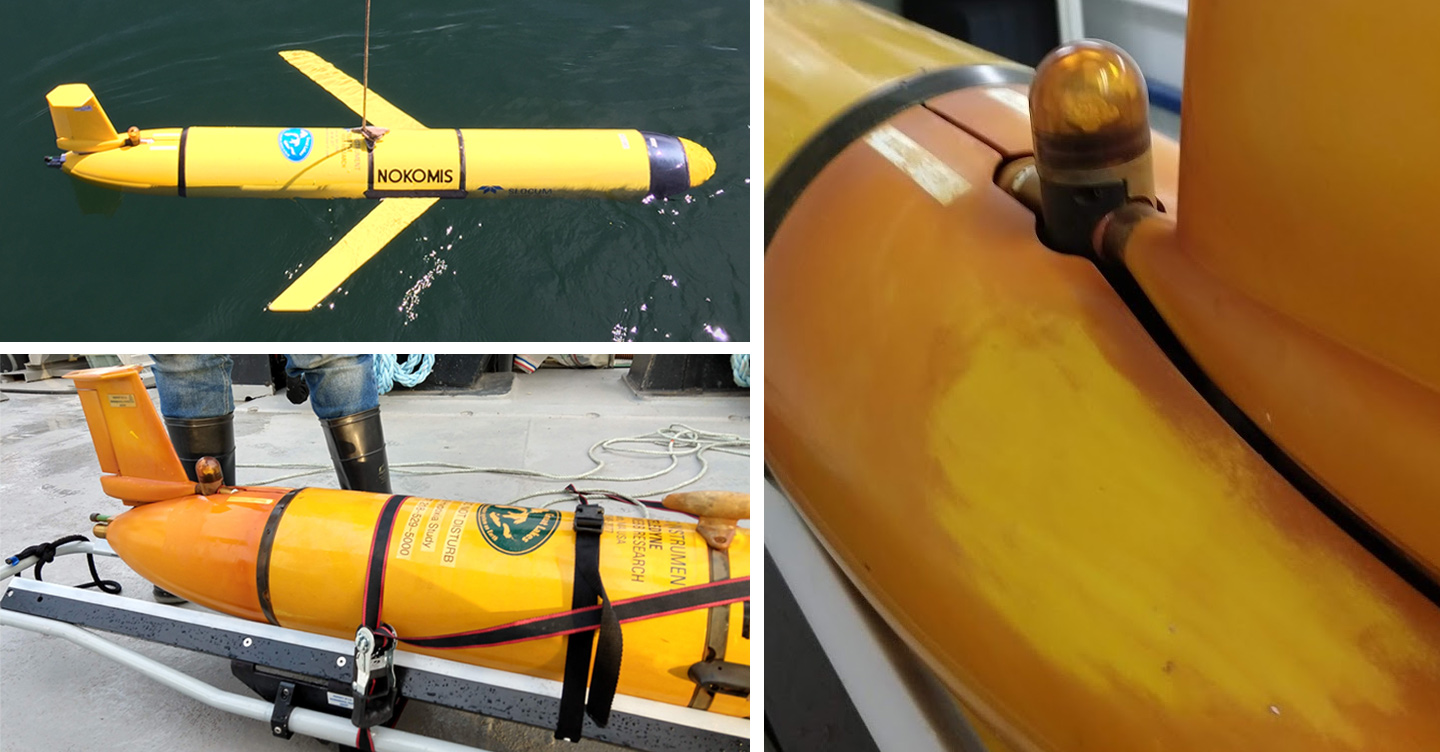
In support of the 2019 Lake Erie Cooperative Science Monitoring Initiative, the Environmental Protection Agency “flew” its autonomous underwater glider (a Teledyne Slocum G2) to explore the recurring hypoxic zone of the lake’s central basin.
The zone’s hypoxia is exacerbated by the seasonal growth and subsequent decomposition of a large amount of plankton (algae and zooplankton). This decomposition depletes the benthic dissolved oxygen concentration to below 2 mg/L, resulting in the late summer formation of a hypoxic layer that typically extends from 1 to 5 meters above the lake bottom. Lake Erie’s hypoxic layer negatively affects its aquatic habitat and biota, creating a large area sometimes referred to as a “dead zone.”
In its investigation of the dead zone, the glider traveled nearly 500 kilometers during a three-week mission funded under the Great Lakes Restoration Initiative. It completed more than 10,000 vertical profiles of the water column while collecting temperature, conductivity, and chlorophyll data in addition to dissolved oxygen concentrations.
When it was retrieved after its exploration, the normally bright yellow glider was stained orange. This color was likely imparted by the hypoxic layer’s dissolved iron oxidizing onto the glider’s body while it traversed the water column. Although there is more to investigate, some researchers have hypothesized that the excessive iron hydroxide that forms under hypoxic conditions may correlate with the amount of phosphrous released from the sediment. Regardless, it seems EPA’s glider encountered a geochemically reactive environment in the hypoxic zone of Lake Erie!