To implement management actions designed to promote long-term viability of exploited fish stocks in the Great Lakes basin, fisheries biologists must understand the timing and geographic range of these economically and ecologically important species. Historically, biologists examined fish movements using rudimentary approaches (e.g., attaching external tags made of metal or plastic) that provided only cursory information (e.g., release and capture locations) about fish behavior. Recent advances in acoustic telemetry technology have accelerated discovery, expanded both the scope and nature of our questions, and facilitated collaborative research among fishery researchers and managers throughout the Great Lakes region.
Recent advances in acoustic transmitter and receiver technology have revolutionized how telemetry is used to understand how the characteristics of fish populations influence fish movement patterns in relation to physical lake conditions. Specifically, a trend over the past few decades toward smaller yet more powerful transmitters has allowed researchers to monitor the movements of increasingly smaller fish over more prolonged periods of time. For example, acoustic telemetry technology is being used to assess post-stocking survival, habitat use, and movement patterns for juvenile lake sturgeon (Lake Erie), juvenile cisco (Lake Ontario), and round goby (Lake Huron) for up to a year depending on how the transmitters are programmed. Similarly, the ability to passively monitor an area for the presence/absence of transmitter-tagged individuals is an advance that has materialized over the past few decades. Historically, researchers would have had to follow fish around with mobile hydrophones to track their movements; however, today researchers are able to deploy stationary acoustic receivers that passively monitor areas for telemetered fish over extended time periods (i.e., up to 15 months). Both of these technological innovations are providing unsurpassed research opportunities only fantasied a few decades ago.
Today, these acoustic telemetry advances provide fishery researchers with an unprecedented ability to understand where, when, and why fish move. Using an expansive array of acoustic receivers deployed throughout the Great Lakes basin via the Great Lakes Acoustic Telemetry Observation System (GLATOS), studies examining both broad- and fine-scale movement patterns have been underway since 2010. In Lake Huron, researchers were able to better understand recruitment bottlenecks by learning what type of spawning habitat stocked and wild lake trout selected. Similarly, fine-scale movement patterns of invasive sea lamprey and grass carp are being evaluated throughout the basin to inform control efforts. By combining auxiliary sensors (i.e., for depth and temperature) with standard acoustic transmitters, researchers are able to address how fish respond to changing and variable lake conditions such as temperature, turbidity, harmful algal blooms, and anoxia (i.e., lack of oxygen in the water). Furthermore, because the GLATOS network extends throughout all five Great Lakes and their associated interconnecting waters (i.e., St. Marys River, Huron-Erie Corridor, Welland Canal), it is now feasible to understand how fish movements relate to physiochemical characteristics within the Great Lakes ecosystem at geographic scales that were previously impractical, or even impossible, to address.
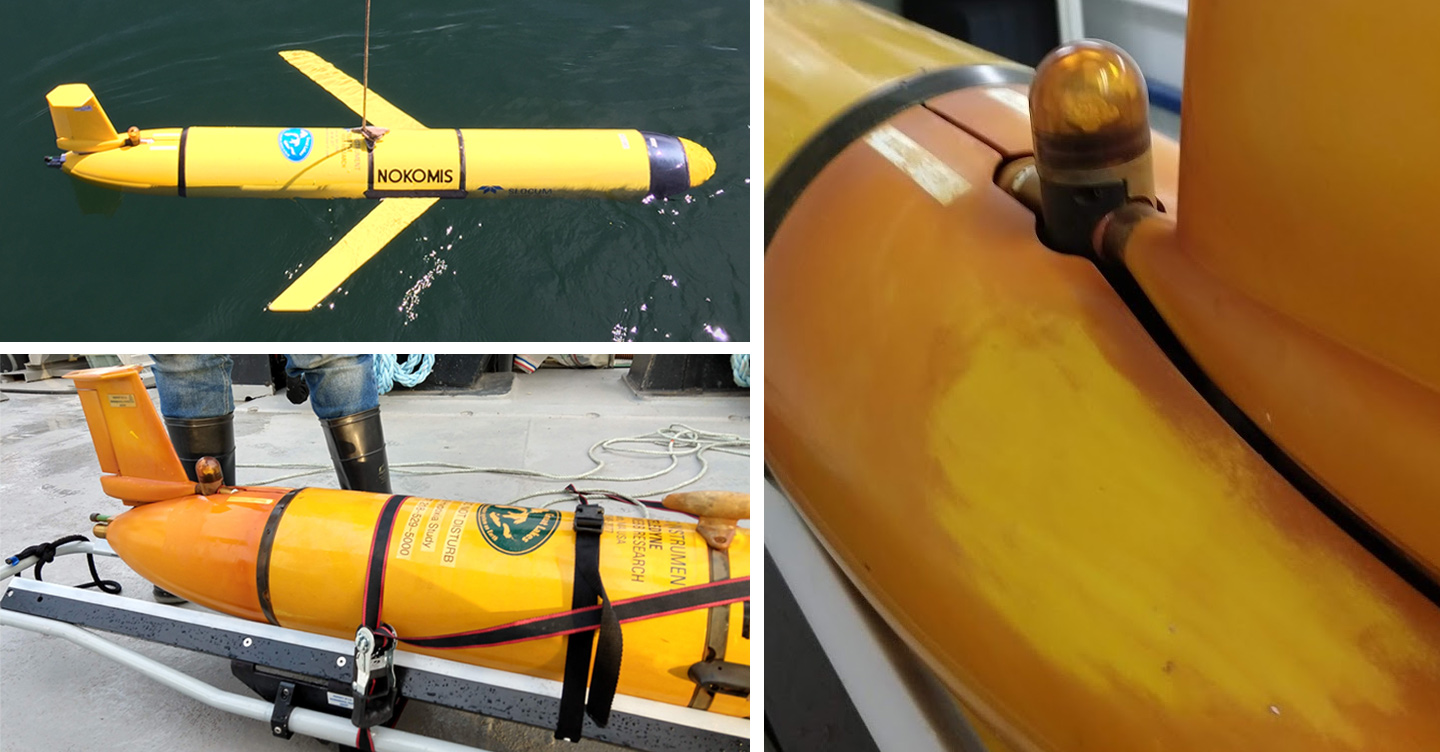
While conducting scientific research across large geographic scales is often logistically and administratively difficult, these challenges present new avenues for collaboration and innovation. For example, GLATOS researchers assist each other with gear deployments and maintenance, share research findings, and collaborate on new research endeavors. Futher, in association with other research going on in the Great Lakes basin, GLATOS researchers anticipate using autonomous underwater vehicles to monitor fish movements in collaboration with the Real-time Aquatic Ecosystem Observation Network based out of the Great Lakes Institute for Environmental Research at the University of Windsor. By combining fish movement and physical lake condition data, researchers will be able to gain a better understanding of the population dynamics of Great Lakes fish stocks and the management actions need to ensure their long-term sustainability in the face of a changing climate.