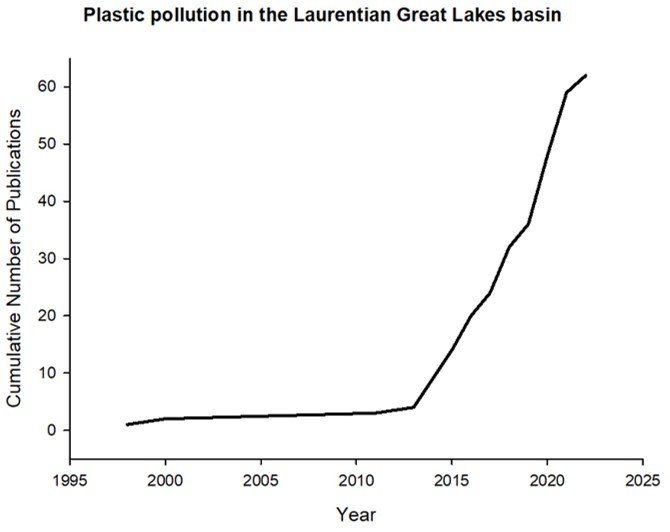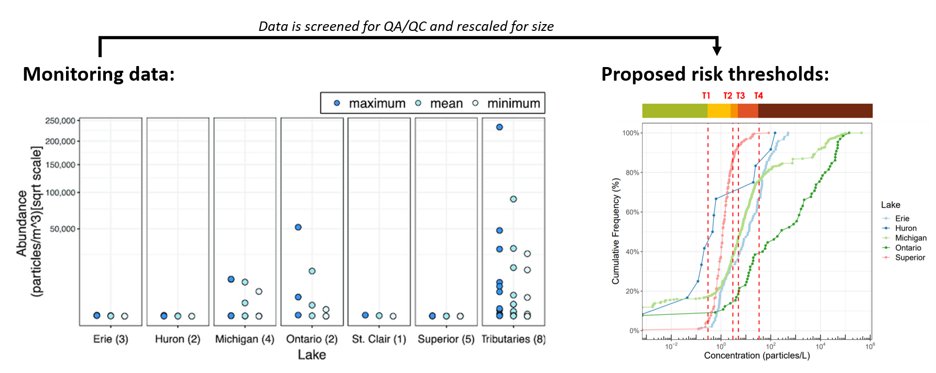
A dozen years ago, I had the opportunity to co-teach an environmental science field course focused on the Laurentian Great Lakes aboard the U.S. Brig Niagara, a replica War of 1812 tall ship based in Erie, Pennsylvania. While out in the vast open waters of Lake Erie I wondered, As much as we have heard about plastic pollution within the world’s oceans, is there plastic in the Great Lakes? The following year, my colleagues and I would set out aboard that same vessel to answer that question, leading to an unfortunate answer and, as all science does, to a lot more questions.
As one of the first freshwater plastic pollution researchers, I now frequently give talks to the public on plastics as an environmental issue. I think most people expect to hear about how plastic is polluting every nook and cranny of our earthly home. And while that is certainly true, increasingly, I want to talk about a more important reality: plastic pollutes at every step of its life cycle. This isn’t just an end-of-life issue. It is a full-cycle material issue, and one that is moving to my backyard.
Fossil Fuel's Plan B: Plastics
I live in Pennsylvania, a state that receives substantial national attention, especially during presidential election cycles, because of its prominent hydrofracking industry. While hydrofracking is most well-known as a method to extract natural gas (i.e., methane) from shale reserves, shallower (and less thermally mature) shale reserves tend to have a higher proportion of “wet” gas components (ethane, propane, and butane) relative to methane. Extraction of these wet gas components means hydrofracking is not just about energy, it is about plastics. As such, we are not only seeing a build-out of hydrofracking wells, but also the plastics industry.
In November 2022, a multibillion-dollar ethylene cracker plant built by the Shell corporation started its operations in Beaver County, Pennsylvania, just north of Pittsburgh, creating polyethylene plastic from wet hydrofracked gas. Within only a few months, this facility had already been fined $10 million for violations of state air quality regulations. These violations are reminiscent of my childhood. I grew up in Texas, a bit north of another area in which the growth of fossil fuel refining also led to the growth of a related and connected plastics industry—an area of the United States known infamously as “Cancer Alley.” The build-out that is emerging in Pennsylvania leads one to wonder if our future can be seen by looking south.
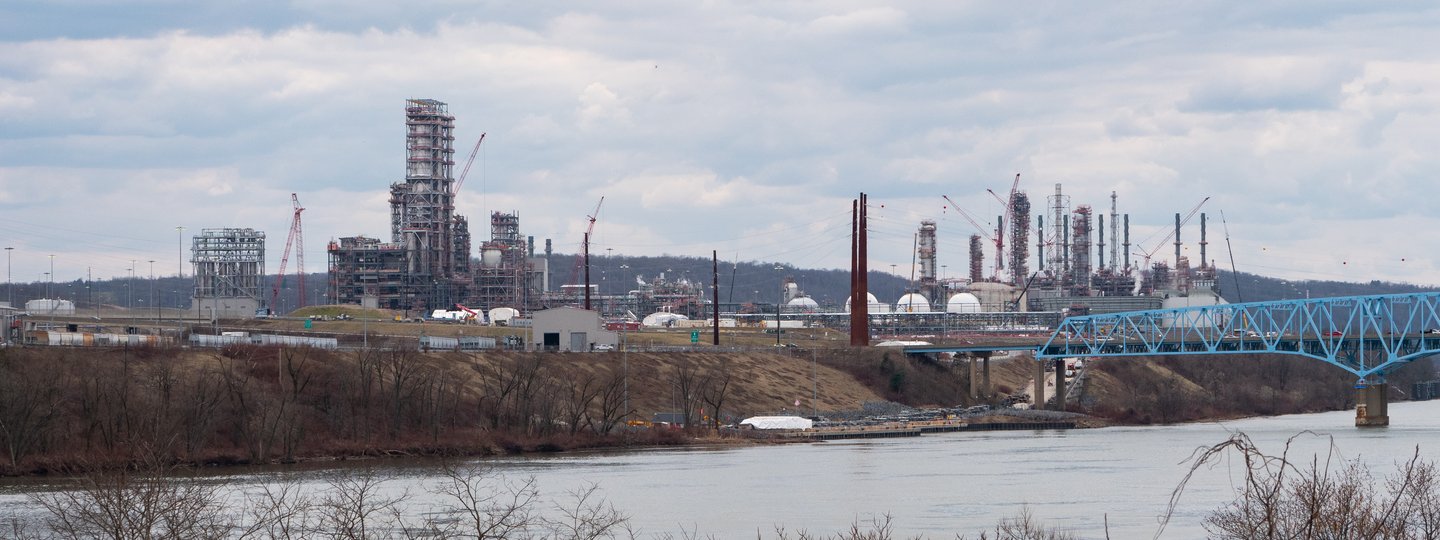
In addition to the operational Shell ethylene cracker plant, Encina is planning a plastics “advanced recycling” facility in Point Township, Pennsylvania, and the International Recycling Group (IRG) has proposed a supersized plastics sorting facility in Erie. Both facilities are focused on end-of-life plastics with significant potential impacts on freshwater systems. Beyond the atmospheric issues of “advanced recycling,” the Encina facility is being planned to be built within the floodplain of the Susquehanna River, which is known to regularly flood. While the IRG facility is planned to be located a few miles from the shores of Lake Erie, the resulting flaked, post-consumer, mixed plastic waste is expected to be transported by boat across the Great Lakes for use as a supplement to coke in steel mills.
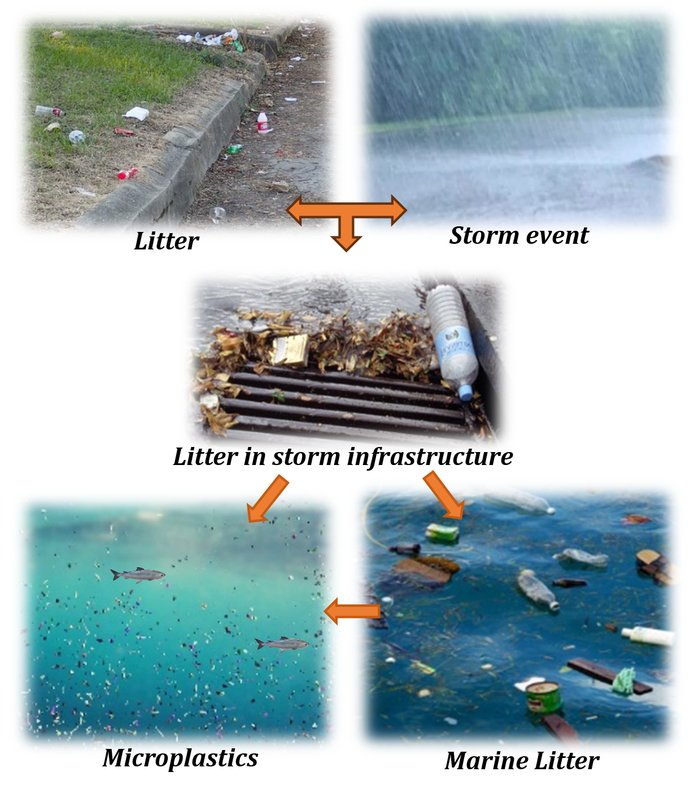
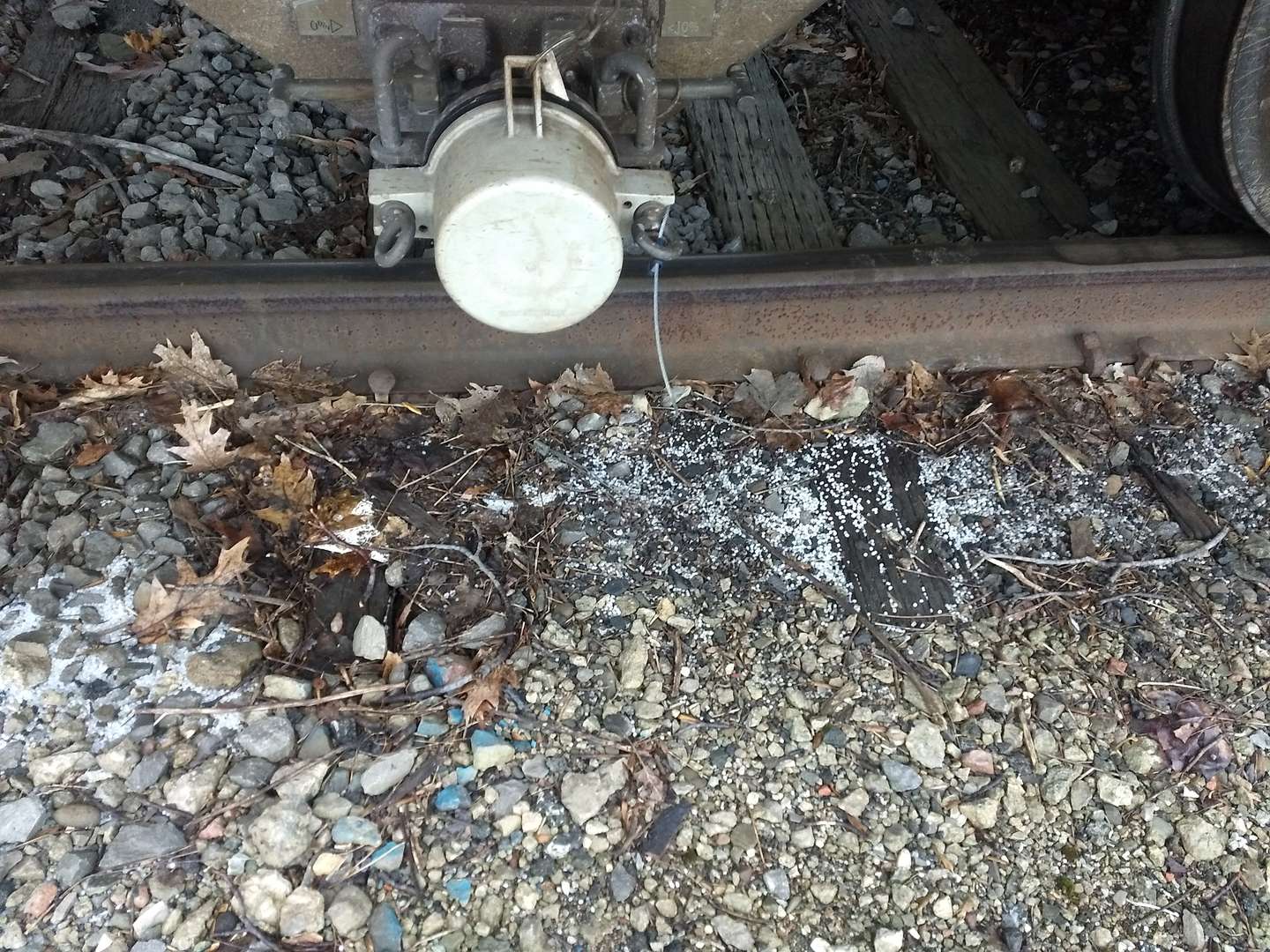
These industries bookend the already extensive plastics manufacturing throughout the region. Such businesses rely on a feedstock of pre-production plastic pellets (known as “nurdles”) that originate from fossil fuel refining and are well-known to be lost as they are vacuumed from one storage container to another (i.e., train to truck, and truck to silo). However unintentional these losses may be, rainwater still carries them from land to lake in dramatic numbers.
As transportation is increasingly going electric, plastics are the Plan B for the fossil fuel industry, and much of that new build-out is happening right here in Pennsylvania, with impacts on air and water, including the Great Lakes.
A Full Life-cycle Issue
It is important to see plastics as a full life-cycle issue, especially as we still grabble with understanding myriad sources and pathways that release and transport them throughout the globe. Understanding the sources is complicated given the prominence of plastic in our lives and the local-to-regional nature of particular sources to particular waterways. For example, when we surveyed a remote lake in Mongolia (Lake Hovsgol), the dominant microplastics within the water were heavily influenced by the local fishing industry, while in Lake Superior (USA) the microplastic loading is largely owing to fibers, which seem to be transported to the lake through the air and atmospheric deposition. In more urban areas, run-off is the prominent source. But even the “removal” of plastics through the wastewater treatment process only moves plastics from the wastewater into the sludge, which is then commonly applied to agricultural fields as fertilizer, giving a second life to the microplastic pollution as a soil contaminant.
All of this plastic—whether in our air, our soil, or our water—eventually makes its way into us through the air we breathe, the water we drink, and the food we eat. Microplastics have been found within our blood, our lungs, our brain, and even on both the maternal and fetal sides of the placental boundary. While understanding the impacts of our plasticized world on human health is still in its infancy, the initial studies don’t look good. For one, we have to consider plastic for what it is—a mixture. These polymers have been implicated as factors in various neurological disorders like Alzheimer’s disease. In addition, we need to consider myriad chemicals (current estimates of ~10,000) used in the manufacture of plastic products. Many of these chemicals are known to mimic hormones, leading to a wide variety of human health implications, from cancer to reproduction issues to obesity to autism.
Solutions to plastic pollution are as varied as the sources. Reducing our individual plastic usage by finding reusable alternatives is something we can all do that has real impact. After all, every bit of plastic found in our lakes ultimately comes from us. Adding filters to washing machines, like we have on dryers, would help to reduce the flow of fibers into our waterways. The Break Free from Plastic Pollution Act, a suite of legislative bills, has been reintroduced in the U.S. Congress for a third time. The heart of this legislation is extended corporate responsibility, which has been shown to be very effective in car battery and electronics recycling. It would change the landscape of packaging away from single-use plastics toward the use of reusable, recyclable, and compostable commercial packaging materials. Chief among all of these solutions is the need to reduce our usage of this material. As a chemist, I can understand its appeal; as a human and lover of our lakes, I advocate for finding alternatives, using less, and moving to a circular economy.
A dozen years ago, sailing the incredibly beautiful Great Lakes, a simple question crossed my mind. In working to answer that question, the lakes are speaking through me, and other researchers like me, revealing to us the impact we are having and pointing us on another course. Will we listen?