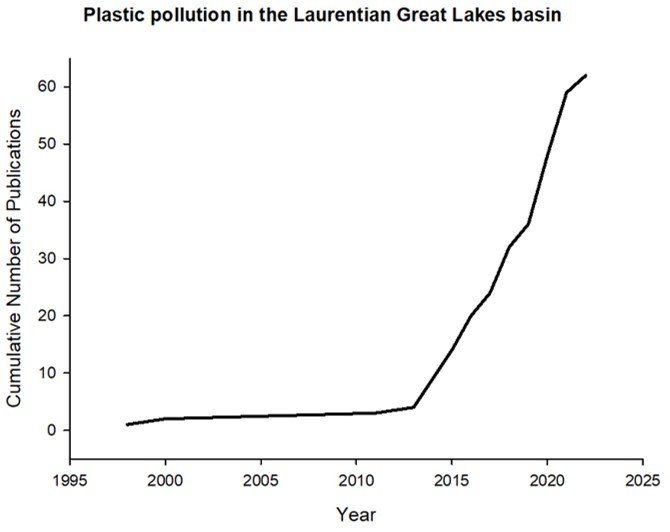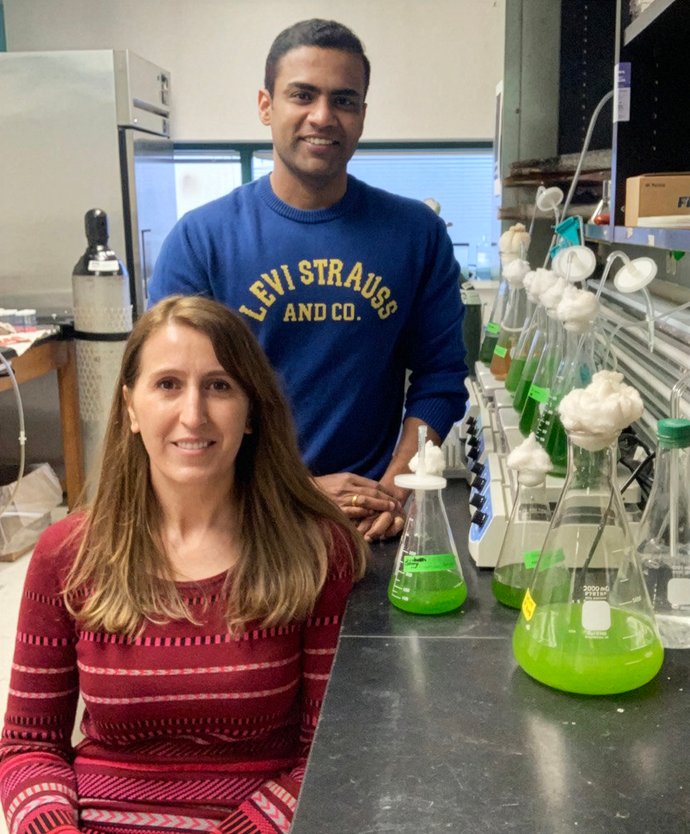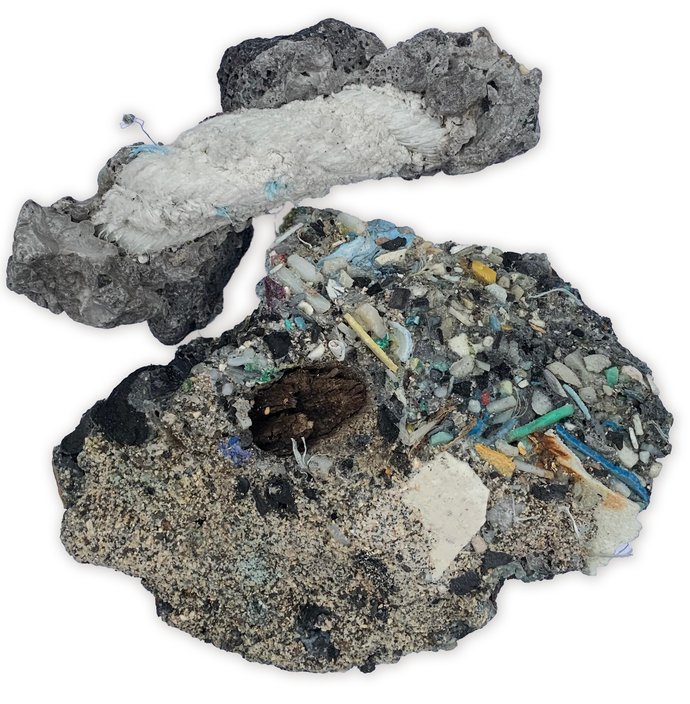
An unlikely collaboration that began in 2012 has led to a prolific body of published and exhibited works by a Canadian group of scientists, artists, and cultural workers known as the Synthetic Collective. When earth scientist Patricia Corcoran and visual artist Kelly Jazvac stepped onto the sand of Kamilo Beach, Hawaii, in 2013, neither realized the significance of what they would find. Their fieldwork, guided by descriptions from environmental thought leader, oceanographer, and boat captain Charles Moore, resulted in the naming of an anthropogenic product symbolizing humankind’s impact on the planet’s natural systems—plastiglomerate. Stones composed of sand grains, volcanic lithic fragments, and shelly, coral, woody, and plastic debris were held together in a matrix of once molten plastic. Since then, the Synthetic Collective and their collaborators have embraced interdisciplinarity in their investigation of plastic pollution in the Laurentian Great Lakes.
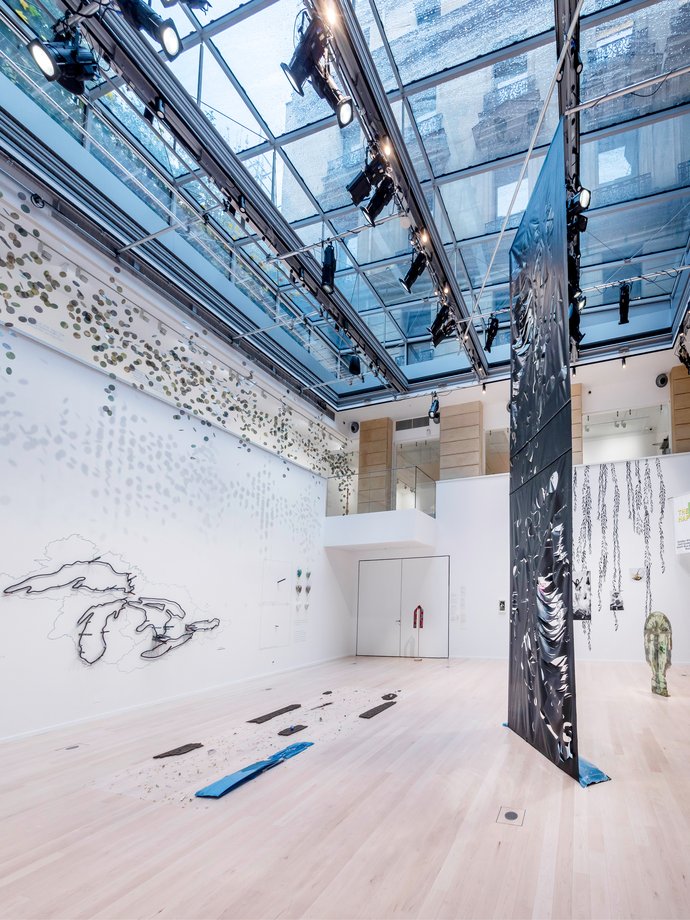
The group uses a harmonized approach of engaging with plastic pollution from multiple interwoven perspectives. Their tangible results include scientific and art publications, but more importantly, bring a greater awareness of the distribution, sources, and threats of plastic debris through media (e.g., National Geographic Magazine), museum presentations (e.g., Smithsonian National Museum), and art exhibitions (e.g., Kelly Jazvac’s Recent Landscapes displayed at the Louis B. James Gallery, New York).
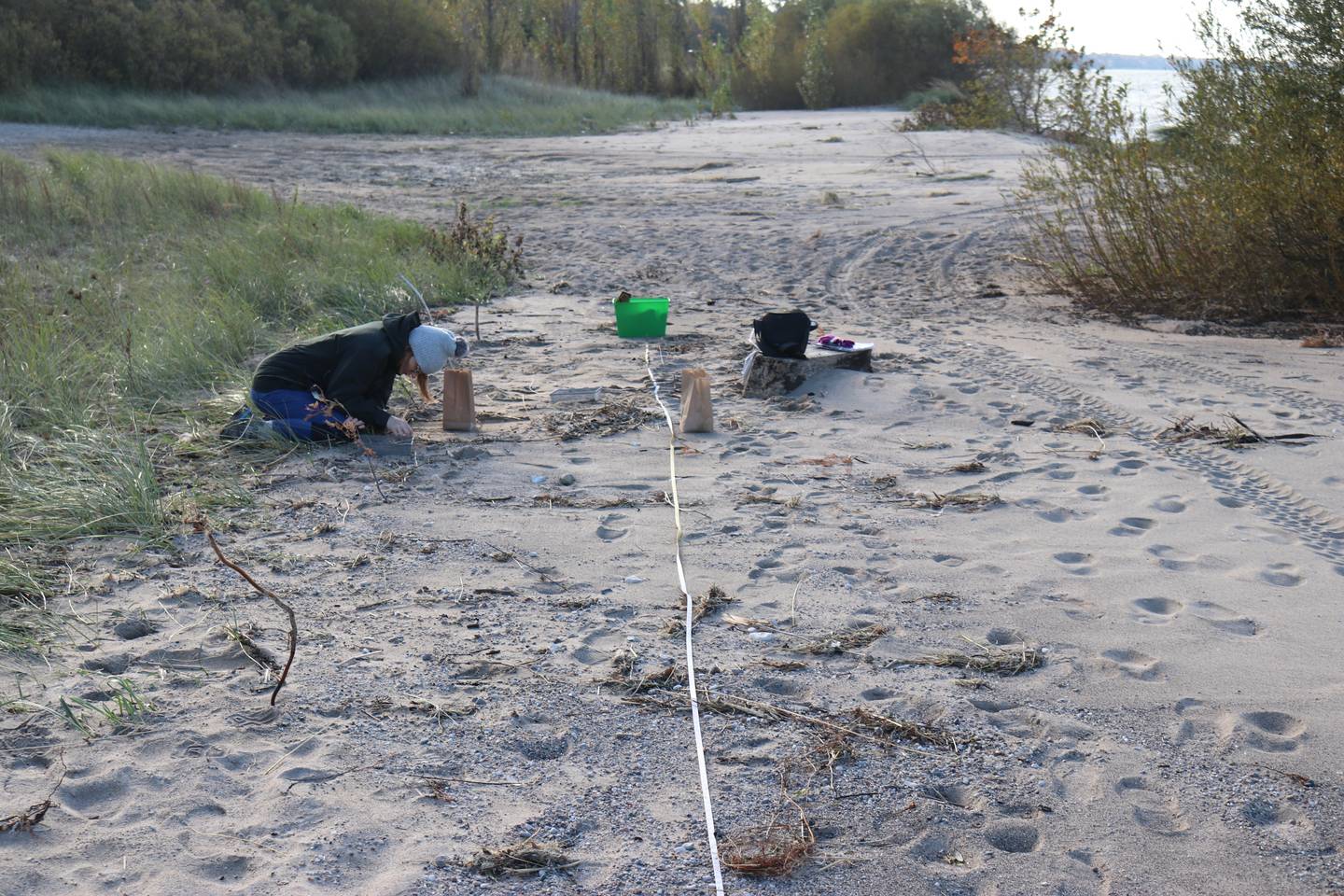
Although samples of plastiglomerate have been and are showcased at various museums around the globe, the Synthetic Collective’s foremost exhibit thus far has been Plastic Heart: Surface All the Way Through, which opened at the Art Museum at the University of Toronto in September 2021 and moved to the Canadian Cultural Centre in Paris, France, in November 2022. The exhibit used the Synthetic Collective’s 2018 scientific investigation of plastic debris on 66 Great Lakes beaches as a starting point to explore the roles of plastics and plastic pollution in the art world. The artists joined the scientists in sampling the beaches and the scientists joined the artists in developing the museum exhibit.
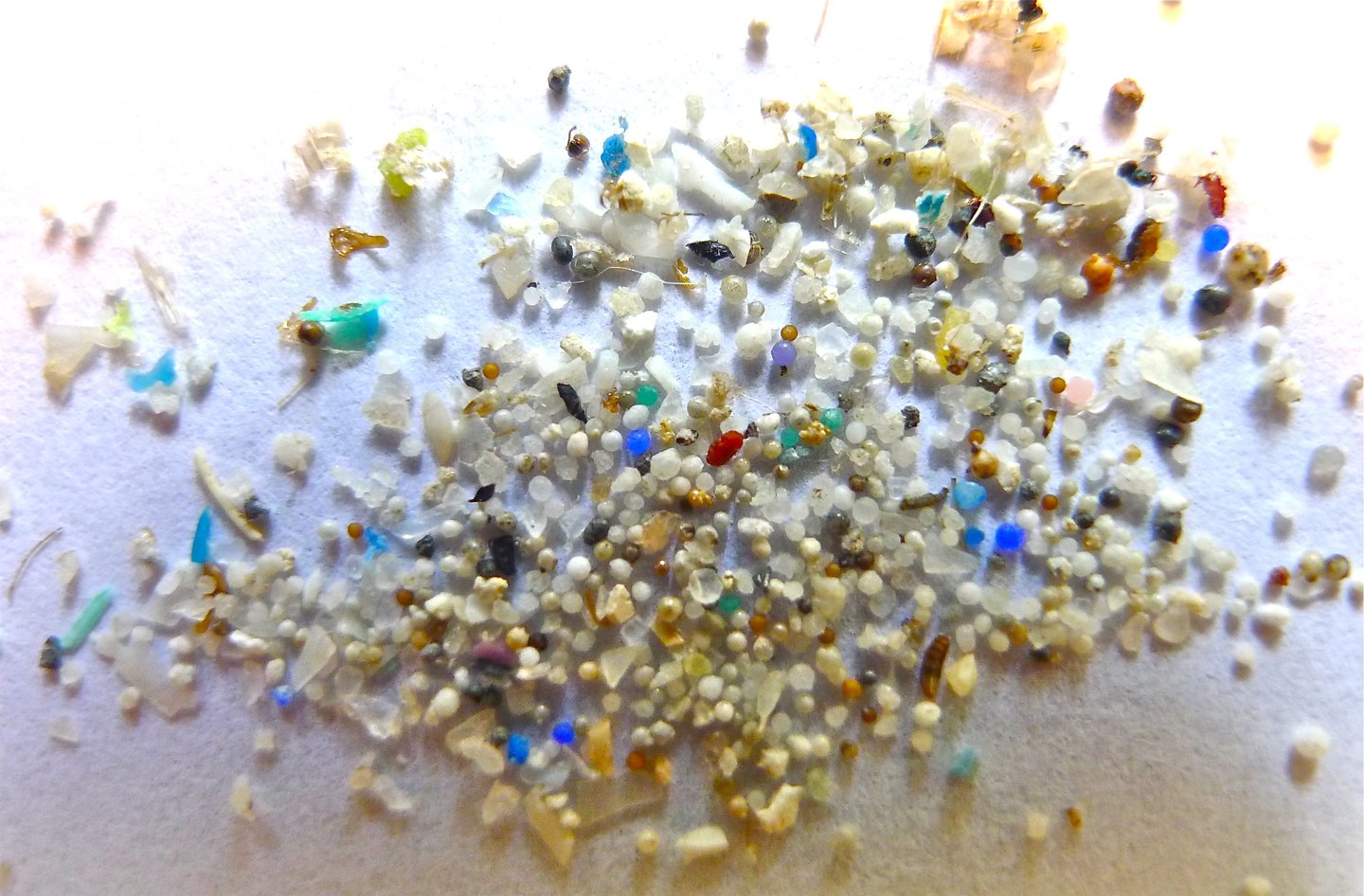
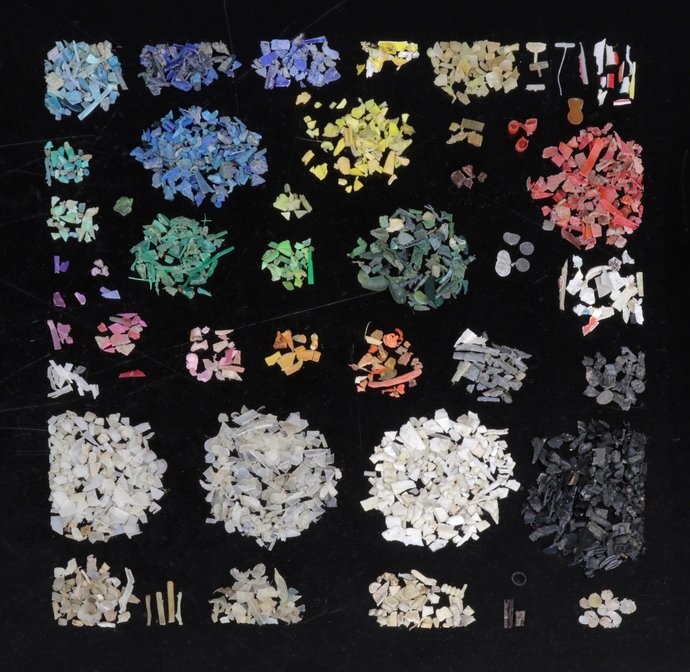
In the gallery space, the 7,268 pellets collected from a 10m2 quadrat along the strandline of Baxter Beach near Sarnia, Ontario, made their way into a floor work by artist Tegan Moore that mimicked the shape of the quadrat and included a soundtrack of the soft sound of pellets being counted and characterized. Other works by Synthetic Collective members similarly repurposed and reinterpreted the sampling study for an art audience, whereas other artists were commissioned to visualize the collected data. Data visualizer Skye Morét, for example, mounted coloured bars on a wall with an outline of the Great Lakes made from previously used rope. The protrusion of each bar from the wall corresponded to the number of pellets collected from each beach. Morét’s work showcased how data visualization could repurpose materials. The exhibit itself sought to have as low a carbon and waste footprint as possible, and to use few plastics in shipping or installation. Walls were not painted, holes were left in the walls from previous exhibitions, vinyl labeling was replaced with handwritten signage, video works were shown on tablets to lessen the exhibit’s energy usage, and the waste created during the installation was included in the gallery space.
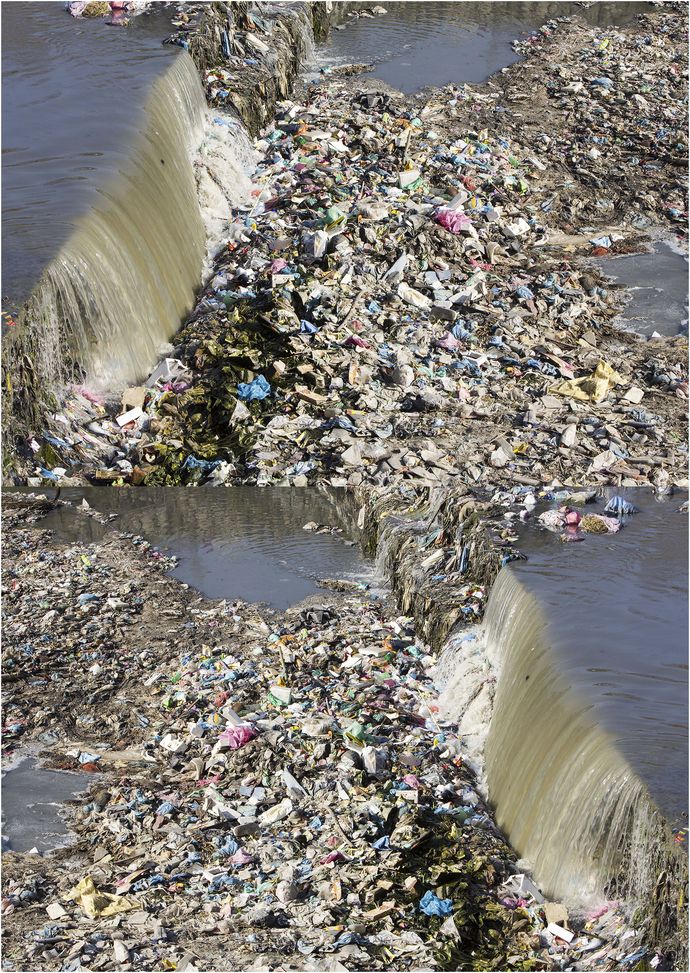
Historical artworks and specimens from medical collections showed extensive degradation—microcrazing, embrittlement, and discoloration—that occurs even if plastic artworks and artefacts are held in near ideal museum storage conditions. Degradation effects are also studied by science members of the Synthetic Collective, but rather, the degradation of plastic debris while in the environment. As plastic debris, and especially microplastics (particles <5 mm), are often buried in landfills and under sediment and the water column, the chief degradation agent, UVB light, does not affect the polymers. This results in preservation of plastic debris in the sedimentary record, which is a profound marker of the Anthropocene, a proposed epoch marked by the activities of humans on Earth’s natural ecosytems.
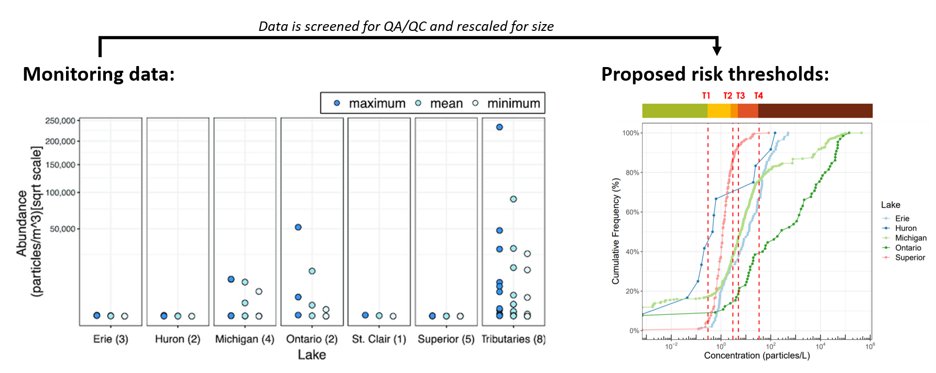
Moving forward, the Synthetic Collective will continue to investigate, convey, and mobilize change with respect to plastic pollution in the Laurentian Great Lakes watershed. Together with academic, public, Indigenous, industry, and government collaborators, the team is exploring plastic pollution in tributaries, stormwater ponds, soils, and air in the region while foregrounding a collaborative working model that lessens the carbon footprint of research and outputs.