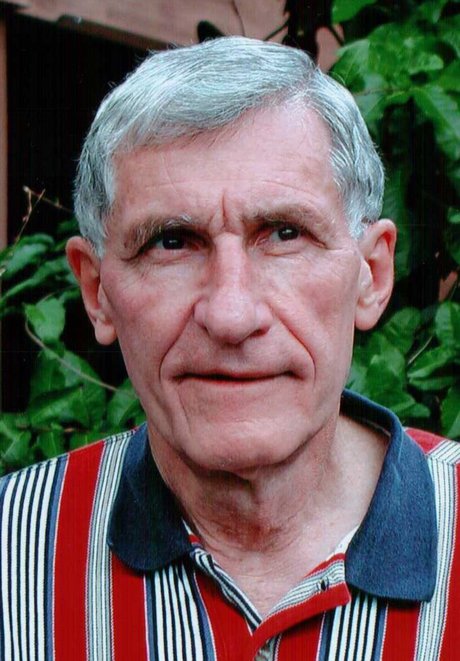
The Great Lakes science and management community lost a prominent scholar and researcher with the passing of Claire L. Schelske on August 20, 2019. Claire graduated with a B.A. in 1955 and an M.S. in 1956 from Kansas State Teachers College in Emporia, Kansas (now known as Emporia State University). Claire first worked with David Chandler at the University of Michigan in 1960, where he completed his Ph.D. research on the availability of iron as a factor limiting primary productivity in a marl lake; this was subsequently published in Science in 1962. His research forms a 40-year body of work elucidating the relationship between phosphorus enrichment and algal production in large lakes, as well as secondary limitation of other nutrients, particularly silica. His work is a comprehensive treatise based on several lines of complimentary research (mechanistic experimentation, mass-balance compilation, paleolimnological inquiry, and synthesis of comparative limnology). As such, Claire’s research helped to build a sophisticated understanding of the eutrophication process in large lakes in North America.
However, what was equally impressive to Claire’s scientific accomplishments is the manner with which he has achieved these successes. The same values that guided his research—honesty, integrity, rigor, and commitment—also translated to his professional relationships and service. Claire formed long-lasting relationships with all of his key colleagues—these remain viable to this day.
The Early Years
Claire LaVerne Schelske was born in Fayetteville, Arkansas, on April 1, 1932. He was raised in Peabody, Kansas. Claire was both athletic and academic in high school, where he lettered in four sports and graduated class valedictorian in 1950. He graduated with a B.A. in 1955 andan M.S. in 1956 from Kansas State Teachers College in Emporia, Kansas (now known as Emporia State University). During this time, he met and his lifelong partner, Betty, and they were married in 1957. Together they had three children and six grandchildren. Claire first worked with David Chandler at the University of Michigan in 1960, where he completed his Ph.D. research on the availability of iron as a factor limiting primary productivity in a marl lake; this was subsequently published in Science in 1962.
From 1960 to 1962, Claire continued his postgraduate work at the University of Georgia Marine Institute on Sapelo Island, where he investigated mechanisms that maintain high productivity in Georgia estuaries with Eugene P. Odum. From 1962 to 1966, he researched the environmental distributions of radioactivity from fallout at the Bureau of Commercial Fisheries in Beaufort, North Carolina.
He then worked as a technical assistant at the Office of Science and Technology in Washington D.C. until 1967. That same year, Claire was hired at the University of Michigan Great Lakes Research Division, where he initiated what would become a 40-year collaboration with Eugene (Gene) F. Stoermer. Together, they collected baseline environmental data prior to constructing a nuclear power plant along the shoreline. Shortly thereafter, they conducted a series of experiments that spawned their formulation of the “Silica Depletion Hypothesis,” which was published in 1971 in Science. Their research and Claire’s expert testimony played an essential role in requiring the City of Milwaukee, Wisconsin, to reduce storm water overflows of raw sewage into Lake Michigan.
Research Overview
Claire’s research helped to build a sophisticated understanding of the eutrophication process in large lakes in North America by identifying anthropogenic phosphorus loading as not only one of the primary controls, but, perhaps as important, one of the secondary biogeochemical effects set into motion though this primary influence (e.g., Schelske 1962, 1979). His research identified a novel mechanism for advanced eutrophication, verified the mechanism using several lines of complementary research, and—the ultimate utility of any scientific endeavor—finally promoted societal change through greater understanding and the ability to predict the consequences of human behavior. In sum, Claire’s research has helped to build the foundation for two of the most extensive aquatic restoration efforts in recent human history; namely, nutrient controls in the Laurentian Great Lakes (multi-billion dollars over the past 30 years) and nutrient and hydro-period restoration to key systems associated with the Florida Everglades ($8 billion over 25 years).
40 Years of Eutrophication Research
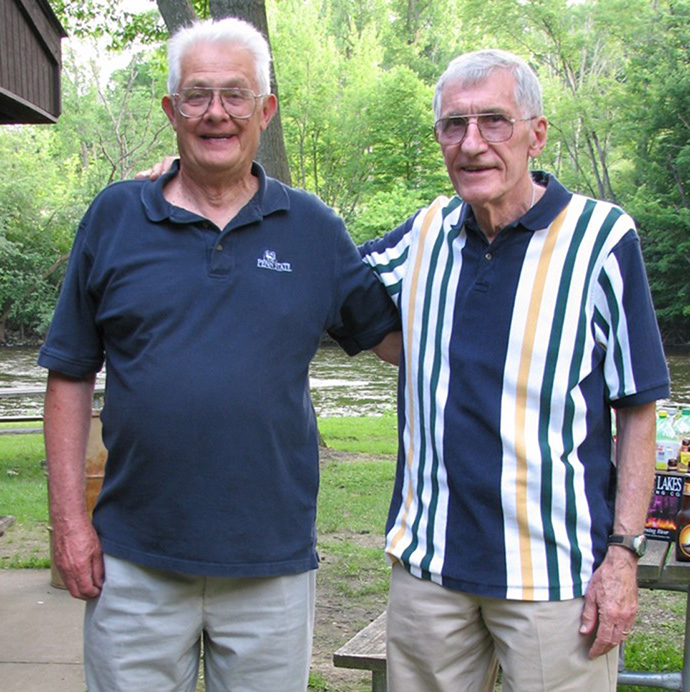
The body of Claire’s work forms a 40-year comprehensive treatise based on several lines of complimentary research (mechanistic experimentation, mass-balance compilation, paleolimnological inquiry, and synthesis of comparative limnology) that elucidated the relationship between phosphorus enrichment and algal production in large lakes, as well as secondary limitation of other nutrients, particularly silica. During the 1960s and 1970s, Claire’s original field and laboratory experiments with Gene identified phosphorus as the key element controlling the eutrophication of the Great Lakes. This work was particularly novel in that it not only employed traditional bioassay methodologies (e.g., Schelske et al. 1974) but also used some of the first large bags enrichment experiments deployed in situ by scuba from large research vessels (ca Schelske and Stoermer 1971). In the 1980s, Claire conducted a series of constituent mass-balance studies within and between Great Lakes basins to address inherent spatial complexity among lakes; as such, this work extended the bioassay predictions to the entire Great Lakes system (e.g., Schelske 1985). During the late 1980s and 1990s, Claire with his colleagues developed a new (and emerging) line of research in paleolimnology that addressed system-level change in the natural history of all five Great Lakes as evidenced by alterations in bulk nutrient storage and species shifts interpreted from microfossils (Schelske et al. 1983, Stoermer et al. 1985, Conley and Schelske 1989, Hodell and Schelske 1998). Finally, Claire synthesized comparative research results to develop a comprehensive understanding of how and why each of the five Great Lakes would respond to nutrient enrichment (Schelske et al. 1986; Fahnenstiel et al. 1998), and, perhaps most importantly, produced a predictive framework for their expected recovery following nutrient abatement and other large-scale changes to the collective watershed (see Carrick et al. 2001).
Claire’s interest in nutrient biogeochemistry has not been limited to the Laurentian Great Lakes. In 1987 he accepted a position as eminent scholar in water resources at the University of Florida and initiated similar research on Florida lakes without giving up on his interest in the Great Lakes. During this phase of his career, he provided keystone research on eutrophication problems in systems associate with the Florida Everglades, arguably one of the most important watersheds in North America. His work furthered the conceptual model linking P-enrichment with secondary nutrient depletion and its associated biological changes to shallow, subtropical lake systems (e.g., Carrick et al. 1993; Brenner et al. 1999; Schelske et al. 2000).
Service and Accomplishments
Claire gave generously through his service to professional societies to which he belonged. He has held elected offices in the International Association for Great Lakes Research, the International Society for Applied and Theoretical Limnology, and the Association for the Sciences of Limnology and Oceanography (ASLO). He also received the Ruth Patrick Award from ASLO in 2003 for elucidating the biogeochemical consequences of cultural eutrophication in large lakes and developing a comprehensive understanding of the recovery of anthropogenically disturbed aquatic ecosystems. He was also awarded the Edward S. Deevy Award from the Florida Lake Management Society for contributing to the understanding of Florida’s water bodies.
Closing Remarks
Perhaps the true measure of an individual’s scientific impact and contribution to any particular human endeavor may be the application of their work to address new and challenging situations. Claire’s model of eutrophication has been applied to nutrient enrichment problems in the Florida Everglades (Reddy et al. 1999), Eu-Asia (Stoermer et al. 1995), and the world’s oceans (Conley et al. 1993). Claire’s work has resulted in 161 articles in peer-reviewed journals (four papers in Science, 20 in Limnology and Oceanography), one book, 16 book chapters and monographs, and more than 30 professional reports and conference proceedings. He directly supervised three Ph.D. students and 12 post-doctoral students; that said, he also took numerous others under his wings throughout his career.
However, what is equally impressive to Claire’s scientific accomplishments is the manner with which he has achieved these successes. The same values that guided his research—honesty, integrity, rigor, and commitment—also translated to his professional relationships and service. Claire formed long-lasting relationships with all of his key colleagues that remain viable to this day (Eugene Stoermer, 42 years; Daniel Conley, 30 years; Gary Fahnenstiel, 30 years; David Hodell, 26 years; Mark Brenner, 26 years; and Hunter Carrick, 24 years). Speaking personally, Claire was an inspiring person to study under and eventually to collaborate with; we feel fortunate to have shared this time with him.
Literature Cited
Brenner, M., T. J. Whitmore, J. H. Curtis, D. A. Hodell, and C. L. Schelske. 1999. Stable isotope (13C and 15N) signatures of sedimented organic matter as indicators of historic lake trophic state. J. Paleolimnol. 22:205-221.
Carrick, H. J., C. L. Schelske, F. J. Aldridge, and M. F. Coveney. 1993. Assessment of phytoplankton nutrient limitation in productive waters: Application of dilution bioassays. Can. J. Fish. Aquat. Sci. 50:2208-2221.
Carrick, R. Barbiero, and M.L. Tuchman. 2001. Variation in Lake Michigan plankton: Temporal, spatial, and historical trends. J. Great Lakes Res. 27:467-485.
Conley, D. J. and C. L. Schelske. 1989. Processes controlling the benthic regeneration and sedimentary accumulation of biogenic silica in Lake Michigan. Archiv. Hydrobiol. 116:23-43.
Conley, D. J., C. L. Schelske, and E. F. Stoermer. 1993. Modification of the biogeochemical cycle of silica with eutrophication. Mar. Ecol. Prog. Ser. 101:179-192.
Fahnenstiel, G. L., A. E. Krause, M. J. McCormick, H. J. Carrick, and C. L. Schelske. 1998. The structure of the planktonic food-web in the St. Lawrence Great Lakes. J. Great Lakes Res. 24:531- 554.
Hodell, D. A. and C. L. Schelske. 1998. Production, sedimentation, and isotopic composition of organic matter in Lake Ontario. Limnol. Oceanogr. 43:200-214.
Reddy, K. R., G. A. O’Connor, and C. L. Schelske (eds.). 1999. Phosphorus Biogeochemistry in Subtropical Ecosystems, Florida as a Case Example. CRC/Lewis Publishers. 707 pp.
Schelske, C. L. 1962. Iron, organic matter, and other factors limiting primary productivity in a marl lake. Science 136: 45-46.
Schelske, C. L. and E. F. Stoermer. 1971. Eutrophication, silica and pre¬dicted changes in algal quality in Lake Michigan. Science 173: 423-424.
Schelske, C. L., E. D. Rothman, E. F. Stoermer, and M. A. Santiago. 1974. Responses of phosphorus-limited Lake Michigan phytoplankton to factorial enrichments with nitrogen and phosphorus. Limnol. Oceanogr. 19: 409-419.
Schelske, C. L., E. F. Stoermer, D. J. Conley, J. A. Robbins, and R. M. Glover. 1983. Early eutrophication of the lower Great Lakes: new evidence from biogenic silica in sediments. Science 222:320-322.
Schelske, C. L. 1985. Biogeochemical silica mass balances in Lake Michigan and Lake Superior. Biogeochemistry 1:
197-218.
Schelske, C. L., E. F. Stoermer, G. L. Fahnenstiel, and M. Haibach. 1986. Phosphorus enrichment, silica utilization, and biogeochemical silica depletion in the Great Lakes. Can. J. Fish. Aquat. Sci. 43: 407-415.
Schelske, C. L., M. F. Coveney, F. J. Aldridge, W. F. Kenney and J. E. Cable. 2000. Wind or nutrients: Historic development of hypereutrophy in Lake Apopka, Florida. Limnology and Lake Management 2000+. Arch. Hydrobiol. Spec. Issues Advanc. Limnol. 55:543-563.
Stoermer, E. F., J. A. Wolin, C. L. Schelske, and D. J. Conley. 1985. Post-settlement diatom succession in the Bay of Quinte, Lake Ontario. Can. J. Fish. Aquat. Sci. 42: 754-767.
Stoermer, E. F., M. B. Edlund, C. H. Pilskaln, and C. L. Schelske. 1995. Siliceous microfossil distribution in the surficial sediments of Lake Baikal. J. Paleolimnol. 14:69-82.